
Cottage kitchens run from a weekend of painted shaker cabinets and a few reclaimed wood shelves to a full remodel with a freestanding island and a farmhouse sink that may need the base cabinet cut to fit.
Your lease or your deed decides where you start: renters get the pieces that travel, like floral curtains and antique furniture, while owners can commit to beadboard walls, sage green cabinets or a farmhouse sink.
Where an older house still has its original architectural features, build around them and keep everything else quiet.
1. Open Shelving
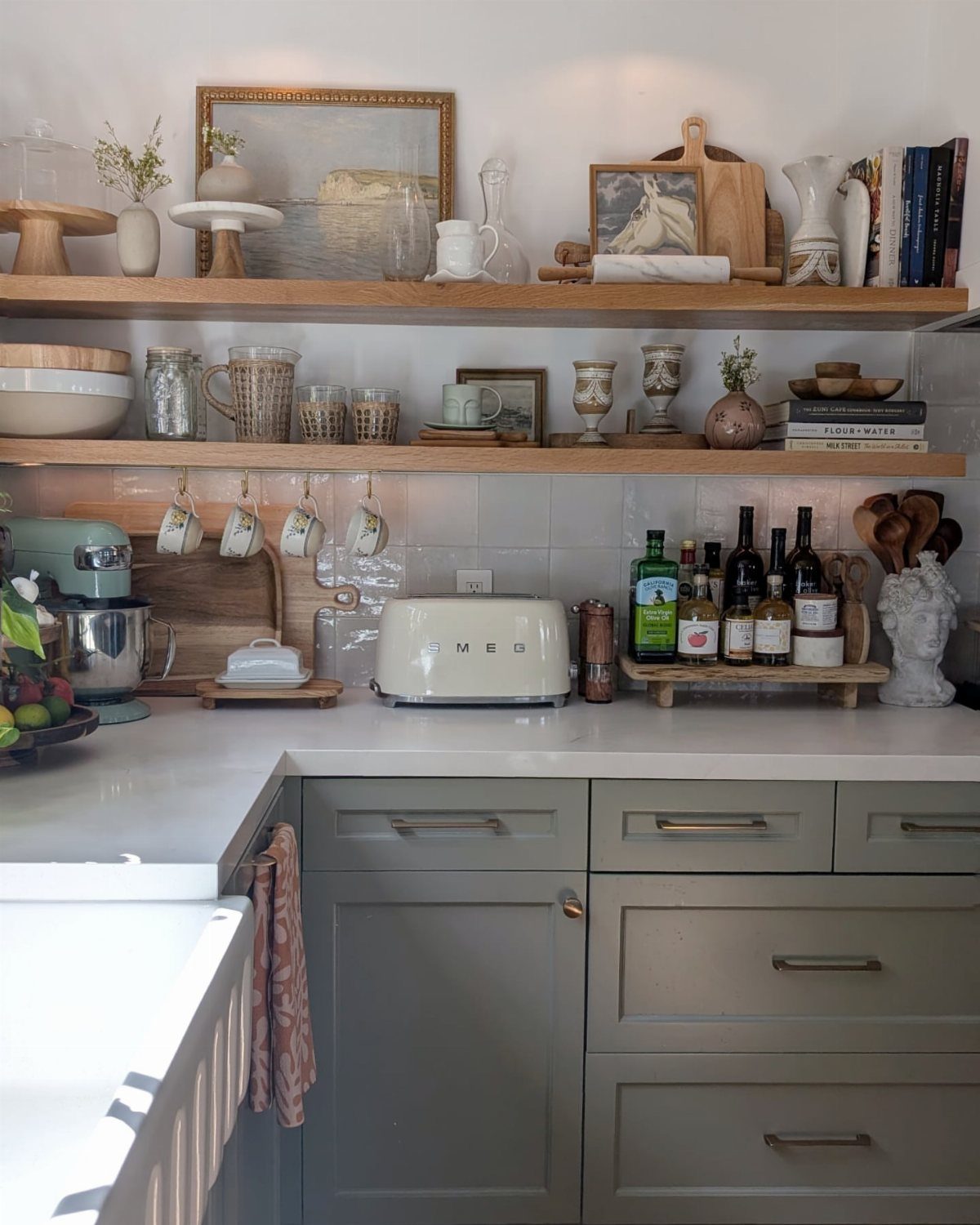
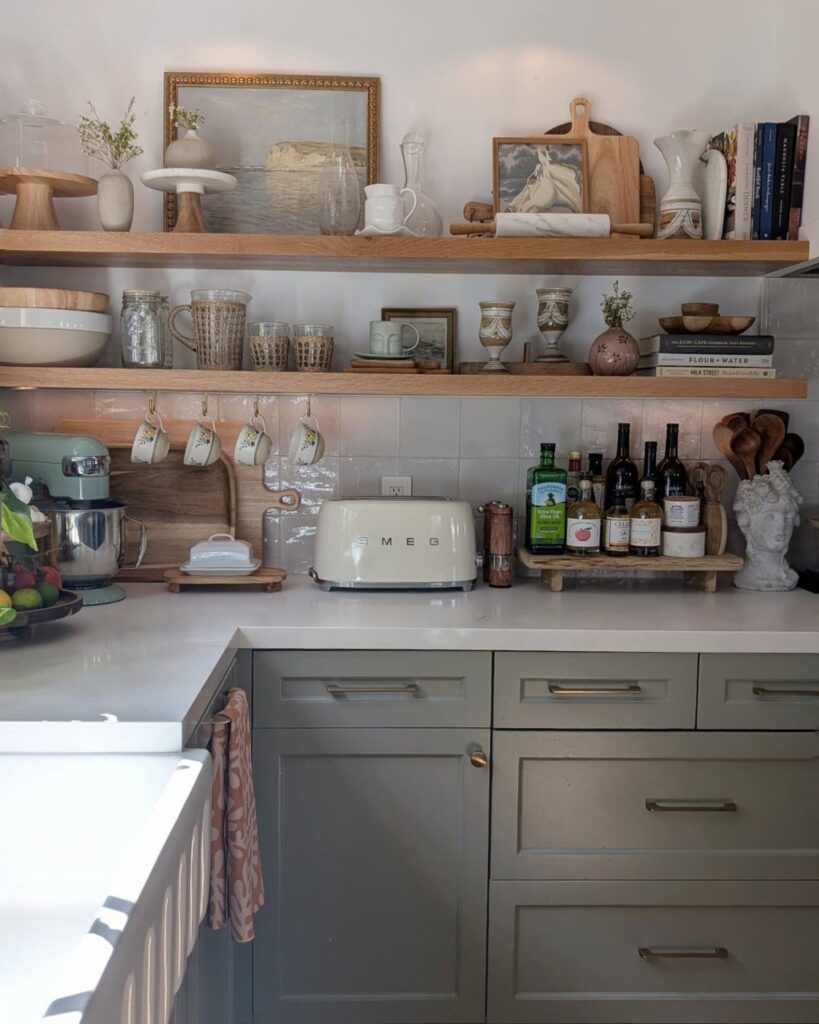
2 wood shelves over sage green cabinets give the dishes you reach for daily a permanent place, and the wall stays lighter than it would with upper cabinets.
Keep the shelves for everyday plates, bowls and a few pieces you like looking at, such as a small framed print.
Anything you use weekly should live there; anything you use twice a year should not. Open shelves show every dusty surface, so I would limit them to what gets washed and put away often.
2. Antique Furniture
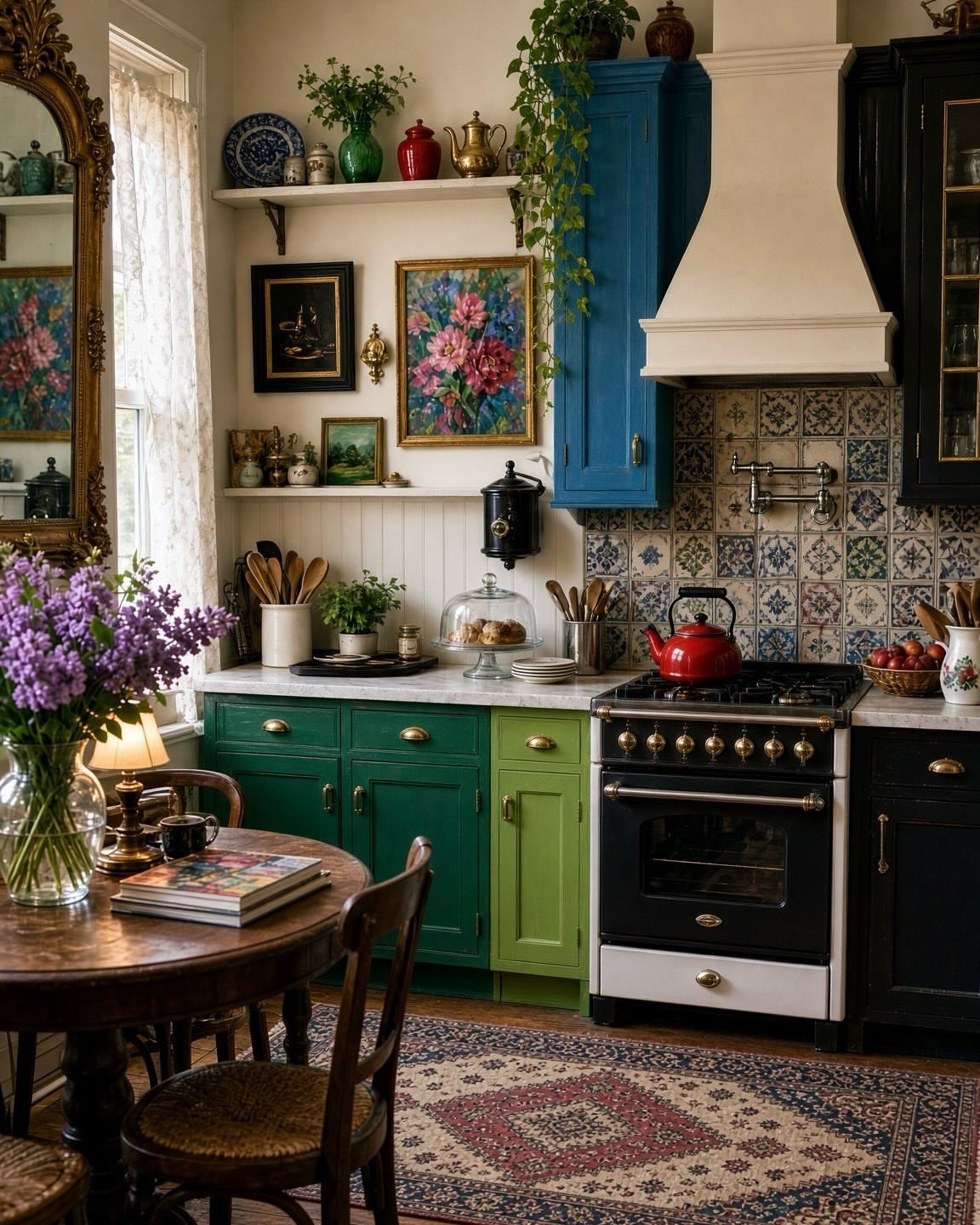
A round wooden table with mismatched chairs does more for a cottage kitchen than any new fixture, because secondhand pieces arrive with wear that new furniture has to fake.
In a room with colorful cabinets and patterned tile, a vintage-style stove and a few antique accessories fit right in.
Buy one anchor piece first, usually the table, and let smaller finds fill in over time. Chairs don’t need to match, but keeping them to similar wood tones stops the set from looking chaotic.
Anyone who has a cottage kitchen will know that creating the perfect room is more than just getting the look right – it’s about creating a space that is comfortable and homely and where all the family want to congregate.
3. Natural Materials
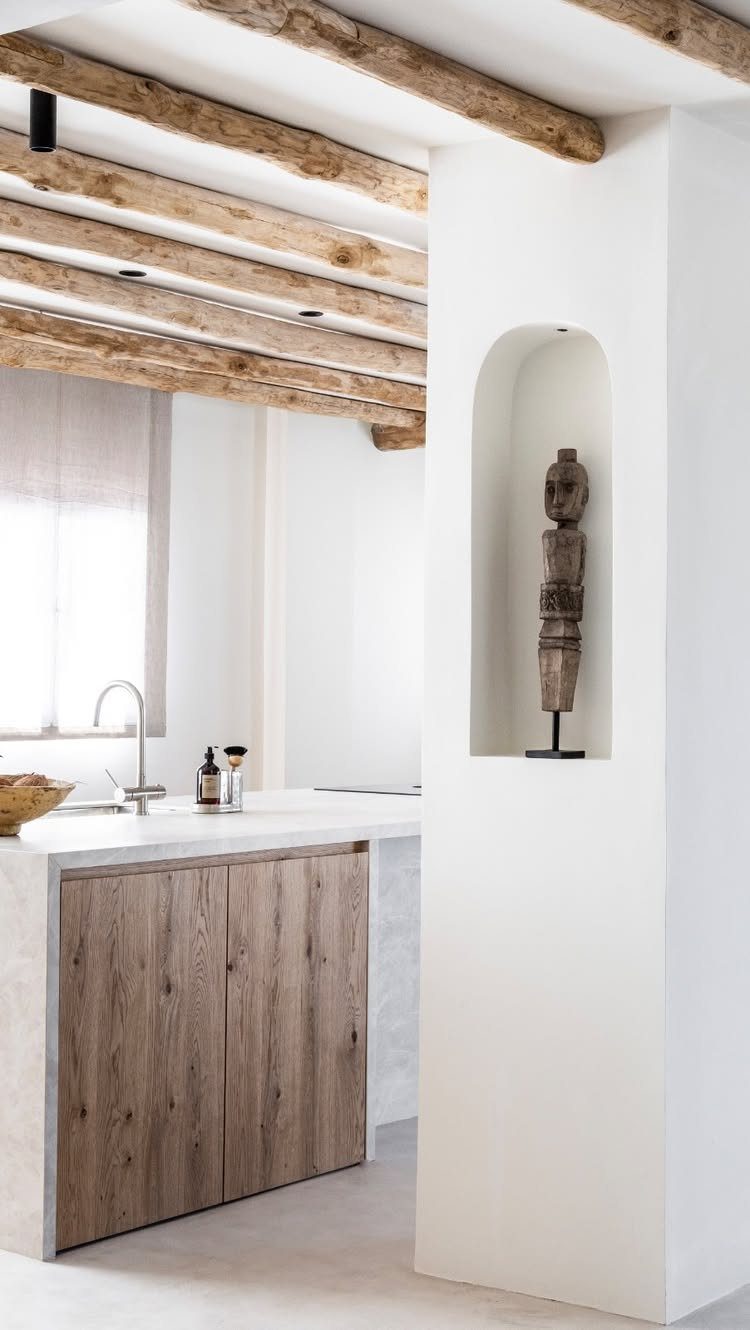
Heavy ceiling beams, light wood cabinetry and a wood-paneled island make a white kitchen feel warm instead of sterile.
For a rental or a tight budget, a few wood pieces still help: a cutting board, a wooden stool or a bowl in plain sight.
In a full remodel, choose one dominant wood tone and repeat it, so the beams, cabinets and accents read as one palette.
4. Farmhouse Sink
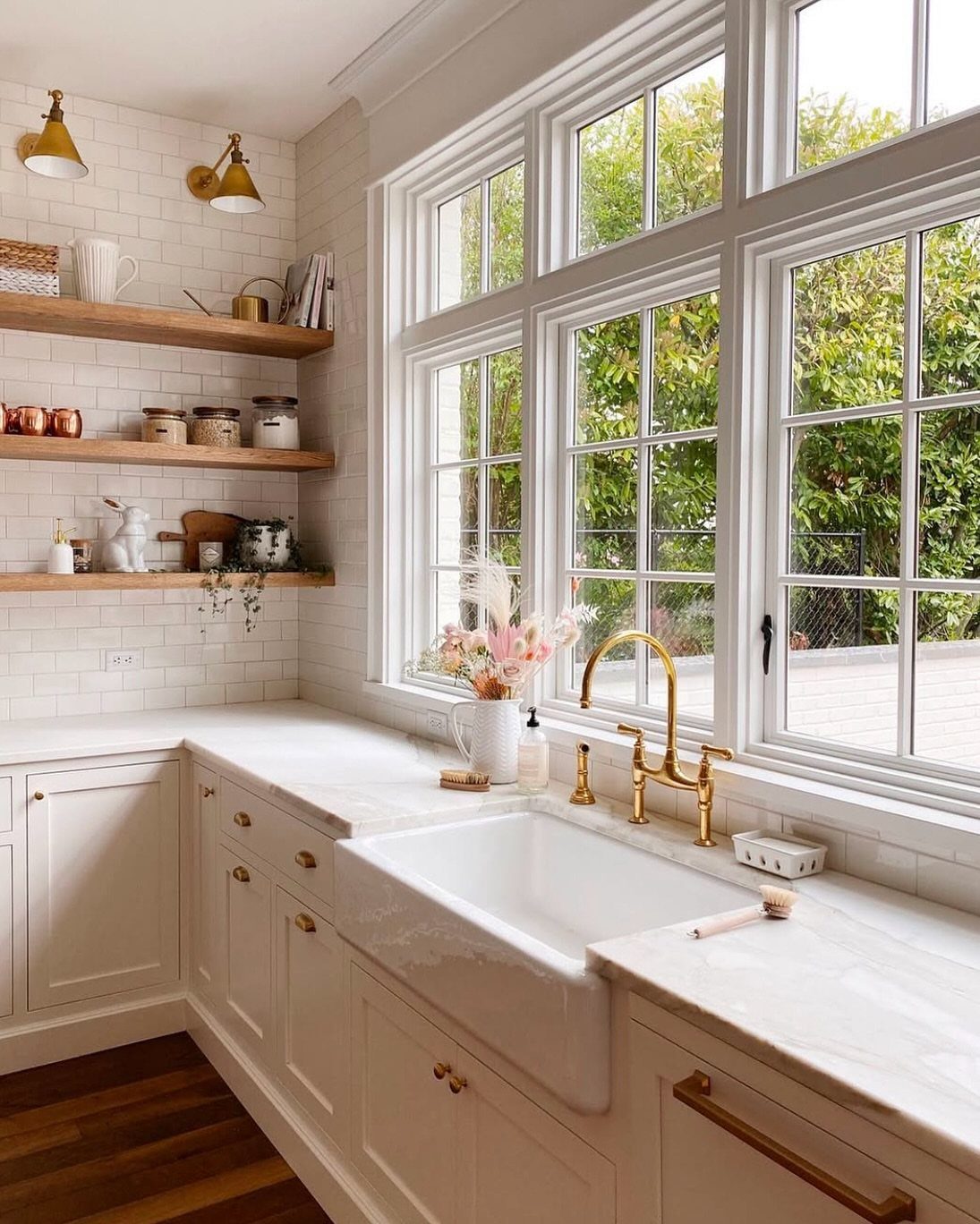
A deep, white apron-front sink gives the kitchen a clear focal point. A gold faucet adds a warm contrast against the white porcelain, especially under a window with a view of greenery.
The bigger basin handles large pots and baking sheets better than a standard sink. Check your base cabinet before ordering, since apron-front models usually need the cabinet front cut or adjusted to fit.
5. Sage Green Cabinets
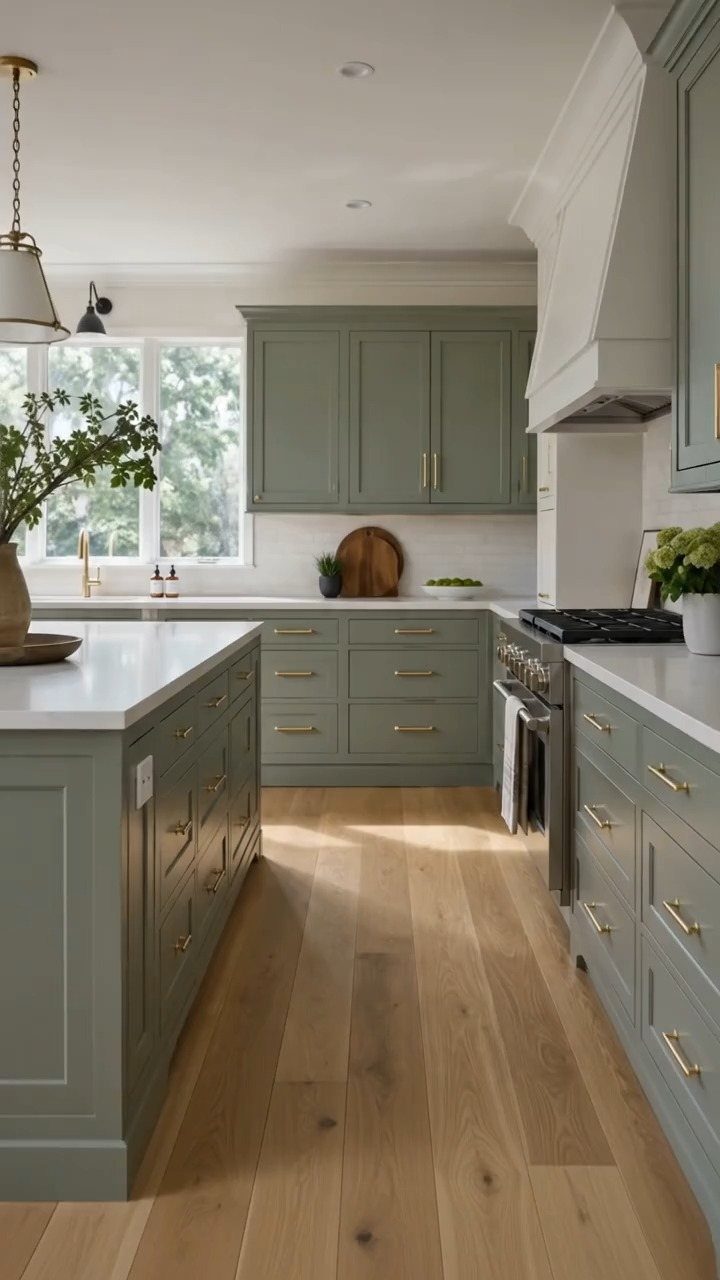
Sage green is a soft, gray-leaning shade that calms a kitchen without darkening it. On shaker cabinets, it pairs easily with white countertops and light wood floors, and a large window keeps the color looking fresh through the day.
Painting existing cabinets is the cheapest route to this look and a realistic weekend project. Test a sample on a door first and check it in morning and evening light, because green shifts more than most colors.
6. Painted Shaker Cabinets
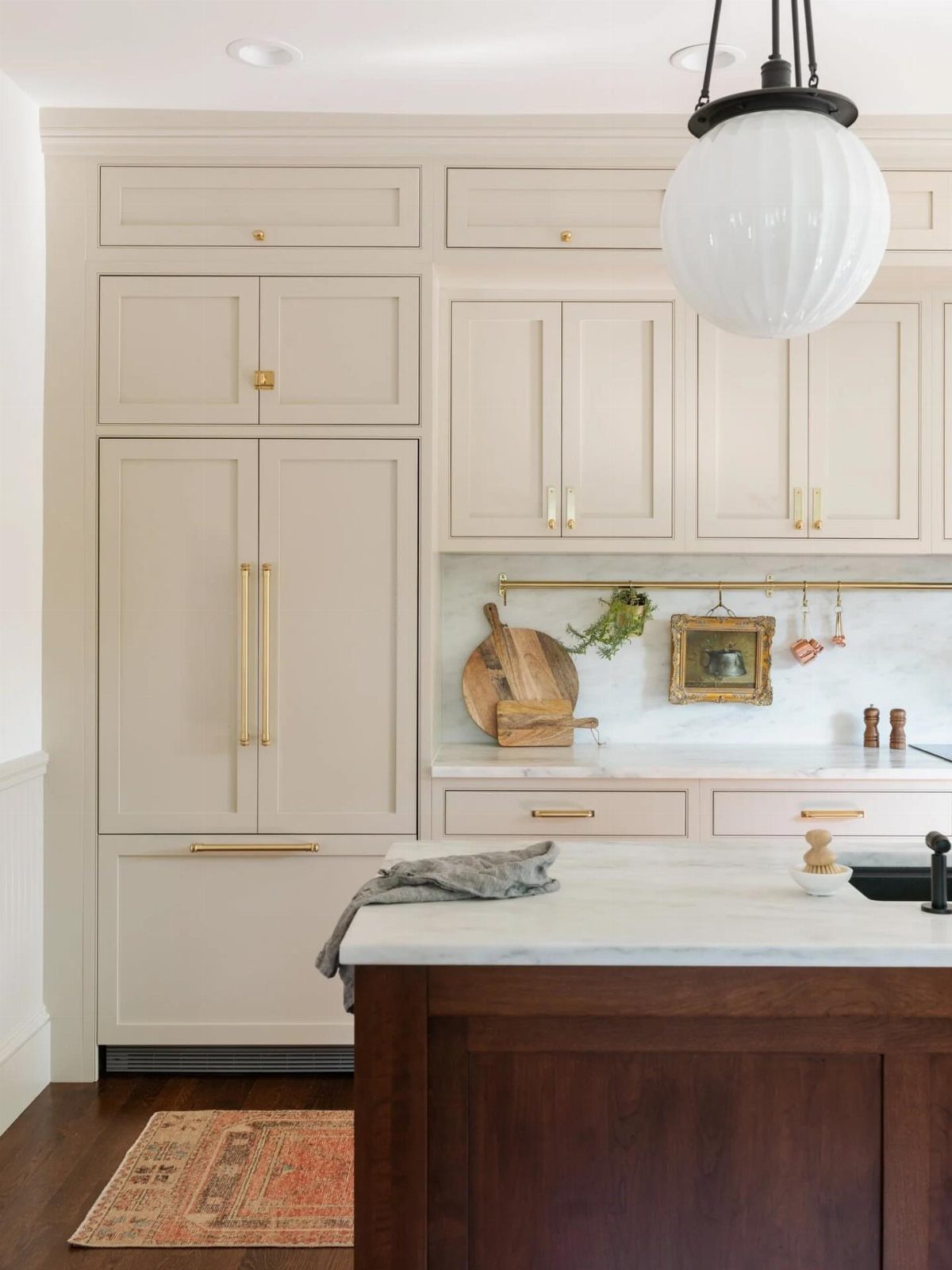
Cream paint on shaker doors, a simple flat panel set in a frame, gives a cottage kitchen its handmade look without fussy detail.
I prefer cream to stark white here because it reads softer next to warm metals. If your doors are already shaker style, new paint and hardware can change the whole room for a modest cost.
7. Butcher Block Countertops
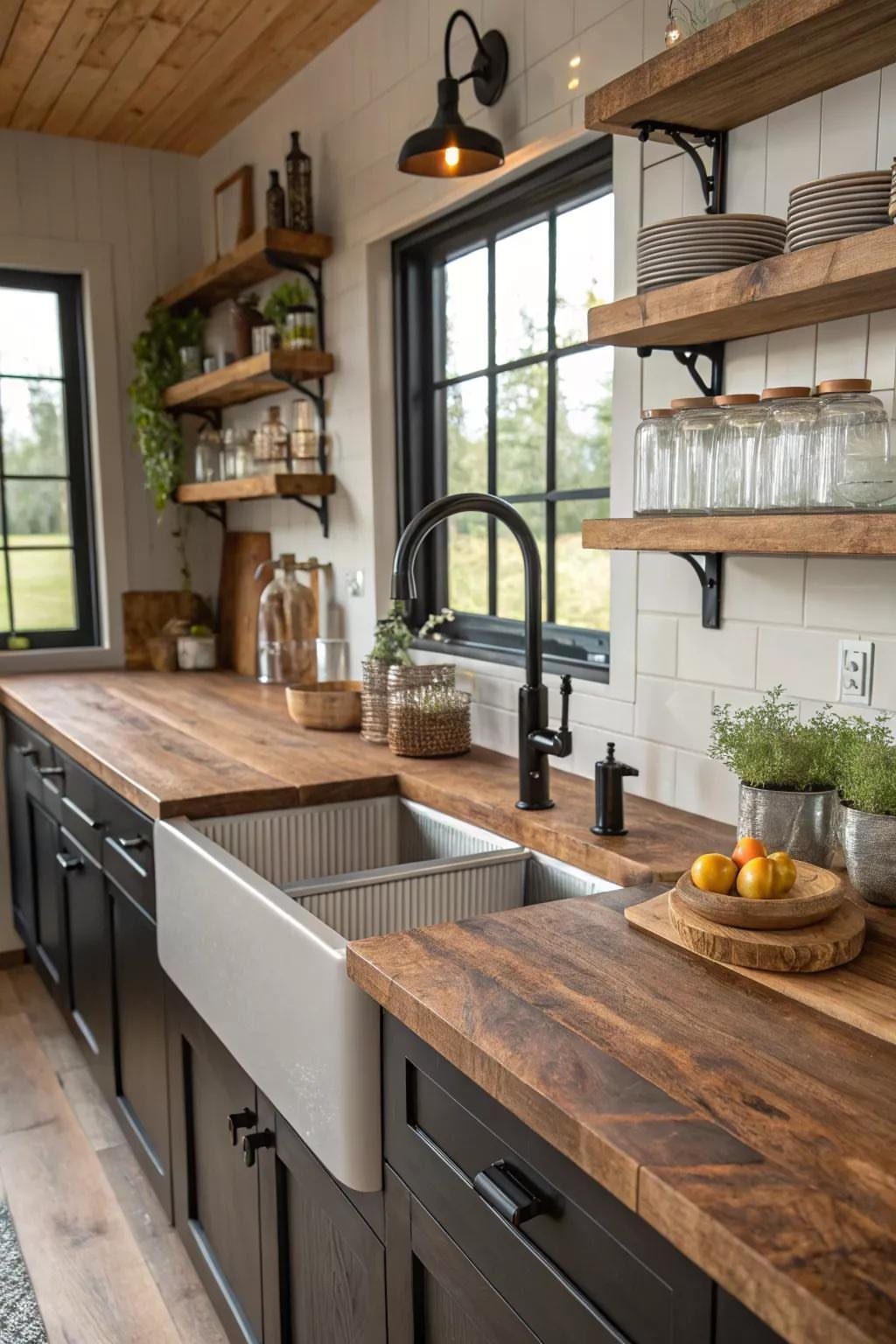
Black cabinetry can feel heavy, and thick butcher block on top is what warms it up. Knife marks and water rings settle into the wood over time, which suits a cottage kitchen better than a surface that stays perfect.
Repeating the same wood on the open shelving above the counter makes the counter and the wall read as a pair. A thick, visible edge looks more convincing here than a thin slab.
8. Freestanding Island
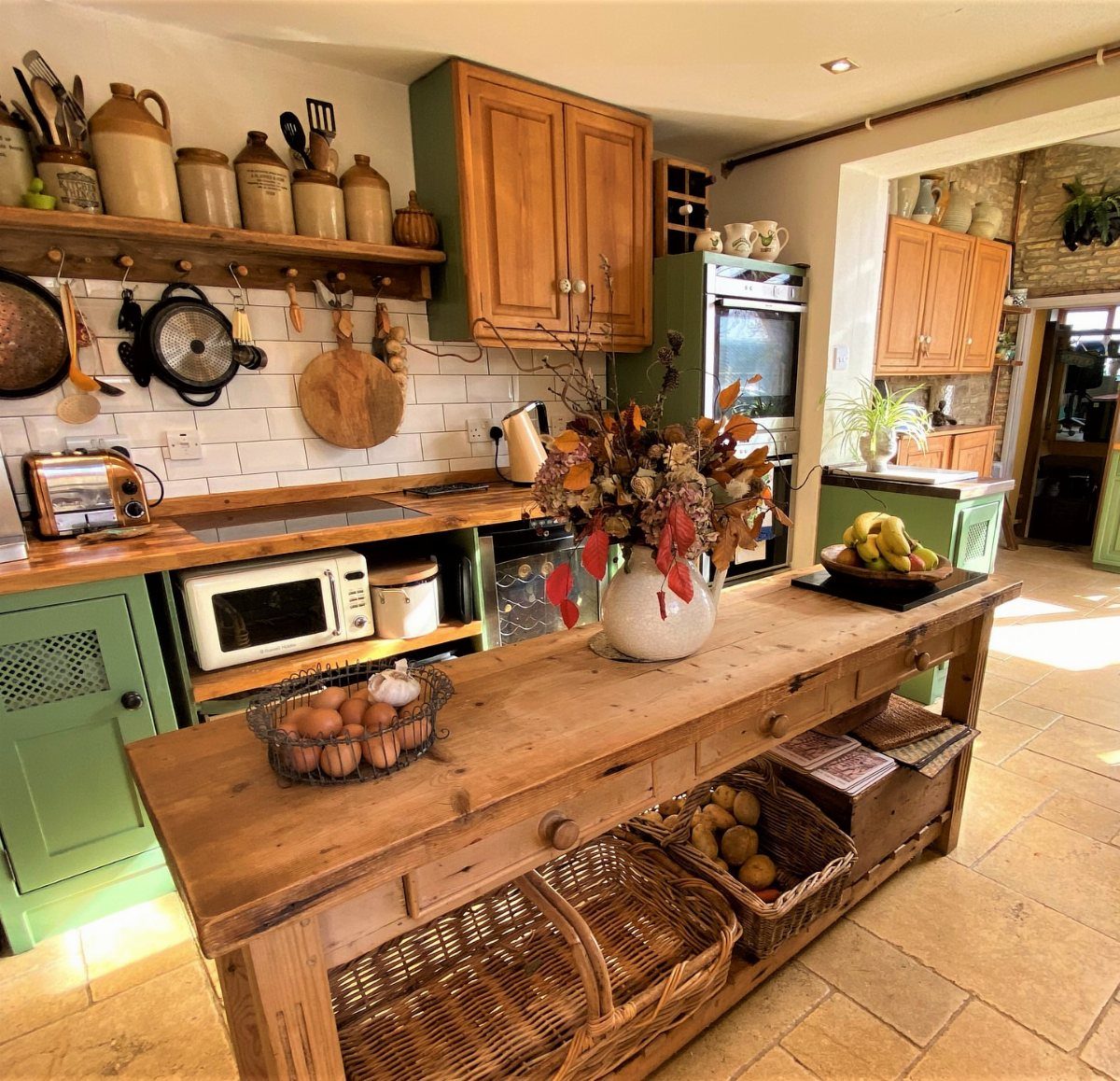
An island on legs, with open space beneath, keeps a kitchen feeling like a furnished room instead of a built-out one. Wicker baskets below take the place of cabinet doors and hold towels, produce or pantry overflow.
Against green cabinets, I would choose a wood top and leave it plain. Before buying an island for a small kitchen, measure the walkway on every side and tape the footprint on the floor.
9. Farmhouse Table
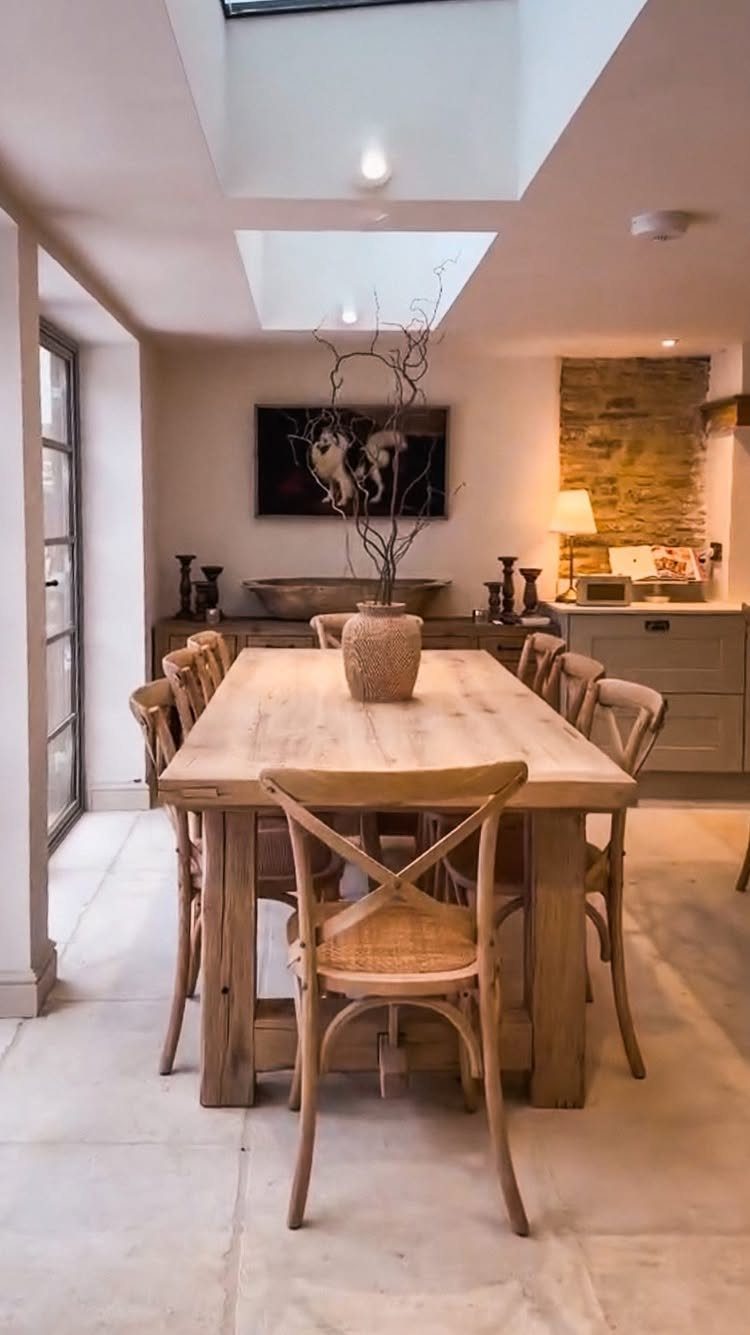
Where an island won’t fit, a farmhouse table does the job and then some: it handles prep, breakfast, homework and dinner.
Light wood and cross-back chairs keep a farmhouse table airy, and a vase of bare branches makes a centerpiece for next to nothing.
If the room is tight, pick a narrower table over a smaller number of chairs. A table people can sit around is what turns a kitchen into the place everyone ends up.
10. Beadboard Walls
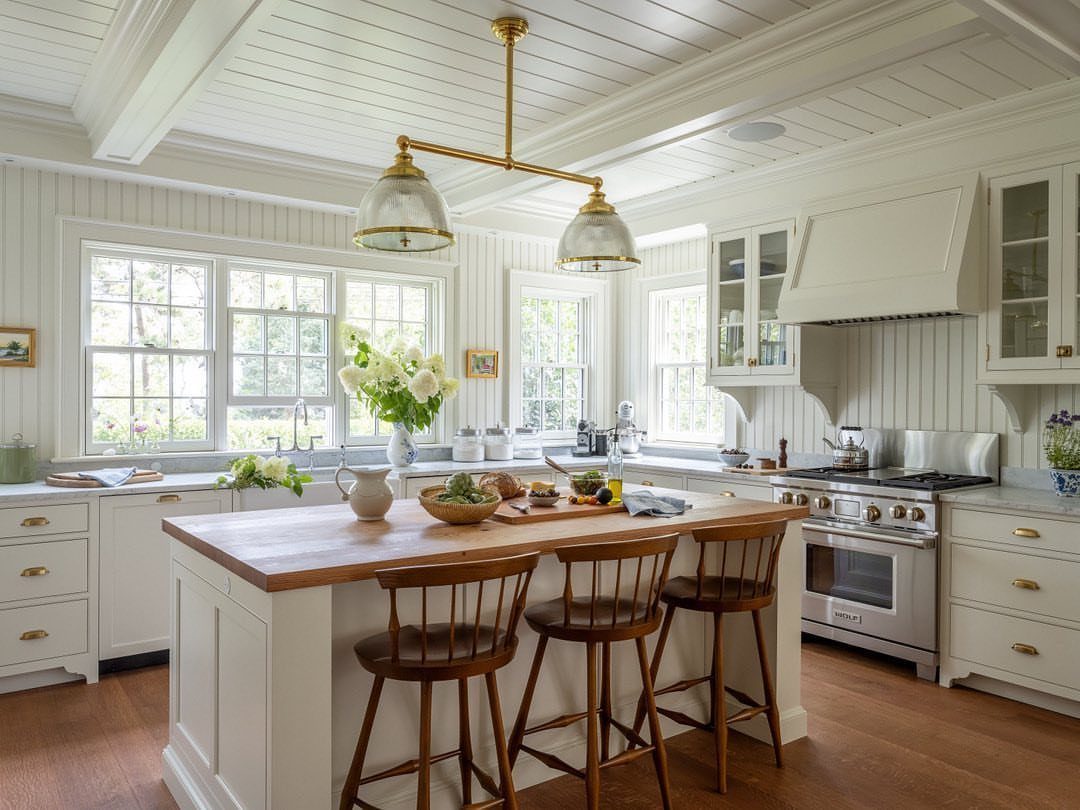
Painting the walls and the ceiling the same white makes beadboard wrap the whole room, which is the most traditional way to use it.
The vertical grooves add texture without adding color, so a brass light fixture and a wood island stay the focus.
Paneling doesn’t have to cover everything. Even one wall or the ceiling alone brings in the cottage character.
11. Floral Curtains
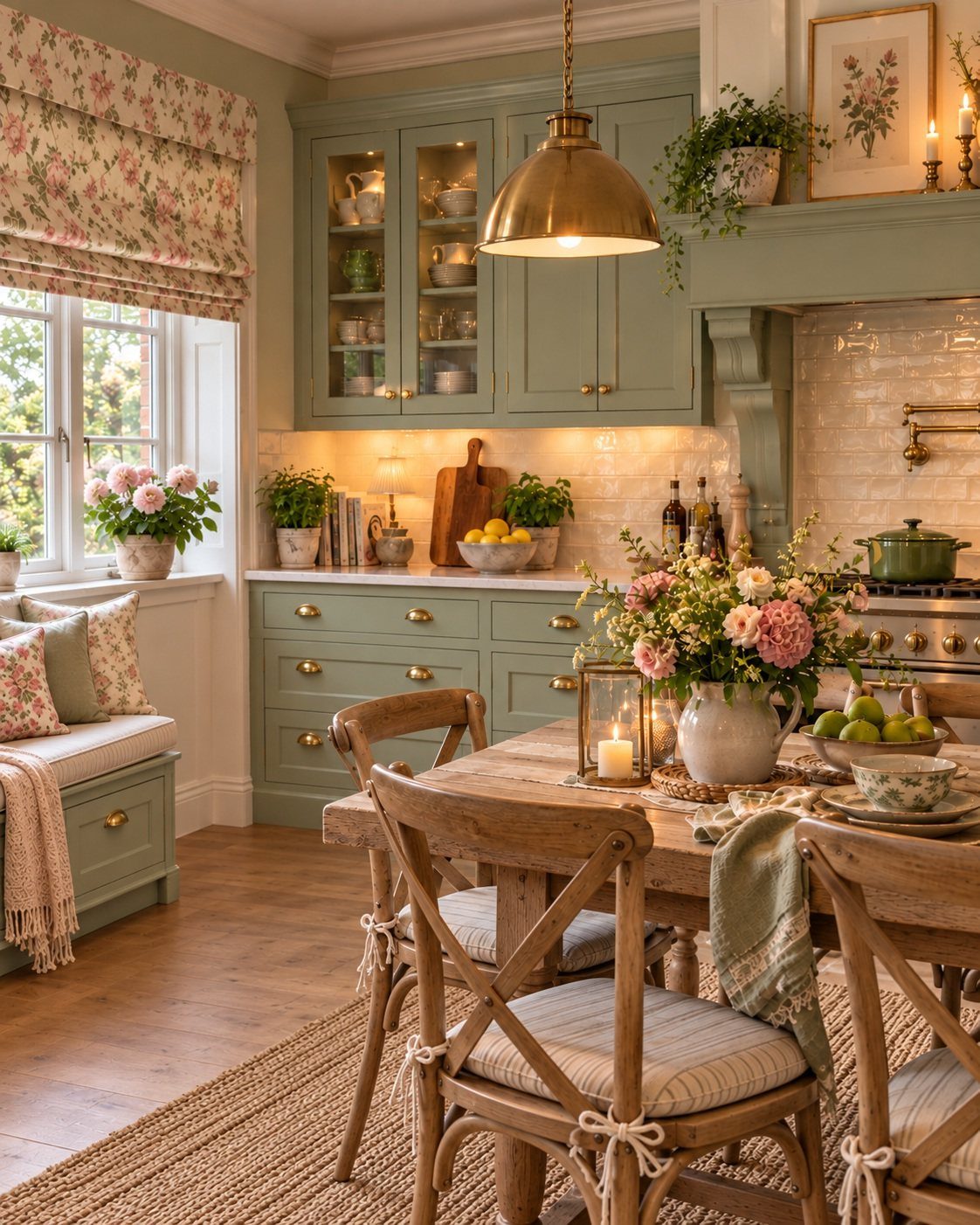
A single printed window is the safest place to try a bold floral, because one Roman shade takes little fabric.
Against plain sage green cabinets, the pattern becomes the only print in the room, so let it be a lively one.
Pick a floral that includes a green close to your cabinet color, and the two will look planned. Roman shades also sit flat to the glass, which keeps the sink area tidy.
12. Reclaimed Wood Shelves
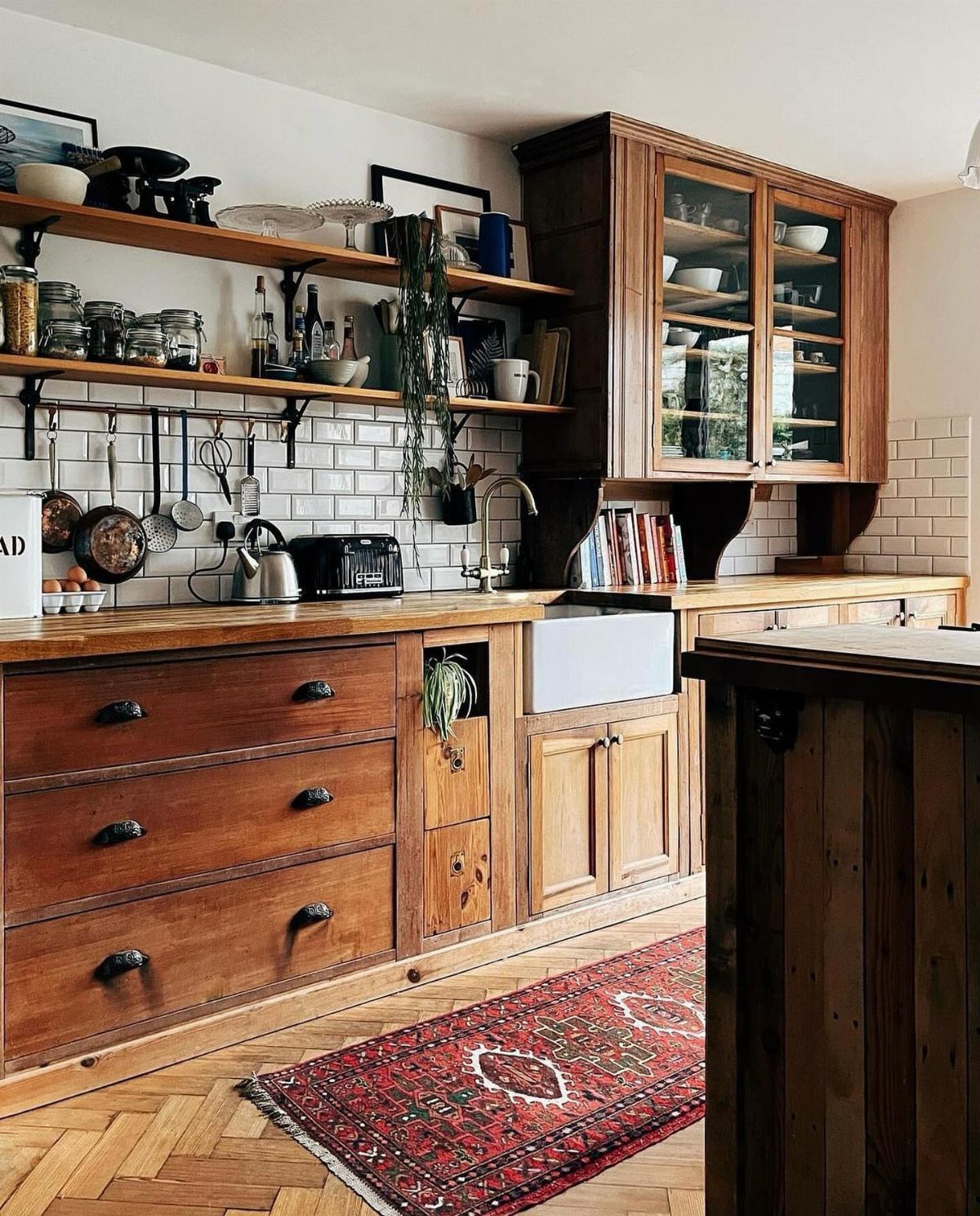
Boards with nail holes, uneven color and worn edges give a kitchen visible history that new lumber has to imitate.
Clear glassware looks good against that darker, textured grain, and a white subway tile backsplash keeps the wall behind them calm.
Reclaimed boards vary a lot, so choose them in person and look at each face. I would take the one with the most character over the cleanest one.
13. Vintage Wallpaper Feature Wall
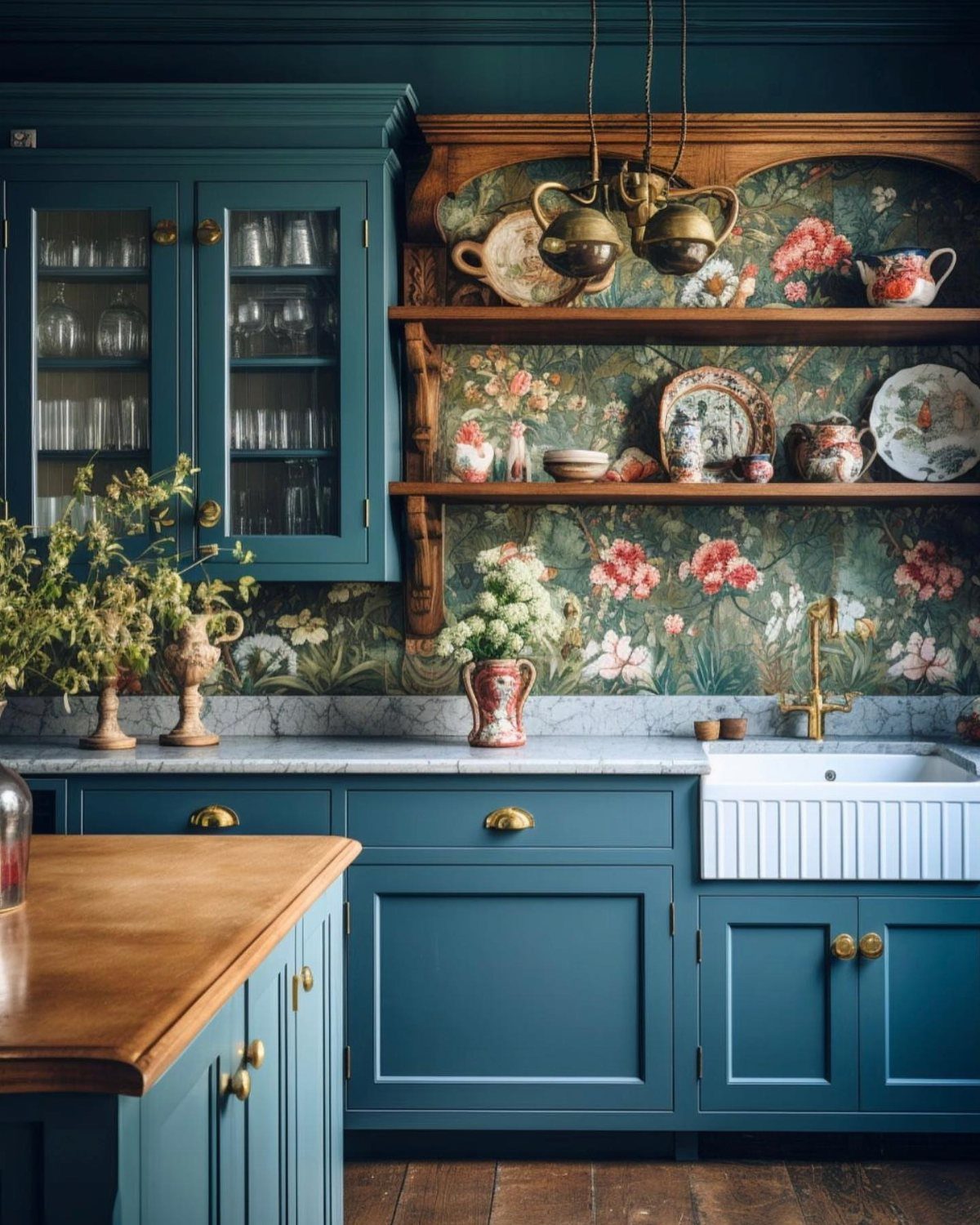
Floral wallpaper behind open shelving turns a plain stretch of wall into the thing people ask about. Against dark blue cabinets, the pattern gives the wall depth, and ceramics on the shelves stand out in front of it.
Limit the paper to one wall so it reads as a feature, not a pattern overload.
Pull one color out of the floral, like the sage in a leaf print, and match your cabinet paint to it so the wall reads as part of the plan.
14. Farmhouse Table Seating
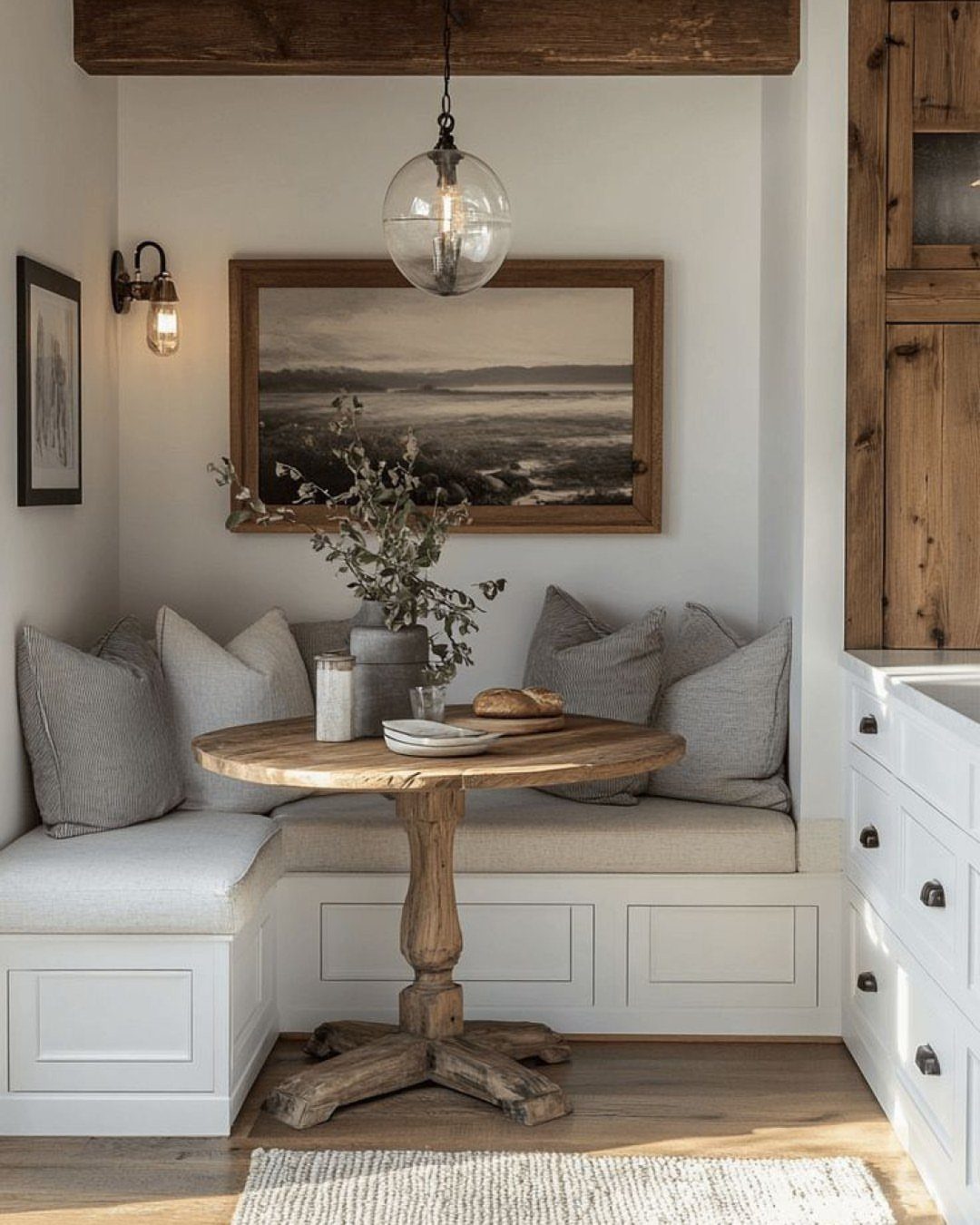
A round pedestal table with a built-in corner banquette gives a kitchen a seat people want to linger in.
With no table legs in the way, the round top lets a few more people squeeze in than a square one would.
Soft pillows in neutral shades make the bench comfortable for long breakfasts. For a small kitchen, a corner banquette uses a spot that would otherwise sit empty, and I would pick it over a row of separate chairs.
15. Blue Retro Fridge
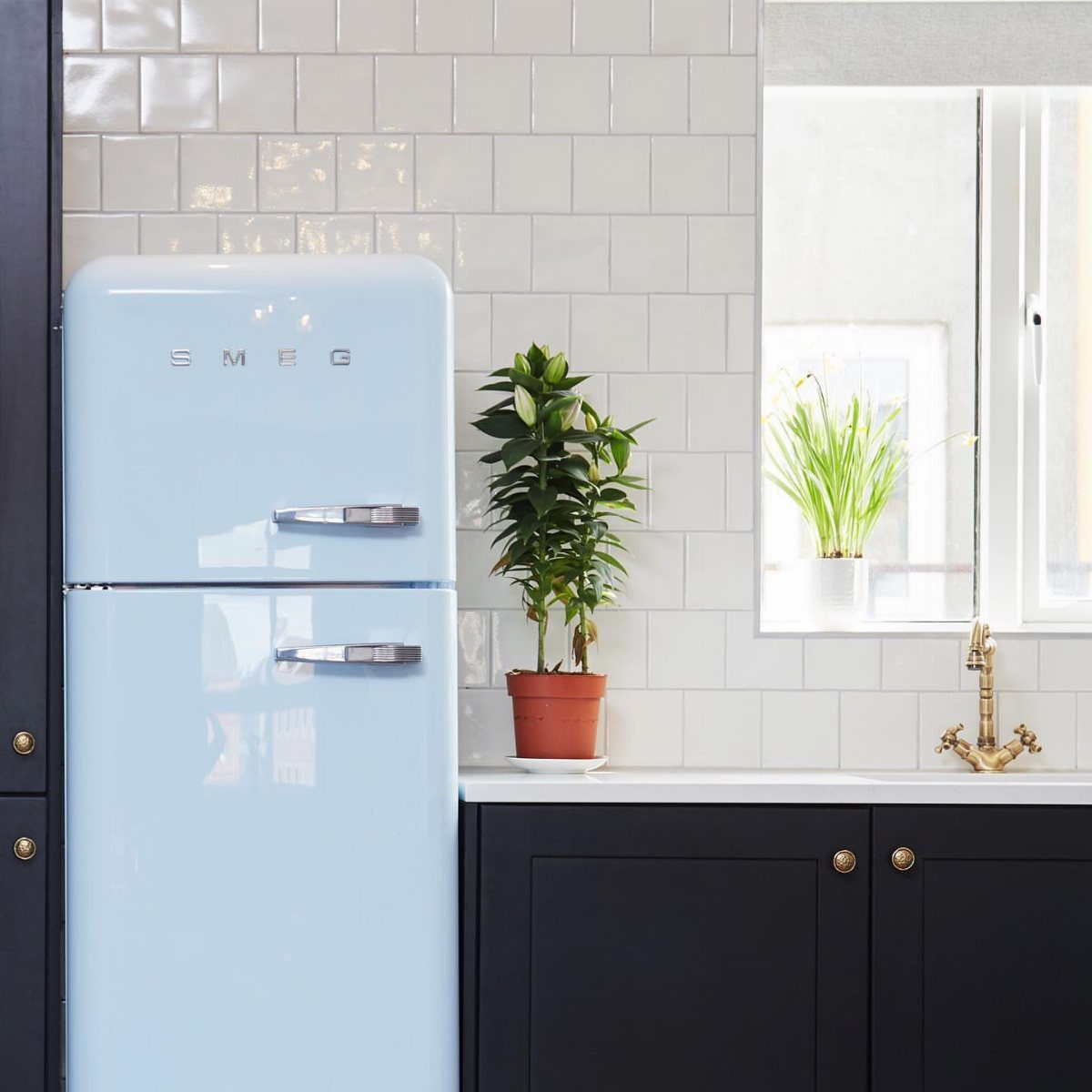
Navy cabinets and white tile are a calm backdrop, so a light blue retro fridge becomes the one piece the eye goes to first. Keeping the surrounding colors quiet is what lets a curved, colorful appliance look deliberate.
Because the fridge is the star, I would skip colored accents nearby. A single potted plant beside it is enough.
Retro appliances usually cost more than standard ones, so decide whether you want this as your focal point before you buy.
16. Compact Galley Kitchen
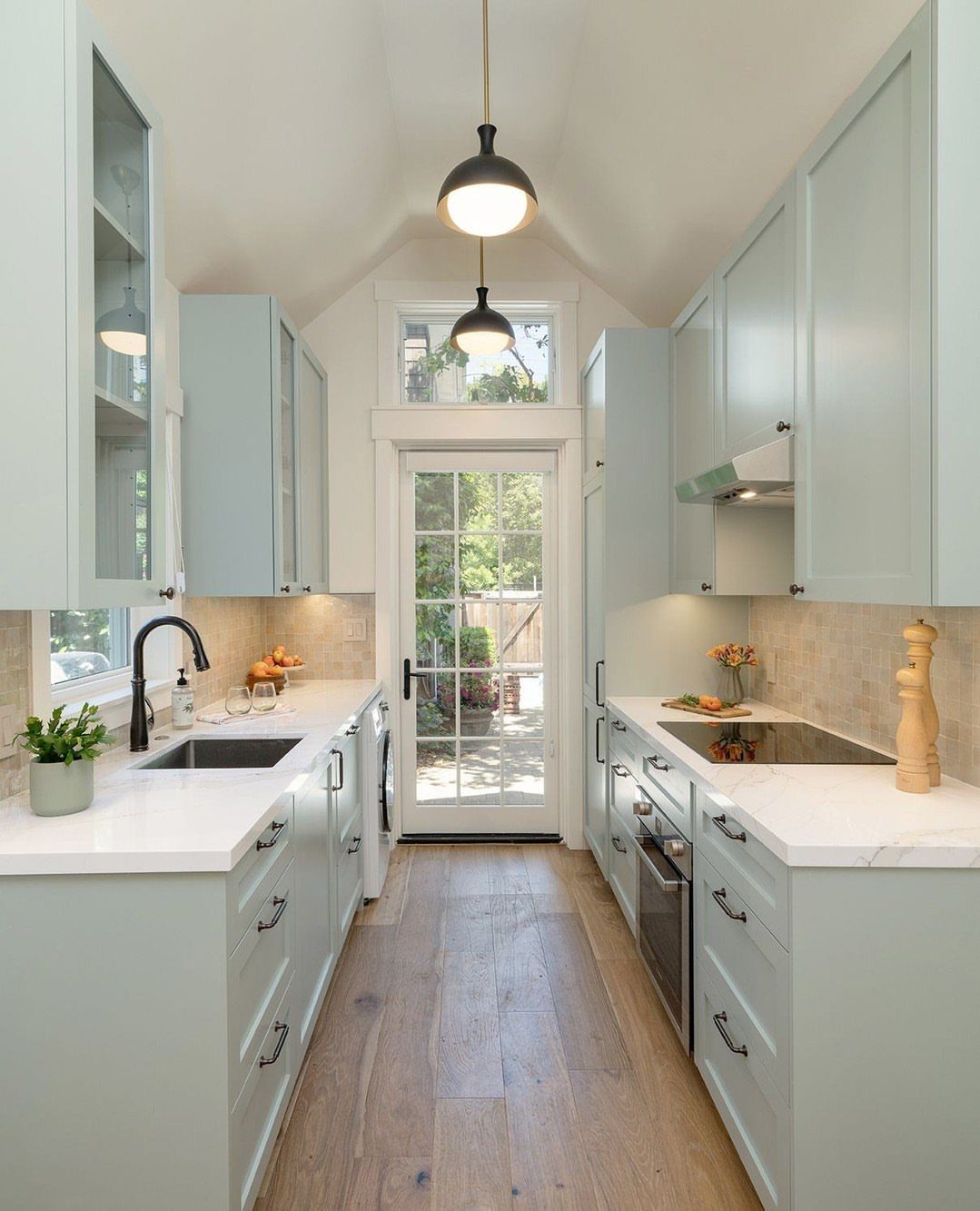
Pale colors bounce light down a narrow room instead of closing it in.
A glass door at the end pulls the eye outside and makes the space feel longer. If your galley lacks one, keep the far end clear so the view runs straight through.
17. Ceiling Clothes Maid
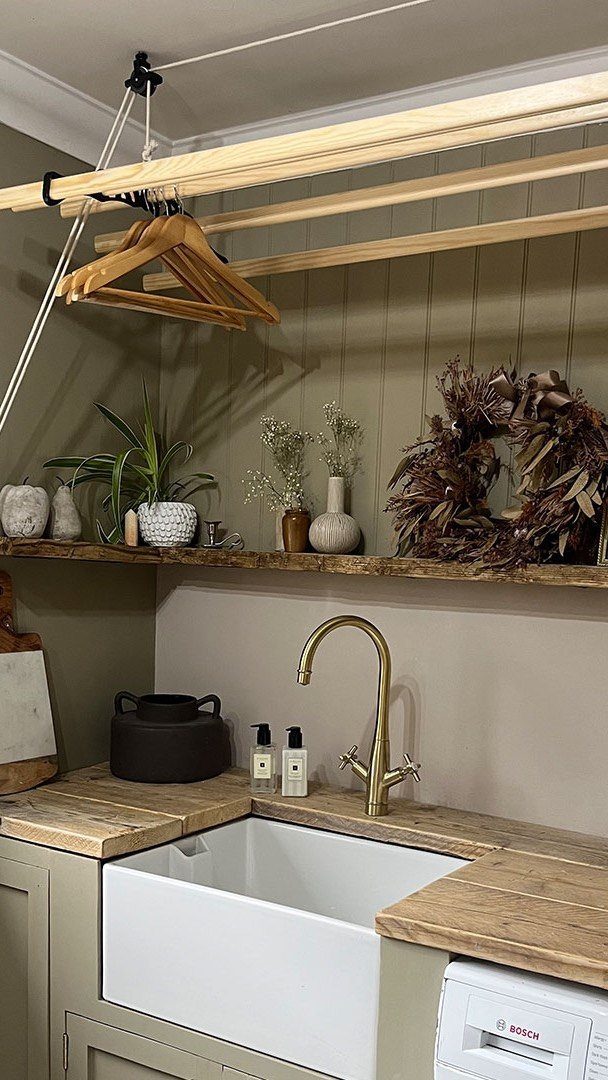
A wooden drying rack mounted to the ceiling puts wet laundry above the sink, where drips land in the basin and the floor stays dry.
It also keeps clothes off the counters and out of the way when the rack is raised.
Hang it where you can reach the cord easily, and anchor it into a ceiling joist, since damp clothes add real weight. In a laundry nook, the rack saves floor space a freestanding drying rack would take.
Preserve Original Architectural Features
Before you paint, replace, or tear out anything, look at what the kitchen already has. A Victorian range, stone walls, ceiling beams, and original quarry floors are the parts a new kitchen can’t buy, so keep them wherever they’re sound.
Pick one of them as the focal point and build around it. If there’s an old range, keep the area near it plain so it reads as the star of the room.
Simple neutrals on walls and cabinets give these features room, and so does furniture with clean, unfussy lines. If a ceiling needs restoring, reclaimed beams keep the character intact in a way new lumber won’t.
Rentals follow the same rule: you can’t change the architecture, but you can keep everything around it quiet.
Balance Cottage and Modern
A cottage look doesn’t require a cottage. In a newer or plainer house, the style comes from a few traditional details set against calm, modern surroundings.
Let one appliance, like a retro fridge, carry the vintage look and keep the rest plain and modern.
They pair well with traditional details, and a kitchen that works smoothly is easier to live with than one dressed up as a period piece.
Start with clean-lined cabinetry as the base, then bring in warmth through natural materials and one or two traditional touches. Keep ornamentation restrained, because when every surface has a detail, the room tips from cottage into costume.
If the kitchen starts to feel busy, take away the last thing you added.
Frequently Asked Questions
What defines a cottage kitchen?
A cottage kitchen puts comfort ahead of polish. It uses warm colors, soft painted cabinets and furniture that looks collected over time instead of bought as a set.
Wear is part of the appeal, because knife marks on a wood counter or a mismatched chair give the room the lived-in feel the style depends on.
How do I make my kitchen look like a cottage?
Sage green or cream paint on existing shaker doors is the lowest-cost route to a cottage look, and a weekend is enough time to finish it.
Then add open shelving for everyday dishes, a wood table with mismatched chairs, and one natural wood tone repeated around the room.
Before committing, brush a sample on one cabinet door and check it at 8 a.m. and again after dark, because green can swing from gray to minty depending on the light.
How does a cottage kitchen differ from farmhouse and modern kitchens?
A cottage kitchen is smaller, softer and more whimsical, with a collected look.
Farmhouse kitchens tend to feel grander or more industrial, and modern kitchens are sleek and minimal. Painted cabinets, worn wood and chairs that don’t match are what keep a cottage kitchen on its own side of that line.
Can I get the cottage kitchen look in a rental?
Yes.
In a rental, swap the knobs and pulls but save the originals in a labeled bag so they can go back on at move-out, then add a patterned runner, linen dish towels or a gathered curtain panel for a softer layer.
Fill any existing open shelf with the bowls, mugs and pitchers you use daily, and set a small lamp on the counter for warm light in the evening.
A cutting board, wooden stool or bowl left in plain sight brings in natural wood without changing anything permanent.