

Corner cabinets in this list run from a small oak cabinet and a vintage white piece to a built-in with a wine cooler, and how much you want on view versus hidden usually decides which one fits your room.
Glass fronts and open shelves put everything on display, while a hutch with solid lower doors takes the overflow out of sight.
1. Glass-Door Corner Cabinet
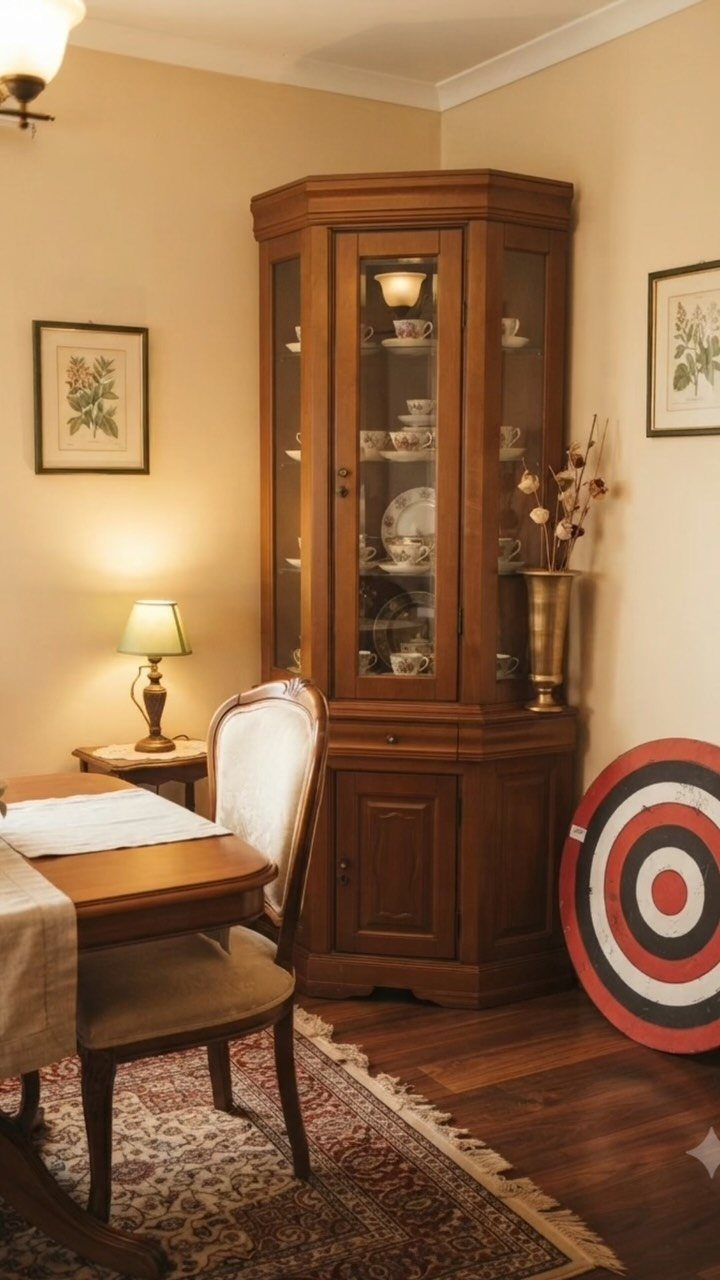
Glass doors turn a corner cabinet into a display case, so what goes inside matters more than the wood around it.
I’d stick to one color family, like the white ceramics here, so the shelves read as a set instead of clutter.
Put the pieces you most want seen at eye level, and leave a little empty shelf space so the cabinet doesn’t look packed.
2. Built-In Corner Cabinet
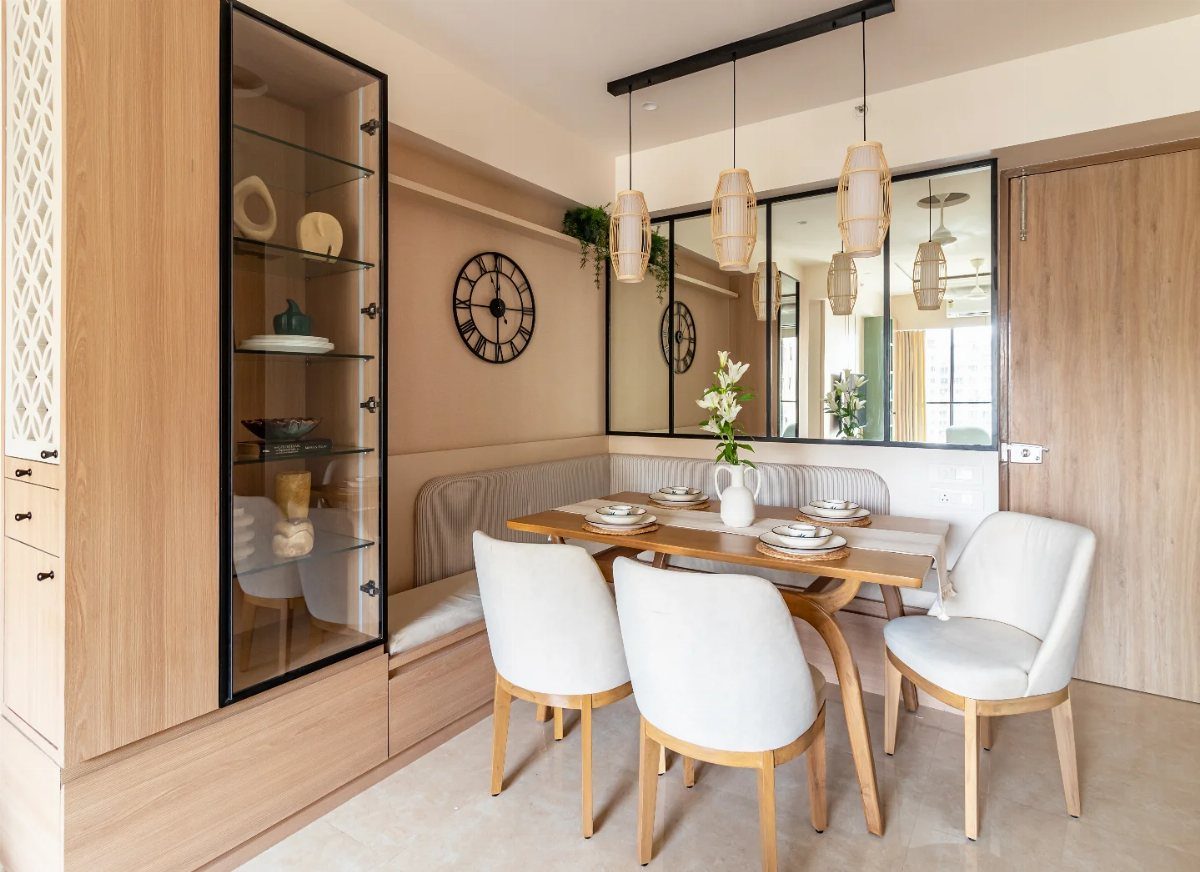
Fitted into the corner, a built-in cabinet sits flush with the walls instead of standing in front of them.
The glass door and shelves let you keep a few pieces on view without filling a whole wall. A built-in takes more planning than a freestanding piece, so I’d choose it for a home you plan to stay in.
3. Corner Hutch
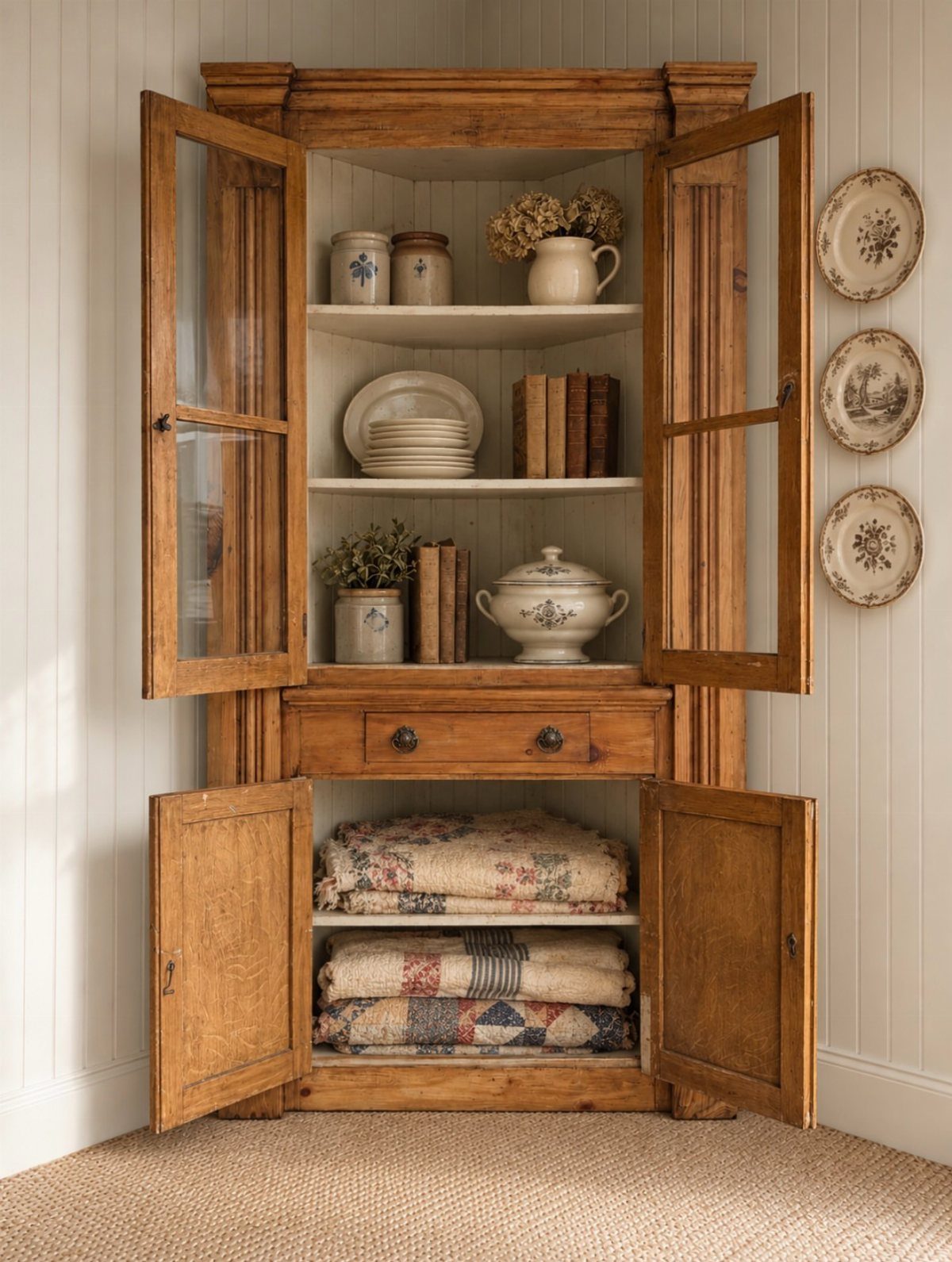
Two jobs live in one piece here: glass-front uppers for display and solid doors below to hide the rest.
I’d put dishes and a few books behind the glass and keep linens in the lower cupboards, out of sight.
That split is why a hutch earns its floor space over a display cabinet alone. The lower half takes everything you’d rather not look at while you eat.
4. White Corner Cabinet
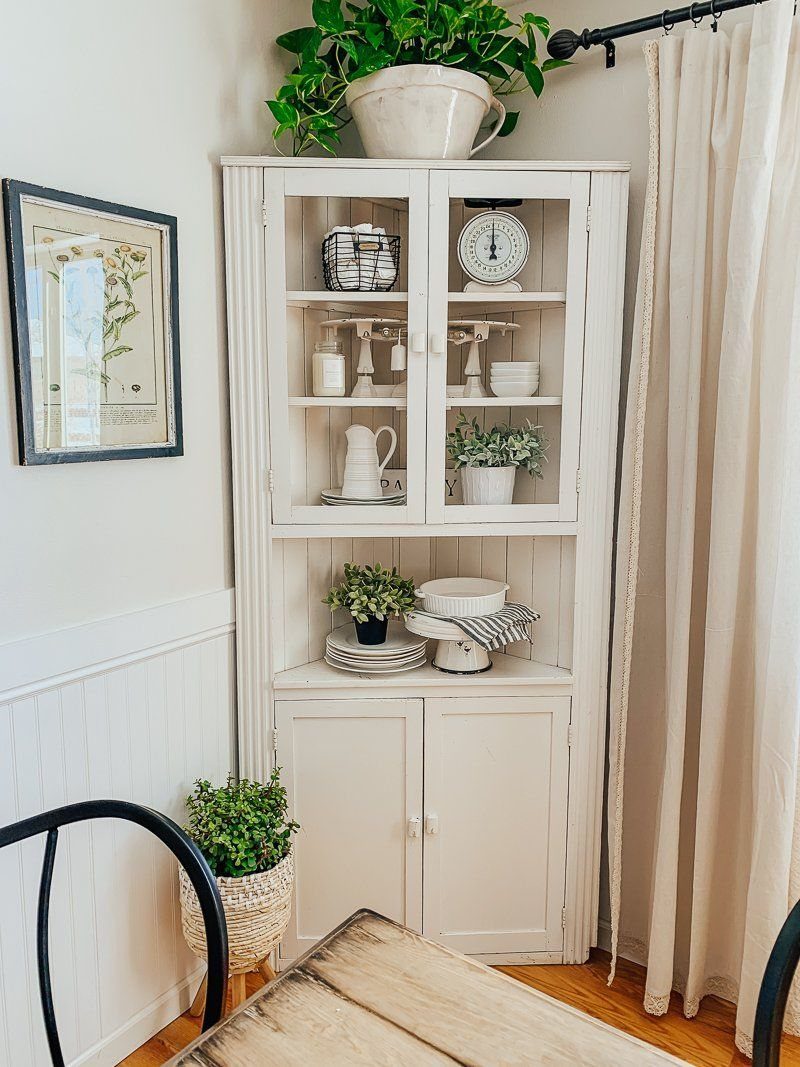
White paint keeps a dining-room corner light. White dishes inside a white cabinet blend into it, so a few plants do the work of adding color.
A small clock or a few green stems give the shelves something to break up the all-white look.
I’d go easy on the count, though. Against a finish this bright, fewer objects per shelf read cleaner than a full display.
5. Open-Shelf Corner Cabinet
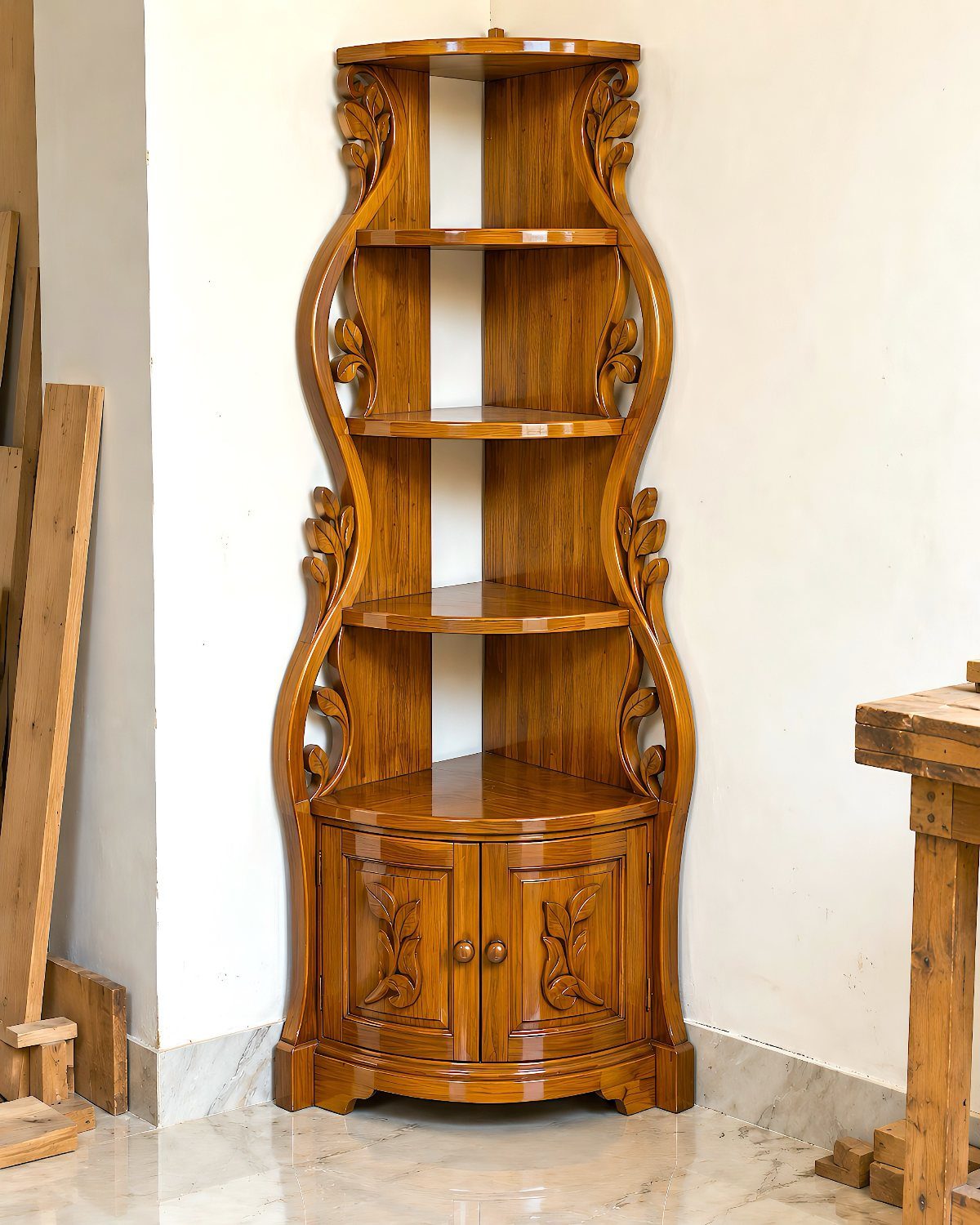
With no glass between you and the objects, open shelves are the easiest cabinet to style and the easiest to let go messy.
Reserve the shelves for a few good pieces and use the closed cupboard at the bottom for everything else.
Carved, ornate wood already supplies plenty of detail, so I’d keep what sits on the shelves simple, in one or two materials.
6. Dark Wood Corner Cabinet
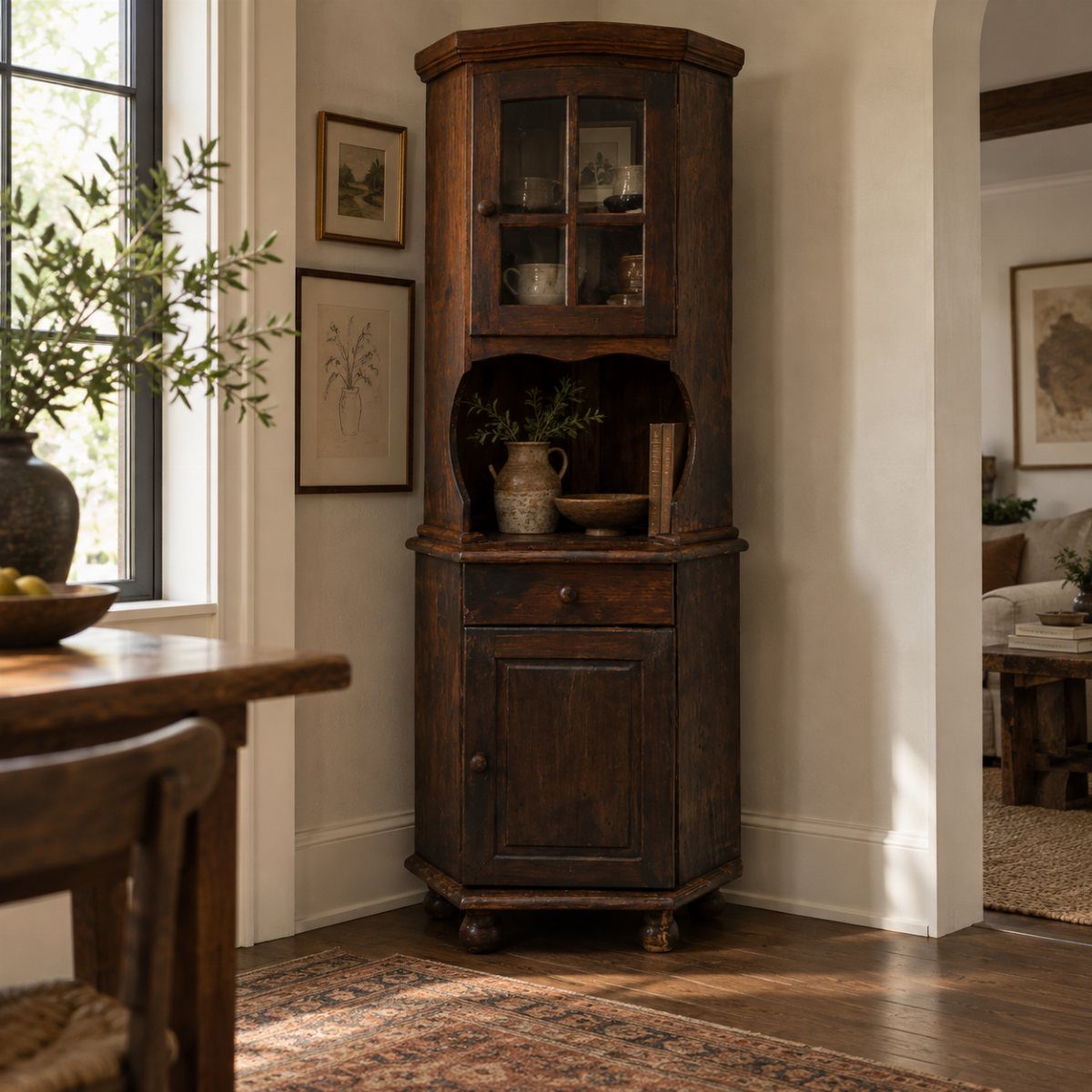
Dark wood gives a corner weight that pale finishes can’t. Glass doors keep that weight from turning into a heavy block, and the drawer and lower cupboard hold whatever you don’t want on view.
I’d set it against a lighter wall so the outline of the cabinet reads clearly. Light-colored dishes inside will stand out against the dark shelves.
7. Tall Corner Cabinet
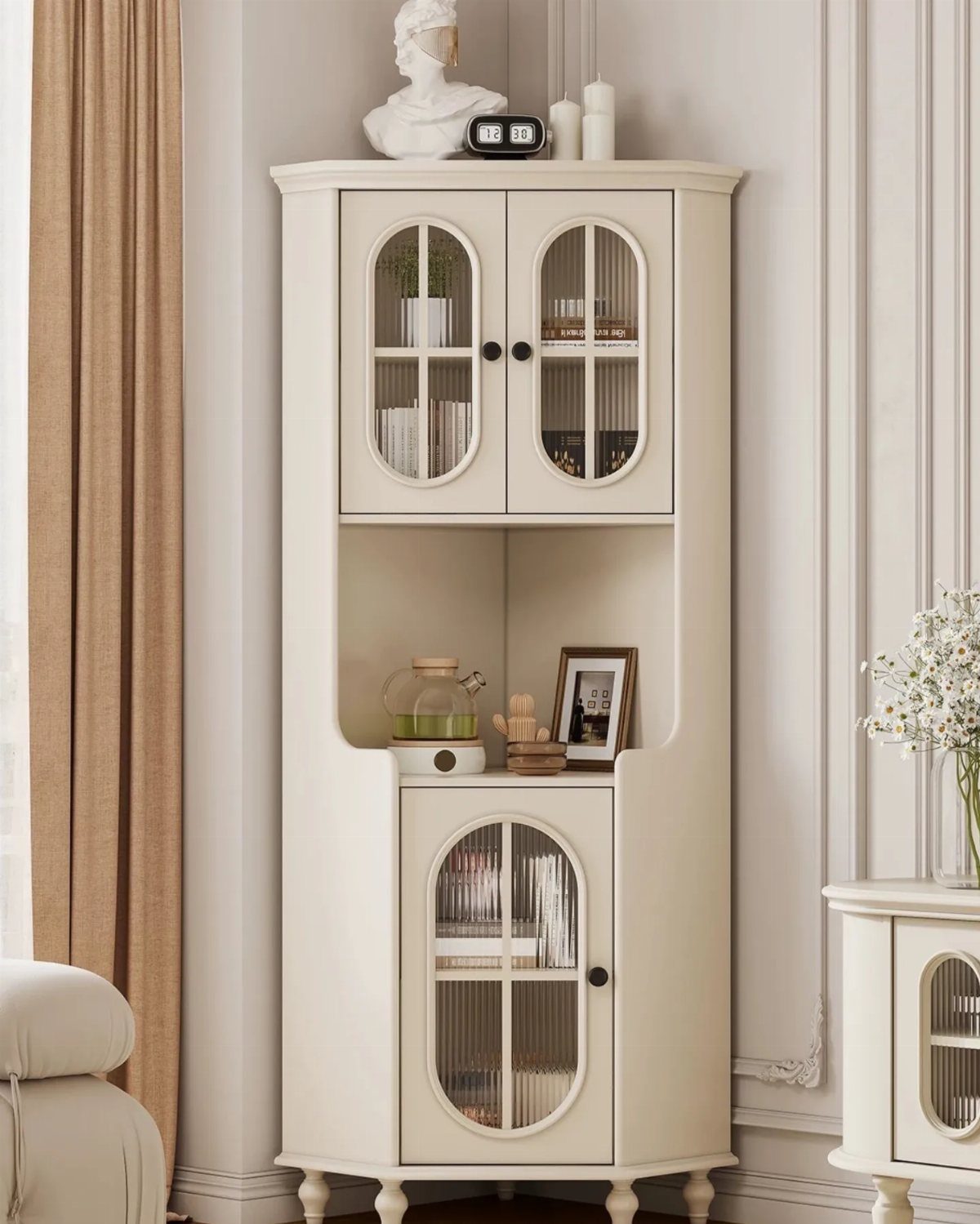
A cabinet that runs tall uses height instead of floor space, which is the smart move in a corner where width is already scarce.
Cream paint with glass doors keeps it soft against neutral walls, and the open shelf in the middle gives you a spot for things you handle often.
I’d leave the top for one or two objects, like the bust and clock here, so the eye travels up without the piece feeling crowded.
8. Dining Room Corner Decor
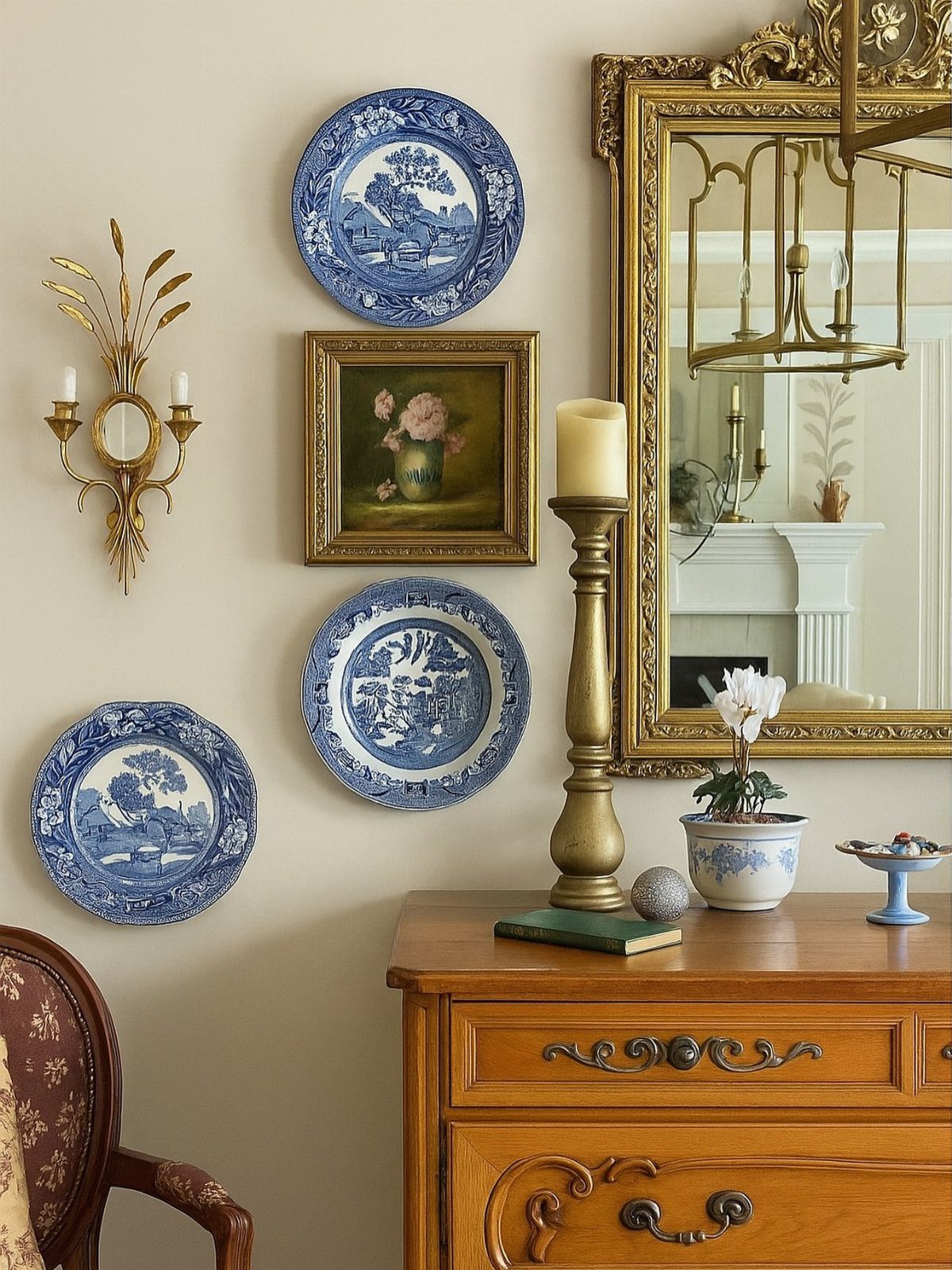
Plates on the wall do the heavy lifting in this corner, and the cabinet below just anchors them.
A candle and a bowl on the wooden top are enough. Hang the plates and mirror first, then add the surface pieces so nothing competes.
9. Corner Bar Cabinet
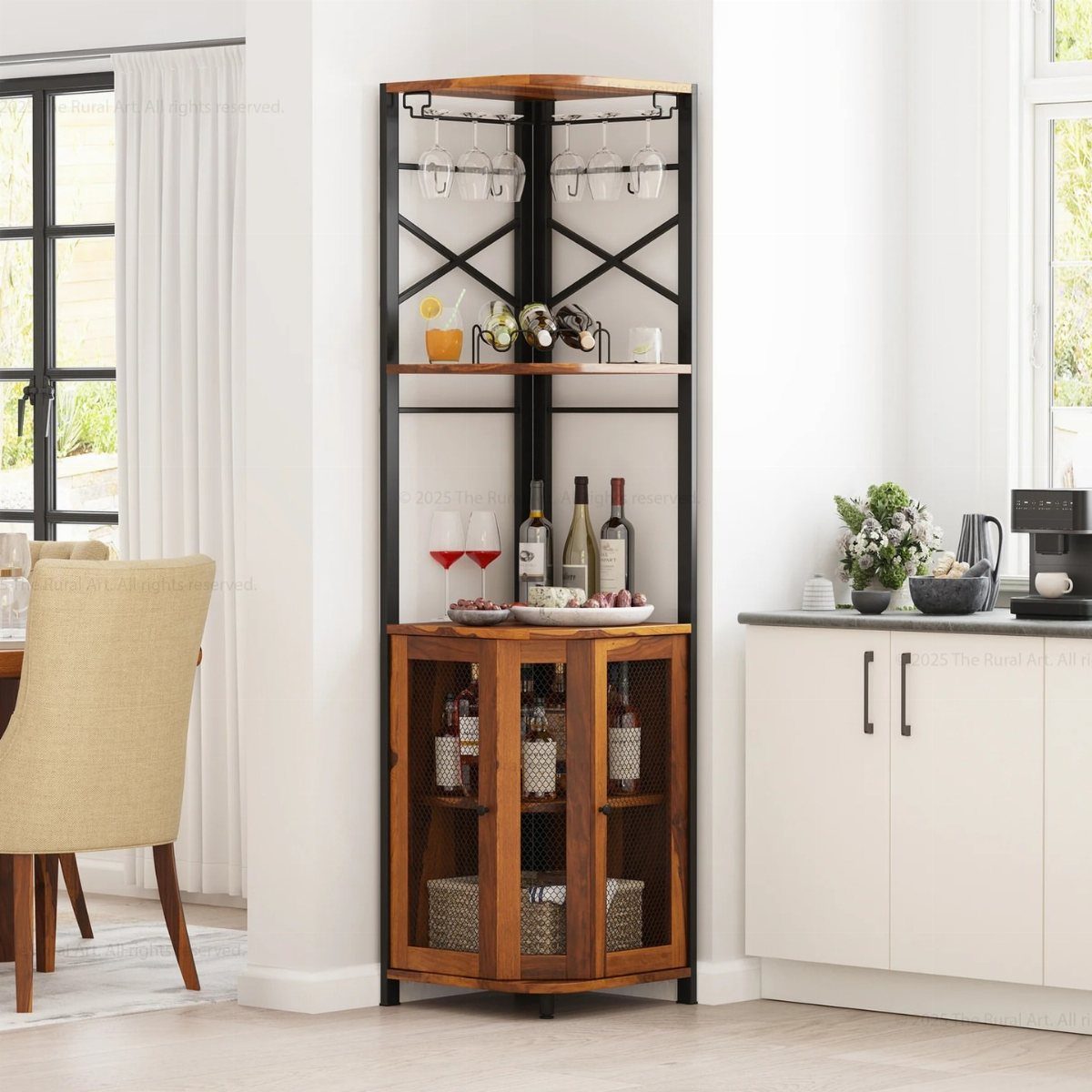
A dedicated corner gives bottles and glasses a permanent home, and a black metal frame with wooden shelves lets the storage double as part of the look.
Open shelving keeps drinkware within reach, so I’d store glasses upright on the lower shelves and bottles where they’re easy to read.
Because nothing is hidden, a tidy arrangement matters more than the number of pieces. This suits a dining area that opens onto the kitchen.
10. Green Corner Cabinet
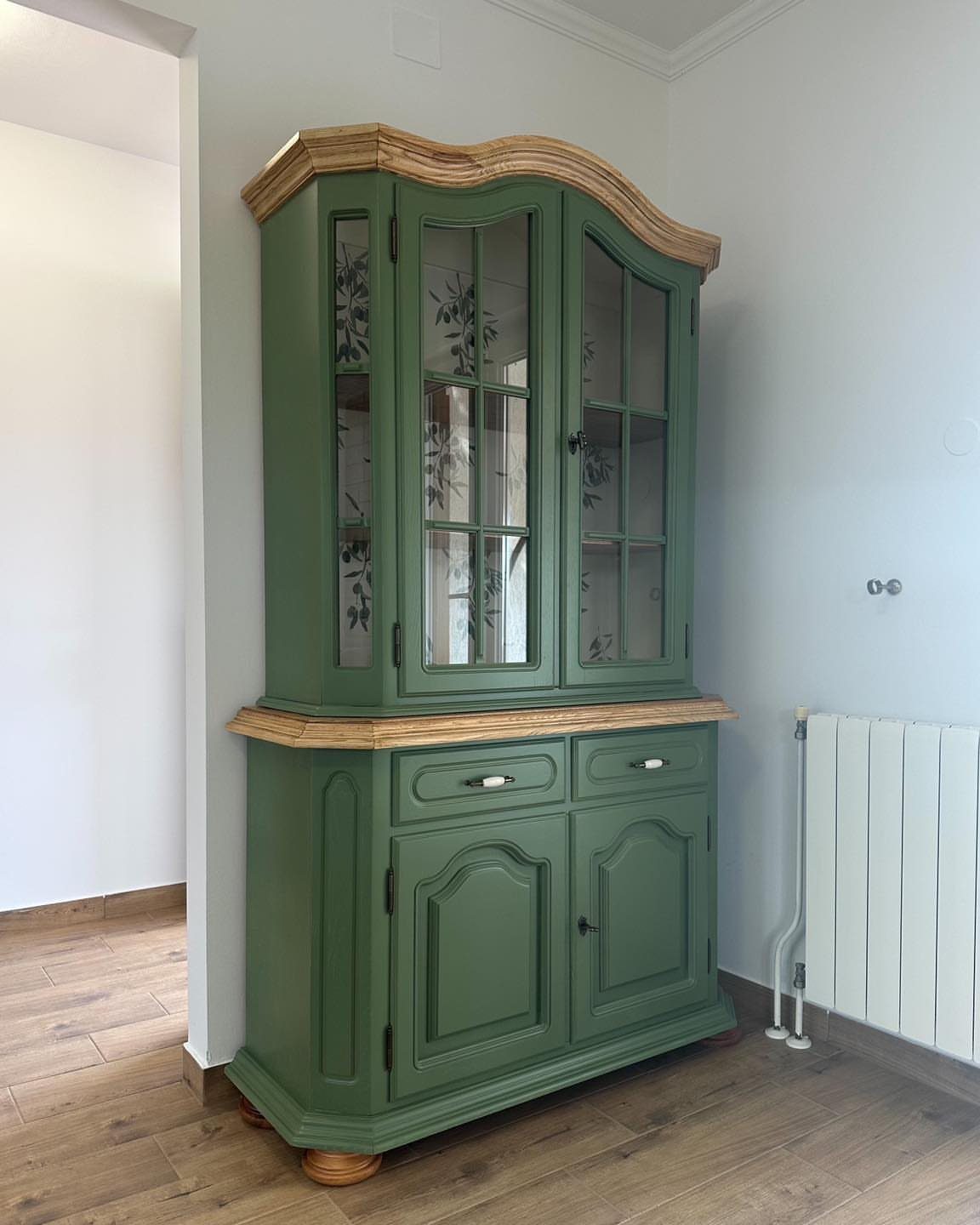
Painted green, a glass-door corner cabinet becomes the one colored piece in a room of light walls and wood-look flooring.
Wooden trim in a lighter tone stops the green from feeling heavy, and pale walls around it keep the cabinet as the focal point.
A used or unfinished cabinet is a good candidate for a repaint, since color is the whole change. Fill the shelves with simple, light-colored pieces.
11. Corner Cabinet with Lighting
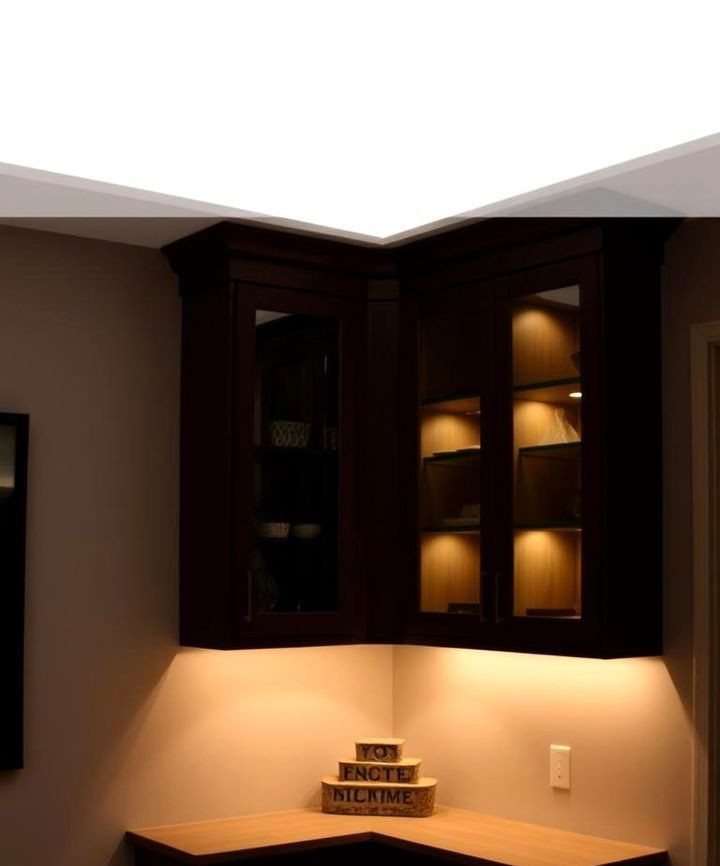
Warm light inside a glass-door cabinet makes the contents look intentional, and it’s the detail that keeps dark wood from reading as a shadow in the corner.
I’d put the lighting on the shelves where your best pieces sit, not spread across every level. Dark wood and glass are what let the glow stand out.
12. White Glass-Door Cabinet
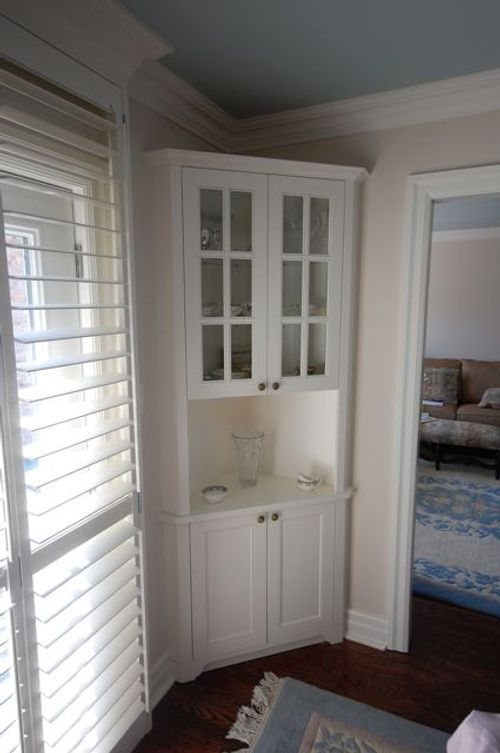
Glass on top and solid doors below is a combination I like for dinnerware: the good plates show, and the everyday overflow stays hidden.
In white, the built-in cabinet blends with the shutters and leaves the hardwood floors to supply warmth.
I’d stack plates upright on the glass-door shelves and keep serving pieces behind the lower doors. Painting the interior a shade deeper than the exterior is an option if you want the dishes to stand out.
13. Classic Wooden Hutch
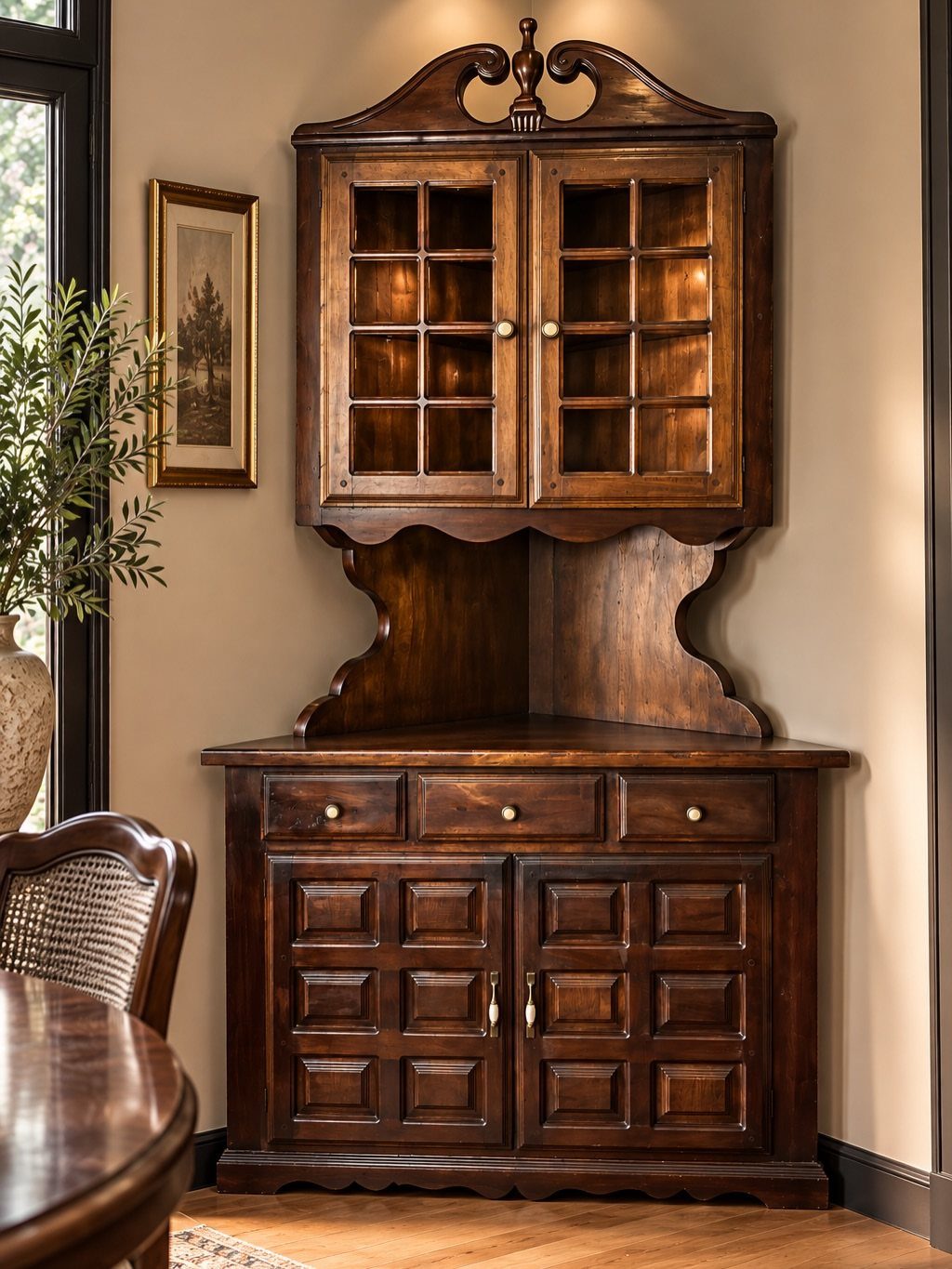
Dark brown wood carries a classic look on its own, and a corner hutch like this one needs very little added to it.
Glass fronts up top and paneled doors and drawers below mean the plain things can disappear while a few good pieces stay lit by the room.
Beige walls keep the finish from feeling heavy. I’d pick a hutch this deep in tone for a dining room with decent daylight, then let one plant nearby soften the corner.
14. Vintage Dishware Corner Cabinet
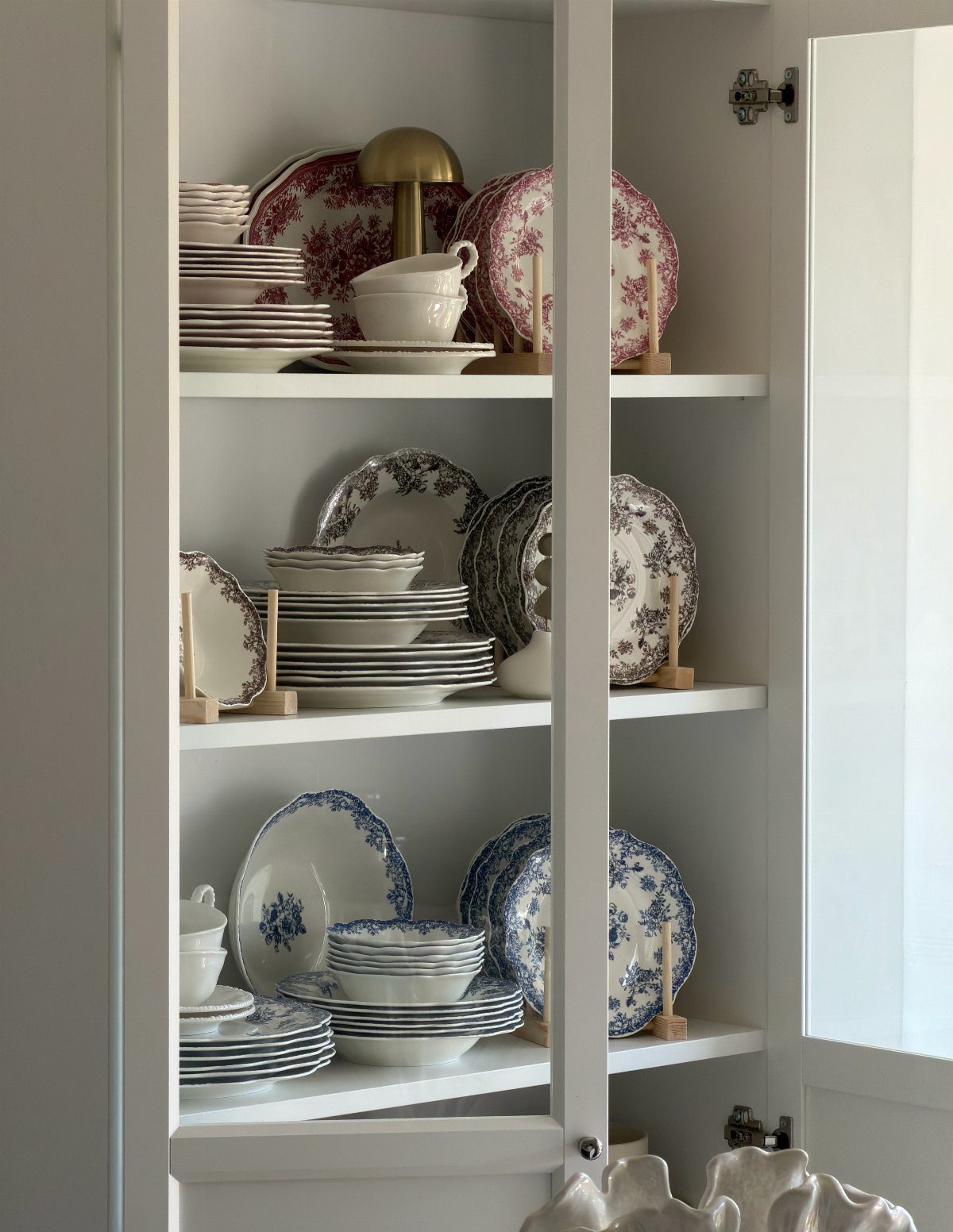
A set of matching vintage plates deserves a cabinet of its own, and a white corner unit gives patterned red, brown and blue pieces a calm backdrop.
Group by pattern so each shelf reads as one collection, and put the boldest bowls at eye level.
A small gold lamp on top adds warmth without taking shelf space. I’d skip mixing in modern dishes here; the pieces look best when the whole cabinet tells one story.
15. Contrasting Cabinet Interior
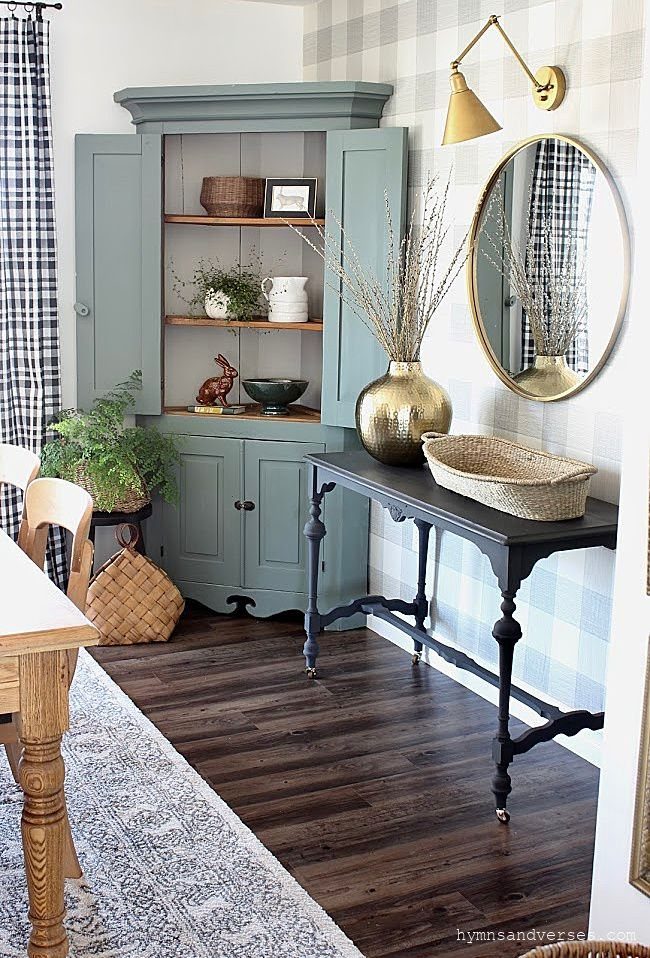
Paint the inside of a cabinet a different color than the outside and the dishes stop blending in with the box around them.
Sage green outside with a lighter beige inside makes ceramics pop against the back panel. Pick an interior shade two or three steps away from the exterior, then test it behind your actual dishes before committing.
A gold mirror and lamp nearby pick up the same warm notes, so the corner feels planned rather than filled.
16. Vintage White Cabinet
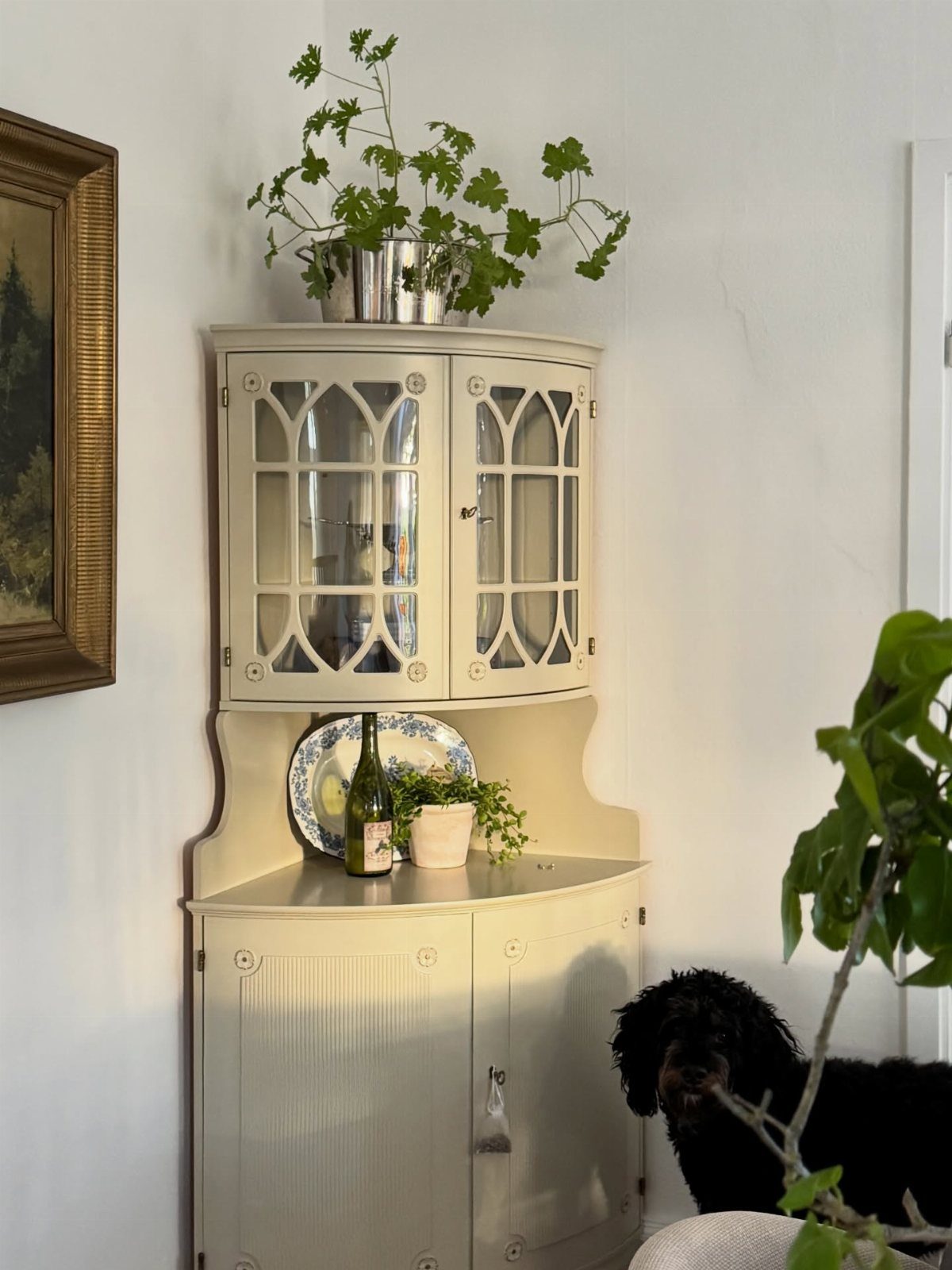
White paint and old-fashioned glass doors give a small dining room storage that looks like it has always been there.
Plates and a few potted plants behind the glass keep the cabinet from reading as a plain white box.
A single bottle adds height variation. I’d leave the floor around it open, since a corner piece this size works best when it has breathing room, and hang one framed painting beside it instead of crowding the wall.
17. Small Oak Cabinet
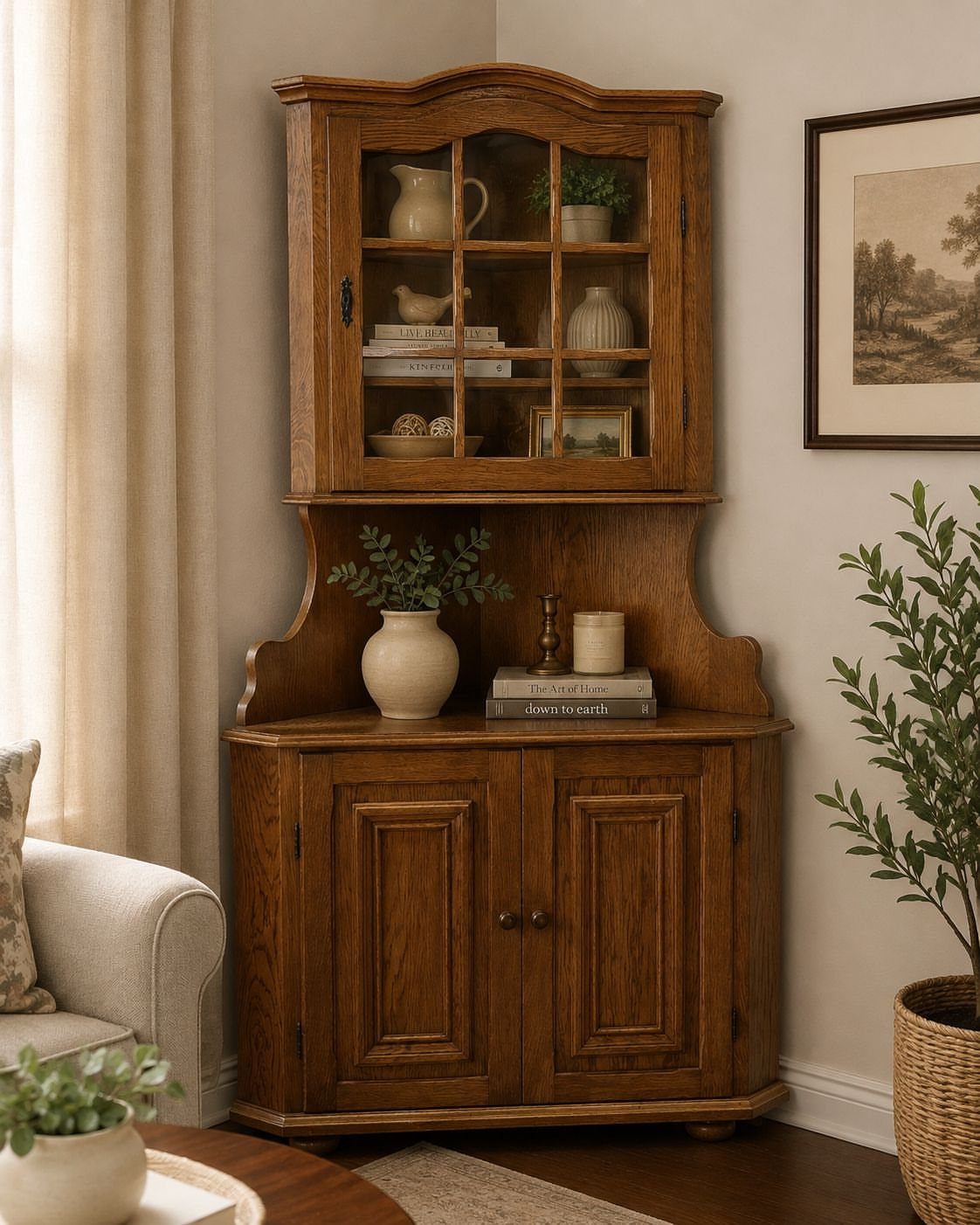
Oak in a small corner cabinet is the quiet choice: warm wood, glass on top, and closed storage below that doesn’t ask for attention.
Books and pottery fit the open shelving, and the glass hutch keeps your nicer pieces visible while the lower cupboard handles the rest.
Because it sits comfortably beside a sofa, I’d treat it as a good fit for rooms where dining and living space share a floor plan. Keep the arrangement neutral so the wood stays the main tone.
18. Farmhouse Corner Cabinet
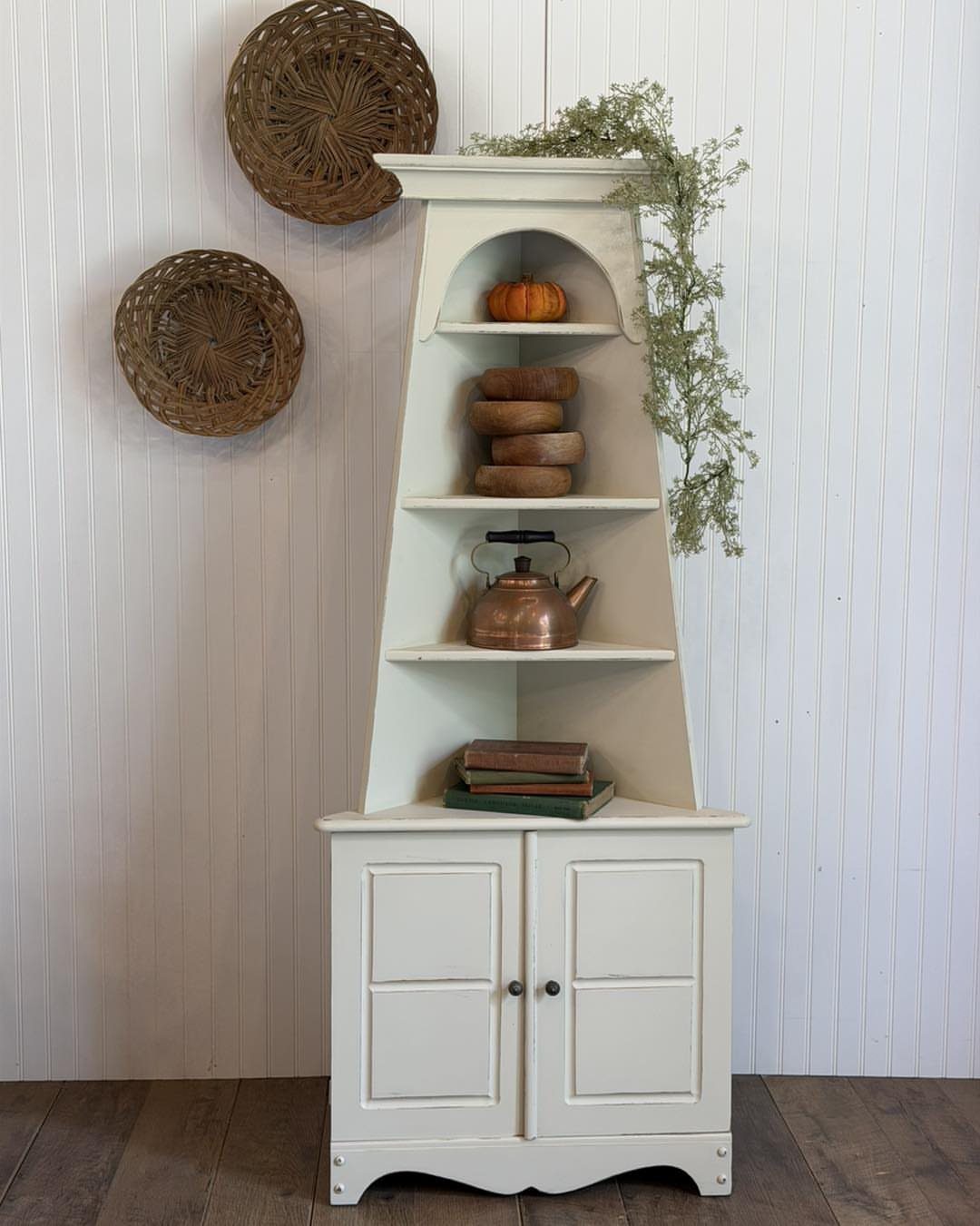
Open shelves over a closed cupboard is the farmhouse formula, and it works because everyday things go on view while the bottom hides the clutter.
Against white paneling, woven baskets nearby add texture without competing with the cabinet. Farmhouse styling falls apart once the shelves turn purely decorative, so stick to objects you’d actually reach for, like bowls, a kettle, or a few cookbooks.
19. Curved Corner Cabinet
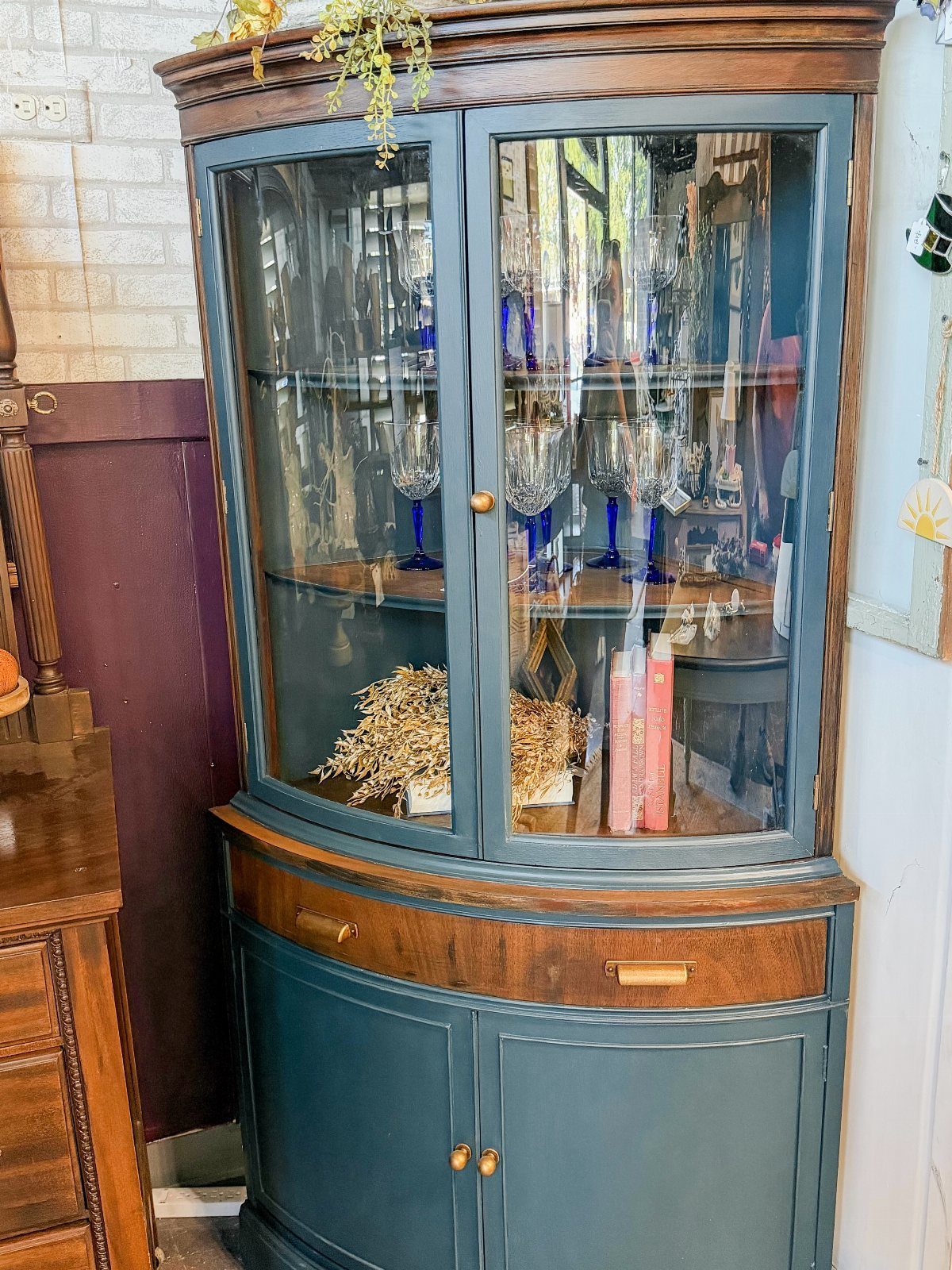
Rounding the front of a corner cabinet removes the sharp point that usually juts into a dining room, and the curved glass gives you display space on every angle.
Deep teal paint with natural wood trim looks rich against a plain white wall. Glassware and a short stack of books are plenty on these shelves, since a curved front already draws the eye and doesn’t need much help.
20. Corner Cabinet with Plates, Books, and Ceramics
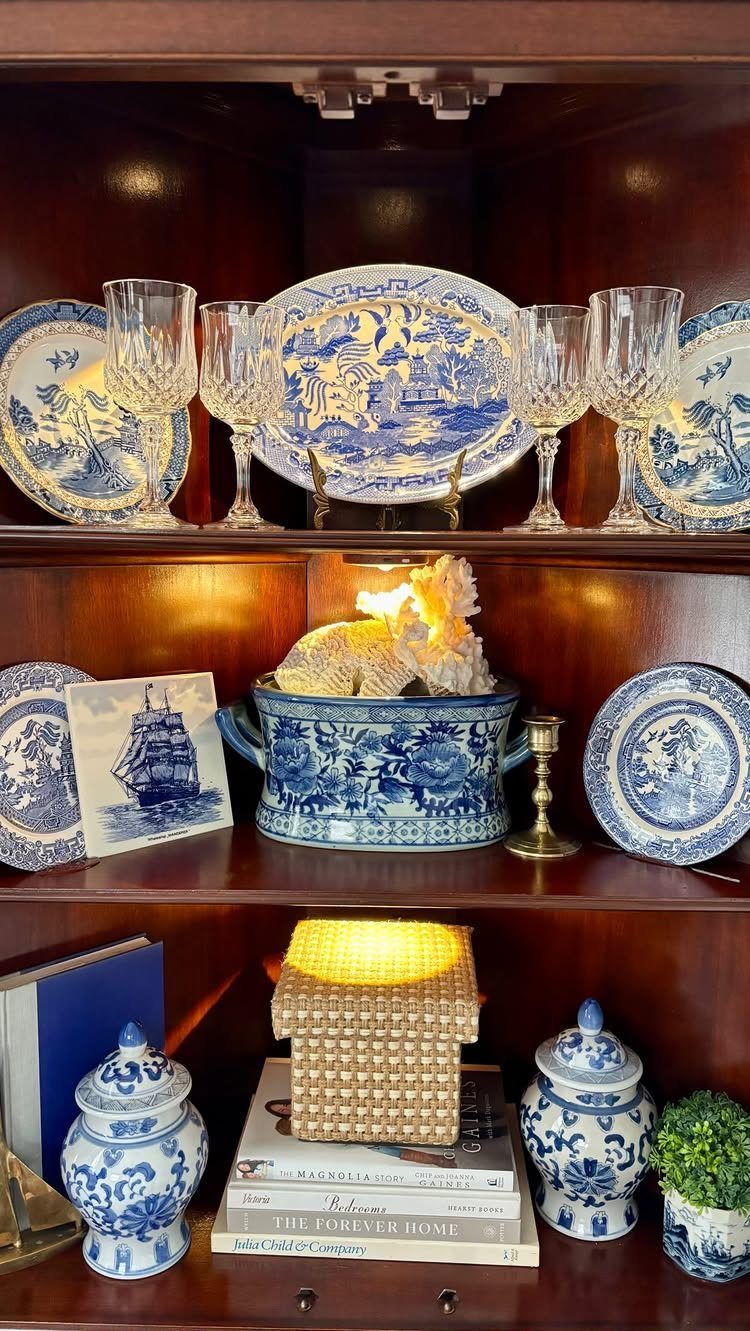
Porcelain, crystal and cookbooks can share one dark wood cabinet as long as a single color, like blue, runs through the group.
Put the patterned plates upright at the back, then set the ginger jars and ceramic bowl in front of them.
Books work as risers and add height to a shelf. Group the glassware on a single shelf so it reads as its own set.
21. Wine Cabinet
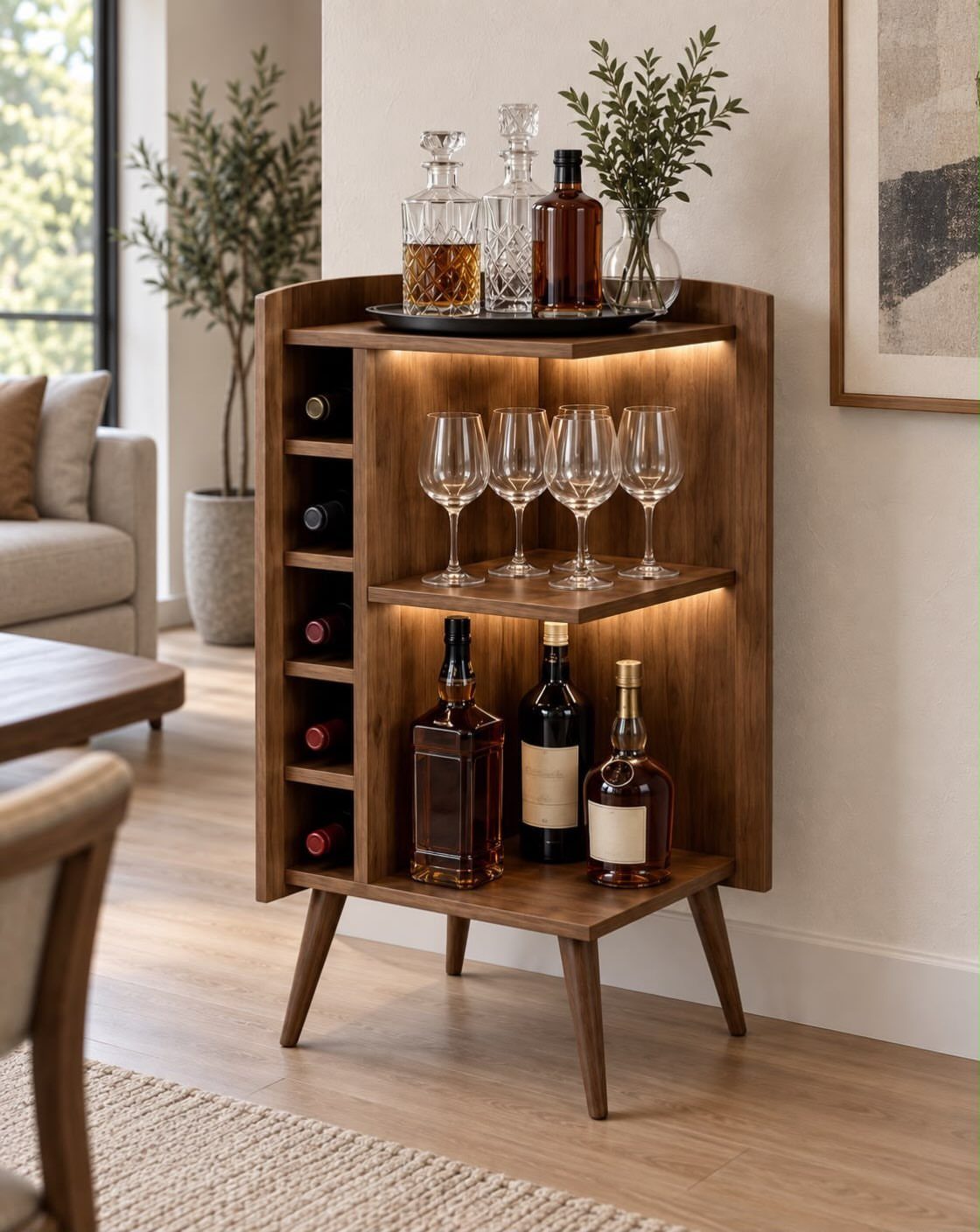
A corner wine cabinet lets one piece of furniture hold bottles, glasses and liquor, so the dining room doesn’t need a separate bar.
Wood with built-in lighting makes the bottles look deliberate. I’d stand the glasses together on one shelf and line up the bottles on another, labels facing out.
In an open plan where dining and living share a floor, a wine cabinet near the sofa helps tie the 2 zones together.
22. Built-In Dining Room Bench
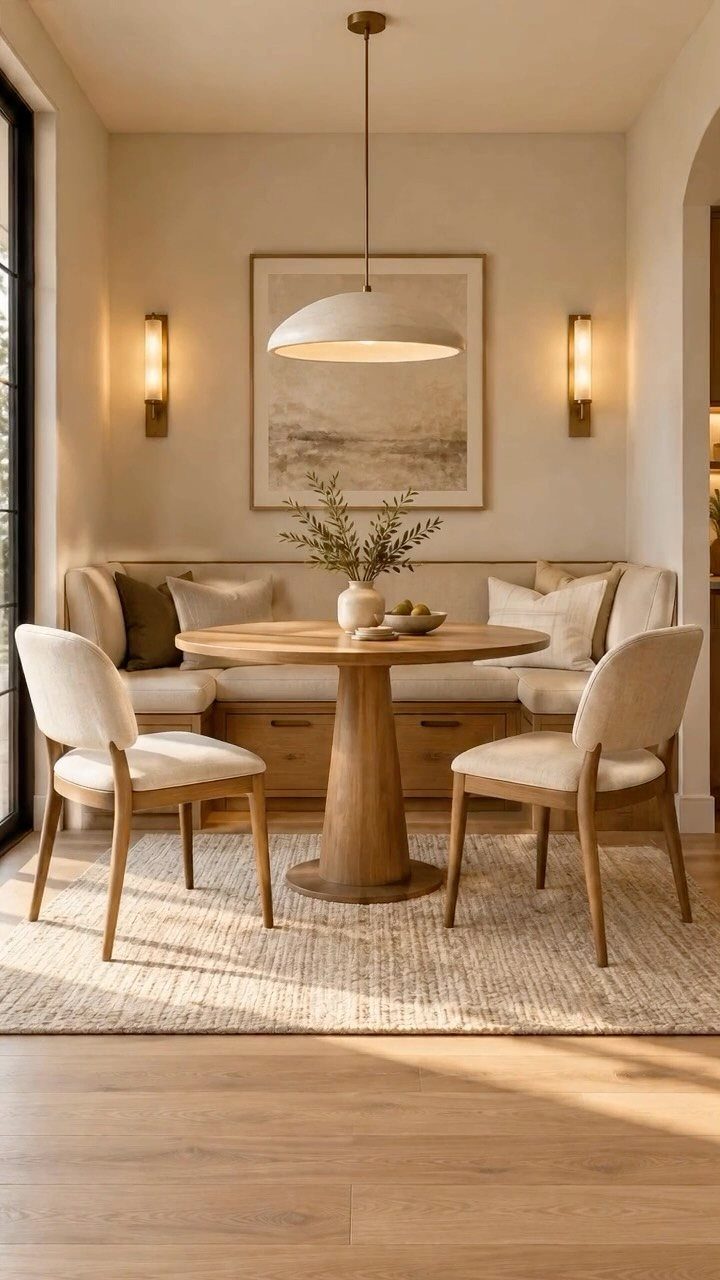
Wrapping a bench around the corner seats more people than loose chairs, and the base doubles as drawer storage.
Pair it with a round table, as here, so nobody gets stuck at a sharp edge, and add a couple of chairs on the open side. Drawers under the seat suit table linens and placemats.
23. Dining Room Sideboard with Potted Tree
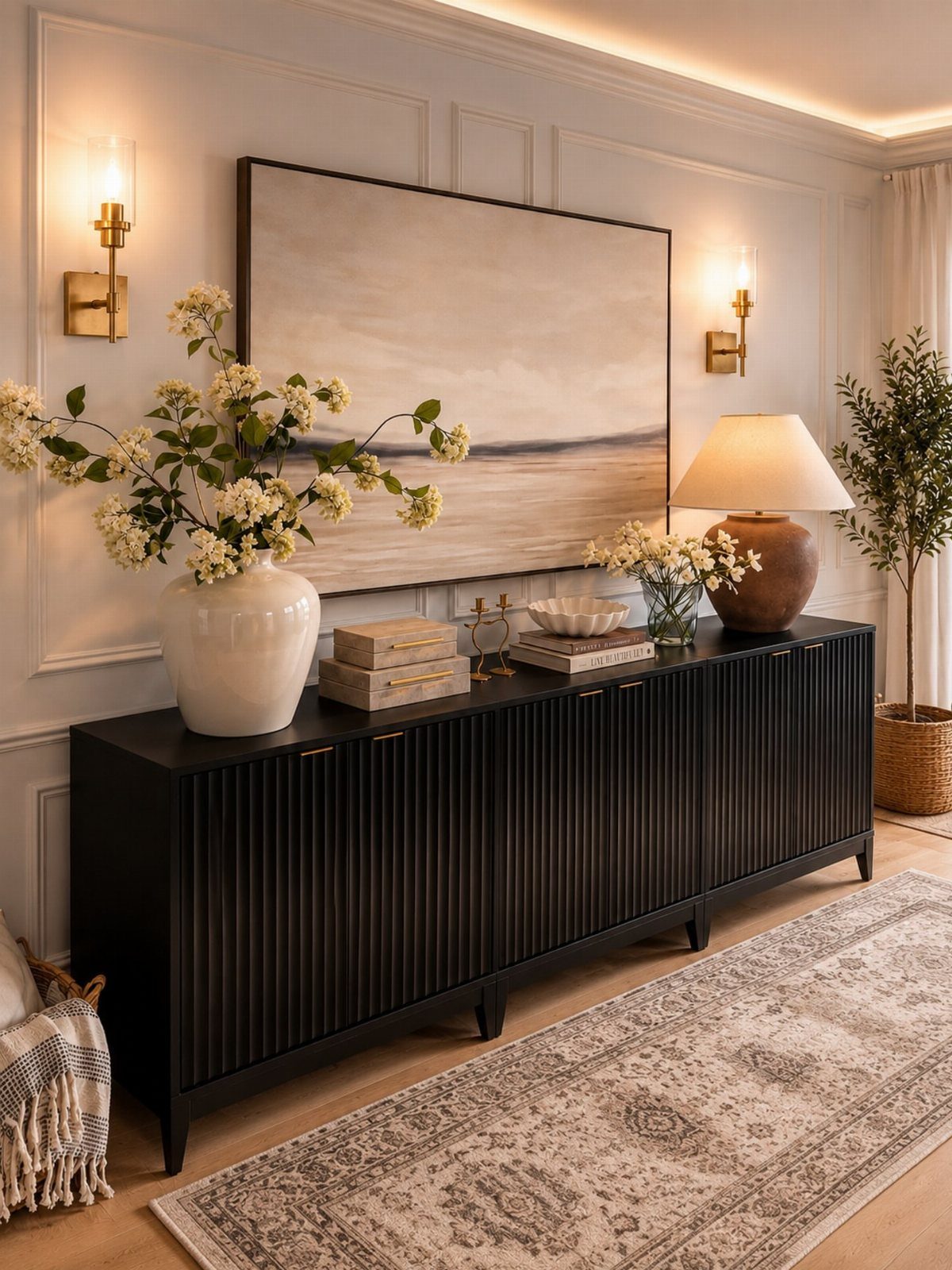
Black fluted wood gives a sideboard texture before you add anything, so the styling can stay light.
I’d set a white vase on top and let a large painting and wall sconces do the rest.
A potted tree in the corner beside it adds height and a living color against the dark finish. Pick a pot that suits the rug and paneling, because it sits in plain view.
24. Navy Cabinets Flanking Dining Room Window
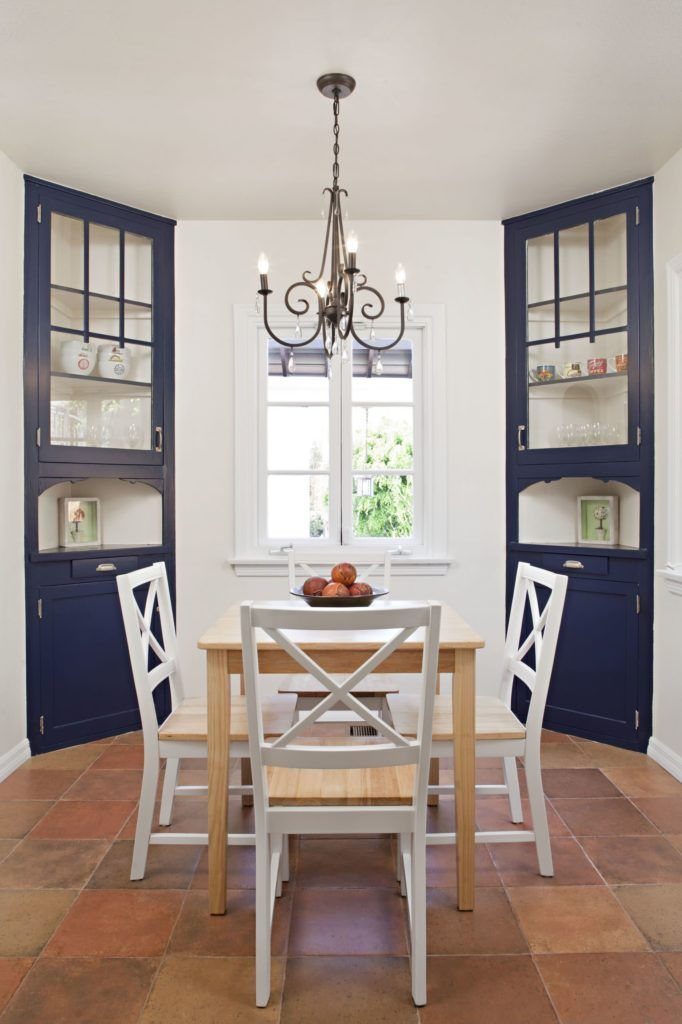
Two tall navy cabinets on either side of a window make the window the center of the wall, and the symmetry gives a dining room a calm, finished look.
Against light wood and white chairs, the navy reads as a deliberate accent, not a heavy block.
Leave the wall between the cabinets bare and let a chandelier over the table supply the sparkle. Matching pieces are the point here, so buy or build them as a pair.
25. Corner Cabinet with Wine Cooler
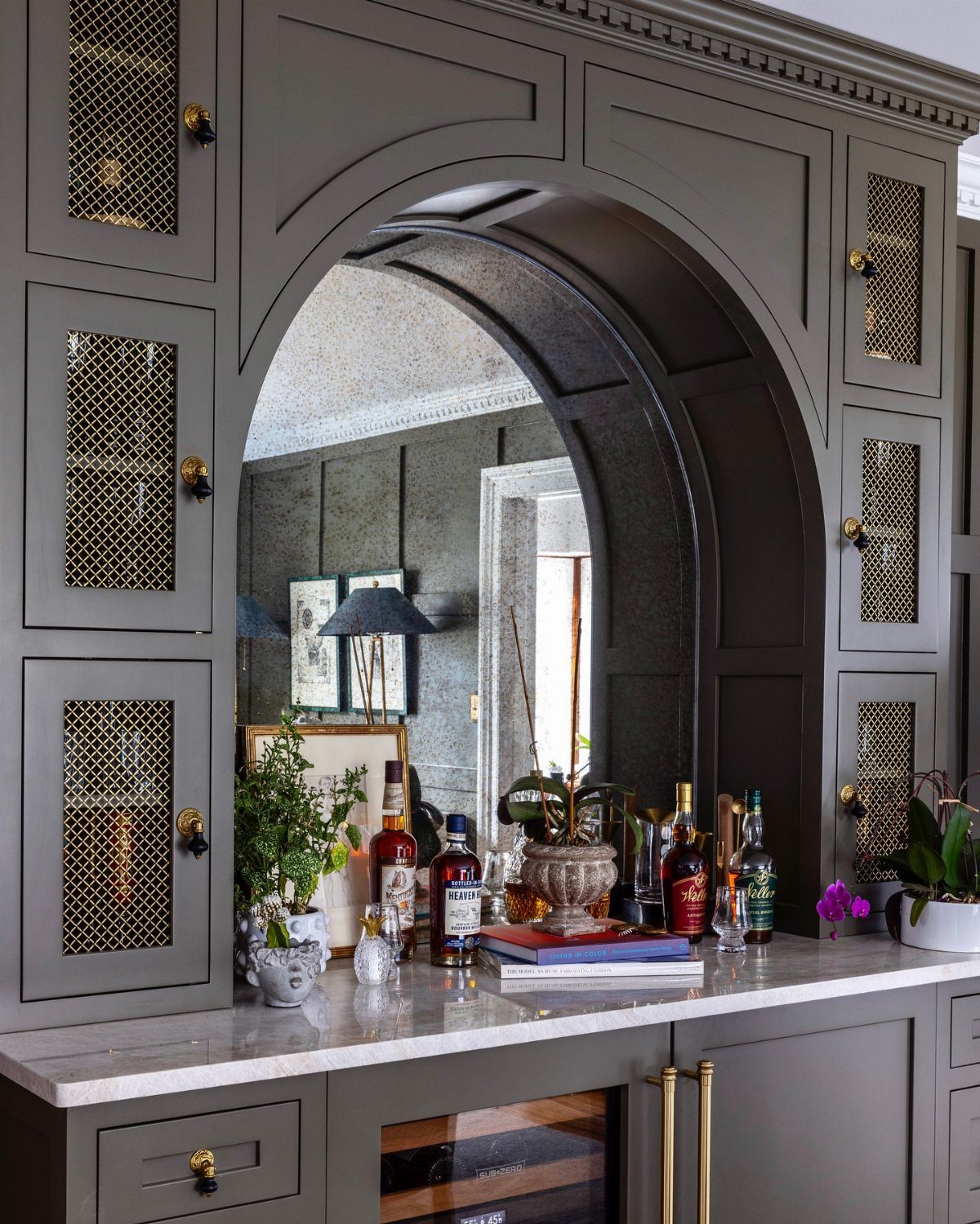
An under-counter wine cooler makes a built-in corner cabinet a full serving station, and mesh-front doors above keep the glassware close but out of sight. Pick a front-venting cooler so it can sit in a closed cabinet without overheating.
A marble top needs only a few liquor bottles and one plant, and leaving the rest of the surface bare keeps the corner from looking cluttered.
An arched mirror behind them bounces light into the corner. I’d choose gray paint here, since it lets the marble and mirror take the attention.
Plan the cooler’s size before the cabinet is built, because the opening has to be cut around it.
26. Curved Corner Cabinet
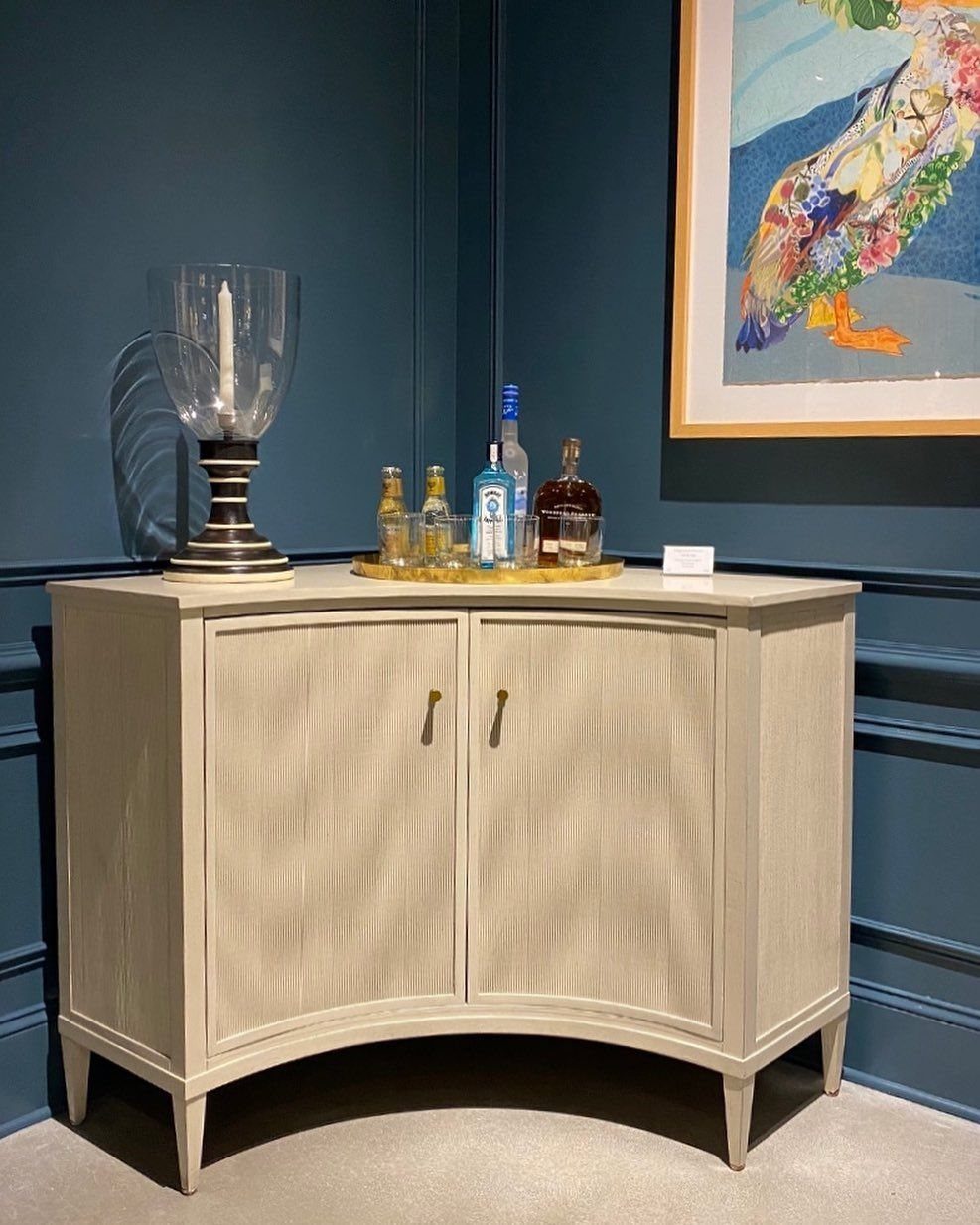
Dark blue walls make a light-colored curved cabinet stand out, and the rounded front means the corner has no sharp edge sticking into the room.
A gold tray on top keeps the bottles and candle holder grouped as one arrangement, which beats scattering them across the surface.
I’d hang a single framed painting above so the wall has its own focal point and the top stays uncluttered.
Light finish against deep color is the move to copy.
Frequently Asked Questions
What can I put in the corners of my dining room?
A glass-door corner cabinet is the most direct choice, and a hutch adds closed storage below for whatever you’d rather not look at while you eat.
For drinks, a corner bar or wine cabinet gives bottles and glasses one permanent home. In a narrow corner, going vertical saves floor space, so a tall, slim cabinet works better than a wide one.
What to do instead of a corner cabinet?
A bench wrapped around the corner seats more people than loose chairs, and the drawers under the seat can hold table linens and placemats. A round tabletop suits that setup because no one ends up wedged against a pointed corner.
If you’d rather skip built-in seating, set a sideboard along the wall with a large potted tree beside it for height and living color. Another option is hanging plates and a mirror over a low cabinet.