

The lineup covers commercial-style and gooseneck designs, single-lever and two-handle models, and finishes from matte black and brushed nickel to chrome, bronze and gold.
Which one is yours depends on the holes already drilled in your sink or counter, and on how much height a high-arc neck needs above the spout.
Hole count settles more than finish does: a 1-hole faucet on a 3-hole sink needs a cover plate, and a two-handle model like the Fulton wants more deck width than a single lever.
1. Pull-Down Kitchen Faucets
A pull-down faucet puts its head at the tip of a gooseneck spout and lets you draw it down toward the sink on a hose. That reach is what makes rinsing corners and filling a bowl on the counter easy.
Before buying, count the holes in your sink or counter and check that the cabinet below leaves room for the hose to travel.
A spare deck hole can hold a soap dispenser, so you don’t have to leave it capped or squeeze a bottle onto the sink edge.
2. Commercial-Style Faucets
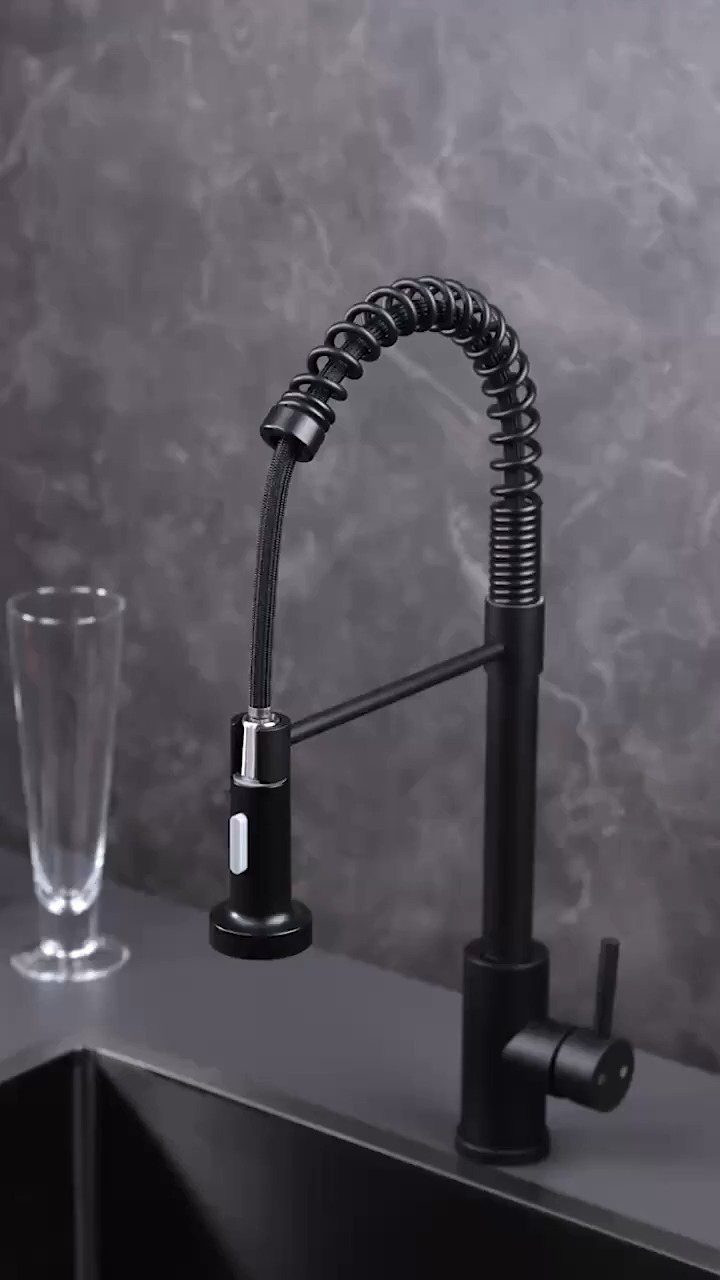
A coiled spring neck gives this faucet the look of a restaurant dish station, and matte black pushes that look further. Against a black sink and grey stone, it reads as one deliberate, dark composition.
I would choose it when the faucet is meant to be the statement and the surfaces around it stay plain. Because the spout stands tall, measure the space under any window or wall cabinet before you order.
3. Waterstone Traditional Gantry Pulldown Faucet
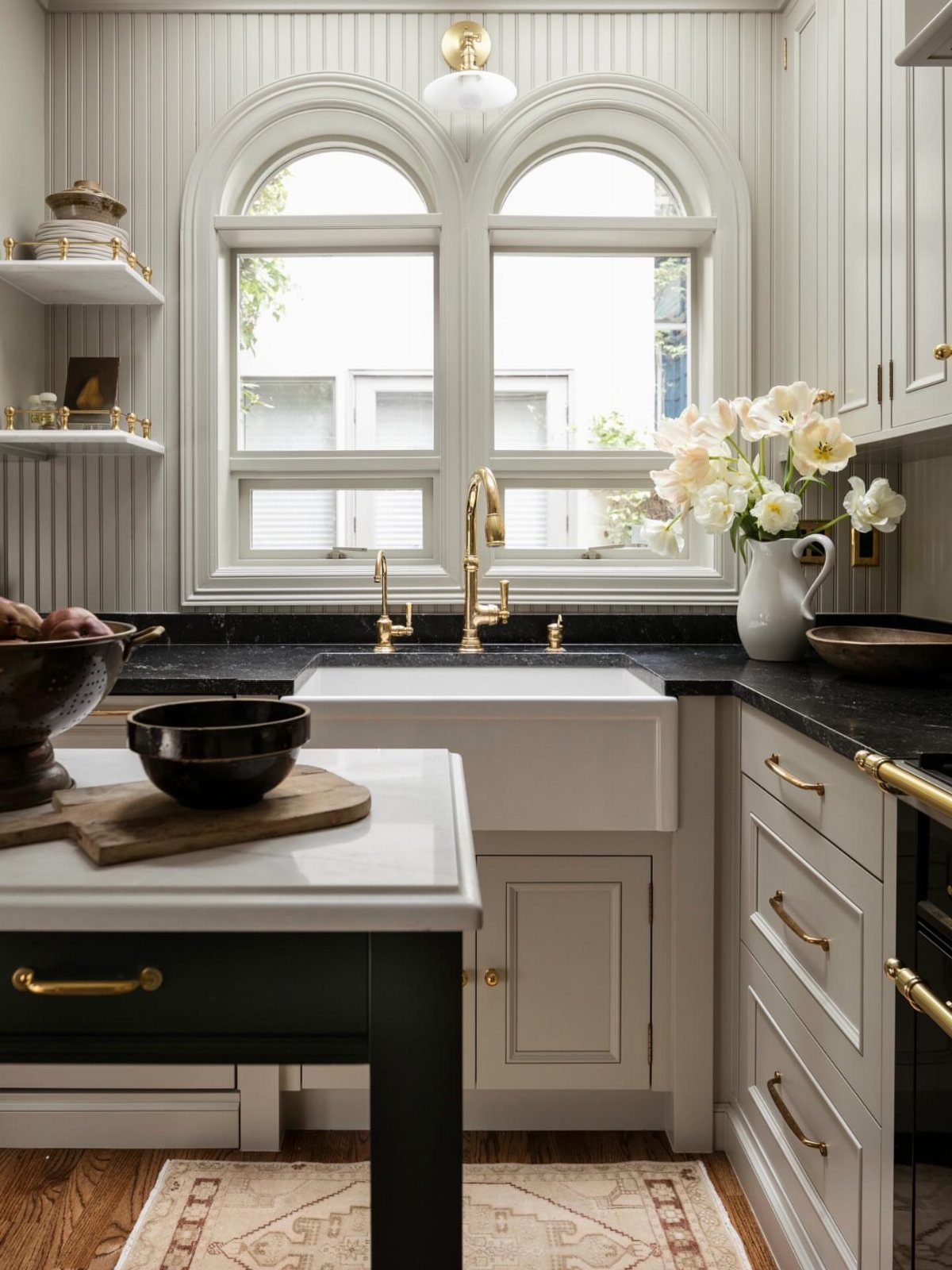
The pulldown head keeps it practical.
A deck-mounted faucet sits on the counter behind an apron-front sink, so measure from the back edge of the basin to the mounting hole. The spout needs to reach the center of the bowl.
4. High-Arc Gooseneck Faucet
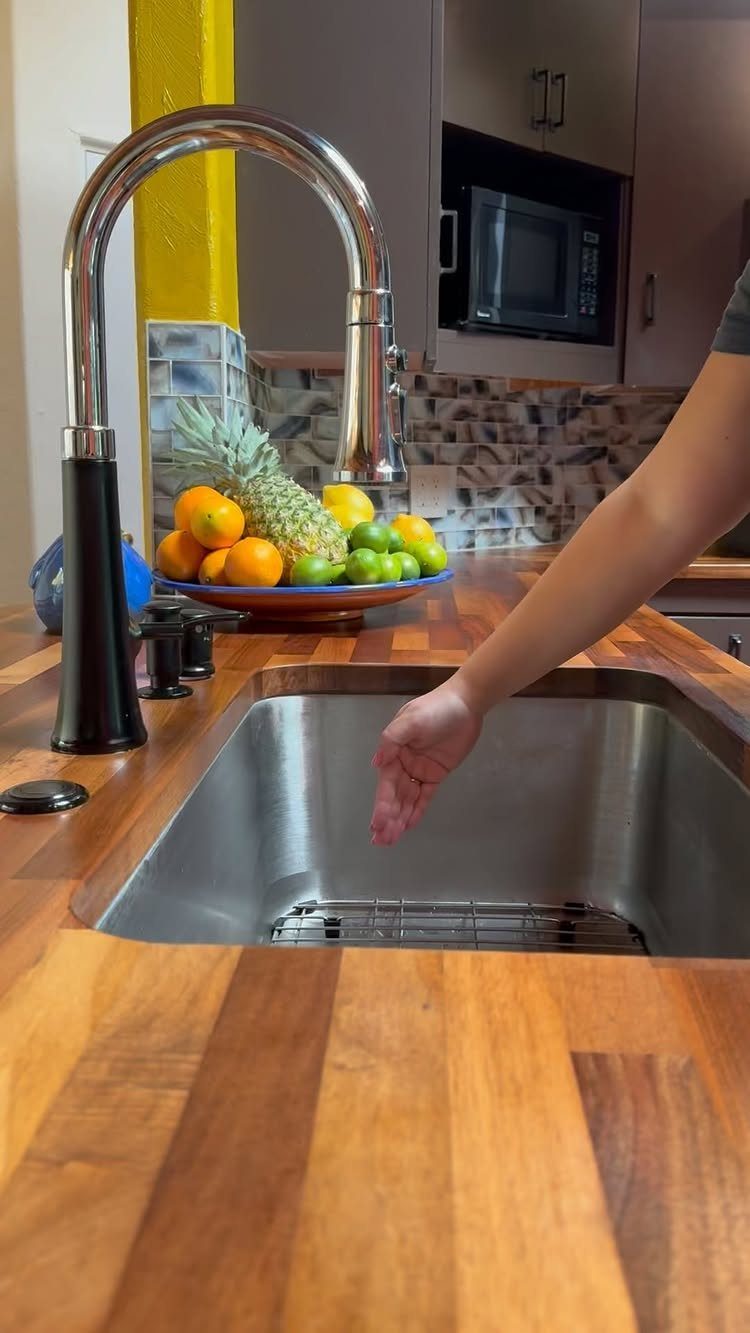
Pots decide whether a high arc is worth it. A tall spout leaves room under the head to fill a stockpot right in the sink, without tilting it or using the sprayer.
Measure the clearance between the counter and whatever sits above it, such as a window sill or cabinet, before you commit. Chrome pairs well with a plain stainless sink, and a wood countertop keeps the setup from feeling cold.
5. Fulton Industrial Two-Handle Pull-Down Faucet
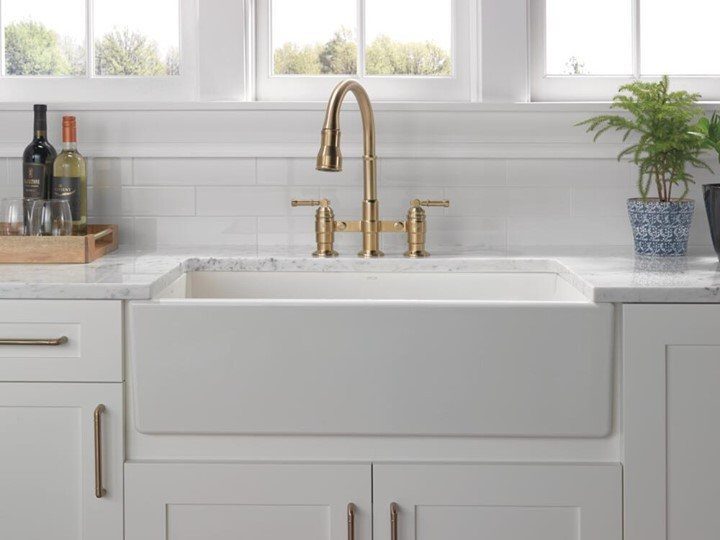
2 handles mean hot and cold are set separately, and on a white farmhouse sink with marble counters that suits a classic look. Gold makes the faucet read as a fixture rather than a utensil.
Two-handle models usually need more room on the deck than a single-lever, so check the hole layout of your sink or counter first. If your holes are fewer, plan on a different style.
6. Bronze Faucet
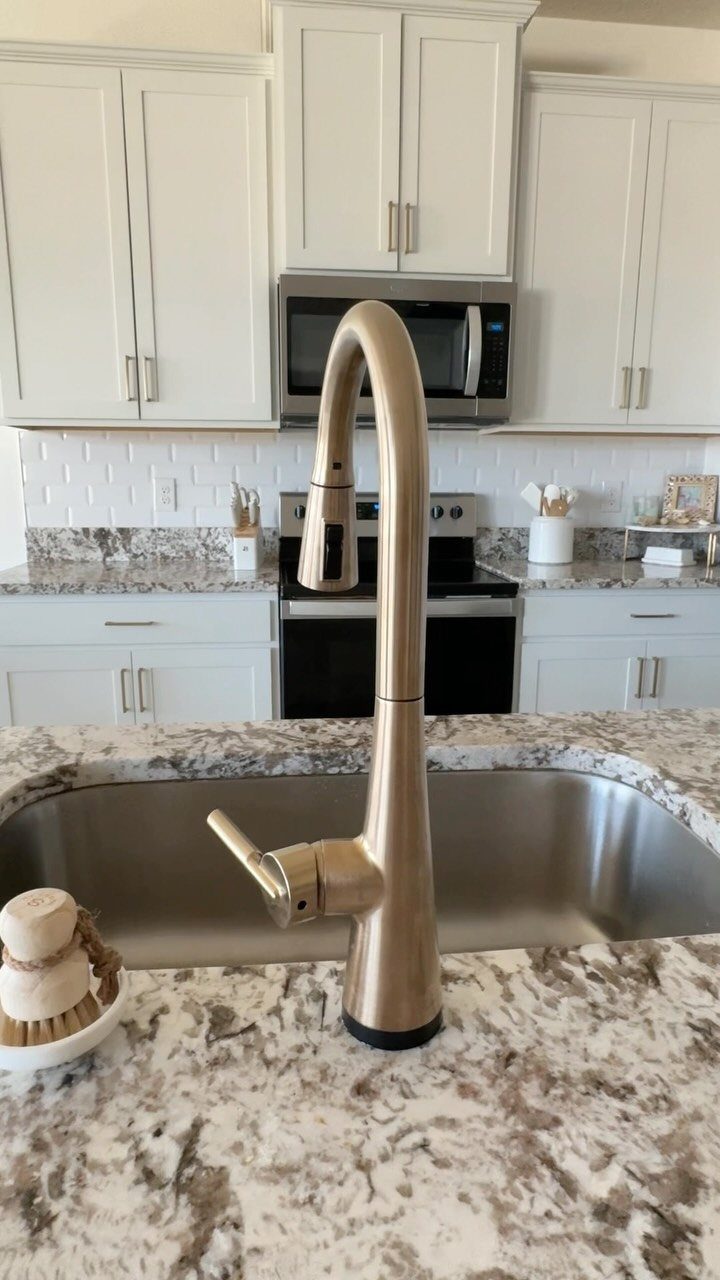
Bronze is the quiet choice among darker finishes, and next to white cabinets and granite it adds warmth without shouting.
The high arc and pull-down head keep a bronze faucet useful at a stainless steel sink, where tall pots need clearance.
I like that the finish blends in with a busy granite pattern instead of competing with it. Check the arc height against any shelf or window above the sink, and confirm the hose has room below.
7. Modern High-Arc Faucet
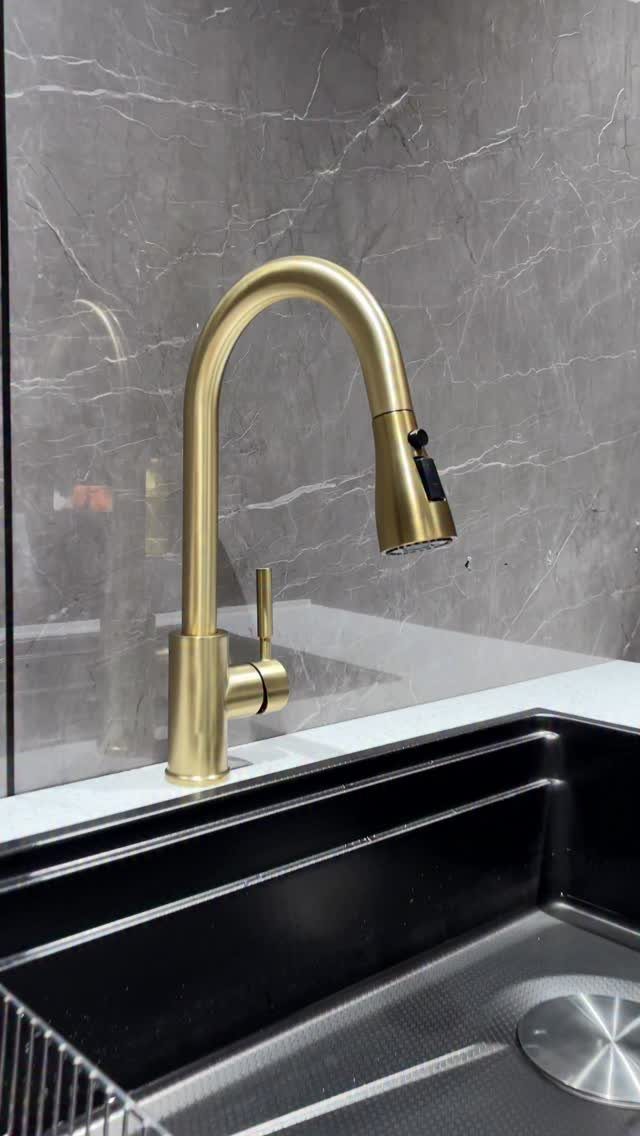
Gold against a black sink is a high-contrast pairing, and the tall arc gives the sprayer room to swing over a deep basin. A white counter and grey marbled backsplash keep the metal from fighting the room.
Check the space between the counter and any window or cabinet above before ordering. If the spout is taller than the opening, the finish won’t matter.
8. Single-Handle Lever Faucet
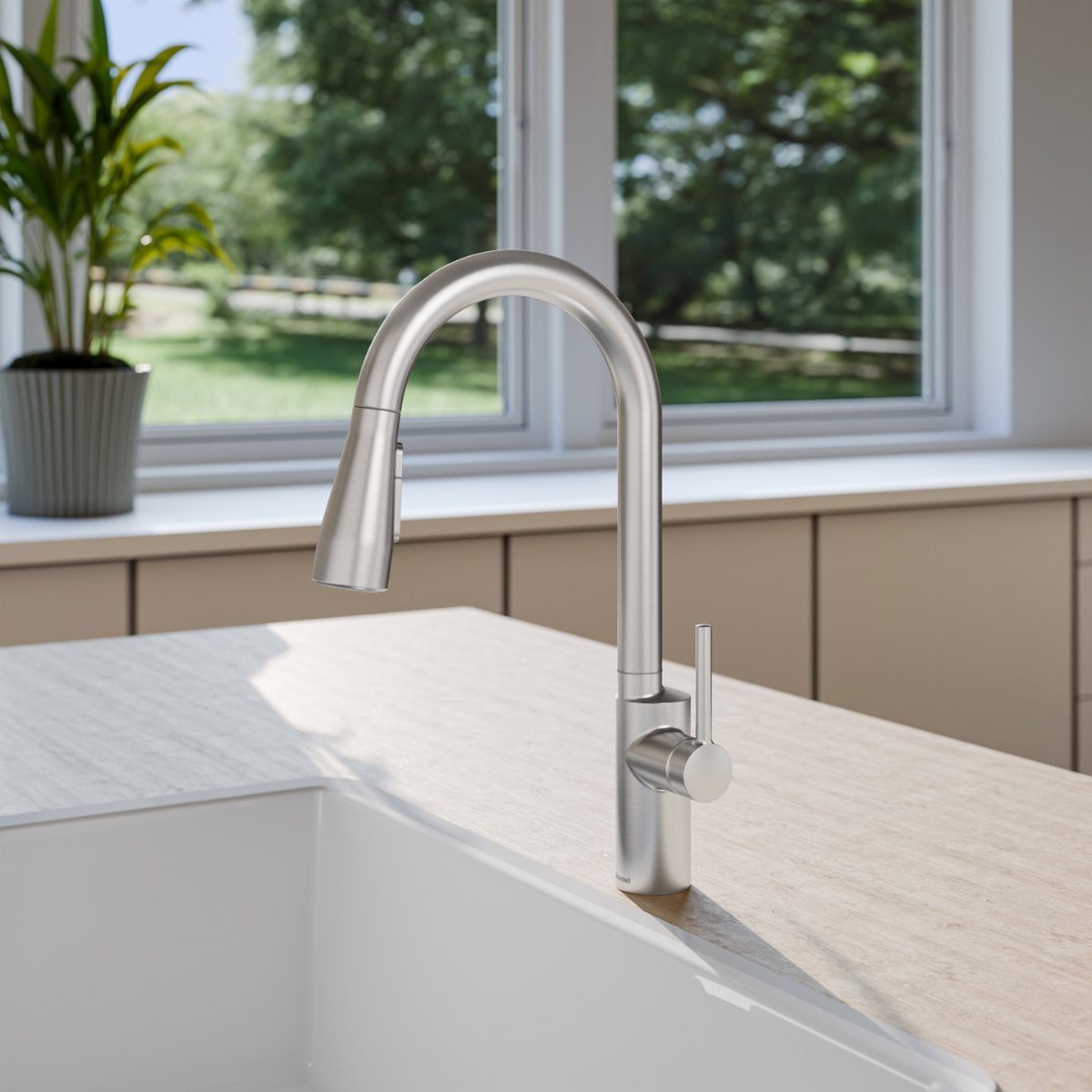
One lever handles both flow and temperature, so you can adjust it with a wrist or forearm when your hands are covered in dough. That is the main reason I lean toward single-handle models for busy cooking.
It also asks for the fewest holes, which helps if your sink or counter is drilled for just one fitting.
Brushed nickel hides water spots better than polished chrome, and it sits comfortably beside a white sink and a sunny window.
9. Solid Brass Faucet
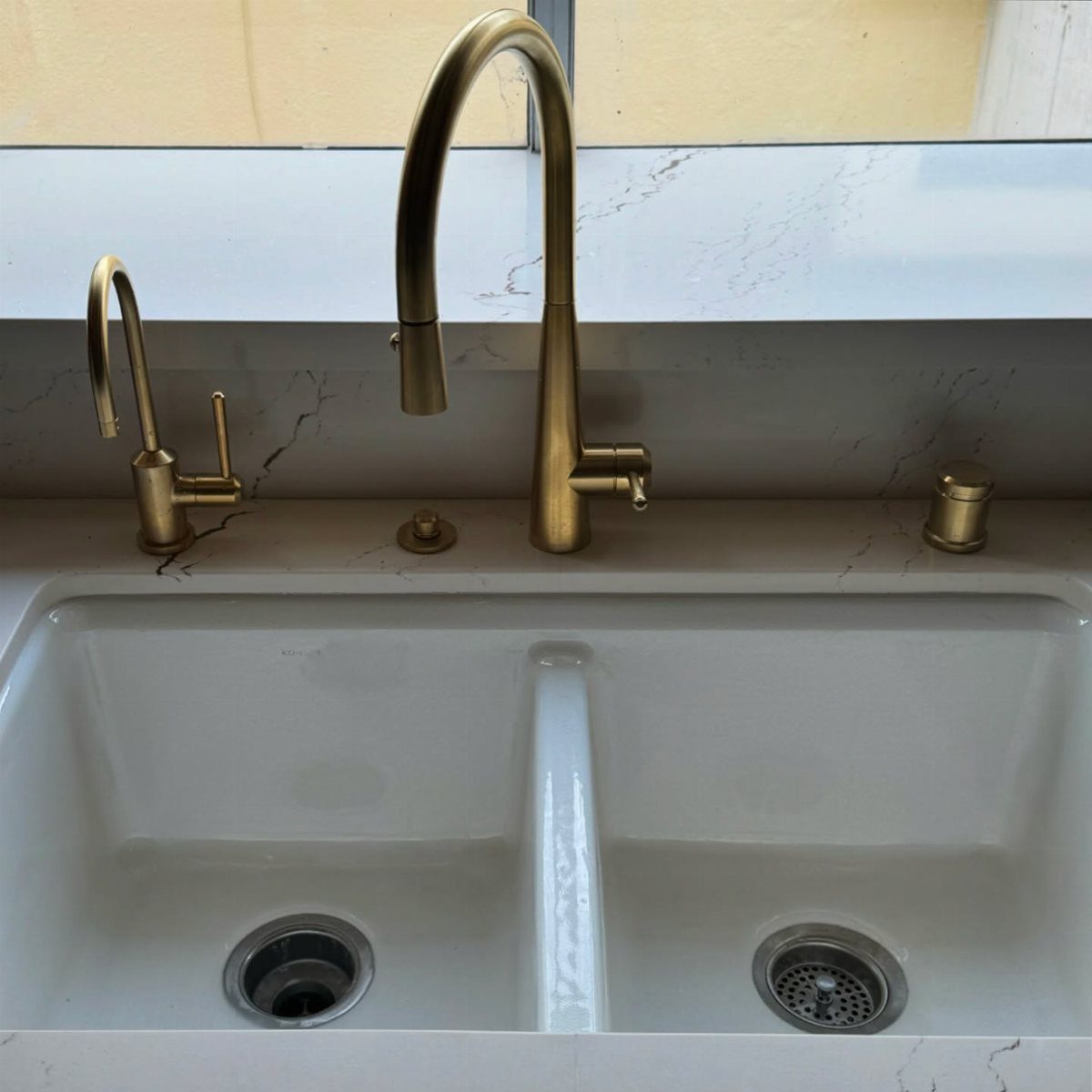
Solid brass is a material choice as much as a look, and the gold tone here shows it off against white marble.
Brass is a durable base for a faucet, so a brass body is worth paying for if you plan to keep it for years.
Match the faucet’s hole count and spacing to your sink or countertop, since a 1-hole faucet on a 3-hole deck needs a cover plate.
10. Kitchen Faucet Finishes

Finish is the cheapest way to make a faucet match a kitchen, because the same pull-down design comes in gold, brushed nickel and black.
The same shape can look very different in each finish, so compare them in person if you can.
I would pick the finish to match your cabinet hardware and light fixtures first, then check how it handles fingerprints and water spots in person.
Brushed nickel is the quietest of the three; gold and black are the ones people notice.
11. Matte Black Pull-Down Faucet
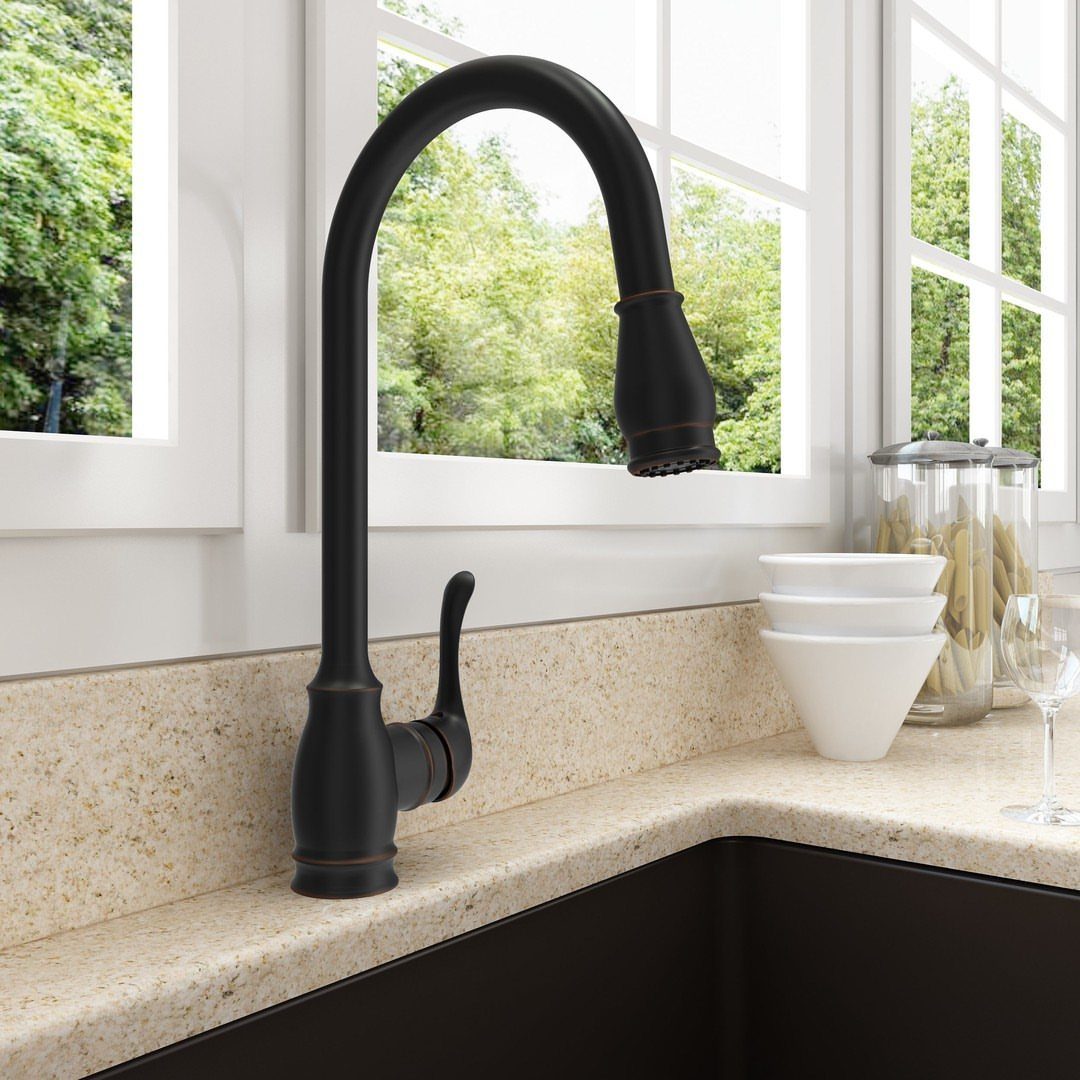
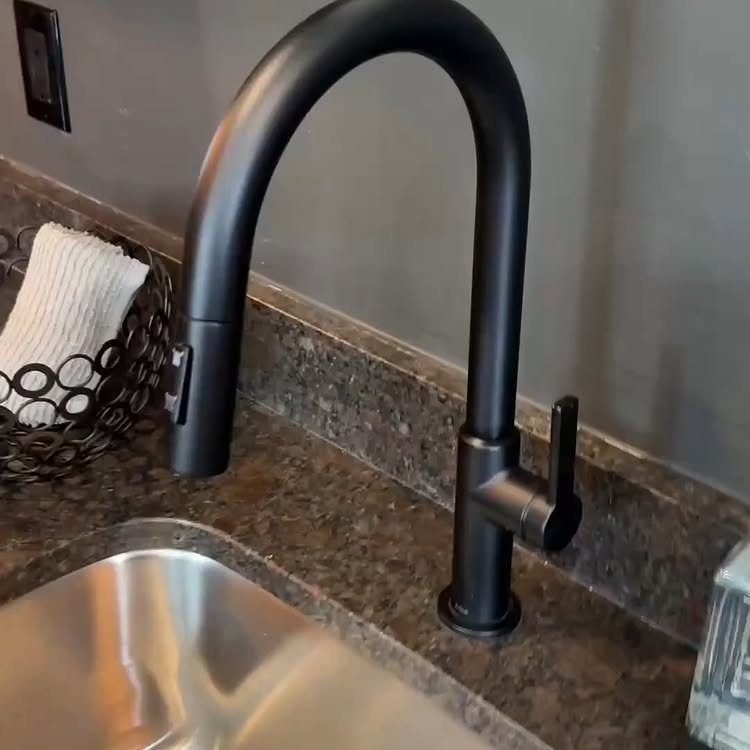
Matte black turns a high-arc faucet into a dark graphic line against a beige speckled counter. With white bowls on the sink edge, the contrast stays crisp instead of heavy.
Matte black holds up well over a black sink, where it reads as one dark composition, and a lighter counter simply gives the faucet more contrast.
Measure the height under the window before ordering, since a tall arc needs clear space above it.
12. Brushed Nickel Faucet
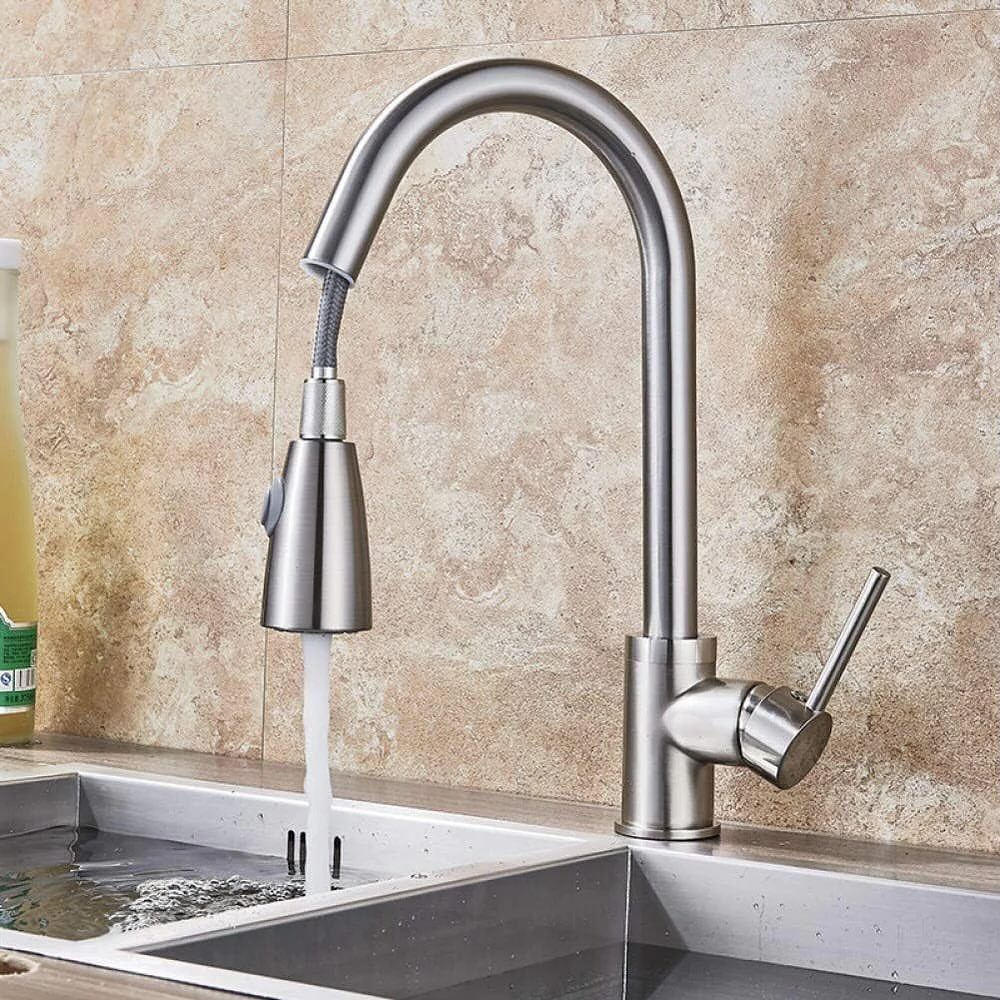
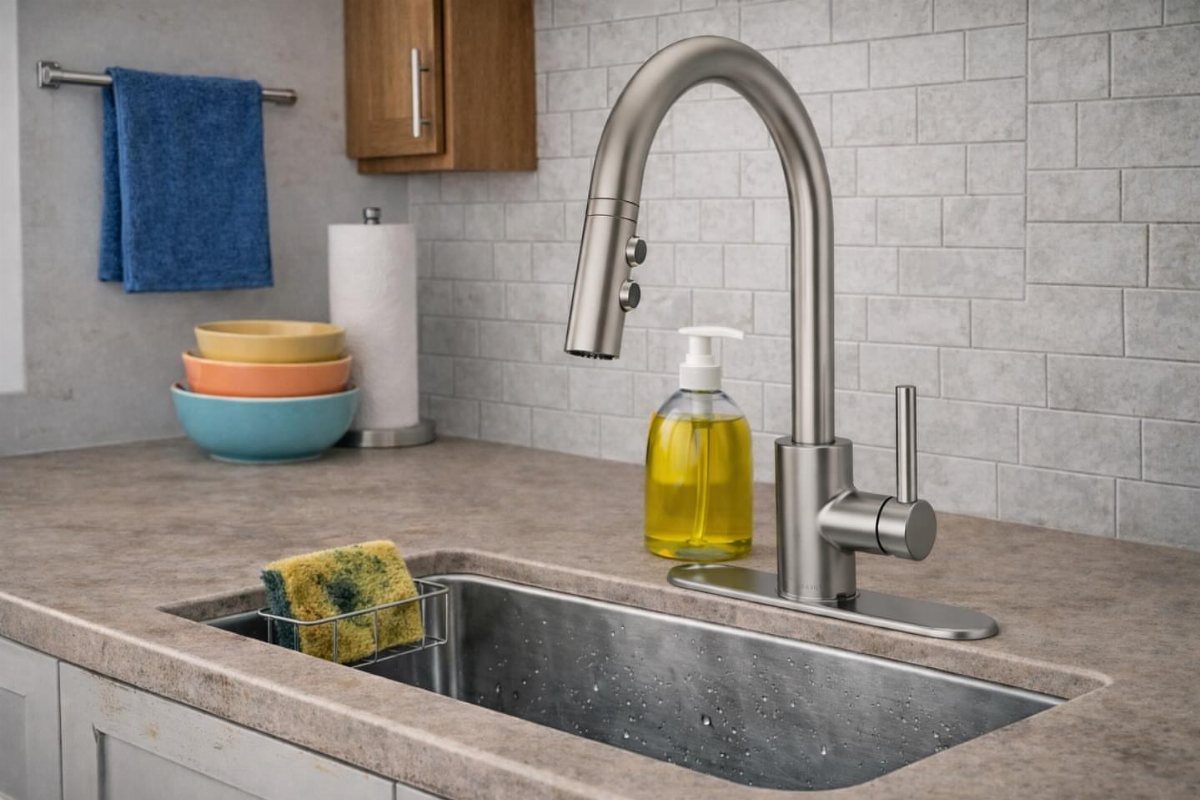
Brushed nickel is the finish I recommend when you can’t decide. Its soft grey tone sits quietly against a stainless sink and tan tile, and it won’t date the way a trend color can.
The pull-down sprayer on a high arc lets you rinse the basin walls and fill tall pitchers. Before buying, confirm the hose has room in the cabinet below and that the arc clears anything above the sink.
13. Gold Pull-Down Faucet
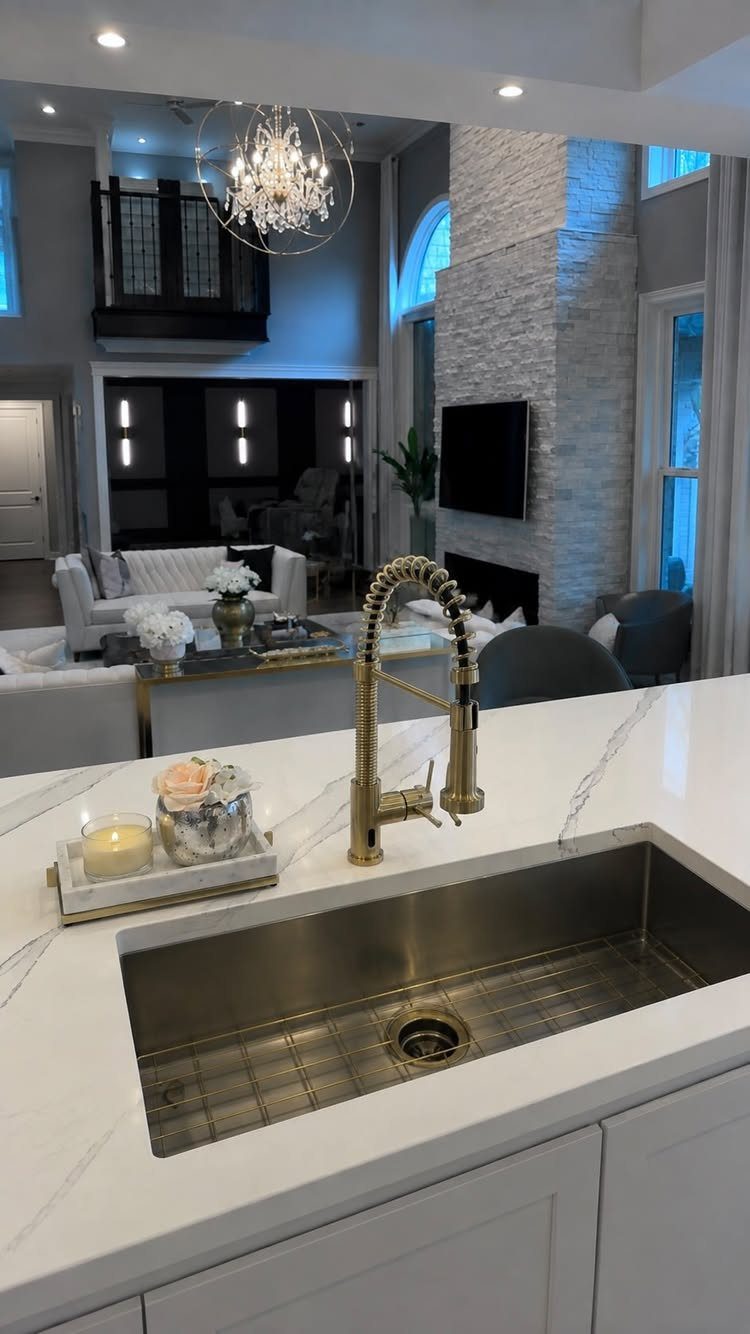
Gold over white marble and stainless steel separates the faucet from the basin instead of blending them together. The warm metal shows up cleanest against a light counter, where it reads as a fixture rather than an accent.
If the backsplash or counter has a busy pattern, gold can fight for attention.
I would save it for rooms where the surfaces are plain and the color palette needs something warm. Match your cabinet hardware to the faucet finish so the metals feel planned.
14. Chrome Pull-Down Faucet
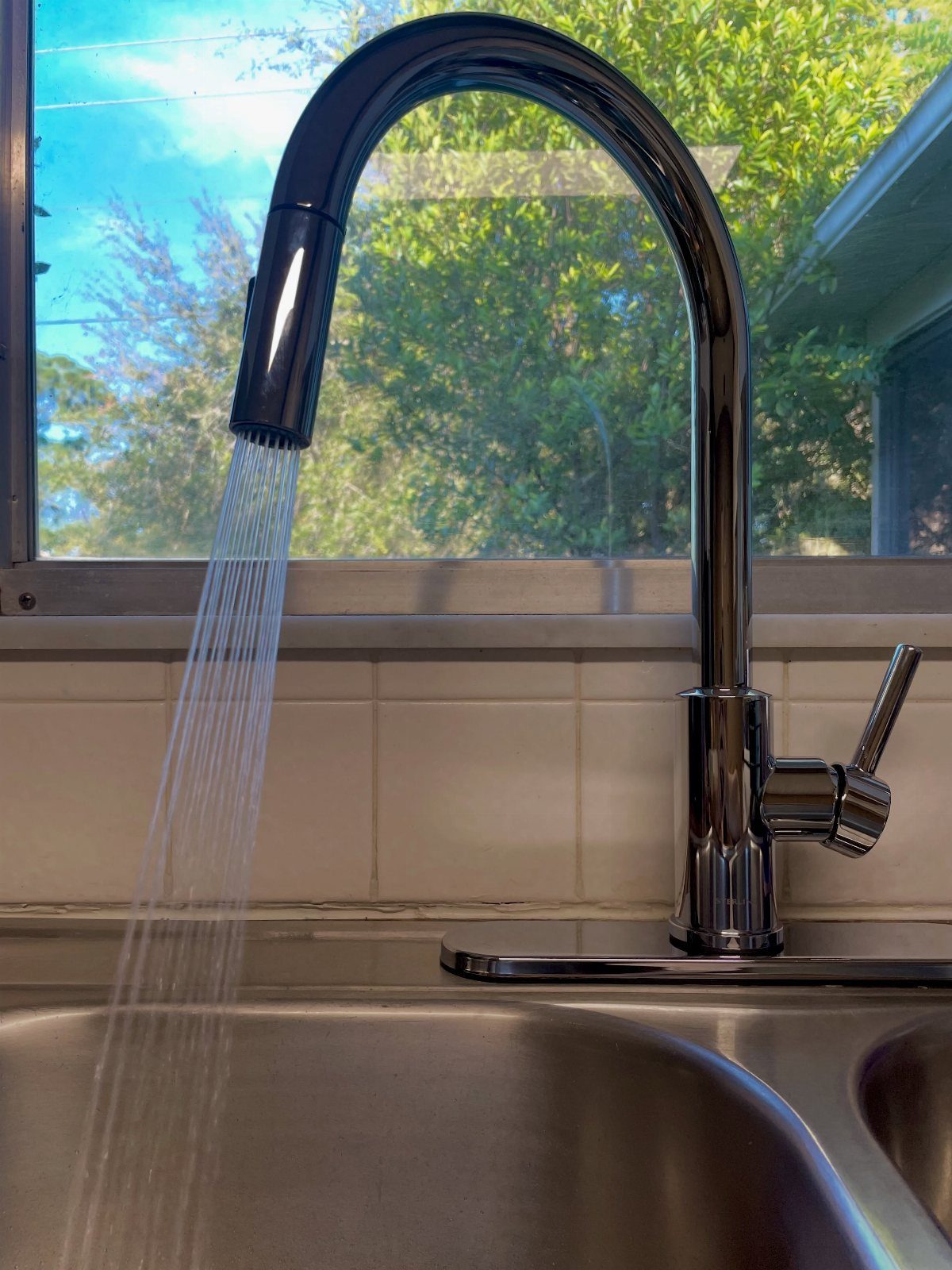
Chrome handles hard daily use well, because it shrugs off heat and wipes clean with a cloth. On a high arc over a stainless sink in front of a window, it reads as plain and honest rather than decorative.
Chrome shows water spots more than brushed finishes do.
A pull-down head lets you rinse the spout itself, which helps. Before installing, check that the hose reaches the far corners of a wide sink.
15. Flexible Neck Faucet
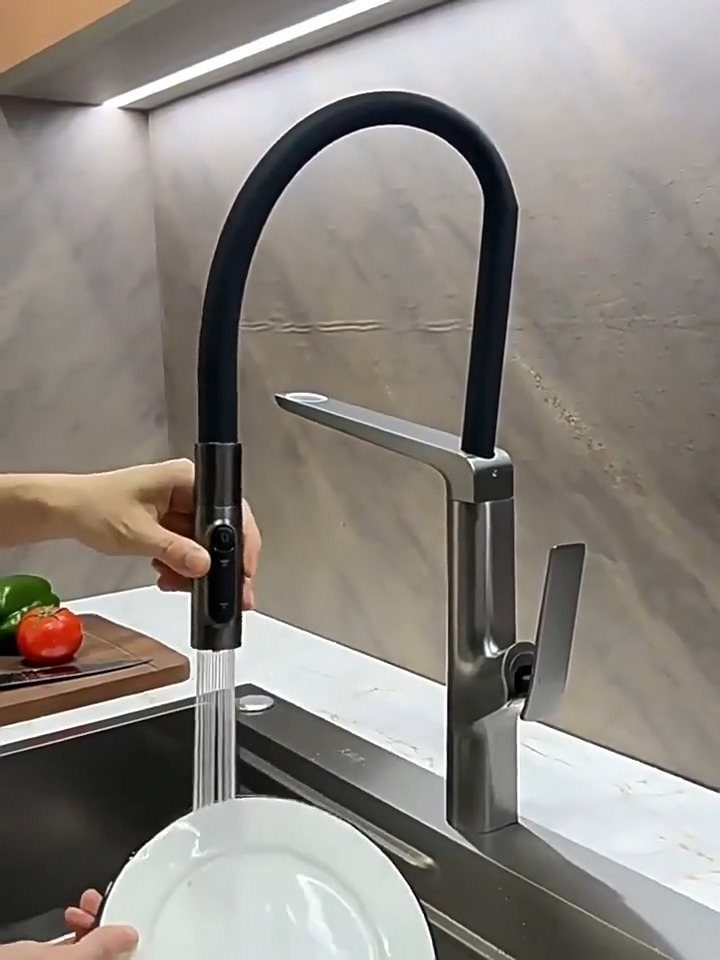
A flexible neck bends where a solid spout does not, so you can angle the stream without moving the whole faucet body.
The black neck contrasts with brushed metal, which turns the flex zone into a design choice rather than hiding it.
That flexibility also means the neck can sag or kink over time if you pull it hard.
I would check how far the head needs to travel in your sink before deciding whether a flexible neck is worth the extra moving part.
16. Pull-Down Spray Head
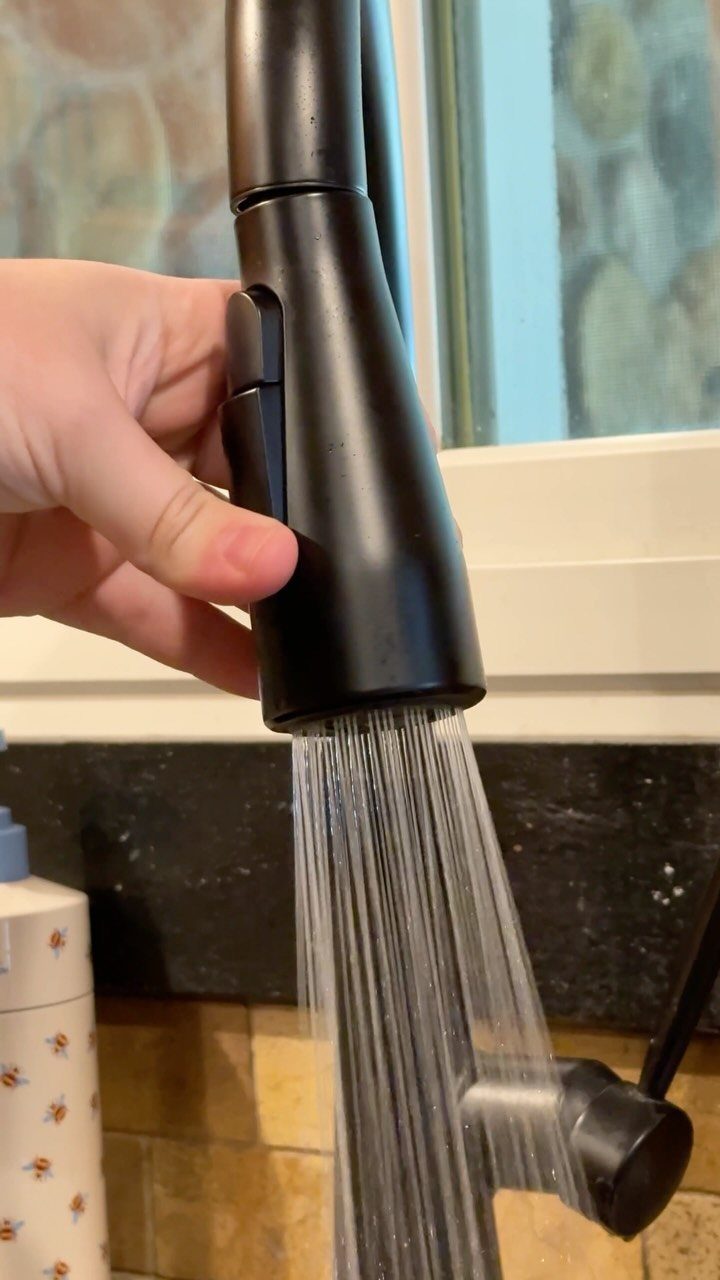
The button on the spray head switches between steady stream and wide spray, so you control the pattern without reaching back to the faucet body.
That matters when your hands are wet or messy and you need to rinse something quickly.
Most pull-down heads dock magnetically, which keeps them from drooping when you let go.
If the magnet is weak, the head hangs crooked and looks careless. Test the docking action in the store if you can, because replacing just the head later is not always straightforward.
17. Pull-Down Faucet in Use
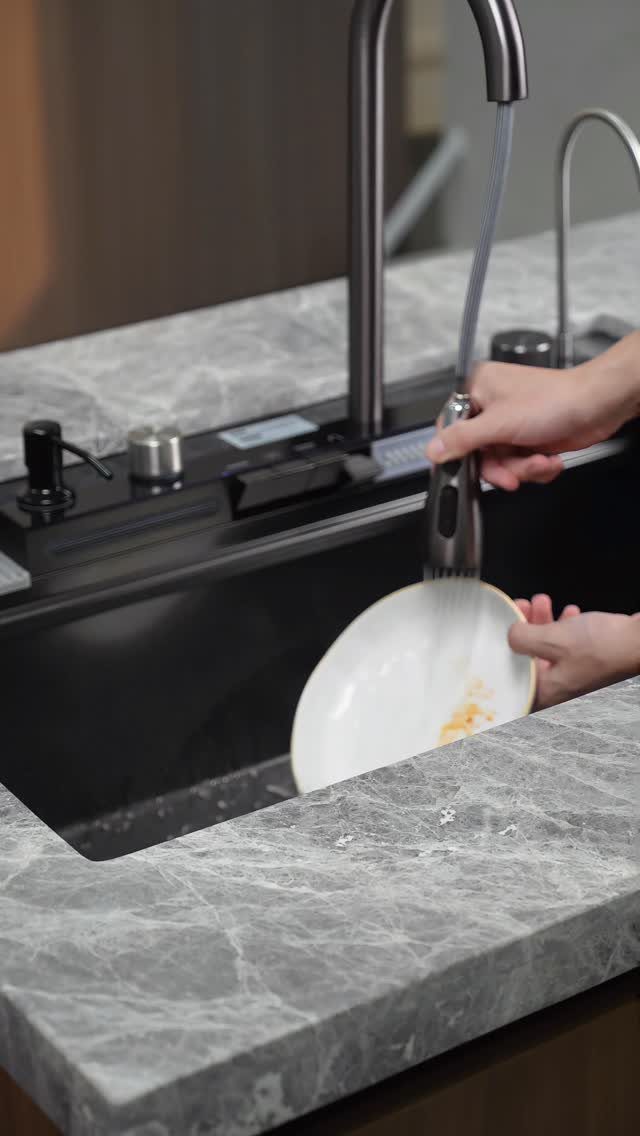
Rinsing a plate under a pull-down head means you can angle the spray across the surface instead of holding the dish under a fixed stream. A black finish on a black sink hides water spots better than chrome or stainless.
Switch to stream mode for filling pots, spray mode for rinsing produce or scrubbing stuck food off a plate.
18. Spring-Coil Faucet
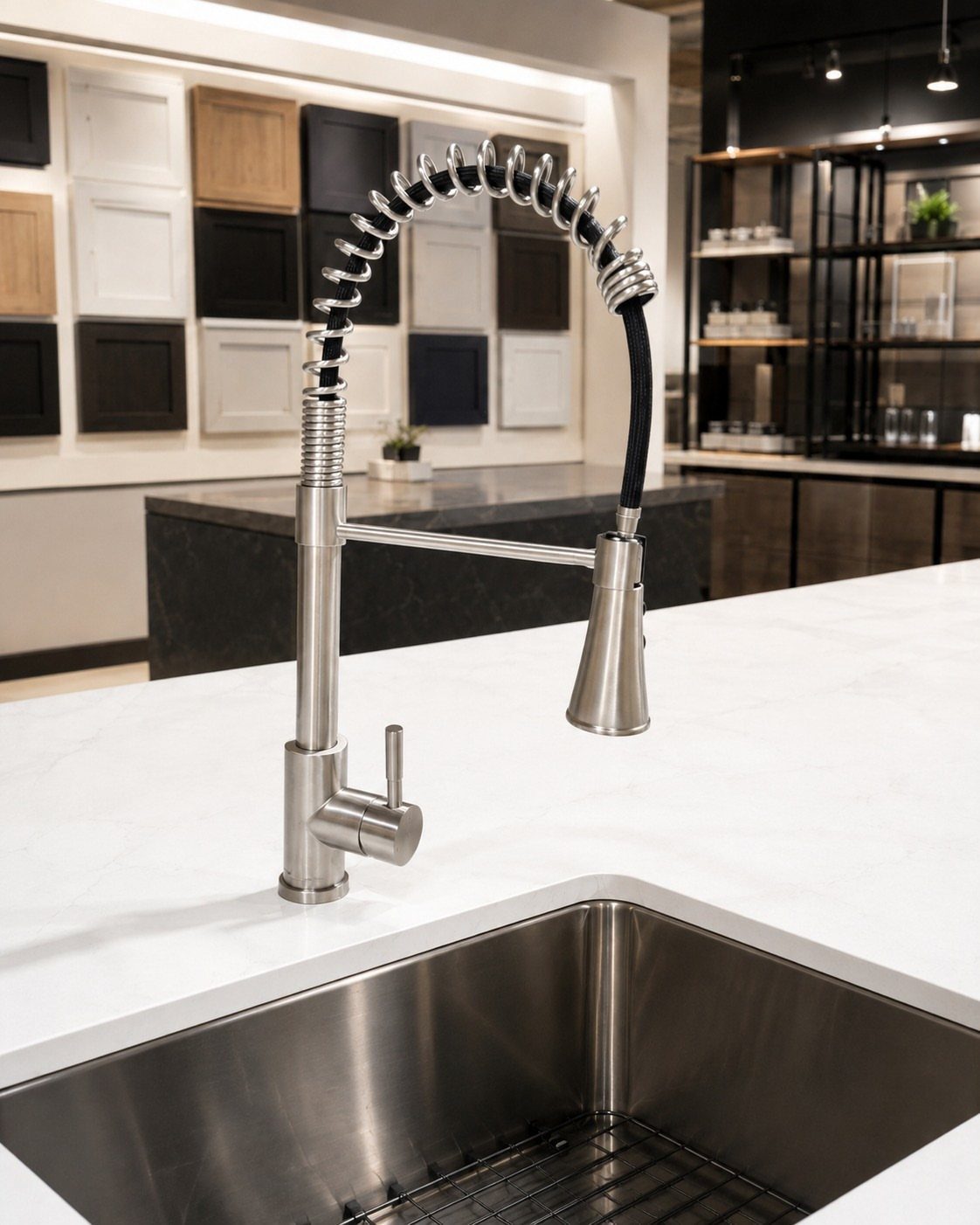
The exposed coil on this faucet gives it a professional look that reads as tool rather than decoration, and the spring stretches so the spray head reaches across a wide sink.
The coil needs wiping between the turns, since grease and dust settle there. Measure the clearance above the sink before buying, because the spring adds height even when the head is docked.
19. Dual-Spout Faucet

A second, smaller spout beside the pull-down gives you 2 ways to run water: the sprayer for rinsing and filling, and the little spout for quick jobs like a glass or a wet sponge.
Matte black on a black sink keeps both spouts reading as one clean piece.
Check your deck or counter for an extra hole before ordering. Without one, this setup means drilling or a sink with a spare opening, and I would skip it on a tight budget.
20. Pull-Down Faucet Installation
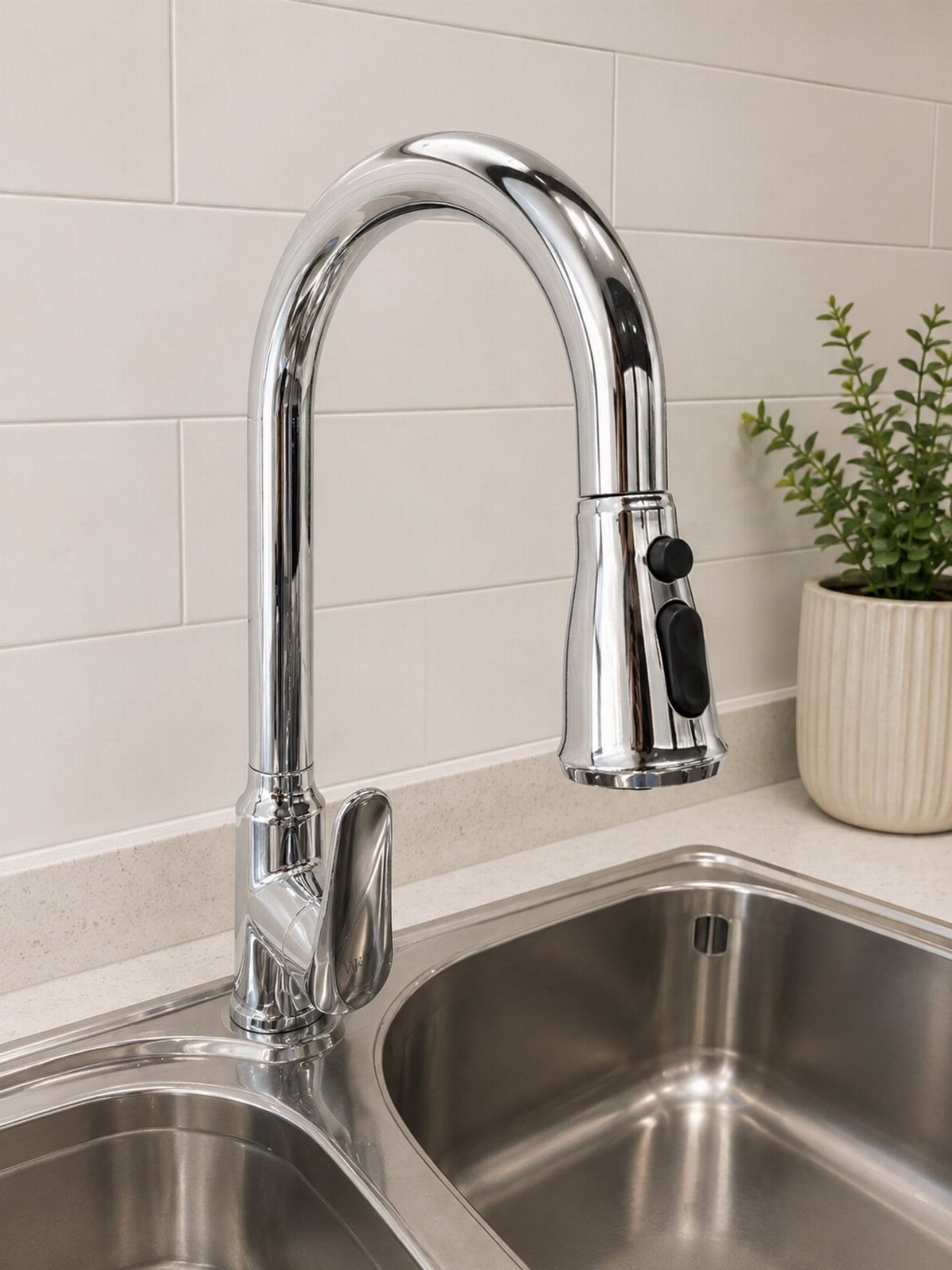
A chrome pull-down over a stainless double sink is the most forgiving combination I know, because the metals match and nothing fights for attention against white tile. A small plant beside the basin is all the decoration it needs.
Hole count and cabinet clearance decide which models will fit: check how many openings your sink or counter has, then measure the space below for the hose and the counterweight.
Most pull-downs can be a weekend DIY swap, though a cramped cabinet makes the job slower and harder on your back.
21. Pull-Down Faucet in Use

Washing greens is a job the pull-down does better than a fixed spout, because you aim the spray at the leaves instead of moving the colander around.
A black faucet over a stainless double basin also hides the small splashes that come with it.
Use the wide spray for produce and the stream for filling a pot. Keep the head close to the sink floor so water doesn’t bounce onto the counter.
22. Gold Pull-Down Faucet
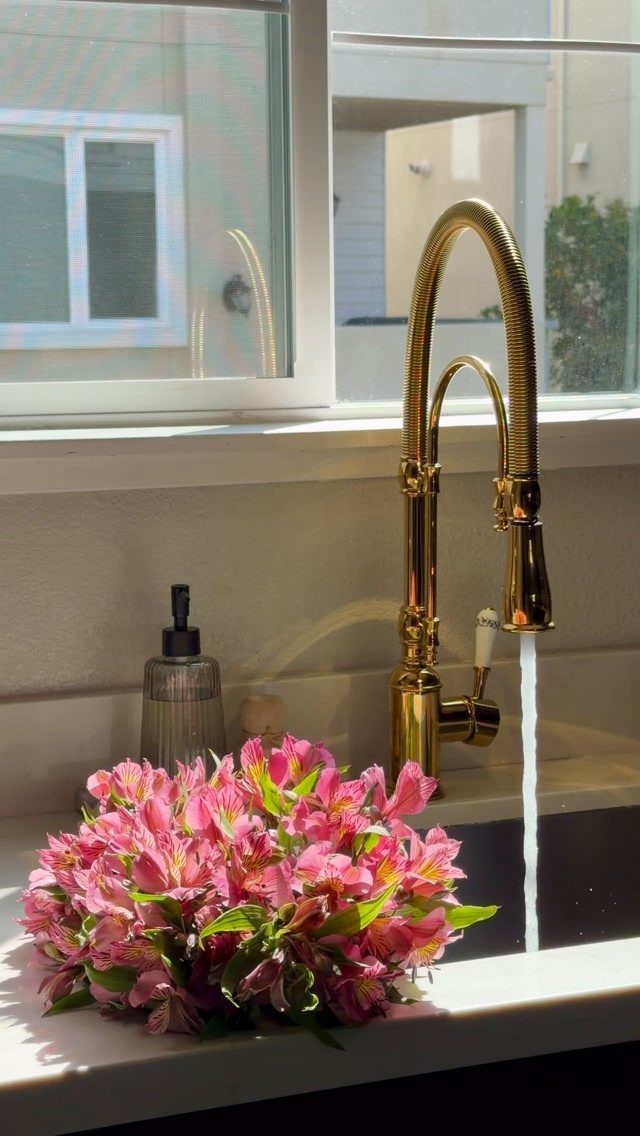
Against a white counter, gold stops reading as a fussy accent and starts looking like a deliberate choice.
If you are on the fence, I would pick gold only when the counter and backsplash are light and plain, since busy surfaces fight with a warm metal.
Match the soap dispenser finish if you want the pieces to look planned.
23. Spring-Coil Faucet
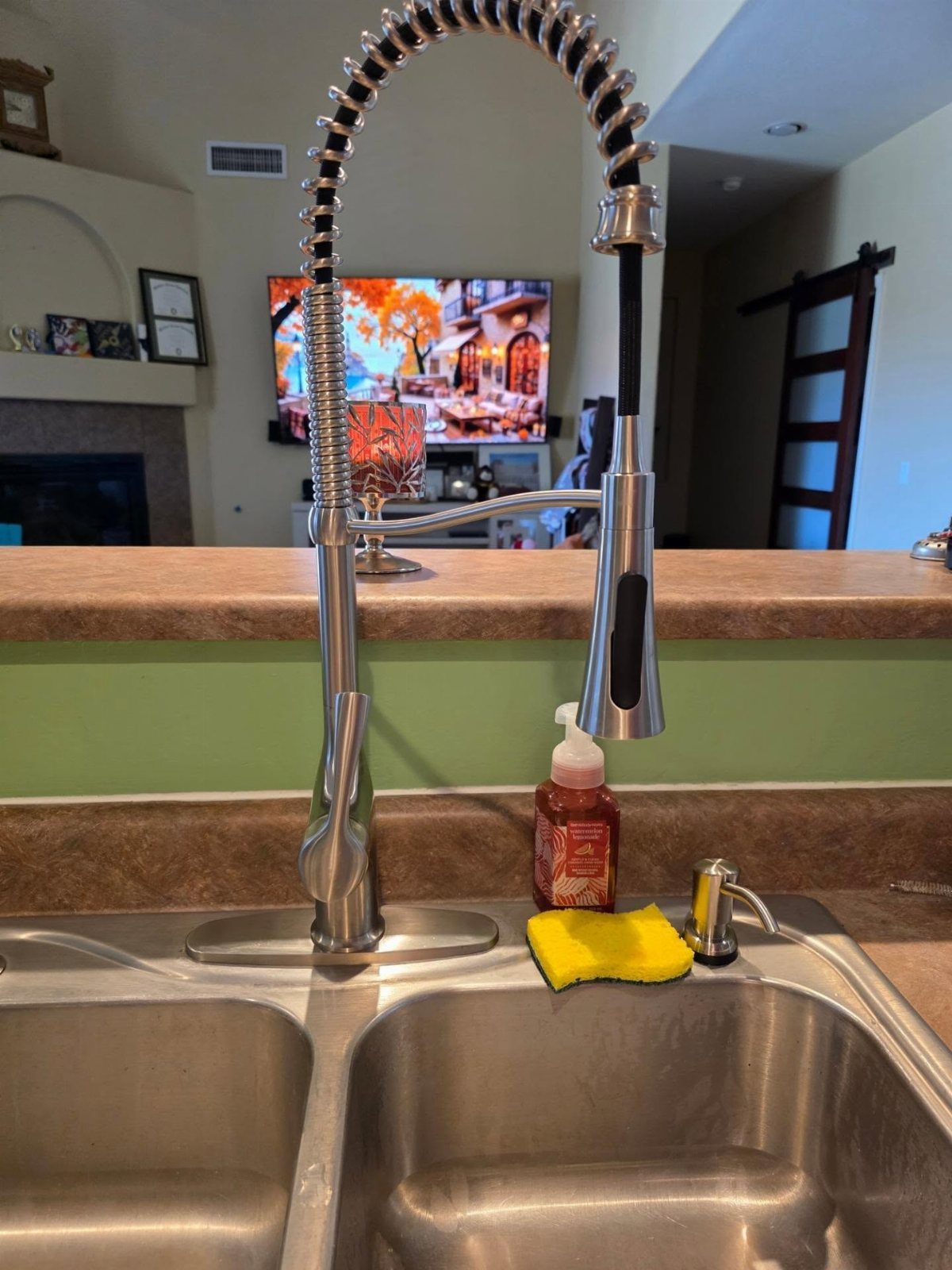
An exposed coil gives this faucet its character, and in stainless it fits a home kitchen that is lived in rather than styled. The spring lets you pull the head over either basin of a double sink.
The coil collects a little grime between the turns, so plan to wipe it down. Measure the overhead clearance first, because the coiled neck stands taller than most standard spouts.
24. Faucet Finish Comparison
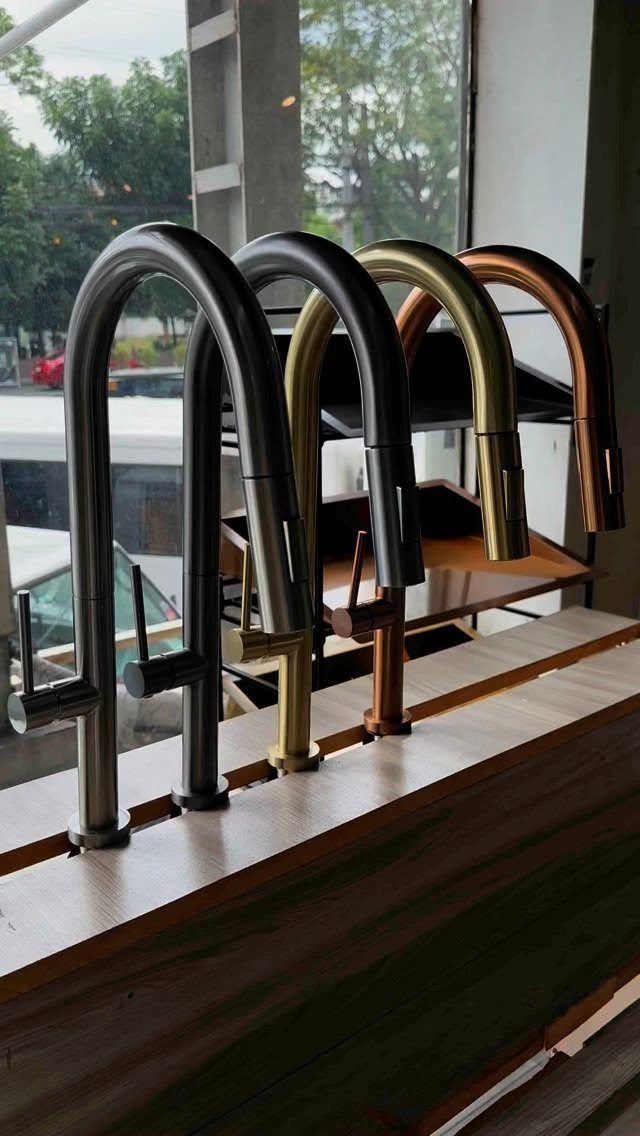
Silver, gunmetal, gold, and copper lined up together show something a catalog photo can’t: how each metal reads next to the others under one window’s light.
Silver and gunmetal read cool and calm. Gold and copper bring warmth.
If you can, hold samples near your own counter and cabinet color before choosing. I would pick based on what is already in the room, not on what looks best on a shelf.
Check Mounting Holes Before Buying
Count the pre-drilled holes in your counter or sink deck before you look at a single finish. That number narrows your options faster than price does.
With a single-lever faucet, the handle sits right on the spout body, so the sink needs 1 hole for it and a second only if you add a separate sprayer.
A two-handle setup needs three holes for the spout and both taps, plus a fourth if you want a side sprayer.
If your deck has 3 holes and you’d rather run a single-lever faucet, look for a model that supports both mounting styles.
Moen makes most of its kitchen faucets for either 1 or 3 holes, and on a 3-hole sink a deck plate hides the 2 holes you aren’t using.
Confirm the plate is available for the exact model before you order, so you aren’t left with open holes on installation day.
Frequently Asked Questions
What is the current trend in kitchen faucets?
Gold and matte black are the finishes people notice most in a pull-down faucet, while brushed nickel is the quiet one.
Brushed nickel is the safe pick if you’re torn, since it won’t look dated the way a trendy finish can. Matte black stands out against a pale countertop, but over a dark sink the faucet melts into one flat shape.
What should I know before buying a pull-down kitchen faucet?
Before anything else, check how many holes your sink or counter has, because that number narrows down which faucets will fit.
Single-lever faucets get by with 1 hole, two-handle styles usually call for 3 plus extra deck width, and a 1-hole faucet on a 3-hole sink needs a cover plate to hide the gaps.