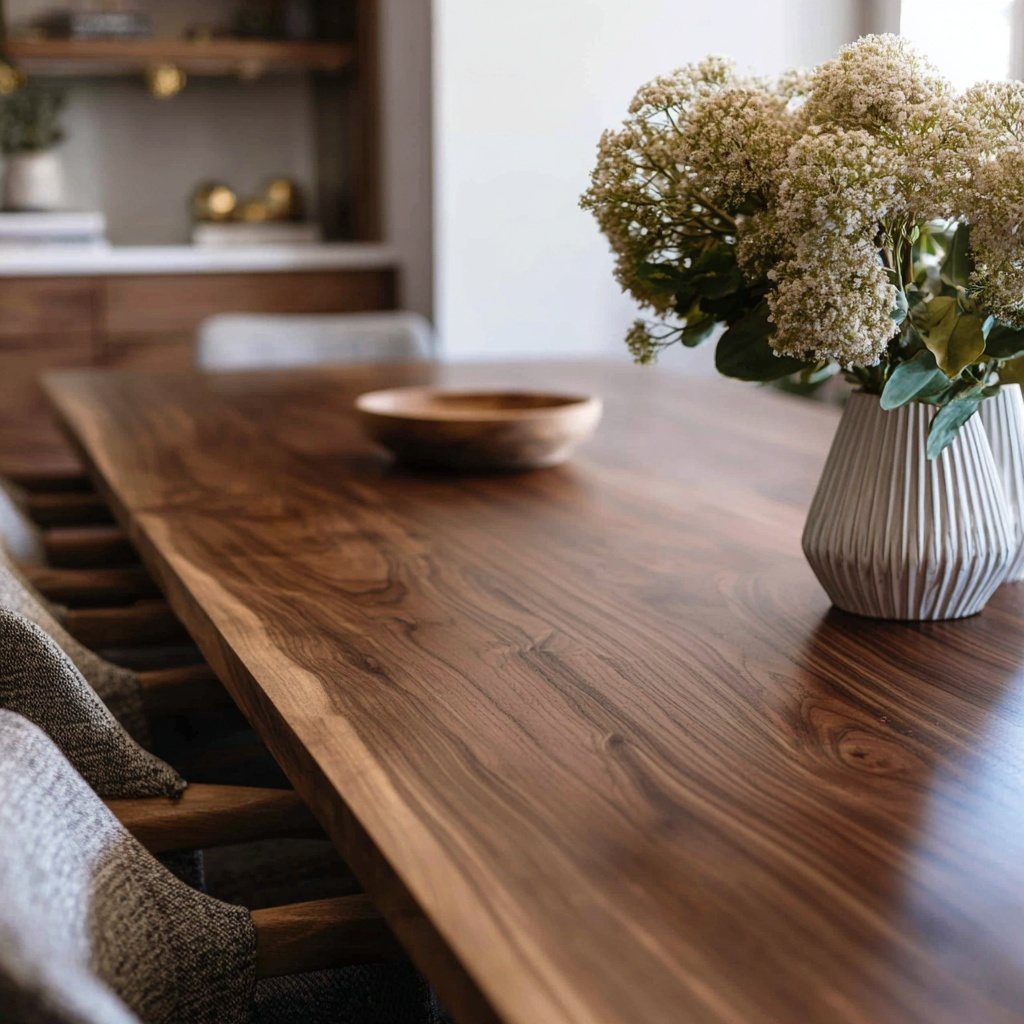

Walnut dining tables range from a live-edge slab with a dark resin river to a seven-piece set with a fluted base, and the choice comes down to how much attention you want the table to carry.
A room that is already busy, with patterned rugs, bold art or a statement chandelier, needs a quieter top and plain chairs, while a plain room can hold a book-matched top, sculptural legs or a black X-base.
Dim rooms and small groups of four push toward lighter walnut and a round top.
1. Live-edge Walnut Table
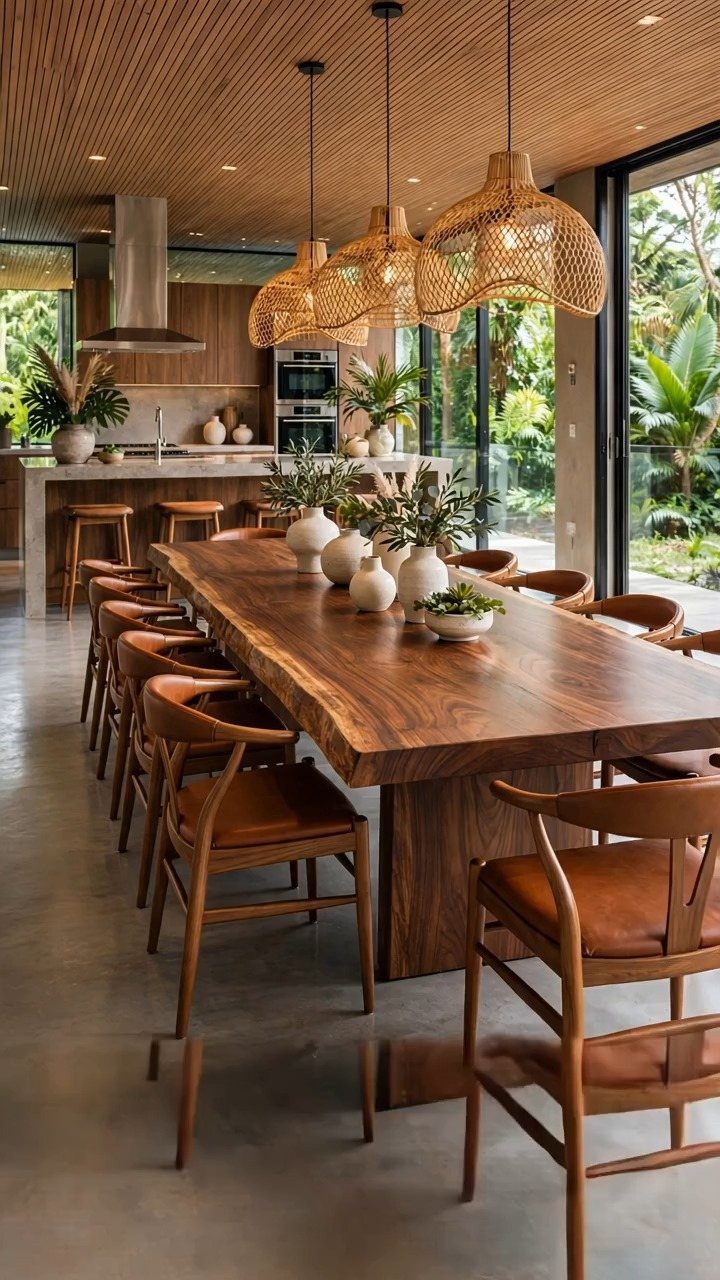
Uneven edges are what make this table. The outline follows the tree, so the grain and the curve of the slab get all the attention.
Plain surroundings let the wood carry the room, so skip busy rugs, bold wallpaper, and loud art nearby.
Leather chairs and woven pendants add texture without competing with the grain, and the mix of smooth and rough surfaces keeps a plain room from feeling flat.
A busy centerpiece would only crowd an edge that already has a lot going on.
2. Walnut Table with Curved-back Chairs
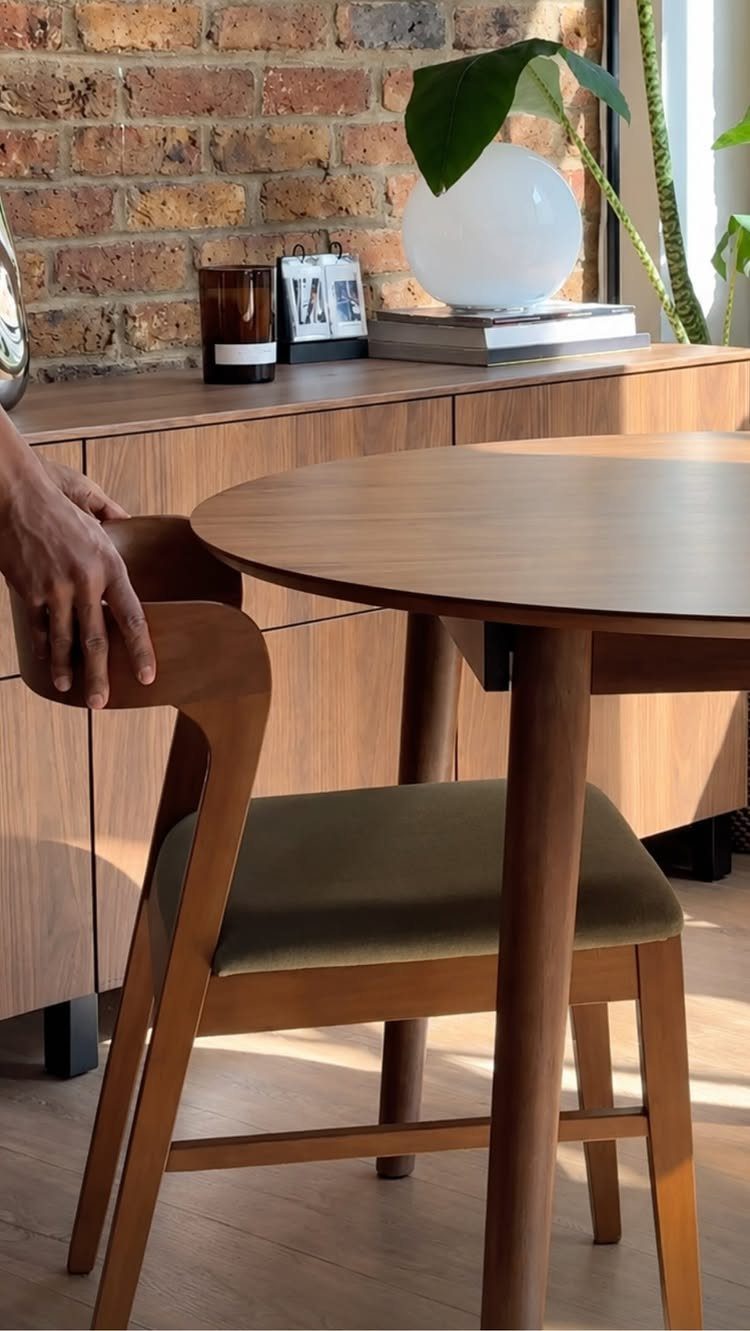
Chairs cut from the same wood as the tabletop make the set look like one piece of furniture. A round walnut table with a matching curved-back chair is a clean version of that.
I like it best in a room with other textures, like the brick and wooden sideboard here, so the wood has company.
Too much of one tone can feel heavy, and a colored seat, such as the green one, breaks it up.
3. Black Dining Chairs
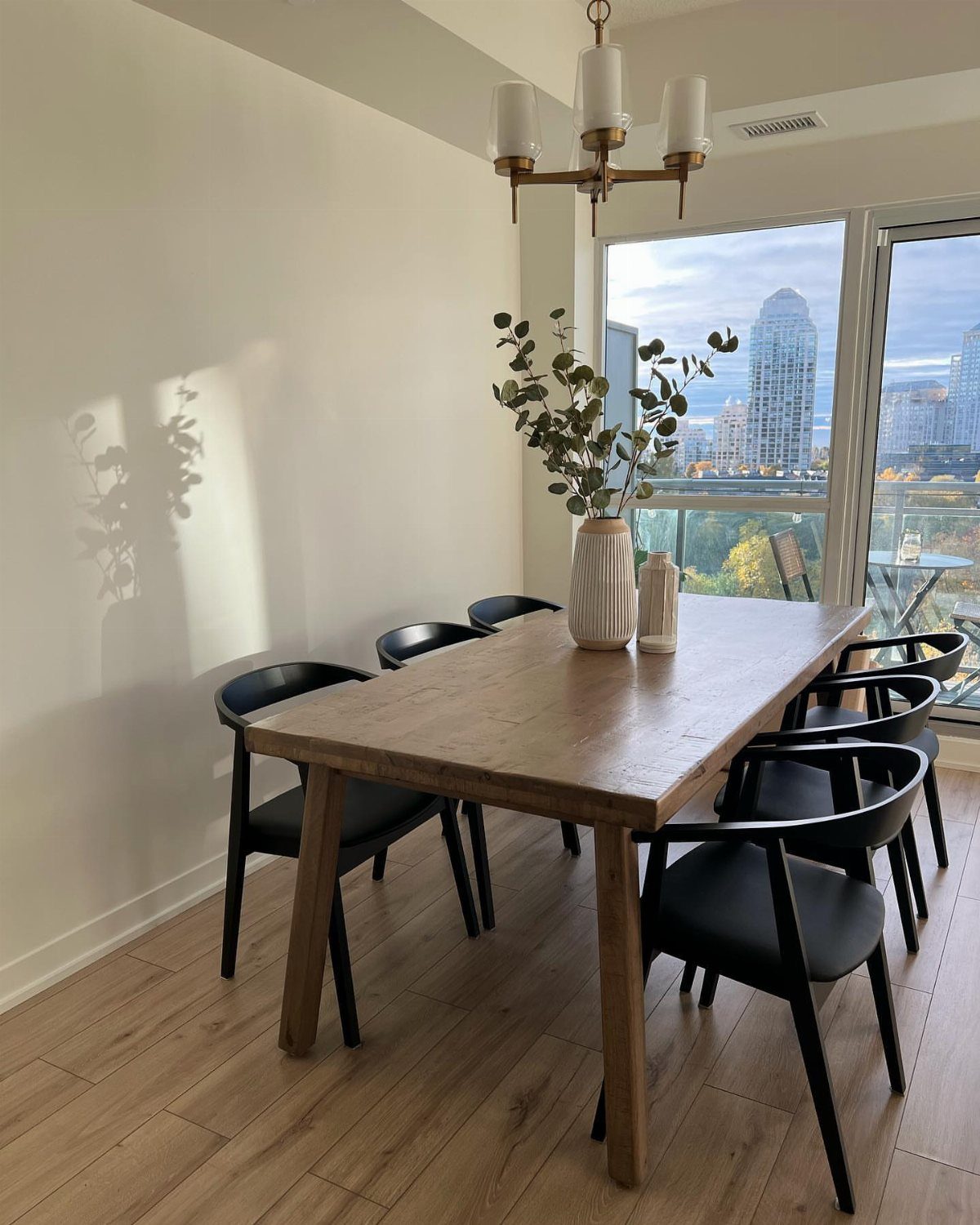
Black chairs give a walnut table a crisp outline. 6 curved-back chairs around a rectangular top read as a graphic border, and the rounded backs soften all that dark.
On a lighter walnut, black sets up a strong contrast. On a deep, dark walnut, it blends into a moody, tonal look.
I prefer the first, since the grain stays visible. Greenery in a vase adds a soft counterpoint.
4. Sculptural Pedestal Base
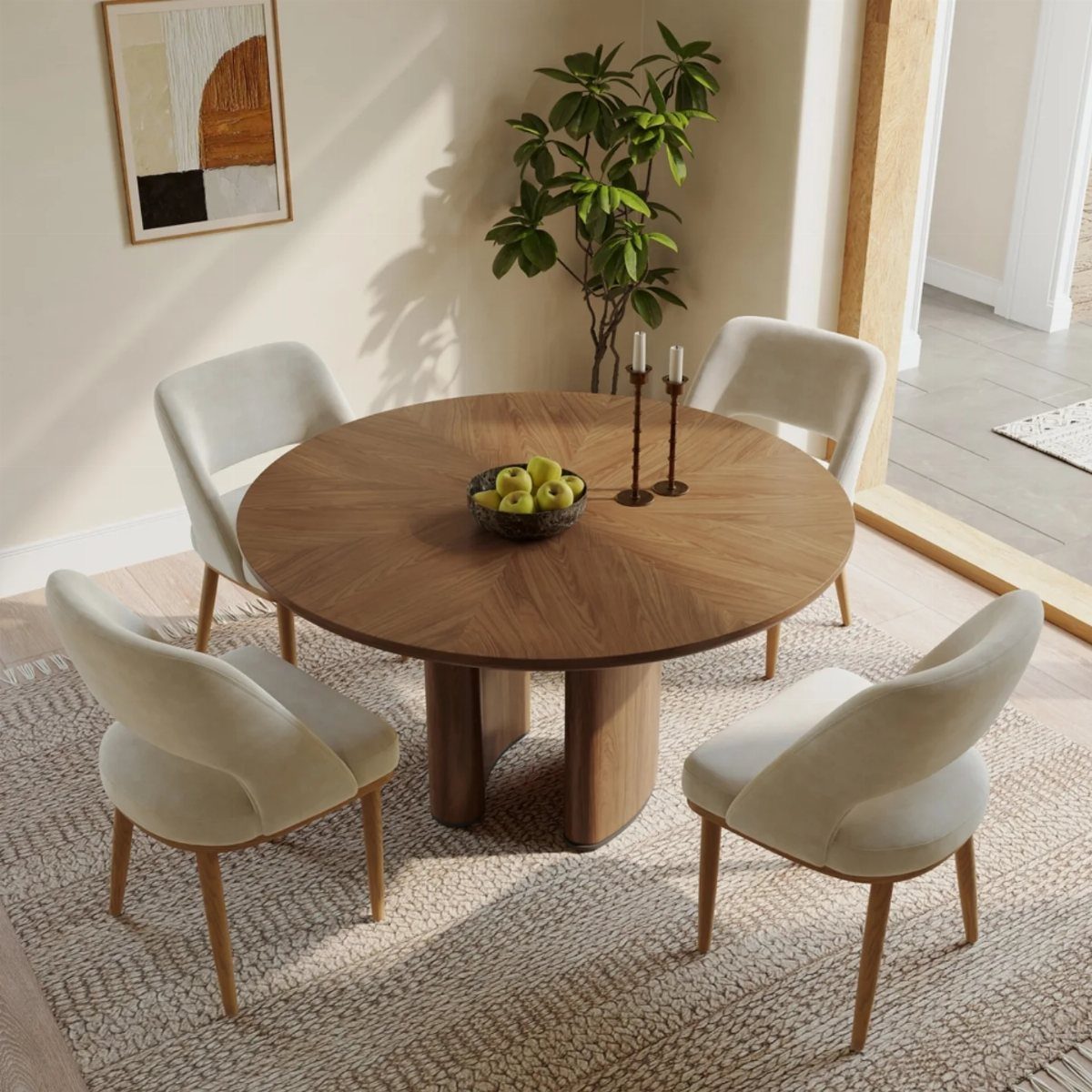
A shaped pedestal base makes the table a sculpture first and a place to eat second. Choose it when you want the lower half of the table to draw as much attention as the top.
Round walnut with a carved base works best with quiet chairs.
Cream upholstery keeps the eye on the base, since a soft, quiet color gives the sculpted shape room to be the focal point. A textured rug underneath adds softness without hiding the shape.
5. Dark Walnut Rectangular Table
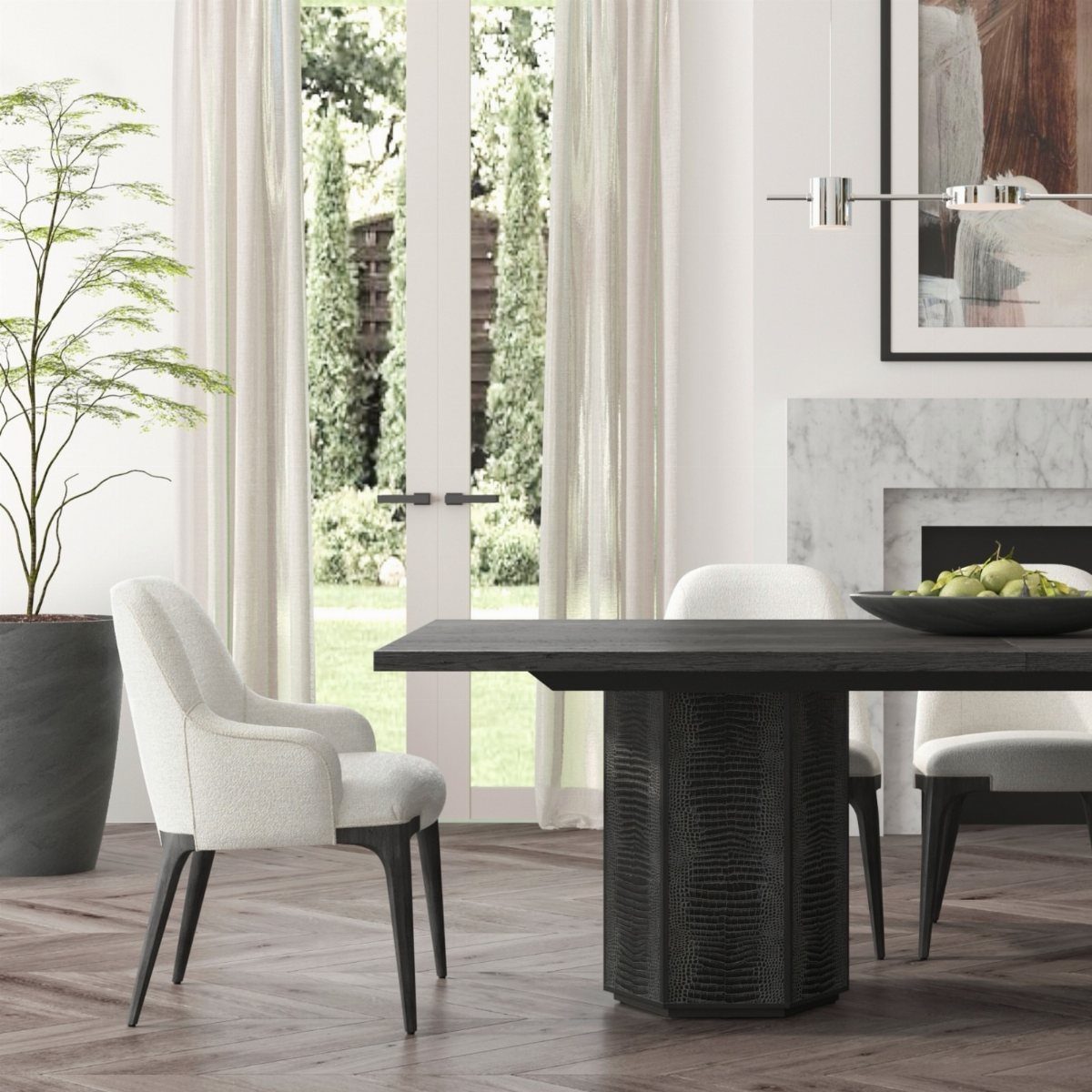
Rectangular is the shape most people picture when they hear "dining table," and a dark walnut top suits it well. The long, even surface shows off deep grain.
Cream chairs give a clear light-and-dark split that I find easy to live with.
A textured pedestal base adds interest below the top, so the table doesn’t feel flat. A single bowl of fruit is plenty on top.
6. Walnut Table with Metal Legs
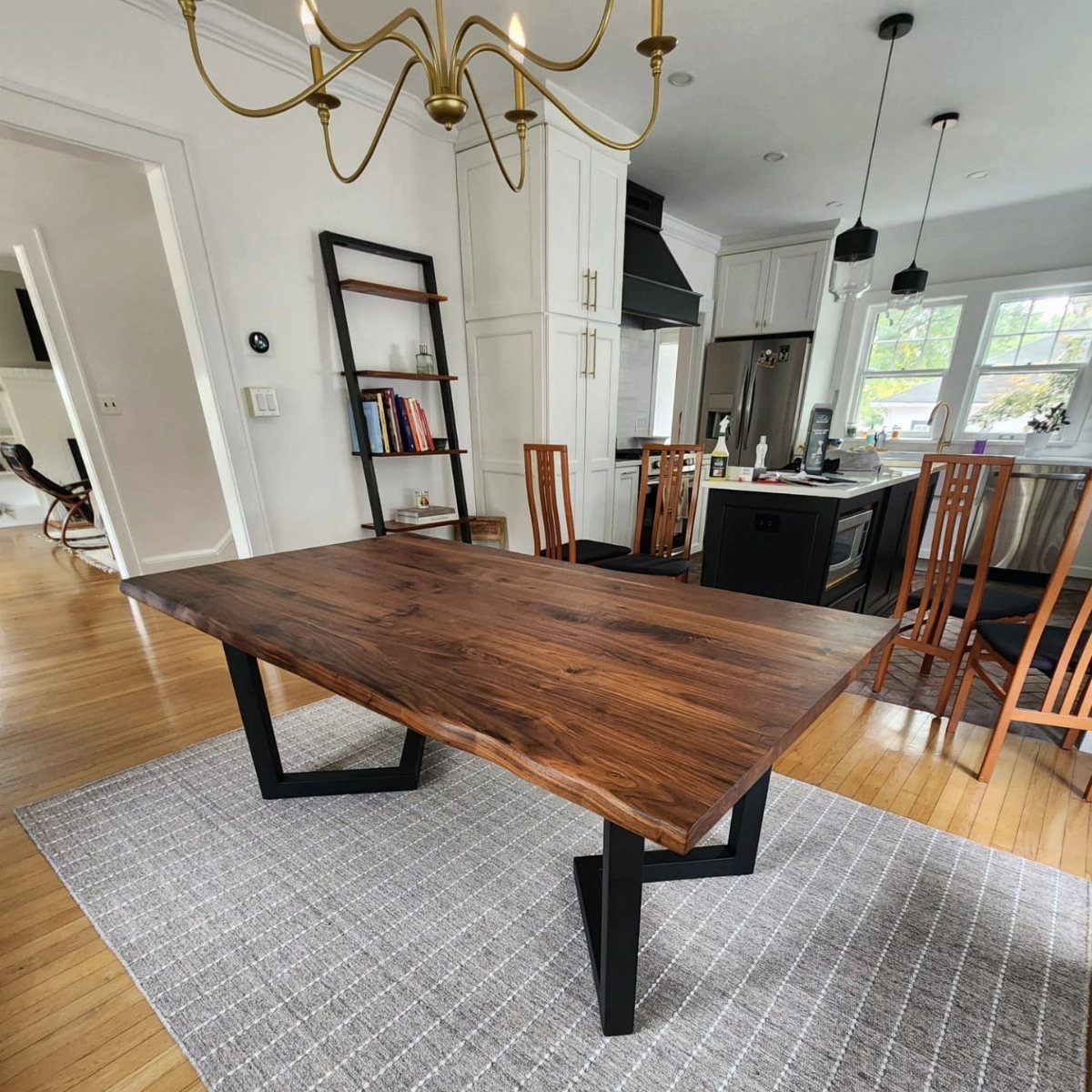
Thin black metal legs under a warm walnut slab give you wood and steel in one table. The dark legs look sharp against the grain, and the top stays the focus.
I’d choose them for a live-edge top, since a slim base keeps the eye on the natural edge.
A grey rug beneath cools the warm wood nicely. Matte black looks more modern than polished metal, which is my preference.
7. Walnut Mid-century Table with Sputnik Chandelier
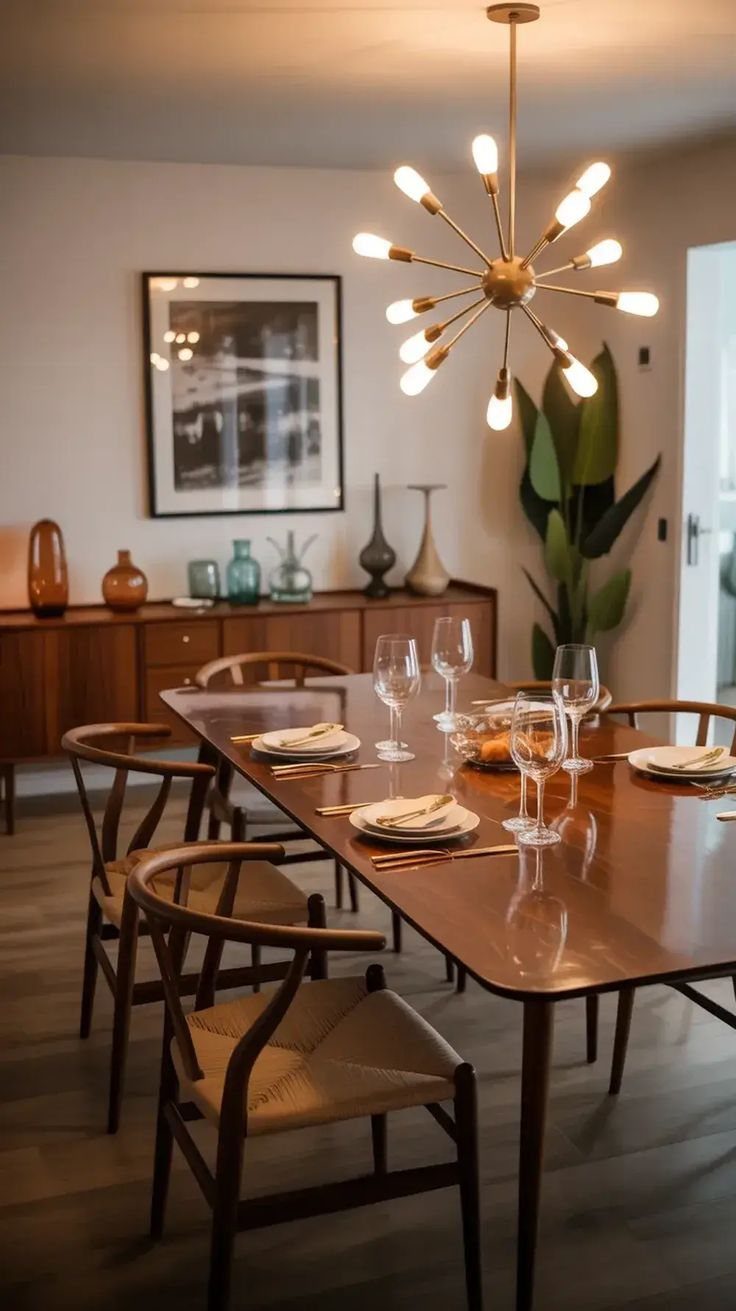
Gold arms and a round starburst frame set the tone before you sit down. A Sputnik chandelier hung over a walnut table with curved-back chairs gives you a full mid-century dining room from 3 pieces.
Match the brass tone to your hardware or frames so the gold looks planned. Sideboard styling stays light in this room, with a couple of vases and one framed picture, since the chandelier already fills the upper half.
8. Round Walnut Table
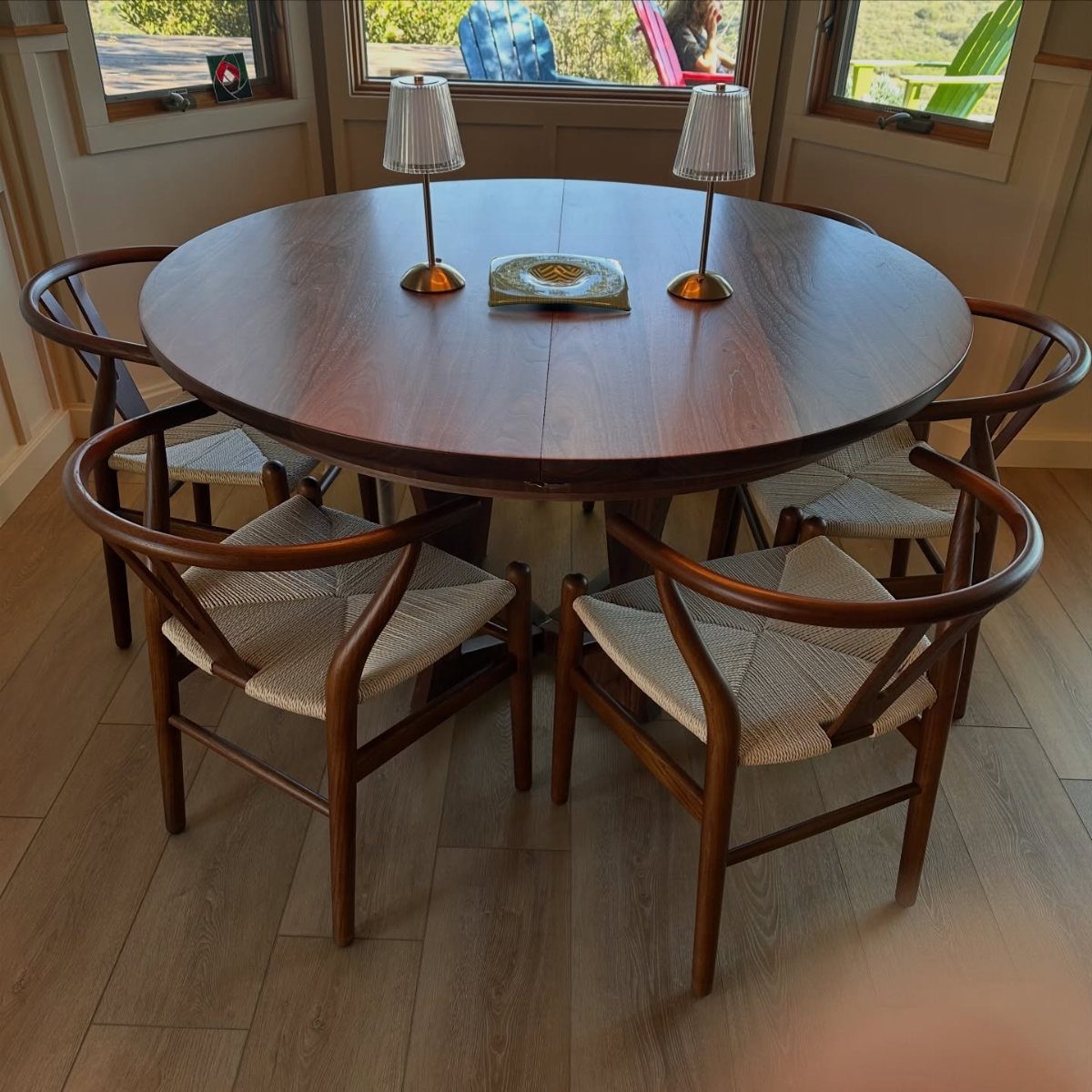
A round top has no head and no foot, so every seat is equal and conversation stays in one circle. That makes it the friendliest walnut option for a smaller group of four.
Woven cane chairs soften the dark wood without hiding it. Small lamps and a tray on the table keep the surface from looking bare, and I’d choose that over a tall centerpiece that blocks sight lines across a round top.
9. Oval Walnut Table
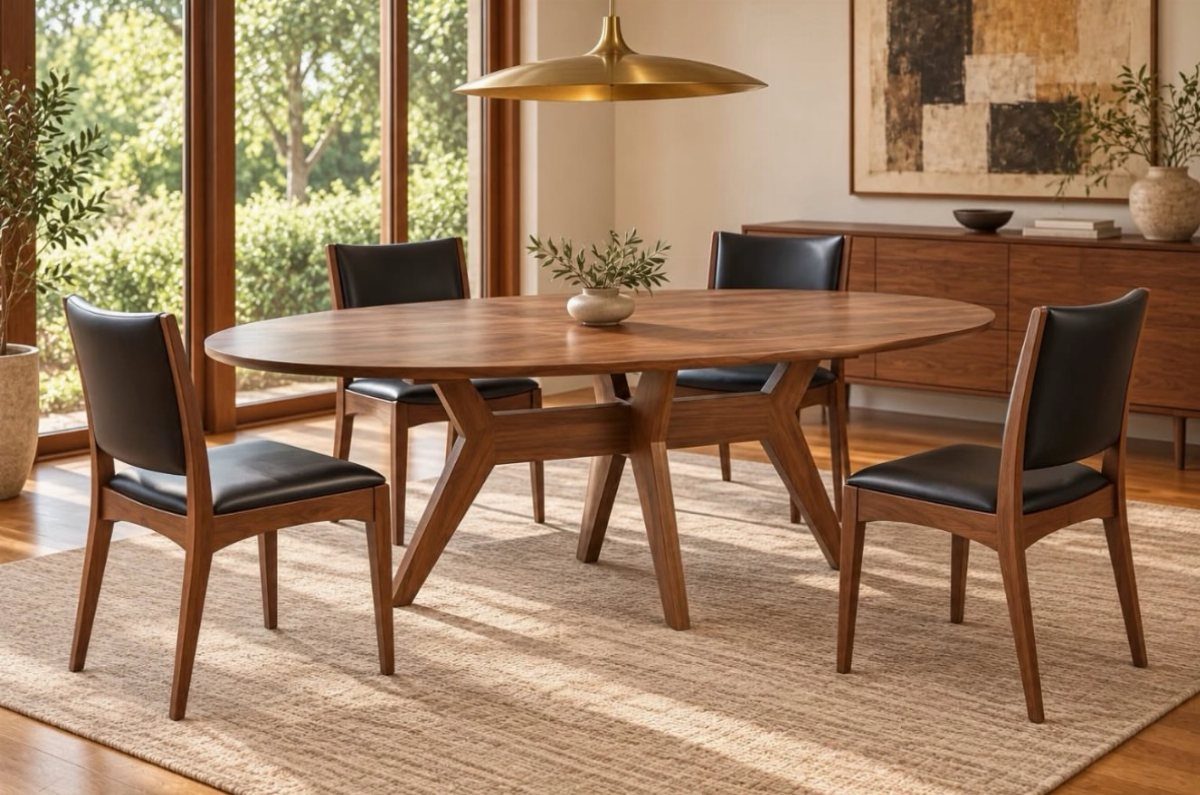
Oval keeps the length of a rectangle but drops the sharp corners, so the table reads softer and easier to walk around. Dark walnut on an oval gives you a long, smooth sweep of grain.
Black leather chairs sharpen the look, and a beige rug underneath warms it back up. I like that pairing because the rug lets the chairs and the wood each stand out.
10. Dark Walnut Dining Table
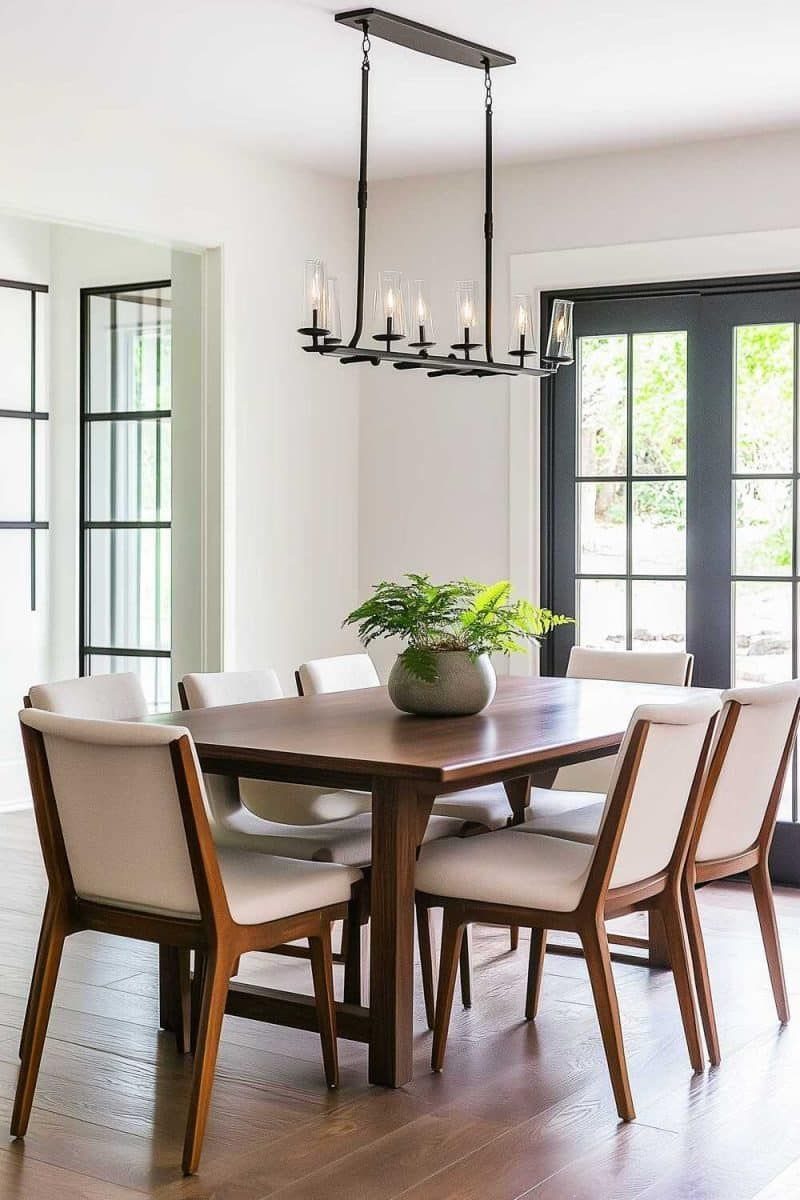
Dark walnut turns the table into the heaviest object in the room, in a good way. Cream upholstered chairs keep that weight from tipping into gloomy, and a bright, window-lit room helps even more.
A black linear chandelier echoes the dark top and gives the long table a matching line overhead.
Add a potted plant for a living, green note. If your room is dim, I’d pick a lighter walnut instead.
11. Fluted Pedestal Base
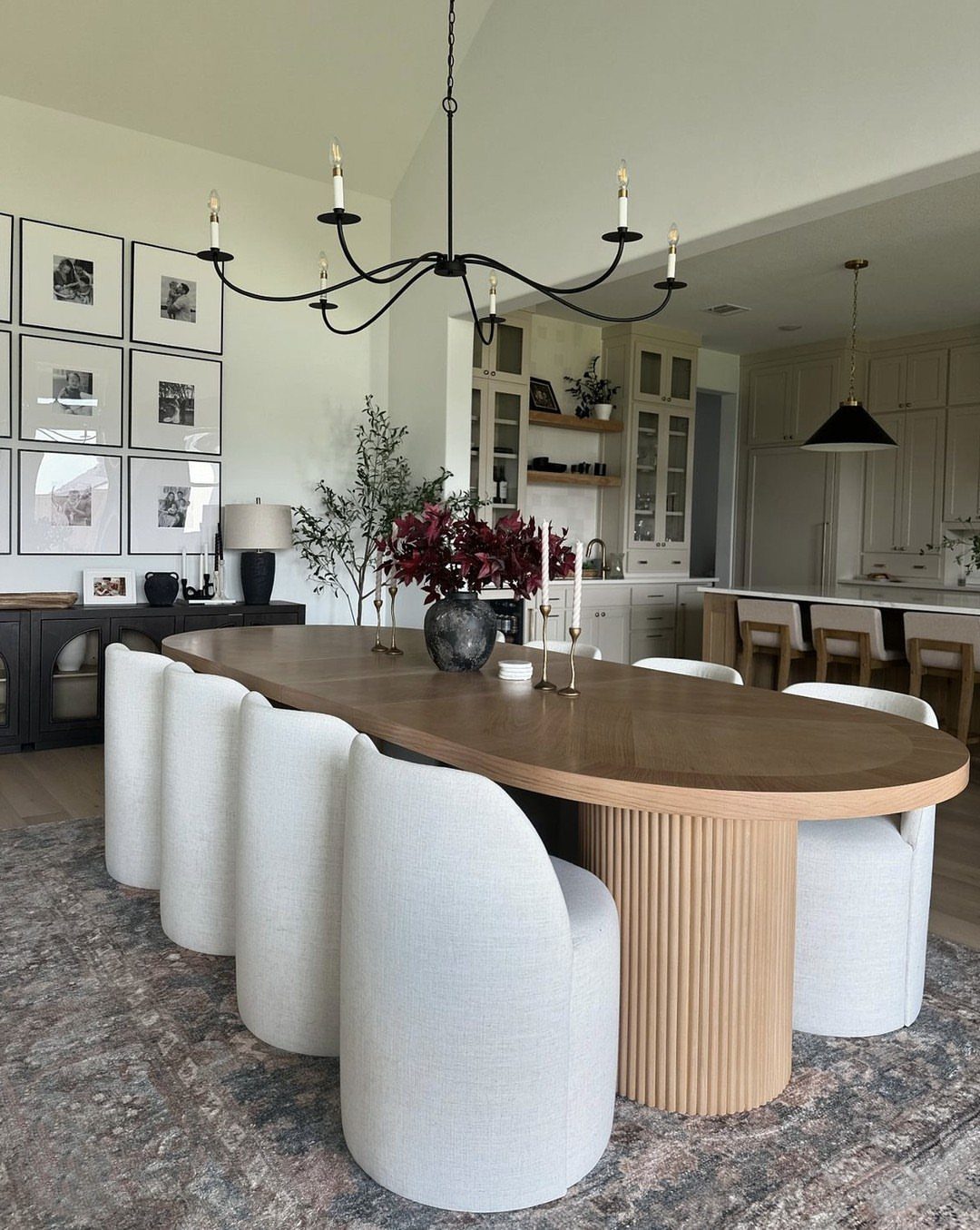
Vertical grooves down the pedestal turn a plain support into a column. On an oval walnut top, fluting adds shadow and rhythm below the table, where most designs go blank.
Cream upholstered chairs keep the look calm so the carved lines read clearly. A pedestal also clears the corners, so chairs fit around an oval with no legs in the way.
12. Extendable Walnut Table
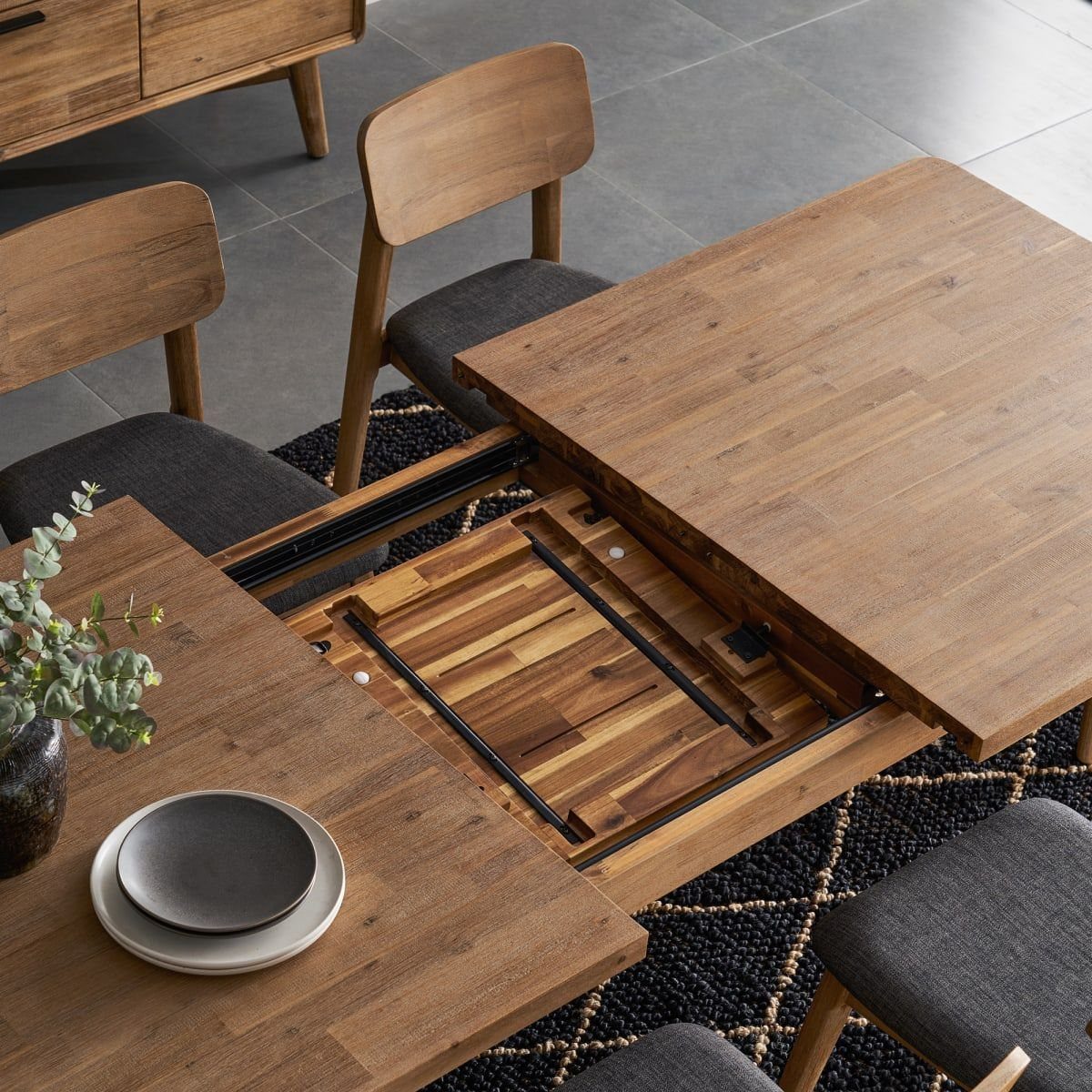
A table that opens up lets you buy for the nights you eat alone or with family, not the occasional night you host. The inner leaf slides out from the middle, and the top gets longer when you need it.
Pick a walnut finish that matches the leaf to the main top, so the seam stays quiet. Check that the rug extends past the chairs when the table is fully open.
13. Walnut Table and Bench
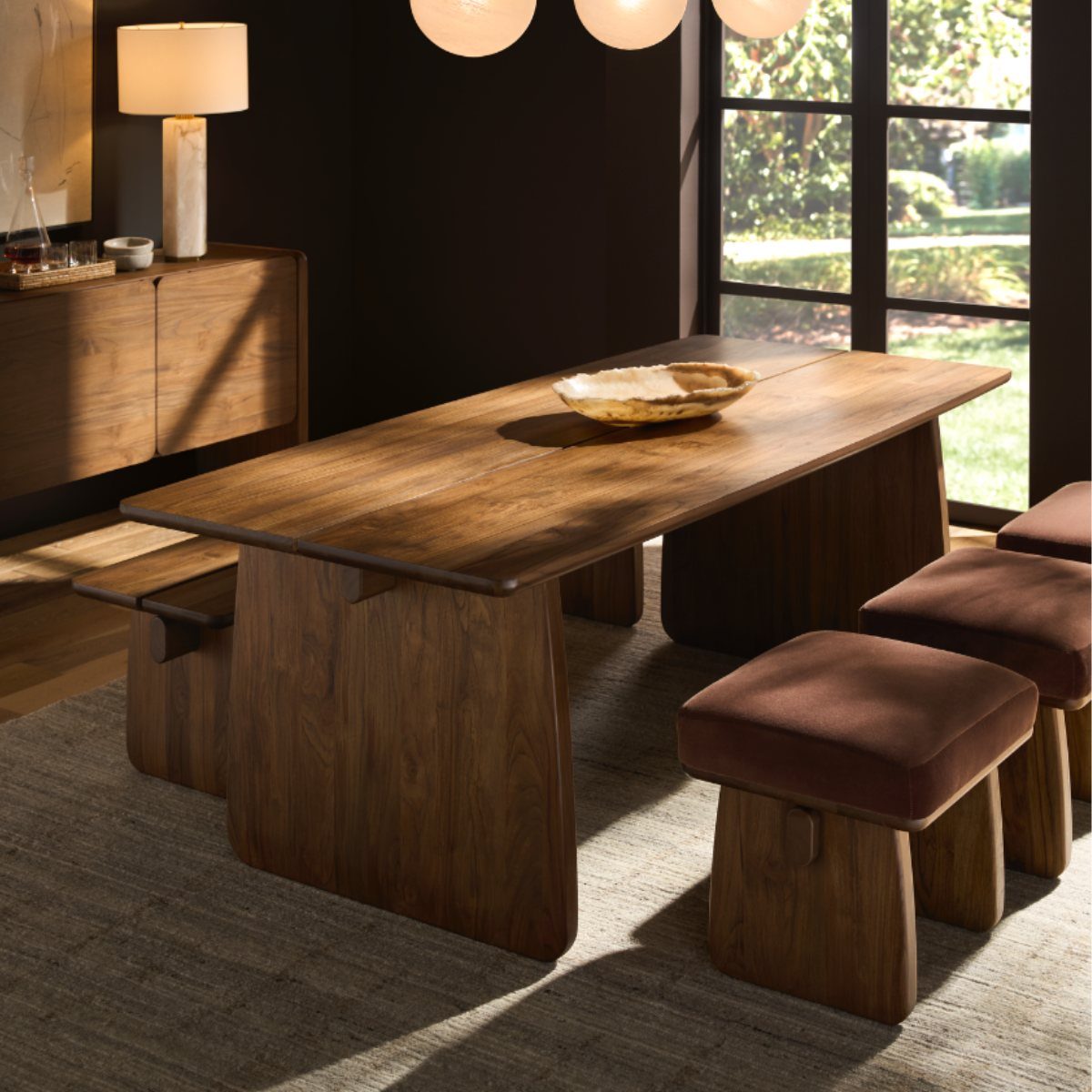
Swap the chairs on one side for a bench and the table gets a longer, calmer line. Here the benches match the walnut frame and add an upholstered seat, so the wood doesn’t read as one dark block.
A sideboard in a coordinating wood ties the room together. Leave the rug, lamp, and window light alone; the matching wood already does the work.
14. Walnut Table with Cane Chairs
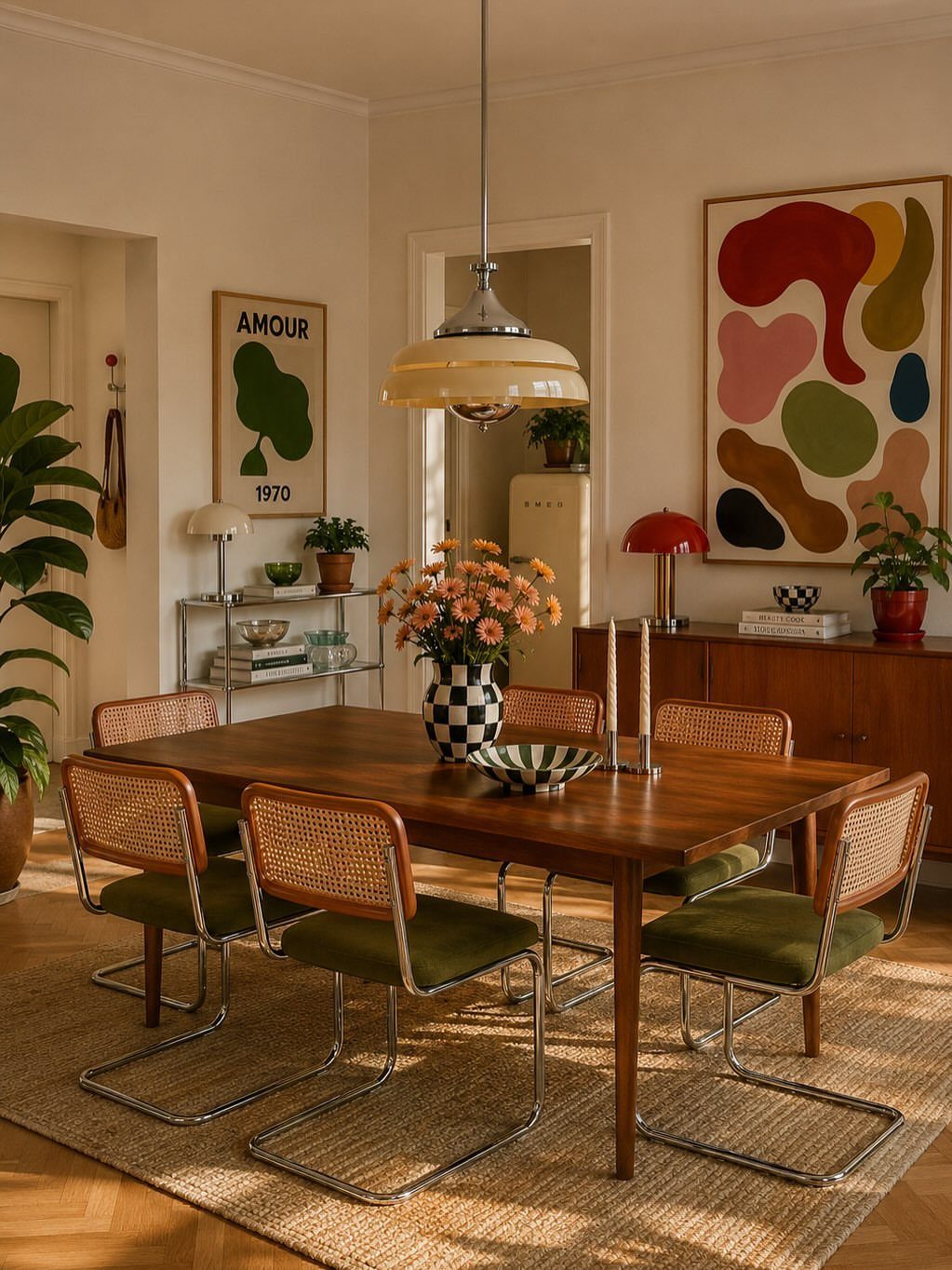
The open weave of cane breaks up the solid mass of walnut, so a rectangular table and its chairs don’t read as one heavy block. Green cushions on the seats bring in color without covering the woven backs.
Bold art on the wall, like the poster here, works best when you repeat one of its colors somewhere in the chairs. I like a single pendant over the table to keep the ceiling line simple.
15. Walnut Table with Green Chairs
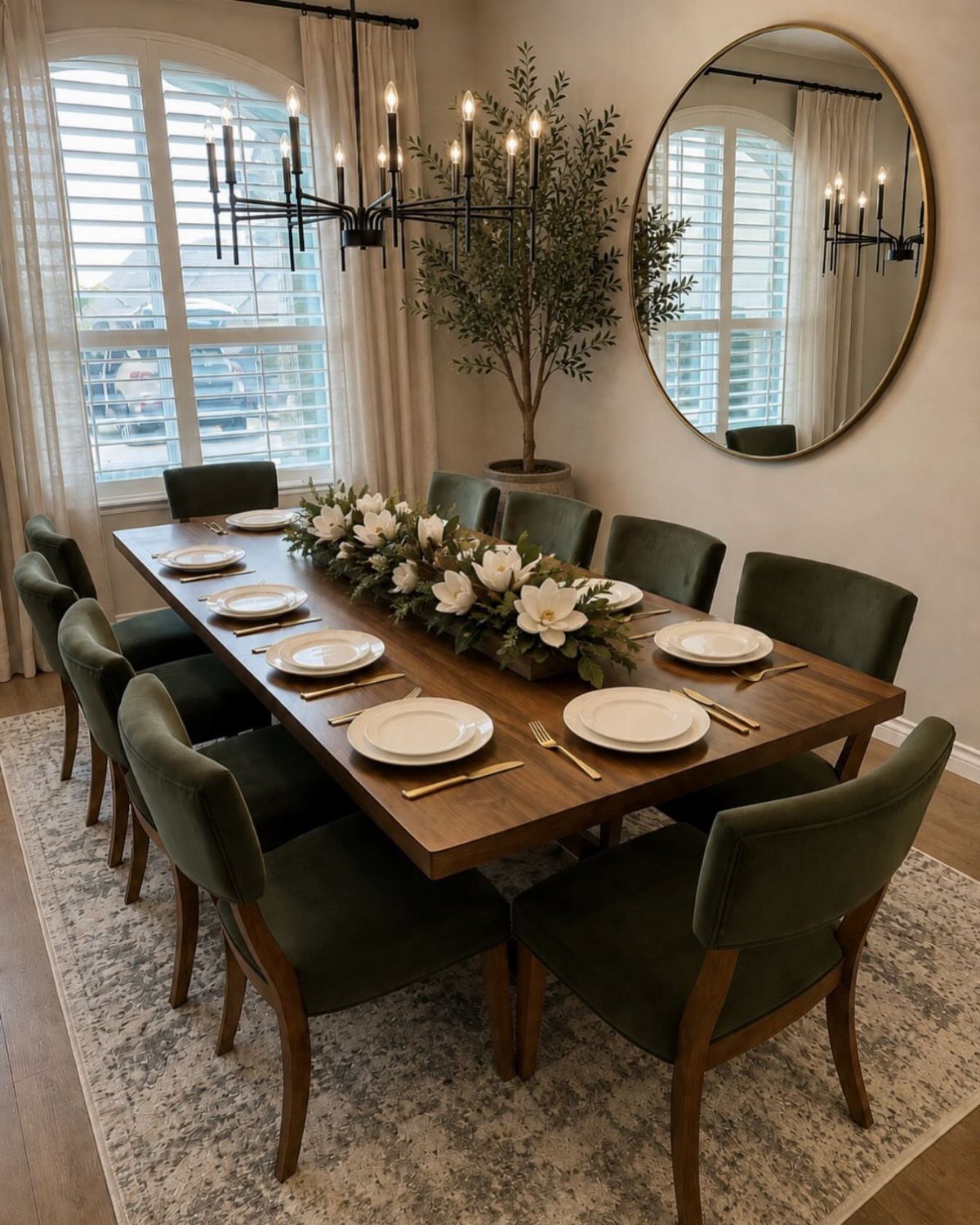
Olive is green with the brightness turned down, which is why it sits so comfortably next to walnut. Both are earthy, so the chairs look chosen rather than dropped in.
White plates and a pale centerpiece keep the tabletop light, which lets olive chairs stay the focus against the dark walnut. A large oval mirror and a potted tree nearby add to the green without adding more color.
16. Walnut Table with Blue Chairs
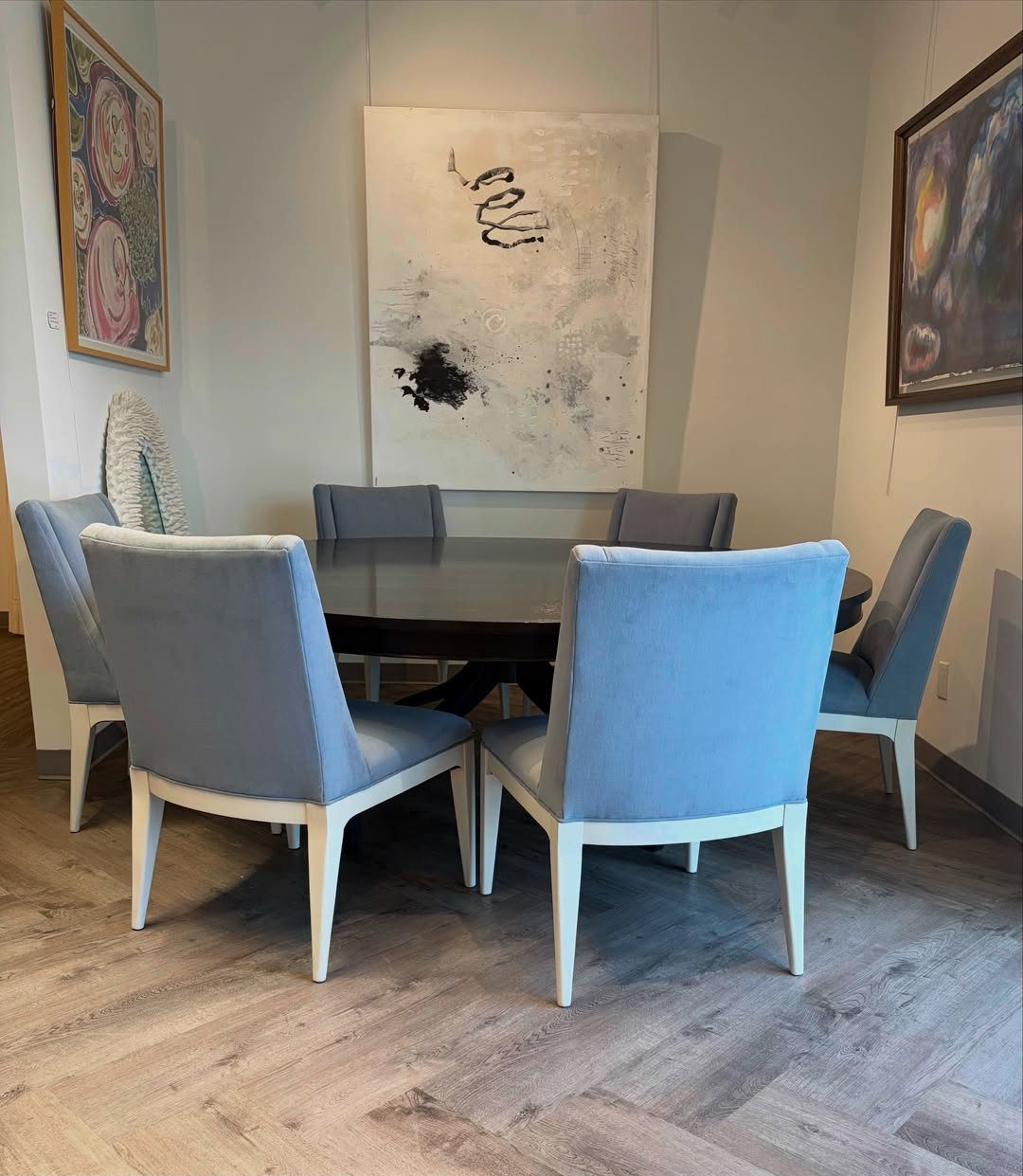
6 light-blue chairs around a dark walnut top set cool against warm, and the contrast is easy to read from across the room. Keep the walls light, as they are here, so the blue stays the main color.
Herringbone wood floors and 3 abstract pieces on the wall bring pattern, so I’d skip a patterned rug. Light blue is also gentler than navy, which would sink into the dark top.
17. Walnut Table with Gold Chandelier
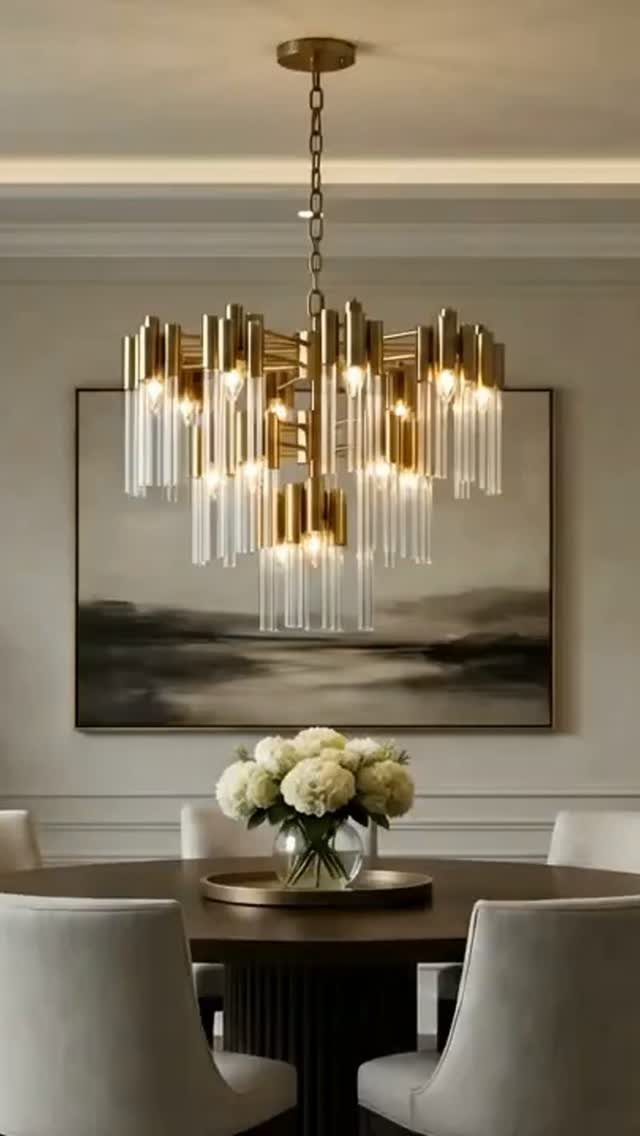
3 tiers of gold, wrapped in clear glass, make a chandelier that looks different from every angle. The maker describes a three-tier gold metal frame surrounded by clear glass tubes.
Centered over a round walnut top, it repeats the circle of the table. Pale chairs and a quiet landscape painting give it room, since a fixture this size already carries the upper half of the room.
18. Walnut Table with Pendant Lights
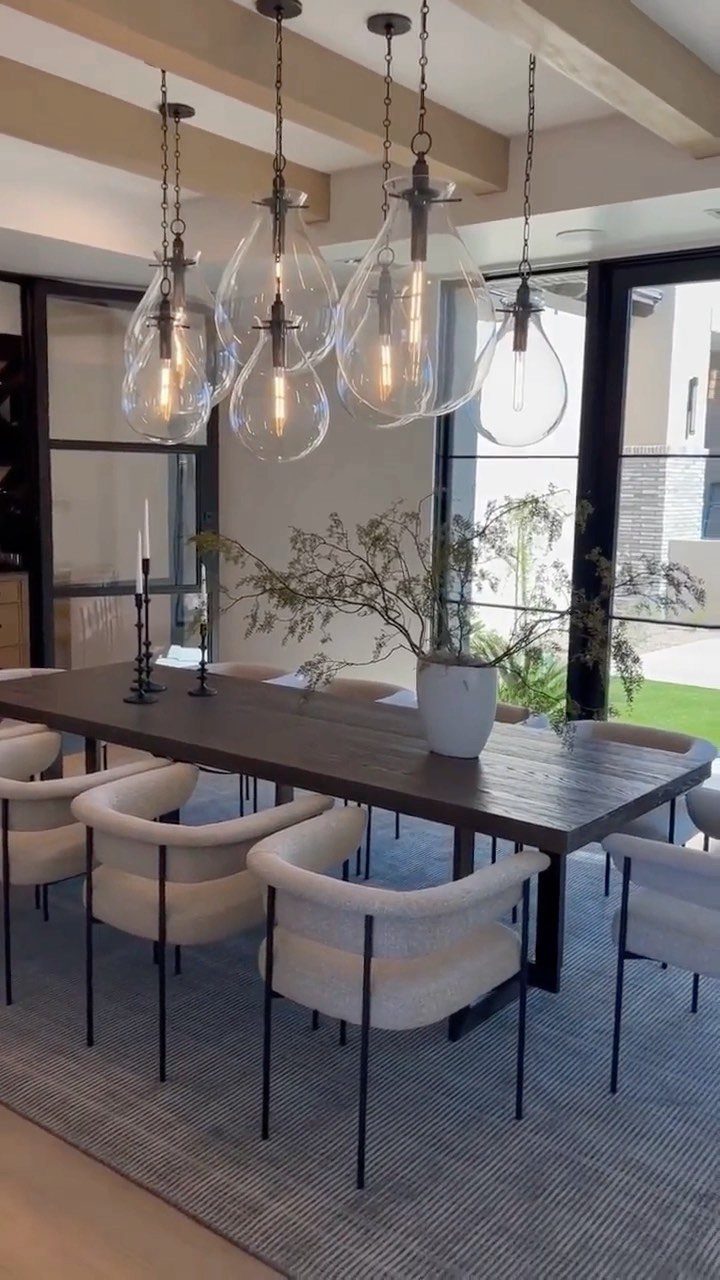
Glass pendants hang over the table without blocking the view of the room, which matters when the windows are this large. Over a dark walnut top with cream chairs, they add light and very little visual weight.
On a long table, I’d use several pendants in a row rather than one, so the light spreads along the full length.
19. Walnut Table with Area Rug
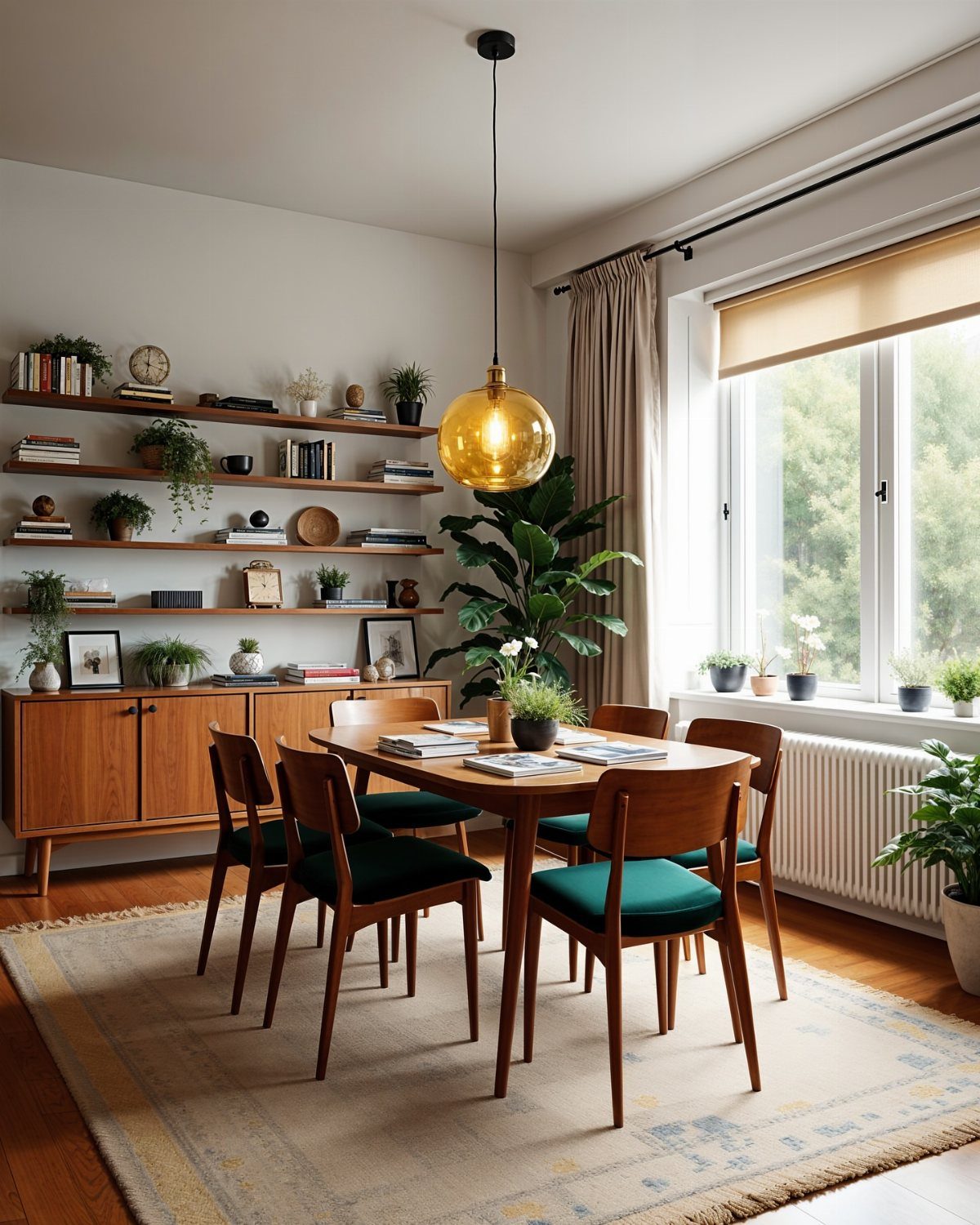
A light rug under a walnut table and chairs marks off the eating zone and keeps the dark wood from looking dropped onto the floor. Against a pale rug, the table edge reads cleanly.
Pull the rug out far enough that the chair legs stay on it when someone slides back. The green seats and gold globe pendant already supply color, so a plain rug gets my vote.
20. Walnut Table with Sideboard
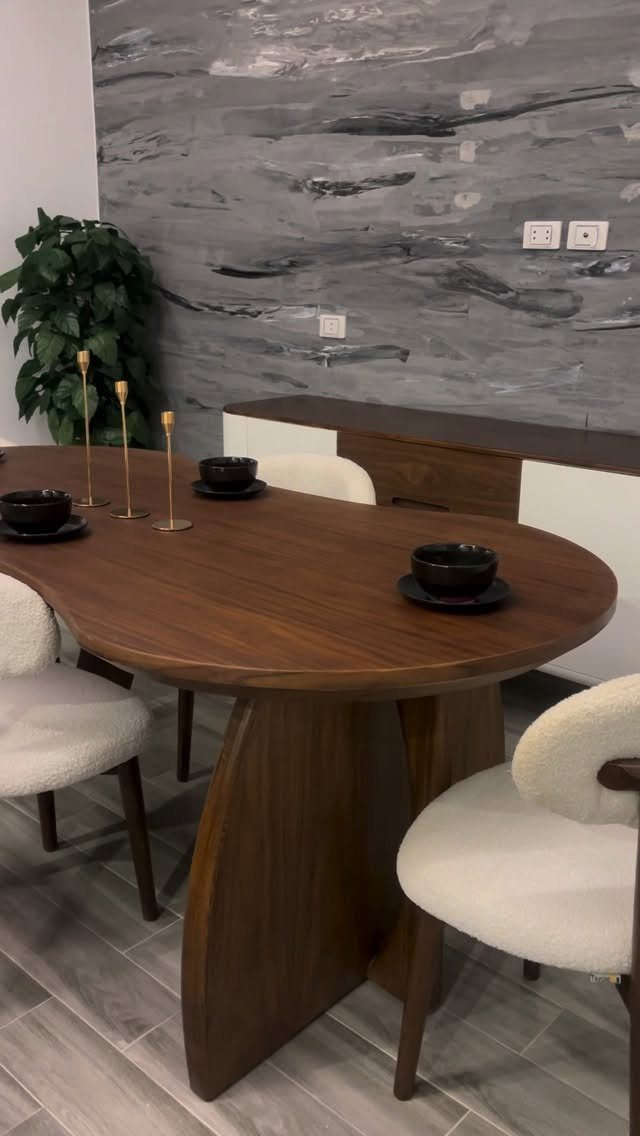
A sideboard cut from matching walnut makes the pair look like one set. Pushed against a grey textured wall, it adds a long, low surface for serving and storage right where you eat.
Matching the wood is my preference over a contrasting piece, since the grain repeats across the room. White chairs and black bowls keep both surfaces crisp, so don’t crowd the top of the sideboard with more than a few objects.
21. Walnut Table Centerpiece
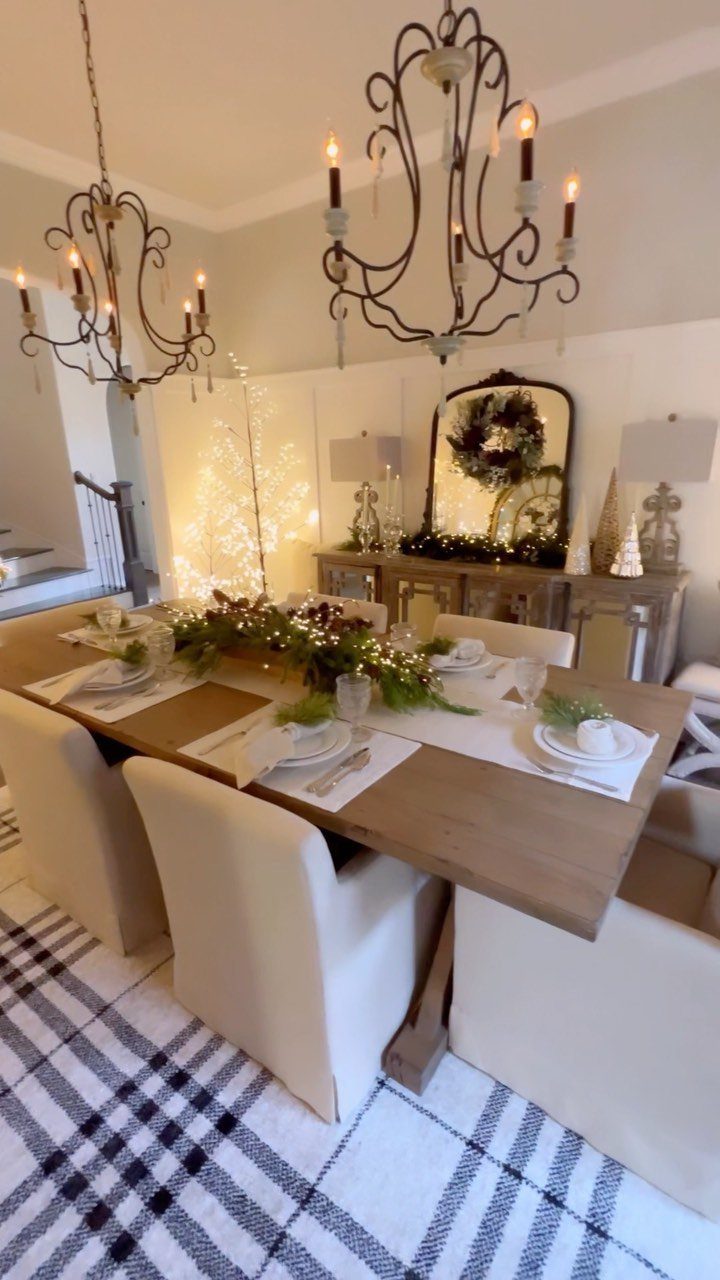
Greenery with small lights down the middle of a walnut table gives it a seasonal, festive look without hiding the wood. White chairs keep the arrangement bright against the dark top.
I’d limit the centerpiece to a narrow strip so plates and serving dishes still fit on each side.
Low greenery beats anything tall, because people across the table can see each other. Swap it out with the season and the table never needs replacing.
22. Walnut Table with Resin Inlay
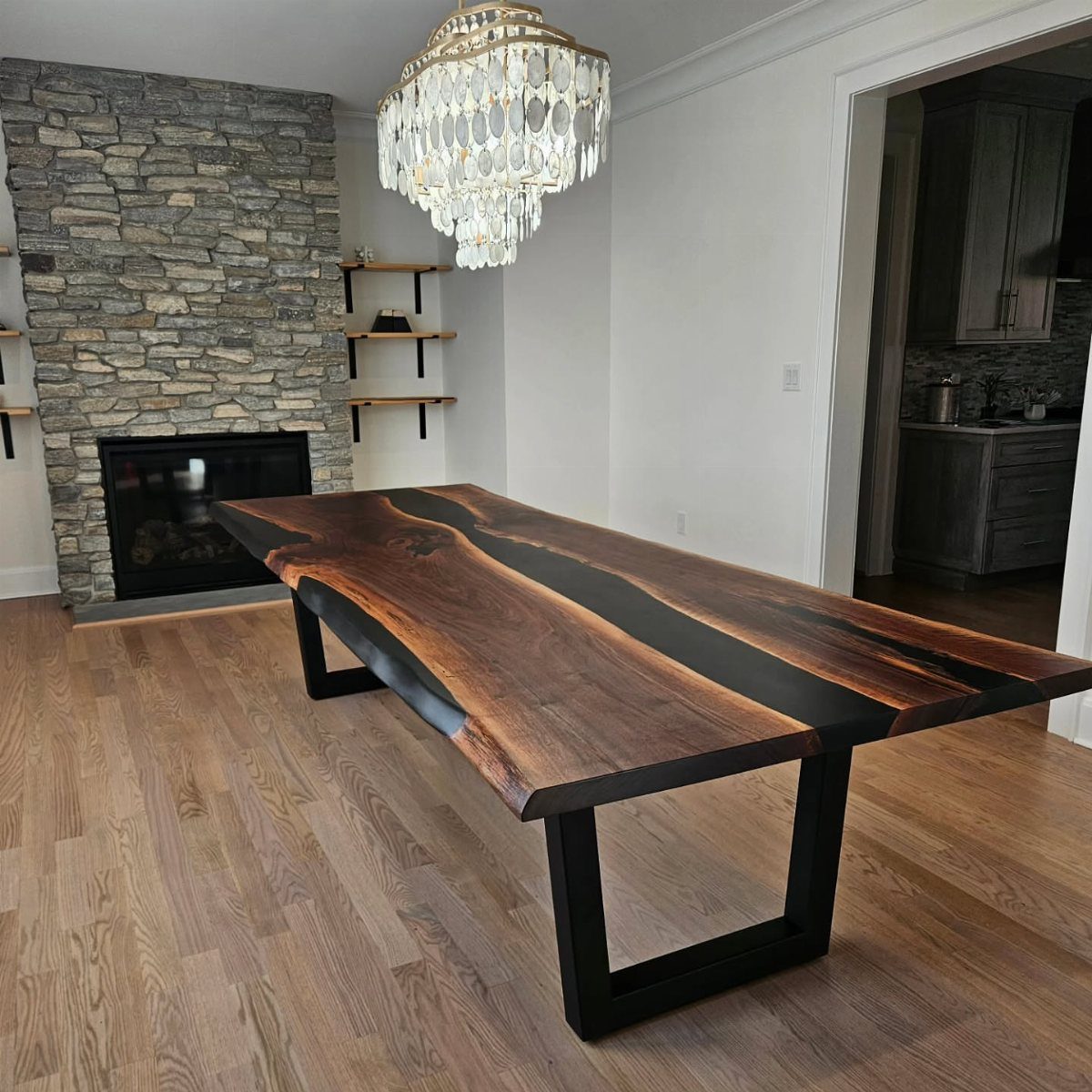
A dark resin river through a live-edge walnut slab adds a second line to follow beside the natural edge. With black metal legs below, the whole table stays in one dark palette and the grain reads clearly against the resin.
Pick the resin color before anything else: black is bold, and it suits a room with a stone fireplace and a sparkling chandelier. Keep chairs and decor simple, since the top already has plenty going on.
23. Walnut Table with Upholstered Chairs
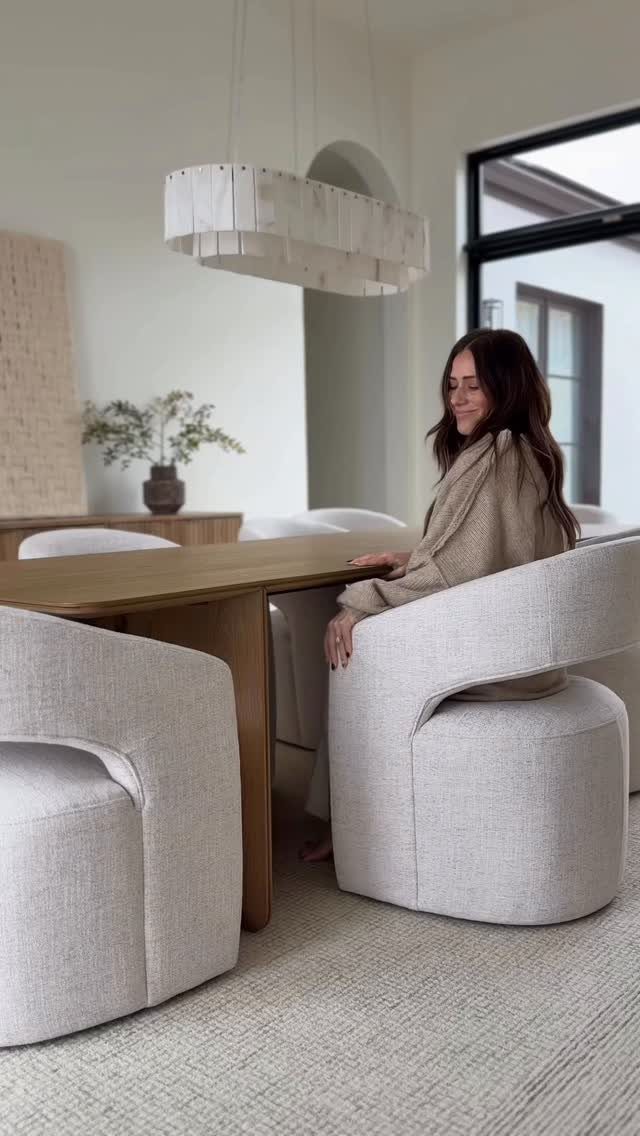
Large cream chairs with curved backs make a walnut table feel softer and more comfortable to sit at. Fabric against dark wood is an easy pairing, and the rounded shapes echo each other.
Choose a seat deep enough to linger in if your dinners run long. I’d pick a light, plain upholstery here, because the wood and the chair curves supply enough interest on their own.
24. Walnut Table with X-base
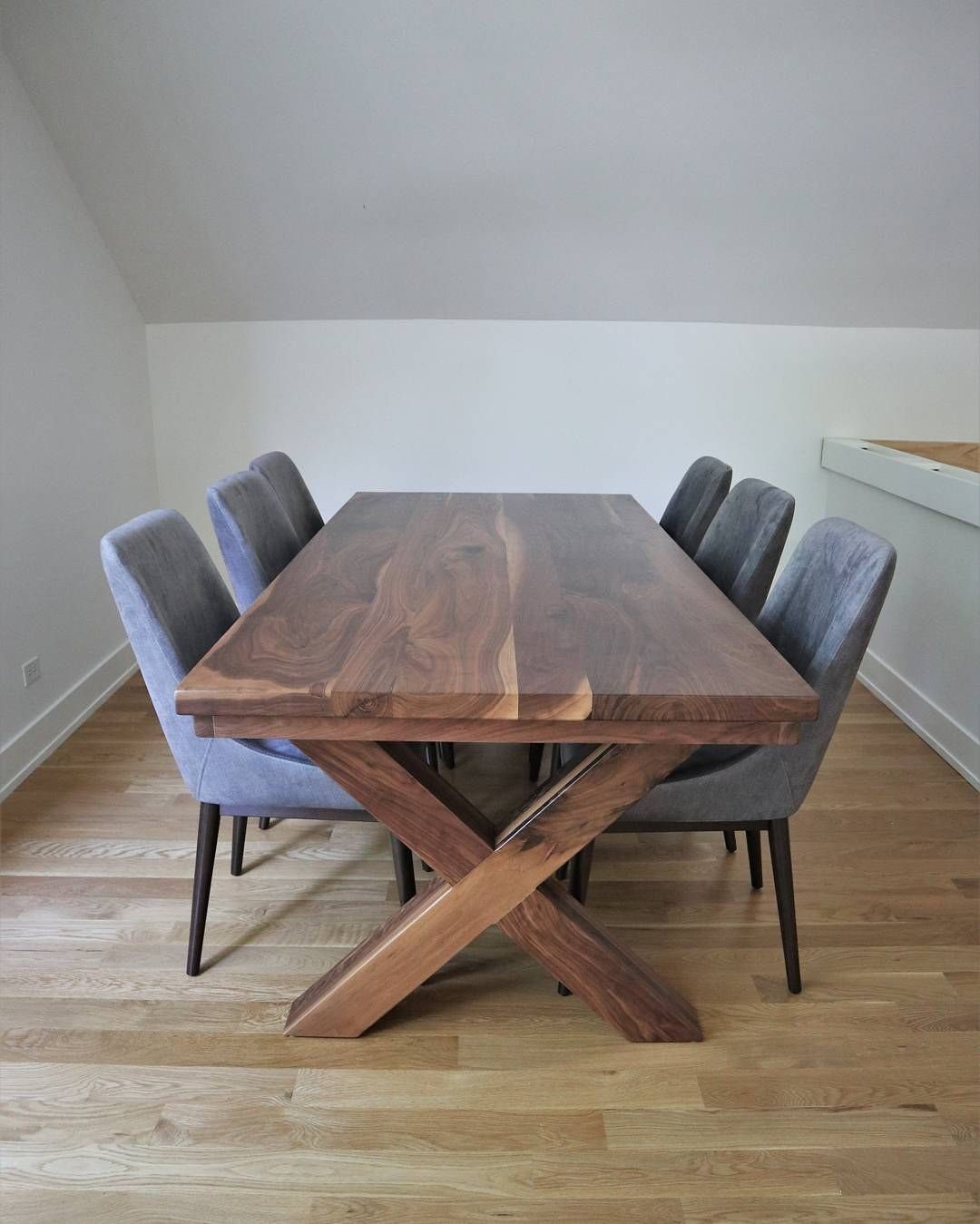
Crossed legs give a walnut table a firm, architectural base that reads differently from legs set at the corners. On a rectangular top, the X-base shows from every side, so the table looks finished from any angle.
Grey upholstered chairs stay neutral beside it, and light wood floors and white walls keep the room open. I like this setup when you want shape in the base and need no decorative object to get it.
25. Walnut Table with Turned Legs
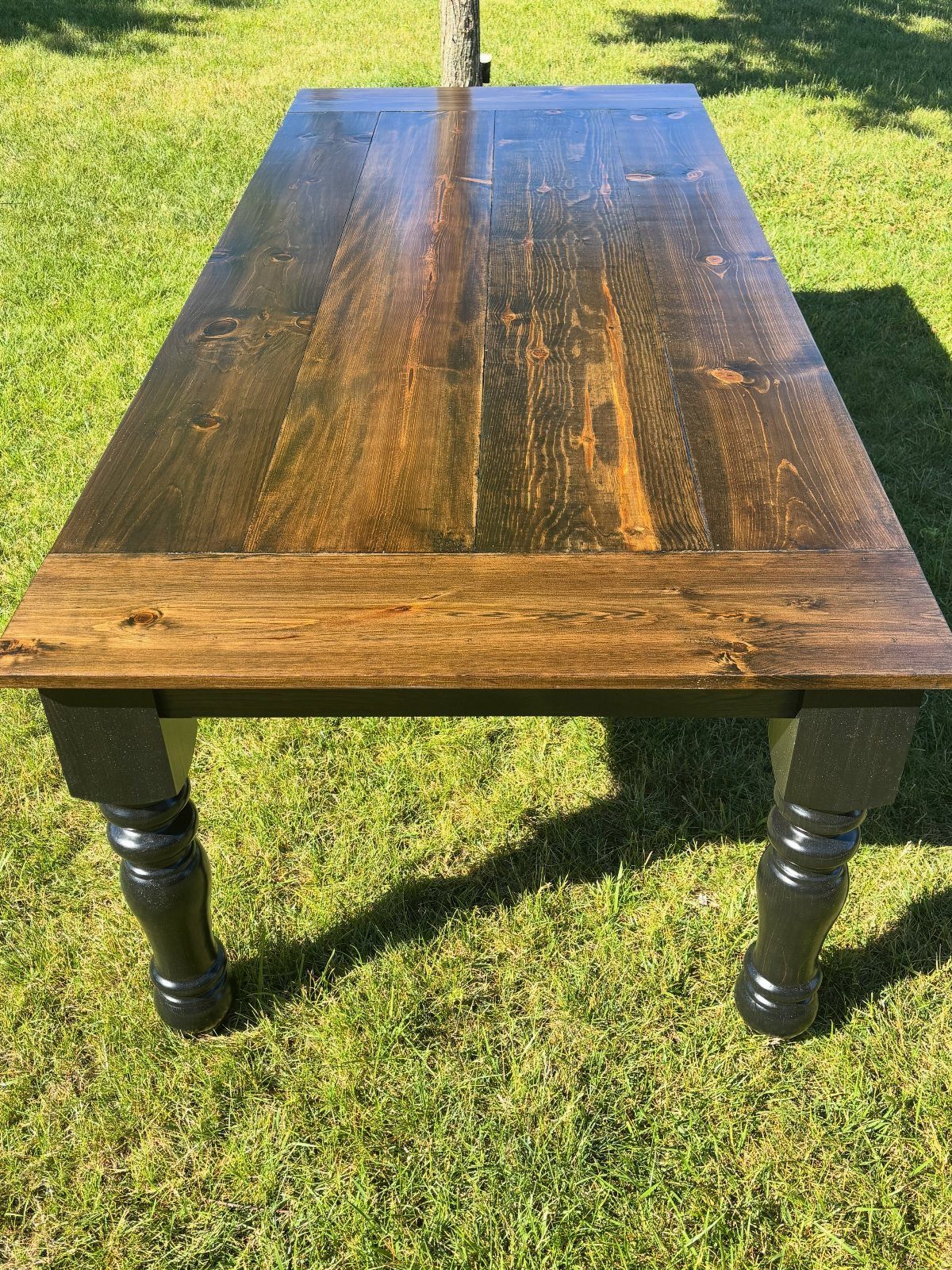
Turned legs bring a traditional profile to a walnut table, with rounded shapes that look carved rather than cut. Black paint on the legs sets them apart from the dark top, so the silhouette stays easy to read.
I’d keep the chairs plain so the legs get the attention. A table like this suits a room that leans classic, not sleek.
26. Walnut Table with Black Leather
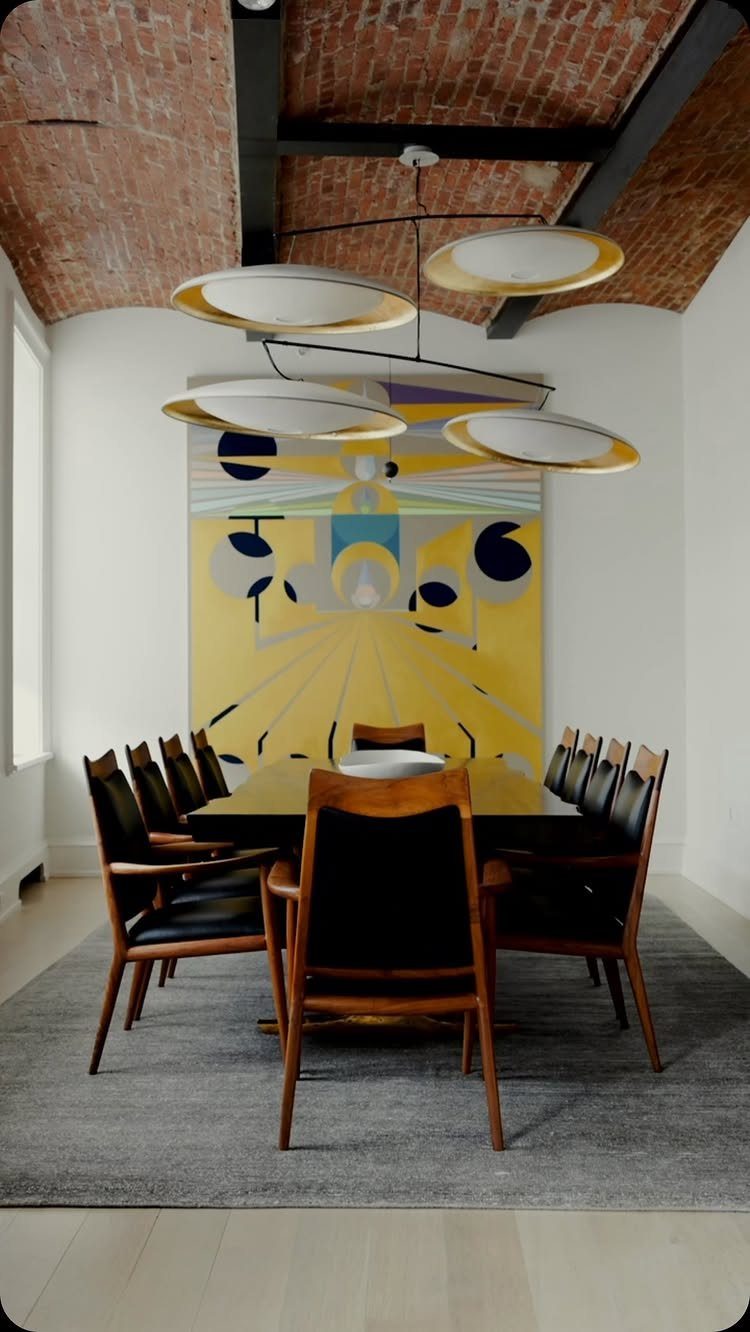
Black leather against walnut is the darkest pairing you can make, and it works best when the room around it is busy enough to hold the weight. Seats in leather read sharp and clean, while the wood keeps things warm.
Let one big piece of art carry the color, as the yellow abstract does here, and leave the chairs and top alone. Wipe leather down after meals; it’s easier to clean than fabric.
27. Walnut Table with Cream Cushions
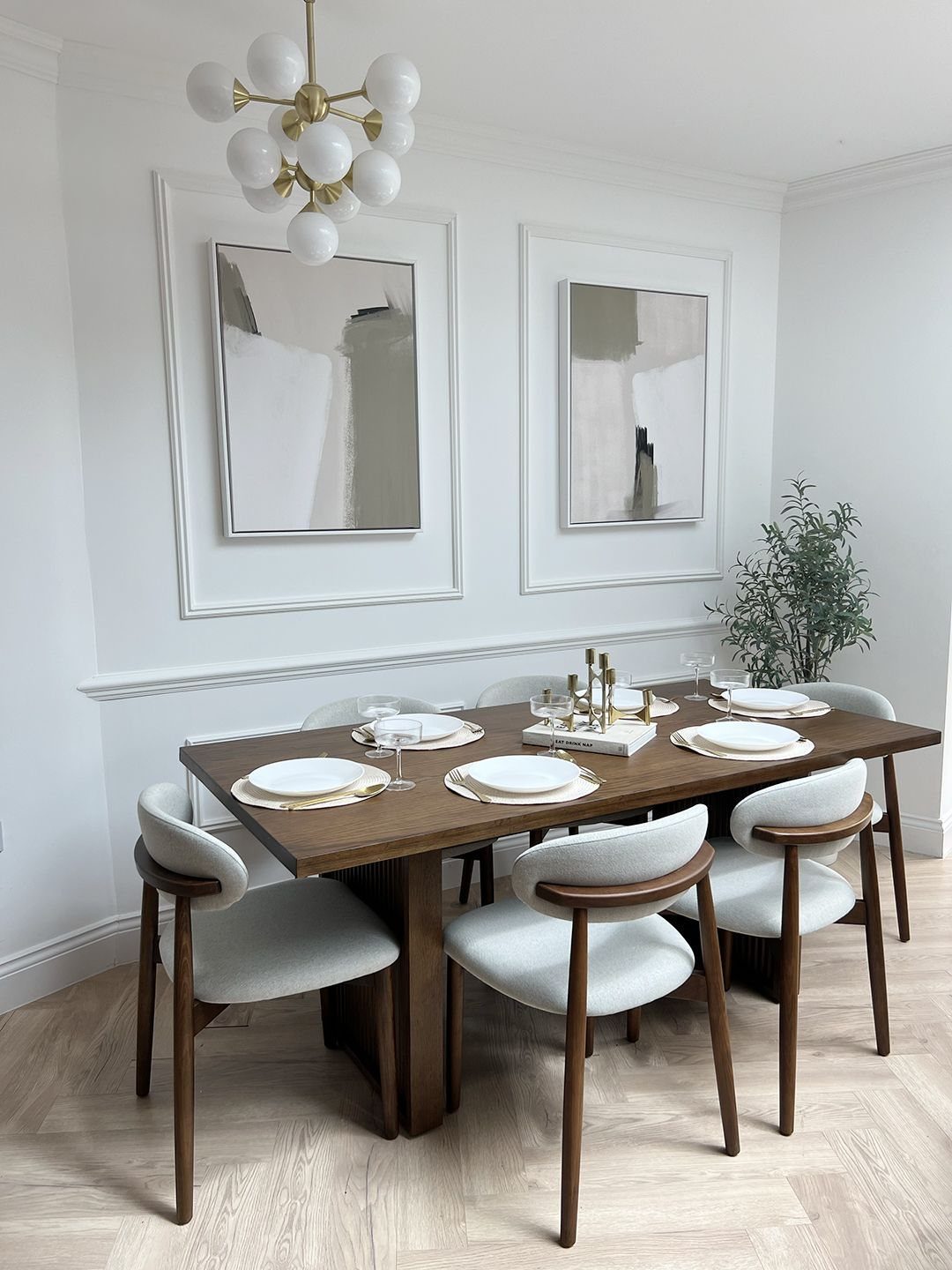
Matching walnut chairs can make a set look stiff, and cream cushions fix that fast. The soft seat breaks up the wood and makes long dinners more comfortable.
Pick a cushion in a plain, light fabric so the chairs stay matched to the table.
White walls and a single globe chandelier keep a walnut table looking bright instead of heavy. Washable covers are worth a look if you have kids.
28. Walnut Table with Geometric Base
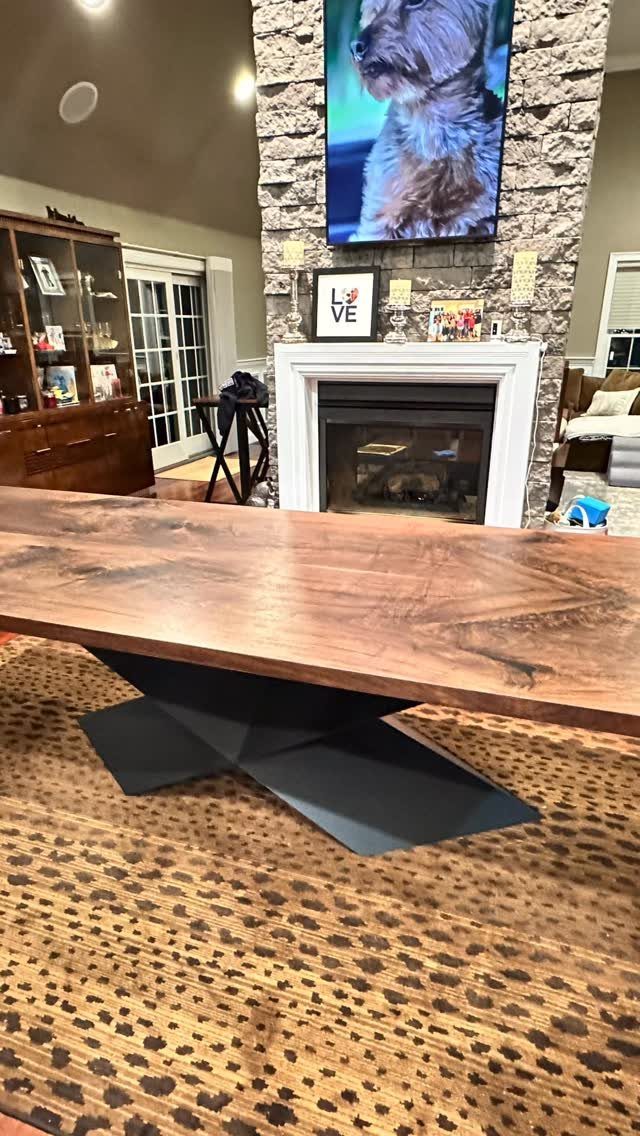
A geometric base turns the support into the part people ask about. Angled black metal under a walnut slab gives the wood a strong frame, and the grain stays the star on top.
The maker of this piece says it started as two rough slabs just a few weeks earlier, and the grain and voids give it a one-of-a-kind look.
A bold rug, like a leopard print, works when the table top is this natural; I’d keep everything else quiet.
29. Seven-piece Walnut Dining Set
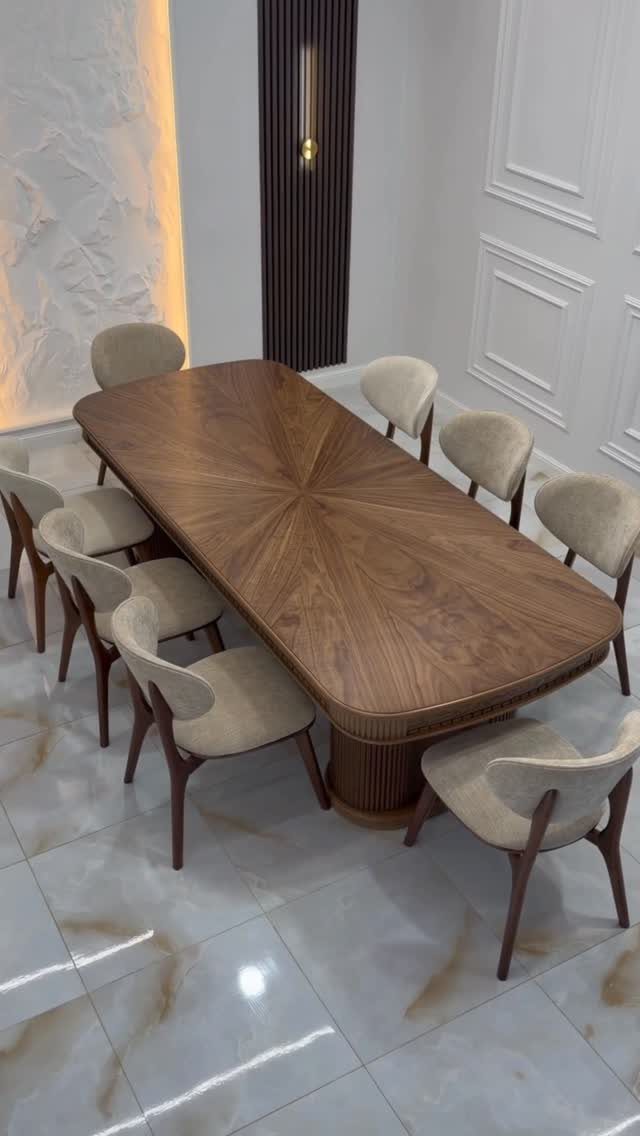
Buying the table and six chairs as one set removes the hardest part of dining room shopping: matching the wood, the scale, and the style.
An oval walnut top with a fluted base and cream upholstered chairs sits together because every piece was made to.
I’d pick a set over mixing when the room is large, since a big table looks calmer with one clear look. Pale floors and white paneled walls keep a large walnut set from feeling heavy.
30. Book-matched Walnut Table
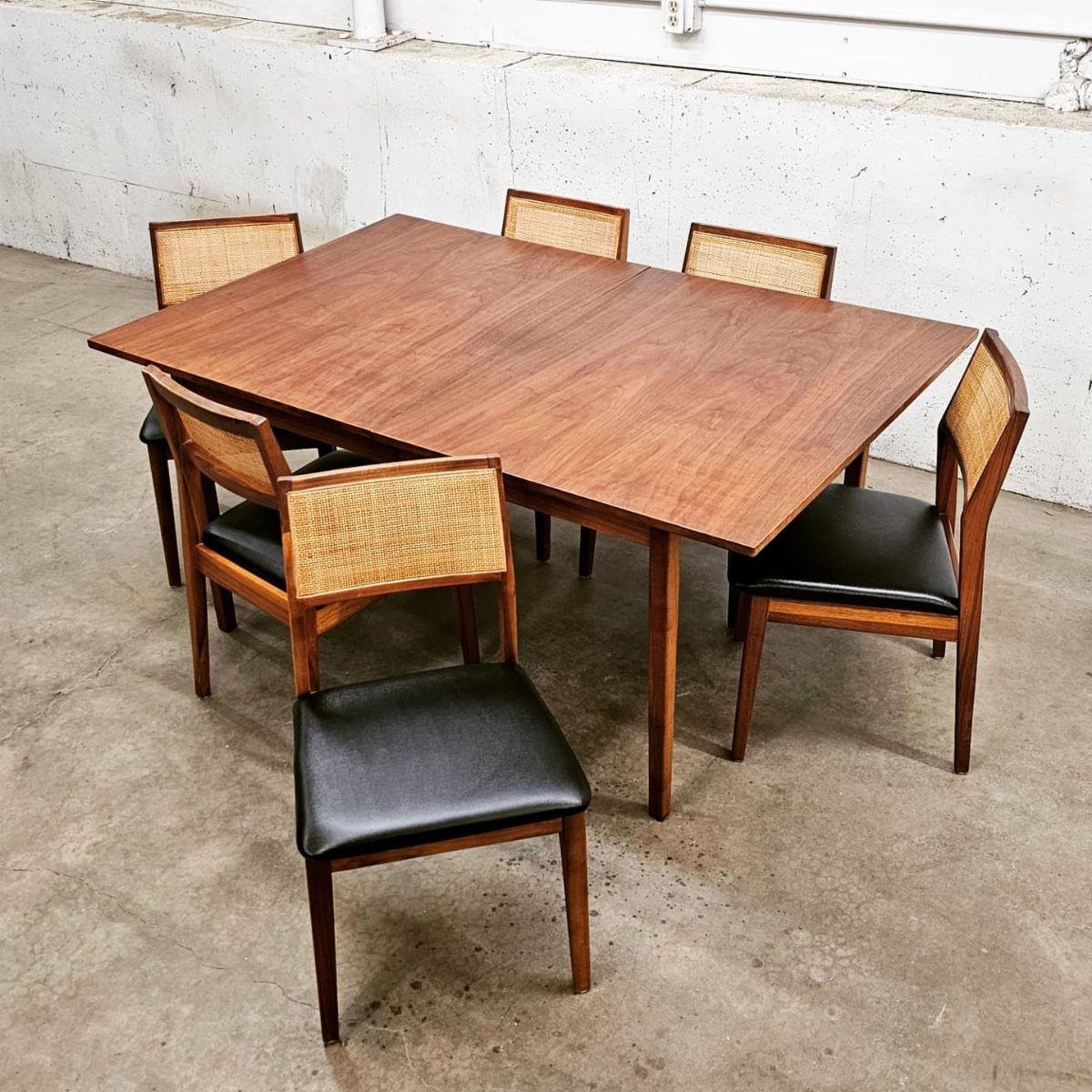
Book-matched walnut means 2 boards cut from the same piece of wood and opened like a book, so the grain mirrors down the center of the top.
It gives a table a symmetrical pattern that a plain plank top can’t copy.
Cane-back chairs with black leather seats suit it well, since the open weave lets the wood stay in view. Ask the seller to show the seam; a tight, even join is the sign of good work.
31. Walnut Table with Sculptural Legs
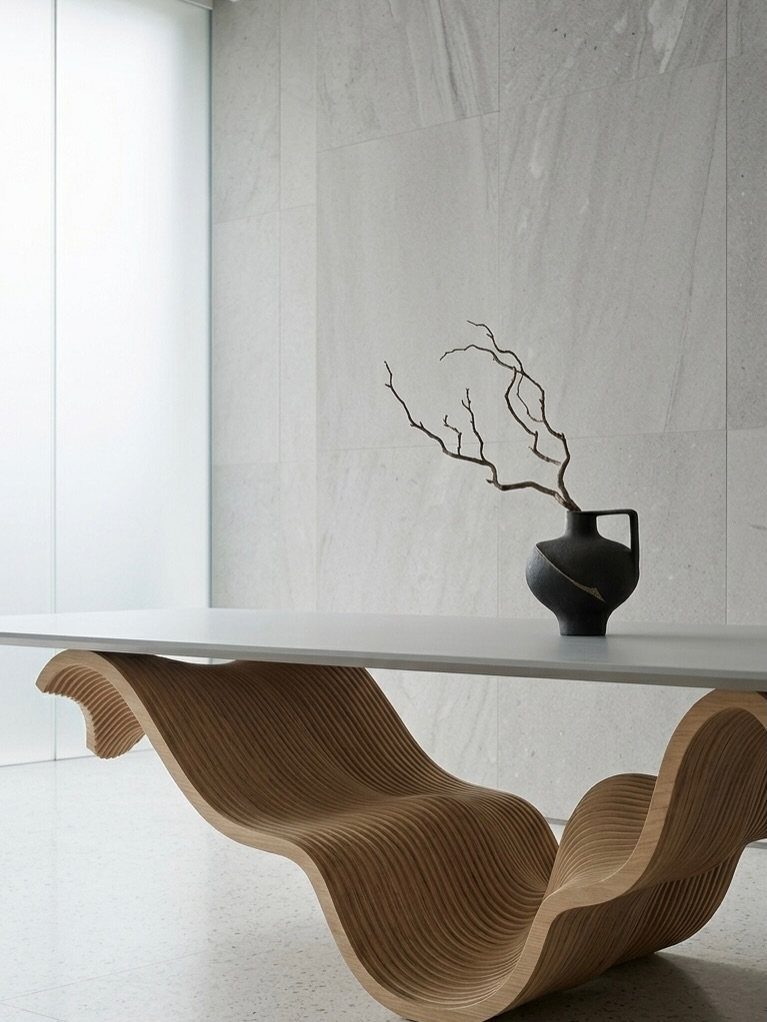
Carved, wavy legs turn the base into the main event. A white top sits on a wooden base that curves like a ribbon, and the wood does the talking while the surface stays calm.
Keep everything else plain, as the black vase with a single branch does here.
A base this expressive needs open floor around it, so I’d skip a busy rug and let the shadows of the curves show against a pale wall.
32. Walnut Table with Cream Chairs
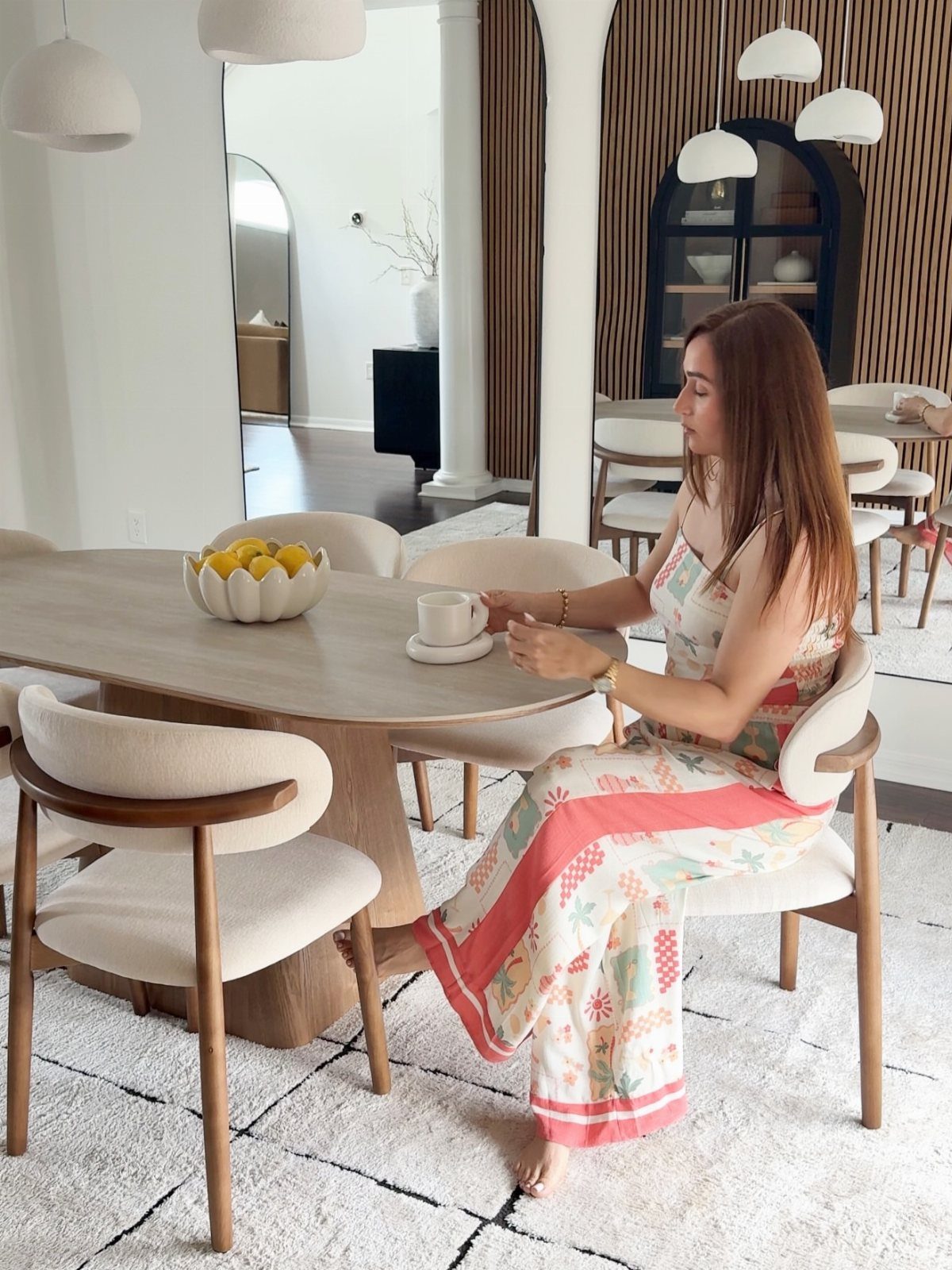
Cream chairs and walnut are the easiest light-and-dark pairing I know. Around an oval top, the soft shapes follow the table’s curve, and nothing competes with the wood grain.
A white rug and a wood-paneled wall keep the palette neutral, so texture does the work instead of color.
If you want a little more, add it in small pieces like a vase or a throw, and leave the chairs alone.
33. Walnut Table with Patterned Rug
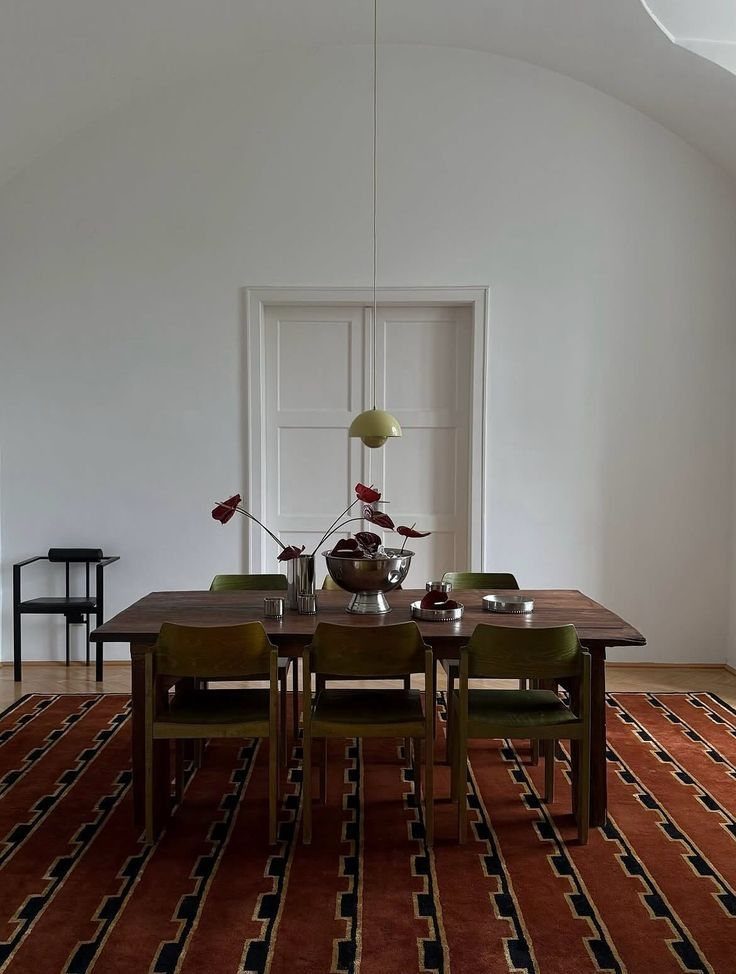
A red and black patterned rug gives a white room something to look at from the floor up. Green chairs sit on it well, and the red flowers on the table pick up the rug’s main color.
Walnut is dark enough to hold its own over a busy pattern.
White walls, like the ones in this room, let the rug do the talking, and I’d hold everything else to those same 3 colors so nothing competes with the pattern.
Frequently Asked Questions
Is walnut a good wood for a dining room table?
Yes, if you want a warm, dark top with grain that shows.
Chairs in cream, black, olive, light blue, or woven cane all sit comfortably beside walnut, and the dark tone keeps the table from getting lost on a busy patterned rug.
Walnut’s visual weight can crowd a dim room, so I’d choose a lighter finish there.
Where can I find a solid walnut dining table?
West Elm sells its Anton solid wood dining table in 72, 86, and 120 inch sizes, and Etsy sellers make solid walnut tables by hand in custom sizes.
Look for a seam that stays tight and even along its whole length, since gaps or a visible step between boards point to rushed work.