

These ideas run from a cabinet shelf divider that costs little and takes minutes to set, to pull-out drawers and roll-out trays whose slides need clearance on both sides.
Your own measurements decide which one fits: the inside width, depth, and height of the drawer or cabinet rule out more options than style or budget will.
A tall chef’s knife that won’t clear the top when the drawer closes is a good example, so I’d measure before buying anything.
1. Kitchen Drawer Organizers
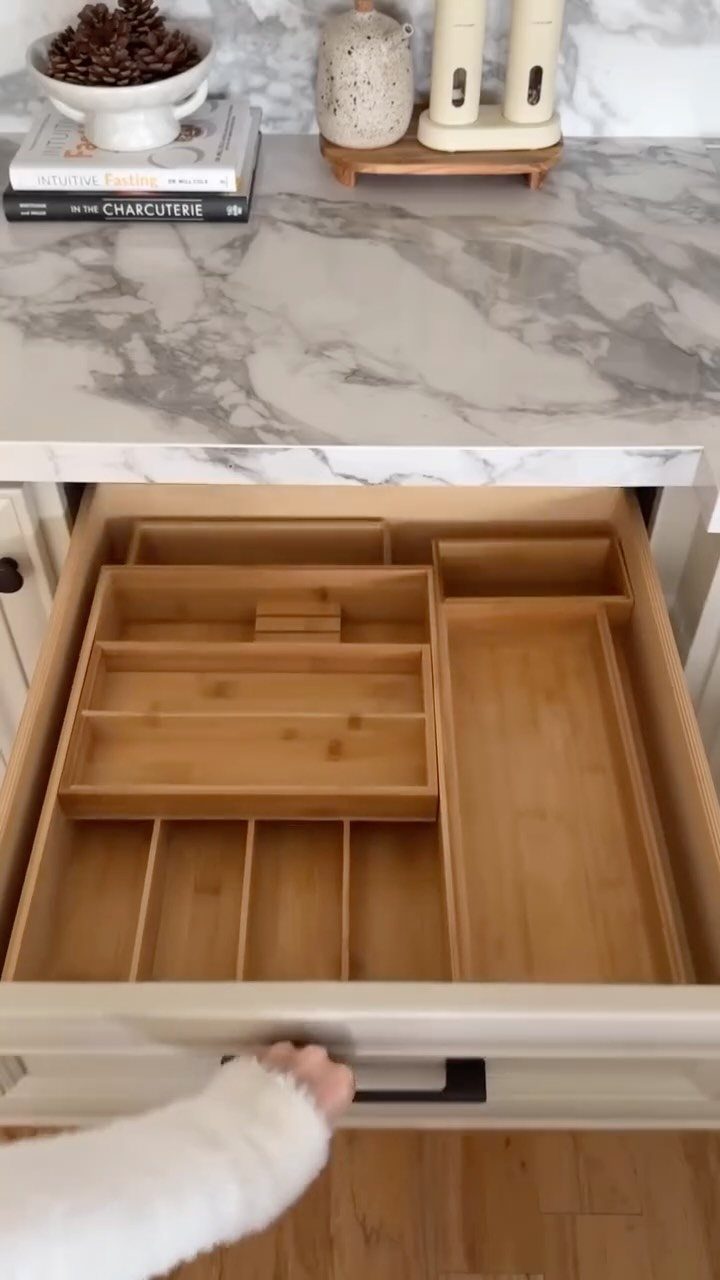
Bamboo dividers work best when the compartments match what you actually reach for daily. Measure the drawer first, then pick organizers that fill it edge to edge so nothing slides around when you close it.
Give spatulas and whisks their own long slot, and keep small gadgets together in a tray. Loose pieces sneak under dividers and jam the drawer, so I’d sort before buying anything.
2. Pull-out Cabinet Drawers
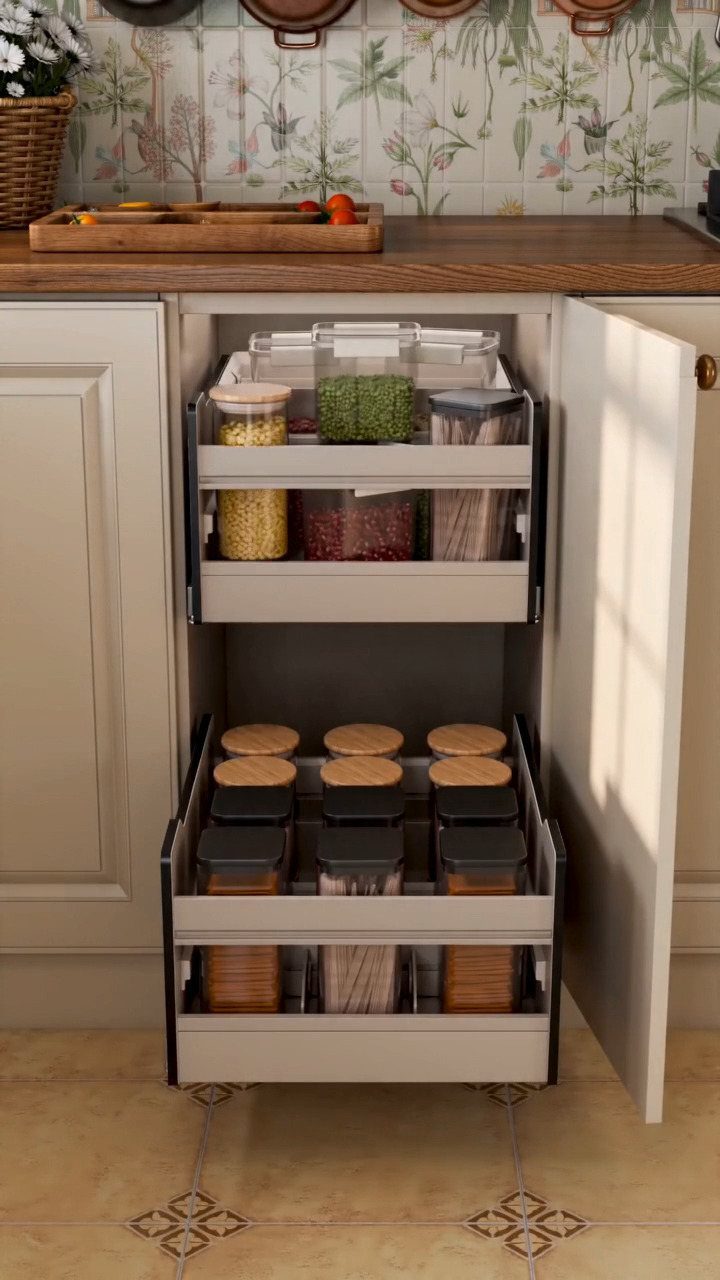
Pulling a cabinet’s contents forward means you stop kneeling to hunt for the jar at the back. Two shallow pull-out drawers like these suit food containers and glass jars, since you can see every lid from above.
Pick the pull-outs for a lower cabinet where reaching is hardest. Measure the opening width and depth before ordering, because the drawer slides need clearance on both sides.
3. Flatware Drawer
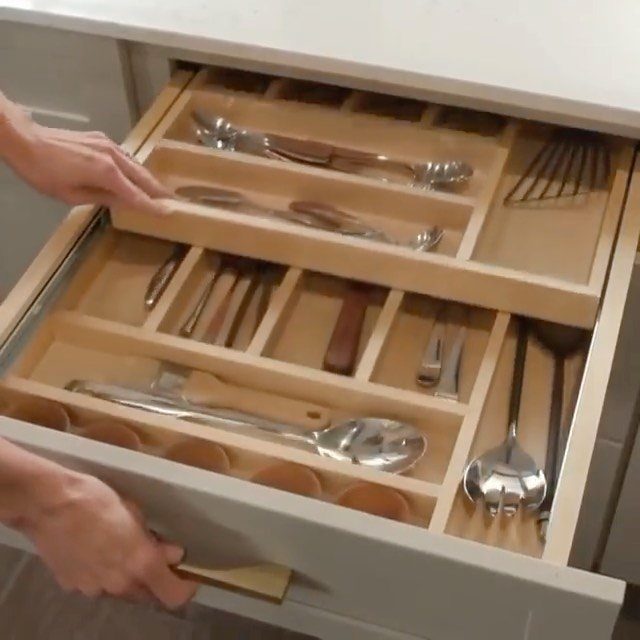
Everyday forks, spoons, and a few serving pieces share one drawer, and wooden dividers keep the long ladles from tangling with the small spoons.
I like a layout with a wide section for serving utensils and narrow slots for daily silverware.
Keep the drawer near the dishwasher or table so unloading takes a few steps. Cull any serving piece you haven’t used in a year before it eats a compartment.
4. In-drawer Knife Storage
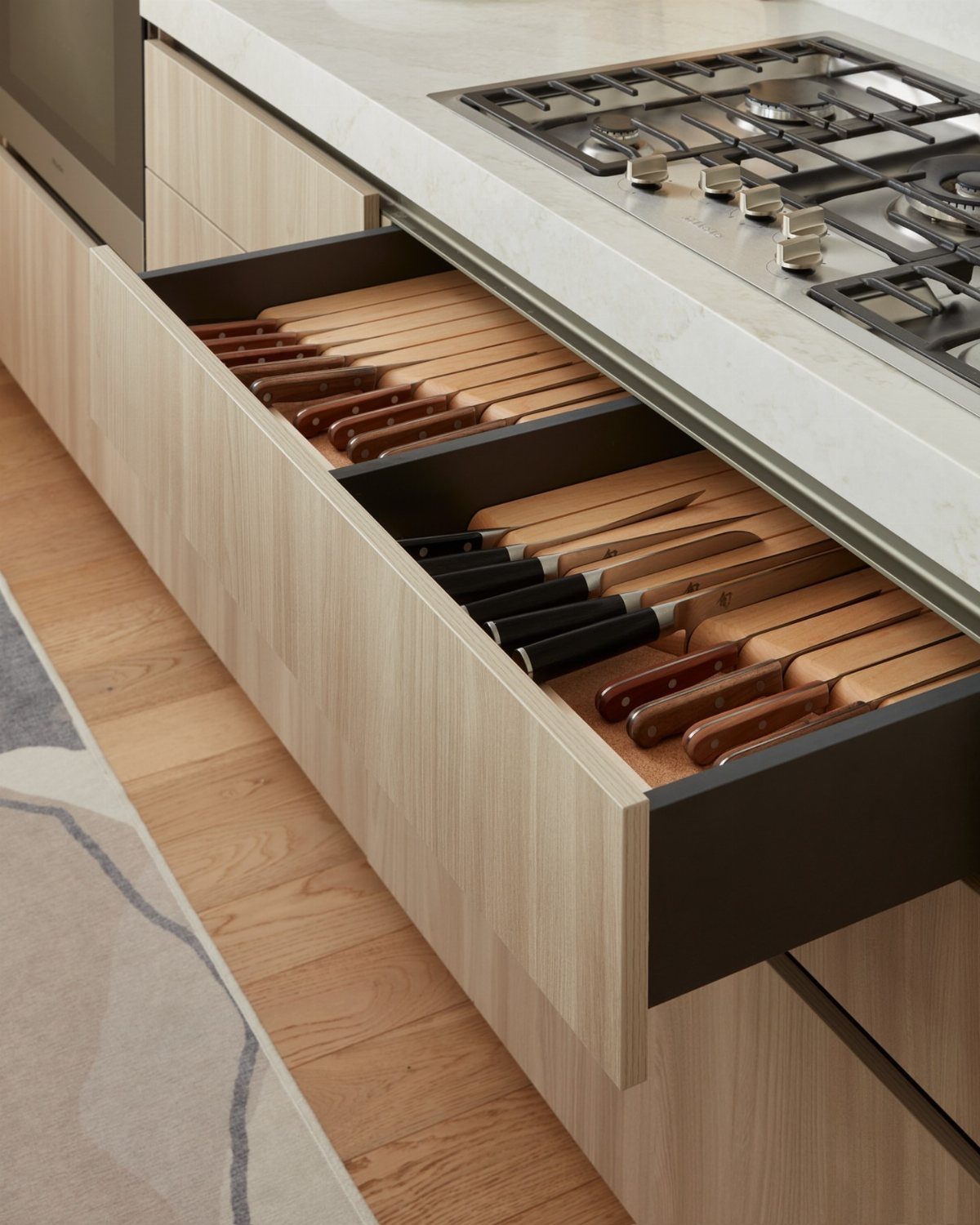
Knives belong in a drawer when counter space is tight or little hands are around. A wooden insert holds each blade in its own slot, so edges stay apart and the handles face up for a quick grab.
Buy the insert after measuring your drawer’s inside width, depth, and height. A tall chef’s knife needs enough clearance to close the drawer.
5. Pantry Organizers
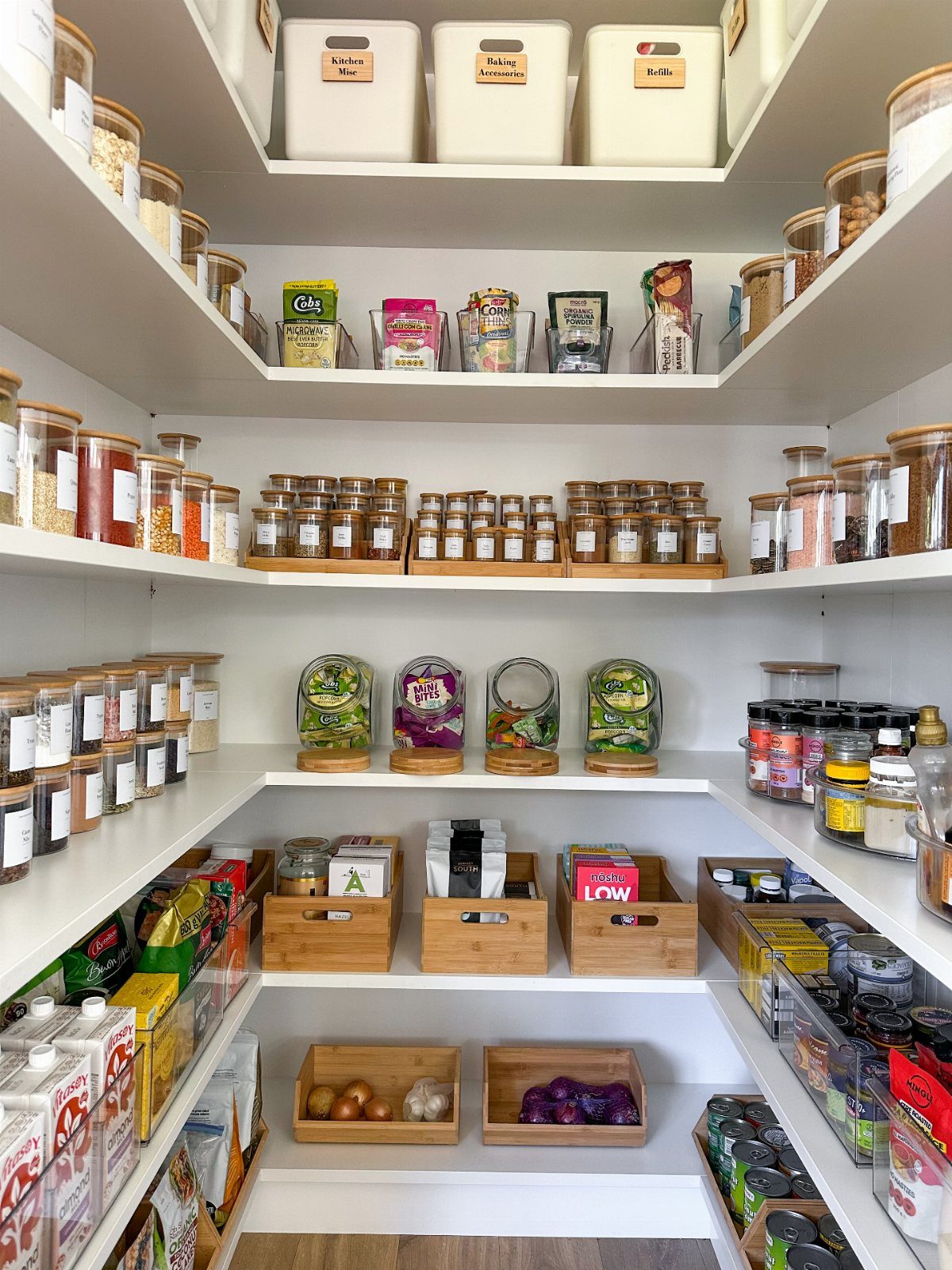
Labels do most of the work in a pantry: "Baking Accessories," "Refills," and "Kitchen Misc" tell everyone in the house where things go back.
Group like items into bins, and decant dry goods into glass jars so you can see when you’re low.
Use open crates for heavy items on lower shelves and put small bins above. Sort into broad categories first; you can split them later once you see what piles up.
6. Under-sink Organizers
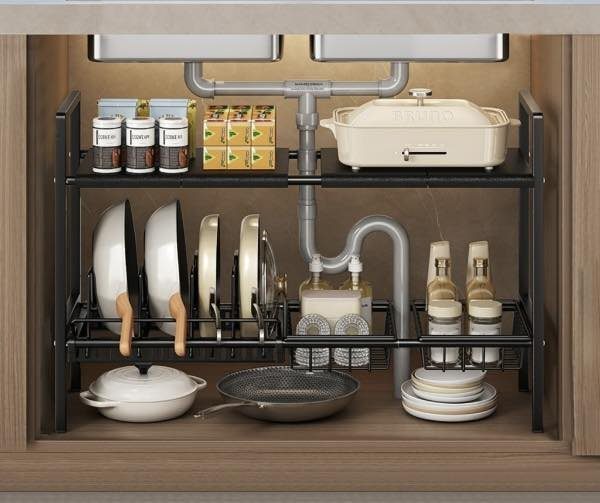
Plumbing makes the sink cabinet an awkward space, and a two-tier metal organizer lets you stack around the pipes instead of wasting the room. Put pots and pans on the lower level, with plates and containers on the upper one.
Black metal hides drips and water stains better than white plastic.
7. Deep Roll-out Trays
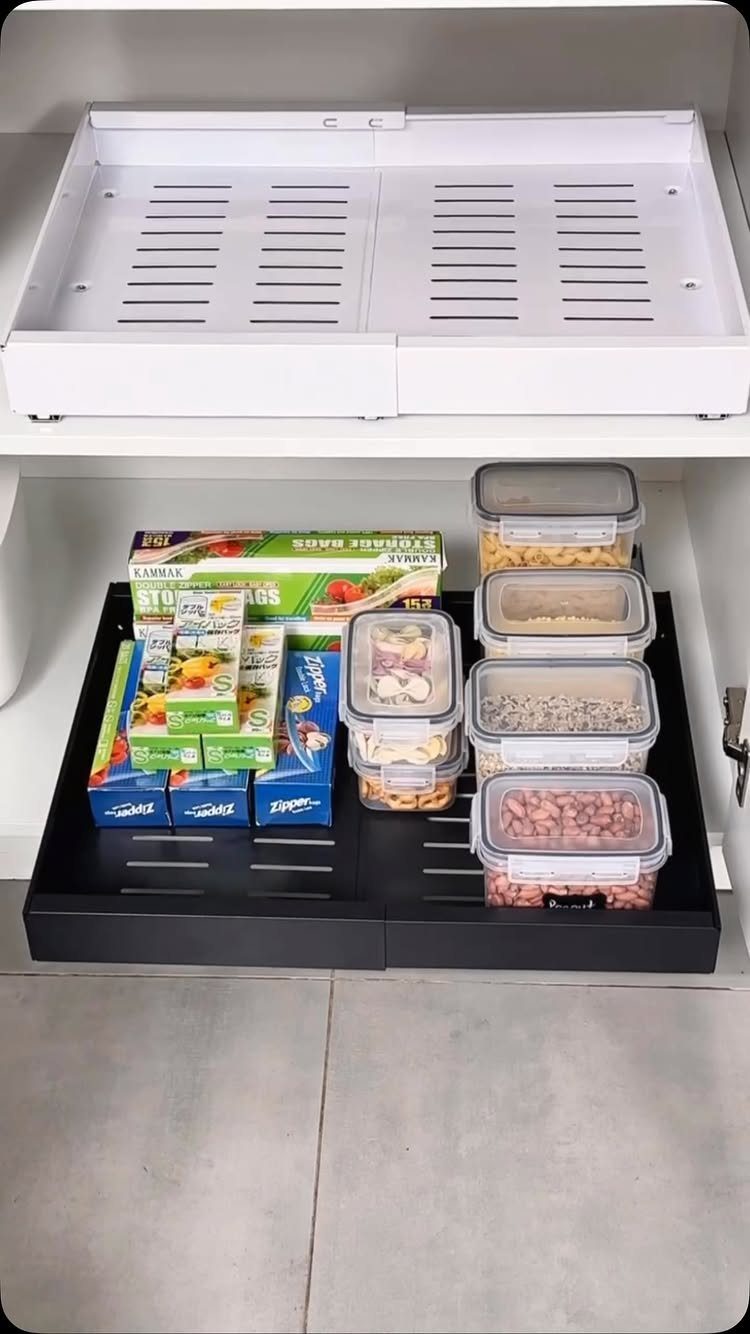
Deep cabinets swallow things, and a black roll-out tray brings the whole shelf forward so the back stops being a dead zone. I’d give it the oversized pantry items and small appliances, the bulky pieces that don’t fit a drawer.
Food containers and boxed or bagged goods also sit well on one, since pulling the tray out brings the back row into view.
Check the door opening as well as the cabinet interior, since the tray has to slide past the frame.
8. Peg Dish Organizer
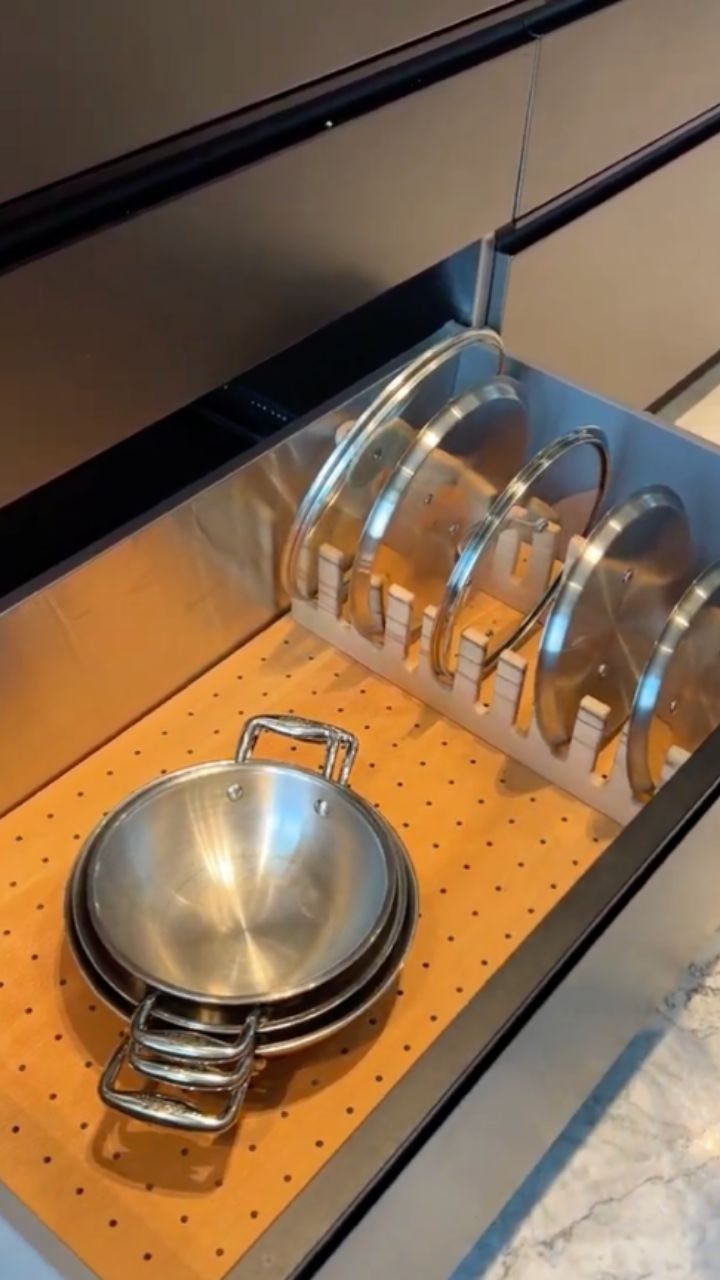
Lids standing on pegs come out one at a time, with no lifting the rest of the stack.
A pegboard liner lets you move the pegs to match each lid’s diameter, so set them snug enough that a lid can’t tip.
Stack the woks or pans behind the lids. Lining up the lids by size keeps the drawer easy to scan.
9. Spice Rack Kits
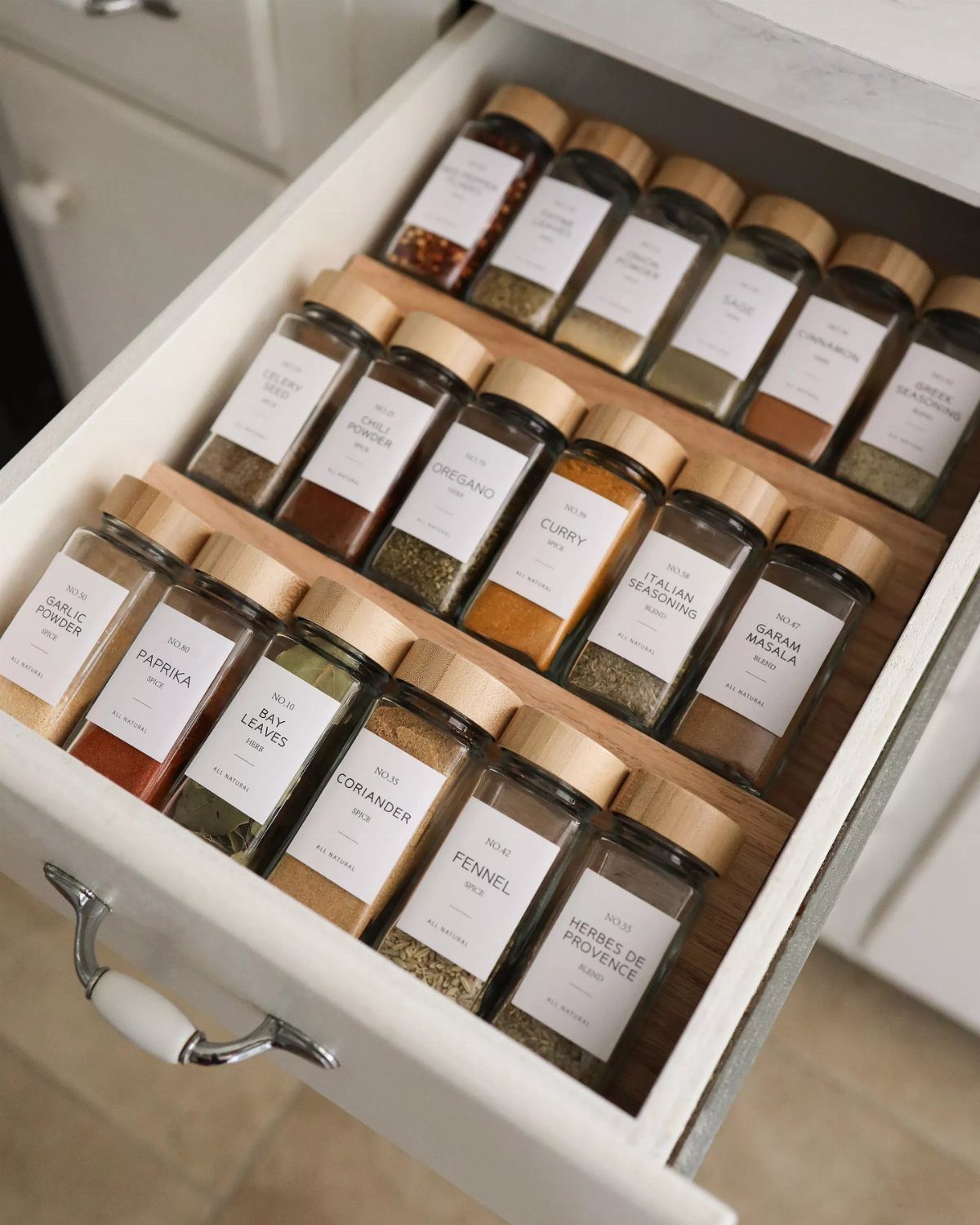
Spice jars in a drawer insert sit flat and face up, so you read every label at a glance instead of rotating bottles on a shelf.
Jars in one matching size line up cleanly in a drawer, and labels on the lids let you read each spice at a glance.
I’d group by how you cook (baking, grilling, everyday) rather than alphabetically. Buy an insert sized to your drawer, then fill it.
10. Kitchen Towel Drawer
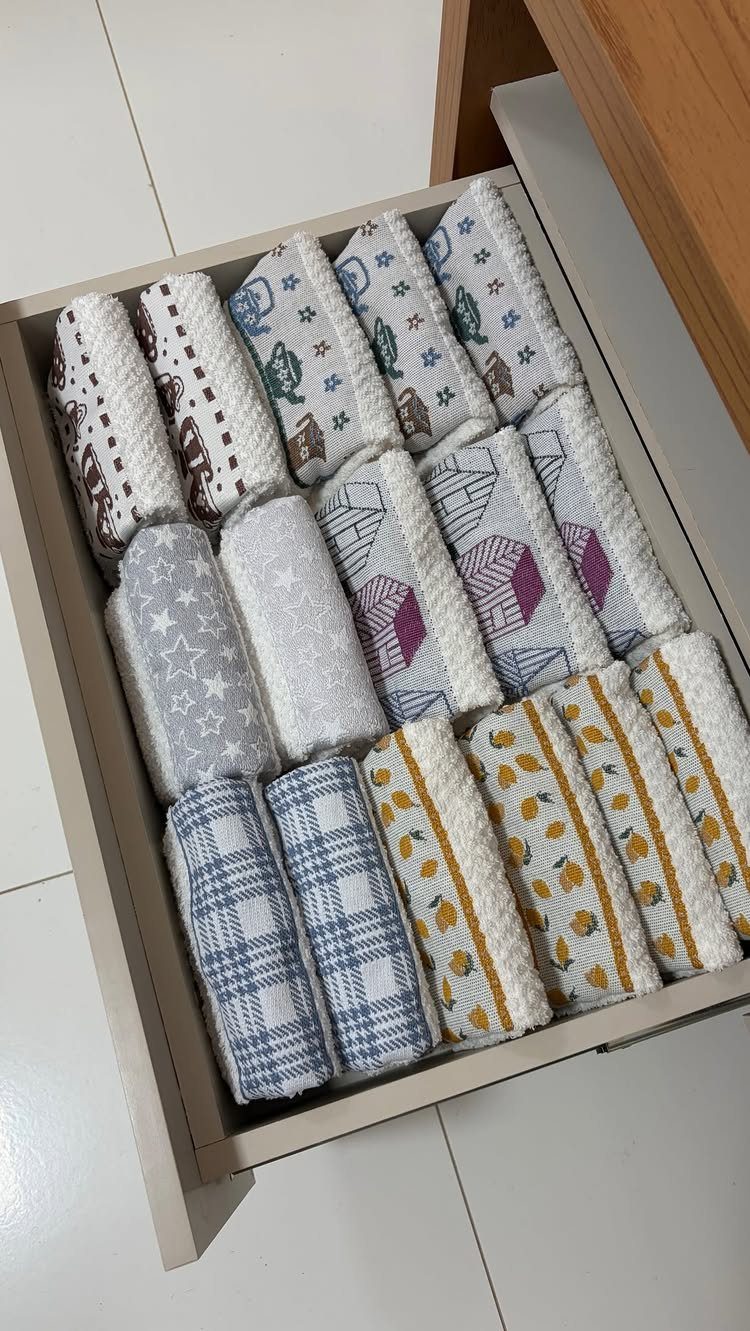
Rolling towels beats folding them. Each pattern shows when the drawer opens, and you pull one out without toppling a stack.
Give the towels their own drawer instead of sharing with utensils, so damp ones never touch anything else.
I’d put it close to the sink or stove, where your hands are wet or messy. Rotate towels so the same few don’t get all the use.
11. Kitchen Utensil Drawers
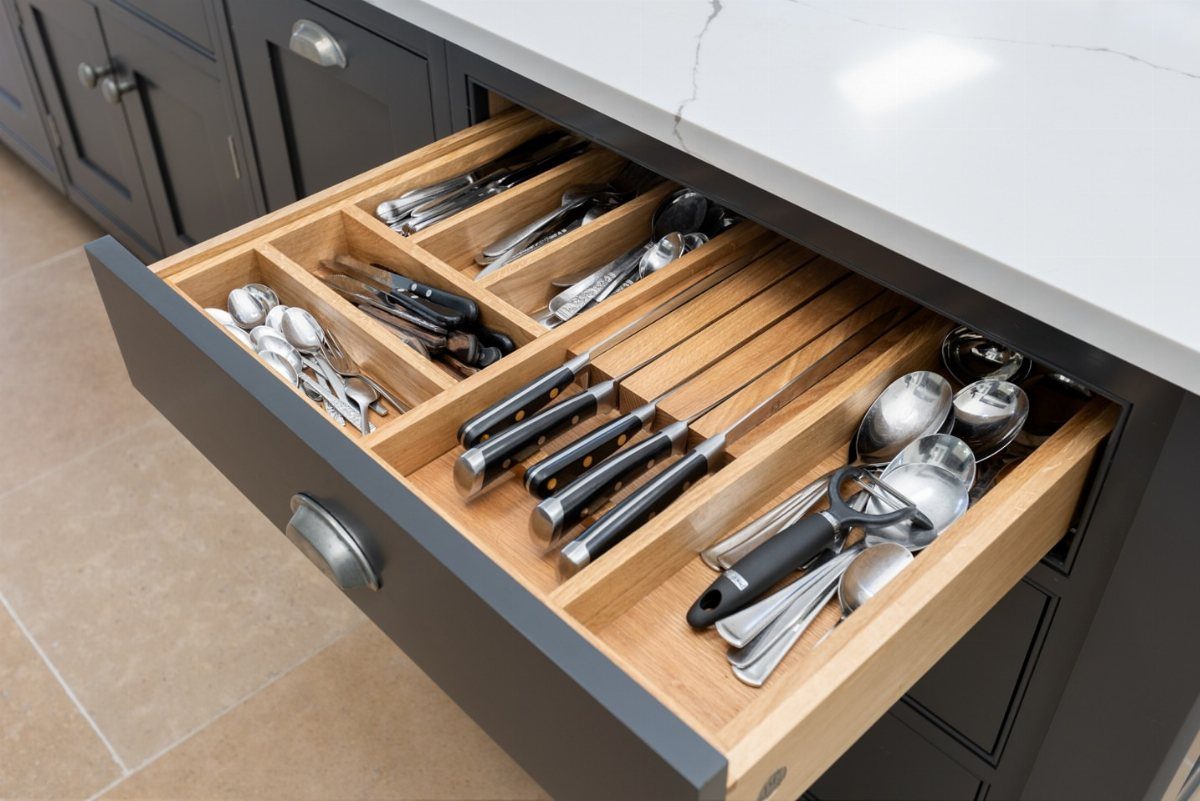
Wooden dividers turn a utensil drawer into labeled zones without any labels. Sort by task: stirring and serving in one section, cutting tools in another, small gadgets in the narrow slots.
A drawer right under the counter near the stove gets the most use, so keep it for what you grab mid-recipe. Anything you use once a year can move to a higher shelf.
12. Baking Drawer
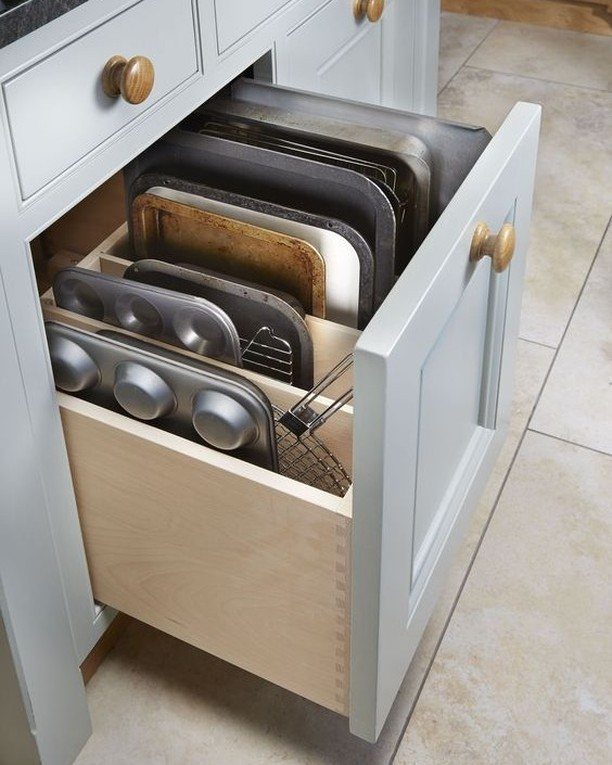
Put the baking drawer next to the oven, since that’s where you reach for sheets, muffin tins, and cooling racks. Dividers keep each type apart, so you pull one pan without lifting the rest.
Measure your largest baking sheet against the drawer’s inside width and depth before buying dividers. A drawer that’s too narrow just sends the sheets back to the cabinet.
13. Food Storage Drawer
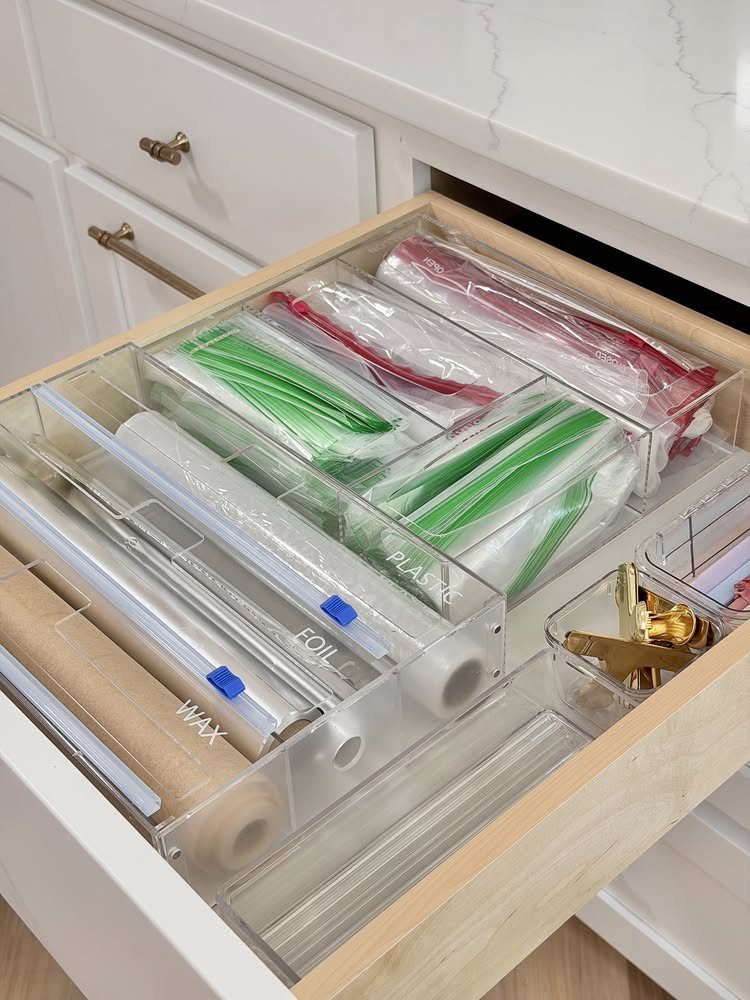
Foil, wax paper, and plastic bags each get their own clear acrylic bin, and a label on the front of each means nobody has to open a box to check.
Rolls and boxes stay upright, so you grab one without digging through the rest.
I’d keep this drawer close to where you pack leftovers. Measure the drawer’s inside width and depth first, then buy bins that fit with no gap for boxes to tip into.
14. Kitchen Paper Drawer
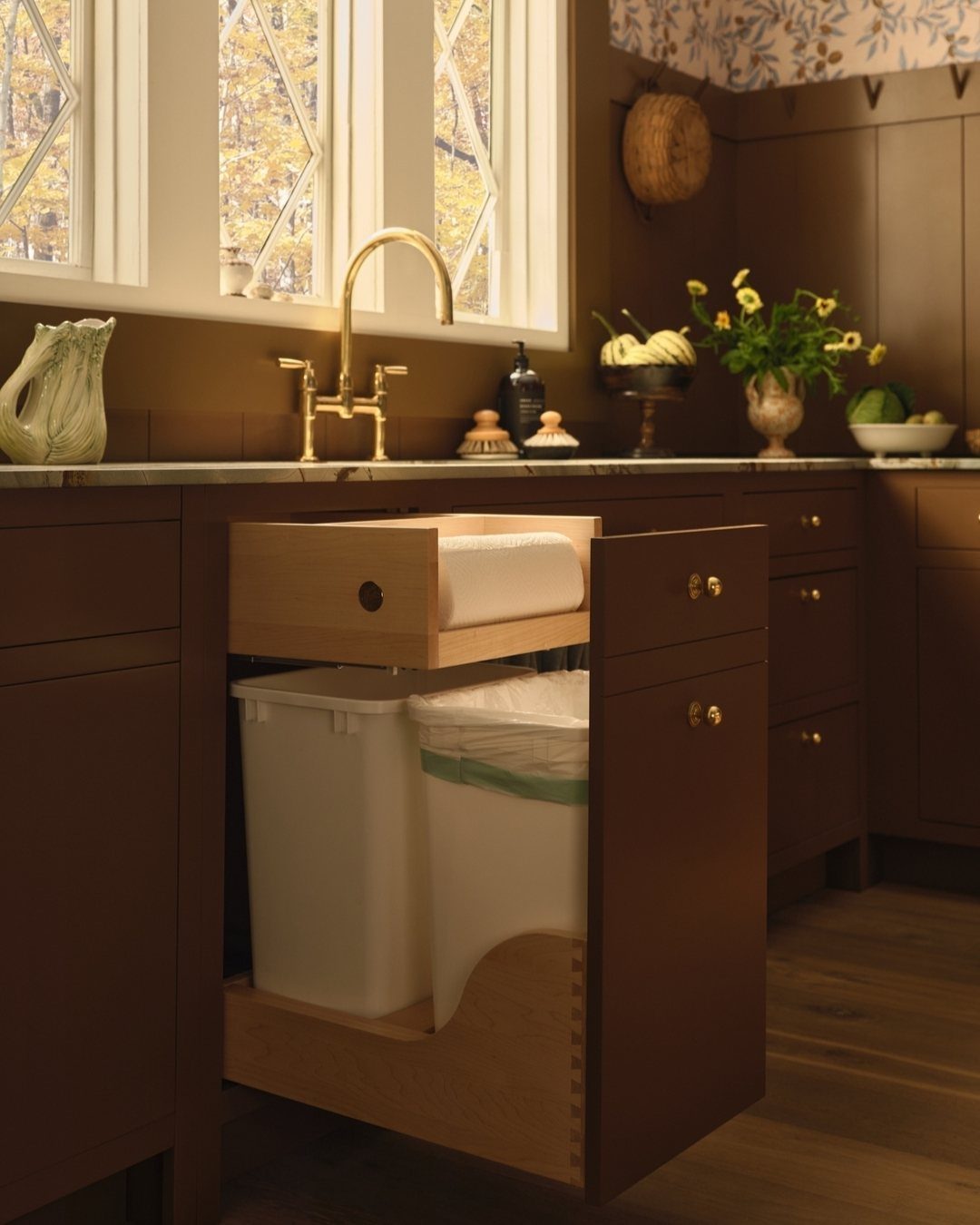
Paper towels need a home that isn’t the counter, and a small pull-out drawer holds the roll plus a couple of bins for related supplies. Pulling it open puts the roll within one reach of the sink.
Pick a spot near the sink or stove, where spills happen.
Check the roll’s height and the drawer’s inside clearance before committing, since a tall roll that catches on the top edge will make you give up on the whole thing.
15. Cookware Cabinet Dividers
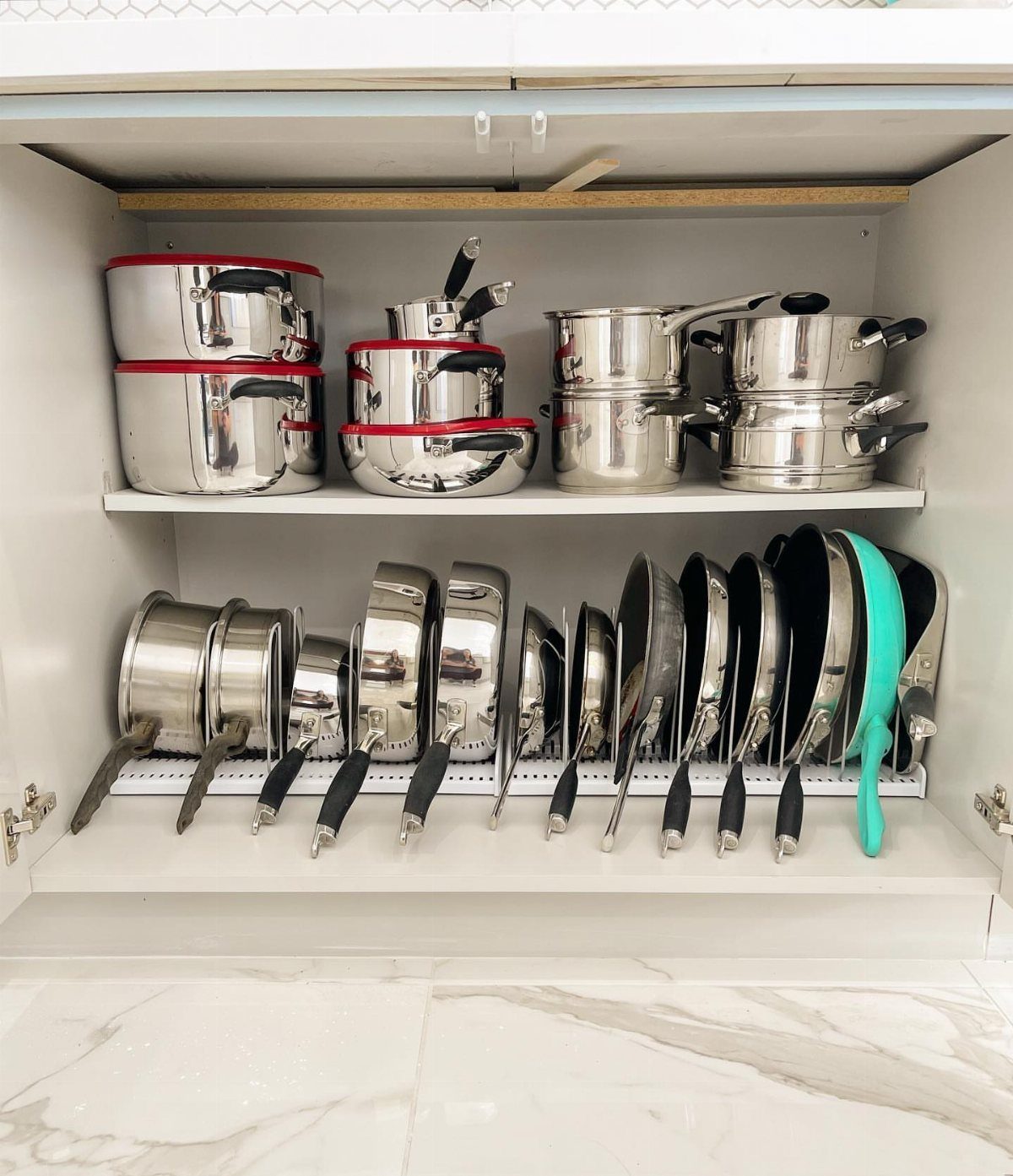
Frying pans stand upright between a divider on the bottom shelf, so you slide out one without lifting the rest.
Stack the stainless pots on a fixed shelf above the dividers, which keeps the heaviest pieces out of daily reach and saves the drawer space for the pans you grab most.
Set the divider slots wide enough for your thickest pan, and put the pans you use most at the front.
A shelf divider costs little and takes minutes to set, which makes it an easy weekend fix for a cabinet that feels like a pile.
16. Pots and Pans Cabinet Storage
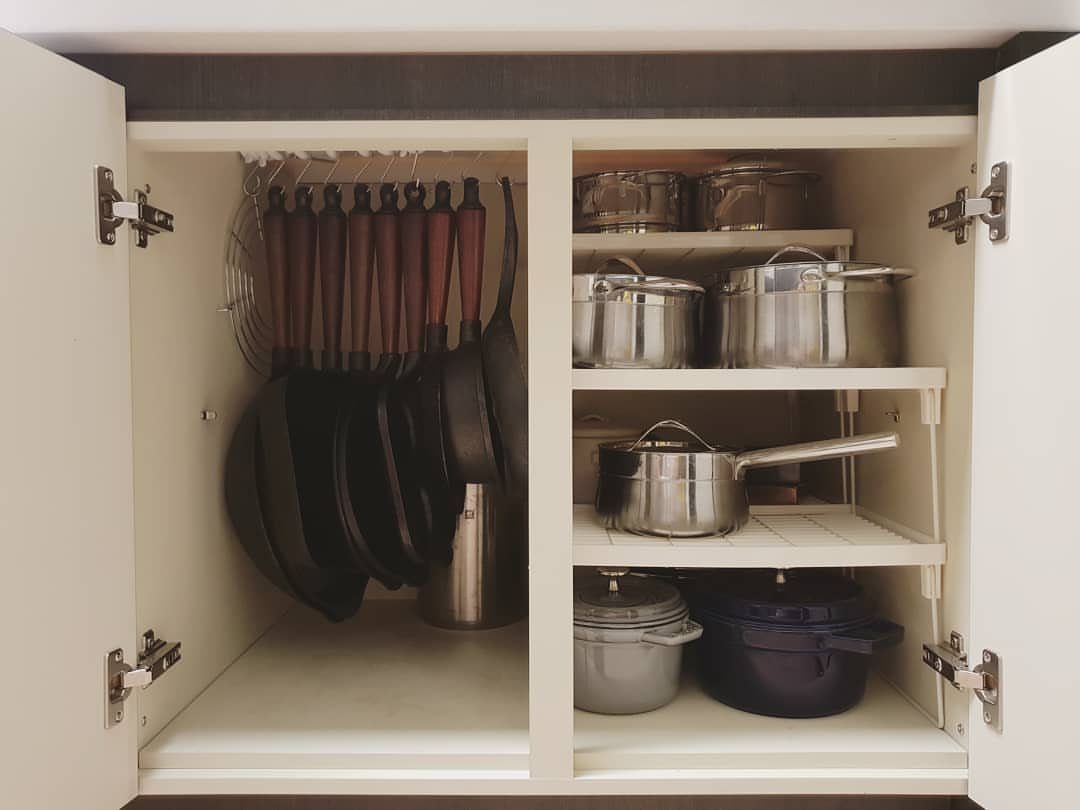
A hanging rack inside the cabinet door space frees the shelves for pots and lids, so pans no longer stack on top of one another.
Frying pans hang in a row, and stainless and ceramic pots sit on the shelves below.
I like this setup for a cabinet you open every day. Hang the pans you grab most at the front, and keep lids on the shelf next to the pots they match.
17. Snack Drawer Bins
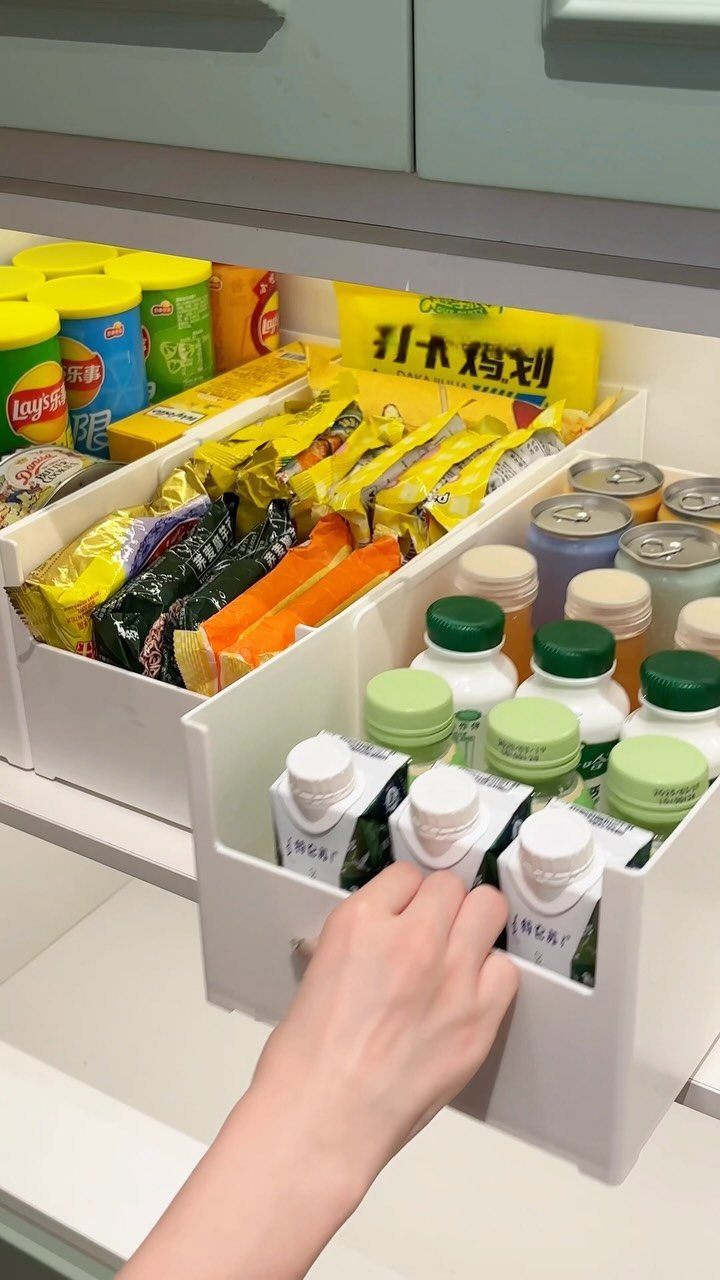
Kids and hungry adults open this drawer all day, so white bins sort chips, packaged snacks, and small bottled drinks into zones everyone can read at a glance. Bins also keep a torn bag from spilling across the whole drawer.
Put the drawer at kid height if you want children to help themselves, and wipe the bins down when crumbs collect. Use one bin per snack type, so you can see when to restock.
18. Cutting Board and Tray Drawer
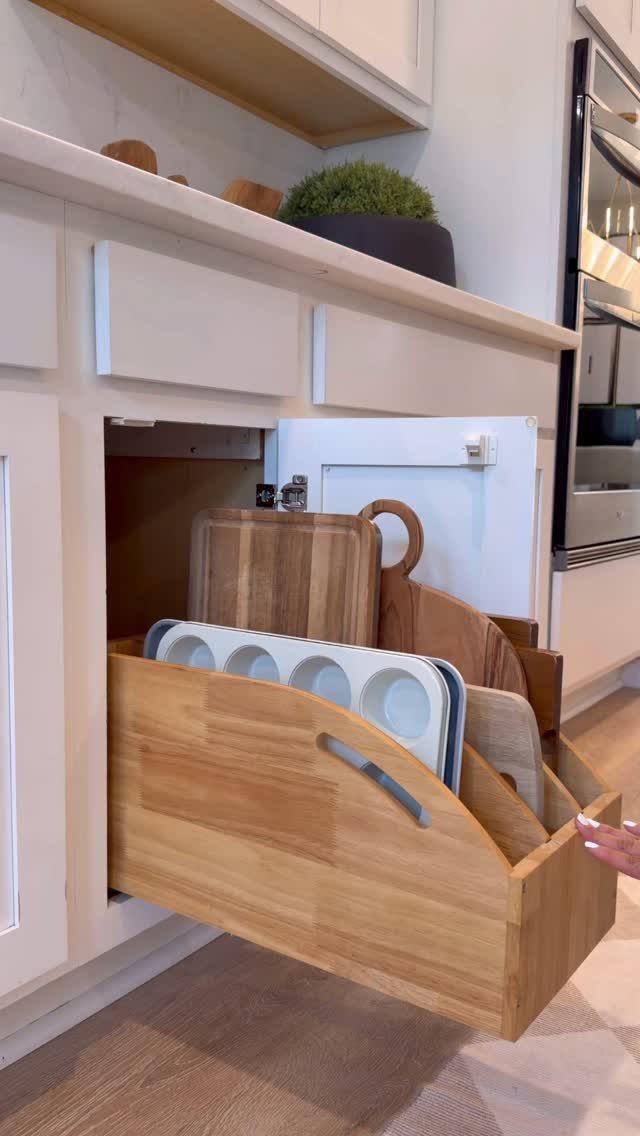
Standing cutting boards and trays on edge in a wooden pull-out drawer makes them easy to flip through like files. Nothing needs lifting out from under a stack, and the whole set stays within reach of the prep counter.
Measure your tallest board and your widest tray against the drawer’s inside height and width before choosing a pull-out. Sort boards on one side and trays on the other, so you never rummage.
19. Food Container Drawer
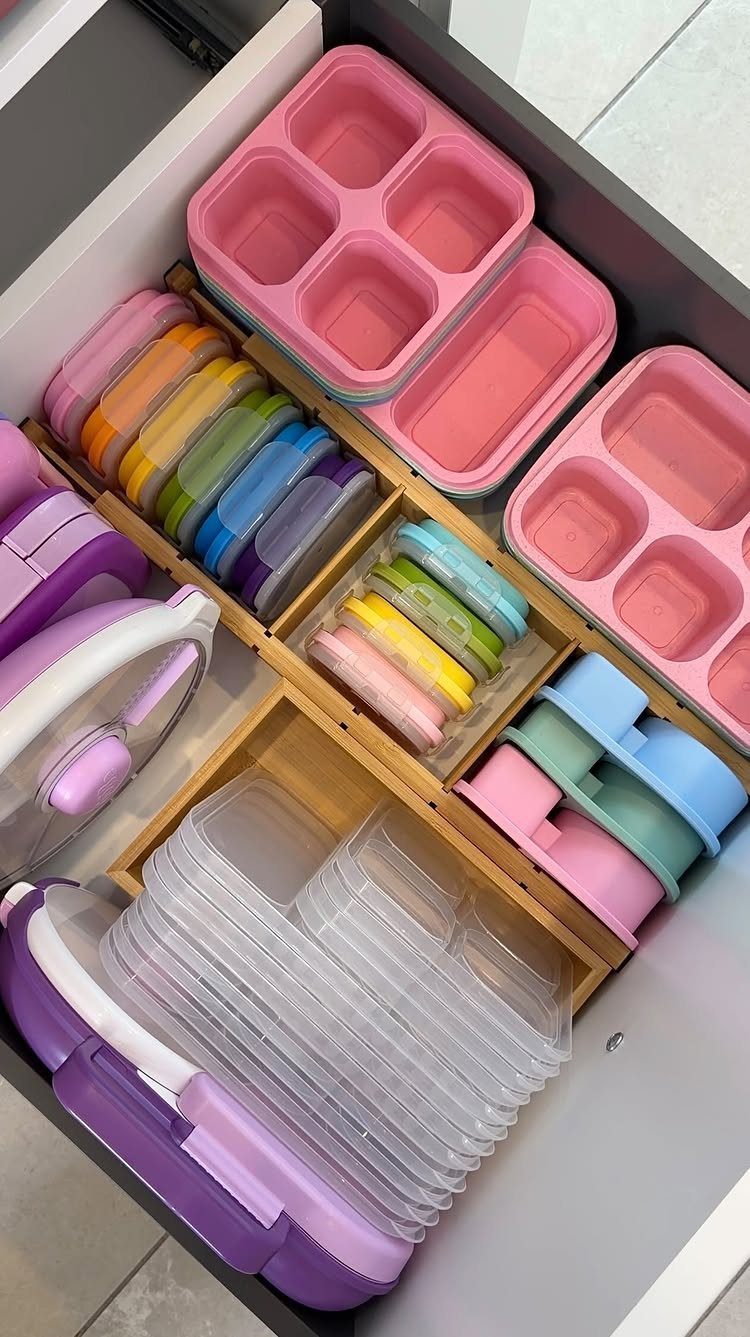
Wooden dividers turn a container drawer into assigned seats: each box gets its own section, and the lids stay with them instead of wandering off.
I’d sort by size, with the bigger boxes in the wide sections and the small ones in the narrow slots.
Measure the drawer’s inside width, depth, and height before buying dividers, then check that a stacked set still clears the top when you close it. Keeping the containers nested by shape means you pull one out without disturbing the rest.
Frequently Asked Questions
What types of kitchen cabinet organizers are available?
Pull-out shelving, pantry pull-out drawers, lazy Susans, vertical dividers, spice racks, deep roll-out trays and pull-out drawer organizers are the main options.
Drawers do best with wooden or bamboo dividers and clear bins, while a deep cabinet needs a roll-out tray that brings the back row forward.
Standing dividers on a cabinet shelf let you slide out one frying pan without lifting the others. Match the type to the spot that annoys you most.
Can I add organizers to existing cabinets?
Yes.
Cabinets you already have can usually take drop-in inserts or sliding shelves, with no remodeling needed. For a roll-out tray, also check that it slides past the door frame.
Do organizers work in small kitchens?
Yes, and they pay off most in tight spaces.
In a small kitchen, a narrow pull-out or a slim unit beside the stove brings the back of the cabinet to you, so you stop crouching for the one jar you need.
A knife insert inside a drawer also frees up counter space.
Are cabinet organizers hard to clean?
No. Smooth slide-out shelves and drawer fronts clean up with a damp cloth in a minute or two.
Bins only need a wipe when crumbs collect. Under the sink, black metal hides drips and water stains better than white plastic.
Do cabinet organizers increase home value?
They help. Buyers do notice a kitchen with tidy, built-in storage, so good pull-outs can help a listing, though I wouldn’t count on them adding a measurable dollar amount.
Pull-outs and inserts also make the kitchen easier to use every day, which is why I’d add them whether or not you plan to sell.