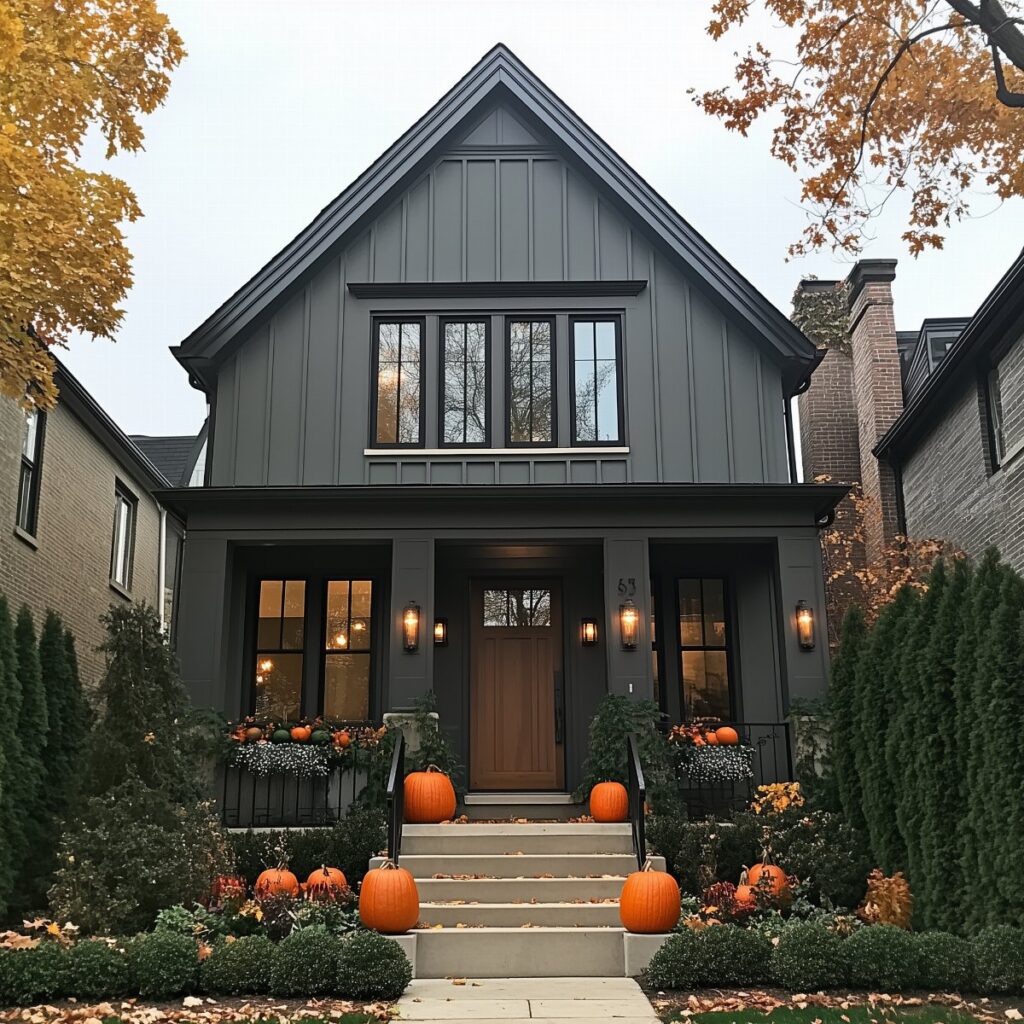

The range starts with soft gray that still reads as dark, moves through black paired with stone or left as raw wood, and ends at facades where a single color carries the whole look on texture alone.
The deciding factor is how much contrast your existing architecture can handle: a traditional roofline with ornate gables needs the gray break, while a modern build with clean planes can carry the monochromatic treatment.
Stone adds weight in both senses, and wood brackets need resealing every few years on a tall ladder; neither choice is maintenance-free, but each one solves a specific visual problem the flat color alone cannot.
1. Dark Gray Board and Batten Siding
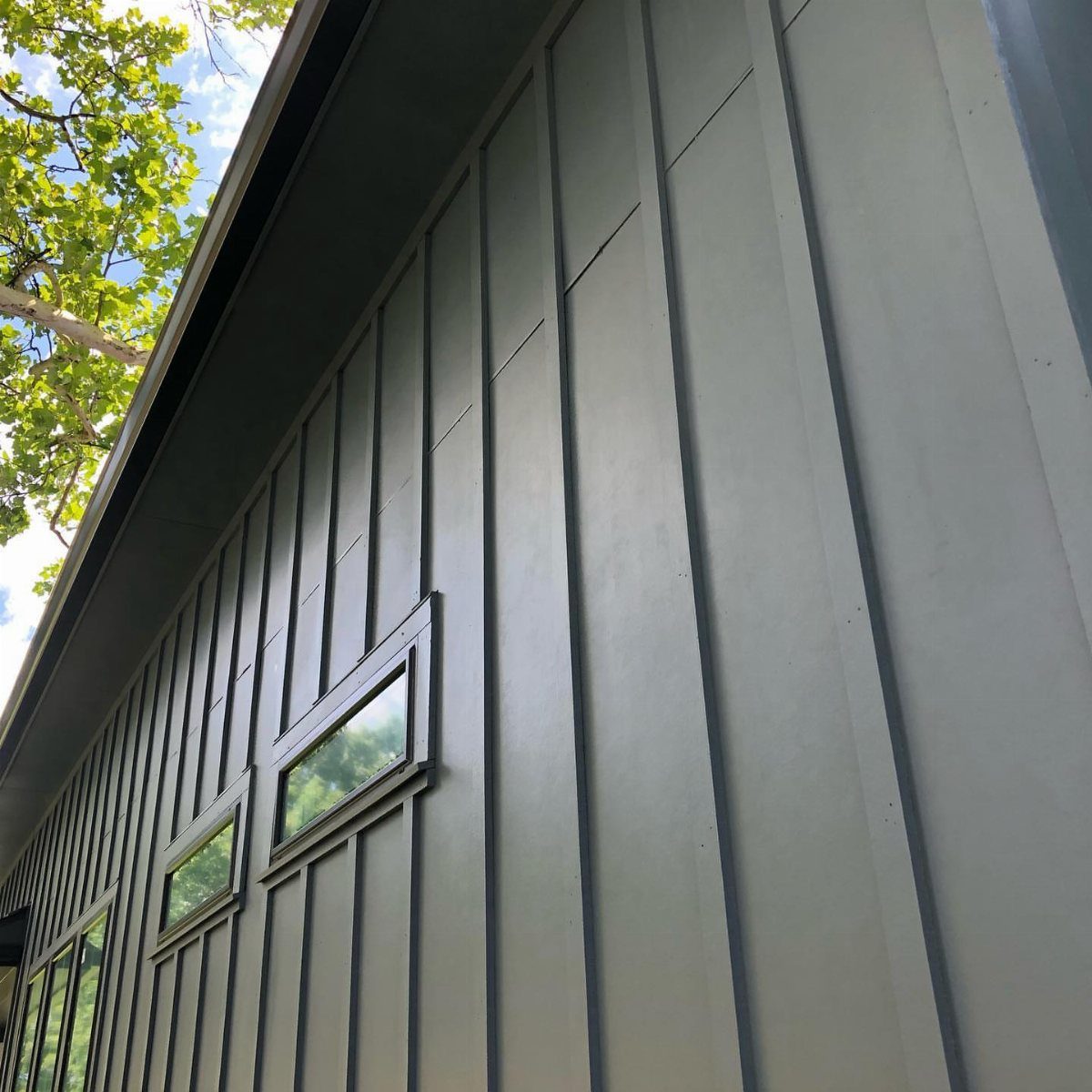
Dark gray board and batten reads softer than true black, which makes it forgiving on older homes or smaller lots where something harsher would swallow the whole facade.
The vertical lines still add the height and shadow that make board and batten appealing, but the tone lets you pair it with white trim without the high-contrast drama that can feel like a brand-new build trying too hard.
If you are mixing siding styles, this is the shade to switch to on dormers or the entry section.
It breaks up a run of black lap without fighting it, and the color stays consistent enough that the eye reads the house as one design rather than two ideas colliding.
I would put it anywhere the roofline changes or the wall steps back; those natural breaks hide the transition.
Maintenance stays minimal on fiber cement or engineered versions, and most lines now carry a dark gray in their standard palette rather than charging premium pricing for special orders.
Blackboard and batten exteriors continue growing in popularity, offering homeowners a bold and sophisticated look for their homes. This striking design choice combines the classic charm of board and batten siding with the dramatic appeal of a dark color palette.
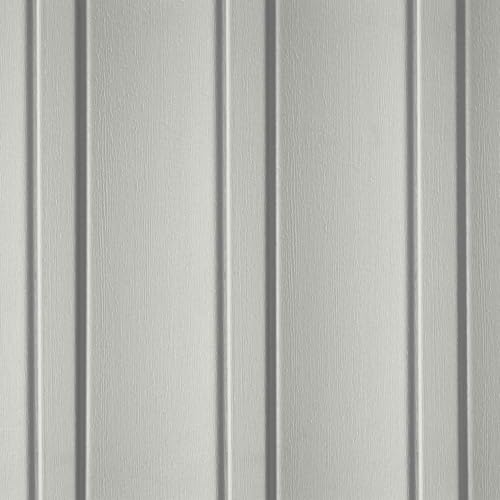
Most commonly used for whole house or accent applications

Tru-Lock state-of-the-art locking system, Random seams

Shutter are priced individually. When you order two shutter, they will come as mirrored pairs.These shutter are designed solely for decorative purposes. Installation instructions are included, guiding you on how to securely bolt them to an exterior wall
2. Black Board and Batten with Stone
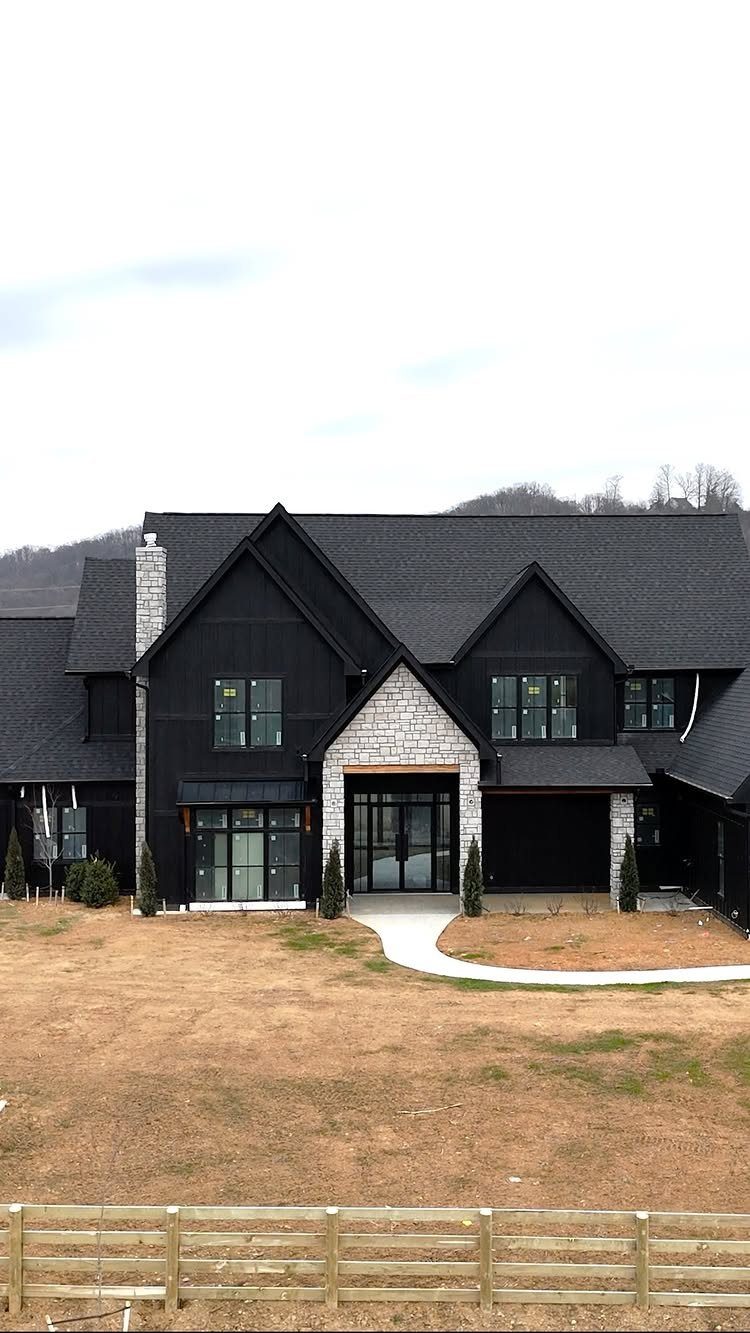
Stone against black board and batten works because the eye needs somewhere to rest, and rough light stone gives it a place.
The combination suits hillside lots or anywhere trees sit close to the house; the stone picks up ground color and keeps the black from reading as a hole in the landscape.
Placement matters more than stone type. Columns, chimney faces, and the foundation band do the heavy lifting; skirting the whole base can look like a pedestal the house sits on rather than part of the design.
I would start with the chimney and the porch columns, then step back and see if the foundation wants any.
Rounded mosaics read more modern, stacked ledgestone more rustic, and either one works if the grout stays tight and the tone stays within the gray family.
Stone is heavy, and that weight shows up in labor and foundation costs. Stone adds labor and footing requirements that siding alone does not, so check your budget and your wall structure before you commit to a full-height column wrap.
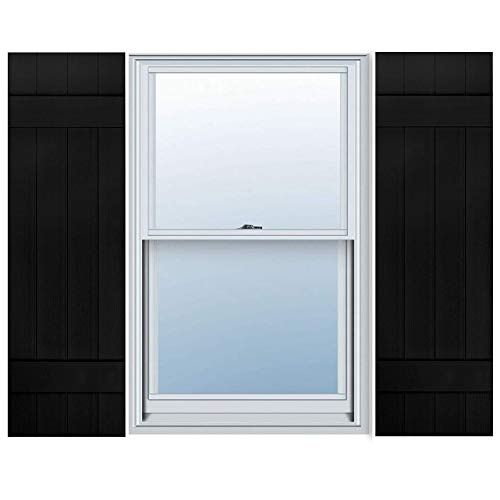
Injection Molded Polypropylene Construction

Item Description: 14 in. W x 38 in. H Builders Edge, TailorMade Four Board Joined (2 Batten), Board-n-Batten Shutters, Includes Matching Installation Spikes (Per Pair), 018 - Tuxedo Grey

Dimensions: 19-1/2 in. Width x 1 in. Depth x 39 in. Height
3. Black Wood
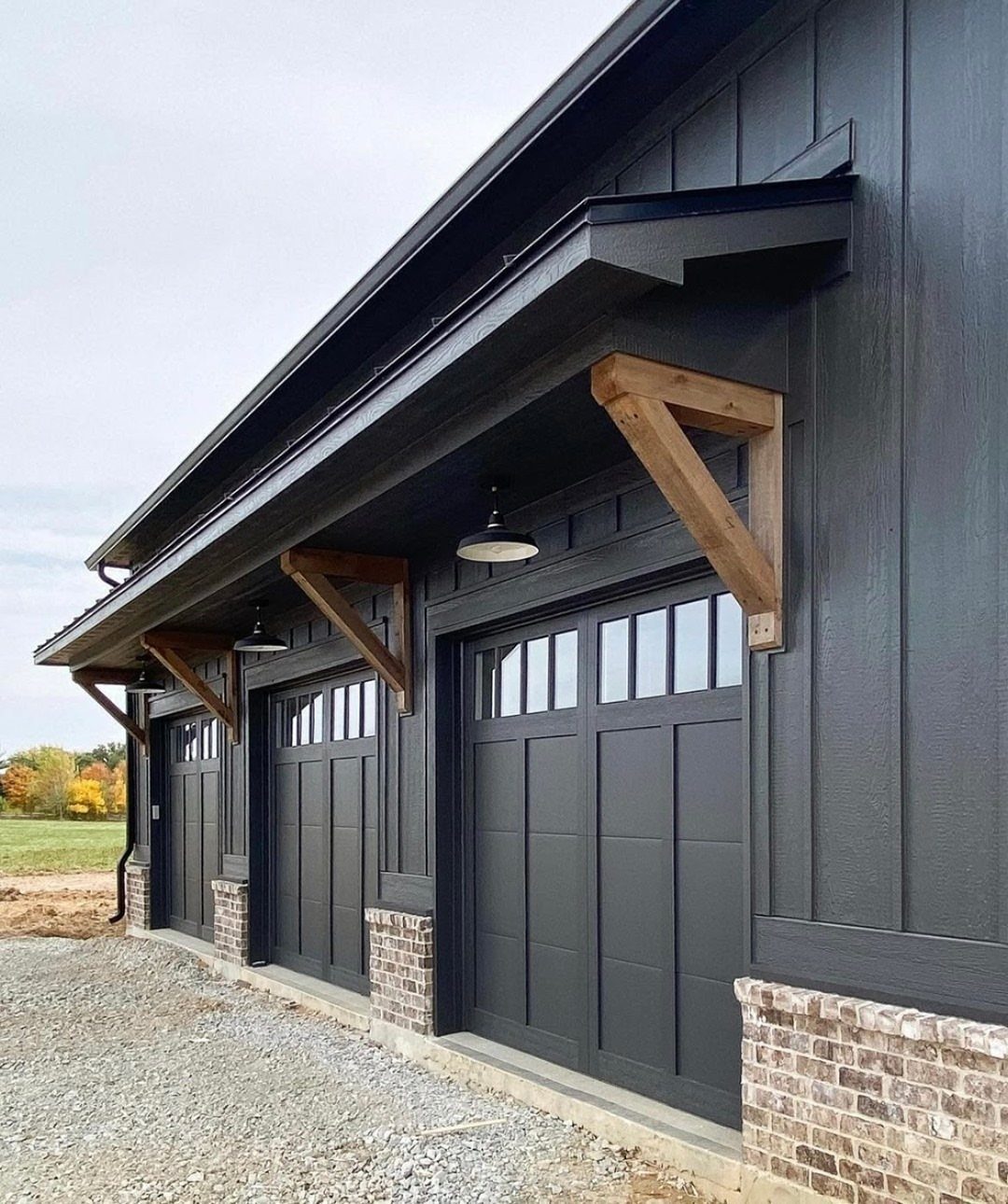
Natural wood brackets or corbels against black siding warm the whole facade without softening it into something else. Wood works best on elements that project or support: eave brackets, porch posts, a threshold beam.
Flat trim in wood tone tends to look like a mistake; the same material carved or angled reads intentional.
If your house has a prominent porch or a deep overhang, those are your spots. Black LP SmartSide trim frames the wood and keeps the edges crisp, but the wood itself should be the structural gesture, not an applique.
I would use black garage doors and black window trim to push the contrast so the wood does not drift into beige territory.
The maintenance split is real. Wood needs resealing every few years; the black siding around it does not.
Plan for scaffolding or a tall ladder on that schedule, or choose a dark stain that fades gracefully rather than a clear coat that flakes.

All-in-One Design - Package of 10 premade molding trim slat + 2 decorative edge strip create instant board & batten walls
All-in-One Design - Package of 20 premade molding trim slat + 4 decorative edge strip create instant board & batten walls

Premade Board and Batten Paintable Wainscoting Kit: Package includes 20 premade molding trim slats, 4 decorative edge strips, and two pairs of gloves for convenient installation
4. Monochromatic Black Facade
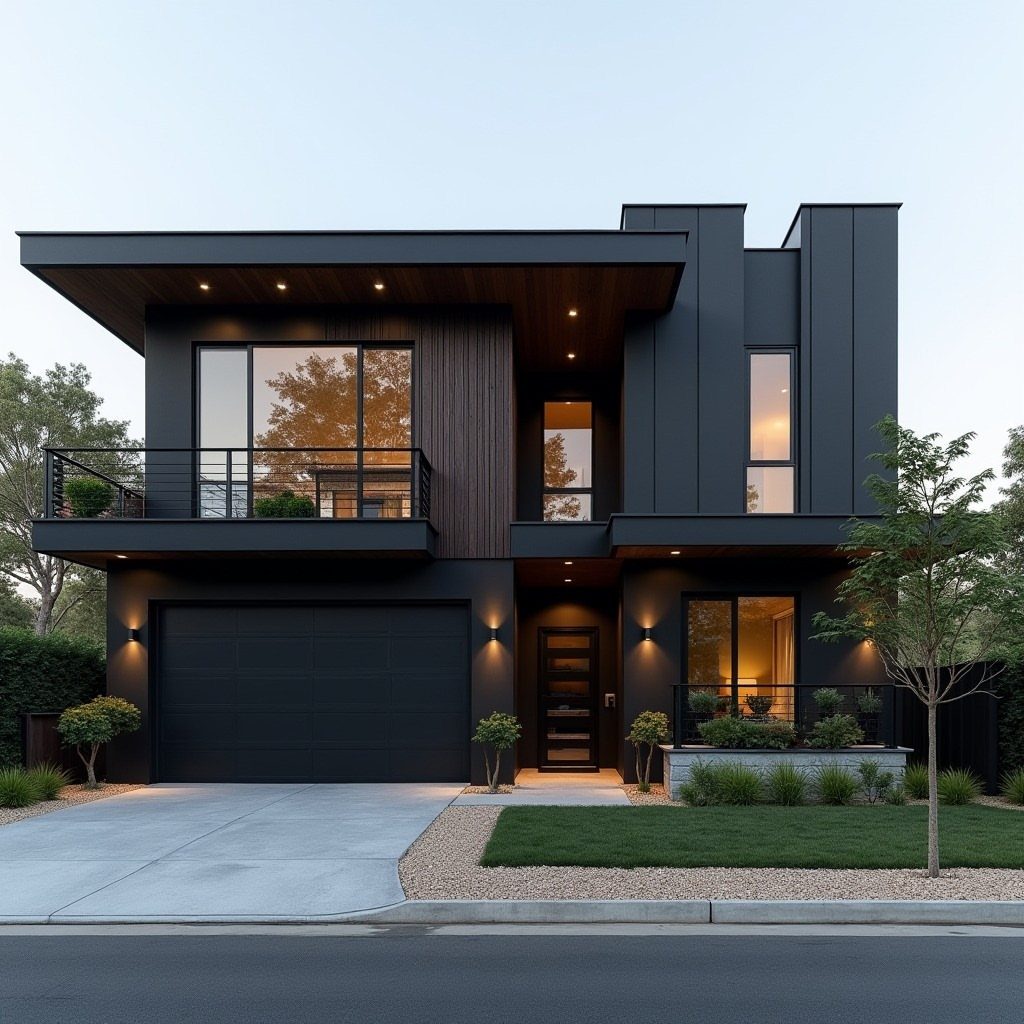
An all-black facade lives or dies on texture.
Smooth panels next to board and batten next to lap siding, all in the same depth of black, give the eye enough variation to read the house as designed rather than painted over in a weekend.
Direction and spacing do the work. Run board and batten vertical on the main volume, switch to horizontal lap on a lower wing, and use a smooth panel for the recessed entry.
The color stays identical; the shadows change. Any trim color break undoes the effect; white or wood would pull the eye away from the silhouette and surface variation.
The risk is flatness under overcast skies or at dusk, when even good texture can disappear. Large windows help, and so does some landscape lighting aimed at the wall planes rather than the ground.
This suits confident minimalists and modern builds; a traditional roofline with ornate gables will fight the restraint.

Crafted from sturdy, durable, smooth‑surfaced MDF, this board‑and‑batten wall kit is lightweight, easy‑to‑clean and warp‑resistant. It features a smooth, burr‑free surface for comfortable touch.
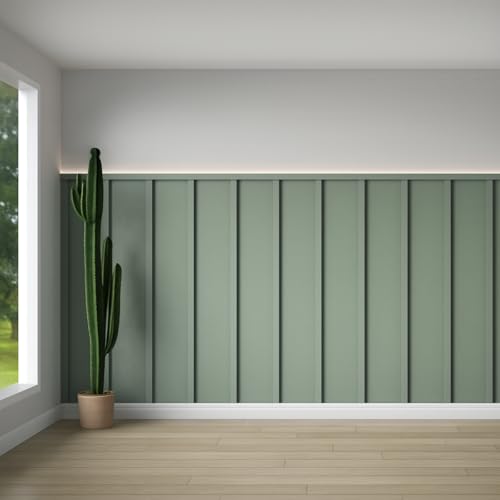
Mdf Material: board and batten wall panel kit is made of MDF, which is durable, waterproof, and easy to clean; The surface is smooth and burr-free, and feels comfortable to the touch
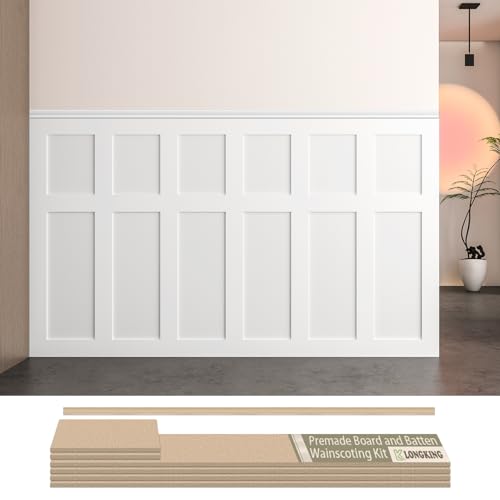
Board and Batten Wainscoting Kit – LONGKING pre-cut MDF wall panel kit is designed for easy DIY installation. Create a stylish accent wall with classic board and batten molding trim, perfect for modern and traditional home décor.
Durability of Modern Materials
Fiber cement board and batten sidesteps the maintenance cycle that keeps wood siding looking tired after a few seasons.
Moisture damage, peeling, and the slow deterioration that follows are built into natural wood; fiber cement holds color and surface consistency year over year.
Allura’s line is engineered for faster installation and a uniform finish, which matters more with dark tones where every flaw catches light.
The material costs more upfront than basic wood, but the savings show up in skipped scaffolding rentals and no annual resealing. Either material lets dark board and batten stay dark.

Item Description: 14"W x 55"H Lifetime Vinyl, Standard Four Board Joined, Board-n-Batten Shutters, w/Installation Shutter-Lok's & Matching Screws (Per Pair), Black
Item Description: 14"W x 59"H Lifetime Vinyl, Standard Four Board Joined, Board-n-Batten Shutters, w/Installation Shutter-Lok's & Matching Screws (Per Pair), Black

Item Description: 12"W x 55"H Lifetime Vinyl, Standard Three Board Spaced, Board-n-Batten Shutters, w/Installation Shutter-Lok's & Matching Screws (Per Pair), Treated Cedar
Color Versatility
Black and gray read as neutrals on a house exterior, which opens more accent paths than the monochrome look suggests.
A dark facade sets off brick, weathered steel, or painted shutters without demanding a specific tone; the siding does the restraining so the accents can move.
I would keep trim within the same family, warm or cool, rather than mixing charcoal siding with brown wood and blue-black shutters.
That discipline lets a single accent color carry the whole scheme: sage green on a mailbox, rust on a light fixture, cream on a door.
Dark gray especially leaves room for stone or brick that carries real color variation, where true black would flatten it to silhouette.

FAST DIY INSTALLATION: Our lightweight polyurethane panels are designed for quick and easy installation, saving you time and professional labor costs. Unlike heavy real stone, these panels are easy to handle and can be installed by a single person using basic tools—perfect for a weekend DIY project.

Item Description: 7"W x 39"H Americraft Two Board (3 Batten) Exterior Real Wood Joined Board-n-Batten Shutters (Per Pair), Peaceful Blue

Item Description: 10 1/2"W x 37"H Americraft Three Board Exterior Real Wood Joined Board-n-Batten Shutters w/ End Batten (Per Pair), Peaceful Blue
Maintenance Benefits
Year-round maintenance is the reality of wood board and batten; fiber cement or metal removes that schedule entirely. Wood swells, checks, and loses its finish to moisture and sun, and dark colors show every blemish faster than lighter stains.
Metal paneling carries the same advantage; the color is baked into the substrate, not sitting on top waiting to peel.
Installation speed matters too on a full facade replacement; fiber cement boards go up faster than traditional wood, and the consistent factory finish skips the on-site priming and sealing that wood demands.
The labor difference alone can offset part of the material premium. For a weekend-scale project, engineered or metal products mean the work ends when the last board is hung, not when the weather clears for resealing.

Item Description: 21"W x 39"H Americraft Six Board (2 Batten) Exterior Real Wood Joined Board-n-Batten Shutters w/ Z-Bar (Per Pair), Peaceful Blue

Item Description: 14 in. W x 39 in. H Builders Edge, Standard Four Board Joined (2 Batten), Board-n-Batten Shutters, Includes Matching Installation Spikes (Per Pair), 419 - Storm Cloud

Dimensions: 11-1/2 in. Width x 1 in. Depth x 39 in. Height
Visual Texture Importance
A single dark color across a whole house depends on texture to keep it from reading as a solid block.
Direction does part of the work; vertical boards on the main volume against horizontal lap on a wing create shadow lines that read even in flat light.
Spacing matters too; wider boards with narrow battens read differently than equal widths, and that rhythm can shift between floors or across a gable.
Shake or shingle texture at an entry or dormer breaks the plane without introducing a new color.

【Complete Set for 8ft Walls】 Includes 10 pre-cut molding trim slats + 5 cross pieces, covering 94 x 53 inches wall

Board and Batten Wall Molding Kit : Include 21 premade molding trim slats and 2 decorative edge strip.No measuring or extra shopping. Everything you need for a accent wall, ready to assemble right out of the box

All-in-One Design: This complete set includes 12 pre-made molding trim slats and 3 decorative edge strips, enabling you to create an instant board and batten wall effortlessly.
Frequently Asked Questions
Should board and batten be lighter or darker?
Darker reads bolder and more modern on a facade, while dark gray specifically stays softer than true black and forgives older homes or smaller lots.
Where the roofline shifts or a wall steps back, dark gray softens the joint between siding styles so the change reads as intentional, not patched together.
What is the best color for board and batten siding?
Black and dark gray dominate right now because the vertical lines already add drama, and a dark tone lets that shadow work without competing color.
Against white trim, dark gray settles in without the sharp contrast that can make a new build look like it is auditioning for attention, and every major fiber cement line stocks it as a standard.
What is the best dark color for an exterior house?
Black and dark gray are the two that keep showing up on built projects, with dark gray winning on older homes where true black would swallow the facade.
Black can swallow a house whole if you let it; stone or natural wood accents break the mass so the facade reads as grounded, not like a gap in the yard.
What is the cheapest option for exterior board and batten siding?
Fiber cement or engineered products run lower than natural wood over time because wood demands year-round maintenance and resealing every few years.
Most manufacturers now carry dark colors in standard palettes without premium pricing for special orders, and engineered versions hold color without the peeling and moisture damage that ruin wood.