

The ideas below run from a single quart of exterior paint and one afternoon with a brush to a full siding replacement that costs more up front.
What decides which is yours is whether you are adding a dark green accent to what already exists or wrapping the whole house in it.
1. Tate Olive
Tate Olive sits in that useful middle ground where green meets brown, neither too bright nor too muddy. Stone and wood trim bring out the best in it; the color was made for natural materials.
If your house already has stone veneer or a wood porch, this is the olive that ties them together rather than competing.
Check the fixed elements first. The undertone shifts with light, so sample on the wall that gets morning sun and the one that sits in shadow.
What reads earthy at noon can turn flat by evening.
Best for homes with existing texture to play against. On a plain facade with vinyl siding and no trim variation, it can sink into the background.
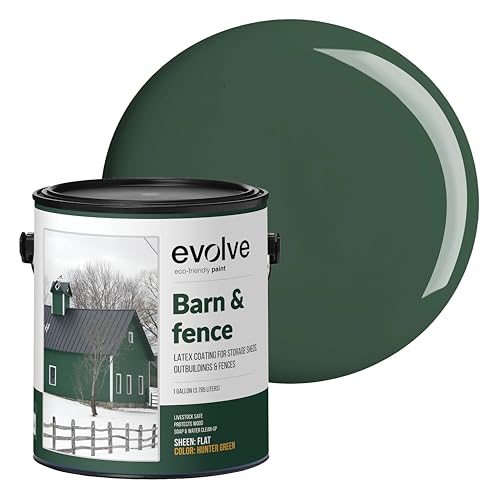
ELEVATE OUTDOOR STRUCTURES: Refresh barns, fences, sheds, and exterior surfaces with durable paint that delivers long-lasting color and protection.

2. Hunter Green

Hunter Green carries the weight of a color that has been on American houses since the nineteenth century without ever looking like a period piece.
The balance between blue and yellow in the mix keeps it from going too forest or too teal, which is why it works on a renovated Victorian or a new build with traditional proportions.
Vertical board-and-batten gives it a current feel, though the color itself does not chase trends. A window box with something growing breaks up the darkness without softening the effect.
This is the safe choice for historic districts with paint guidelines, and for anyone who wants the green to read as permanent rather than fashionable. Less surprise is the price; it will not stop traffic.

VERSATILE APPLICATIONS: Ideal for both indoor and outdoor use on surfaces like wood, metal, concrete, and plastic. Perfect for house paint projects and outdoor furniture paint needs.

SPRAY PAINT AND PRIMER – Krylon COLORmaxx Spray Paint and Primer delivers premium coverage and superior color with adhesion and durability. This primer and spray paint can be used on wood, metal, wicker, most plastics, glass, plaster/ceramic and more.

ALL-IN-1 PAINT & PRIMER: A hardy multi-purpose and multi-surface one-coat paint and primer in one for almost any indoor or outdoor surface. A wall, ceiling, floor, skirting board, cabinet, furniture and door paint for your bathroom, kitchen, home and garden.
3. Dark Olive

Dark Olive leans hard into brown, enough that from across the street it can read as a warm neutral rather than a green.
That makes it the practical pick for wooded lots where a cleaner green would vibrate against the trees and look artificial.
Wood window trim, not white, is the pairing that makes sense here. White would crisp up the edges and fight the color’s whole purpose, which is to settle the house into its setting.
Sample against your bark and your dirt, not your neighbor’s beige.
Rural and semi-rural settings are where it earns its keep. In a dense suburb with small lots and bright neighboring houses, it can look like a shadow that landed in the wrong place.

Includes 30 featured and newest released color card. Sprayed on color to see our colors in your homes lighting for more accurate color choices.

Includes 30 featured and newest released color card. Sprayed on color to see our colors in your homes lighting for more accurate color choices.

Includes 30 featured and newest released color card. Sprayed on color to see our colors in your homes lighting for more accurate color choices.
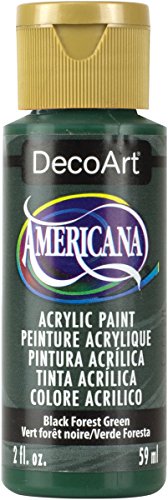
4. Black Forest Green

Black Forest Green goes so deep that direct sun is what keeps it reading as green at all; in shade it flattens toward charcoal.
The modern houses that carry it best use that near-black quality as a base for lighter accents to push against.
Light wood around the entry does real work against a dark wall. Without that warmth, the whole facade would feel like a sealed box.
Concrete steps, metal roofing, and this green share a language of deliberate contrast.
This is for the reader who wants drama and has the architecture to support it. On a simple ranch with standard windows and no trim hierarchy, the color will swallow the details that are already scarce.
And And And Studio used the darkest green Farrow & Ball sells on this Los Angeles home, which explains why it almost looks charcoal when the shade from the surrounding trees hits it just right.
— Domino

Extremely durable outdoor paint ideal for use on properly prepared exterior wood, brick, masonry, concrete, weathered aluminum, weathered vinyl siding*, and primed metal substrates
This product is Non-toxic

Designed to provide a non-reflective finish that conceals hunting and sporting equipment
5. Dark Green Trim and Shutters
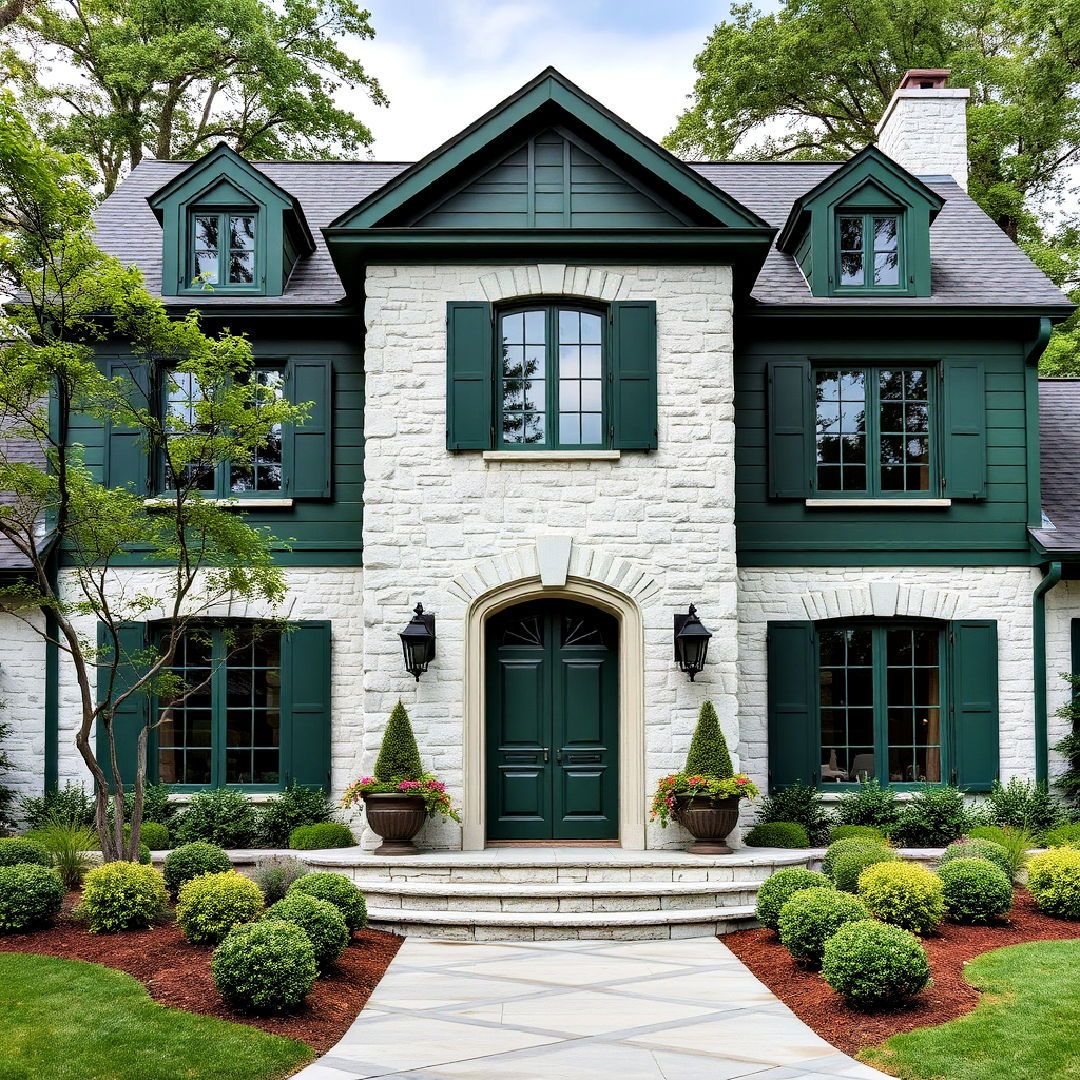
Not every house needs to wear green head to toe.
Dark green trim and shutters against white or cream siding gives the curb appeal hit without the commitment of a full repaint, and the cost drops to a few gallons and a weekend with a brush.
Shutters frame windows; trim outlines the shape of the house. Both draw the eye to structure that might otherwise disappear.
Keep the green consistent across every accent, door included, so it reads as intentional rather than leftover.
Start here if you are unsure. You can always expand to the body color later, and the test run tells you how the shade behaves in your light.
The risk is low, the visible change is immediate, and white siding with dark trim ages better than the reverse.

INTERIOR/EXTERIOR: KILZ TRIBUTE Trim, Door & Cabinetry paint features a unique formula developed to offer the best characteristics of interior and exterior paint in one convenient product.

WHITE PAINTED TRIM NAILS FOR CLEAN EXTERIOR INSTALLATIONS: 1-1/4 in. stainless steel trim nails with white head blend with siding, fascia, and window trim to minimize visible fasteners and create a professional finished appearance.

Renews and protects discolored bumpers and trim
6. Olympic Range

Olympic Range is the darkest forest green on this list that still reads as green in overcast light, which matters in the Pacific Northwest and the Northeast where the sky spends half the year washed out.
The drama is there, but it does not depend on bright sun to activate it.
White window trim gives it breathing room; without that contrast, the mass of the house can feel heavy. Wood-tone porch posts soften the edge between dark wall and light trim.
Modern and rustic both work because the color itself is not stylistically coded. A steel roof and clean lines push it contemporary; cedar posts and a stone foundation pull it toward cabin.
The same gallon works either direction, which is rare.

TRUE ALL-IN-ONE PAINT & PRIMER – Skip the extra steps. Evolve Tru Coat combines paint and primer in one, delivering excellent adhesion and coverage on wood, metal, masonry, and concrete with minimal prep.

ALL SEASON PAINT & PRIMER-IN-ONE: Cascadia XL is a 100% Acrylic Latex Paint & Primer-in-One with advanced technology for rain protection and a superior finish

SPRAY PAINT AND PRIMER – Krylon COLORmaxx Spray Paint and Primer delivers premium coverage and superior color with adhesion and durability. This primer and spray paint can be used on wood, metal, wicker, most plastics, glass, plaster/ceramic and more.
7. Vintage Vogue
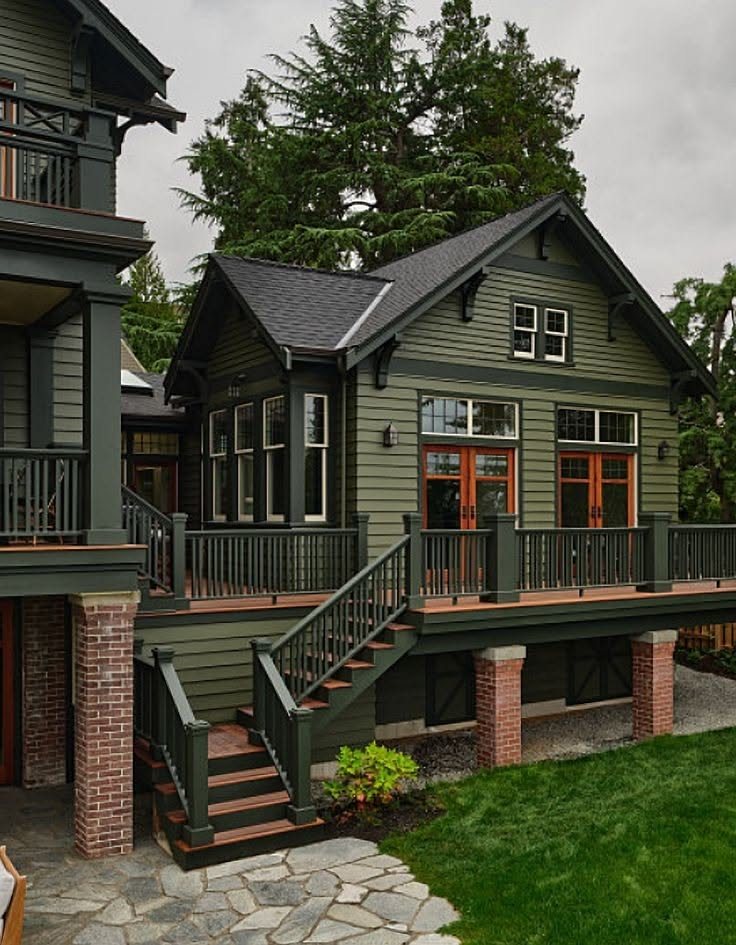
Vintage Vogue carries a quiet gray undertone that keeps dark green from shouting at the neighbors.
On a Craftsman with olive tones in afternoon light, the color turns moodier as the sun drops, which gives a small house more presence than its footprint suggests.
I would pair it with slate-colored stone rather than warm brick; the cool cast in the paint fights orange tones. Black window frames and natural wood at the entry warm it back up without cluttering the palette.
For a weekend painter covering existing siding in decent shape, two coats over primer runs surprisingly little in material for a single-story facade.
ALL-IN-1 PAINT & PRIMER: A hardy multi-purpose and multi-surface one-coat paint and primer in one for almost any indoor or outdoor surface. A wall, ceiling, floor, skirting board, cabinet, furniture and door paint for your bathroom, kitchen, home and garden.

Weather and corrosion resistant coating protects exterior/interior surfaces like wood, metal, concrete, masonry and more
ALL-IN-1 PAINT & PRIMER: A hardy multi-purpose and multi-surface one-coat paint and primer in one for almost any indoor or outdoor surface. A wall, ceiling, floor, skirting board, cabinet, furniture and door paint for your bathroom, kitchen, home and garden.
8. Forest Green

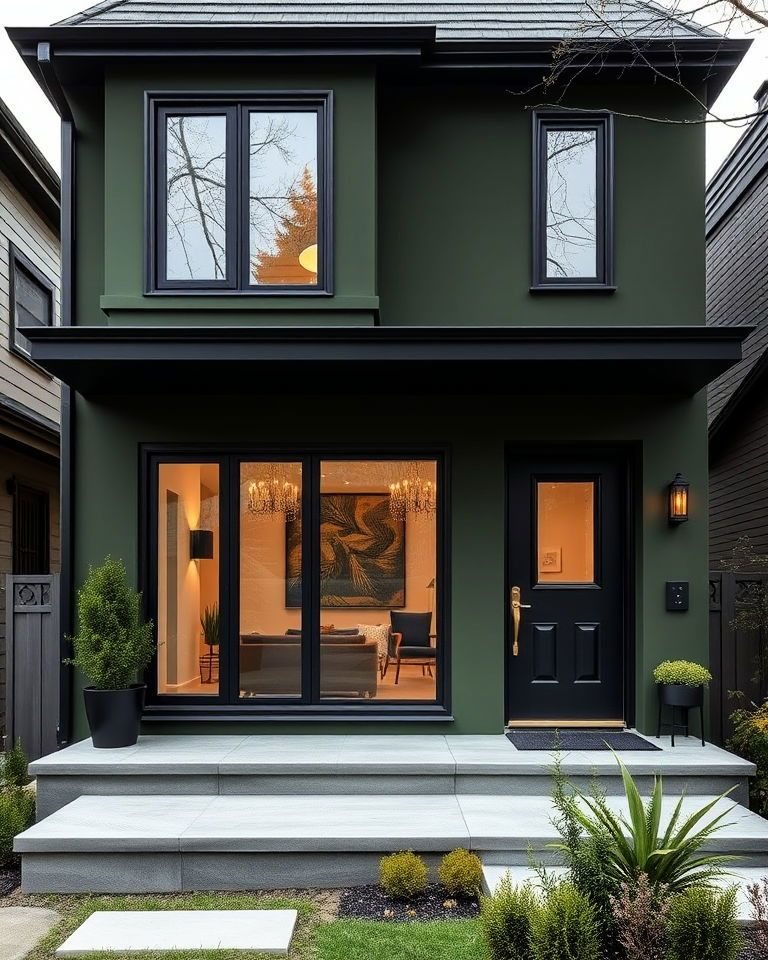
Black trim against forest green siding is the combination I keep coming back to when someone wants a classic look that does not read "country cottage."
Dark green works on a small footprint with a covered porch when the darkness at the roofline and windows pulls the whole mass together, letting the stone walkway and steps do the contrasting work instead.
This shade holds enough black to stay neutral with autumn trees around it, enough green to soften a flat suburban facade.
On shutters or a front door, one quart of exterior acrylic covers the job; for full siding, budget for a darker primer coat since forest green over a light previous color can turn chalky in spots.

Includes 30 featured and newest released color card. Sprayed on color to see our colors in your homes lighting for more accurate color choices.

Includes 30 featured and newest released color card. Sprayed on color to see our colors in your homes lighting for more accurate color choices.

ENAMEL FLOOR PAINT: Provide your floors with an extremely durable and long-lasting finish using California Paint ALLFLOR Porch, Patio and Floor Enamel Paint.
9. Dark Green Doors
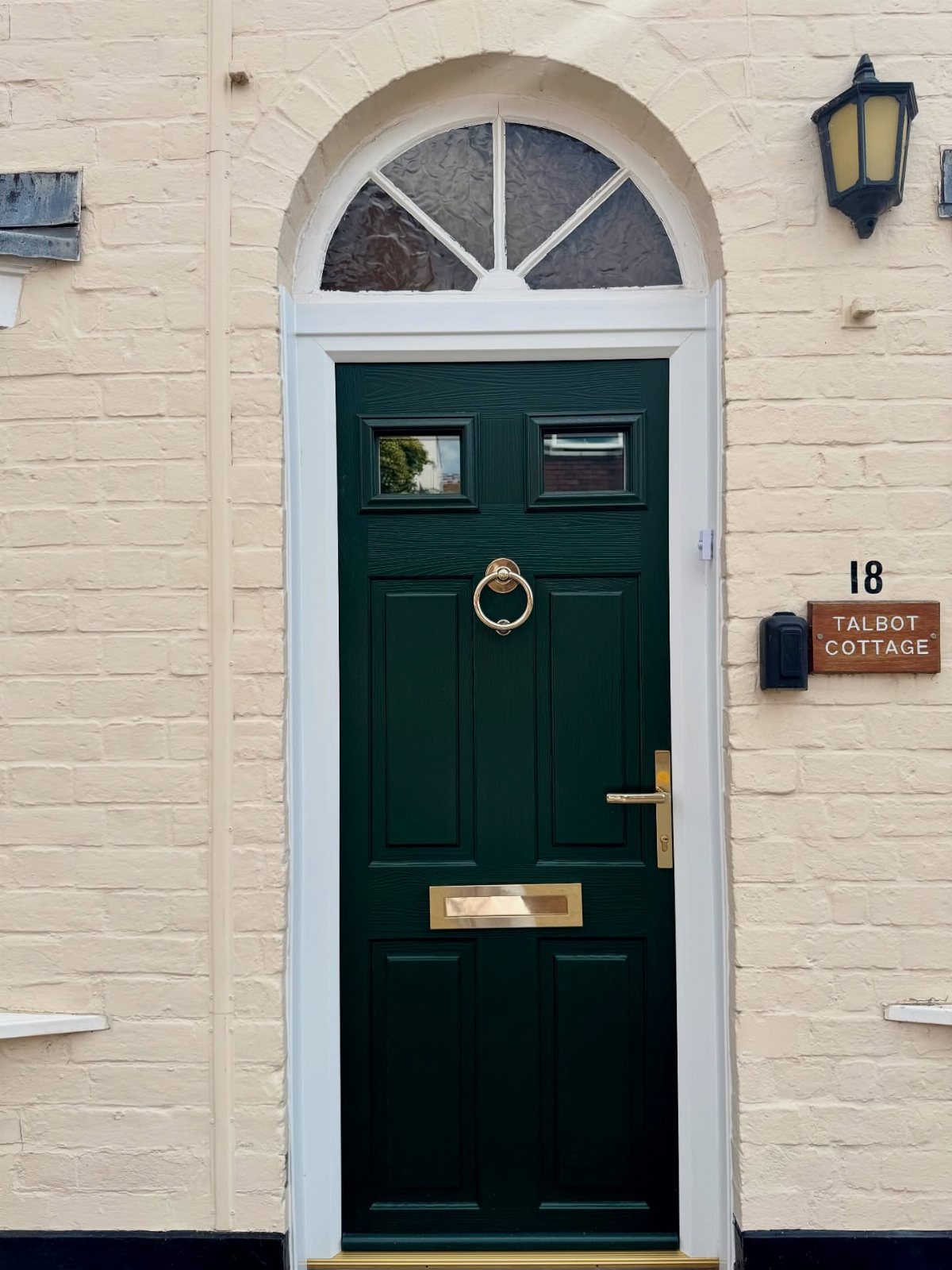
A dark green door against light brick or stucco does the heavy lifting of curb appeal without touching the rest of the house.
Cream brick and gold hardware set the standard: brass or aged bronze keeps the tone warm, and a fanlight or sidelights keep the entry from feeling like a cave.
This is the single-day project that pays off most per hour spent. A quart of exterior paint, a good brush for the panels and a small roller for flat sections, and you are done by mid-afternoon.
I have seen it work on colonial revivals, bungalows, and plain ranch boxes that needed one strong gesture to stop looking rented.
If your existing door is in rough shape, a fiberglass replacement in a panel style that matches your house era costs more than a paint job but holds paint longer than old wood.

Contents: 1x Maxx Darth 17ml

Extremely durable outdoor paint ideal for use on properly prepared exterior wood, brick, masonry, concrete, weathered aluminum, weathered vinyl siding, and primed metal substrates
10. Dark Green Siding
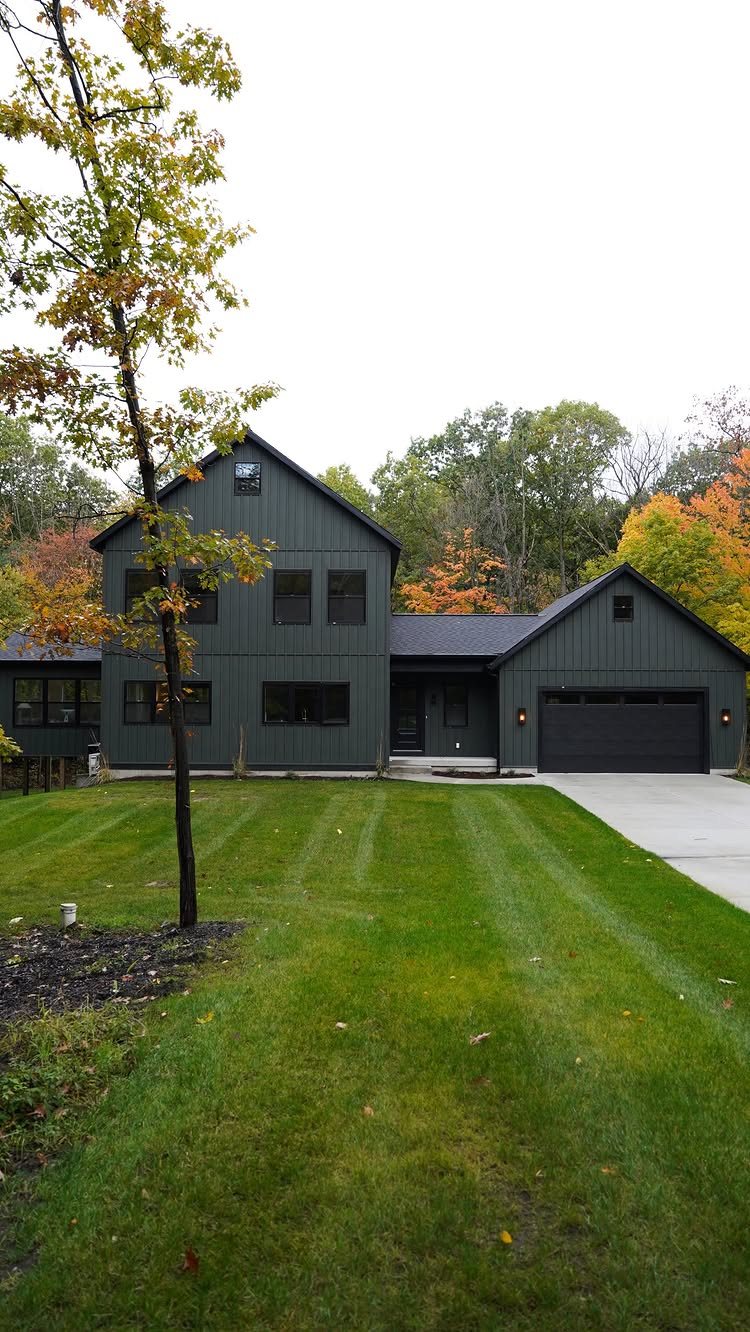
Vertical siding in dark green reads more contemporary than the same color running horizontal, and black trim and a garage door push that modern note further without going full monochrome.
The house sits back into the trees rather than competing with them, which is what you want when the lot has mature planting.
Fiber cement or engineered wood in this color needs less frequent touch-up than traditional clapboard, though the up-front cost runs higher.
Vinyl in a dark shade can warp in southern exposure; if your front faces west and you are in a hot climate, I would spend the extra for cementitious board or accept that you will repaint wood more often.
The boldness here is in the coverage, not the detail: let the massing do the work and keep trim minimal.

Use for a variety of indoor and outdoor project surfaces including wood, metal, plaster, masonry or unglazed ceramic
ALL-IN-1 PAINT & PRIMER: A hardy multi-purpose and multi-surface one-coat paint and primer in one for almost any indoor or outdoor surface. A wall, ceiling, floor, skirting board, cabinet, furniture and door paint for your bathroom, kitchen, home and garden.
Choosing the Right Green Paint
Your roof, brick, stone, and landscaping have already chosen half the palette for you. A green that ignores those fixed elements will fight them every hour of daylight.
Sample on white foam board, not the wall itself; liquid samples are formulated for interior use and will mislead you outside.
Paint two coats on a board you can move around: morning sun, afternoon shadow, the light that hits your front door at 5 PM. The same gallon shifts dramatically across those hours.
Benjamin Moore stores carry the full line, and their sample program lets you take home enough to test properly. Start with the colors that already work on houses with your stone or roof tone, then narrow from there.
Complementary Colors
Dark green sits at the center of the color wheel, which means it pairs both warm and cool without turning muddy. The undertone in your specific green decides which direction works better.
Warm brick needs the softer end of the range: October Mist 1495 or Saybrook Sage HC-114, where the yellow in the green speaks the same language as the orange in the brick.
Limestone, fieldstone, cedar, oak, and mahogany all read clearly against dark green without competing. Black or bronze metal fixtures give the eye a place to rest.
The combination that fails most often is white trim that is too bright; it can make a moody green look like a Christmas decoration. Off-white or cream is usually the safer call.
Testing Paint Colors
Bright sunlight pulls the green forward and makes it more alive. Overcast light deepens the tone and turns it moodier.
The landscape around your house warms or cools what you are seeing, so a yard full of summer maple reads differently than bare winter branches.
North light and south light are different colors by late morning. A sample that looks rich on the front facade can turn flat on the garage wall that gets shadow by 2 PM.
White foam board, again, not the siding. Two coats, moved around through sun and cloud and morning shade, will tell you what a chip in the store never could.
Dark Green Popularity
White, gray, and beige still dominate the exterior market, but dark green has moved from occasional to expected in the last several years.
The appeal is practical as much as aesthetic: a house near trees or against a wooded lot settles into the view instead of shouting across it.
The split in green matters. Yellow-greens like olive or chartreuse read warmer and work with brick and earth tones.
Blue-greens like hunter, emerald, and teal carry cool and pair with slate, black, and gray.
Knowing which side your green lives on prevents the common mistake of a cool green against warm stone, or a warm green against a steel roof.
Frequently Asked Questions
Is dark green a good color for a house?
Yes. Dark green shifts between earthy and bold depending on the shade, and it has the range to read permanent on a historic Victorian or current on a modern build.
The deeper tones blend with trees and city surroundings alike without looking like a passing trend.
Which colors look best with dark green?
Warm wood trim, natural stone, black accents, and soft whites all work. White trim keeps a dark green house from going flat and heavy, and raw wood posts on the porch keep the transition from looking too sharp.
Stone in cool slate tones suits greens with gray undertones, while warm limestone pairs better with olive shades.
What are the best exterior green paint colors for 2026?
Sherwin-Williams Olympic Range and Benjamin Moore Black Forest Green are the two that come up most often for dark shades.
Olympic Range holds its green in gray light, which is why it gets used so much in Seattle and up through New England.
Black Forest Green sinks so far toward black that you need full sun to catch the green in it; shade flattens it to almost charcoal.