


Deck skirting covers a real spread: pressure-treated lattice you can nail up in an afternoon, horizontal slats that take a weekend, or composite fascia that costs more at the register but never asks for another coat of sealer.
What you are hiding underneath changes the whole decision: open framing, storage space you want access to, or just air you need to keep animals out of.
Composite fascia boards wrap the rim joist and drop straight to grade in one clean band, and they only make sense if you already went with composite decking and want one material handling every surface.
1. Composite Deck Skirting

Composite skirting boards match your deck in color and grain, so the whole structure reads as one solid piece rather than a platform hovering over dirt.
The boards are a mix of wood fiber and recycled plastic, which means no staining, no rot, and no carpenter ants turning your weekend project into next spring’s repair.
Upfront cost is the main drawback. You will pay more than pressure-treated lumber, and the savings come back only in the years you do not spend resealing.
Check whether your deck board manufacturer makes matching skirting panels; the color match is worth the wait if they do. If your deck gets full sun, lighter colors stay cooler to the touch and fade less noticeably over time.
This one suits owners who want the job finished for good and have the budget to get there in one pass.
There are many reasons to add skirting around your deck. It can help keep beams and other structural elements beneath the deck hidden, provide an out-of-sight place for storing tools and other essentials, and give your outdoor space a more put-together and cohesive look.
— Bob Vila

Made of glass-filled polypropylene, a UV- stable material which prevents any scratches

Decorative screen panels can enhance both indoor and outdoor spaces, creating the perfect accent or focal point
2. Horizontal Wood Slats

Horizontal slats stretch the eye sideways and make a deck look wider than it is, which helps on narrow lots where every inch of visual breathing room counts.
Alternating two board widths breaks up the rhythm just enough to keep the eye moving.
Cedar or redwood holds up well if you want the grain to stay visible; pressure-treated pine takes paint and saves money. Either way, leave a finger-width gap between boards so air moves through and the framing underneath can dry.
I would stain horizontal slats rather than paint them; water pools on flat surfaces, and stain does not peel the way paint does when it fails.
This style fits contemporary houses and any deck where the railings already run clean lines. On a traditional home it can read too stark.

Decorative screen panels can enhance both indoor and outdoor spaces, creating the perfect accent or focal point

Decorative screen panels can enhance both indoor and outdoor spaces, creating the perfect accent or focal point
3. Wood Lattice

Lattice is the option your grandfather used, and it still works because it is cheap, light, and lets air through in ways solid skirting cannot.
Diagonal lattice is the classic pattern; square or straight-weave versions are available if the cottage look feels too sweet.
Pressure-treated lattice resists ground moisture, though I would still keep the bottom edge off the dirt by an inch or two if your grade allows it. Paint or stain it after installation, not before; the cut ends need protection too.
White reads fresh and traditional; black or dark stain gives the same pattern a graphic, modern edge that pairs well with metal railings.
You lose some privacy since light and sound pass through. Lattice screens without fully hiding, so if you store ugly things underneath, they will still show as shapes.
This suits raised decks where the main goal is keeping animals out and air moving in.
4. Under Deck Storage

A door cut into skirting turns dead space beneath your deck into storage for the things that clutter garages: hoses, pots, the grill cover you only need part of the year.
Full-height double doors with black hardware make a statement, but a single smaller door works fine for crawl-in access.
I would lay down a sheet of gravel or pavers to keep mud off what you store, and skip anything that rusts or mildews.
Pressure-treated framing around the door opening keeps the cuts from rotting; use exterior-grade hinges and a latch that does not freeze shut.
Best for decks with enough clearance to stand or crouch in and a level yard underneath. If your grade drops hard, the door frame fights the slope and the whole thing looks forced.

【Explore all colors with ease】Find the decking color that perfectly matches your space through color sample boards. The 3 sample plates include 6 colors.

COVERS EXPOSED EDGES: Effectively hides the exposed edges of deck tiles, giving your deck a neat and refined appearance. Designed to cap off your deck tiles, ensuring every edge is covered for a cohesive, finished look that enhances the overall aesthetic of your outdoor area.

100% FSC CERTIFIED MATERIAL: The interlocking deck tiles are made from responsibly sourced, FSC certified wood plastic composite, which reduces the excessive demand for wood
5. Stair Skirting

Wraparound stairs turn the entire perimeter of a low deck into a gradual descent, so there is no blank wall to skirt at all.
Each step drops to the next level, and by the time you reach ground level you have walked down the whole deck edge.
Carrying the same horizontal board pattern from the deck onto the stair risers makes the transition read as intentional architecture rather than a workaround.
This only works when your deck sits close to grade; a tall deck would need a staircase that eats your whole yard.
The framing is more complex than a standard skirt, and the treads need proper footings just like any stairs. Built-in step lights turn the functional into something you actually want to look at after dark.
I would pick this for floating decks, small platforms, or any yard where the deck should feel grounded rather than perched. It trades storage space beneath for flow and access.

Sturdy Animal Protection: Keep unwanted guests out of your home. This outdoor dryer vent cover features a durable metal screen that blocks birds, squirrels, and other small animals from entering the vent and causing blockages.

The Builders Edge Animal Guard for Exhaust Vent is used in place of the trim ring

The Builders Edge Animal Guard for Exhaust Vent is used in place of the trim ring
6. Vertical Wood Planks

Vertical planks draw the eye up and make a low deck seem taller, the same way striped wallpaper raises a ceiling.
Painted white boards running floor to bottom rail with no horizontal break read closer to a room wall than to traditional deck trim.
Treated lumber is the practical choice, though cedar holds paint longer if your budget stretches.
Run the boards with a small gap, or butt them tight and expect some seasonal swelling; in humid climates I would gap them and call the shadow lines part of the look.
The solid face blocks wind and animal traffic better than slats or lattice, so if your underside stores nothing and you want it fully hidden, this is the way.
Vertical lines suit modern and farmhouse styles equally. On a very wide deck they can feel repetitive; breaking the run with a post or a change in spacing helps.

Waterproof Interior & Exterior Wall Panels: Upgrade any space with 100% waterproof WPC slat wall panels designed for both indoor and outdoor use. Ideal for exterior wall panels, facade cladding, accent walls, and commercial applications.

Mobile Home Skirting Vinyl Underpinning 16" Wide x 28" Long Panel.

【Real Texture】Our faux stone wall panel are made from high-quality polyurethane (PU) material that mimics the look and texture of natural stone. Available in a variety of styles and colors, including stacked stone, castle stone, and limestone, this helps give your home a beautiful, warm, inviting, realistic look.
7. Deck Fascia Boards
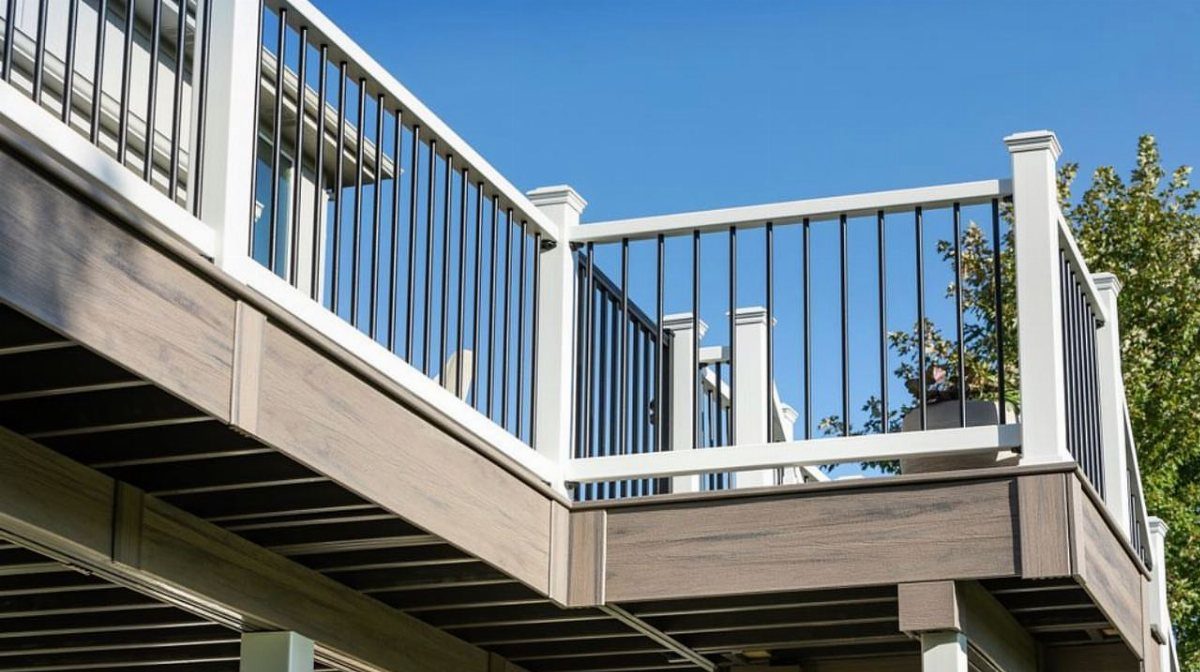
Fascia boards finish the edge where your deck surface meets the drop, and on a raised deck they can carry downward to close the gap entirely.
The boards are the same material as your decking, just thinner and wider, so the grain and color match without trying.
Most composite brands sell matching fascia in 12-inch widths. On a standard-height deck that covers the rim joist and stops; on anything taller you run the boards vertically as skirting proper.
Wide grey-brown fascia boards read as deliberate bands, not an afterthought, when you wrap them cleanly around the rim joist and down to grade.
A picture-frame deck border in a contrasting fascia color adds the most polish for the least work. Stone or lattice skirting can meet the fascia at a crisp line, but the fascia itself stays maintenance-free.
Best if you already chose composite decking and want one material to handle every surface.
Choosing Skirting Materials
Wood, composite, vinyl, metal, and PVC each carry different maintenance loads and price tags. Tropical hardwoods resist decay longest but cost more upfront; pressure-treated pine saves money now and demands sealing later.
Composite gives the grain look without the annual ritual of stain or paint. Vinyl and metal shrug off moisture and need little beyond soap and water.
Match the material to how many weekends you want to spend underneath the deck rather than on top of it.
Cost, durability, and style all pull in different directions. I would put my money into composite or hardwood if the deck is a long-term part of the house, and into pressure-treated if the plan changes every few years.
The color match to existing decking matters more than the material name; a clashing skirt undoes the whole structure.
Installation Tips
Measure the full perimeter twice before cutting anything. The ground under a deck is rarely level, so a tape pulled tight at one corner may lie an inch short at the other.
Leave gaps. Every solid skirting style needs airflow to the framing or trapped moisture will rot the joists you cannot see.
A finger-width opening between boards, or the natural perforation of lattice, handles this without thought.
If you are adding an access door, frame it in pressure-treated lumber even when the skirt itself is composite or fascia. The cut edges are where water collects.
Hinges rated for outdoor use and a latch that clicks shut even after rain are what turn a hidden compartment into actual storage instead of a hassle you avoid.

Matches color of UltraShield quick deck composite deck tiles

Matches color of ultra shield quick deck composite deck tiles

Easy Self- Installation: Features advanced for nano silicon glue backing derived from natural stone crystals; simply peel off the film and press onto the wall for a secure hold without nails or extra tools.
Maintenance Considerations
Composite and vinyl cut the maintenance list to almost nothing. A bucket of soapy water and a stiff brush knock off the grime that collects at ground level; the material does not ask for staining, sealing, or pest checks.
Wood needs more. Inspect it yearly for rot, mold, and the holes that mean insects have moved in.
Keep plants trimmed back from the skirt so air moves and moisture does not sit.
Lattice breaks more easily than solid boards, though replacing a section costs little. Brick, metal, and faux stone cost more at purchase and barely register on the upkeep calendar later.
I would run the numbers on total years of ownership before deciding which trade to make.

The Builders Edge Animal Guard For Exhaust Vent Is Used In Place Of The Trim Ring

The Builders Edge Animal Guard for Exhaust Vent is used in place of the trim ring

The Builders Edge Animal Guard for 4" Hooded Vent fits inside the vent
Frequently Asked Questions
What are some creative deck skirting ideas?
Turning boards sideways makes a slim deck read wider; standing them upright gives a low platform more height. Composite panels match your deck boards exactly, and lattice still works when you want air flow at a low cost.
For something more involved, wraparound stairs replace skirting entirely on a low deck, or cut a door into solid skirting for under-deck storage.
What are the newest decking trends?
Composite skirting that matches deck boards in both color and grain is the most visible shift; manufacturers now sell matching fascia in 12-inch widths that carry down from the rim joist to grade.
Horizontal lines remain the signature of modern skirting, whether in composite, wood slats, or carried onto stair risers for a unified look.
Metal, brick, or concrete panels appear on high-end contemporary builds, though most weekend projects stick with wood or composite.
How to install deck skirting?
Measure the height from rim joist to ground at several points, since grade rarely stays level, and buy material accordingly.
Cut panels to fit, secure with exterior-grade screws, and protect any cut ends on wood with stain or paint after installation.
Add a door frame with pressure-treated lumber if you want storage access, and use hinges and latches rated for outdoor use.