


What you’re allowed to change decides which of these ideas is yours.
Most renters can’t repaint a floor, so a white kolam pattern on red has to arrive as tile or a runner, while painted jars and ceramic cabinet knobs need only a screwdriver and a few minutes.
The range runs from a simple knob swap to a traditional outdoor kitchen that needs a yard, with mosaic backsplashes and patterned tile in between for owners who can alter the room itself.
1. Colorful Mosaic Tile Backsplash
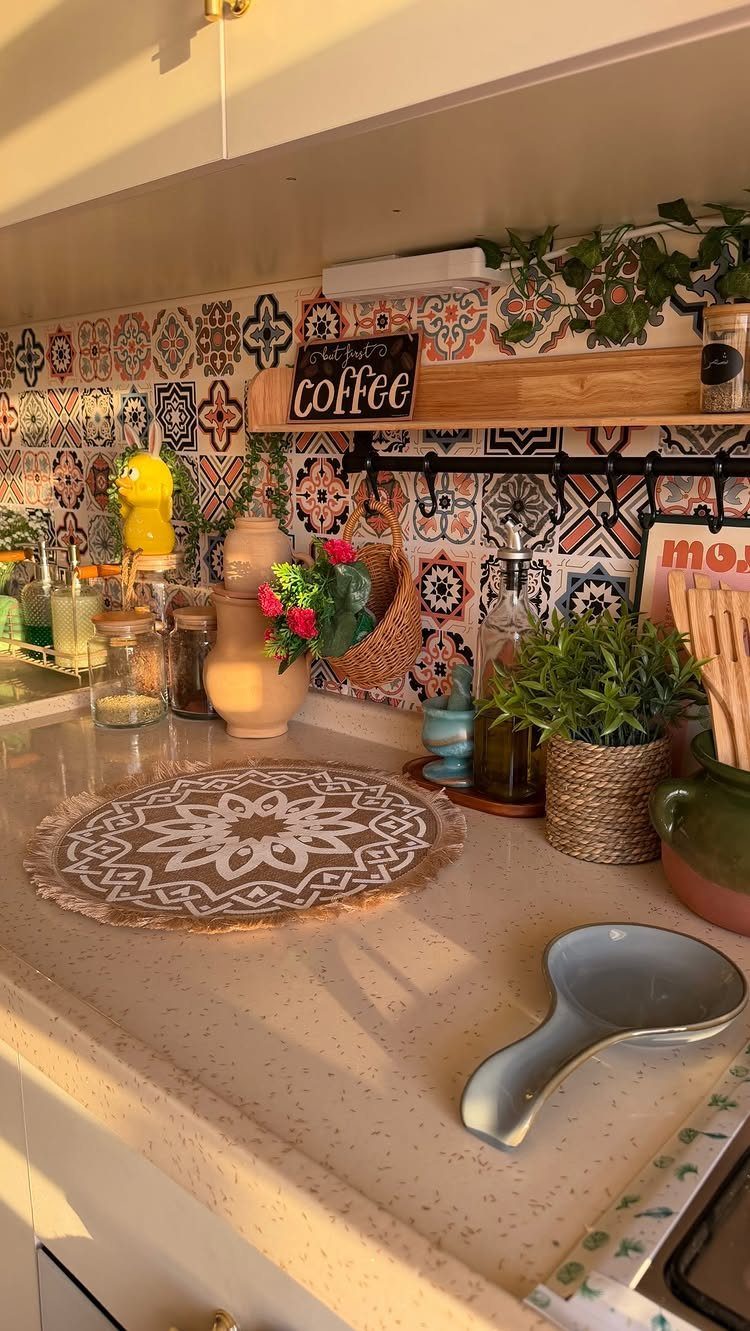
A mosaic backsplash earns its spot by doing 2 jobs: it gives the counter a focal point and it keeps splashes off the wall.
Pick one that carries a few of the colors already in the room, like the terracotta of the clay pots or the green of the plants, so the tile looks planned rather than added on.
Keep the counter styling light in front of it. With a pattern this busy, a few jars and a plant or two are plenty.
2. Indoor Greenery
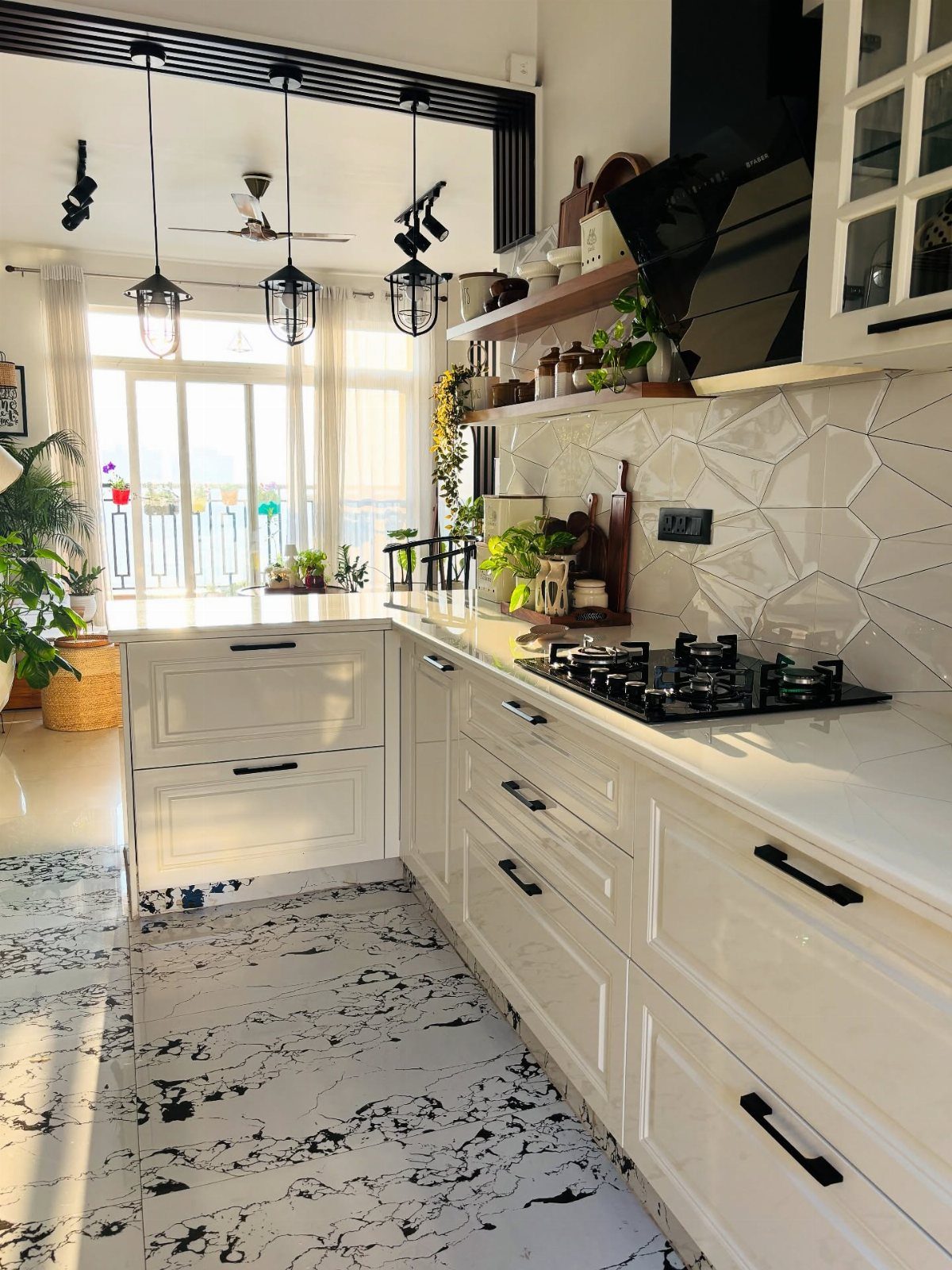
Greenery looks right in a kitchen when it sits in more than one place: a pot on the counter, one on a shelf, another by the window.
Spreading plants out like this keeps the room from looking like a nursery in one corner.
Culinary herbs are my pick for the counter plants, since you can snip them while cooking. Keep them where you’ll actually reach them, and leave the marble or tile floor and counters clear around the pots so watering stays tidy.
3. Open Shelving
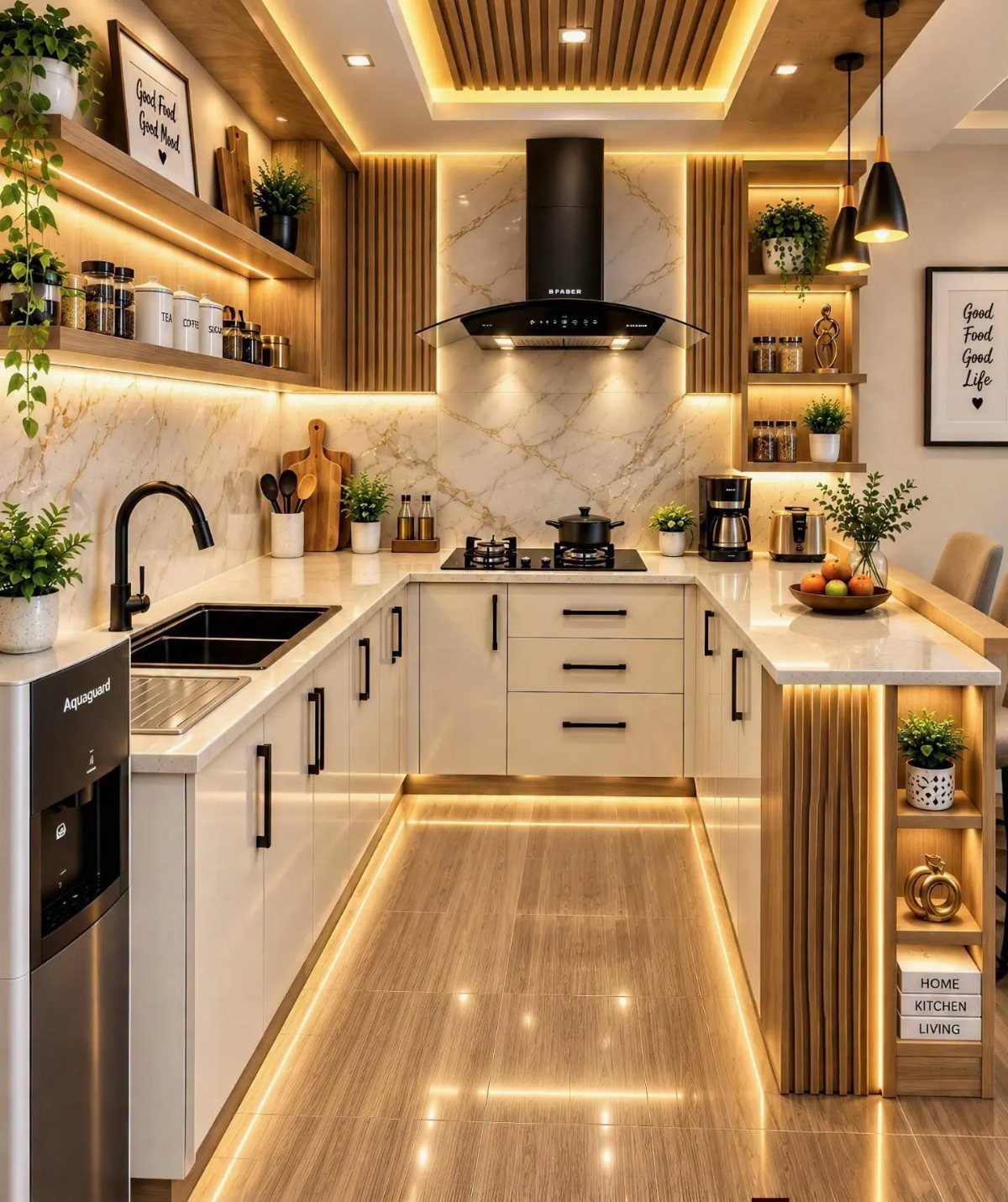
Wooden open shelves suit a white kitchen well, because the wood adds warmth where the cabinets and walls stay cool and plain. Everyday jars and a plant or two make them useful and good-looking at once.
Reserve the shelves for things you reach for daily, and leave the rarely used items behind closed doors. Open shelves show everything, so a handful of matching jars looks calmer than a crowd of mismatched packets.
4. Pendant Lights Above an Island
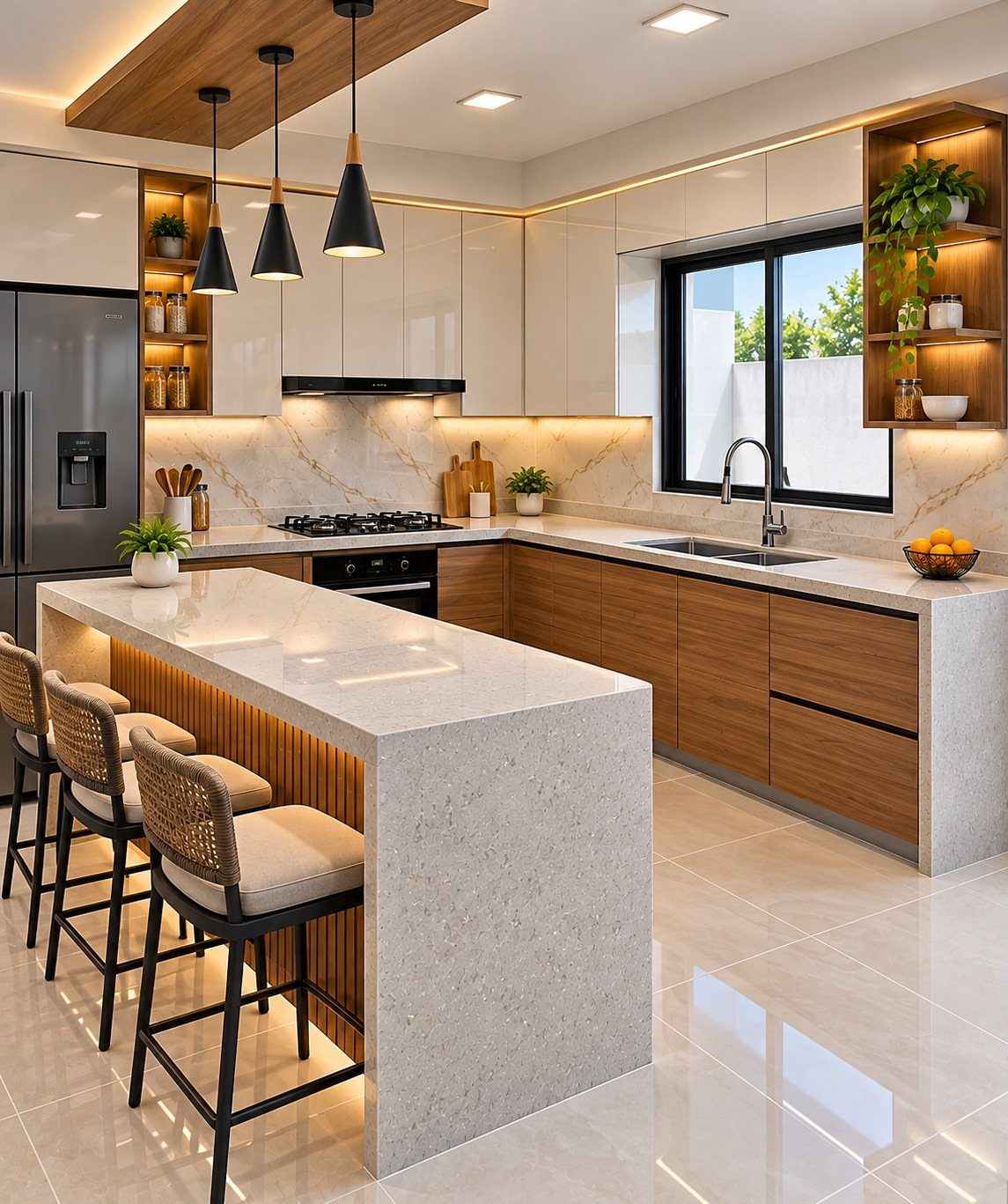
Three black cone pendants over an island do more than light the counter. They set a clear zone for eating and prep, and they bring in a dark accent that ties back to the wood cabinetry and the stools.
Hang them in an even row, centered on the island, so they read as one group.
Pair them with ceiling or under-cabinet lighting, since pendants alone leave everything else in the kitchen dim. Put the pendants on a dimmer if you can; it makes the same kitchen work for cooking and for a slow evening.
5. Patterned Kitchen Tiles
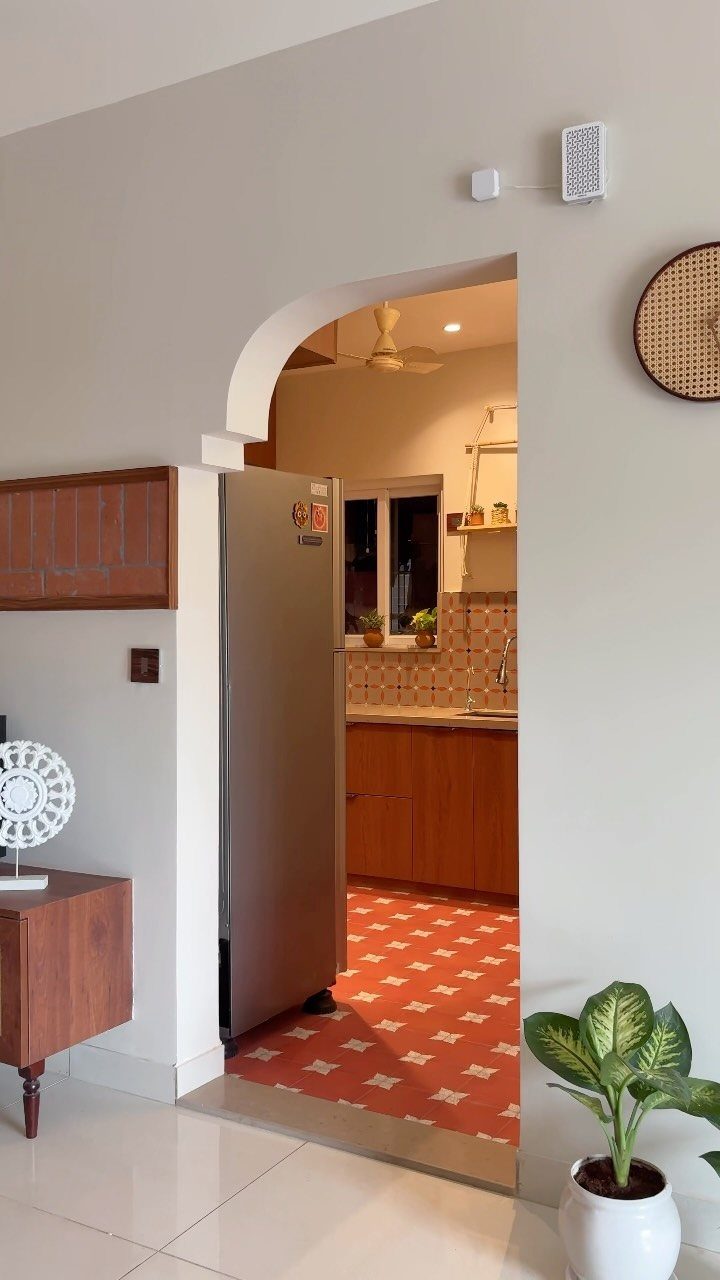
Patterned tiles are the quickest way to give a kitchen traditional Indian character without adding clutter. Used on the floor, they also solve a practical problem: a busy pattern hides everyday crumbs and splashes between mopping sessions.
Reddish-brown and terracotta tones sit comfortably with wooden cabinets, and they keep the room warm.
Choose a glazed or sealed tile that wipes clean easily, and look for a pattern with a repeating motif so cuts at the edges don’t throw it off.
6. Indian-Style Furniture
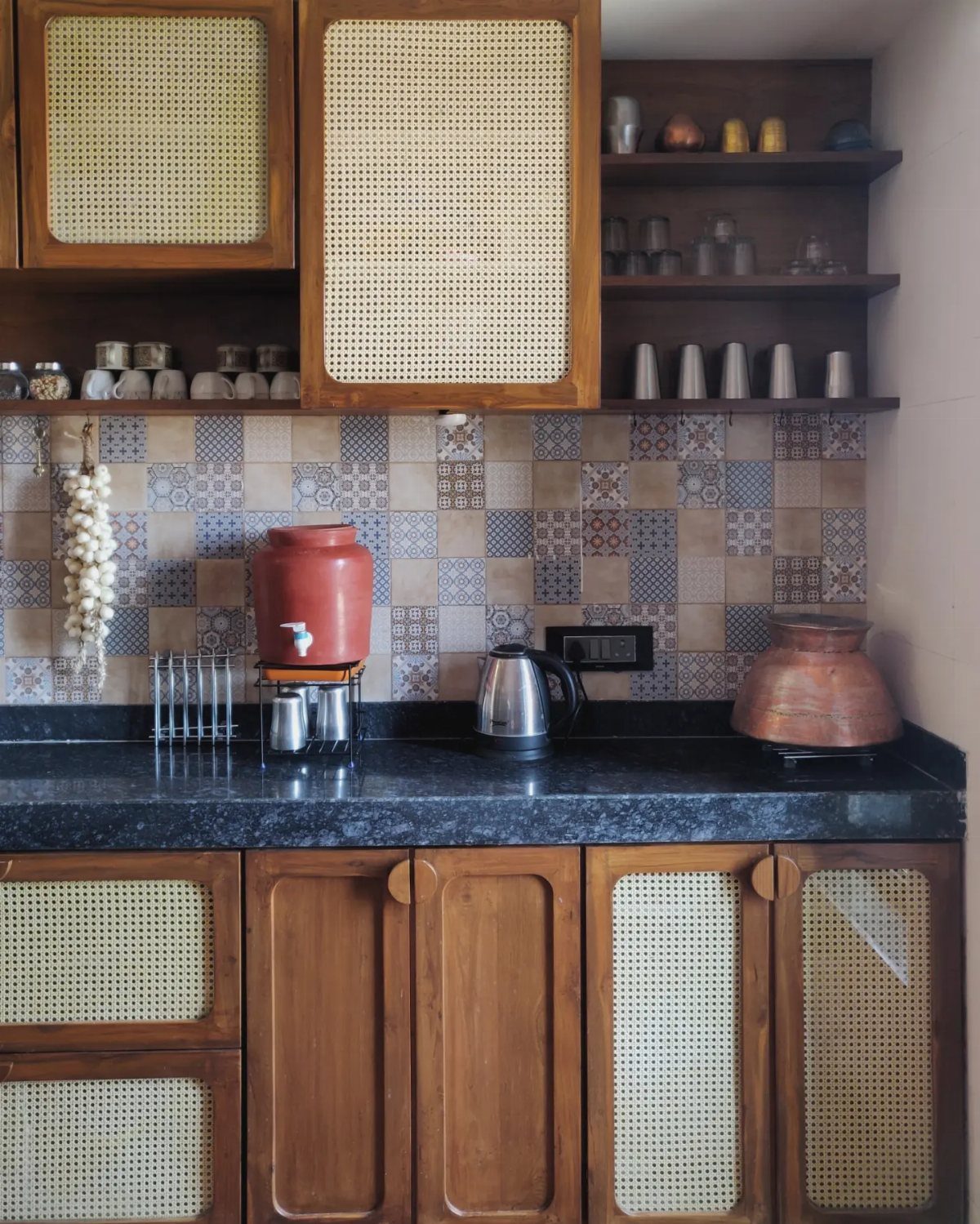
Woven cane panels set into wooden cabinet doors are a detail I like far more than carved ornament in a working kitchen. They add texture and let the cabinet look traditional while the lines stay simple.
Pair them with a patterned tile backsplash, but keep the countertop plain and dark so the 2 textures don’t compete.
If your cabinets are plain, replacing only a few doors with cane is a cheaper way to get the same effect.
7. Painted Storage Jars
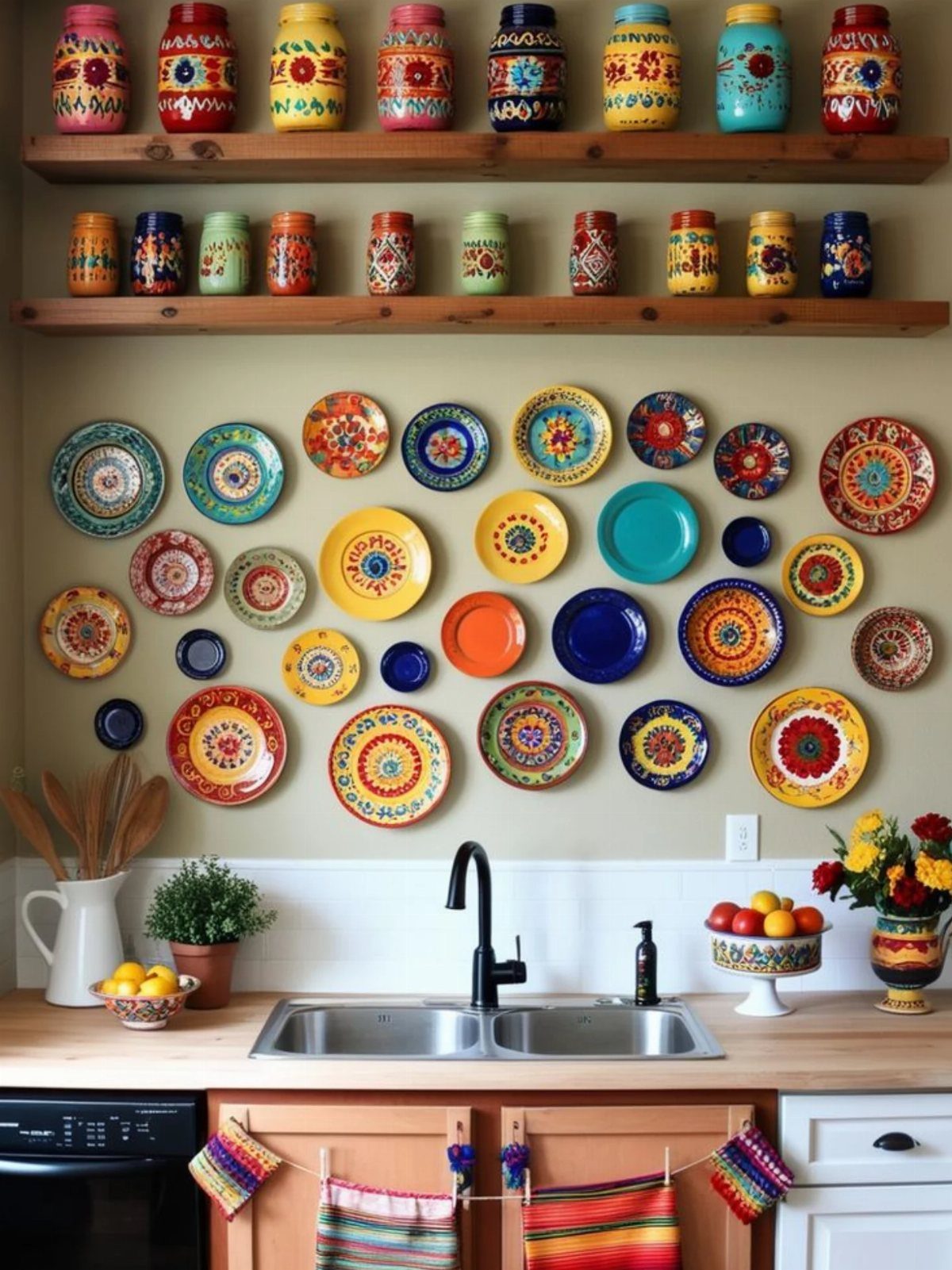
Jars are the cheapest way to make staples look like decor. Painted jars in mixed colors turn flour and lentils into decor, especially on open wooden shelves with decorative plates hung behind them.
If you paint plain jars yourself, paint the outside only so food never touches the paint.
Stick to a few colors that echo the plates, and keep the matching pieces together on one shelf so the display reads as a group.
8. Colorful Ceramic Cabinet Knobs
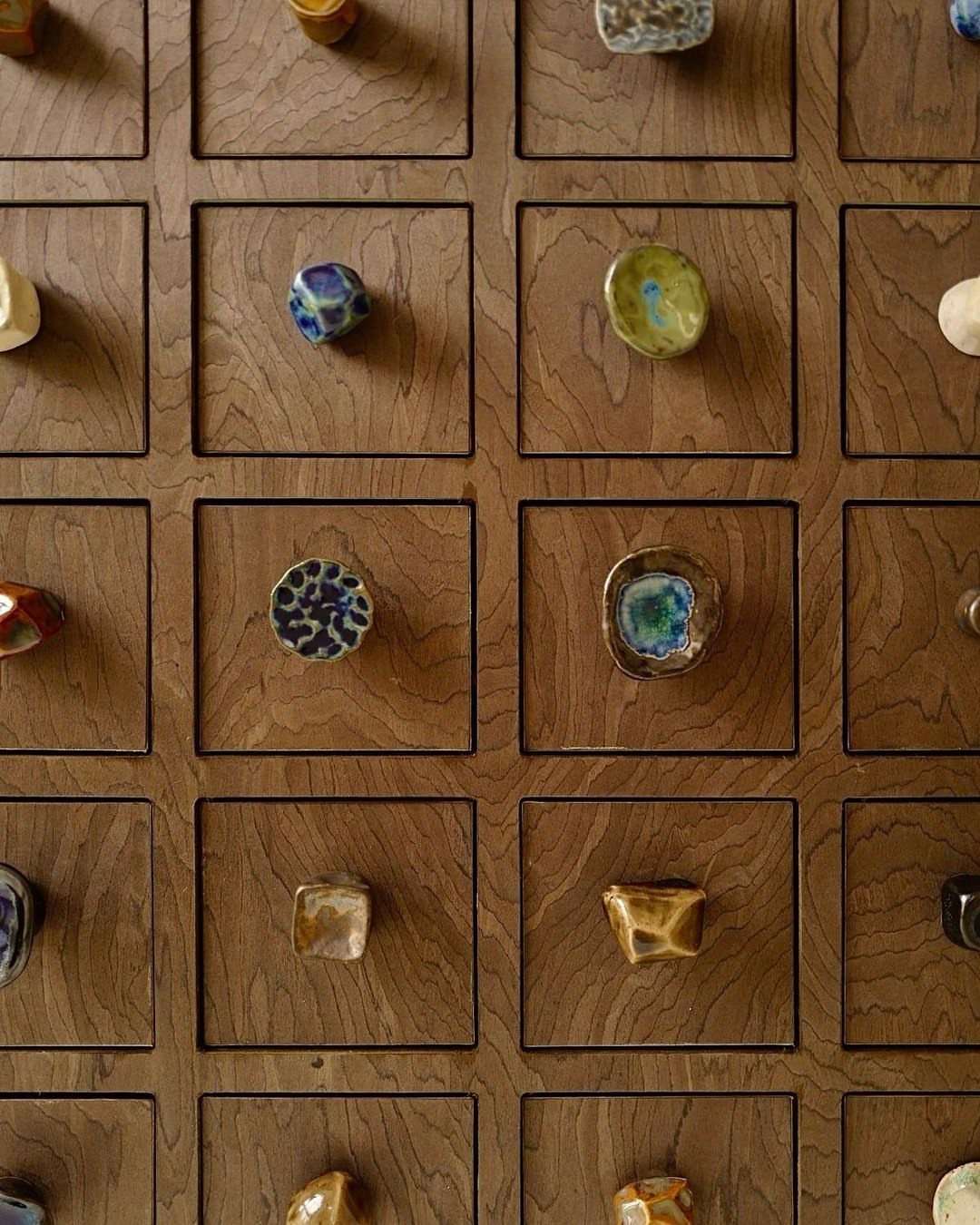
Swapping the knobs takes a screwdriver and a few minutes, yet it changes how the whole cabinet run looks. On a grid of small wooden drawers, handmade ceramic knobs in different colors turn plain fronts into a pattern.
Check the hole size on your cabinet doors first, since knobs need just one hole and most ceramic ones come with a standard screw that fits.
I’d leave the drawer fronts plain wood and let the knobs carry all the color.
9. Traditional Indian Outdoor Kitchen
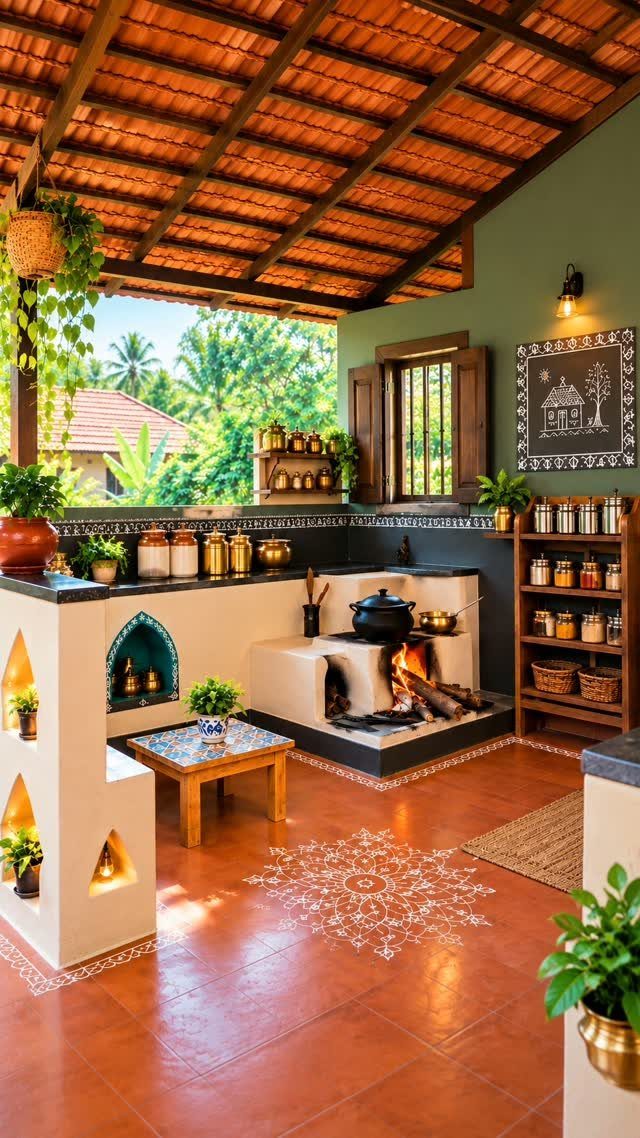
A wood-fire stove under a tiled roof, with terracotta underfoot and brass pots within reach, makes an outdoor kitchen that feels lived in rather than built for show. Greenery around the edges finishes it.
This one needs a yard, so it won’t fit most renters or compact flats. Brass pots are the part to borrow: hang or stack a few on an indoor kitchen wall and they bring the same warm glow.
10. Kolam Patterned Kitchen Floor
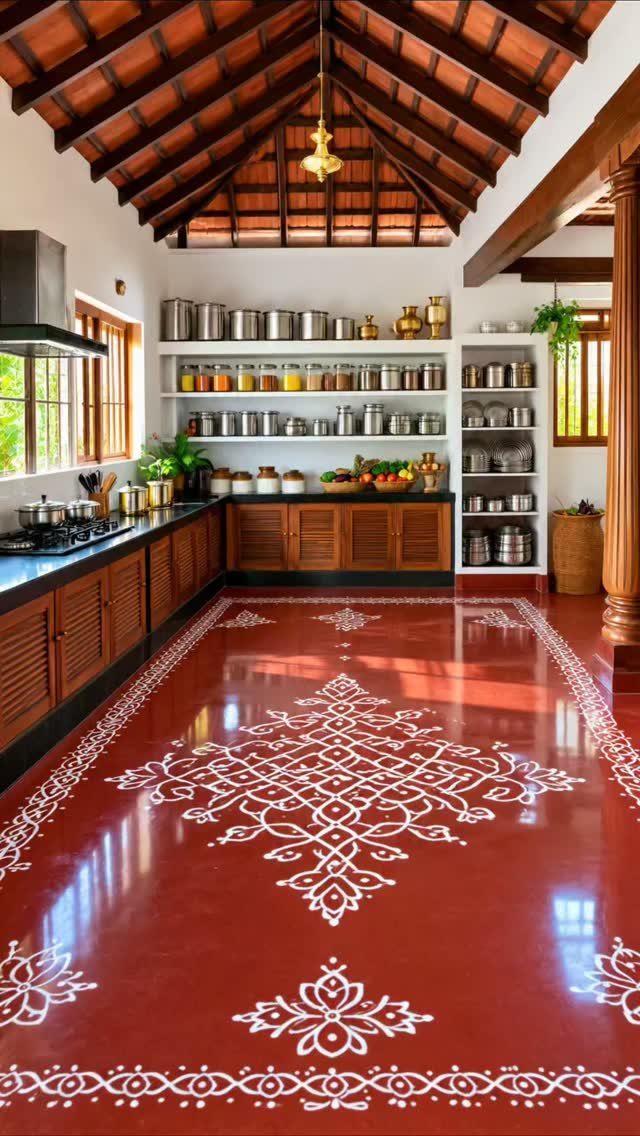
White kolam patterns on a red floor give a kitchen a focal point at your feet, and the wood cabinets and stainless-steel containers around it stay quiet enough to let it lead.
Most renters can’t repaint a floor, so look for red tile with a white pattern or a durable runner that echoes those colors. If you go with tile, pick a sealed one that wipes clean.
11. Indian Decorative Counter Display
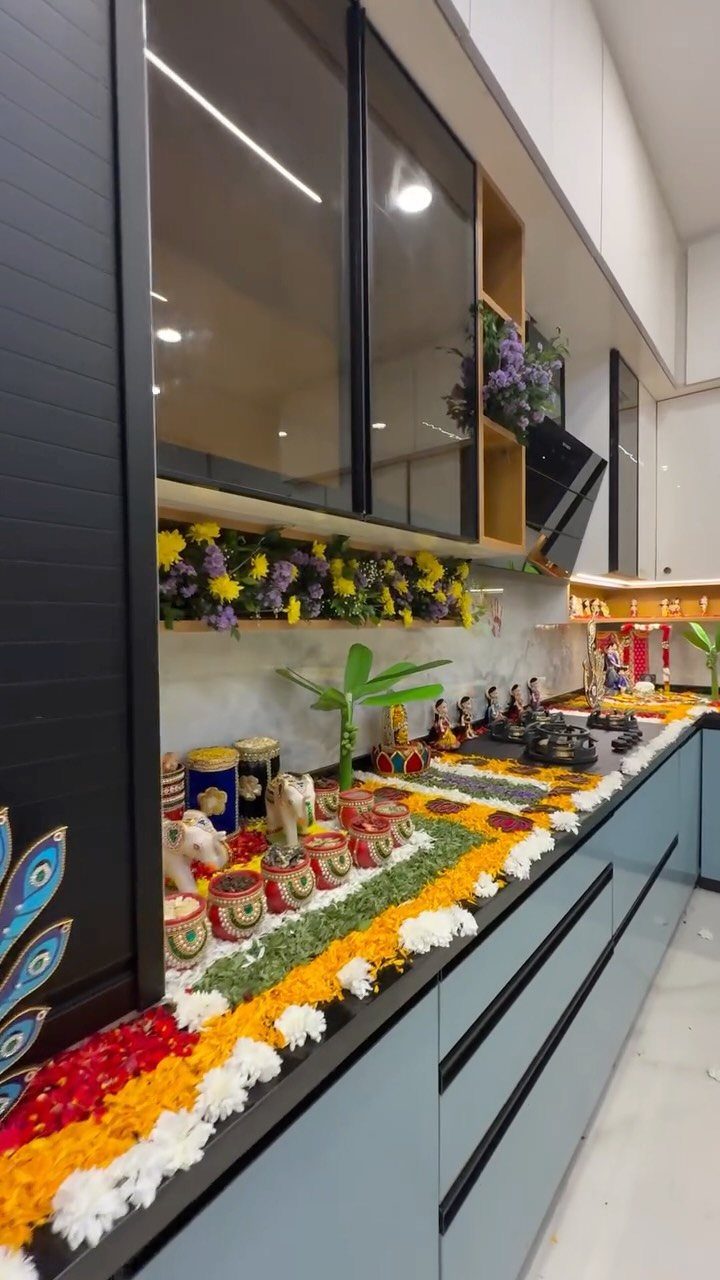
Against dark grey cabinets, a cluster of small pots, figurines, and flower petals stands out sharply. The dark backdrop is what makes the colors work.
Group everything in one corner of the counter instead of spreading it across the whole run. Petals fade fast, so treat them as a fresh touch you replace, and let the pots and figurines hold the spot between refreshes.
12. Indian Kitchen Accessories
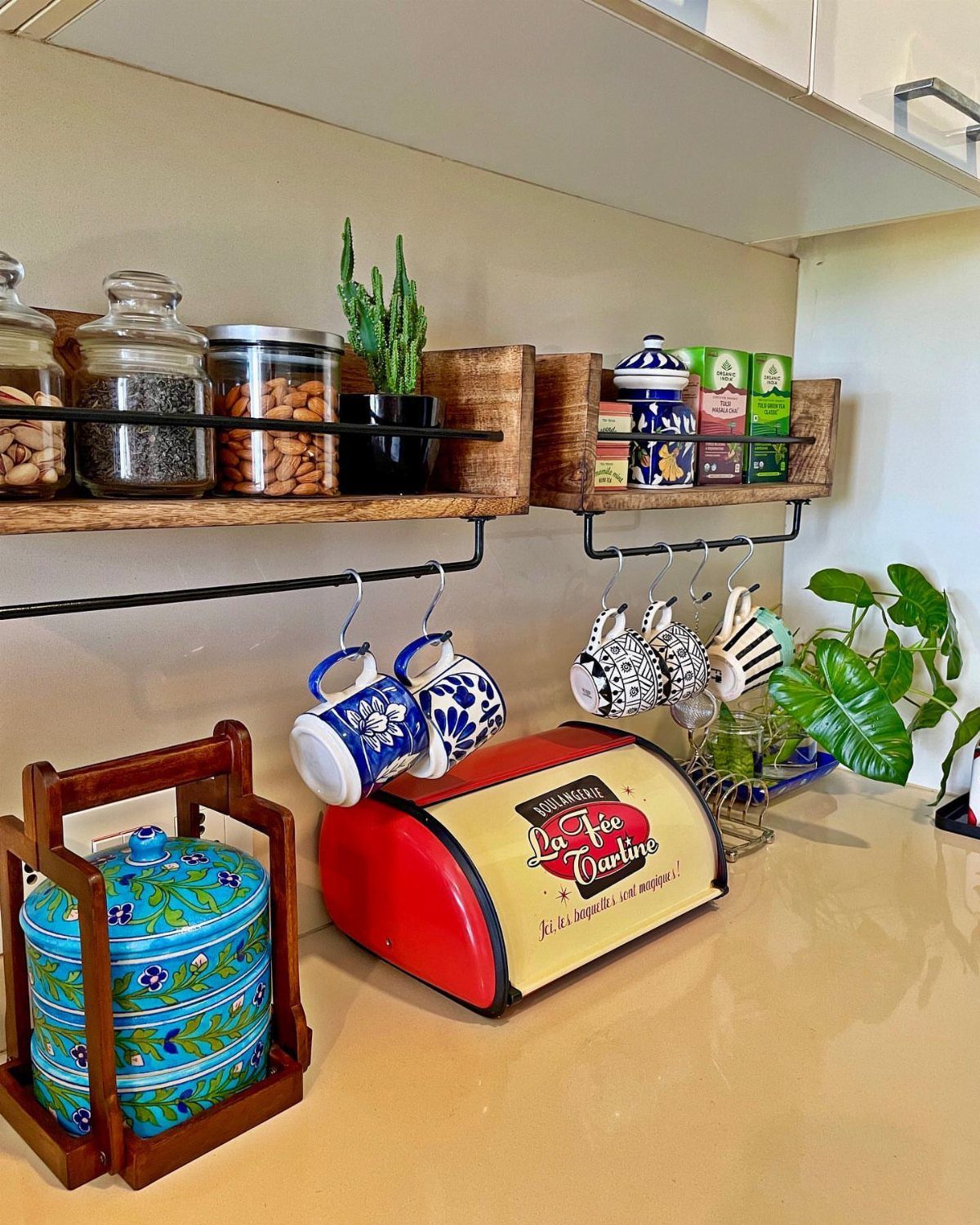
A blue patterned tiffin, a red bread box, and mugs hung on hooks add up to a counter with color and almost no cost. The hooks also free shelf space, which matters in a compact kitchen.
Choose two or three accent colors and repeat them across the pieces. Then keep the jars on the wooden shelves plain, so the accessories stay the loudest things in the room.
13. Spice Rack Display
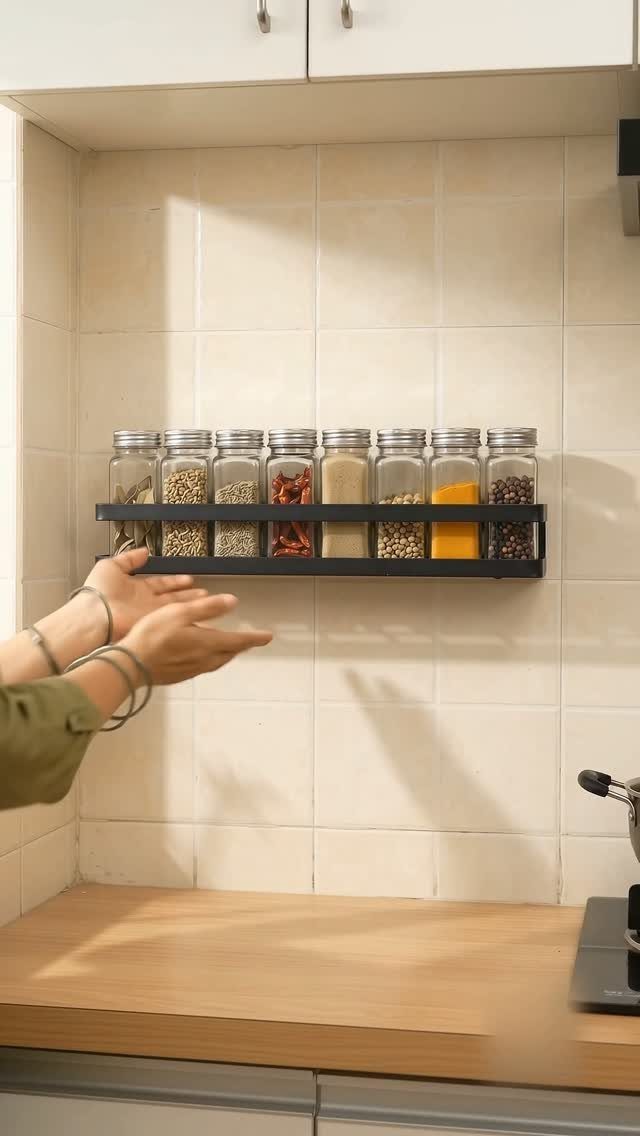
Spices stored in matching glass jars on a wall-mounted rack do double duty: the colors become the decor, and the jars sit at arm’s length from the stove.
A black rack against beige tile gives the reds, yellows, and browns a crisp frame.
Pick one jar style so the rack reads as a set, and label the lids so you’re not guessing mid-recipe.
Keep the rack to the spices you use weekly. A half-empty jar of something rarely used just looks tired.
14. Indian Vessel Shelf Styling
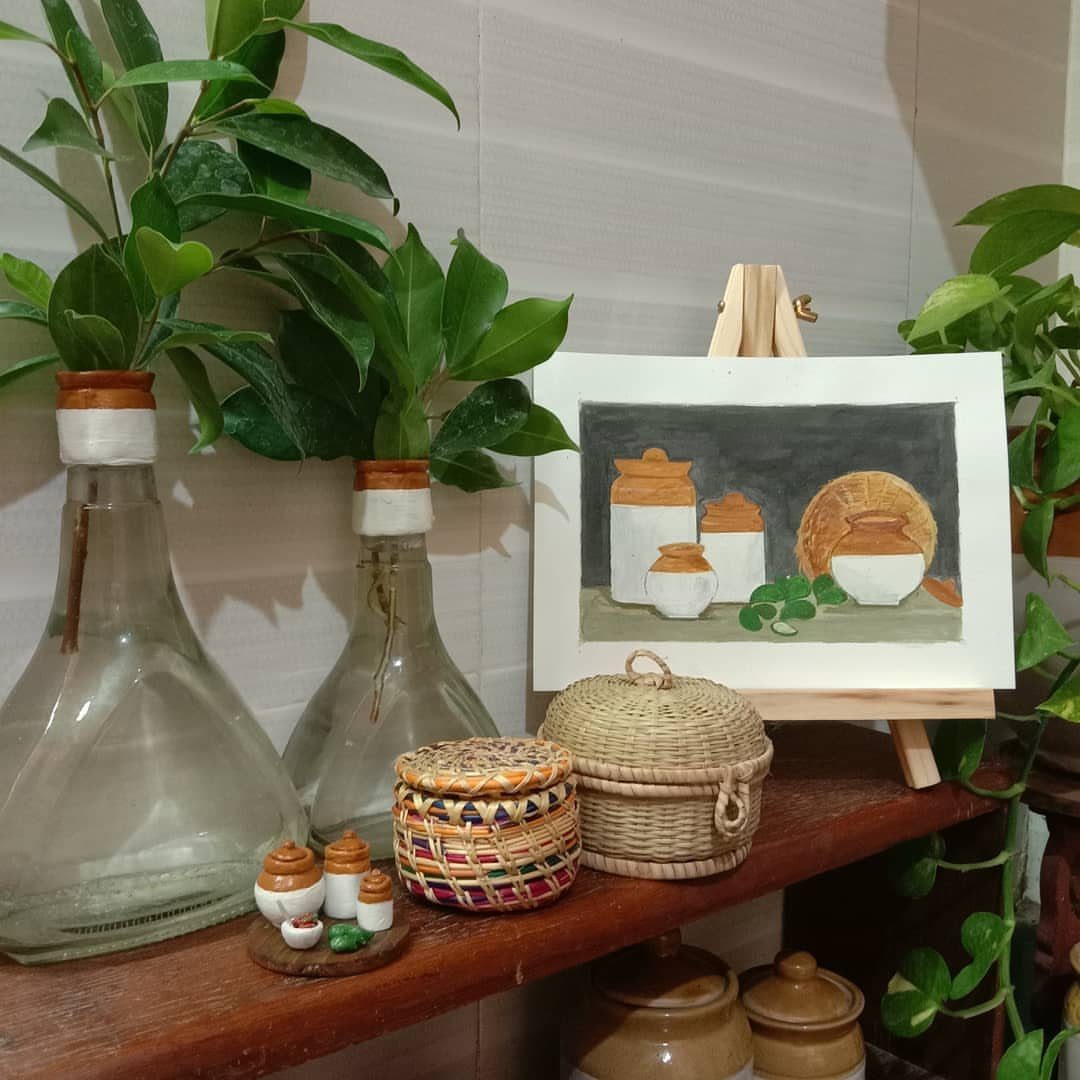
Miniature clay pots, woven baskets, and a couple of glass bottle planters can share one wooden shelf if they stay in a narrow range of natural tones.
A painting of traditional Indian kitchenware propped at the back ties the display together without adding another object to dust.
Vary the heights, with the baskets low and the planters tall, and leave a few inches of bare shelf between groups. I’d keep the pots purely decorative and store real cookware elsewhere.
Blend Tradition with Modern Function
Small kitchens reward appliances that do more than one job. Counter space goes further when one air fryer grills, bakes, and toasts, and a compact fridge with its own freezer compartment fits in spots where a bulky double-door model won’t.
A dedicated maker for idli, dosa, and appam only earns its shelf space if you’d use each one often, so count your real habits first. I’d keep only the gadgets that earn their counter space.
Mounting the water purifier on the wall gets it off the counter and hands that spot back to prep work.
Give the appliance corner one contemporary showpiece that is also useful, so the modern gear looks intentional next to the traditional pieces.
Choose Durable Cooking Surfaces
Heavy daily cooking means frying, grinding, and hot pots set down in a hurry, so the counter has to shrug it off. Granite and quartz both handle that and wipe clean easily.
Granite generally needs periodic sealing, while quartz generally doesn’t, which makes quartz the easier pick if upkeep is the part you’ll skip. Use a trivet under hot pans on either one, since high heat can damage quartz.
For the floor, matte-finish tile and scratch-resistant flooring stand up to dragged pots and stools better than a glossy surface, and matte hides water spots.
Keep Kitchens Clear and Usable
Appliances you pull out only now and then can go in a high cabinet or a closet, which leaves the area around the stove and prep zone for daily tools. A clear counter makes cooking faster and cleaning shorter.
Where cooking is frequent and produces smoke and odors, a chimney keeps the air fresher. Pick one at least as wide as the cooktop, mount it at the height the manufacturer specifies, and vent it outdoors if your building allows.
Wash the filters on a regular schedule, since a clogged one pulls less smoke.
Frequently Asked Questions
Which color is best for an Indian kitchen?
Warm spice tones suit this kitchen best: turmeric yellow or saffron orange on the main wall, coriander green in smaller doses, all set against cream or soft gray so nothing competes.
Warm terracotta and reddish-brown tile also sit well next to wood cabinets. Pick one or two bold shades to carry the room and let everything else stay quiet.
What are some traditional Indian decorations?
Hand-painted pottery, brass utensils, woven baskets, and Madhubani or Warli artwork are the classic choices. In a working kitchen, painted storage jars, cane panels set into cabinet doors, and kolam-style patterns on the floor carry the same look.
A few brass pots hung or stacked on a wall add a warm glow even in a small apartment.
What are some common items found in an Indian kitchen?
Spices and spice boxes, traditional cookware such as clay pots and brass utensils, and stainless steel thalis show up in most.
A mixer-grinder and a pressure cooker are the usual appliances. Everyday pieces already look good on display: matching glass spice jars on a wall rack, or a painted tiffin sitting on the counter.
What art to put in a kitchen?
Madhubani or Warli paintings are the traditional pick, and framed posters, graphic art, or a mural suit a more modern room.
Painted plates hung on the wall behind open shelves add color without using any counter space. Metal wall art also brings sheen and texture.
What color makes a small kitchen look bigger?
White, cream, and soft pastels open up a small kitchen, and pale blue or pale green work the same way with a fresher feel.
Choose a finish with some sheen, since semi-gloss throws light back into the room, and paint the ceiling and trim a shade lighter than the walls to push the edges outward.
For personality, a turmeric-yellow or marigold-orange accent wall is enough.
How can I create the illusion of space in a small kitchen?
Open shelving, light colors, and furniture that does more than one job are the three moves that help most.
A mirror backsplash or glossy tiles bounce light around and make the room read larger. Keep open shelves to everyday items, since they show everything on them.
What materials are recommended for kitchen countertops?
For heavy daily cooking, I’d go with granite or quartz, because both stand up to hot pots and wipe down fast.
Granite needs resealing now and then, while quartz skips that chore, so quartz wins if upkeep is what you tend to put off. Bamboo and reclaimed wood are sustainable options if you want a natural look.
How to organize a small kitchen in India?
Go vertical first: hang utensils and spices on the wall, stack containers for dry goods, and add drawer dividers for small tools.
Keep daily items at eye level and put occasional ones up high or down low. Move appliances you rarely use into a high cabinet, and try a one-in, one-out rule for new gadgets.
How to make a cheap kitchen look nice?
Colorful ceramic knobs are a 10-minute swap with a screwdriver, and matching the spacing of the existing holes means no drilling.
Repainting the cabinet doors in white or a soft pastel changes the whole room for about a weekend and a quart or two of cabinet paint.
Peel-and-stick backsplash tiles and matching jars for staples finish the look without a big project.
What is the most efficient kitchen layout for small spaces?
Galley and L-shaped layouts work best in small Indian kitchens, because they improve workflow and keep every main area within reach.
Modular cabinets with pull-out drawers, wall-mounted storage, and a foldable or extendable dining counter add capacity without taking floor space.