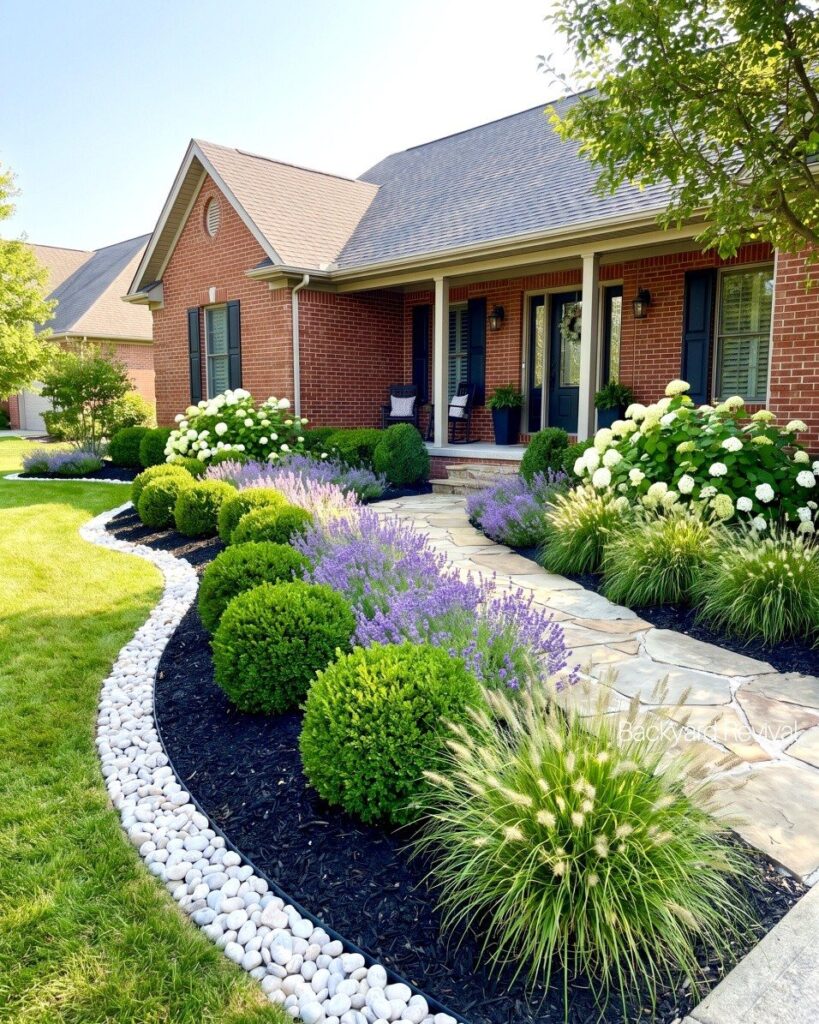

These ideas run from a single afternoon with a tipped pot and white pebbles to a planted dogwood that layers color season after season, and the right one depends on whether your stoop faces morning sun or afternoon bake.
Check the tag on Rose of Sharon before you dig, since some varieties stay compact and others stretch tall enough to screen a utility box.
1. Rose of Sharon

Rose of Sharon carries its blooms through the hottest weeks when most shrubs have quit. I like it for a front bed that bakes against siding or pavement, where the reflected heat would crisp pickier plants.
Lavender-blue flowers sit at about eye level on a shrub that stays compact or stretches tall depending on the variety you choose, so check the tag before you dig.
It wants full sun and ordinary soil, and once the roots settle it barely asks for water. A single plant makes a soft screen for a utility box; three in a row read like a loose hedge.
Self-seeding means a quick walk with a trowel in spring to pull volunteers before they take over the petunias.

Thrives in USDA zones 5a-9b

Thrives in USDA zones 5-9

Receive 1 live Purple Rose of Sharon plant, approximately 6–8 inches tall, no pot, ready for planting
2. Hydrangea
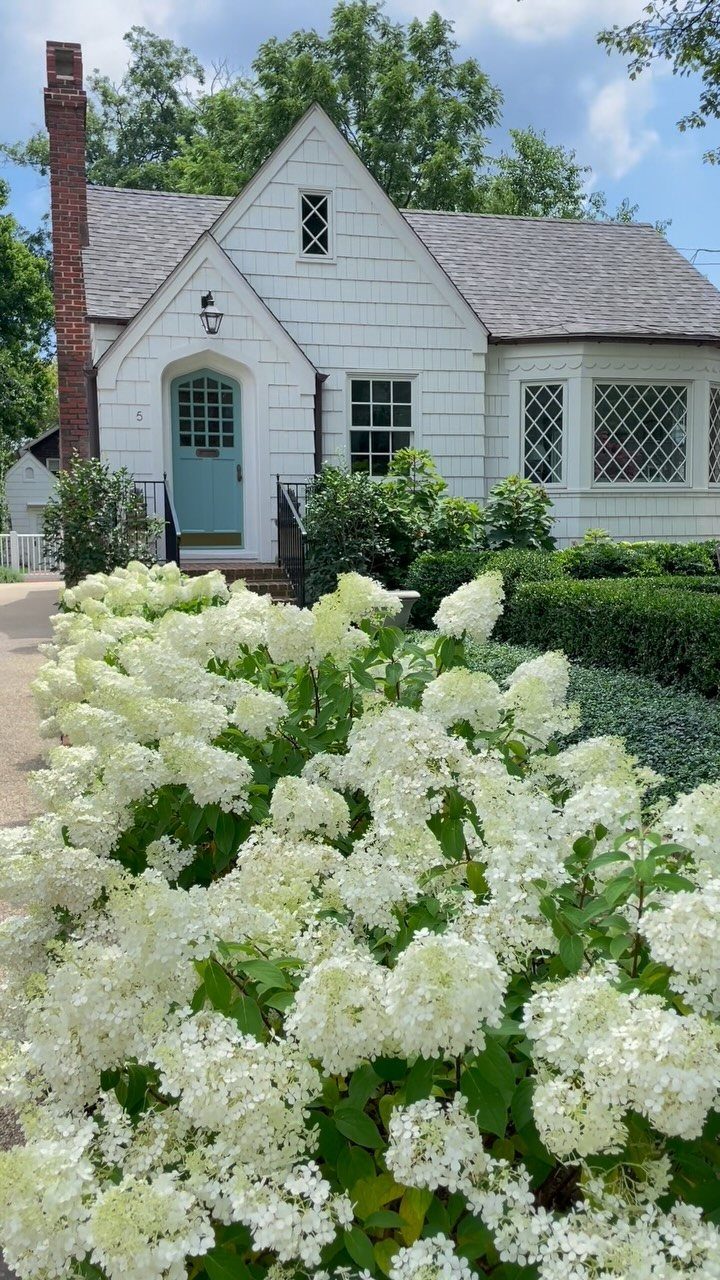
Hydrangea has become the default choice for front-of-house planting because it actually earns the spot. You can find dwarfs for a narrow strip by the stoop, or let a big one fill a corner without much help from you.
Morning sun and afternoon shade works best in hot zones; farther north they take more sun.
The color-shifting blues and pinks get all the attention, but white ages well into autumn and shows up after dark if you have any path lighting at all.

Lifelike Artificial Flowers: Experience the elegance of nature with our faux morning glory, meticulously crafted to mimic the delicate beauty and vibrant hues of real flowers. Each fake flowers is designed for unparalleled realism, bringing a touch of authentic charm to any space (POT NOT INCLUDED)

【Packing Includes & Care】6 bunches fake white daisy with dark‑veined,6 fake fully white morning glory flowers (vase not included). Flowers are safely packed and may arrive compact; Leave unpacked in loose place for few days for natural shape recovery. Gentle hand‑reshaping is suggested for best visual effect.

3. Lavender
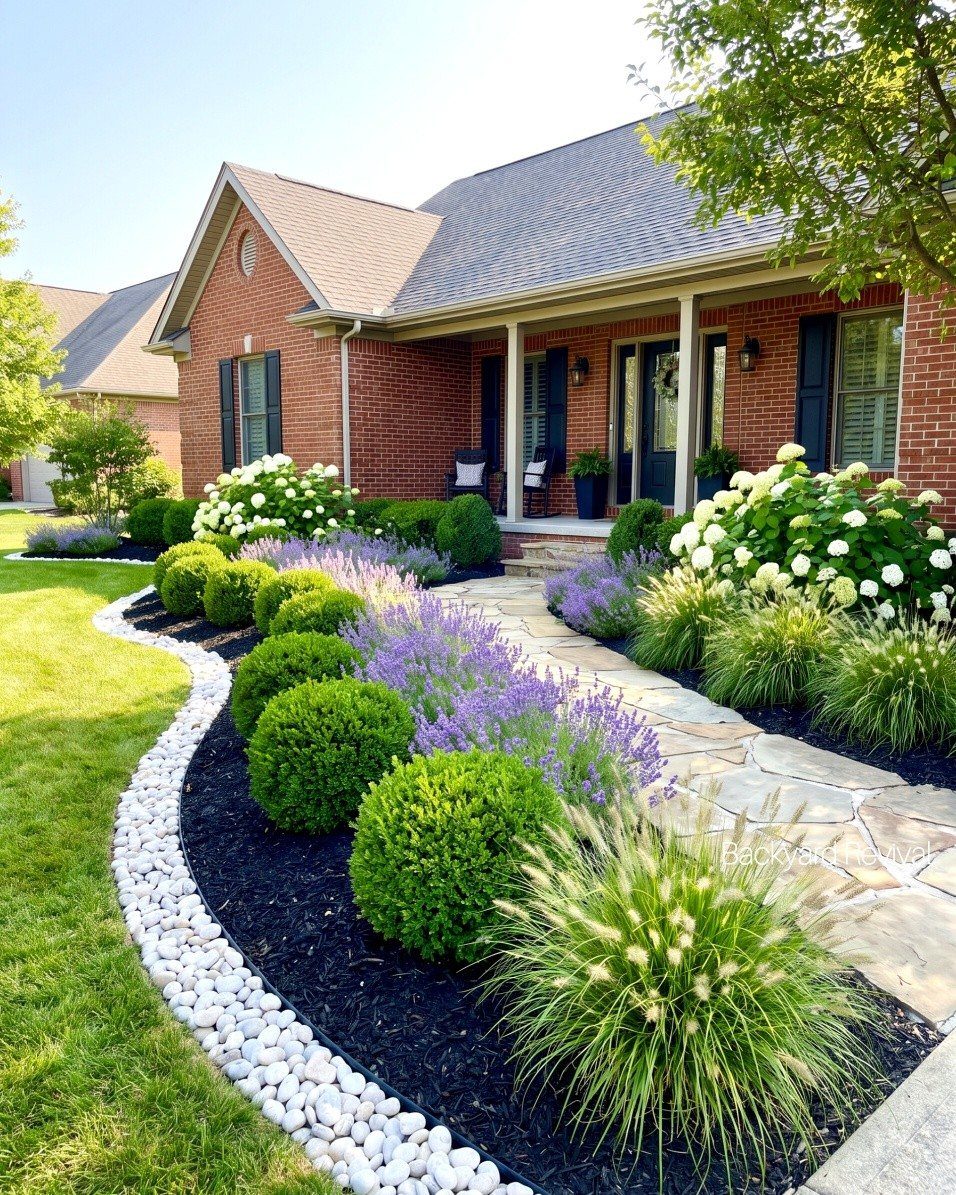
Lavender belongs wherever you brush past it on the way to the door. A line of it along a stone walkway, where the heat collects and the drainage is sharp, would also work well.
It wants poor soil, which is a rare gift: a slope that defeats everything else is often perfect. Full sun is non-negotiable; half a day of shade makes it leggy and sullen.
Once established it needs almost no supplemental water, and the bees will find it before you finish planting. French types run softer in color and longer in stem than the compact English kinds.
Either works; the shorter ones stay neater if you are the type who rarely gets around to trimming.

🌿 Exceptional Growing Medium: Our Lavender Potting Mix is meticulously crafted with premium ingredients like Canadian Peat Moss, Charcoal, Worm Castings, Perlite, Sand, Pumice, and Lime, providing the ideal balance of nutrients and moisture for optimal Lavender growth.

100% Natural: Custom blend for Lavender plants container growing; no artificial ingredients
PREMIUM SOIL BLEND: Contains sphagnum peat moss, perlite, volcanic pumice, and earthworm castings with dolomite lime for balanced pH. Ideal for african violet soil mix needs.
4. Ornamental Grasses

Ornamental grasses give a front yard the movement that shrubs and flowers cannot manage on their own. Loose punctuation between hard edges, concrete, gravel, steel, keeps a modern house from feeling too sterile.
That contrast is the whole point. You choose the grass by what your winters do.
Cool-season types green up early and bloom by June; warm-season ones sit tight until July then peak in September.
A northern yard probably wants feather reed grass or a similar cool-season clumper; farther south, miscanthus or fountain grass holds up through heat that would fry the others.
Ask at a local nursery about regional grasses; a native will need nothing from you after the first year.
Plant in drifts of three or five, not singles, and let them stand through winter; the cleanup happens in early spring before new growth starts.


Each offer includes one plant grown in a 4 inch pot

Thrives in USDA Zones 4-9
5. Boxwood

Boxwood is the plant you order when you want the structure to hold up in February as well as June. A low hedge defines the lawn edge, while spheres clipped sharp against a fence give structure without heaviness.
That versatility is why it has lasted in American yards for two centuries. It takes shade better than most evergreens, though the densest growth happens in half-day sun.
The yearly work is two trims, Memorial Day and Labor Day if you are in a temperate zone, though I know people who shear once and live with a looser shape.
Korean and English types are hardier; Japanese boxwood recovers faster if you cut too deep. The root ball needs good drainage; wet feet in winter kills more boxwood than cold ever has.

【PACKAGE & SIZE】Each set includes 2 artificial agave topiary ball trees. Each tree measures approx. 27" H in total, including a 7" ground spike for stability. The lush foliage ball is about 20" D x 20" W, full and dense for an eye-catching look.

[Sturdier Spike, Easier Install]: This outdoor artificial plant comes with an upgraded ground spike—simply push it straight into soil, a planter, or even gravel. Whether placed in your garden or styled indoors, it stays securely anchored through winds and rain.

[ Black Square Planter] 26" W x 26" L x 26" H. Heavy Duty Galvanized Steel Planter. Easy to Install. Package: 4 sides and a bottom surface with 5 drainage holes, Installation Manual x 1, M5 Allen wrench x 1, screw x 22, gloves x 1.
6. Create a Welcoming Entrance

A welcoming entrance is less about the door itself than about the path that leads to it.
The photo builds the approach in layers: pink flowers at knee height, a red-leaf Japanese maple catching the eye at chest height, boxwood holding the edges straight. The house number on a modern sign reads as intentional, not afterthought.
I would spend my money first on the path width; thirty inches is the minimum for two people to walk abreast without brushing the planting, and anything narrower feels like a tight squeeze even when the plants are small.
The door color is the cheapest change you can make if the rest is already in place.
A dark charcoal or navy against light brick reads as designed rather than default; bright red or yellow needs more confidence than most of us have.
The Japanese maple is the riskiest element here, since it wants shelter from afternoon sun and will sulk in a windy exposed site. A columnar holly or a slender conifer trades the color for reliability if your stoop faces west.

Thrives in USDA Zones 5-9

Red Althea Rose of Sharon Plants Live Trees Seedlings, 1 Year Old 6-12 Inches Tall, Winter Hardy, Flowering Shrubs for Outdoor Planting, Multicolor on One Plant

Known for its stunning, vibrant flowers, this shrub is suitable for adding color and interest to any outdoor garden or landscape
7. Use Fun Features

A tipped pot spilling stones into a dry stream bed turns a standard bed into something the neighbor kids slow down for.
A pot set on its side with white pebbles spilling out like water, held in place by larger smooth rocks, turns a small corner of yard into a dry creekbed feature that reads from the street.
Water features, fire pits, and decorative stone arrangements all do the same job: they give the eye a destination. What changes the answer is your climate and your comfort level with upkeep.
A recirculating fountain takes wiring and winterizing; a dry stream bed takes a free afternoon and no plug.
I’d pick the dry version for anyone who treats yard work as a weekend project, not a second job. It reads as playful without demanding daily attention.
8. Add Decorative Accessories

Stone fountains, path lights, and a bench tucked against a low wall all do the same thing: they signal that someone lives here, not just mows here.
Small fixtures along the walkway do the heavy lifting after dark; a fountain at the center gives the eye somewhere to land.
Bird baths, garden art, and decorative pots fill the same role for smaller budgets and tighter spaces. A single large piece beats three small ones fighting for attention; the eye needs one place to land.
Vertical options like trellises or hanging planters matter most when square footage is tight. I’d add accessories after the plants are established, not before.
Green texture first, then the objects that sit against it.

100% Natural: Custom blend for Lavender plants container growing; no artificial ingredients

🌿 Exceptional Growing Medium: Our Lavender Potting Mix is meticulously crafted with premium ingredients like Canadian Peat Moss, Charcoal, Worm Castings, Perlite, Sand, Pumice, and Lime, providing the ideal balance of nutrients and moisture for optimal Lavender growth.

For beautiful bouquets and delicious garden-to-table treats, choose easy-to-grow Bonnie Plants Lavender with Miracle-Gro Pour & Feed Singles Ready-to-Use Plant Food 4-pack for your garden; trust the experts with more than 200 years of experience
9. Small Tree
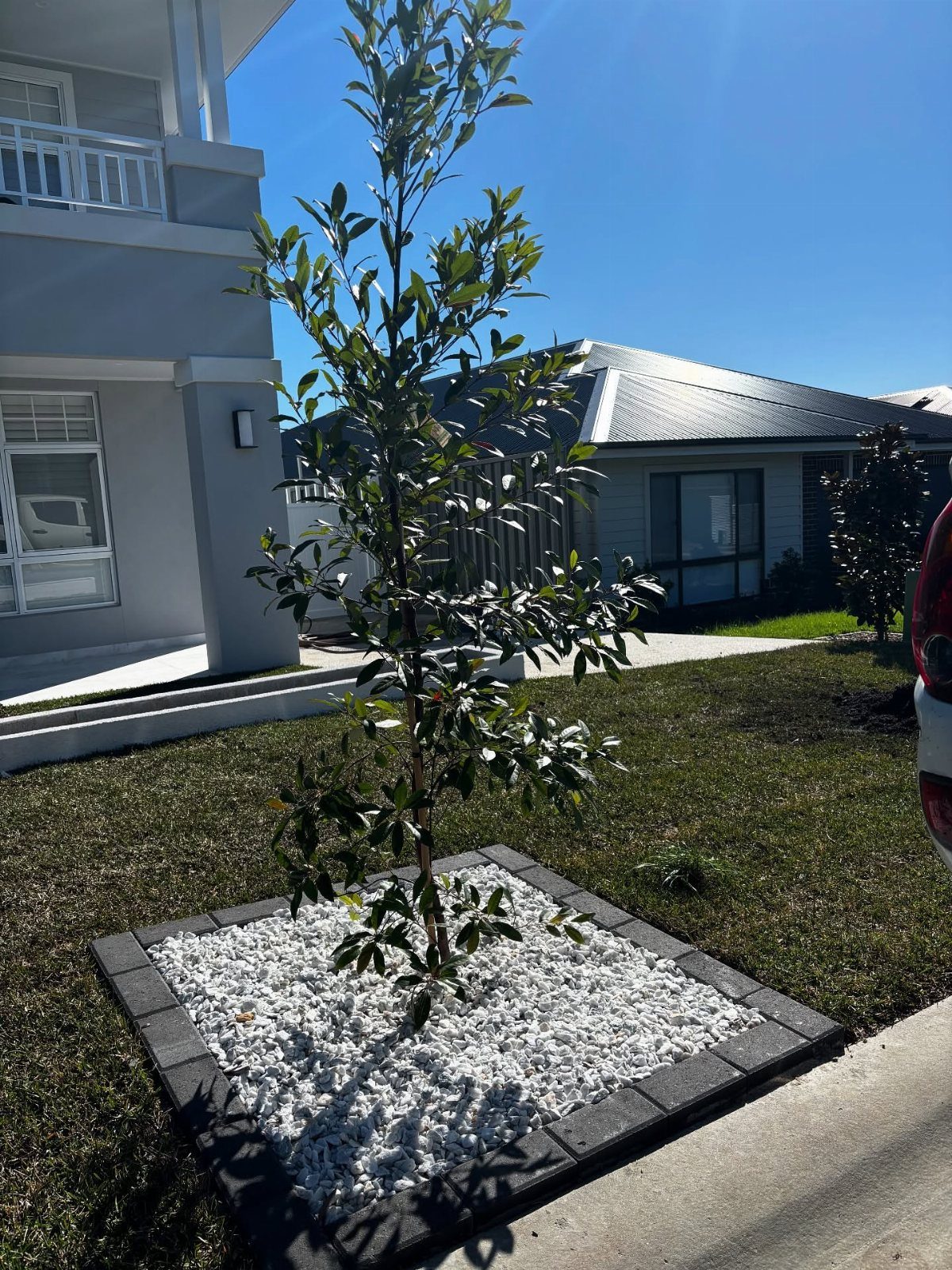
The slender trunk and clear shape read as intentional; the gravel keeps weeds down and mowing simple.
Small ornamental or flowering varieties suit this reader best. They add height variation, cast light shade, and draw birds without the root-zone battles of full-sized shade trees.
You give up eventual canopy and timber value, neither of which most front yards miss.
Check mature width against your bed size and any overhead lines. A tree that outgrows its frame undoes the clean look you bought it for.
Thrives in USDA Zones 4 to 9

This Plant will Ship in a fabric Grow Bag ( see pics ) - The plants are currently growing in a 1 Pint nursery pot However they will NOT ship in a plastic pot.

Compact Dwarf Variety – A smaller version of Limelight, ideal for containers and limited garden spaces.
10. GOLDEN SHADOWS® Pagoda Dogwood

Variegated foliage that opens orange, shifts to yellow, then settles into yellow-green gives this dogwood three seasons of color from one plant.
The horizontal branching layers flat against ranch or Mid-Century lines, echoing those low roof planes rather than fighting them.
White flower clusters arrive in spring; the foliage turns deeper in fall. At 10–12 feet in both directions, it stays small enough for most front yards without becoming a shrub that lost its ambition.
Part sun keeps the variegation sharpest; full sun works where summers stay moderate. I’d plant this where the morning light hits it, letting the glow carry toward the street.
11. Potentilla

Pale pink blooms from spring straight through fall on a shrub that shrugs at drought and deer is a combination worth naming. Potentilla’s five-petaled flowers cover the mounded habit so thoroughly the foliage reads as backup, not main event.
Once established it needs little water, survives dry spells that kill pickier plants, and grows past browsing without fencing. Sunny yellows and richer oranges exist in other varieties if pink does not suit your siding.
Hardy across most of the country and content in part to full sun, it fits most yards without fuss. I’d plant this where the mail carrier sees it, since the bloom season rewards daily passersby more than weekend visitors.
12. Weigela

Dark burgundy leaves set off bright pink flowers in a combination that reads as designed, not accidental. Weigela’s flower coverage is dense enough to pull hummingbirds in, and the shrub itself asks little beyond a sunny spot and occasional shaping.
Hot summers suit it; cold winters do not phase it. Foliage and flower colors run wide enough to match most house exteriors, though dark-leaf varieties give the most contrast against green lawns.
Fairly adaptable translates to forgiving of average soil and missed waterings. I’d place this where the blooms backlit by late sun show through, since the color saturation is the whole point.
13. Azalea

Azalea blooms hit hard in spring, then the shrub stays green straight through winter. That makes it one of the few front-yard plants that earns its keep for more than a month or two.
Partial shade suits them best, and the soil needs to read acidic with plenty of organic matter worked in. I fertilize after flowering, never before; the plant just spent its energy and needs to rebuild, not grow soft new wood.
Pair them with hydrangeas or camellias for a bed that hands off color from one season to the next.
The evergreen types carry structure when everything else has dropped. In zones 6-9, they’re nearly foolproof once established.
14. Hosta
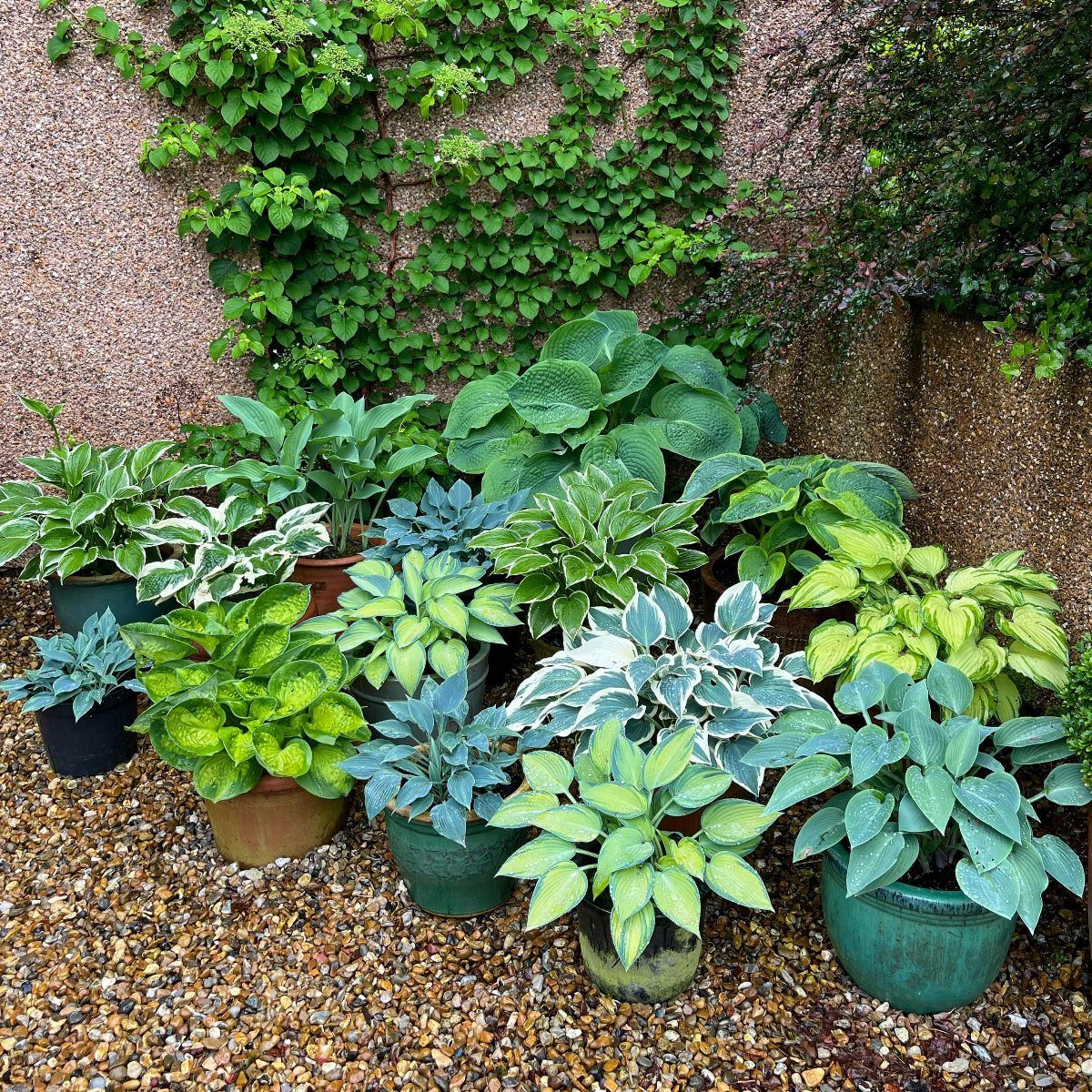
Shade is where hostas earn their reputation. The broad leaves come in solid greens, creamy variegation, or near-blue tones, and they thicken up a bed under trees or along a north-facing foundation where most flowers give up.
Size runs the full range. ‘Empress Wu’ spreads like a tablecloth, big enough to hide the legs of a chair; ‘Mini Skirt’ stays small enough for a pot by the door.
I plant medium varieties like ‘Wheee!’ at 11-18 inches tall behind a row of low annuals, and they return every spring with no replanting. Zones 3-9, so the cold is not a concern.
The main tradeoff: slugs love them, and deer will mow variegated leaves first. A gravel base or sharp-edged mulch helps.
15. Japanese Maple
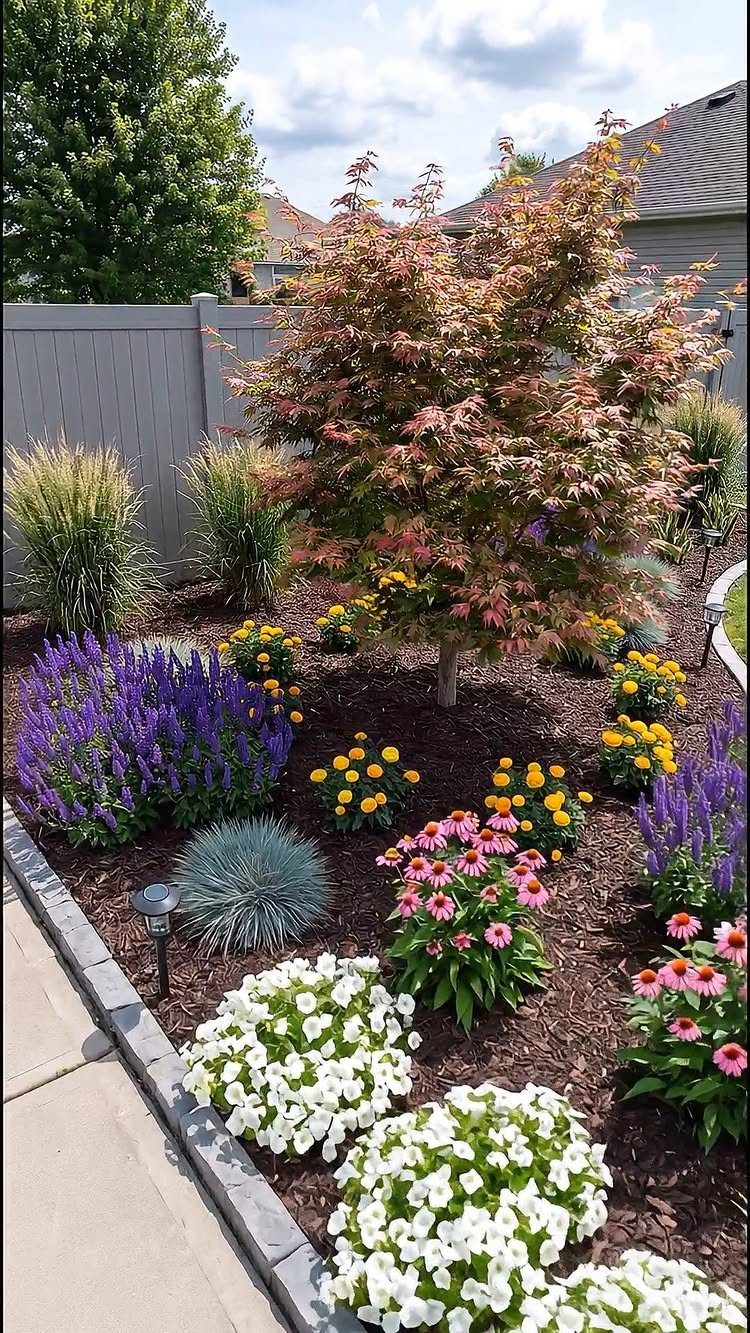
A Japanese maple carries a front yard without demanding space. The growth stays slow and the canopy stays compact, so it fits where a standard shade tree would swallow the house before you’ve finished the rest of the yard.
The foliage carries the show: reds, purples, or greens depending on the cultivar, and the leaf shape is delicate enough to read as texture from the curb.
I treat it as the anchor and plant lower perennials around the base; salvia, coneflower, or grasses fill the skirt without competing for attention.
It wants well-drained soil and some shelter from harsh afternoon sun in hotter zones. The up-front cost runs higher than a standard nursery tree, but the structure it adds outlasts any annual bed.
For small lots, this is the focal point that does not outgrow its welcome.
Choose Appropriate Plants
Right plant, right space is the part most people skip and then fight for three seasons.
I start with what the yard actually gives me: full sun or shade, clay or sand, and whether salt spray hits in winter from a road or walkway.
Native plants have already solved those problems; they survived your region’s conditions long before anyone watered them by hose.
The North American Native Plant Society and Audubon both run databases searchable by zip code, which I use when I want to know what feeds the birds local to me.
A yard that still looks alive in February needs some plants that keep their leaves through winter, some that drop them for fall color, and flowers timed so you’re not staring at bare dirt by June.
For front yards, I keep trees and shrubs small; a 30-foot canopy over the sidewalk is a fight with the power company waiting to happen.
Use Hardscaping Effectively
Hardscaping is the structure that makes plants readable from the street. A walkway too narrow for two people side by side reads as an afterthought no matter what grows beside it; 30 inches is the minimum that feels generous.
Stone or paver underfoot drains better than concrete and gives a surface you can reset if frost heaves it.
I match materials to what is already there. Brick walks mean brick edges or a brick stoop reads as planned; composite decking costs more up front but needs no staining every other spring.
Low stone walls around beds keep lawn equipment out of the roots and give the eye a clean line when the perennials are still small.
A porch update in modern materials can pull a whole facade forward without touching the planting at all.
Frequently Asked Questions
What is the best plant to plant in my front yard?
Hydrangea is the default choice that actually earns its spot, with dwarfs for narrow strips or big ones for corners.
Rose of Sharon keeps blooming straight through August when most shrubs have gone green, and lavender laughs off the thin soil and heat bouncing off pavement that would ruin fussier plants.
The right choice depends on your specific conditions: morning sun and afternoon shade for hydrangea, full sun and sharp drainage for lavender, or reflected heat tolerance for Rose of Sharon.
What is the rule of 3 in landscaping?
Odd numbers read as one mass to the eye; three or five of the same plant merge where a single reads as lonely.
This applies directly to ornamental grasses, where a single plant looks lost but a small grouping reads as intentional.
The same principle holds for shrubs like Rose of Sharon: one plant screens a utility box, while three in a row form a loose hedge. Odd numbers break the rigid symmetry that makes plantings look like a parking lot median.
What are the trends in front yard landscaping for 2026?
The traditional turf-and-foundation-shrub look is giving way to eco-conscious choices: rain gardens, native plants, drought survivors, and alternatives to traditional lawn. Front yard patios are gaining ground as people move social life outdoors.
Vegetable gardens and seating areas now mix with ornamental planting rather than hiding in back yards. The common thread is designing for actual use and local conditions instead of defaulting to the standard lawn template.
What are some beautiful ideas for a front yard landscape?
Layer the approach in heights: knee-high flowers, chest-high shrubs like Japanese maple or weigela, and structural evergreens like boxwood holding the edges straight.
Add a destination feature such as a dry stream bed with a tipped pot spilling stones, or a recirculating fountain if you want water and do not mind the wiring.
Path lighting and a clearly visible house number signal intentional design rather than afterthought. One strong focal point beats three small features pulling the eye in different directions.