
The ideas here run from a travertine tray you can set down in a minute to a recessed, backlit shelving unit that is a real building job.
Which one fits depends on how much of the sideboard top you have to give up.
If it also holds bottles, dishes and a casserole on its way to the table, move the display to the wall and keep the surface clear.
If the top is free, it can carry the lamp, candles and layered pieces itself.
1. Mirror Above Sideboard
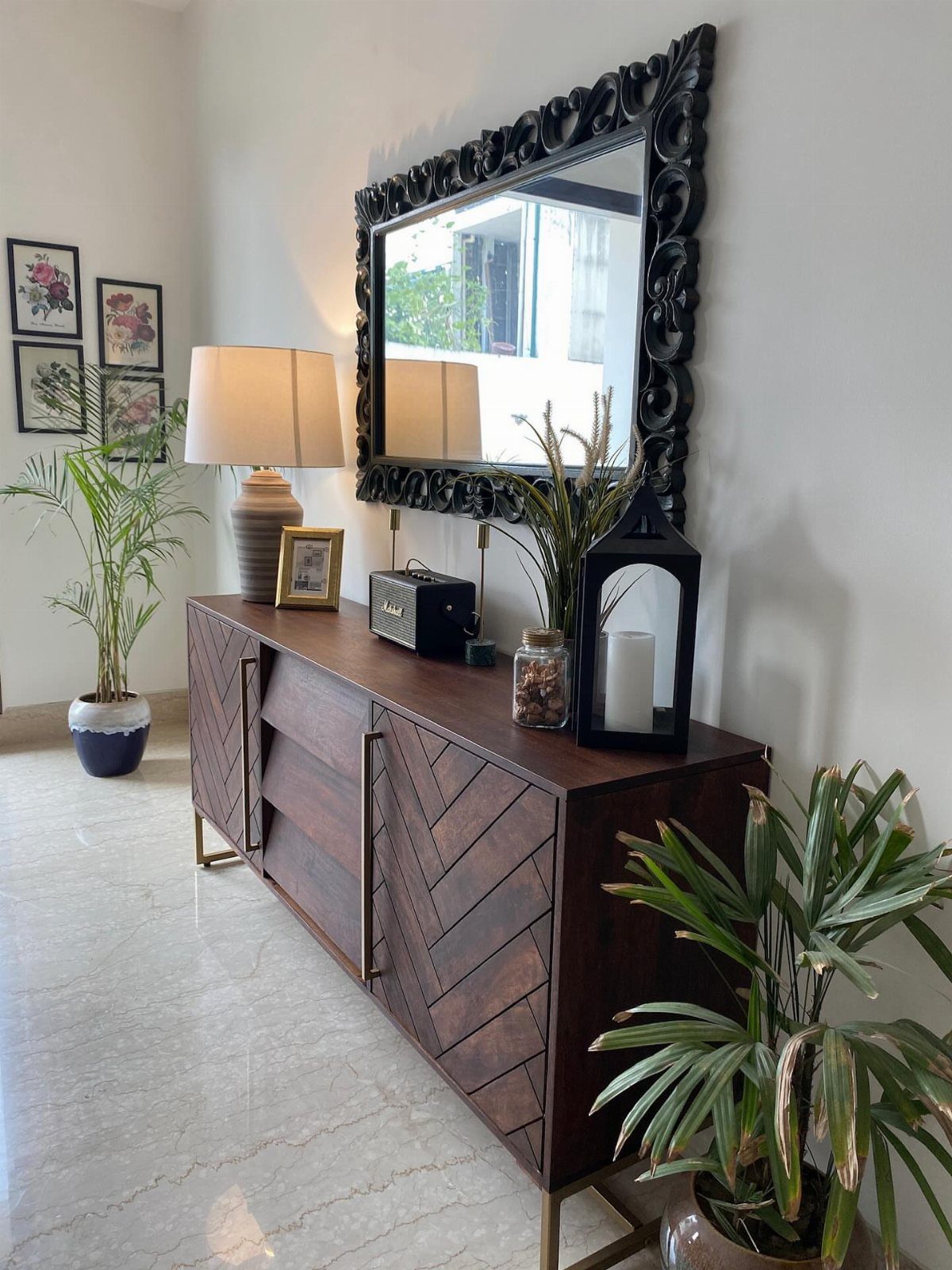
A mirror with a heavy, ornate frame works as art and backdrop in one piece, so the wall above the sideboard needs nothing else.
Over a dark chevron sideboard, it gives the setup a clear top edge, so the lamp and smaller pieces read as one group.
A common rule of thumb is to size the mirror at roughly two-thirds to three-quarters of the sideboard’s width. Before you drill, hold it up and check what it will reflect from your seat at the table.
2. Sideboard with Artwork
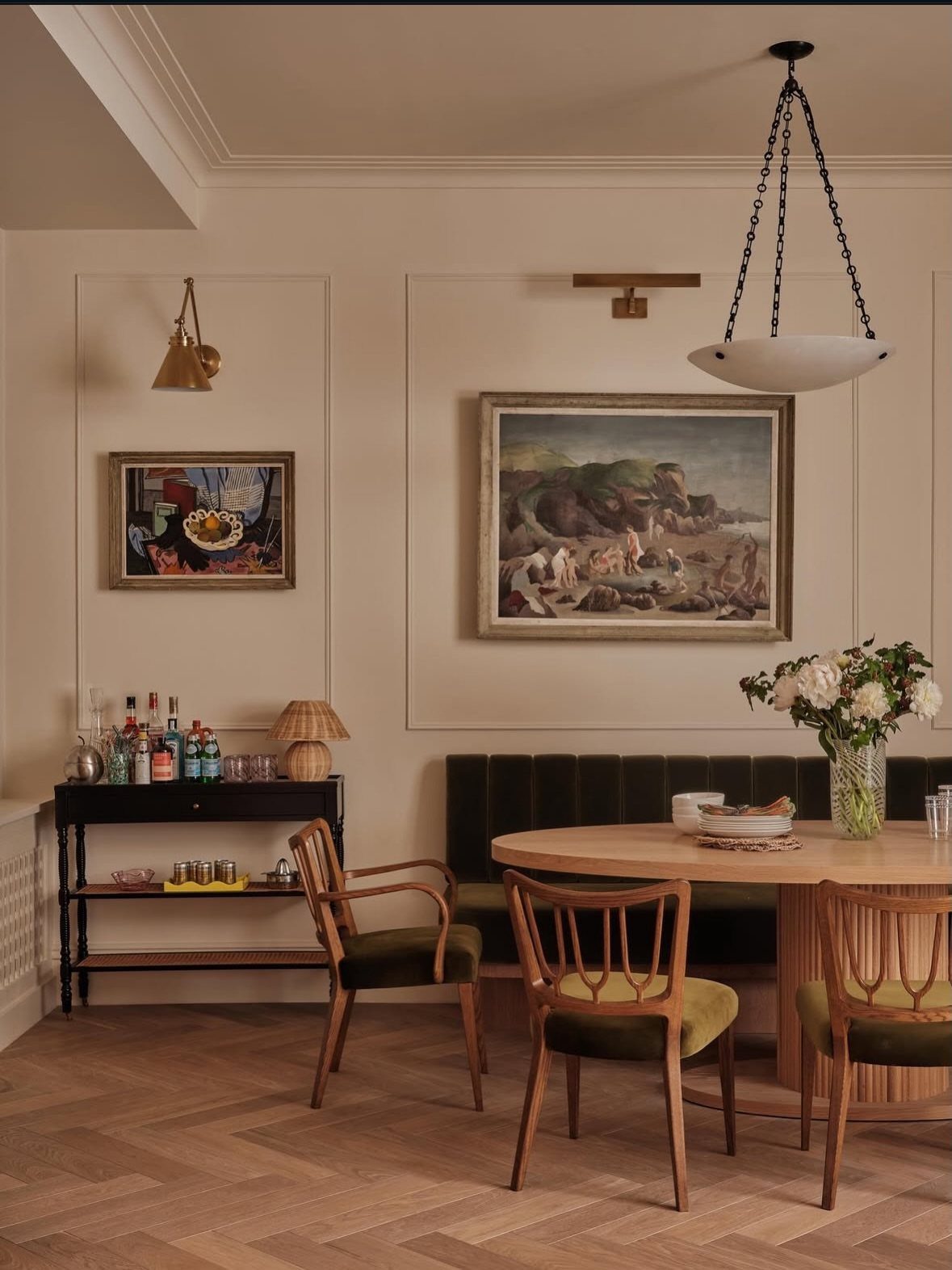
Hanging a pair of paintings gives the wall a focal point before anything lands on the sideboard. With bottles on top, the surface stays plain, so the frames carry the color and the mood.
Center the art over the sideboard so the 2 read as a single group. I’d pick a landscape that echoes the wood tones of the table and chairs, since that ties the room together without adding another object.
3. Vases and Greenery
Tall dried stems in a large white vase add the vertical line a low sideboard lacks. The white keeps attention on the shape of the stems, and dried greenery skips the water changes.
Set the vase toward one end rather than dead center, then let the round mirror fill the space beside it. Bare branches in the same kind of vase work the same way if you want a sparser look.
4. Layered Sideboard Decor
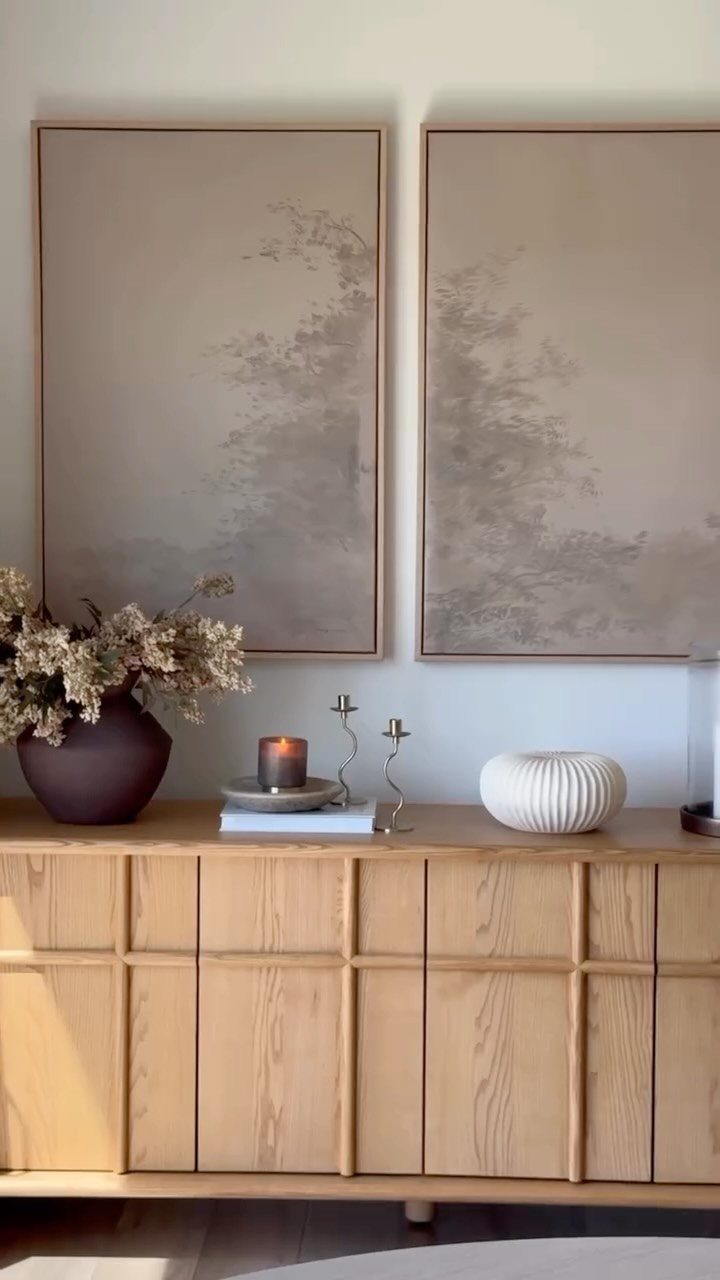
Stack, lean and overlap: that’s how a sideboard gets depth. A candle lifted on a book, candlesticks for height and a low white bowl to balance the tall pieces give the eye several levels to travel through.
Tall pieces like lamps and vases belong at the back, with shorter items stepping down toward the front edge so nothing hides anything else.
Leaning the two large frames so they overlap adds one more layer, though it needs a sideboard top with room to spare.
5. Symmetrical Sideboard Styling
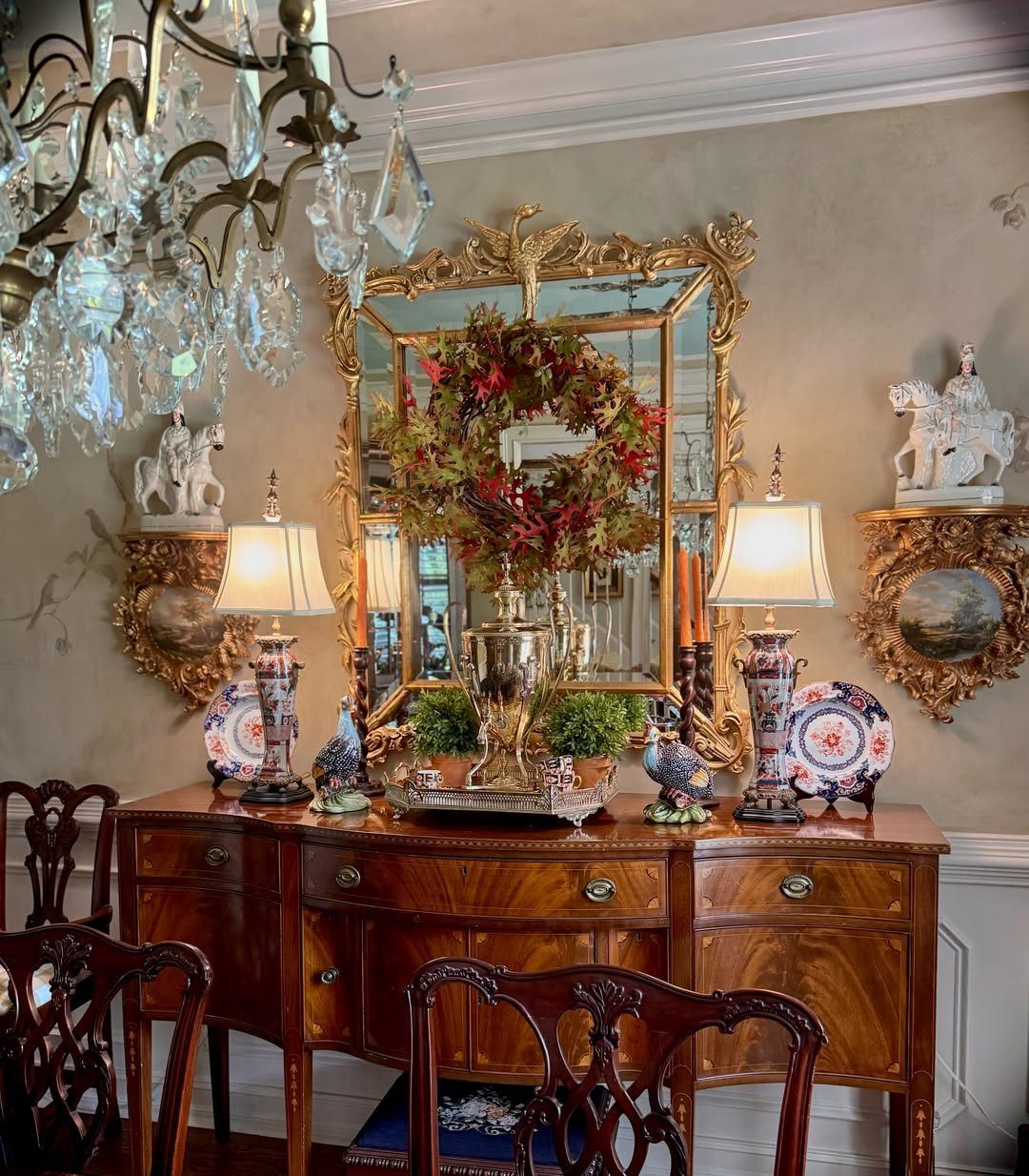
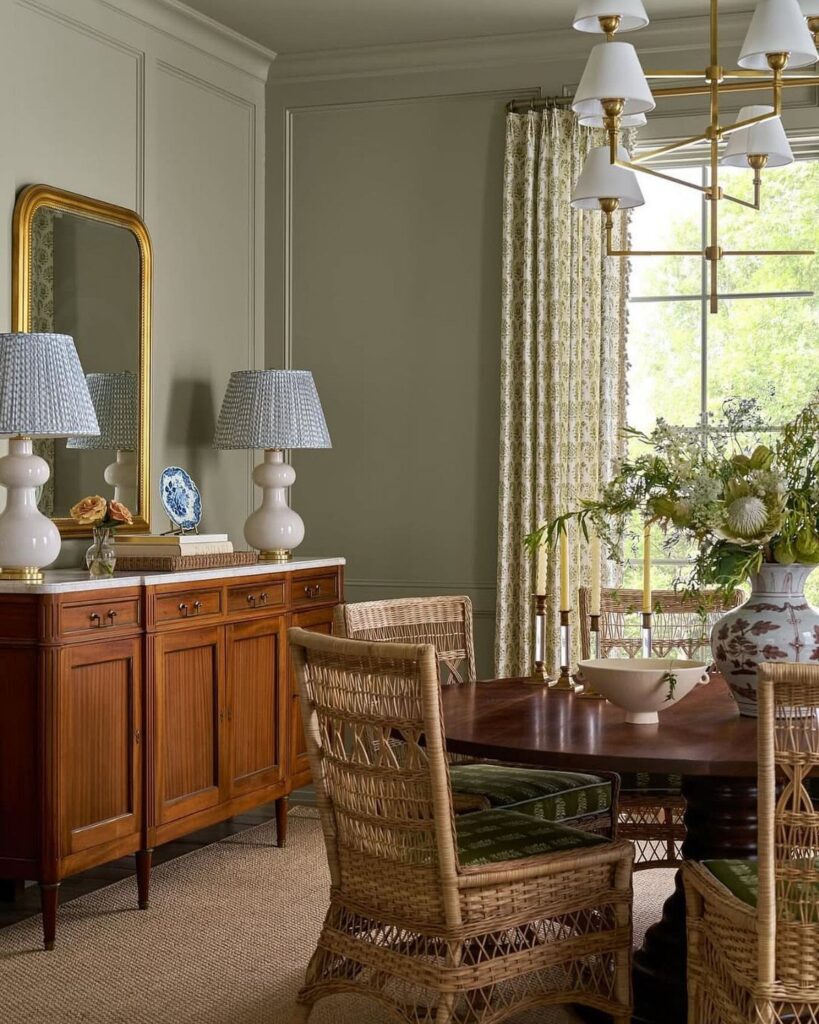
Matching lamps at both ends and a mirror in the middle turn the center of the sideboard into an axis that everything else follows.
Measure from each end so the mirror and the floral arrangement land on the true center, and check that the 2 lamps match in height.
This look is formal, and with ornate chairs I like it that way. For something looser, keep the lamps paired and let the plates and flowers vary.
6. Lamp on Sideboard
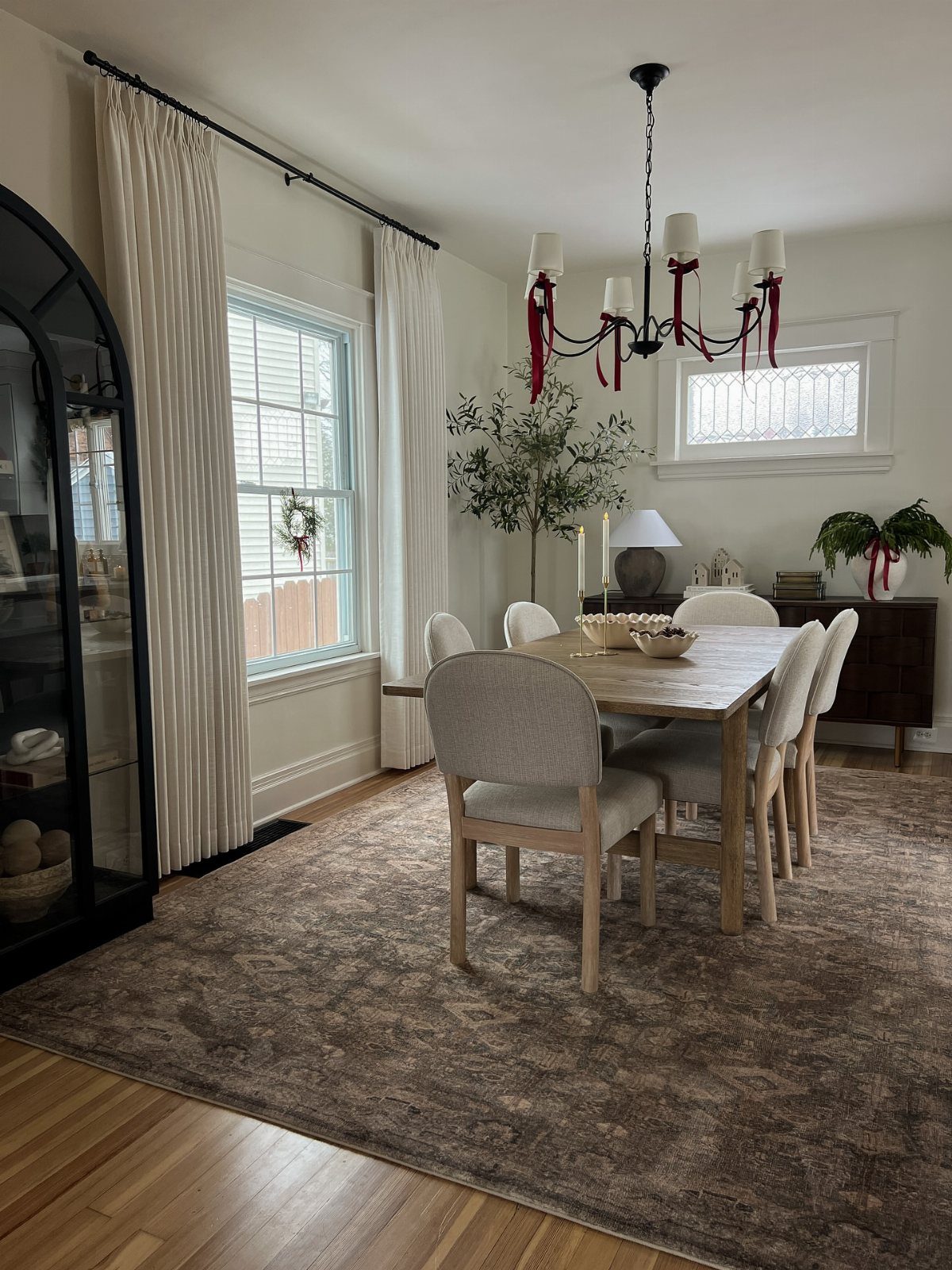
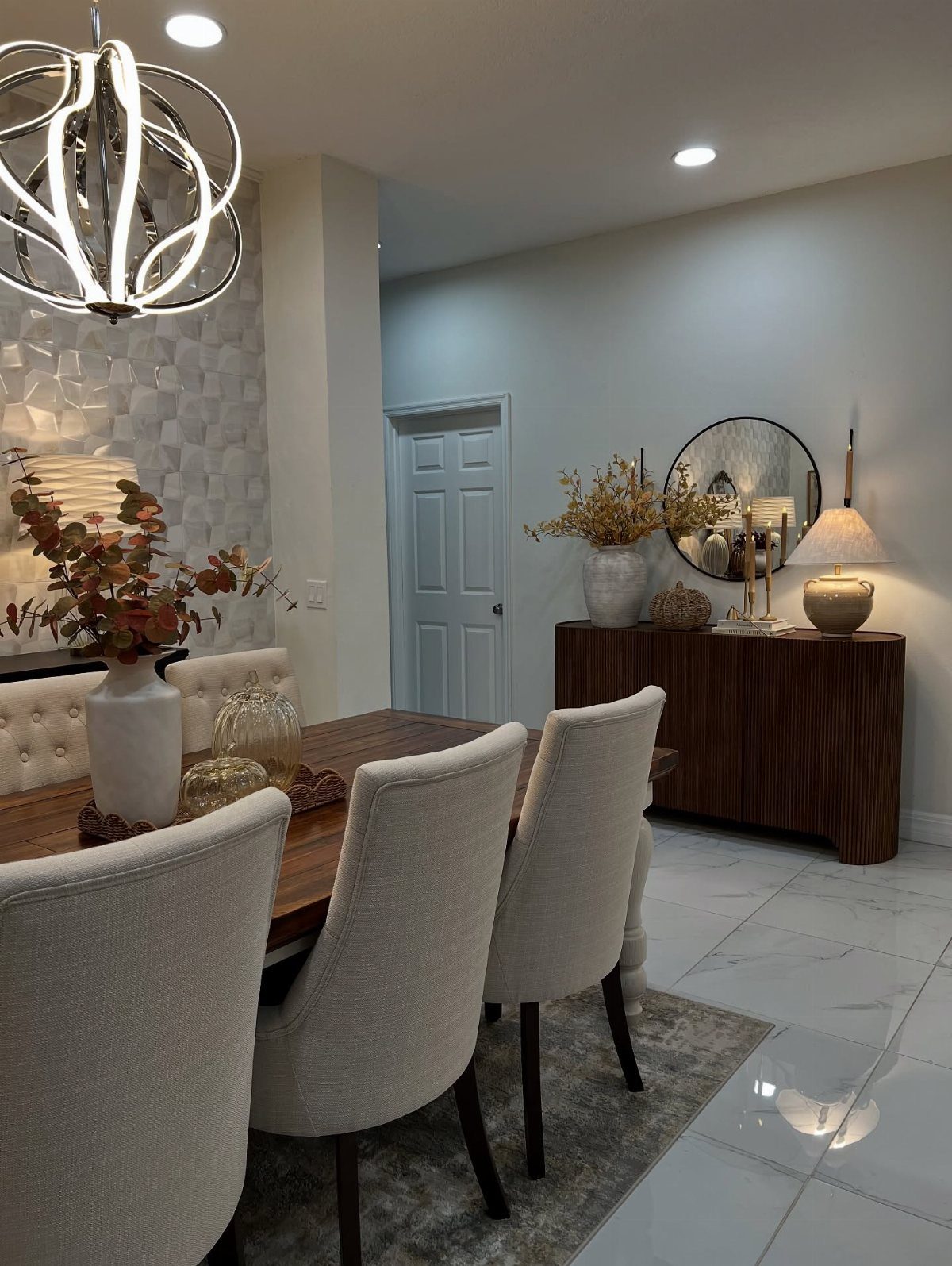
A chandelier lights the table, while a lamp on the sideboard adds a softer, lower pool of light along the wall. The white lamp stays light against the wood, and the candles and plant fill in around its base.
Tuck the cord behind the sideboard and choose a warm bulb. If the lamp and chandelier are on separate switches, I’d run the lamp alone for quiet dinners.
7. Candles and Candlesticks
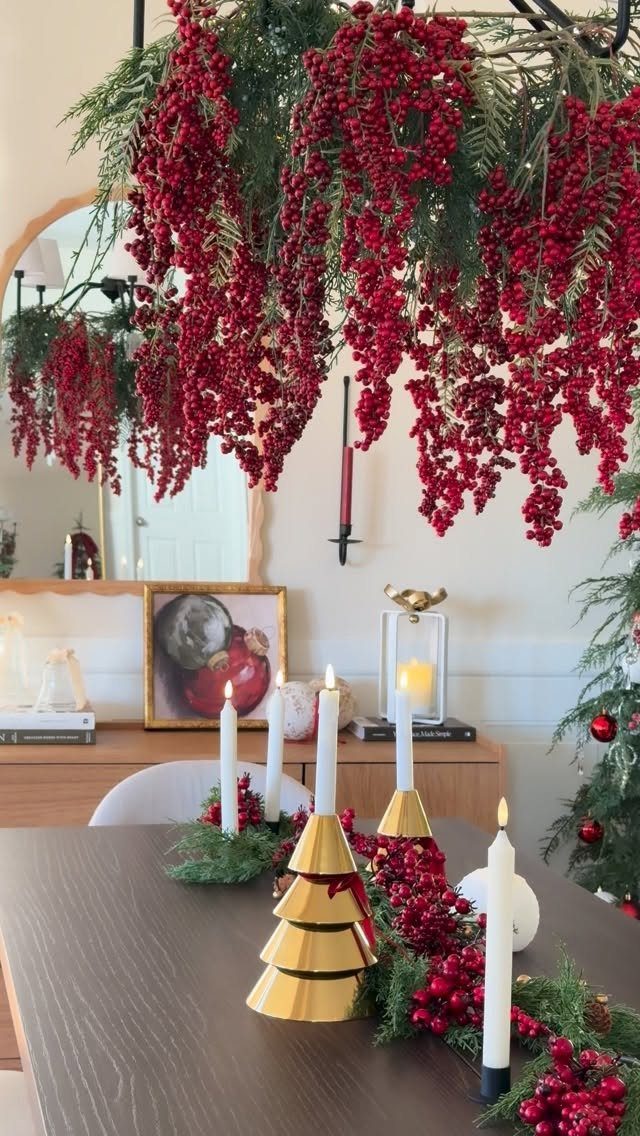
Slim white tapers in gold holders bring a dining table and the sideboard behind it into the same warm glow.
Gold against white reads dressy without adding clutter, and a single candle on the sideboard echoes the pair on the table.
Keep the holders in one metal finish so the group looks chosen, not collected. Vary the heights a little, and light them only when you are in the room.
8. Tray for Organization
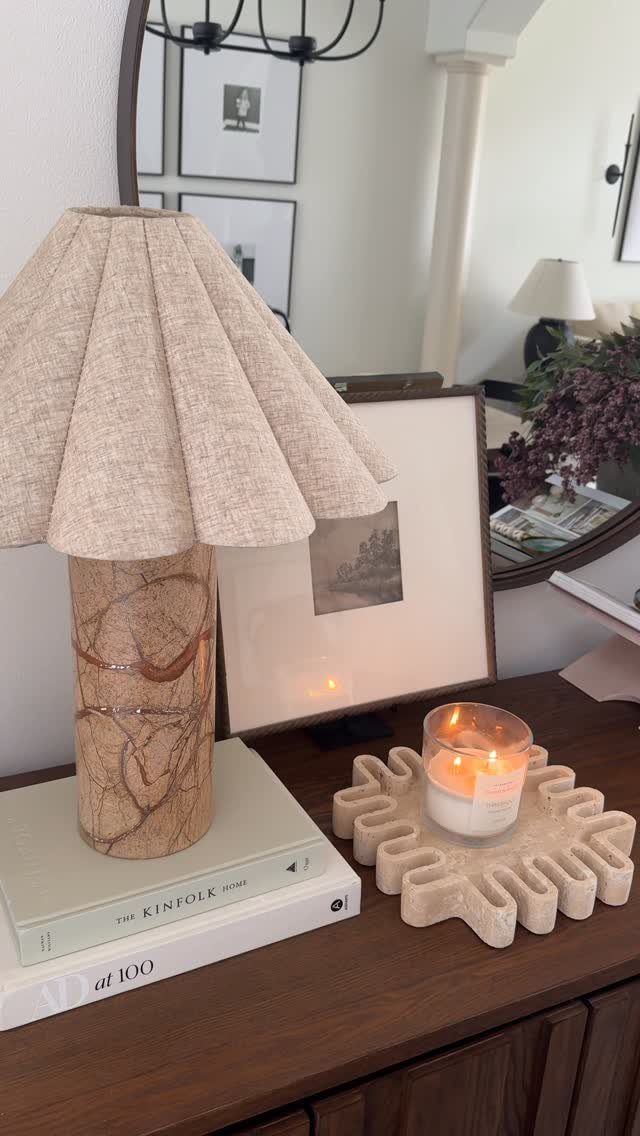
A wavy travertine tray makes a candle look planned instead of parked. Set it on the sideboard and the small items sitting on it read as one arrangement, which is a quick fix for a top that feels scattered.
Leave bare wood around the tray so it has room to breathe.
9. Books with Decor
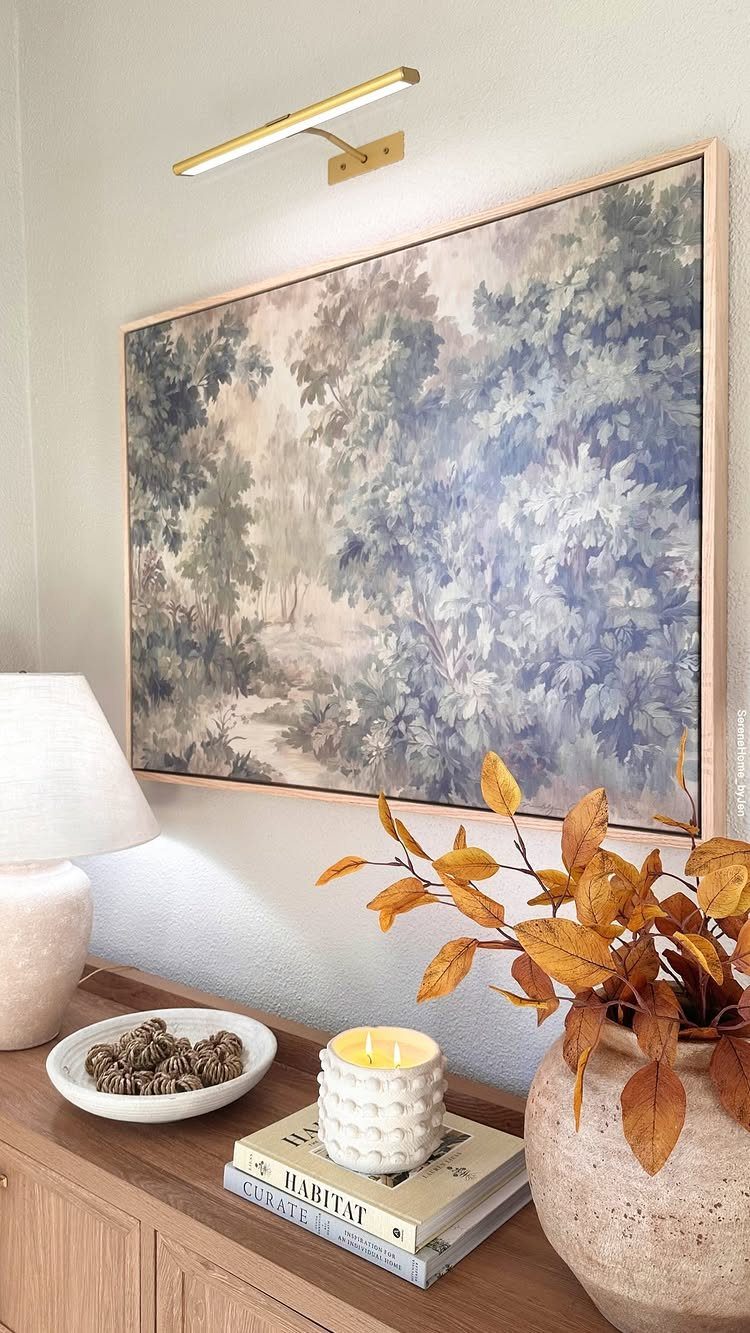
Books do the lifting here.
Stack 2–3 books with the largest on the bottom, and turn the spines outward so the titles add a little interest.
Hardcovers with plain or muted covers look calmer than glossy jackets, and a bowl of dried pods beside the stack finishes the look.
10. Bowls and Decorative Objects
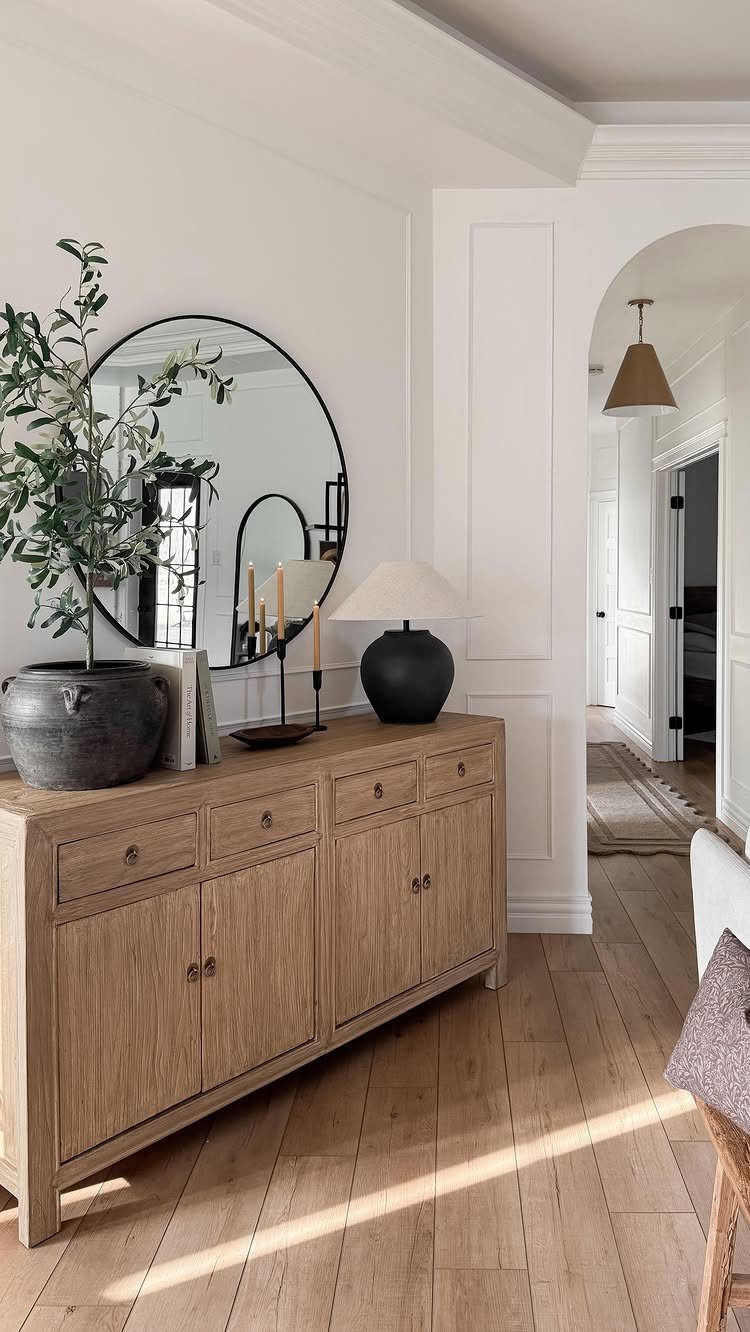
A potted plant sitting inside a wide bowl is a small move with a big effect: the bowl turns a nursery pot into a decorative piece and keeps the low end of the sideboard from looking empty.
Next to a black lamp and a round mirror, the rounded shapes soften the straight lines of the wood.
Choose bowls in a matte finish so they stay quiet beside shinier lamps. One or two is plenty; more starts to look like a shop display.
11. Closed Cabinet Storage
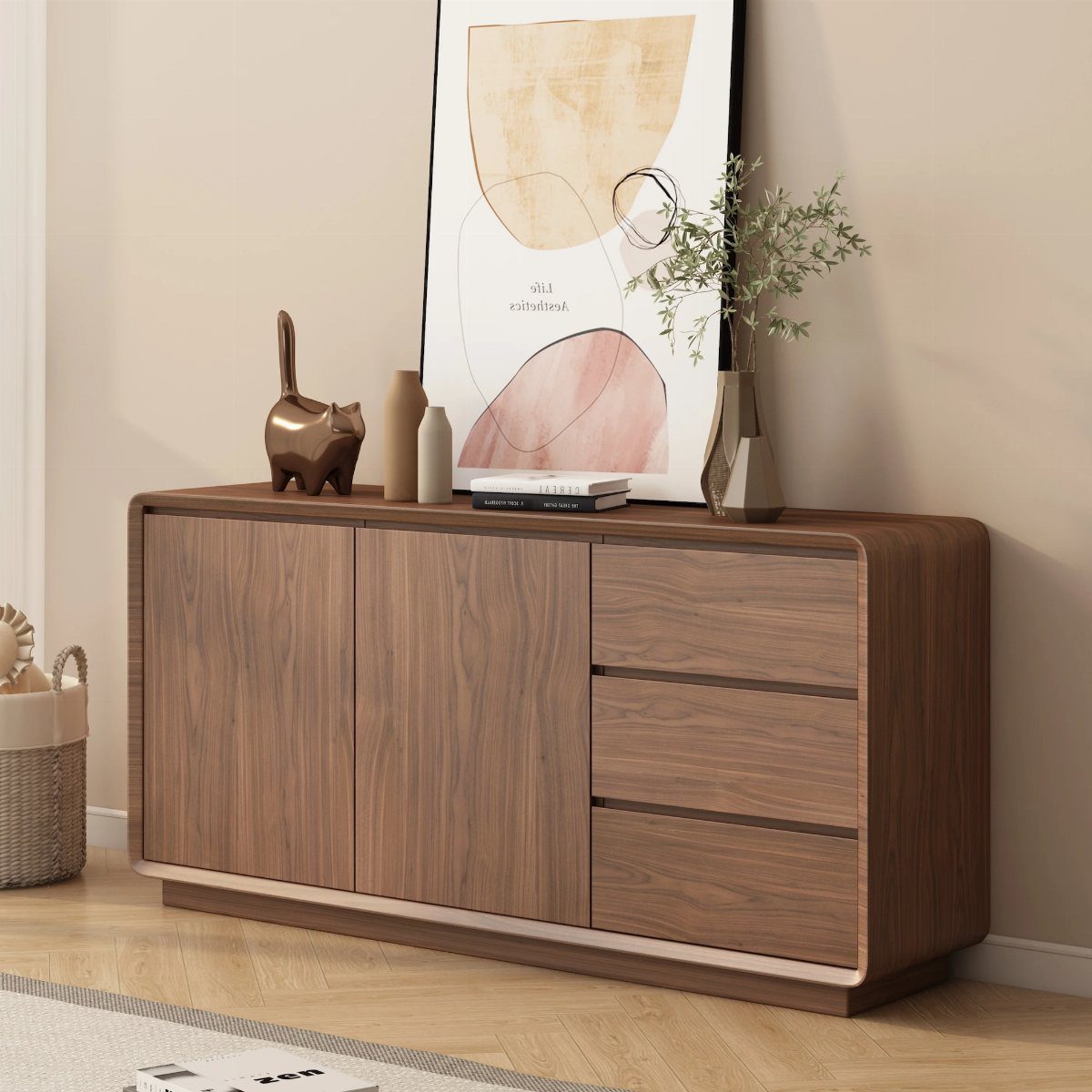
Doors and drawers give a sideboard its real job: placemats, serving pieces and linens stay out of sight, so the top can hold just a painting, a few vases and one small figurine.
That is the version I’d pick for a household that actually eats at the table every day.
Sort what goes inside before you style the top.
Drawers take flatware and napkins, and the cabinet takes the tall items. Then leave open space on the surface so the clean look lasts.
12. Marble Display Ledge
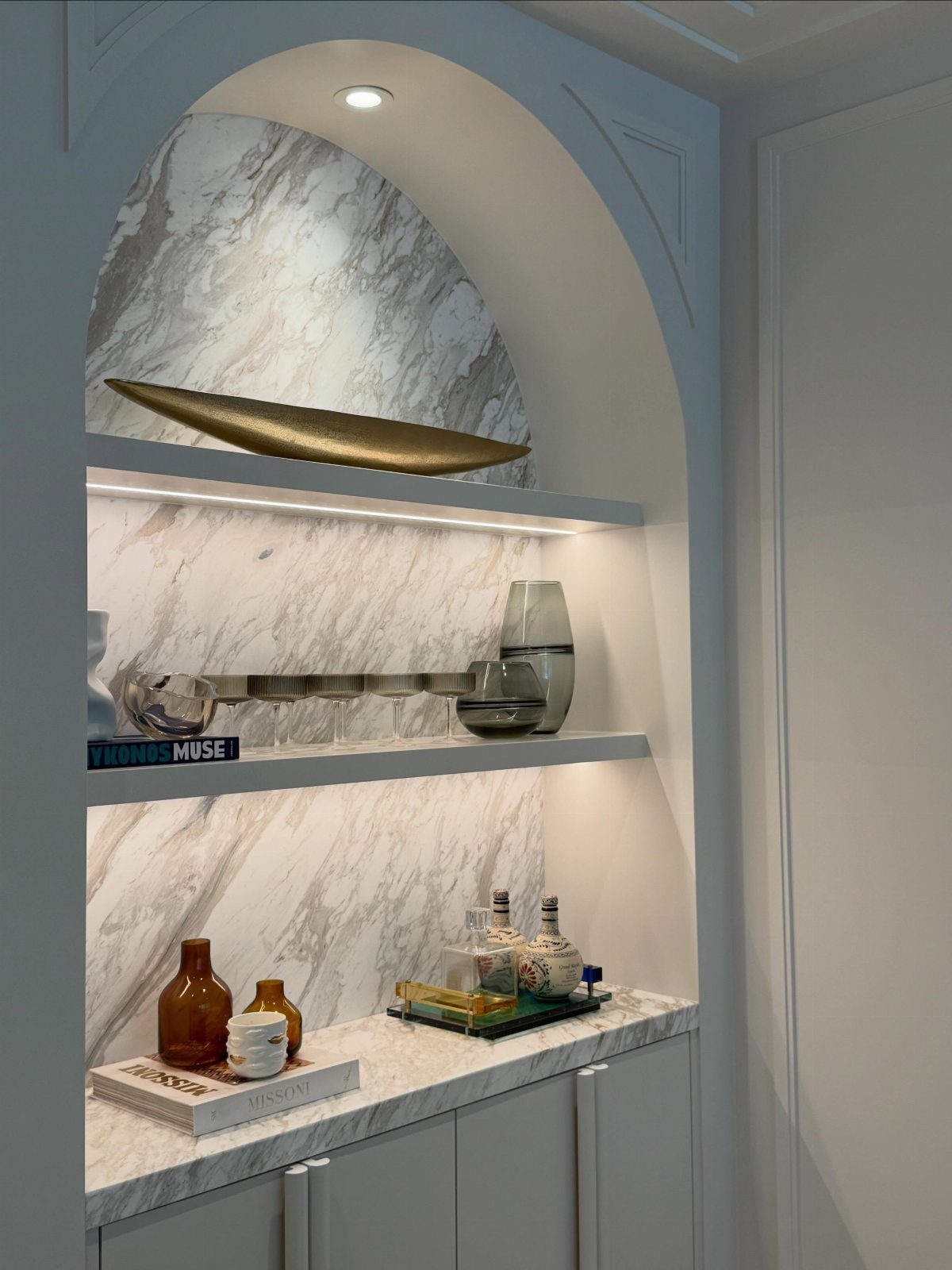
A narrow sideboard can feel tight, and a slim shelf mounted above it nearly doubles the display space without taking up any floor.
In an arched alcove with marble behind it, the extra shelves hold books and glassware while the countertop below stays free for bottles and serving.
Put the pieces you want to look at on the upper shelf and the items you reach for on the counter. Small lights under the shelves make the display work after dark too.
13. Backlit Wall Shelving
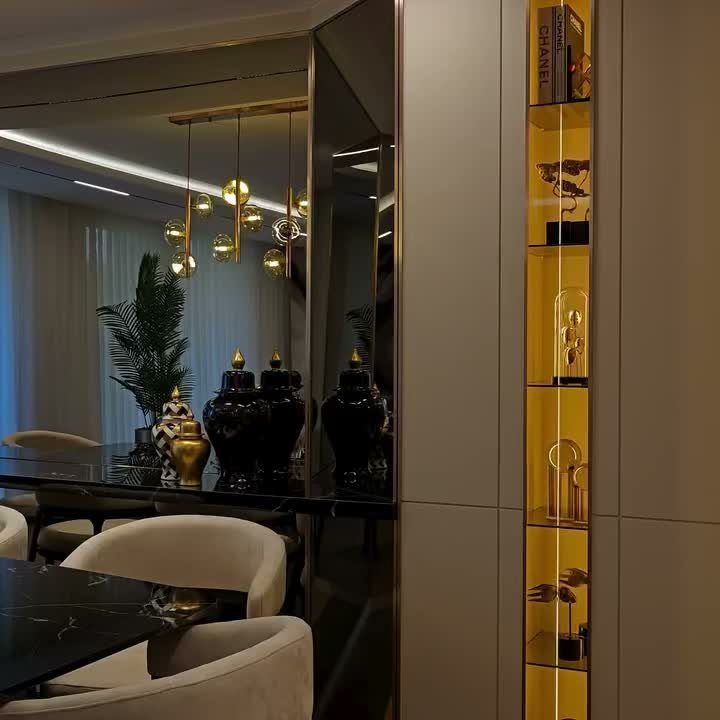
Moving the display into a recessed, backlit unit frees the sideboard top for serving. The shelves hold the books and gold accents, so the black marble stays clear for dishes, bottles and a casserole on its way to the table.
Cluster the pieces you want seen on the shelves and leave a little empty space between groups, since the glow makes every object look deliberate.
Warm light suits gold best. Cool white would flatten it.
Built-in shelving like this is a bigger job than a lamp or a tray, so renters can get a similar effect with a slim freestanding shelf and a battery-powered strip light.
Frequently Asked Questions
How to decorate a sideboard buffet?
A single tall piece, like a lamp or an oversized vase, sets the height, and one companion object beside it balances the look; anything beyond that tends to read as clutter.
Roughly 25% of the top should stay empty, which gives you a landing spot for a platter or pitcher, and the same habit works on a kitchen buffet.
Should a dining room have a sideboard?
Yes, especially if you eat at the table every day. Doors and drawers hide placemats, serving pieces and linens, which leaves the top free for a few decor pieces or for dishes on their way to the table.
Use the shallow drawers for flatware and linens, and save the space behind the doors for taller serving pieces.
Are credenza and sideboard the same?
Not quite, though the 2 pieces are close. Expect a sideboard to be bulkier with more closed cabinet space, and a credenza to sit lower and run longer.
Measure the wall and list what you plan to store, then shop on those numbers instead of the name on the tag.