


The right dining room rug depends on one fact: the shape and pulled-out footprint of your table, since a round table wants a circular rug and an oval or rectangular one wants a rectangle.
From there, the ideas run from a plain jute or light-colored rug to a purple statement piece or a red and black one that anchors the whole room.
Painter’s tape left on the floor for a day or two shows what your room allows, with about 24 inches of rug beyond the table edge as the starting rule.
1. Tie in Accessories
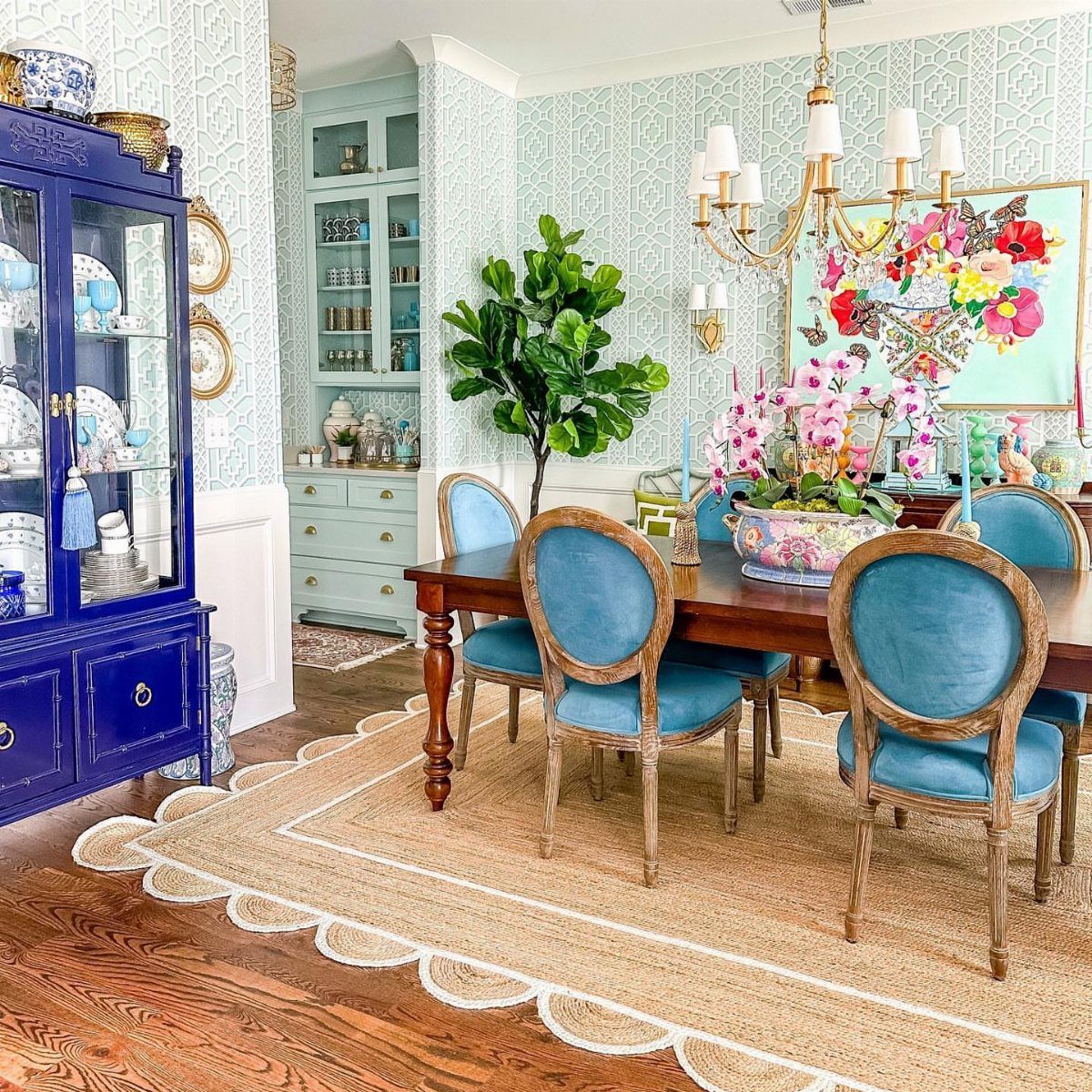
Pick the rug last, after the blue chairs, hutch and artwork are already in the room, and let it borrow from them.
A natural jute rug with a scalloped edge works here because it stays neutral next to blue velvet and patterned wallpaper, while the curved border echoes the softness of the florals.
If the walls and art are already busy, keep the rug plain in color and let its edge shape do the talking.
2. Mix Design Styles
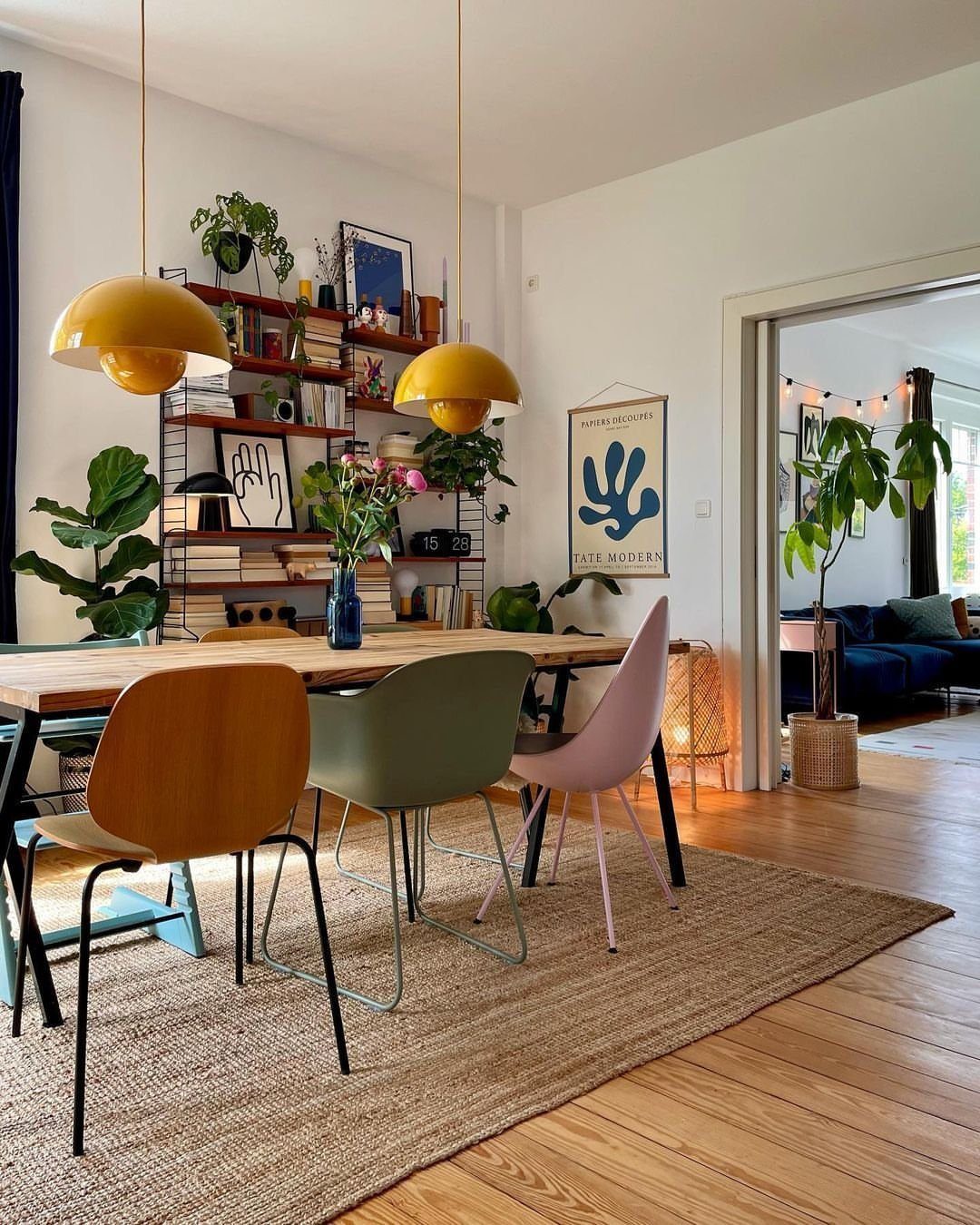
A rug from one tradition can steady furniture from another, and jute does that job well under chairs that don’t match each other.
Its natural fiber and woven texture give three colorful modern chairs and a wooden table a common ground, so the mix reads as chosen instead of random.
I’d keep the rug quiet when the chairs are loud. One bold element per zone is enough.
3. Round-table Rug
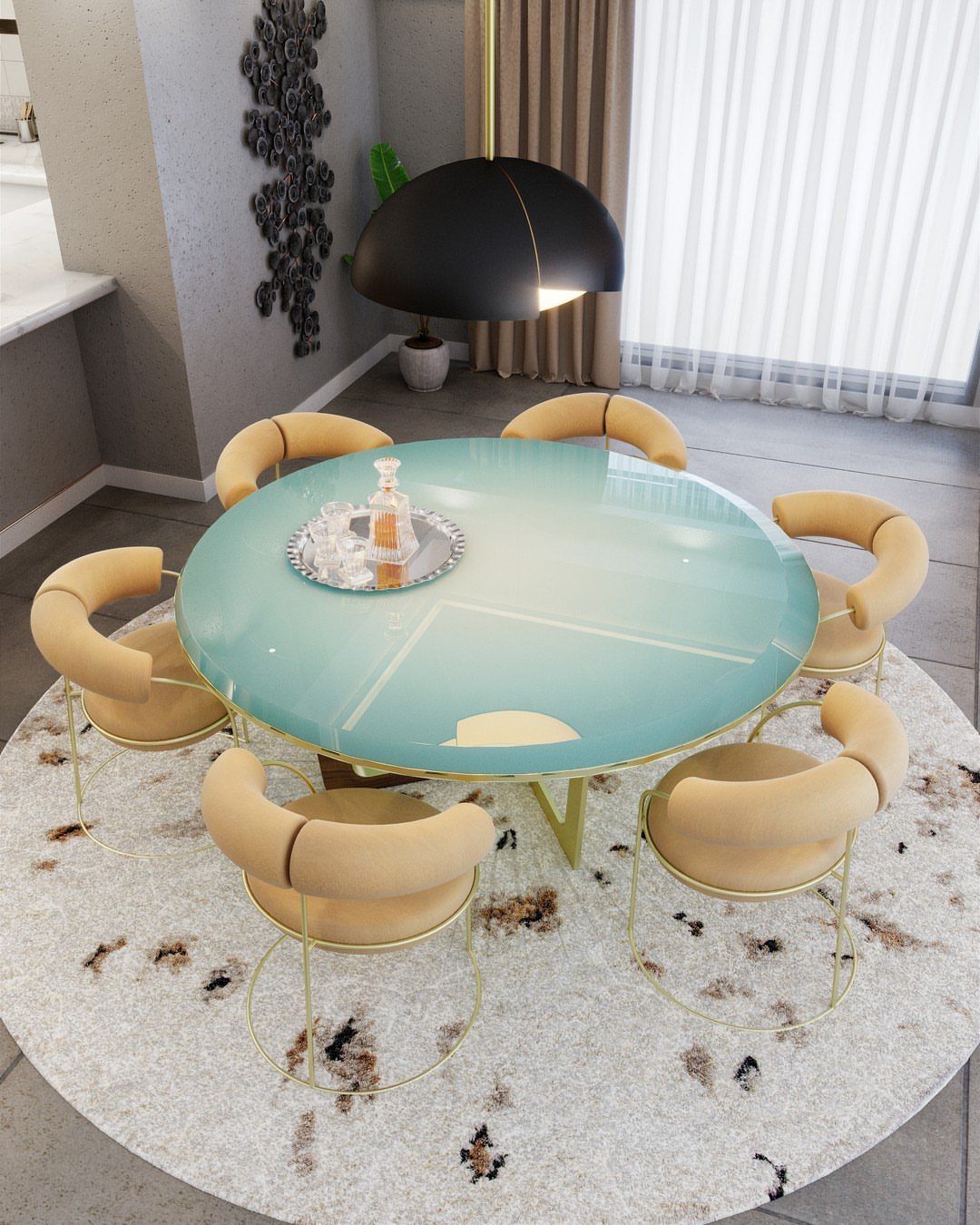
A circular rug follows the shape of a round table, so the edges line up with the way people sit around it.
Pull each chair out as far as you would to stand up, in every direction, and check that the back legs still land on the rug. Size up until they do.
A white rug with brown spots, like this one, hides small marks better than solid white would. Pattern is a practical choice under a table where meals happen.
4. Rectangular-table Rug
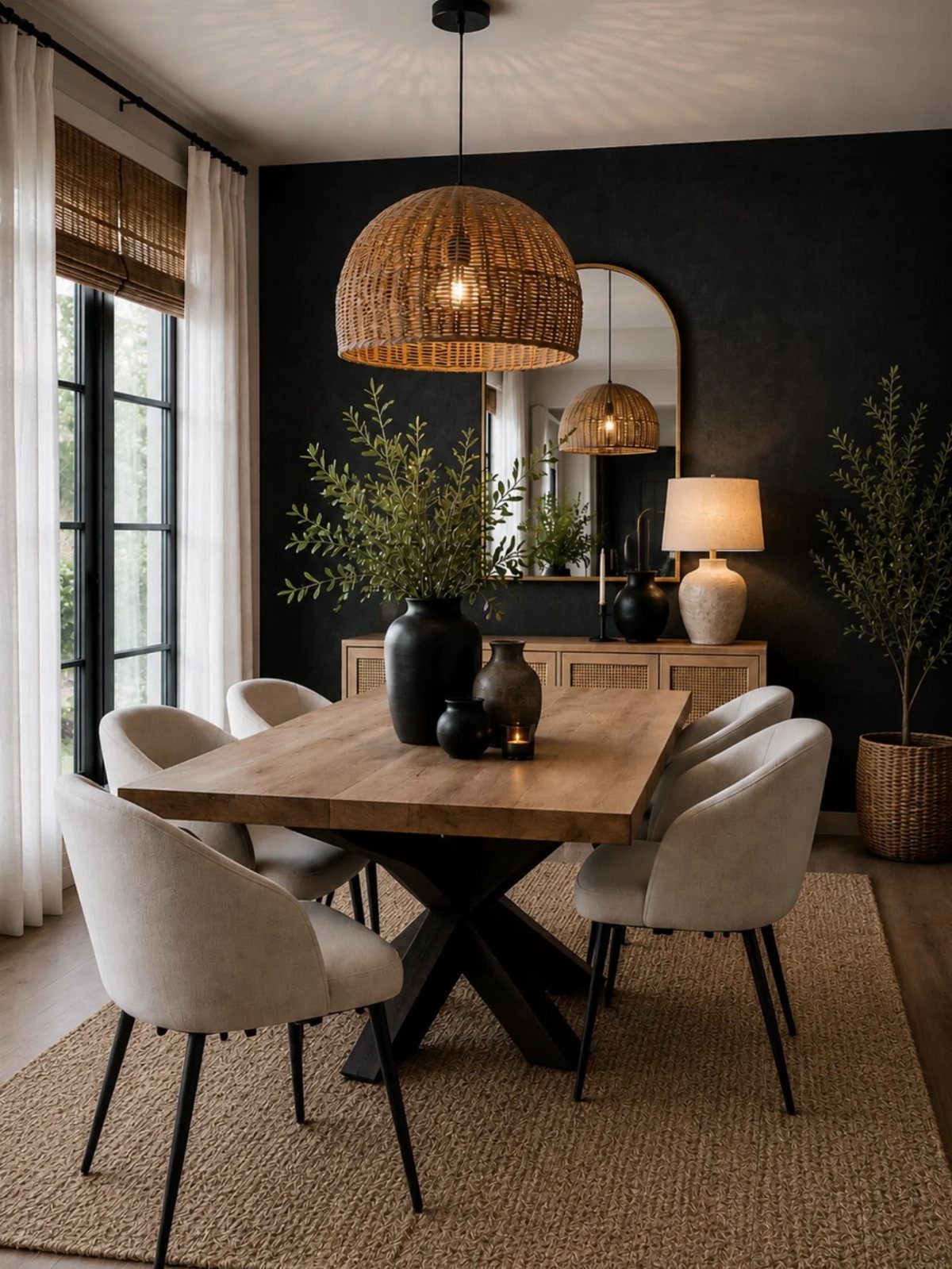
An oval or rectangular table wants a rectangular rug, because the straight edges repeat the table’s long lines and the whole setup looks anchored.
Jute in a natural tone adds texture without competing with a wood table, and its warm, neutral color works against a dark wall too.
Check that the rug extends past the table on all sides, so chairs stay on it when pulled back.
5. Short-pile Dining Room Rug
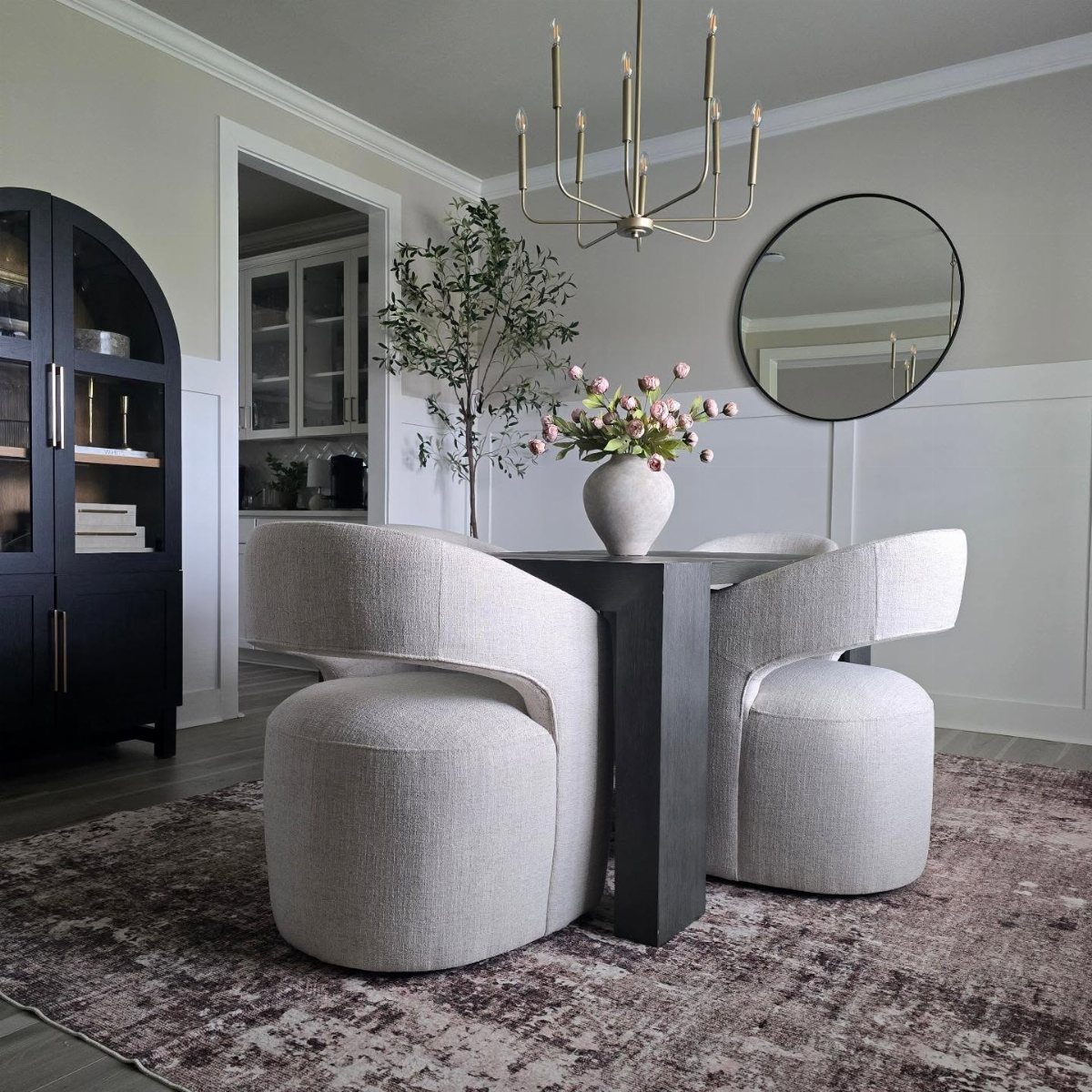
Low pile is the easy-care choice under a dining table: chair legs slide across it without catching, and crumbs sit on top where a vacuum can reach them.
A patterned short-pile rug also camouflages the small marks that come with daily meals.
I’d choose a pattern with some contrast against the floor, so the rug still reads clearly beneath a dark table and pale chairs.
6. Light-colored Rug
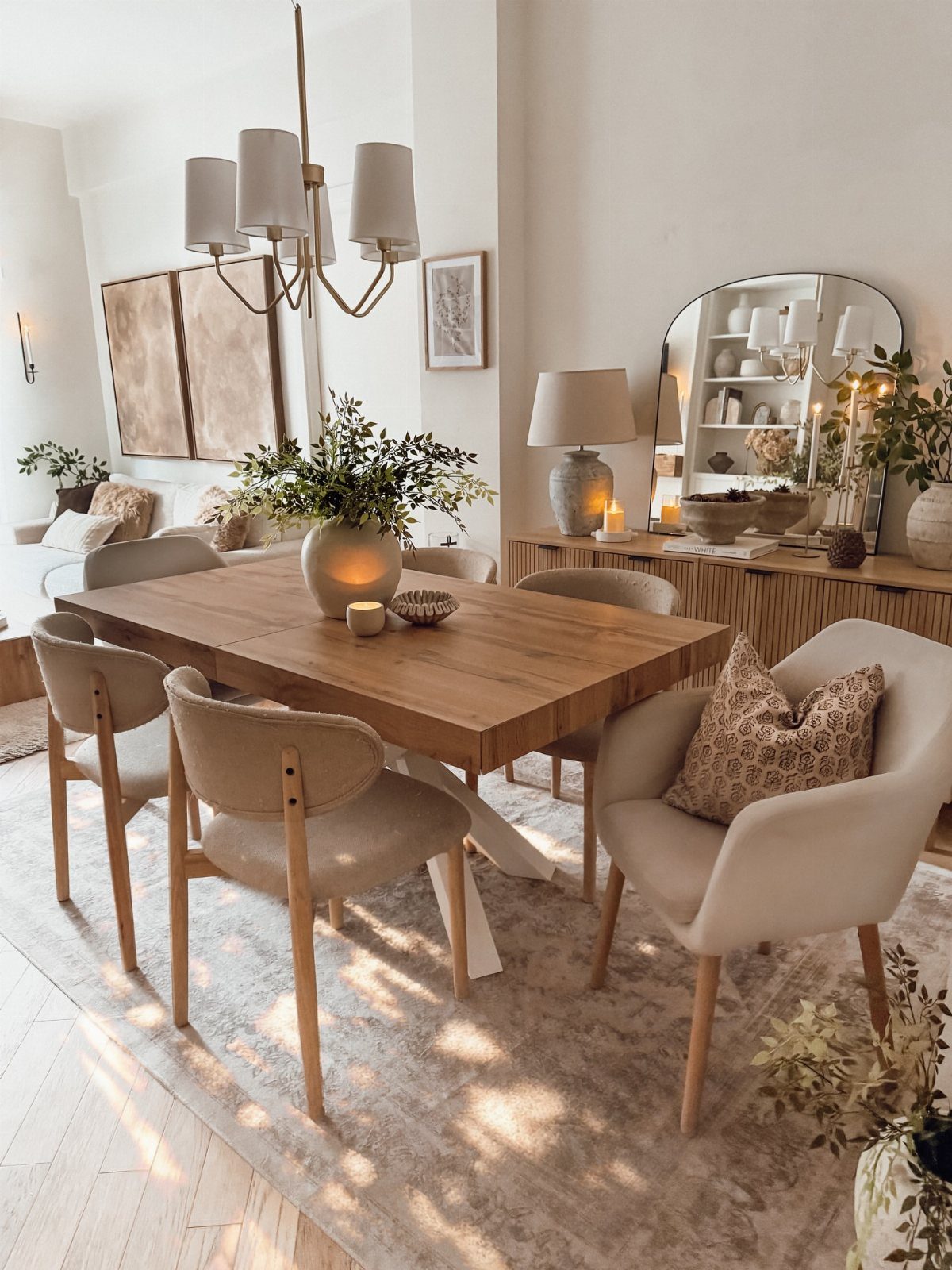
Light rugs look lovely under a wooden table and beige chairs, but they are the least forgiving option in a room where people eat.
Spills and crumbs show quickly on pale fibers, so I’d pick one only if the household eats here occasionally.
A textured weave helps a little, since the surface breaks up the light. For a busy table, though, a mid-tone rug is the safer bet.
7. Brown Textured Rug
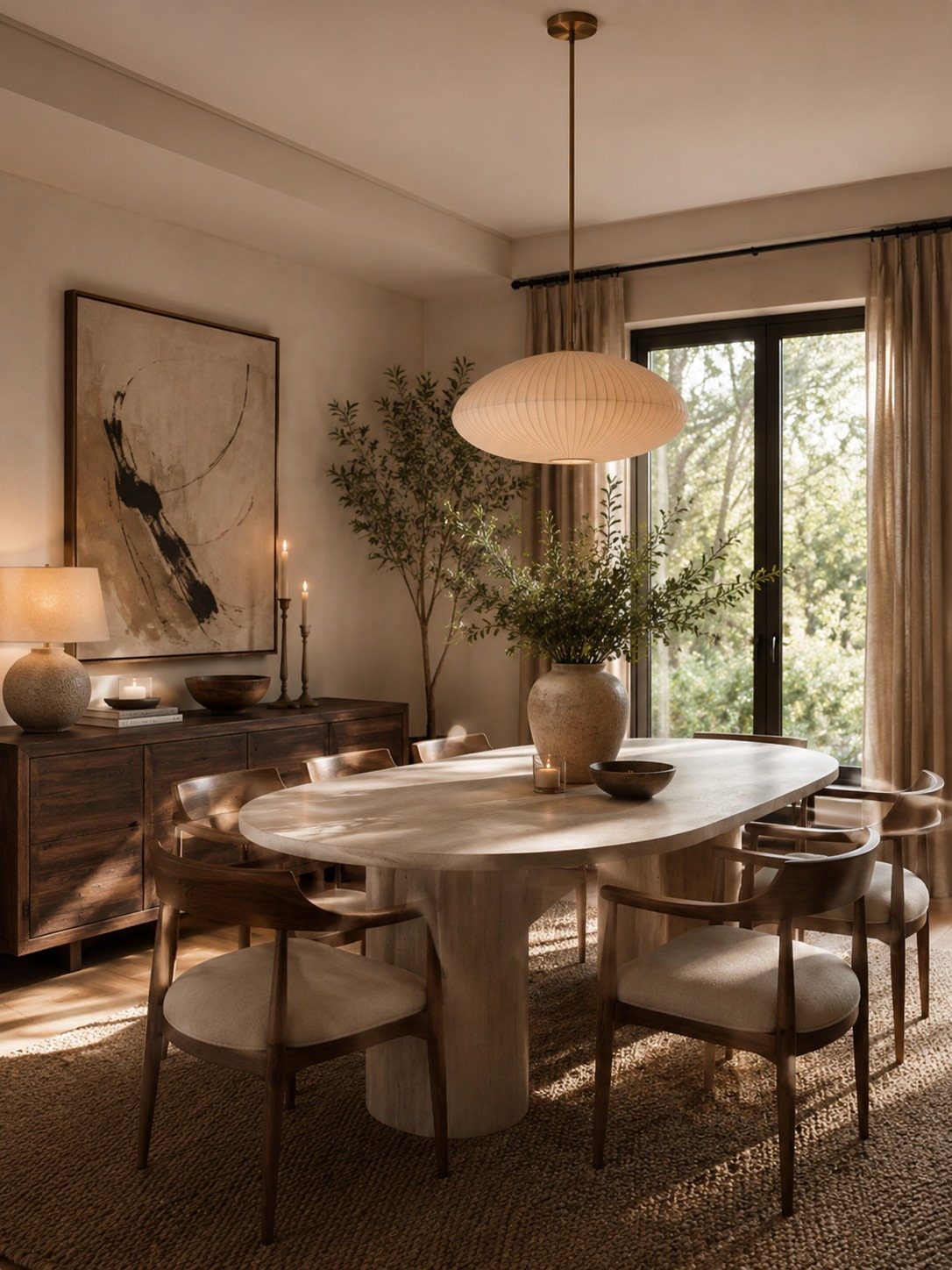
A brown textured rug under an oval table gives a neutral room some depth without adding another color.
Wooden chairs and a brown weave sit in the same warm family, so the layers read as one calm base instead of competing pieces.
A textured surface also hides small marks better than a flat solid. I’d pick brown over beige if the room already has a lot of white, since it grounds the table.
8. Purple Statement Rug
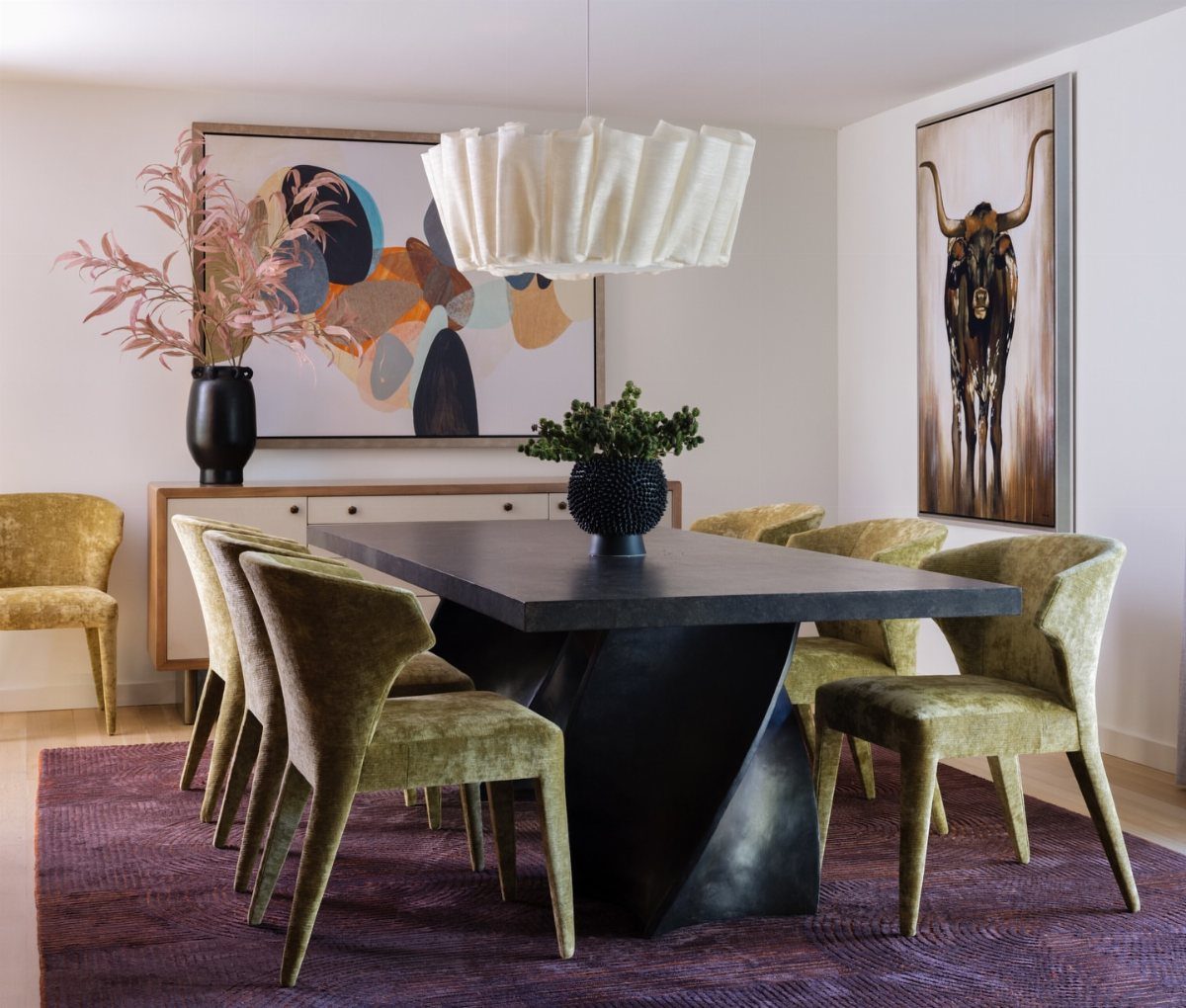
Purple is a bold choice for a dining room, and it works best when the rest of the room stays calm.
Olive-green chairs and a dark table give the rug a muted backdrop, so the color reads as a deliberate accent and not a clash.
Texture keeps a strong shade from looking flat. If the walls already carry large art, as they do here, I’d let the rug be the one loud thing underfoot and keep everything else restrained.
In fact, the eating area is one of the places in your home where all bets are off. Unlike your living room or bedroom where it’s best to set a calm tone, your dining room can be loud, vibrant and unexpected.
— Domino
9. Patterned Beige Rug
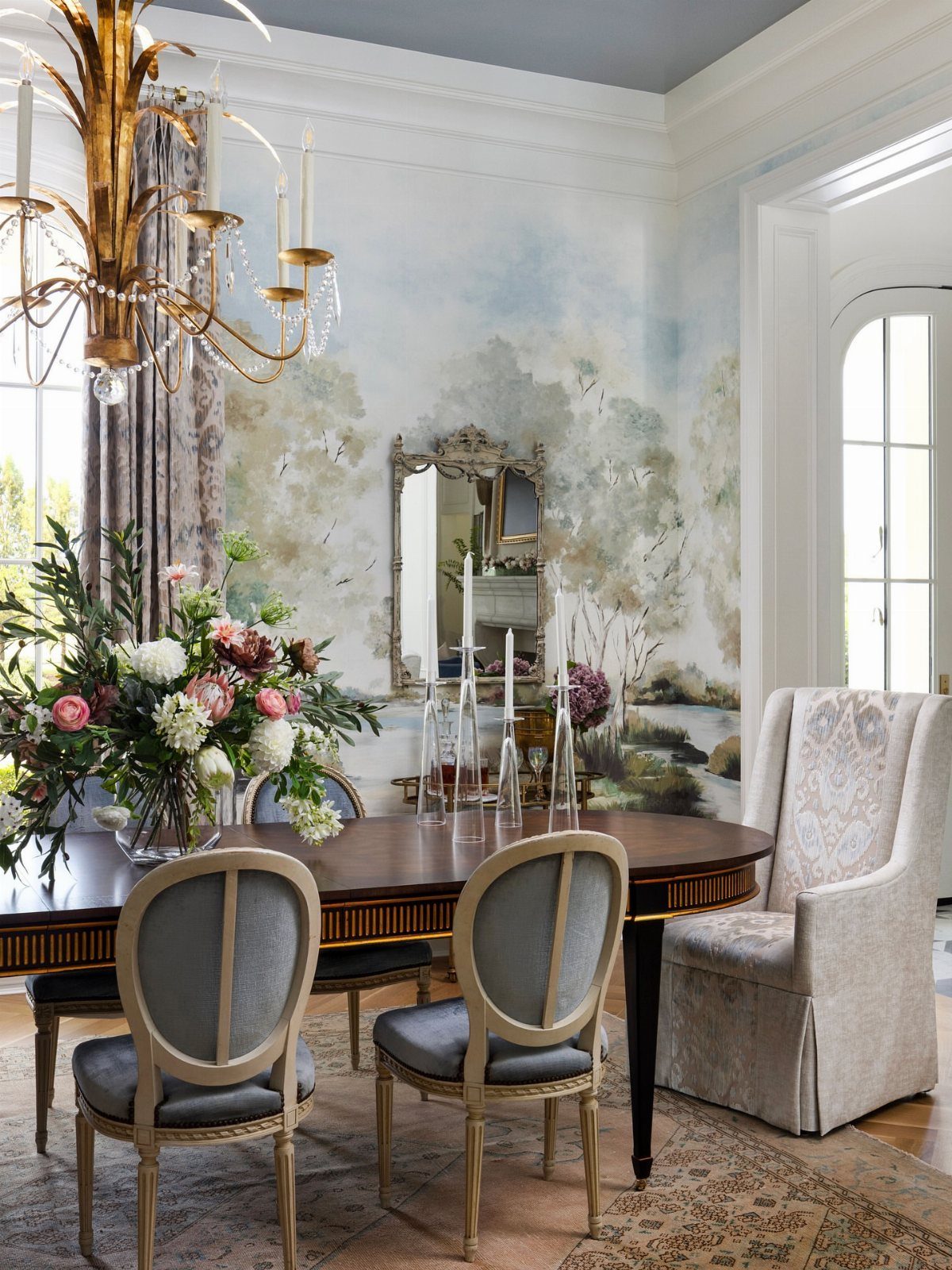
Beige with a pattern is the safe way to add interest under an oval wooden table. The warm neutral sits comfortably beside gray upholstered chairs and a busy nature mural, while the pattern keeps the floor from looking blank.
I’d choose a design with soft, low-contrast motifs when the walls are already telling a story. A rug with a bold repeat would fight the mural instead of supporting it.
10. Geometric Rug Detail
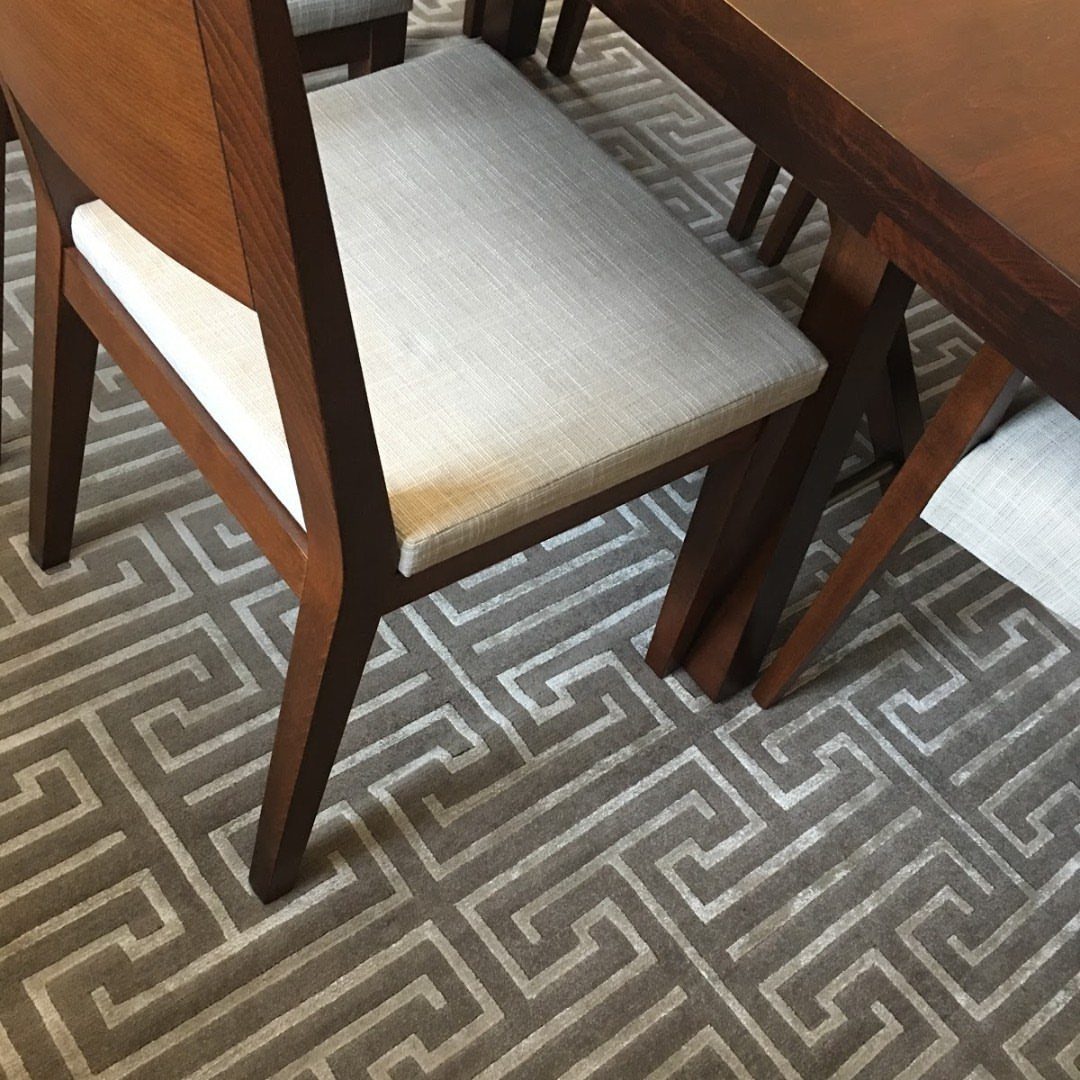
Gray and white geometric lines make a rug that suits wooden furniture well, since the cool tones set off the warm grain of the table and chair legs.
The repeating shapes also give the eye something to follow without adding color.
Pick a pattern on a scale that suits the table: small, tight geometry looks busy under a large set, while larger shapes stay calm. A light-seat chair like this one keeps the whole look airy.
11. Jute Dining Rug
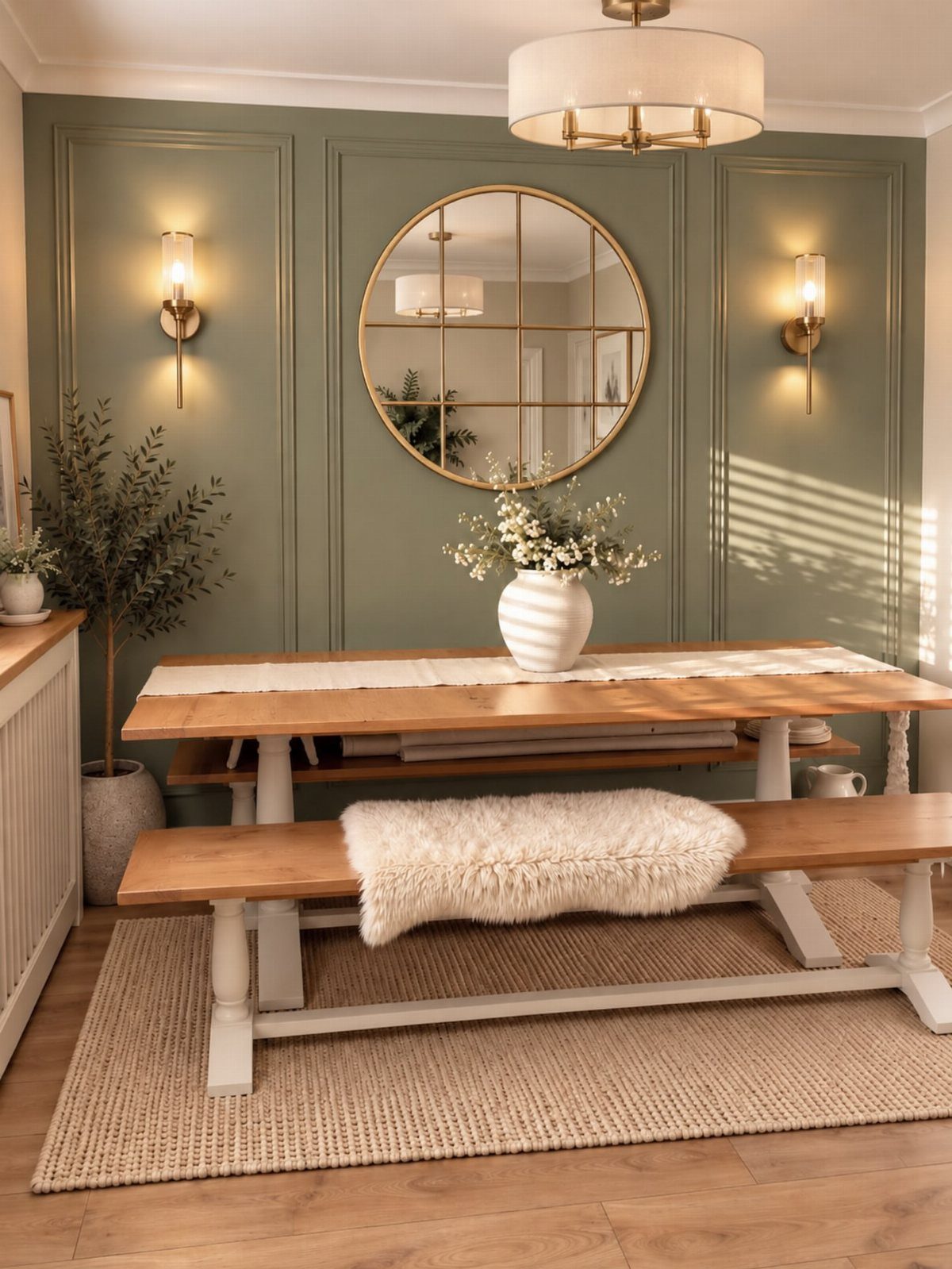
Woven jute and a wooden bench-and-table set share the same natural, earthy feel, and sage-green paneled walls pull the palette together. The rug’s texture adds warmth underfoot without introducing a new color to the room.
Jute is the one I reach for when wood and green are already doing the work.
12. Blue Patterned Rug
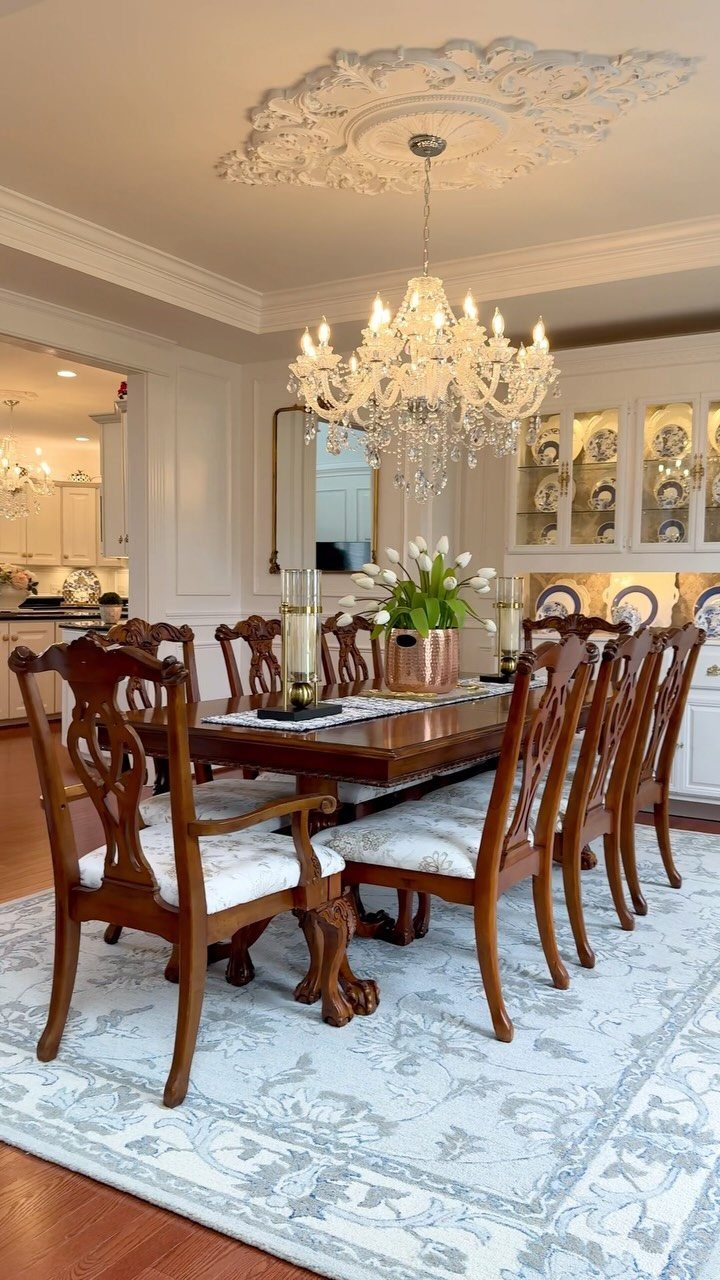
A blue-and-white rug is a classic partner for a wooden table in a formal room, and a large crystal chandelier overhead suits it.
The light blue keeps the floor feeling fresh, while the pattern gives the hardwood a soft layer of color.
I’d choose this when the room leans traditional. Blue and white pairs easily with wood tones, so the rug adds interest without needing the rest of the room to change.
13. Red and Black Rug
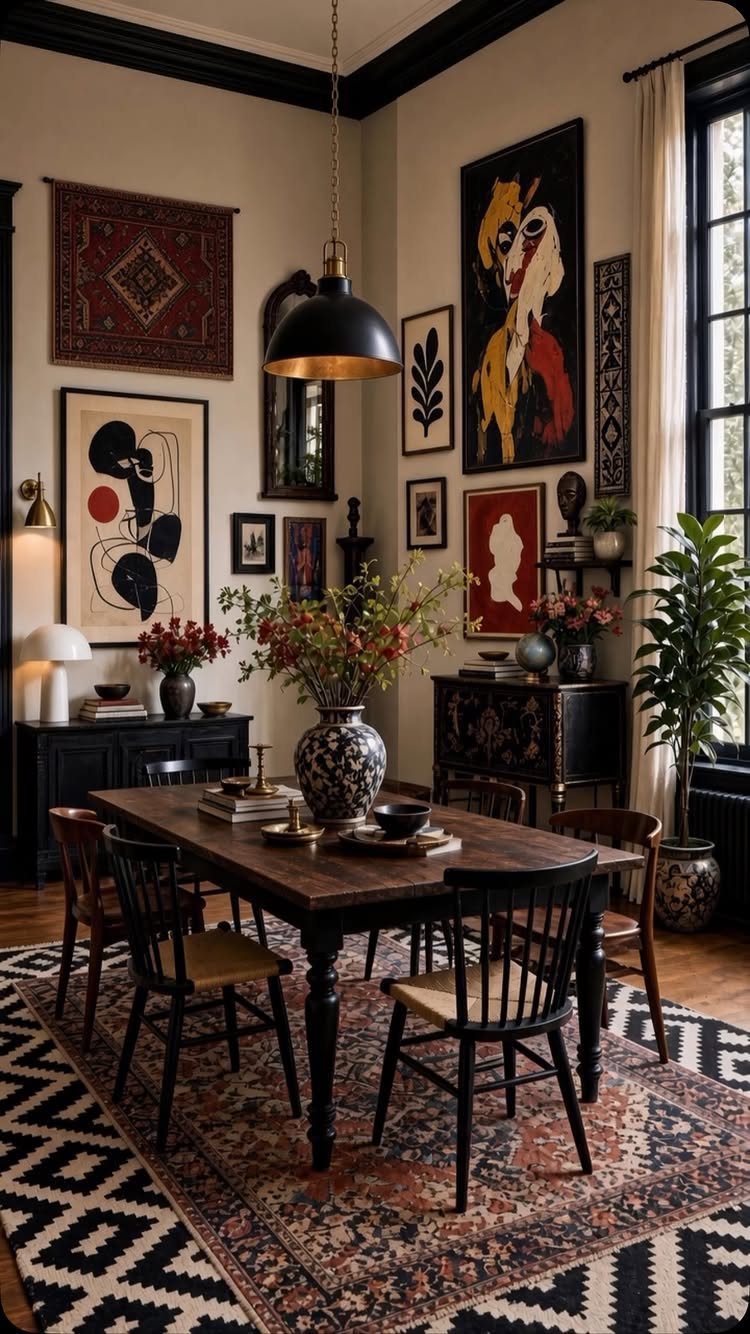
Red and black make the rug the loudest thing in a dining room, and white walls give it the room to be.
With a dark wood table and black chairs already in place, the pattern ties the dark pieces together and keeps them from looking heavy.
I’d let the art and the plant stay the supporting cast here. A rug this strong needs a calm floor plan: one pattern underfoot, solid furniture above it.
14. Gray Patterned Rug
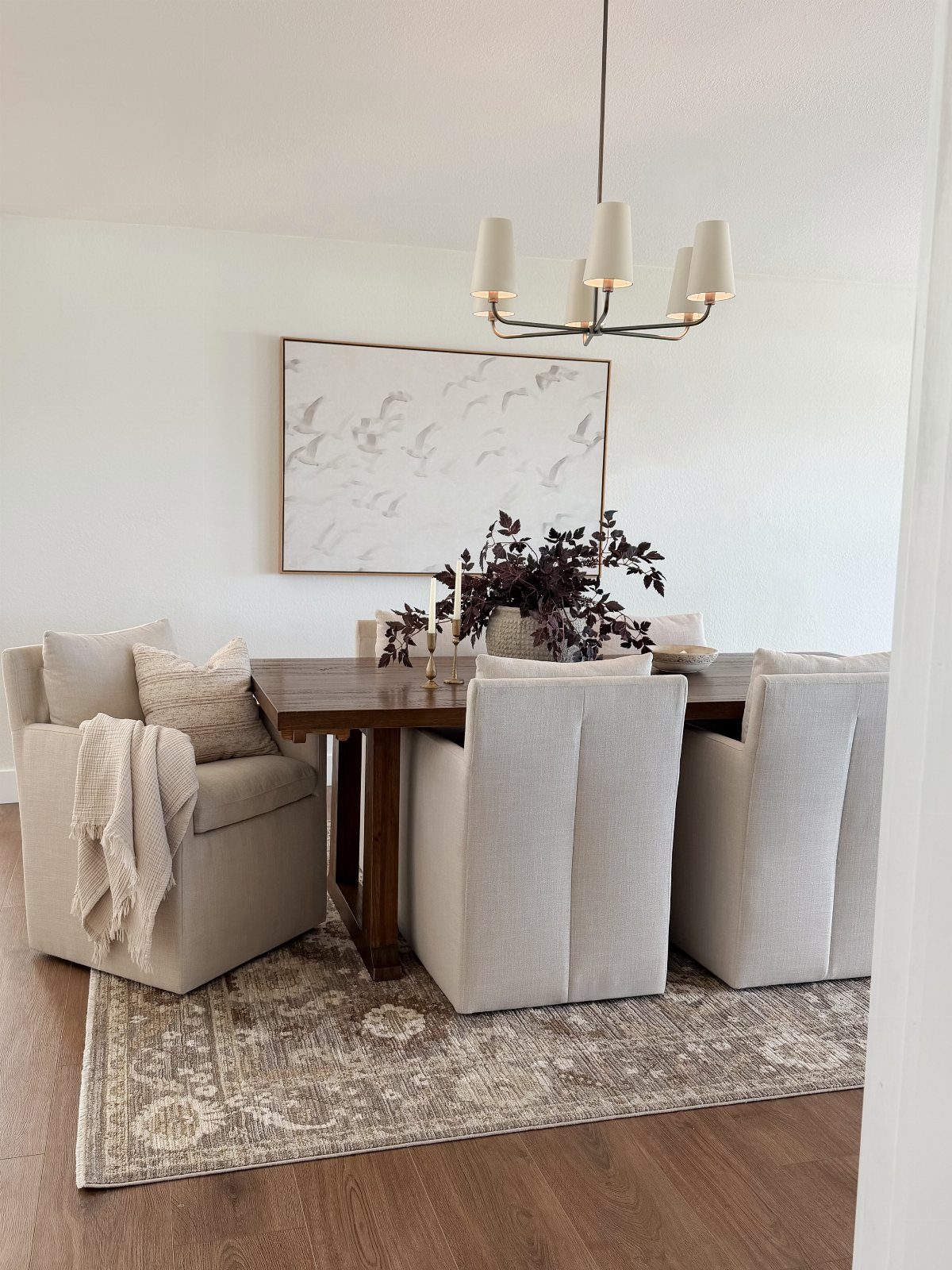
Gray is a quiet way to add contrast under a dark wood table.
A patterned gray rug anchors the table and sits well beside beige upholstered chairs, because a cool neutral under warm seating looks deliberate when the two don’t try to match.
Choose a pattern with some movement in it if the wall art is already bold, since a flat gray can look dull under a modern chandelier.
I like gray when the furniture is warm and dark, because it cools the whole setup down.
Check Room and Table Measurements
Measure the table the way you use it at dinner, not the way it sits on an ordinary Tuesday.
If it has extension leaves, put them in first, since that’s the footprint the rug has to cover on the days it matters.
Next, pull every chair back to where it lands when someone sits down, and measure from the table edge to the farthest chair leg.
Do this on every side, because a table is rarely used evenly, and the pullback distance matters as much as the tabletop size.
Then mark the rug’s outline on the floor with painter’s tape and leave it up for a day or two.
A common rule of thumb is about 24 inches of rug beyond the table edge, but the tape shows you what your room allows.
If the taped rectangle runs up against walls or narrows the path to a doorway, I’d go one size down. A rug that hugs the walls makes the room feel smaller.
Frequently Asked Questions
How do I choose a dining room rug?
Pick the one problem the rug has to fix first, such as a cold floor, loud chair scraping, or a worn patch, and let that narrow your choices.
Chairs that catch call for a bigger rug, spills call for easy care, and a flat-looking room calls for a controlled pattern.
A round table needs checking in every direction, and a quieter floor comes from tone and scale rather than more print.
What mistakes should I avoid when buying a dining room rug?
The most common one is sizing the rug to the tabletop instead of to the chairs when they are pulled back.
Measure with any extension leaves in, since that is the footprint on the days the table gets used most, and aim for roughly 24 inches of rug past the table edge.
Match the pile height to how your chairs move, since softness underfoot matters less than whether a chair leg can glide across it.
What is the best dining room rug for a messy household?
Look for a low-pile rug that’s easy to clean, washable if you can find one, in a pattern busy enough to disguise daily spills and crumbs.
With a short pile, chair legs glide instead of snagging, and crumbs stay on top where the vacuum can pick them up.