

Two-tier deck ideas for backyards run from a weekend string-light upgrade to a full gable-roof addition that costs more than tearing the old deck off and starting over.
The right choice comes down to how many nights a year you actually cook, sit or entertain outside, because a gas fire pit and built-in bench only earn their keep if you are outside past Labor Day.
Every option below includes the numbers from real builds: composite decking against damp planter soil, low-voltage LED on a transformer, and the two seasons a vertical garden needs before it looks intentional.
1. Outdoor Kitchen and Dining Area

A two-tier deck gives you the chance to keep the mess of cooking away from the lounge chairs.
Put the grill and prep counter on the lower level with a table close enough that plates travel easy but smoke rises past the dining area.
Built-in storage under the counter keeps tools dry and means you are not running inside for tongs every few minutes. Cover matters more than size here.
A retractable awning or small roof over the cooking zone lets you grill through a light rain and shields the fridge from sun. The upper deck stays clean for eating.
This setup suits anyone who cooks outside twice a week or more; if you are a once-a-month griller, a rolling cart on a single level saves money and space.

Exceptional Multi-Functionality: This outdoor kitchen island functions as a grill cart, outdoor table with storage, outdoor bar, serving cart, food prep station, or pizza oven stand. Its sturdy construction makes it suitable for the patio, backyard, garage, or even indoor kitchen use

【Fireproof & Heat Resistant】Our grill mat for outdoor grill is made of fiberglass, which can provide heat resistance up to 550℃/1022℉. Our heat resistant mats have finely stitched edges. It won't stick, tear, curl or crack from heat. Protect your countertop.

A Grill Master's Dream: Enjoy seamless outdoor cooking with a durable stainless-steel top, perfect for prepping and serving your BBQ favorites
2. Built-In Seating and Planters
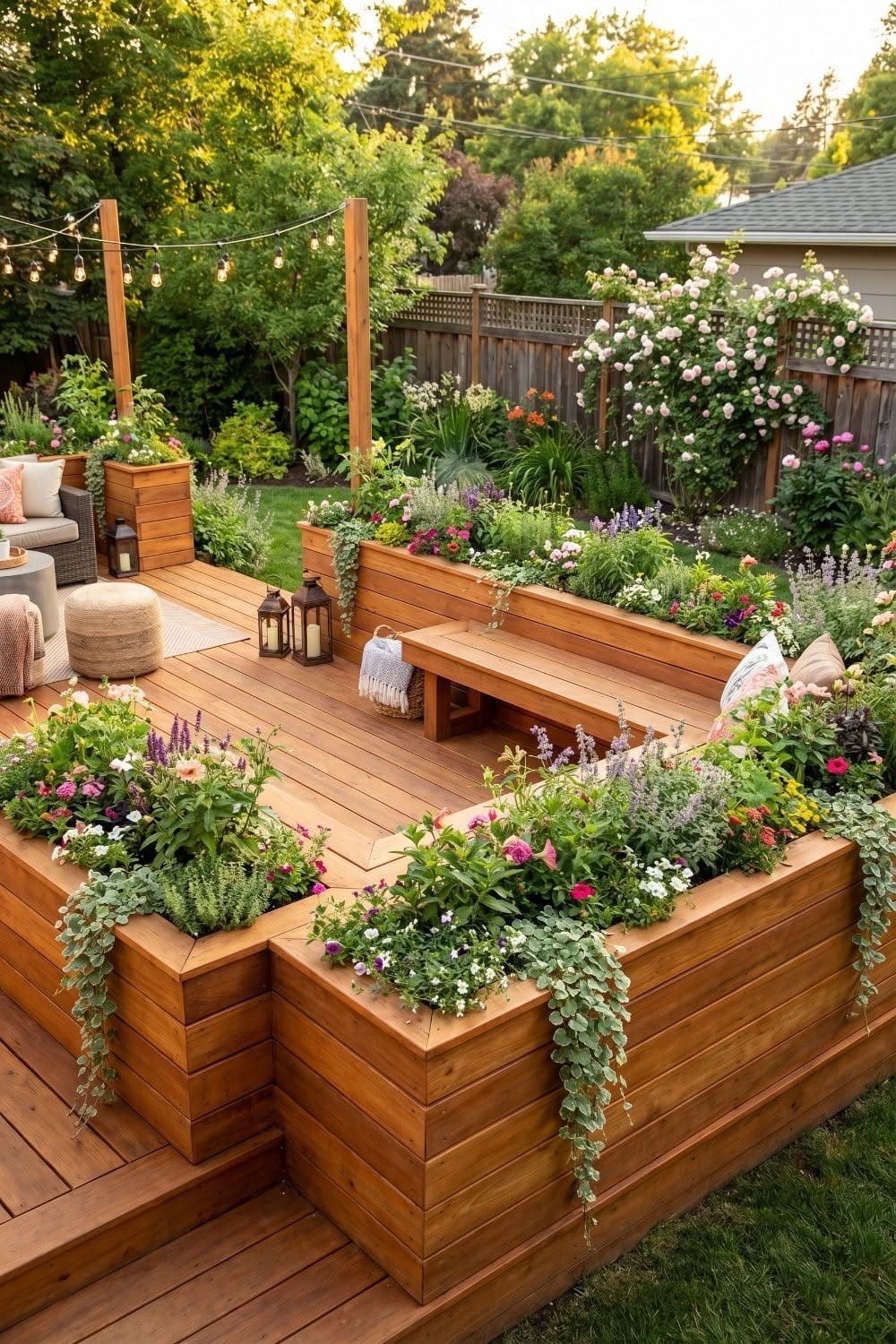
Built-in benches along the perimeter turn the edge of a deck into seating without chairs that blow around in a storm. Storage under the bench seats fits cushions, hose nozzles, or the odd bag of soil.
Composite decking holds up better than natural wood here because planter soil stays damp against the boards year-round. I would use cedar or a composite with some grain to it, since plain gray can look industrial next to flowers.
This idea eats into your floor space, so measure twice. A deck that is too small starts feeling like a corridor once the benches go in.

All-Weather Strength: LZRS tables are made from recycled HDPE plastic with a wood-like texture. They resist warping, cracking, and rot. They are perfect for outdoor use in any season — no peeling or fading!

4-Inch Thick High-Density Foam: Filled with premium sponge foam that provides exceptional support and comfort. It effectively relieves pressure and retains its shape perfectly without flattening over time

【2-Tier Storage with Extra Shelf Space】Enjoy a more organized outdoor space with the 2-tier design of this patio side table. The spacious tabletop and lower shelf provide convenient storage for drinks, books, snacks, plants, and décor, giving you extra shelf space to keep outdoor essentials within reach while relaxing in your Adirondack chair, patio chair, or lounge chair
3. Two-Level Deck with Fire Pit and Seating
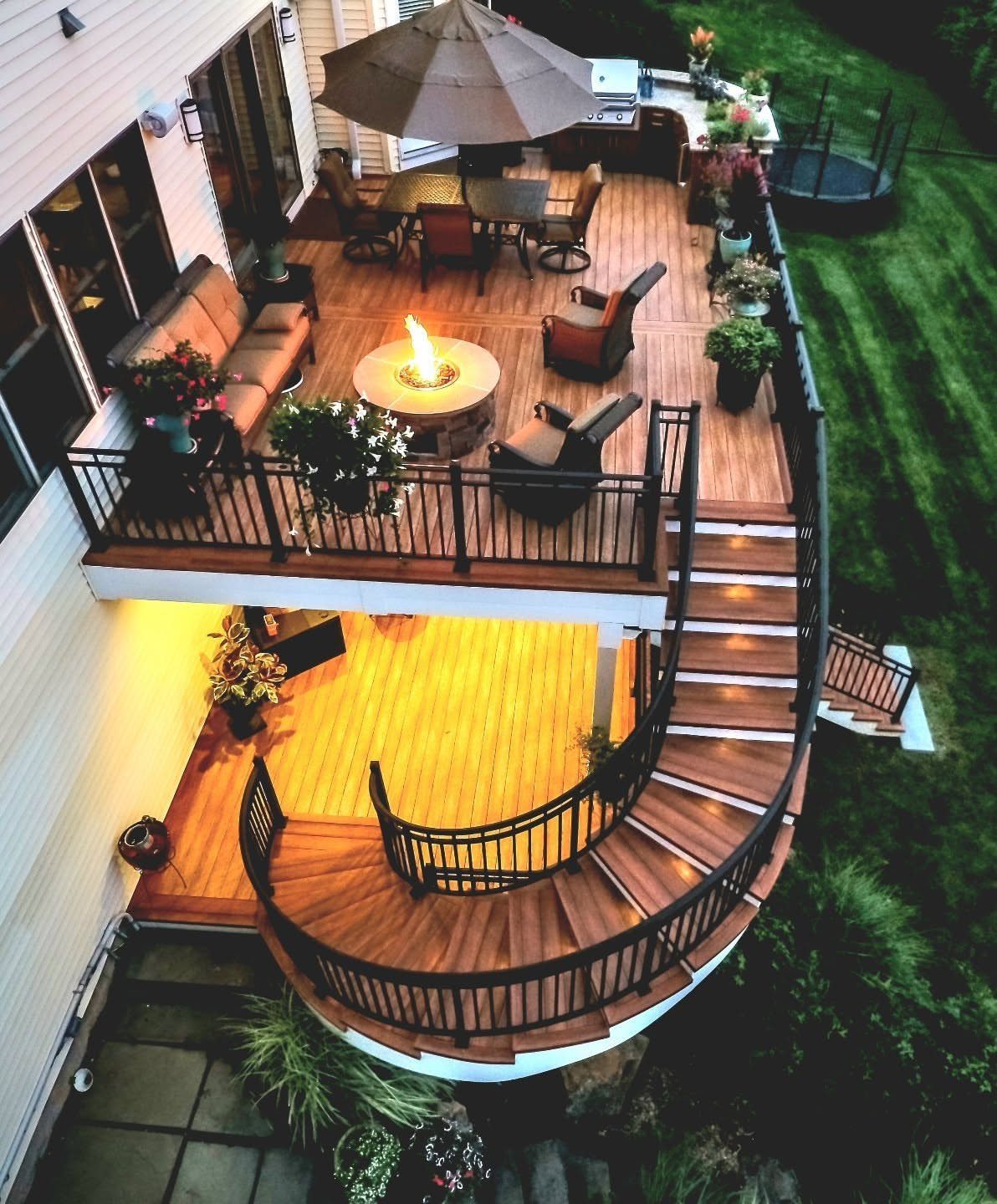
A fire pit works best on the lower tier, where a few steps down contain sparks and the upper deck stays clear of smoke.
Curved bench seating around the pit fits more people than individual chairs and keeps the conversation facing inward. Permanent seating means you cannot rearrange for a crowd.
Once you build that bench, you cannot drag the fire pit to the lawn for a bigger party. Check local codes before you cut; some counties require a spark screen or ban wood-burning features outright.
Gas pits cost more upfront but skip the firewood stack and the neighbor complaints. This layout wins for cool-climate backyards where you want three-season use.
In hot, buggy zones, the same square footage might serve you better as a screened dining room.

QUALITY COMFORT: A gently curved backrest pairs with a soft, weather-resistant cushion that attaches to the frame with securing straps


4. Multi-Level Deck with Stairs and Railings
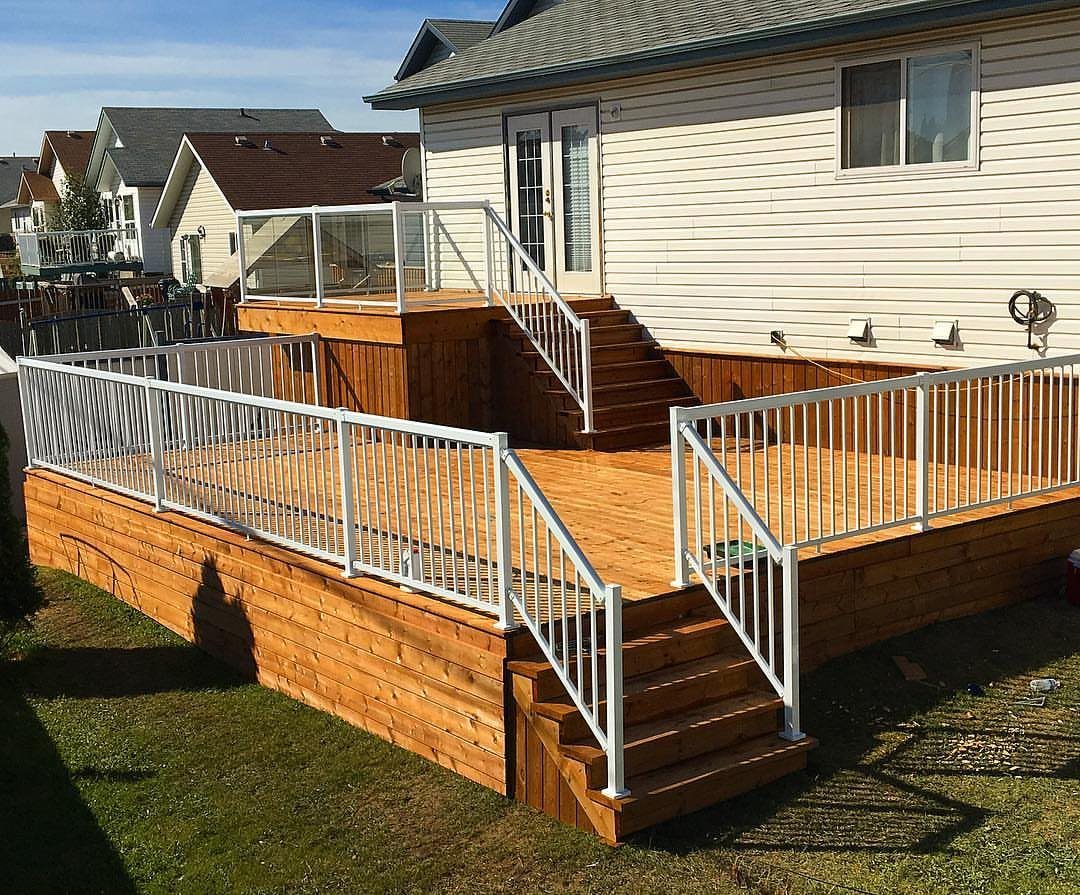
Stairs are the backbone of a multi-level deck, and they are where people get hurt. Wider stairs at the main route between levels let people pass with a tray of drinks.
Handrails on both sides matter more than the railing style, though cable or aluminum with slim posts keeps sightlines open. Glass panels are a higher-end choice; they look sharp but show every water spot.
Built-in step lighting is not decorative. It is how you find the stairs with an armful of plates and no free hand.
Budget decks often skip this and add solar stick-ons later, which shift and die in a season. If you entertain after dark, wire the lights during construction.

Perfect Fit: Youlvy fire pit cover is perfect for rectangular fire pit, you can also use it for similar sized outdoor furniture.Note: please measure the size of your firepit before purchasing.

【𝟑𝟐 𝐈𝐧𝐜𝐡 𝐒𝐪𝐮𝐚𝐫𝐞 𝐅𝐢𝐫𝐞 𝐏𝐢𝐭 𝐂𝐨𝐯𝐞𝐫𝐬】Measures 32" L x 32" W x 24" H, fits most 29-32 inch outdoor fire pits. Works with fire pits by Ciays, Bali Outdoors, HOTEAGLE, OutVue, Verdeluxe, Florise, Yaheetech, TACKLIFE, Endless Summer, Mistmo and other brands. Please double-check your fire pit dimensions before purchase.

Wanting a Great Patio Party?: Having a patio party is different from an indoor party. Outdoors you need to consider the coldness and a center of attention to gather everyone. A propane fire pit table can provide the atmosphere needed for a great time!(note:1:use soapy water to check for leaks before use 2:The reminder card contains interface size instructions and interface inspection instructions)
5. Pergola Shade and Cover

A pergola on the upper level gives you structure without a full roof, which matters when the second story of your house already blocks some sun.
Open slats let light through at an angle; by afternoon, the shadow pattern moves and you get partial cover without a cave effect.
Louvered tops cost more but let you tilt the slats as the sun crosses, which is worth it on a south-facing deck. A steel spiral staircase saves space on a small footprint but feels steep for anyone carrying a cooler.
A standard stair with the pergola overhead suits hosting better. Vines on the posts soften the edges after a season or two.
Wisteria is gorgeous and will pull the structure down fast; clematis or a restrained grape vine behaves better.

[Dusk to Dawn Sensor] Connected to this dusk till dawn transformer, the landscape lighting will turn on automatically at dusk and off at dawn; 60W, convert 120V AC household voltage to 12V DC safety voltage, providing a safer and more practical electrical current level, don't worry about forgetting the switch, energy saving(Please note the transforemr not for Halogen light)

120V AC TO 12V DC TRANSFORMER - The 100W landscape lighting transformer convert 120V AC to 12V DC safe voltage, achieving energy-saving life and away from the danger of electricity. Landscape Transformer offers a dependable solution for all your outdoor LED low voltage lighting system, such as LED landscape lights, spotlights, in-ground,step, pathway lights, etc. (Please note the transformer not for Halogen light

ETL-Certified Safety for Outdoor Lighting: This ETL-listed low-voltage transformer safely converts 120V AC to 12V DC. It reliably powers a range of outdoor landscape lighting, including path lights, spotlights, deck lights, and string lights
6. Lighting Layers and String Lights
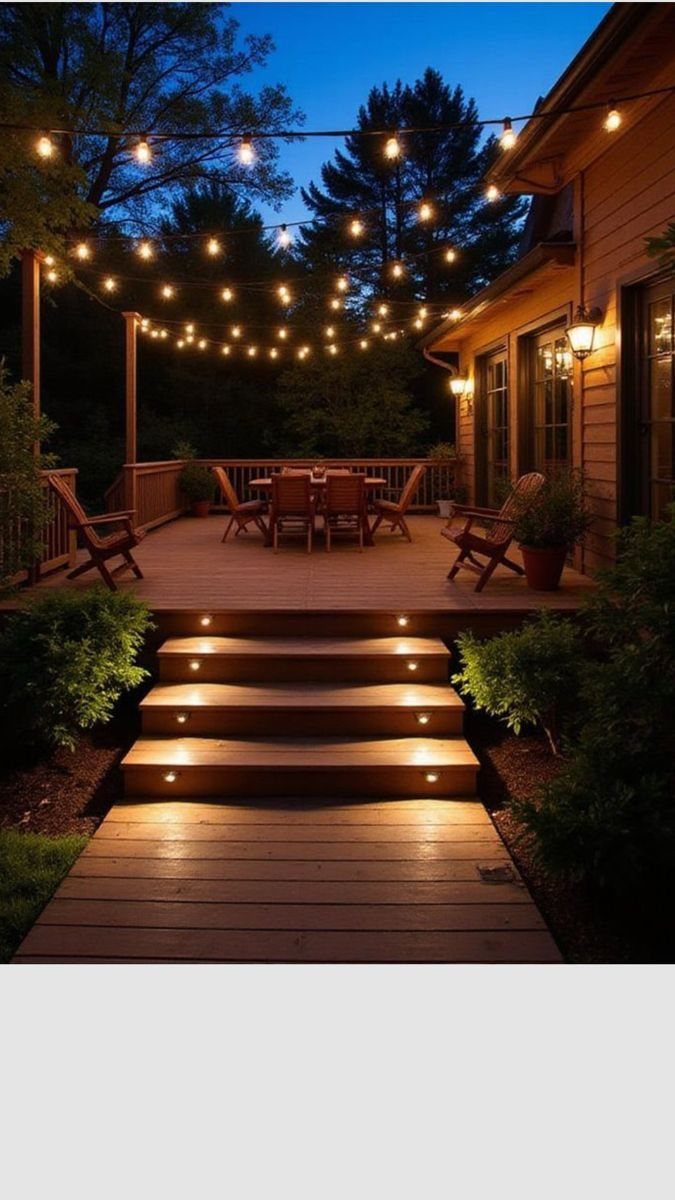
Layered lighting on a two-tier deck means you can use the upper level for dinner and the lower for drinks without one scene bleeding into the other.
String lights overhead give the mood; post caps and stair riser lights keep people from misjudging the drop between levels.
Put the zones on separate switches so you can dim the dining table to dessert-candle level while someone still finds the grill downstairs. Cool white feels like a parking lot.
Solar string lights have improved but still fade early on autumn evenings; low-voltage LED on a transformer stays bright and lets you add a timer.
This is the cheapest upgrade on the list and the one guests notice first after dark.
Adding outdoor lights on a deck is an absolute must. With all the easy-to-install systems available today, it’s a no-brainer.


Professional Durability: Heavy-duty 18-gauge 430 stainless steel prep table supports up to 350 lbs. Commercial-grade kitchen work table resists corrosion. Industrial spaces food carts sleek design enhances restaurant equipment & restaurant supplies

GRILLING PREP STATION: Portable prep station with 2 drop leaf extensions fits well in any outdoor décor thanks to its decorative design
7. Covered Porch with Gable Roof and Railings

A gable roof over a two-tier porch gives you headroom where you need it and sheds rain fast. Glass railings keep sightlines open; if your view is worth it, that detail pays for itself.
Wood beams overhead warm up the white ceiling, and a ceiling fan on the upper level buys you more comfortable evenings once the still nights set in.
The stone fireplace the Trex example used is a separate project, but the roof and railings are the bones.
Black railings against light siding is a reliable pairing, though on a small lot I’d flip it to lighter railings so the structure doesn’t loom.
Budget this as a full addition, not a deck refinishing: the roof framing, tie-ins, and waterproofing run past what a resurface costs on most homes.
A farmhouse feel like the Premium Decking version leans on the gable shape and simple posts; skip fussy brackets and it stays clean.
If your upper level is mostly for morning coffee and the lower for dinner, put the fan above the stairs where both levels catch it.

Product Size: 13" D x 16" W x 17" H, this outdoor side table has no burrs and will not puncture the skin, which is the companion for our adirondack chair

All-Weather Strength: LZRS tables are made from recycled HDPE plastic with a wood-like texture. They resist warping, cracking, and rot. They are perfect for outdoor use in any season — no peeling or fading!

8. Garden Oasis with Vertical Gardens
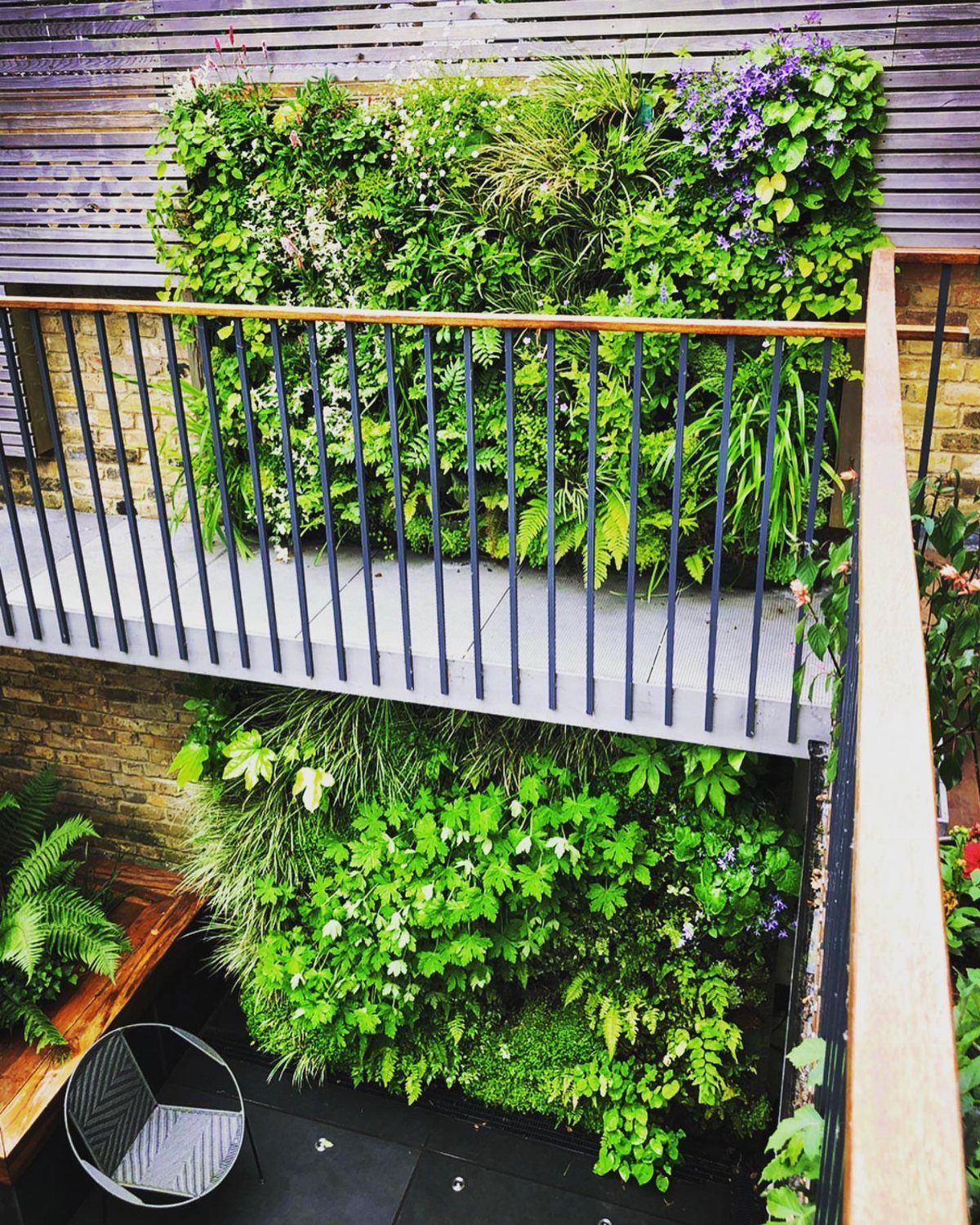
A vertical garden wall turns the blank face of a two-tier deck into the point of the whole yard.
Ferns and small purple flowers packed tight against slatted backing need that spacing to matter more than the plants at first, since air needs to move or you’ll fight mildew all summer.
The lower level sits in more shade, so shade-tolerant plants there, sun-lovers up top. That’s not a suggestion; it’s the difference between a wall that fills in and one that thins out.
Climbing vines on the railings soften the edges, but check that your posts can handle the weight when wet.
Metal railings carry less load than wood, so I’d keep the heavy planters on the ground or the upper deck where the structure is direct.
A pergola cover over part of the upper level, like the Premium Decking example, gives you a partial roof without blocking the garden view.
This idea eats time, not just money. Expect two seasons before the wall looks intentional.
For renters, stick to freestanding planters against the slats; the wall itself is a permanent build.

[Large HDPE Tabletop]: The 37-inch round tabletop, crafted from high-quality HDPE material, offers ample space for meals and long-lasting outdoor use. Its waterproof and fade-resistant surface ensures durability and easy maintenance.

Spacious Secret Stash: Reveal a generous 70-gallon hideaway under this storage bench outdoor, with internal dimensions of 46.6''L x 17.4''W x 12.9''H (external: 51.06''L x 24.2''W x 35.2''H), ideal for tucking away both indoor and outdoor essentials

Durable & Heavy-Duty Construction: Maemttes outdoor bench is crafted from high-quality metal and cast iron, designed to withstand heavy use and support up to 880lbs. Ideal for parks, gardens, and porches, it provides sturdy and reliable seating for years to com
Material Choices
Composite decking costs more upfront than pressure-treated pine, but the gap narrows when you factor in staining every two years and the boards you’ll replace when water pools on a lower tier.
Timbertech and similar brands handle damp planter beds and ground-level splash better than cedar, which is why I would spec composite for any built-in seating with storage underneath.
Cedar still wins on grip when wet. Natural wood on the upper deck feels good barefoot and ages to a soft silver-gray that does not show every speck of dust.
The lower level is a different story: shade keeps boards damp longer and mildew sets in faster.
For railings, aluminum with a wood-grain finish splits the difference: no splinters, no rot, and you can hose it down without thinking.
Glass panels need more cleaning than anyone expects, especially on a two-tier deck where the upper level drips onto the lower railings after rain.

【𝟐𝟖 𝐈𝐧𝐜𝐡 𝐒𝐪𝐮𝐚𝐫𝐞 𝐅𝐢𝐫𝐞 𝐏𝐢𝐭 𝐂𝐨𝐯𝐞𝐫𝐬】Fit up to 28" x 28" x 24" (L x W x H), fire pits such as 25 x 25 inches, 26 x 26 inches, 27 x 27 inch, 28 x 28 inch Perfect Essential for your valuable Gas Propane Firepit Table. (Please carefully check the size of your fire pit before ordering.)
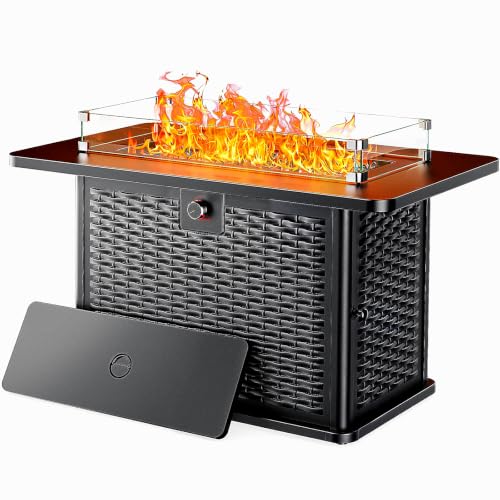
Powerful 60,000 BTU Heating: Enjoy efficient warmth on chilly nights with this high-heat 60,000 BTU output Ciays propane fire pit. The durable 304 stainless steel H-burner creates a denser flame pattern for consistent & effective heating. This gas fire pit will elevate your outdoor experience, reliability and safety.

50,000 BTU Heat Output: The CSA-certified fire table produces up to 50,000 BTUs of heat to effectively warm a radius of space from 8 to 10 feet wide. The included lava rocks help to distribute heat and enhance the flame for an inviting campfire feeling that lasts all year long
Frequently Asked Questions
How much does a two-tier deck cost?
A two-tier deck with a covered porch and gable roof runs closer to a full addition than a refinishing job.
Budget decks often skip wired step lighting and add cheap solar stick-ons later, but those shift and die in a season.
How to frame a 2 tier deck?
Stairs are the backbone of the structure, and wider stairs at the main route between levels let people pass with a tray of drinks.
Built-in step lighting should be wired during construction if you entertain after dark; solar add-ons fail fast.
A second level doesn’t need a dramatic drop; a subtle rise with steps built right into the deck boards keeps the whole yard flowing.
What are the deck color trends for 2026?
Black railings against light siding is a reliable pairing, though on a small lot I’d flip to lighter railings so the structure doesn’t loom.
For built-in benches and planter boxes, cedar or a grained composite sits better with flowers than flat gray, which can read industrial. Wood beams overhead warm up a white ceiling in covered porch designs.
What is like Trex but cheaper?
Composite decking with some grain to it holds up better than natural wood in damp applications like built-in planters, and plain gray composites can look industrial.
For budget-conscious builders, natural wood costs less upfront but needs more maintenance, especially where soil stays damp against the boards year-round.