
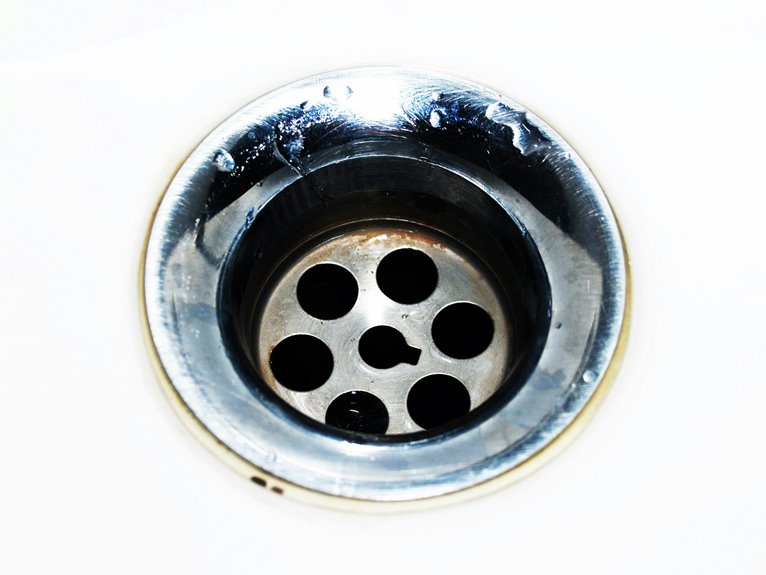

Most standard bathtubs need a 1.5-inch drain, which is the code minimum in most residential areas.
Specialty tubs like whirlpools, jetted models, and walk-in tubs typically require a larger 2-inch drain to handle higher water volume and faster flow rates.
Before upgrading your drain size, check your tub’s manufacturer specifications and local building codes, since upsizing often requires permits and professional re-piping.
Verifying your specific tub’s requirements prevents drainage problems.
Standard Bathtub Drain Size: 1.5 Inches Is the Code Minimum
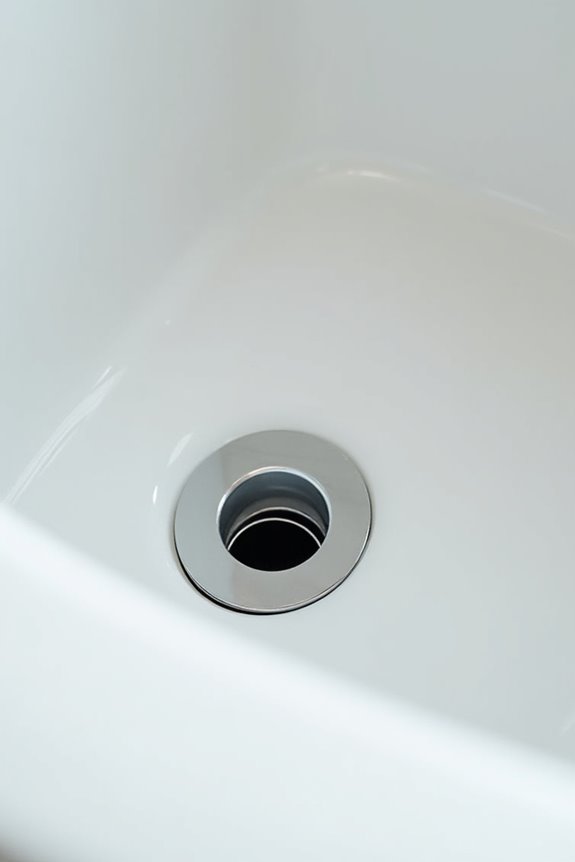
Why does your bathtub drain size matter? Getting the right bathtub drain size guarantees your tub drains properly and meets building codes. The standard bathtub drain size is 1.5 inches, which is also the fixture drain code minimum in most residential areas. This 1.5-inch measurement applies to both your main drain opening and the pipe underneath your tub. Most modern bathtubs are manufactured with this standard size, making replacement parts easy to find. Older or specialty tubs sometimes use different sizes like 1 3/8 inches, which might require adapters. When you replace your drain with the same 1.5-inch size, you typically won’t need a permit. Knowing your bathtub drain size ensures code compliance and proper drainage performance.

1-1/2" X 14" BATH WASTE ASSEMBLY: Includes white poly slip-joint tubes for quick connection and leak-resistant installation.

PUSH-N-LOCK STOPPER: Opens and closes with a simple push for convenient tub drainage control

OVERALL PICK BATH TUB DRAIN KIT: This Heavy Duty bath drain kit includes everything necessary for installation, including 1-1/2” tubular brass, brass bath drain waste and overflow horn elbow and tee, brass bath waste shoes, tip toe bath tub drain plug and bath overflow face plate & matching screws.
Why Showers Need Bigger Drains Than Tubs
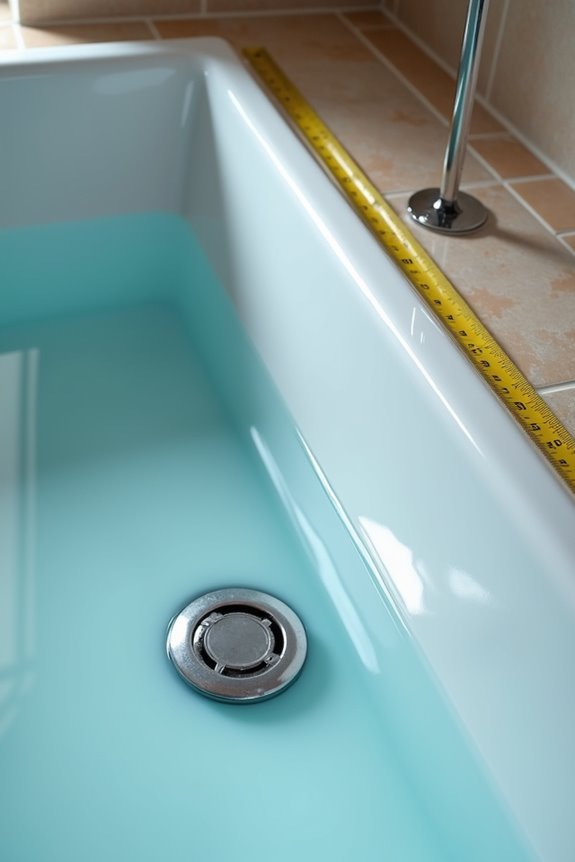
showers actually need bigger drains than bathtubs do. When you turn on multiple shower heads, water flows down fast. That rapid water volume needs a 2-inch drain to handle it without backing up. Your bathtub, on the other hand, uses a smaller 1.5-inch drain because water fills slowly and you’re not dealing with that same pressure. Plus, tubs have an overflow feature that catches excess water before it becomes a problem. This overflow takes some pressure off your drain system. So when you’re planning your bathroom setup, remember that showers demand that larger drain size to work properly. It’s not just code. It’s a practical requirement based on water flow rates and pressure management.

TUB DRAIN ASSEMBLY LINKAGE: Designed to repair and replace a worn-out Trip-lever drain assembly linkage that operates the opening and closing of the Trip Lever Bath Tub Waste Overflow Drain, The brass construction that provides strength and durability and will endure the rigors of every day use.

BATHTUB OVERFLOW PLATE REPLACEMENT: This Danco tub overflow plate will replace your worn out, scratched current 2-hole overflow plate

Drain Assembly with Standard 1-1/2″ Coarse Thread Fit – Designed for bathtub drains with a 1-1/2″ opening and 11.5 TPI coarse thread.
When Your Tub Actually Needs a 2-Inch Drain
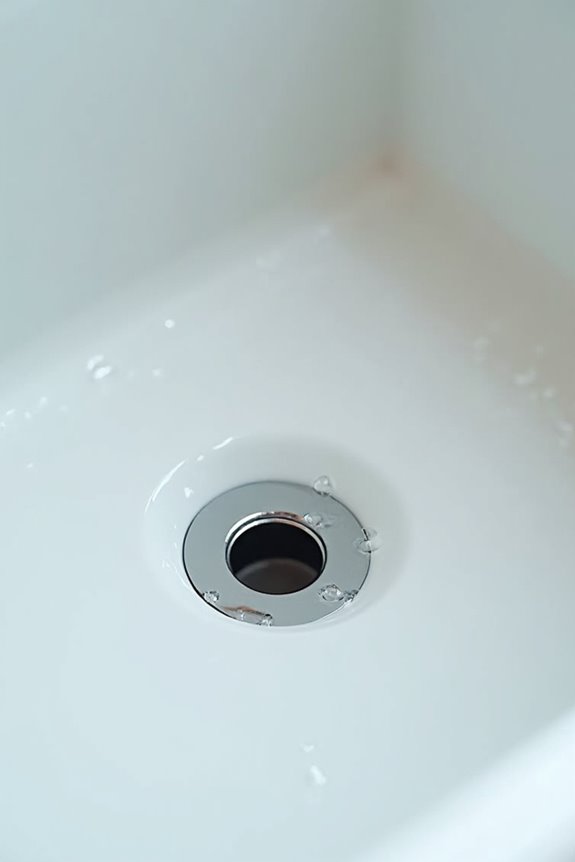
If you’ve got a whirlpool, jetted, or deep soaking tub, you’re probably looking at needing a 2-inch drain instead of the standard 1.5 inches because these specialty models move significantly more water and need that extra capacity to keep up. The upgrade sounds simple, but it often means you’ll need to re-pipe the drain line underneath your tub and possibly get a permit or inspection, depending on what your local plumbing code requires. A 2-inch drain gives you faster water drainage and prevents overflow issues, especially if your household tends to fill the tub quickly or you’re installing an accessibility walk-in model.

Fits 1-1/2" to 2" drains

Easy to install

Compatible with 1-1/2 in. to 2 in. drains
High-Capacity Tub Types
When you’re looking at jetted tubs, whirlpools, or deep soaking tubs, you’ve likely noticed something: they’re bigger and hold significantly more water than a standard bathtub. That’s why many high-capacity tub types need a 2-inch drain instead of the usual 1.5-inch size.
What qualifies as a high-capacity tub:
- Whirlpool tubs with multiple jets requiring faster water drainage
- Deep soaking tubs designed to fill completely for immersion bathing
- Jetted tubs that need quick emptying between uses
- Walk-in tubs with dual 2-inch drains for accessibility
- Freestanding soaking tubs in luxury bathrooms
These high-capacity tub models hold significantly more water volume. A 2-inch drain handles this larger capacity efficiently, preventing slow draining or overflow issues. Verify your specific tub’s manufacturer specs before upgrading your drain size.
Drainage Performance Benefits
Why does drain size actually matter for how your tub performs? The answer lies in drainage performance. A 2-inch drain empties your tub substantially faster than a standard 1.5-inch drain, which means you’re not waiting around for water to disappear. This matters more when you have a larger tub capacity that holds extra water. If you’ve got a whirlpool or deep soaking tub, you’ll notice the difference immediately. Faster drainage also prevents water from overflowing during use, which protects your bathroom floors. The practical advantage is measurable: what once took 10 minutes now takes 5. When your drain size matches your tub’s water volume, everything works smoothly and reliably.
Re-Piping and Code Requirements
You’ve now seen how a larger drain improves performance. Upgrading to a 2-inch drain requires careful planning if your tub and waste line are currently 1.5 inches.
If you need to accommodate a larger drain size, you may need re-piping. Consider the following:
- Permits are required for re-piping or upsizing projects in most areas
- Contact your local AHJ (authority having jurisdiction) before starting any work
- Mismatched drains violate code and cause sealing problems
- Your entire drain system may need replacement for proper fit
- Downstream piping must match your new drain size and capacity
Standard residential tubs use 1.5-inch drains. The 2-inch drain is reserved for whirlpools, jetted tubs, and deep soaking designs. Confirm code requirements with your AHJ before proceeding.
Measuring Your Tub Drain Opening vs. Pipe Diameter
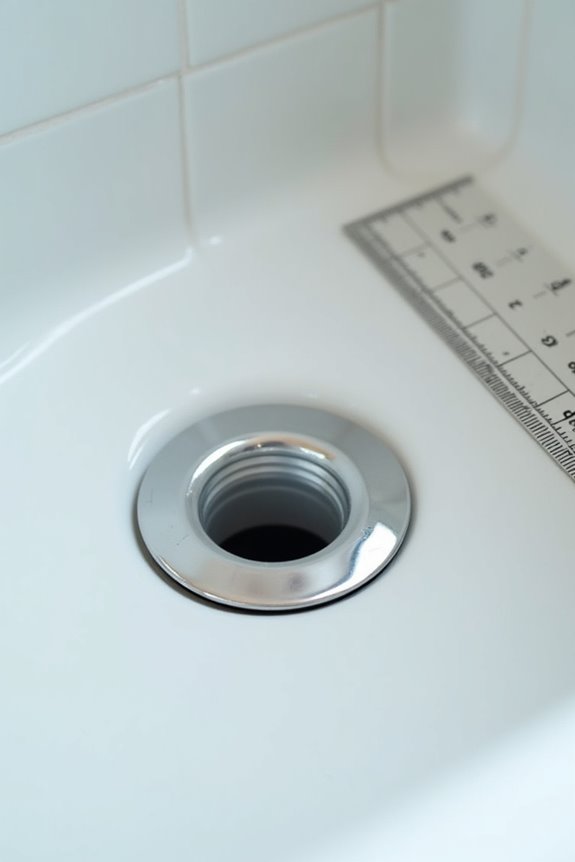
I need to show you the difference between measuring your drain opening and checking your pipe diameter, because they’re two separate measurements that both matter for getting the right drain assembly. Your drain opening is the hole itself at the tub floor (measure straight across without the metal ring around it), while your pipe diameter is the actual width of the pipe that sits underneath your tub. Getting both measurements right ensures your new drain will fit perfectly and work properly.

Durable 1-1/2 inch plastic tubing provides a reliable performance

1-1/2 inch NPMS thread (1-7/8 inch-11.5 UNC-2B)

1-1/2 inch NPMS thread (1-7/8 inch-11.5 UNC-2B)
Opening Hole Measurement
How do you know if your drain parts will actually fit? You need to measure two key things to ensure compatibility:
- Measure across the drain opening hole in your tub floor, excluding the flange ring
- Check the pipe diameter underneath your tub (usually 1.5 inches)
- Verify that both measurements match your new drain assembly
- Look for standard sizes: 1.5 inches for most tubs, 2 inches for high-capacity models
- Note any non-standard openings like 1 3/8 inches on older tubs
Your drain opening and under-tub pipe diameter must work together. If they don’t match your replacement parts, you’ll have leaks or poor seals. Taking five minutes to measure now prevents problems later. Most hardware stores can help you find compatible pieces once you know these numbers.
Pipe Diameter Assessment
When replacing a bathtub drain, you’ll need to measure two separate things: the opening in your tub and the pipe underneath. Both measurements are critical for your tub drain assemblies.
The drain opening is what you see at the tub floor. The pipe diameter is the actual tube running beneath your tub. Most standard bathtubs have a 1.5-inch pipe underneath, though larger or specialty tubs sometimes use 2-inch pipes instead.
Your drain assembly must fit both measurements perfectly. If you only measure the opening and ignore the pipe diameter, you’ll end up with parts that don’t connect properly. Check both dimensions before ordering replacements. This ensures everything seals correctly and works as intended.
Compatibility Verification Essentials
Why does your drain assembly need to match two different measurements? Your drain opening and pipe diameter work together. If they don’t match, you’ll get leaks and problems.
What you need to verify:
- Measure the drain opening (the hole itself, not the rim)
- Check your under-tub pipe diameter—usually 1.5 inches, sometimes 2 inches
- Confirm your drain assembly fits both measurements perfectly
- Verify overflow alignment matches your drain assembly
- Plan for adapters if you have a non-standard tub
Your drain opening is one puzzle piece, your pipe diameter is another. They both need to connect smoothly with your drain assembly. When they don’t align properly, water leaks where it shouldn’t. Taking time now prevents costly repairs later.
What’s Inside a Drain Assembly and Why It Matters
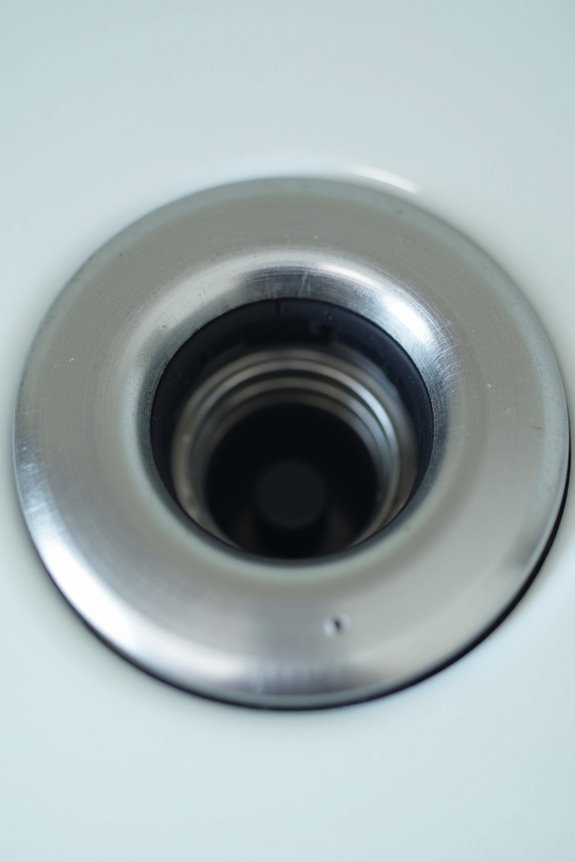
Ever wondered what’s actually hiding beneath your bathtub? Your drain assembly performs critical functions. It includes the flange (that ring you see), an overflow opening, a gasket for sealing, and the waste-and-overflow tee that connects everything. Then comes your bathtub trap, typically 1.5 inches in standard homes, though some tubs need 2 inches. This P-shaped pipe holds water to block sewer gases from entering your bathroom. The drain size matters because it determines how quickly water exits and whether your system meets local codes. Understanding these components helps you troubleshoot problems, verify compatibility with new fixtures, and ensure your setup handles water flow properly. This knowledge directly affects the functionality and longevity of your plumbing system.

Universal Fit: Compatible with most standard bathtubs featuring a two-hole overflow design

High-quality Material: CalcMetal overflow plate comes with high-quality zinc, stainless steel, and brass construction.

1-1/2" X 14" BATH WASTE ASSEMBLY: Includes white poly slip-joint tubes for quick connection and leak-resistant installation.
Tub Drain Code Requirements by Fixture and Region
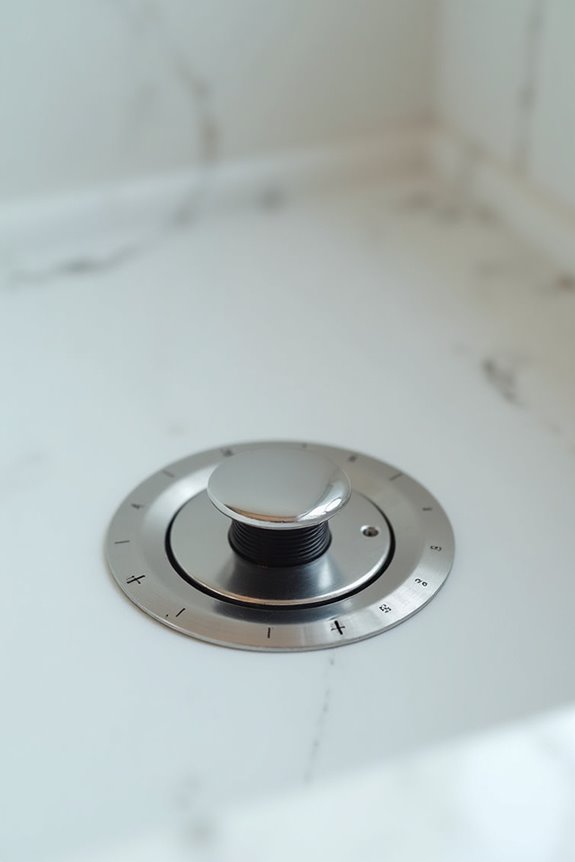
Now that you understand what makes up your drain assembly and why the trap size matters, you’ll need to know what your local building codes actually require.
Building codes differ by region, and your local authority has the final say on what drain size and tub trap setup you can use:
- Most US homes need a standard 1.5-inch drain for typical bathtubs
- Specialty tubs like jetted or deep soaking models may require 2-inch drains
- Your regional code requirements determine if upsizing is allowed
- Older homes sometimes have smaller drains needing adapters
- Always check with your local building department before installation
Contact your area’s authority having jurisdiction (AHJ) to confirm drain size rules for your specific situation. They will provide exact specifications for what is permitted in your region.

1. Space-Saving Design: The retractable drain hose is a clever solution that eliminates the need for fixed drain hoses, freeing up valuable space in your bathroom. It is incredibly flexible, allowing you to bend and stretch it with ease even in the tightest spaces.

BATH DRAIN STOPPER KIT: Bathtub drain stop kit makes for an excellent addition to any home bathroom

BATH TUB DRAIN KIT: This bath drain kit includes everything necessary for installation, including 1-1/2” plastic tubular, bath drain waste and overflow horn elbow and tee, bath waste shoes, tip toe bath tub drain plug and bath overflow face plate & matching screws.
Do You Need a Permit to Upgrade or Replace a Tub Drain?

Whether you’ll need a permit depends on what kind of work you’re doing. A simple like-for-like replacement of your existing drain usually doesn’t require one. However, if you’re upgrading your drain size, say moving to a larger 2-inch drain, you’ll likely need a permit. The same goes if you’re re-piping or changing how water flows through your system.
Your local code requirements vary by location, so contacting your building department is essential. They’ll tell you exactly what permit requirements apply to your project. When permits are needed, inspectors verify that your new drain meets proper sizing and slope regulations. They also check that venting works correctly.
Contact your local authority before starting work to confirm permit requirements and avoid costly corrections later.

1.5"/2" Replacement Shower Base Drain:Ideal for stand-up shower and bath installations, working well in places with limited space. It has a wide range of uses in daily life and can meet the needs of low profile shower drains and side outlet shower drain.

Materials:Made with high-quality PVC materials, this Side Outlet Drain Assembly is built to withstand daily wear and tear for years.

[Upgraded 3-in-1 Design] This bathtub drain stopper integrates three essential functions: water storage, rapid drainage, and efficient filtration. Its optimized flow design ensures water empties quickly and completely, preventing the stagnant puddles often caused by slower, conventional stoppers. Simply press to seal for a bath, and flip to drain instantly
What You’ll Pay and How Fast Your Tub Drains
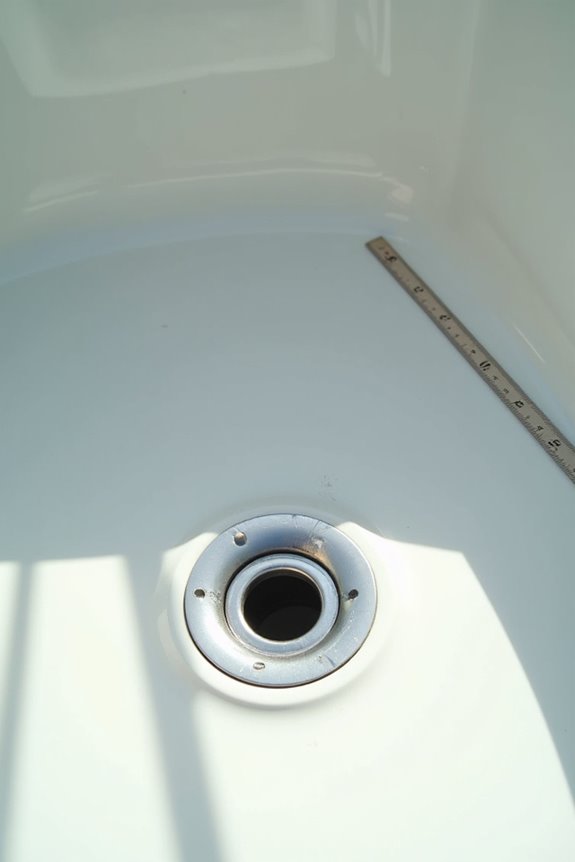
How much you’ll spend on your drain depends on which size you choose and what changes you’ll need to make. A standard 1.5-inch tub drain costs less and drains quickly for most bathtubs. Upgrading to a 2-inch drain increases your expenses considerably because you’ll need new pipes and permits.
What affects your total cost and drain size performance:
- Standard 1.5-inch drains keep costs down and work well for regular tubs
- Larger 2-inch drains improve flow rate but require re-piping and labor
- Specialty tubs like whirlpools need bigger drains for proper drainage
- Adapters for non-standard openings add extra expense and complexity
- Professional installation ensures your drain size matches local codes
Choosing the right drain size balances your budget with how quickly water empties from your tub.


Universal 2‑Piece Set:Includes two rubber drain stoppers in your choice of sizes—select the perfect fit for your bathtub, sink, or laundry basin to ensure complete coverage and leak‑free performance.

2 in. ABS snap-in drain
Why Drain Size Affects How Fast Your Tub Empties
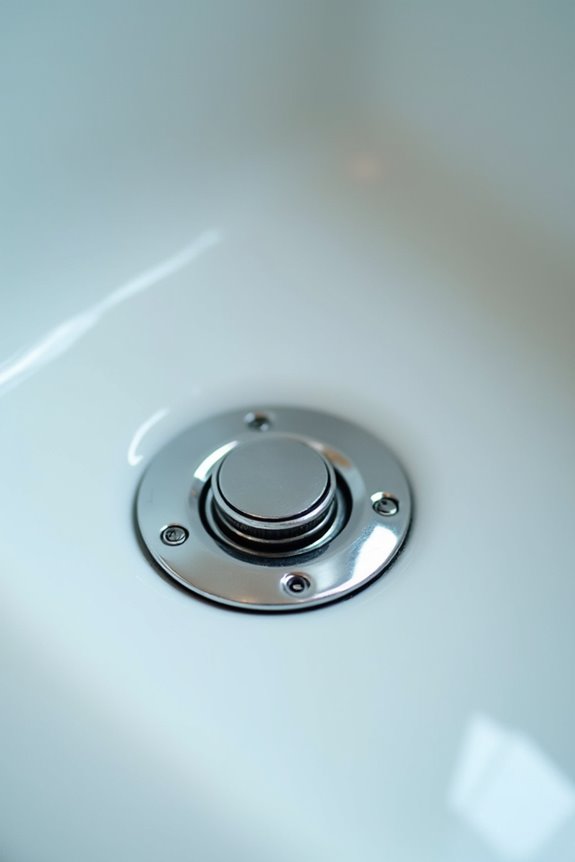
Your drain size is the gatekeeper for how quickly water leaves your tub. Think of it like a doorway; a wider opening lets more people through faster. A standard 1.5-inch drain empties your tub at a steady pace, but upgrading to a 2-inch drain can noticeably speed things up.
Larger drains allow greater water flow. More water passes through with each second, so you’re emptying your tub quicker. The P-trap diameter follows your drain size too. A bigger trap means less resistance to that flowing water.
This matters most if you’ve got a jetted tub or large soaking basin. Faster drainage means less sitting water and reduced overflow risks during fill-up. The upgraded drain size directly improves your daily routine with measurable water removal benefits.

Cinsda 1-1/2" low profile p trap is one of the bath shower fittings, ideal for bathtub installations. It is also suitable for RV tubs

DURABLE. Made with anti-corrosive material that can withstand hot and cold temperature including high pressure. Guaranteed to last longer than your usual drain pipes.

EASY TO USE: Artiwell Tip-Toe Bathtub Drain Stopper is the best ideal replacement for your bathtub drain as it will give ease to your bathing experience by simply tapping close and open the drain, Choose from Seven color options to perfectly match with your faucet and the rest of your bathroom décor.
Mismatched Drain Openings and Pipe Sizes: What Goes Wrong
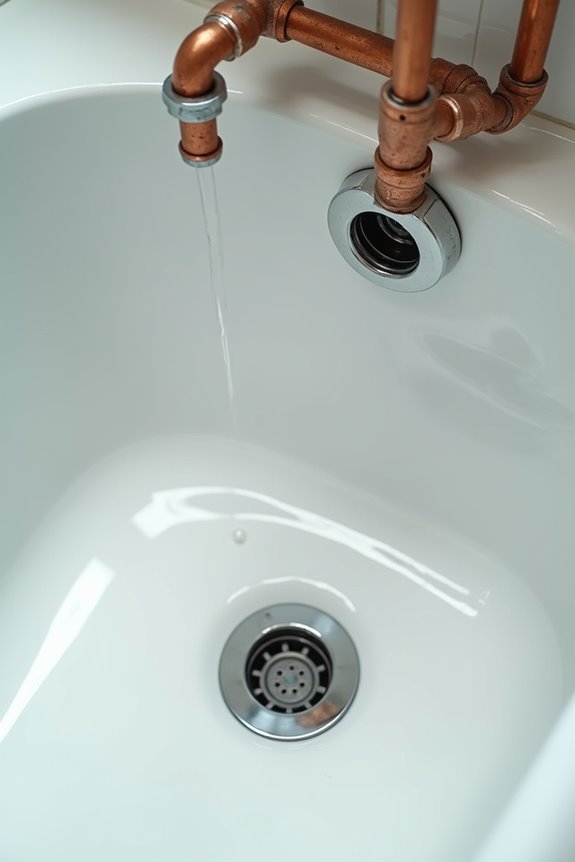
When your tub’s drain opening doesn’t match the pipe size underneath, you’re setting yourself up for real problems that go beyond just slow draining. Mismatched sizes cause leaks that damage your floor, create code violations that’ll cause trouble when you sell your home, and produce drainage issues that’ll frustrate you every time you take a bath. Addressing these mismatches now will help you avoid expensive repairs later.

Universal Brass Adapter Bathtub Drain Kit: The tub drain kit with brass adapter is compatible with most bathtubs and fits tub elbows for 1 3/8" and 1 1/2", Simply attach or detach the brass adapter

EASY TO USE: Artiwell Tip-Toe Bathtub Drain Stopper is the best ideal replacement for your bathtub drain as it will give ease to your bathing experience by simply tapping close and open the drain, Choose from Seven color options to perfectly match with your faucet and the rest of your bathroom décor.

Features an Innovative [ U.S. Patent ] : Tip-Toe bathtub drain kit with a removable copper hair catcher basket for easy access. Simple to install and clean, this design effectively prevents bathtub drain clogs. Built for long-lasting performance, it outperforms ordinary plastic drain plug and offers greater convenience.
Leaks And Seal Failures
Why do some bathtub drains leak no matter what you do? A drain size mismatch between your tub opening and the pipes underneath creates problems that won’t go away.
- A 1.25-inch opening paired with a 1.5-inch pipe leaves gaps where water escapes
- Flanges and gaskets can’t seal properly when sizes don’t match
- Water pools around the drain assembly instead of flowing down
- Seal leaks develop along the overflow connection
- Trap and vent sizing issues cause slow drainage and backups
When your drain opening is too small for your pipe, the flange sits incorrectly. This breaks the watertight connection you need. You’ll notice water dripping into your cabinet below or pooling on the tub floor. The fix requires matching your opening size to your pipe diameter before installation.
Code Violations And Compliance
How’d you know if your drain setup breaks plumbing code? Mismatched drain sizes create real problems. Your bathtub needs a standard 1.5-inch drain opening with a matching 1.5-inch trap to meet code compliance requirements. When drain size and pipe diameter don’t match, you’ll face leaks, seal failures, and venting issues that inspectors catch.
Before you resize from 1.5 inches to 2 inches, you’ll need permits and AHJ approval. Your local Authority Having Jurisdiction reviews these changes to ensure everything meets standards. Re-piping without permission triggers violations and costly corrections.
Non-standard openings like 1 3/8 inches require specialty adapters to maintain proper connections. Getting permits and inspector sign-off protects your home and wallet.
Drainage Performance Issues
Mismatched drain openings and pipes create real drainage problems that go beyond just looking wrong. When your tub’s drain opening doesn’t match your waste pipe diameter, you’re setting yourself up for trouble. The following issues occur:
- Water drains slowly because the connection isn’t tight
- Gaskets fail and cause leaks underneath your tub
- Overflow risks increase during showers or baths
- Traps don’t work properly, letting sewer gases escape
- You’ll need expensive re-piping to fix it later
Drain size compatibility matters because your 1.5-inch tub opening needs a 1.5-inch waste pipe diameter. Pairing them incorrectly forces you to choose between poor seals and drainage performance issues. Check your current setup before problems develop. Matching sizes prevents costly repairs and maintains proper bathroom function.
Should You Replace Your Drain Yourself?
Whether you can handle a bathtub drain replacement yourself really depends on what you’re dealing with. If you’ve got a standard 1.5-inch drain size, you’re in better shape for a DIY replacement. Start by measuring your actual drain opening and the pipe diameter beneath your tub to confirm tub pipe compatibility. Simple drain swaps on standard models are manageable if you’re comfortable with basic plumbing tools. However, upsizing from 1.5″ to 2″ requires re-piping and likely needs permits, making it a job for professionals. Older homes with non-standard openings also demand specialty parts and expertise. When in doubt, consult your local building code or call a plumber. Knowing your limitations prevents costly mistakes.
Drain Sizes for Whirlpools and Walk-In Tubs
What makes whirlpools and walk-in tubs different from standard bathtubs? They’re designed for luxury and accessibility, which means they need bigger drains to work properly.
Drain size requirements for these special tubs include:
- Whirlpool and jetted tubs typically require a 2-inch drain instead of the standard 1.5 inches
- Walk-in tubs often use 2-inch drains for faster water removal
- Some accessibility-focused walk-in tubs feature dual 2-inch drains for even quicker drainage
- Upgrading to a 2-inch tub drain requires checking your local plumbing codes first
- You may need re-piping work, which means calling a professional
Before you choose a drain size, always check your manufacturer’s specifications and contact your local authorities. They’ll confirm what works best for your setup and ensures compliance with local codes.