
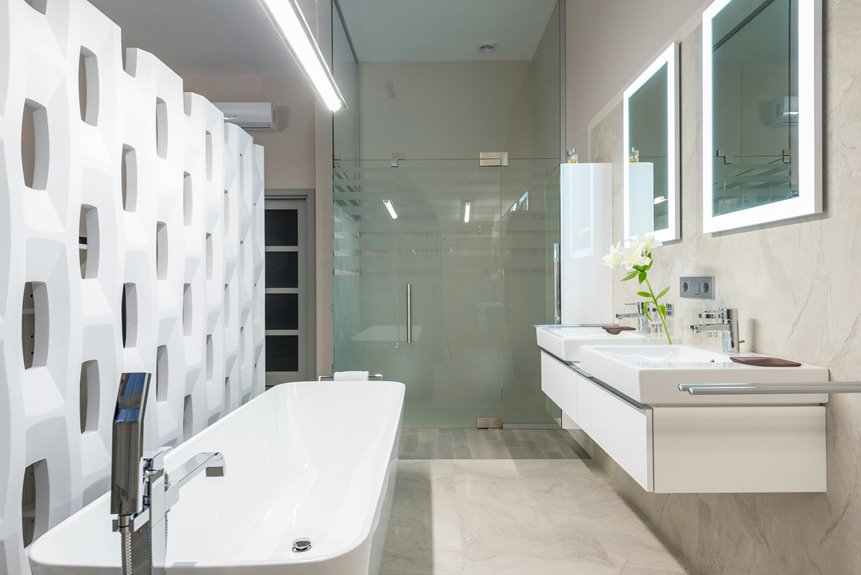

Standard bathtubs typically measure 60 inches long and 30 inches wide, with depths ranging from 14 to 20 inches. These dimensions work for most bathrooms and fit standard spaces comfortably. Compact tubs for smaller apartments run 48–60 inches long and 28–30 inches wide. Oversized options exceed 72 inches in length for those wanting more luxury. Your actual choice depends on your bathroom layout and how much soaking space you need. Understanding these basics helps you select what will work best for your home.
What Are Standard Bathtub Dimensions?
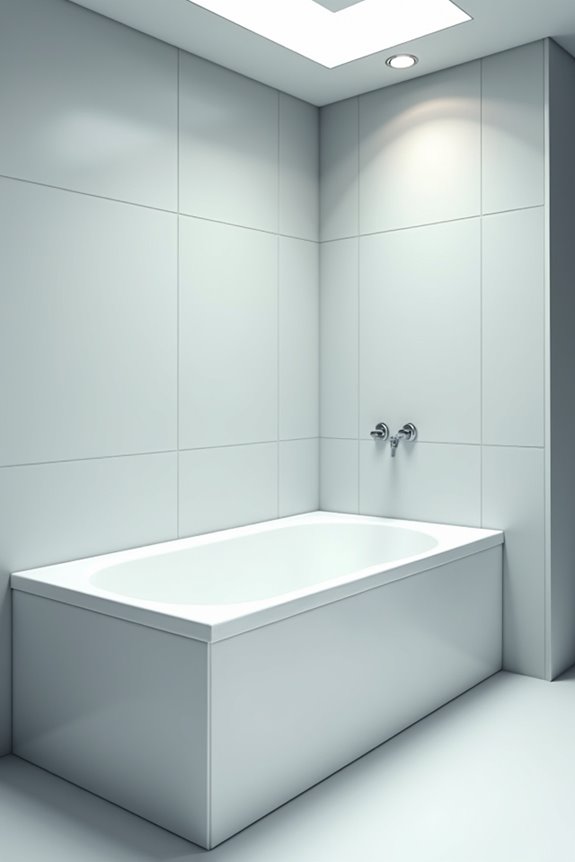
Standard bathtub dimensions follow consistent patterns. Most standard bathtub sizes measure 60 inches long and 30 inches wide, with depth ranging from 14 to 20 inches. This sizing works well for most bathrooms.
Standard bathtubs typically measure 60 inches long by 30 inches wide with a depth of 14 to 20 inches.
If you’re fitting a tub into tight spaces, compact tubs might appeal to you. They’re about 48–60 inches long and 28–30 inches wide. For alcove installations, an alcove tub typically measures around 60 inches long and 28–32 inches wide.
For a more luxurious option, oversized bathtubs exceed 72 inches in length and 34–40 inches in width. Freestanding tubs offer flexibility at 60 inches long with 30–34 inches width.
Understanding these bath measurements allows you to select a tub that fits your space and meets your specific needs.

Minimalist design with contoured lumbar support

Half the weight of cast iron making it easier to install

BECOME A TRUE FAN: Add some fun & fashion to your wardrobe with our decorative beach towel. With fun designs featuring your favorite sports teams and characters from film and television, this towel is perfect for lying on the beach, lounging near the pool, or just drying off in style after a shower or bath.
Compact vs. Oversized Bathtub Dimensions: Which Fits Your Space?
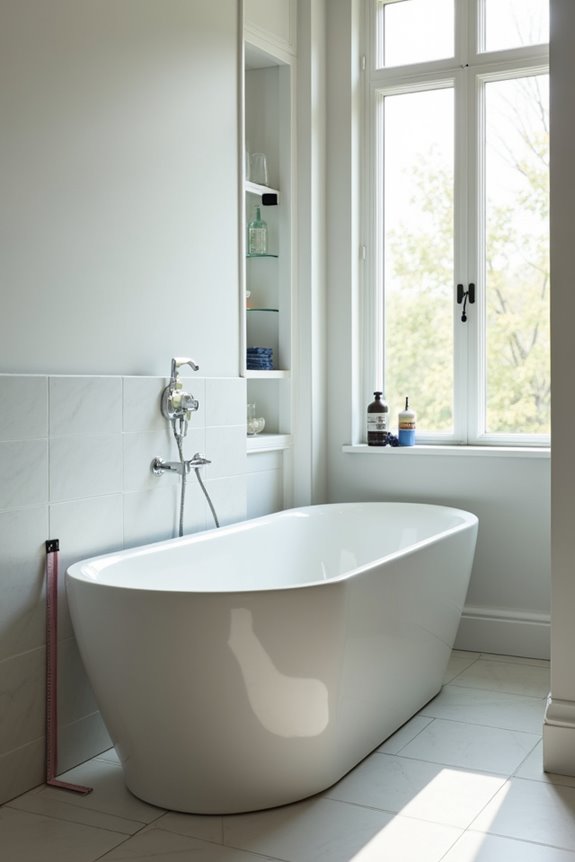
How do you know which bathtub size will actually work in your bathroom? This guide compares compact bathtubs with oversized bathtubs so you can find your perfect fit.
Compact bathtubs measure 48–60 inches in bathtub length and 28–30 inches wide, ideal for apartments and smaller bathrooms. Oversized bathtubs start at 72 inches long and 34–48 inches wide, offering luxurious soaking space.
Consider these factors for your space planning:
- Compact bathtubs fit alcove installations, saving precious floor space
- Oversized bathtubs need freestanding tub layouts for spa-like immersion
- Standard bathtub size measures around 60 inches, the middle ground
- Bathtub width affects how comfortably you’ll fit
- Bath size comparison helps match your lifestyle to dimensions
Your bathtub dimensions should match your bathroom’s actual layout, not just your preferences.

Luxurious, deep soaking experience with 68-gallon capacity and slotted overflow

Acrylic construction with fiberglass and resin reinforcement

✅ [DIMENSIONS AND SPECIFICATIONS]: External Dimension:(L) 60" x (W) 30" x (H) 21-5/8",Internal Dimension:(L) 54-1/2" x (W) 24" x (D1)16-1/8" x (D2)16-7/8", Seating Area:(L) 41-3/4" x (W)17-3/4".Integral front skirt and tiling flange for easy installation.
Are Walk-In Tubs Right for You?
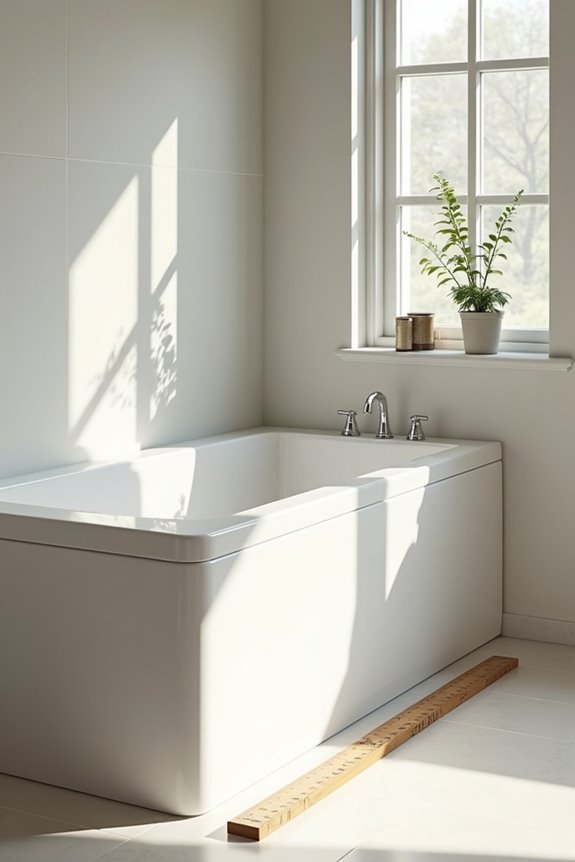
If you’re concerned about stepping over a high tub edge or worried about slipping, a walk-in tub might be the answer you’re looking for. KOHLER’s walk-in tubs feature an ultra-low 3-inch entry height and a 17 1/4-inch door width for safe, easy access. The interior seating area measures 21 1/2 inches wide, providing comfortable support during your soak.
These tubs typically measure 48–60 inches long and 28–32 inches wide, fitting within your existing installation footprint for seamless bathroom integration. The 31 1/2-inch bathing depth maximizes comfort while the 10 hydrotherapy jets and 17 BubbleMassage air jets deliver soothing relief.
Before purchasing, check KOHLER code availability in your area. Certain regions like Alaska, Hawaii, and specific New York counties may have restrictions. Financing options and special offers can help with your space planning investment.

Ideal for Your Bathroom: Style: Right Drain Design. The alcove acrylic bathtub measures 48" x 30" x 20" with a 10.8" soaking depth and a 29 gal/110 L capacity. Ideal for users up to 5'5" (165 cm), providing a full, relaxing soak without taking extra space

✅ [DIMENSIONS AND SPECIFICATIONS]: 48 inch L x 26 inch W x 24 inch H; max water depth (to overflow): 14-1/2 inch

DEEP JAPANESE-STYLE SOAKING - Enjoy a deeper soak without needing a long bathtub. With a 20.45-inch soaking depth and built-in seat, this Japanese soaking tub supports a comfortable upright bathing position, creating an immersive personal retreat within a compact 48-inch footprint
How Material Type Determines Your Usable Soaking Space
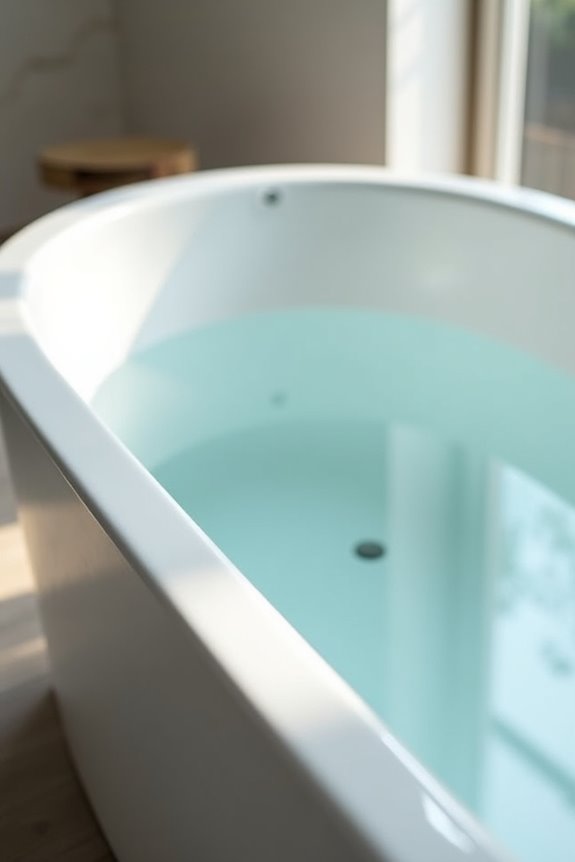
When you’re shopping for a bathtub, the material you choose affects how much room you’ll have inside for soaking.
Acrylic and fiberglass tubs are about 1 inch thick, giving you more internal bathing area within the same exterior footprint. Cast iron tubs have 2+ inch wall thickness, which takes up valuable space inside. Stone resin tubs offer sharp, thin edges that maximize your usable soaking space.
Material choice impacts more than just space:
- Acrylic tubs are lightweight and easy to install
- Fiberglass tubs balance affordability with decent durability
- Cast iron holds heat longer for extended soaks
- Stone resin provides luxury with optimal dimensions
- Material weight affects installation ease and costs
Bathtub dimensions require considering wall thickness. Lighter materials like acrylic simplify installation, though they retain less heat than cast iron. The right choice depends on balancing space, weight, and performance for your specific needs.

✅ [DIMENSIONS AND SPECIFICATIONS]: Exterior dimensions: 72" Length x 35-3/8" Width x 22-7/8" Height;Internal dimensions: 51-5/8"Length x 21-1/4" Width; Water Depth to Overflow: 14-1/2 " Deep. – Effective Tub Capacity: 69 Gallons.

✅ [DIMENSIONS AND SPECIFICATIONS]: 71 inch L x 31 1/2 inch w x 28 3/8'' H; capacity: 60 gallons; max water depth (to overflow): 14 1/8 inch

✅[DIMENSIONS AND SPECIFICATIONS]: Exterior Dimension: 72" L x 35-3/8" W x 32-5/8" H – Effective Tub Capacity: 65 Gallons; Seating Dimension: 41-3/4" L x 22-7/8" W, Water Depth to Overflow: 14-1/2". Power Requirements: 1 Dedicated 110-120V 30AMP Breakers
How to Measure Your Bathroom So Your New Tub Actually Fits
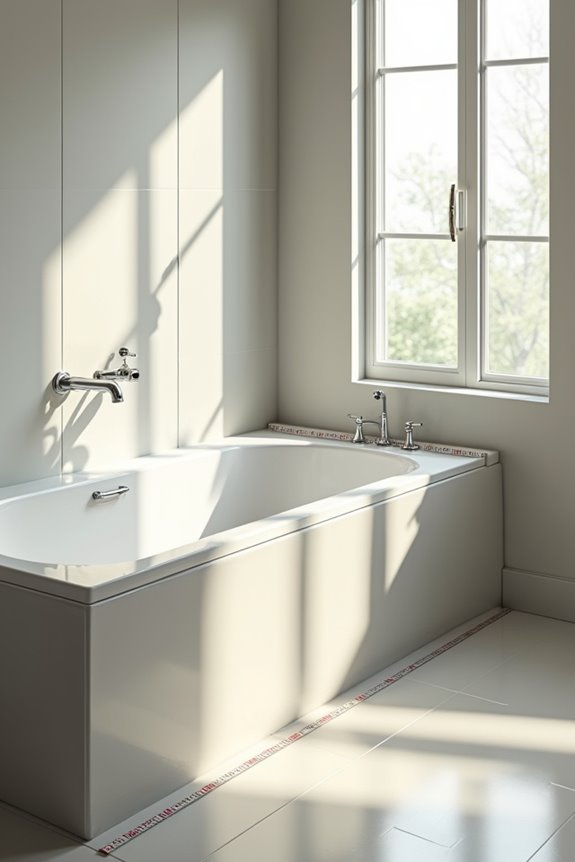
Once you’ve picked the material that works best for your space, you’ll need to make sure your bathroom can actually fit the tub you want. I measure wall-to-wall at three spots: the floor, middle, and top of my bathroom. I use the smallest measurement as my limit. Since most bathtubs are 55–60 inches long and 30–32 inches wide, I check if they’ll fit with 4–6 inches of clearance for maintenance around all sides.
| Measurement Area | What to Check |
|---|---|
| Wall-to-wall | Floor, middle, and top |
| Door clearance | Can tub move through doorway? |
| Plumbing access | Room for modifications? |
| Alcove/walk-in space | Depth and configuration fit? |
I also verify my doorway and clearance openings so I can actually move the tub into my bathroom. This prevents unexpected costs and installation delays.

[Small Size] This short shower curtain is smaller than standard curtain, just fits walkin tub or step in tub. Please measure the height before order.

[Small Size] This short shower curtain is smaller than standard curtain, just fits walkin tub or step in tub. Please measure the height before order.

[Small Size] This short shower curtain is smaller than standard curtain, just fits walkin tub or step in tub. Please measure the height before order.