
These dining areas range from a statement light over the table to a built-in banquette that follows a bay window, so the first question is whether you can alter the walls.
Renters can get close to the look with fluted wall panels and a bistro table, while owners can build bench seating that fits a corner exactly.
Floor space comes second: where a walkway runs right beside the table, a round top with no corners is the safer shape.
1. Built-In Bench Seating
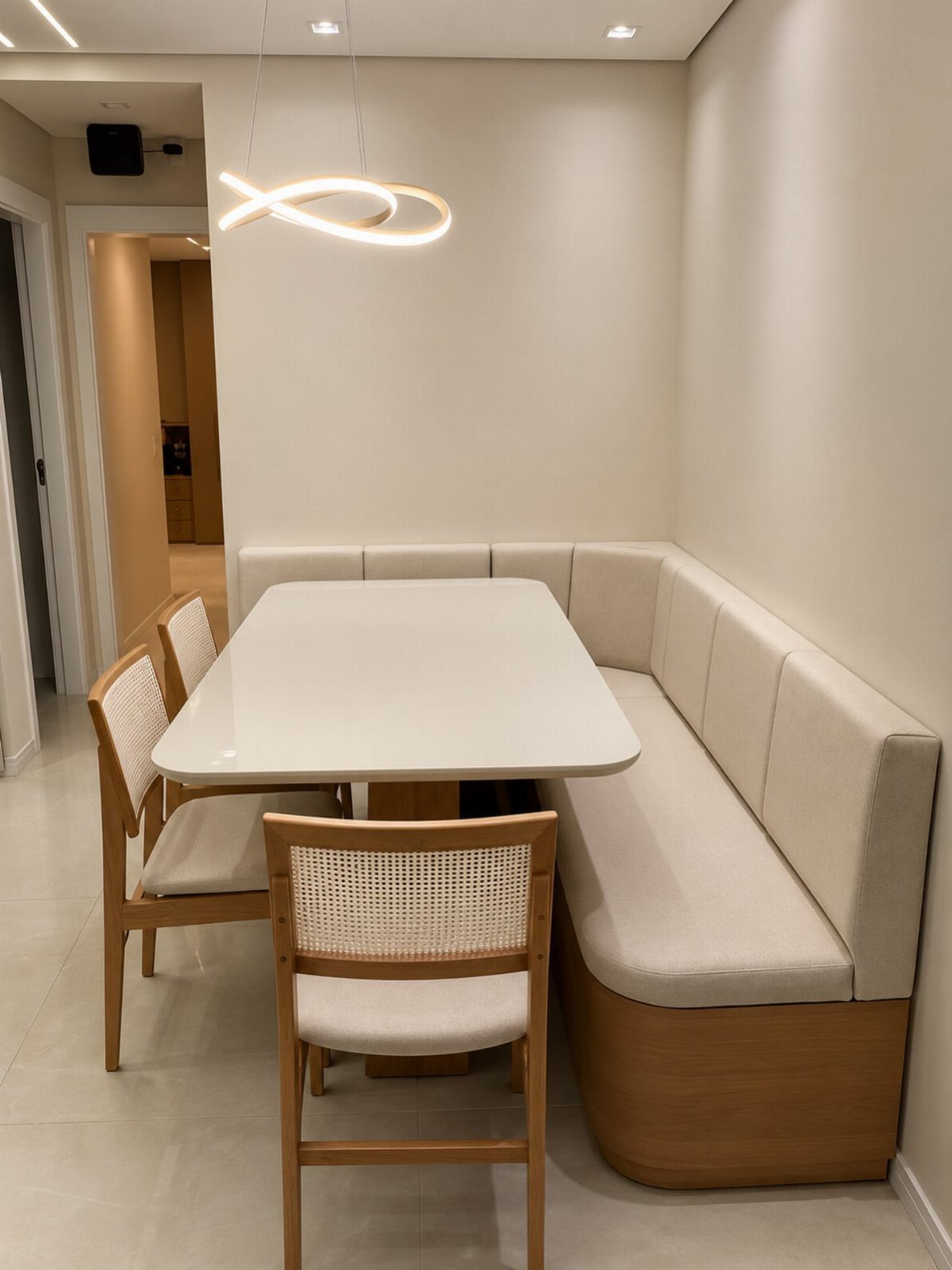
A bench along the wall replaces the chairs on two sides of the table, and an L-shaped one uses a corner that would otherwise sit empty.
People slide in from the open side instead of pulling chairs out into the walkway.
I’d keep 2 or 3 chairs on the free sides so the table stays easy to rearrange. A cushioned seat in a light, solid color also keeps the corner from looking heavy.
2. Round Table
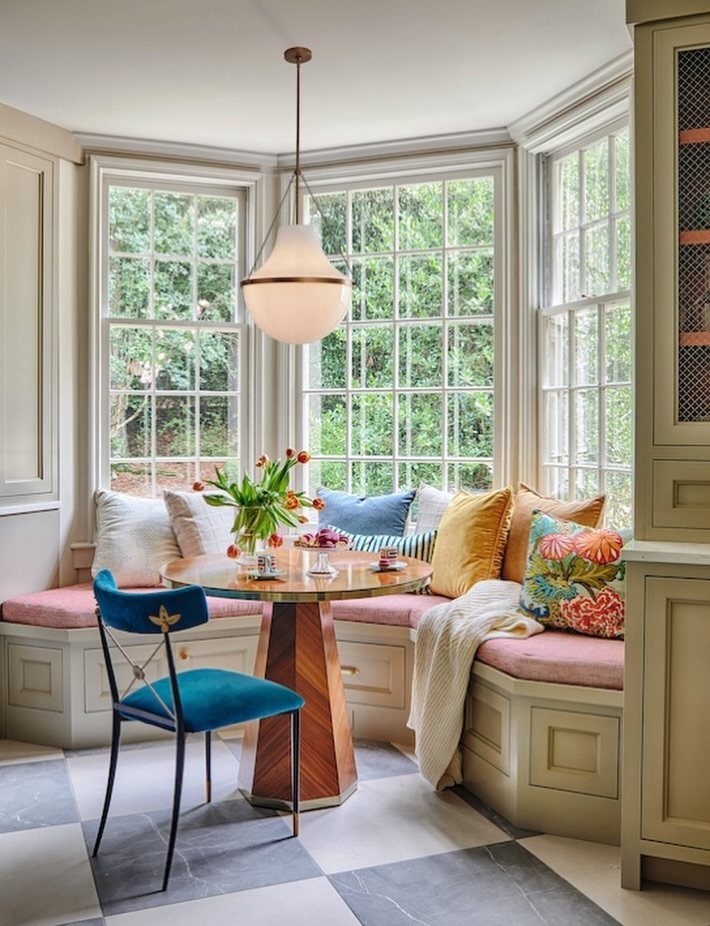
A circular top has no corners to catch a hip or a shin, which matters in a room where the walkway runs right beside the table. People can also angle their chairs without blocking each other.
A round table beats a rectangular one for walkability, since nobody has to squeeze past a corner to reach a chair.
Pair it with a window seat or banquette and the table can sit close to the wall without making the room feel tight.
3. Use a Booth
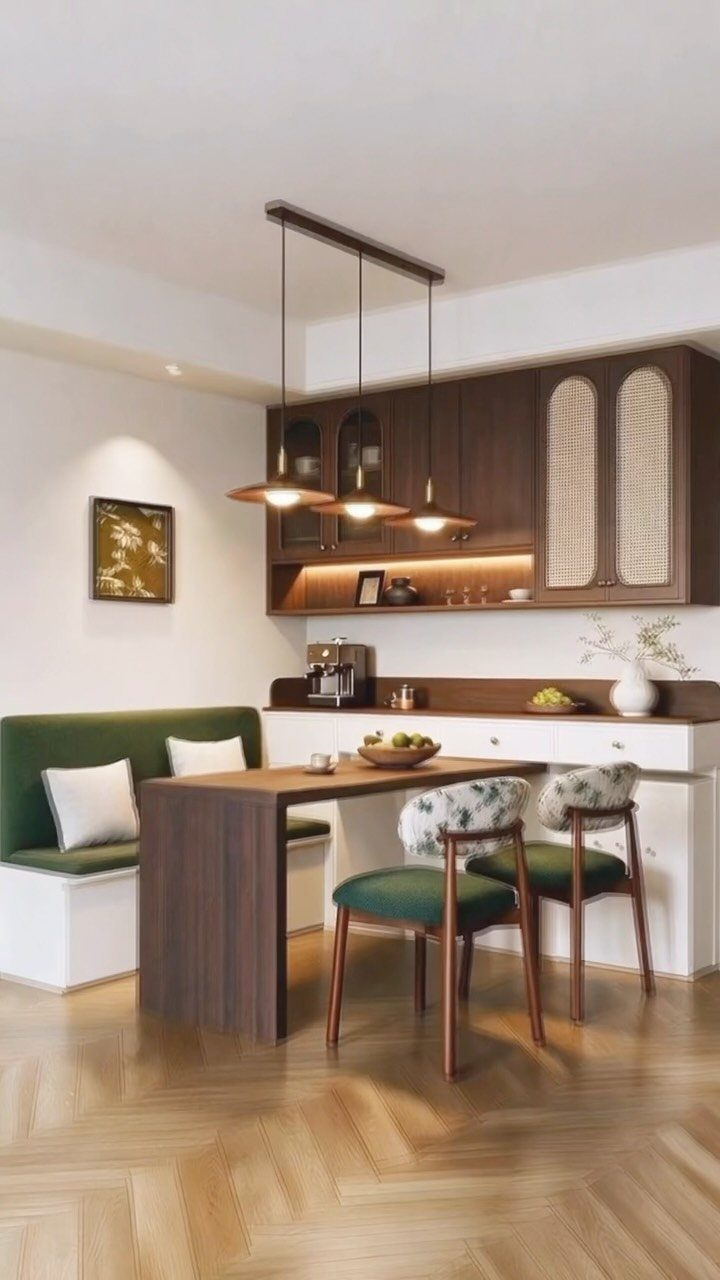
Booth seating is mostly about the table. A dark wood table paired with a green upholstered booth seat and 2 chairs gives a small dining area a built-in look without much floor space.
That fold-away feature is what makes a booth realistic in a shared room. A fixed table in a booth is a commitment; a folding one lets the space go back to being a hallway, an office or a play area.
If your dining area doubles as another room, utilize the corner of said room (usually an under-programmed space!) as your dining area.
4. Kitchen Island Dining
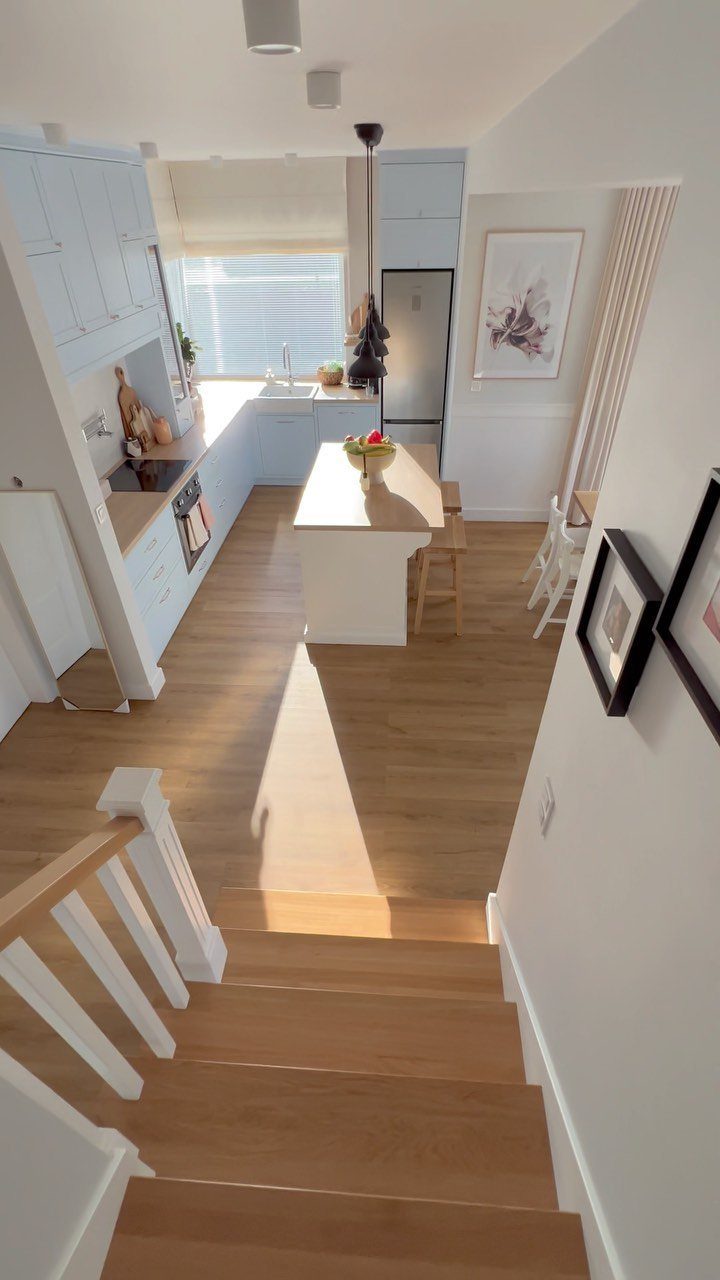
Meals and prep can share one surface when the island has stools tucked under one side. Chop at it before dinner, eat at it right after, and skip buying a separate table.
Stools that slide fully under the overhang keep the kitchen walkable when nobody is sitting.
5. Statement Lighting
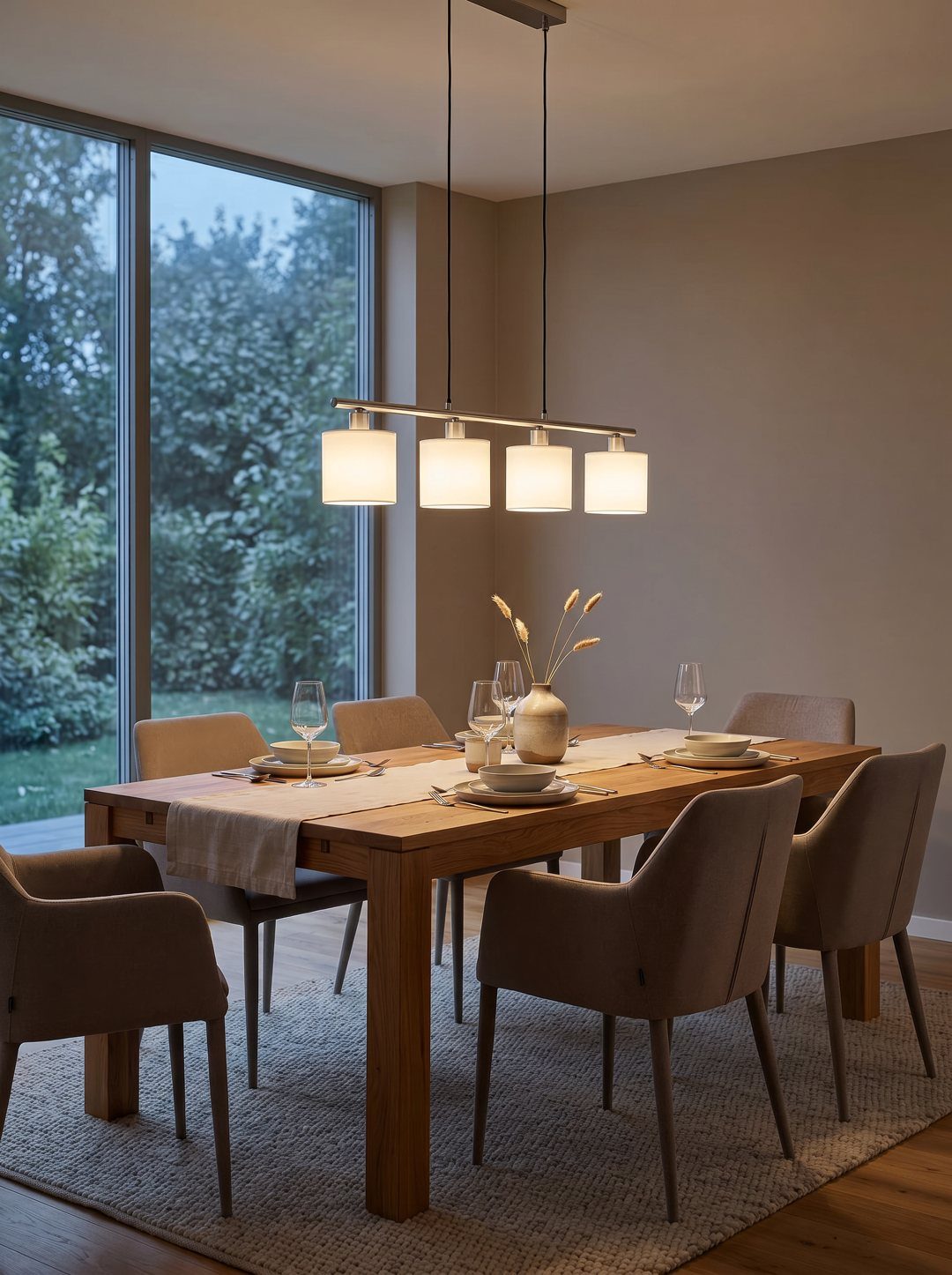
A linear pendant suits a rectangular table because the light spreads along its length instead of pooling in the middle. Choose one a bit shorter than the table, not wider.
Hang the fixture so it defines the dining zone without blocking sightlines across the table. Renters can get the same look with a plug-in swag fixture and a ceiling hook.
6. Round Pedestal Table
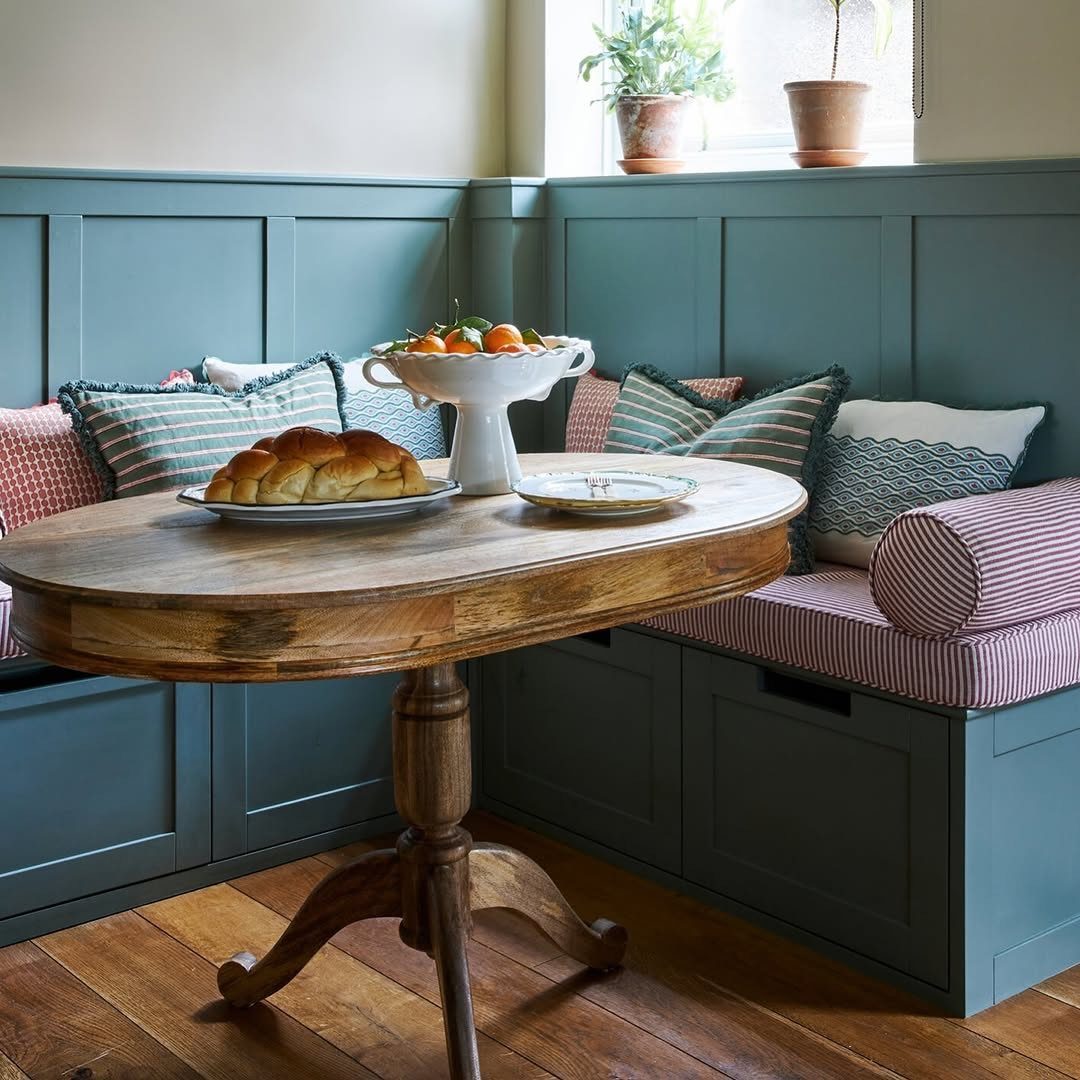
With a single central base, there are no corner legs to dodge, so a fifth person can squeeze in without straddling anything. That makes a pedestal the easiest round table to live with when guests are occasional.
Tuck it next to a built-in bench and slide chairs in on the open side. Check that the base is smaller than the top by a good margin, or knees will hit it.
7. Open-Concept Dining
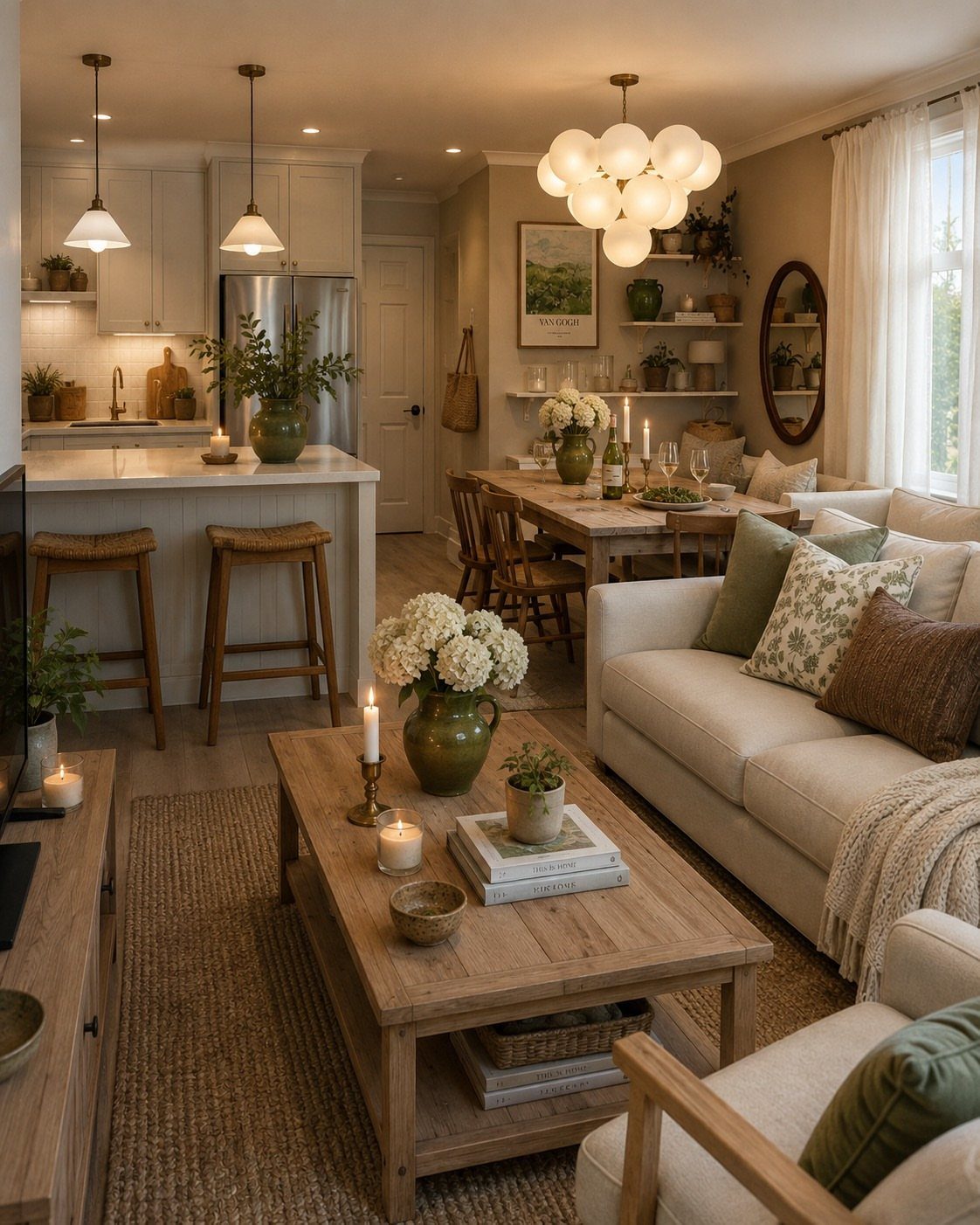
Folding the table into the kitchen or living area saves the floor space a separate dining room would eat.
A wooden table set at the edge of the sofa zone looks like it belongs to the room instead of feeling tacked on.
Keep the table’s wood tone warm against white cabinets, and let a wall print mark where the dining side ends. Anchor it with a rug if the floor runs unbroken.
8. Use a Bistro Table
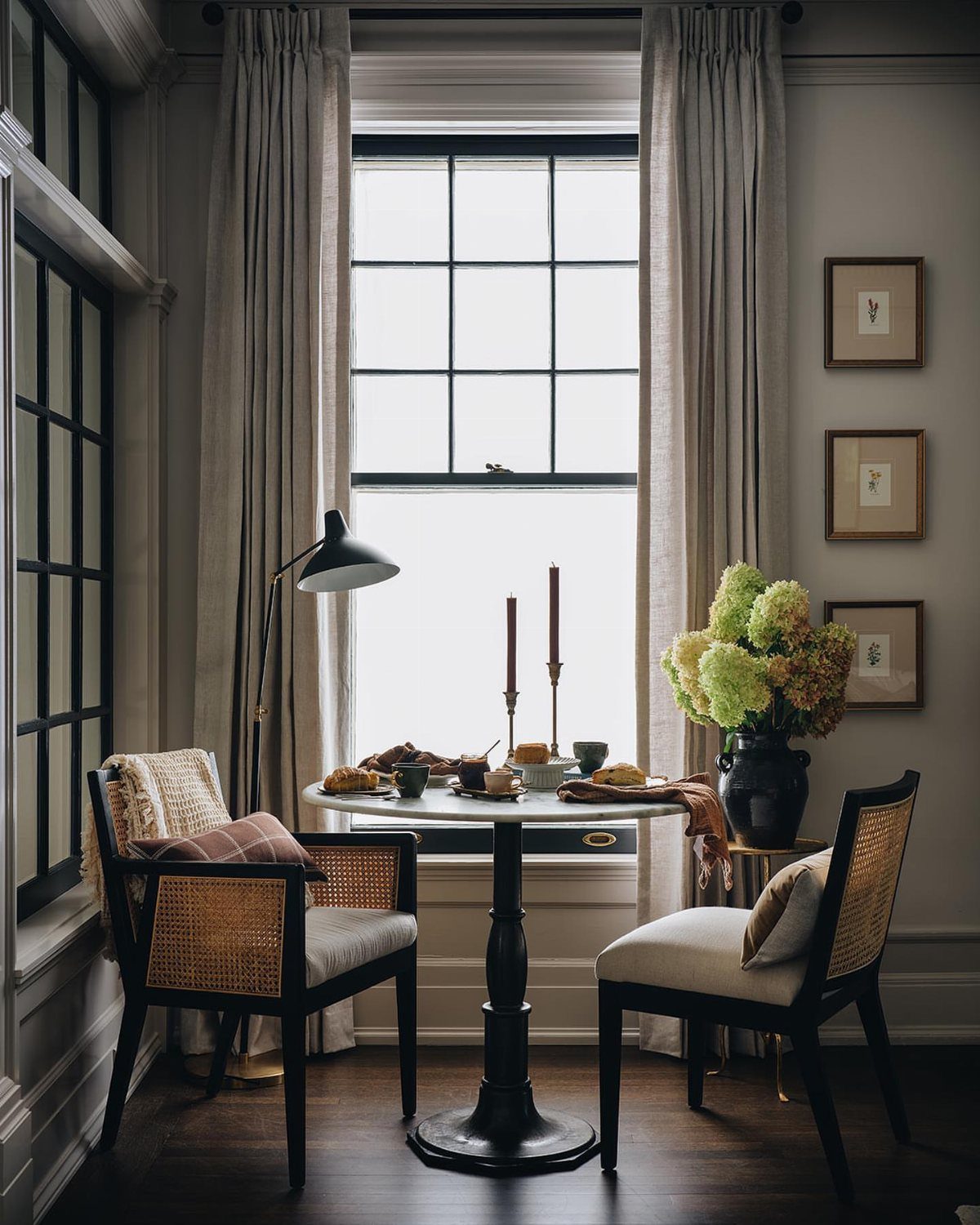
A bistro table with a small round top gives you a place to eat without claiming a whole wall. Set it by a window and the daylight does the decorating.
Cane-back chairs stay visually light, so the pair never crowds the room. I’d choose a table with a slim base, since a wide one fights for knee space.
Bistro tables suit couples and solo eaters best. A third guest means pulling over another seat.
9. Use a Kitchen Hutch
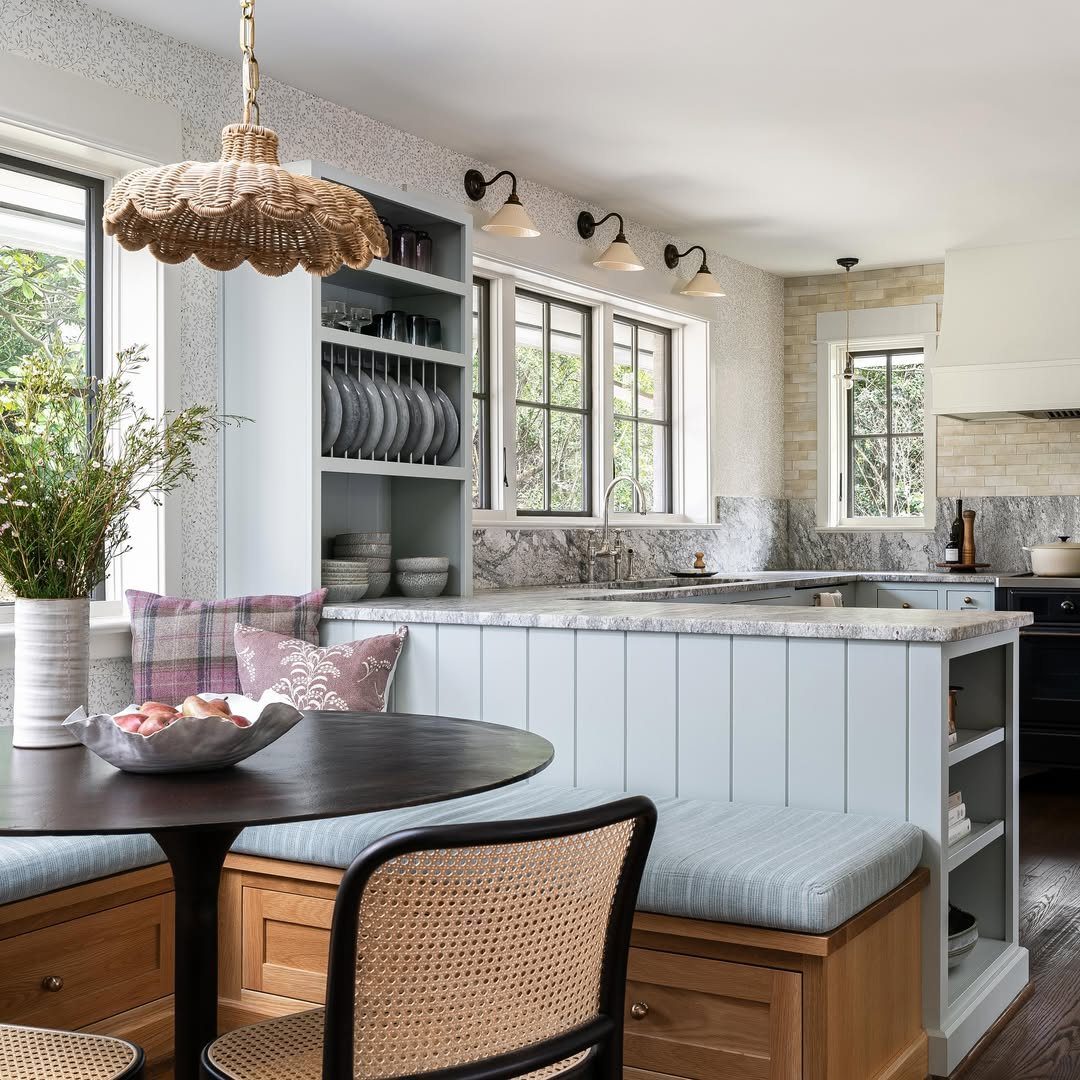
A hutch turns a kitchen into a dining room by keeping plates, glasses and linens a few steps from the table. Nothing gets carried across the house before dinner.
A painted one in a soft color adds character without extra decor. Pair it with a round table and a built-in bench so the whole corner stays compact.
Put everyday dishes on the open shelves and the rarely used ones behind doors.
10. Pattern Play
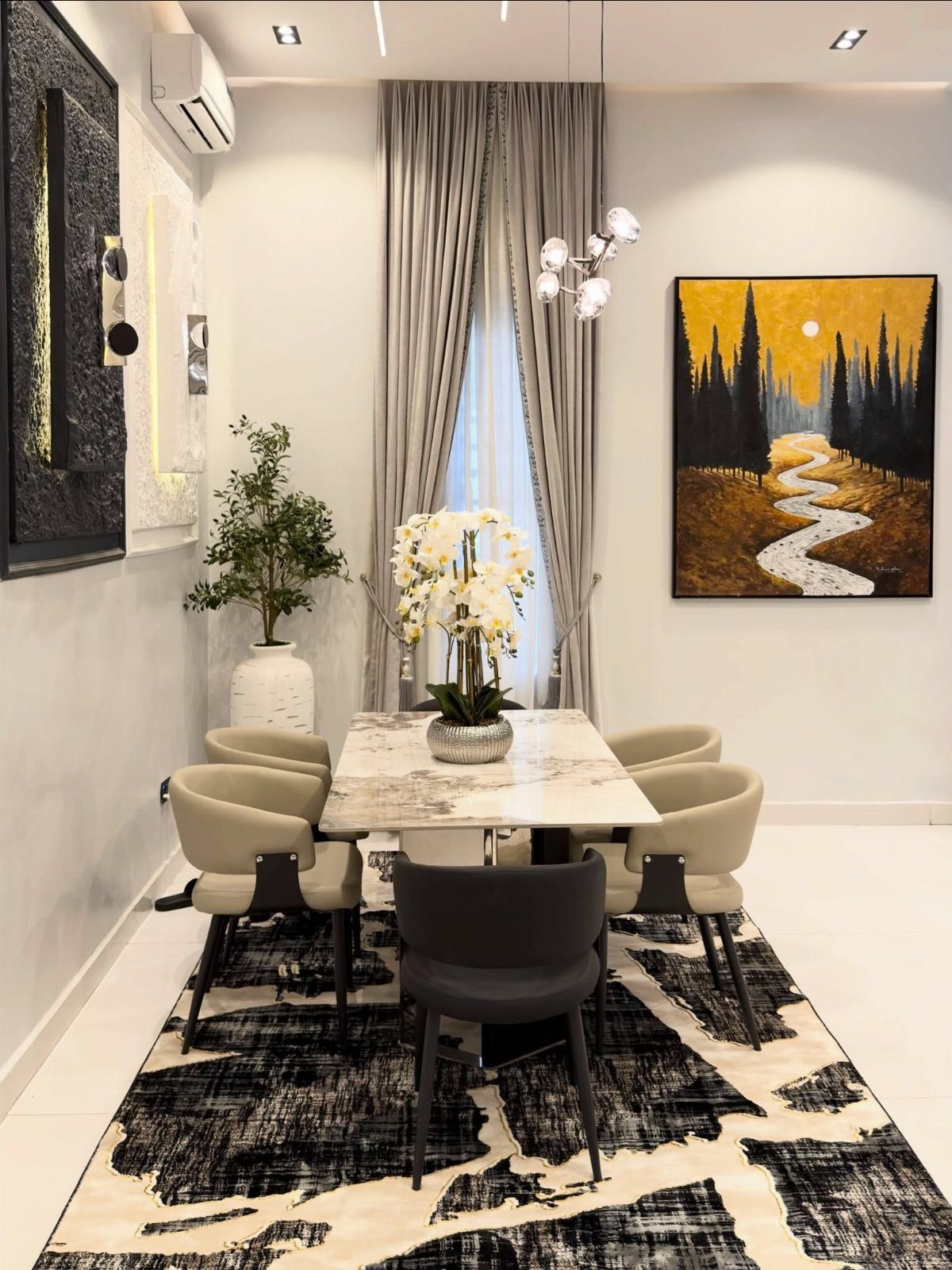
Pick one bold pattern and let everything else stay quiet.
Repeat the same 2 colors in a painting or a plant pot so the pattern feels planned. Rugs should extend past the chair legs, so the chairs stay on the rug when pulled out.
Pattern on pattern works only when the palette is limited.
11. Bay Window Banquette
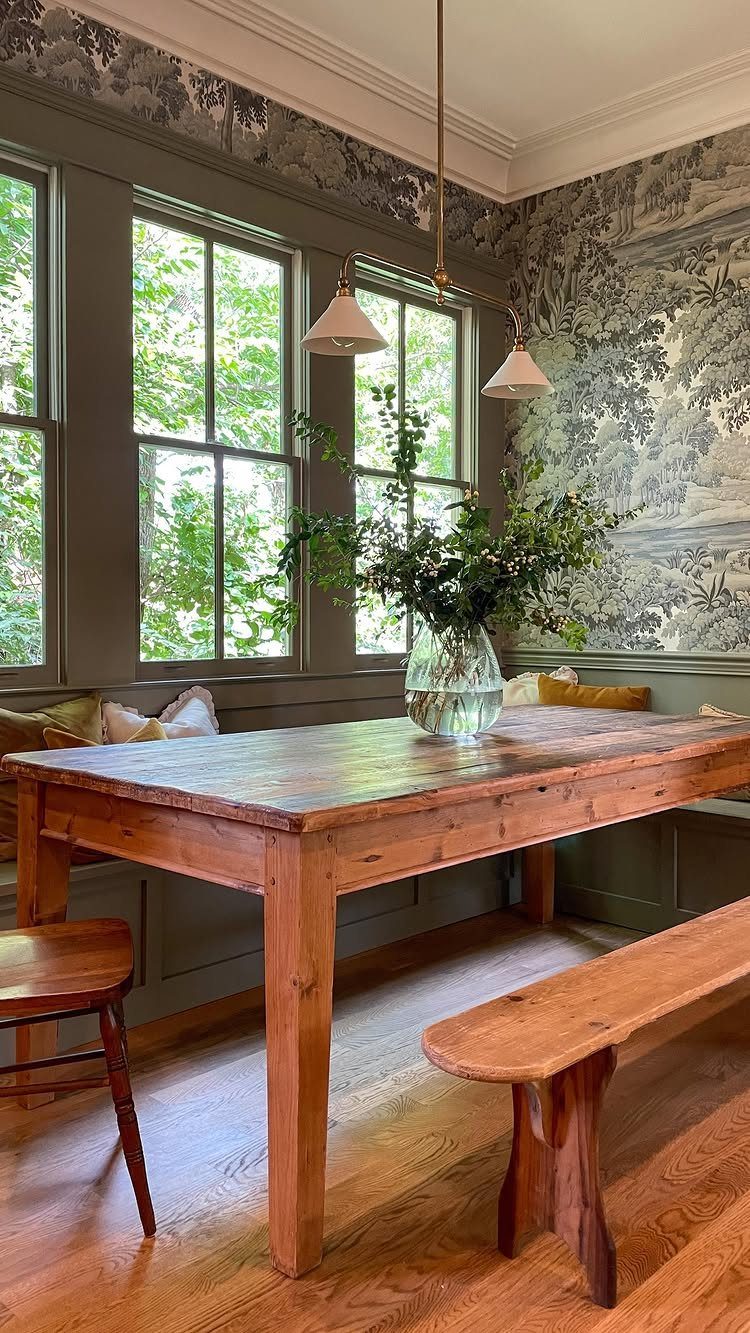
A bay window already has the shape for a wraparound bench, so the table slides in and the corner becomes the best seat in the house.
Wood on wood, bench and table, keeps the nook calm even with floral wallpaper behind it.
Build the bench to follow the window line and add storage underneath if the budget allows.
Hang a pendant above the table and the nook gets its own pool of light, which sets it apart from the rest of the room.
Renters can use a freestanding bench and cushions to get the same effect.
12. Keep It Simple-ish
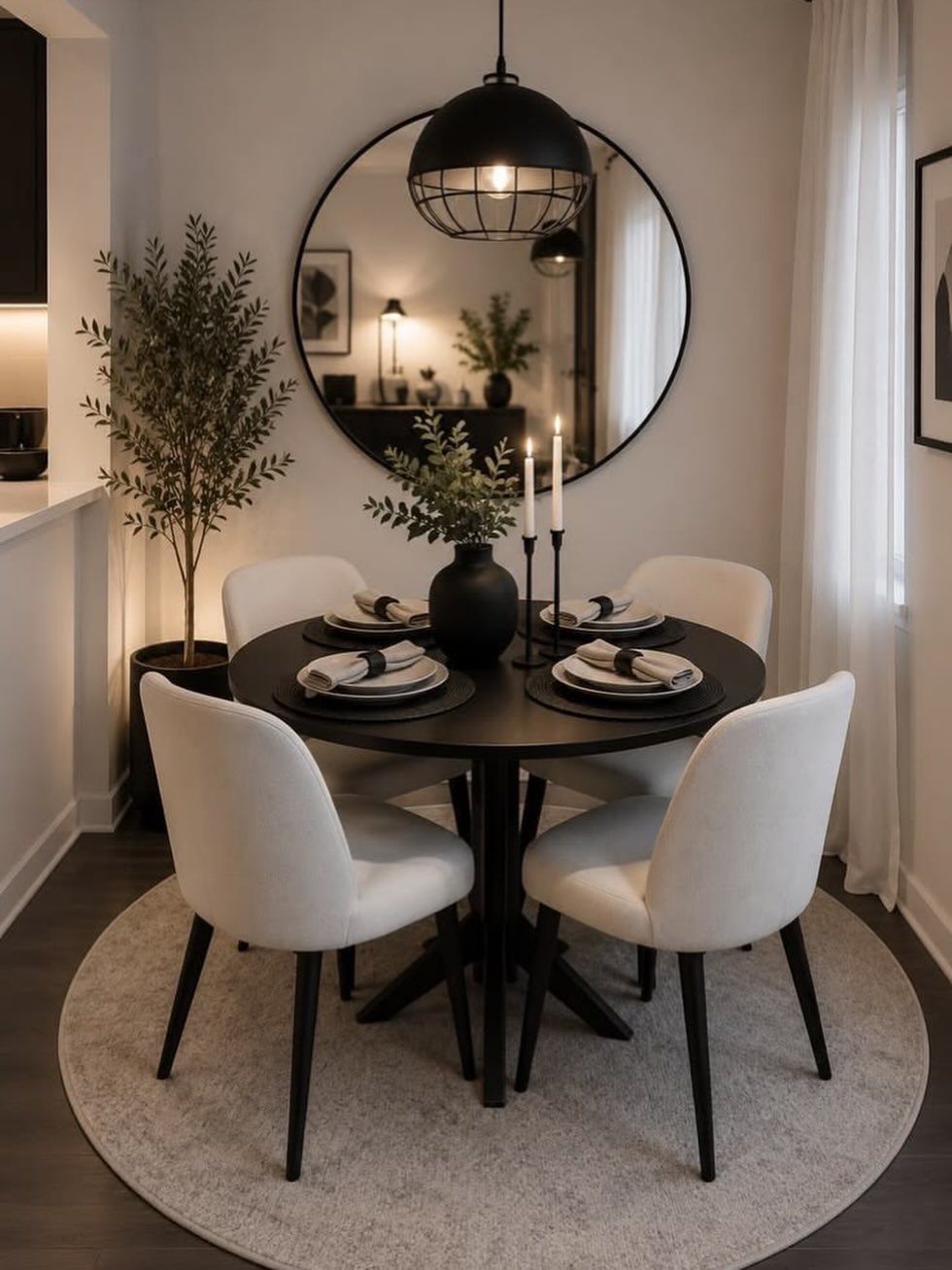
Black and white does the heavy lifting in a small dining room: a black round table, white chairs and nothing else competing.
A large round mirror on the wall above the table bounces light around and makes a tight corner feel wider.
I’d repeat the circles on purpose, with a round rug, a round mirror and a round table, because shapes that echo each other look deliberate.
A single plant adds the only green. Skip more color and the scheme stays easy to live with.
13. Dining Table in Front of a Bookshelf
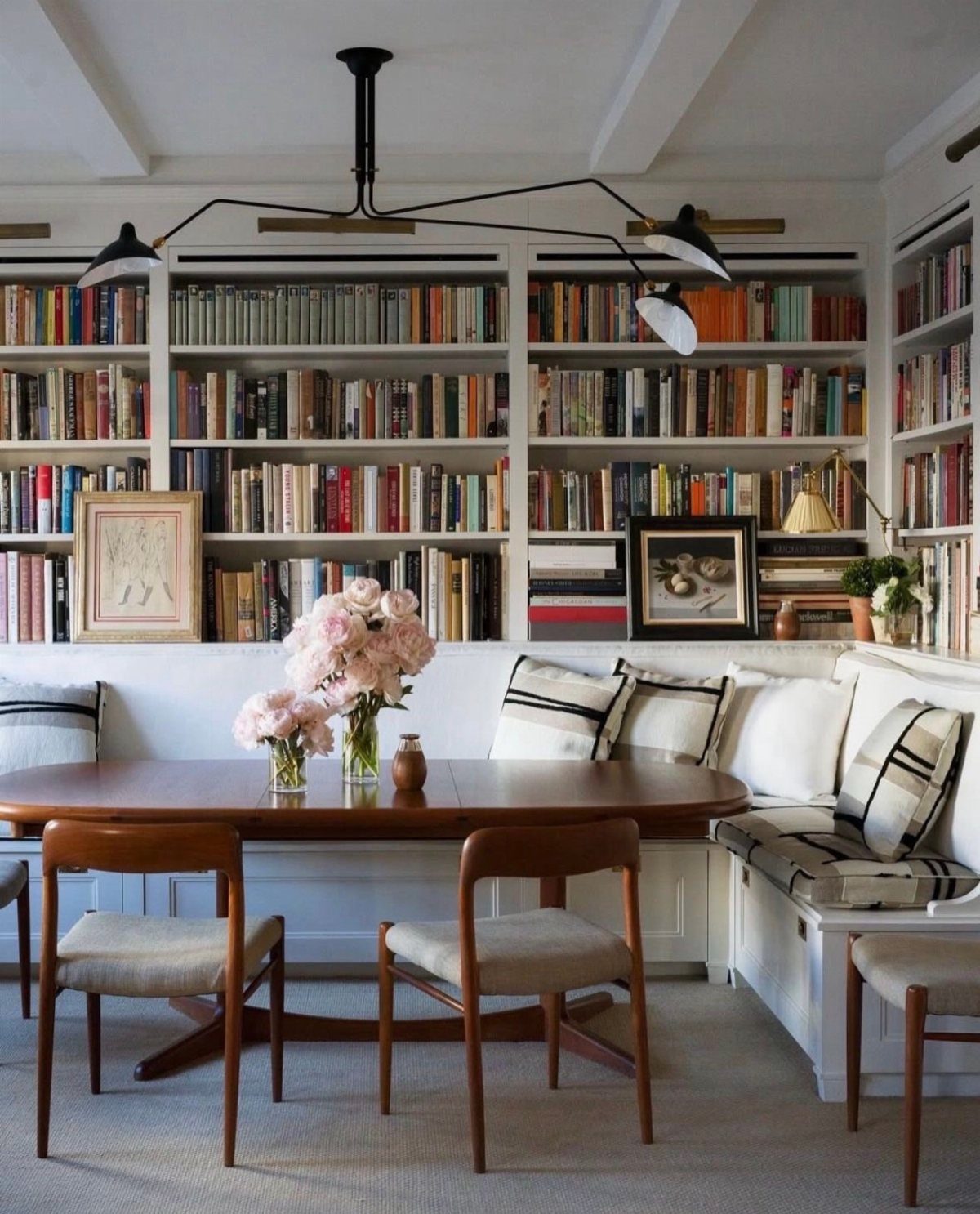
An oval table pushed up to a wall of shelves lets the books do the decorating. White shelving with a black pendant overhead keeps the backdrop crisp, and the wooden table and bench add warmth against it.
Banquette seating on the shelf side means nobody needs to squeeze behind a chair to reach a book. Keep the shelves for things you’d actually want near dinner, like cookbooks and a few favorites.
14. Large Wall Mirror
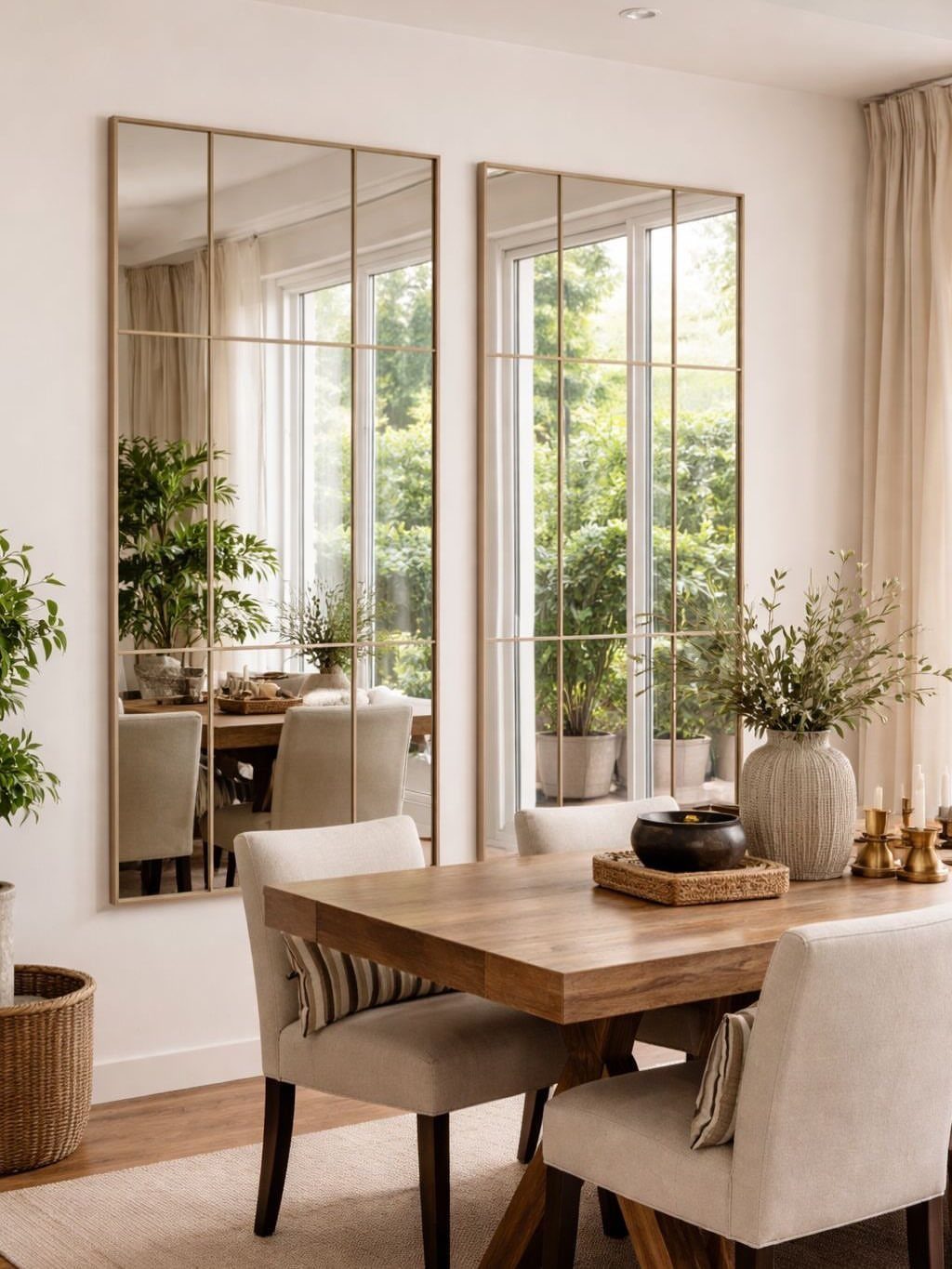
Two tall mirrors with window-pane framing do double duty: they bounce daylight deeper into the room and echo the real window, so the dining area feels like it has two.
Hang them opposite or beside a window so they catch the view, in this case greenery. Gold frames pair well with a wood table and beige chairs, since the warm tones stay in one family.
Mirrors work best with a clean glass surface, so wipe them before guests arrive.
15. Wall-Mounted Shelves and Racks
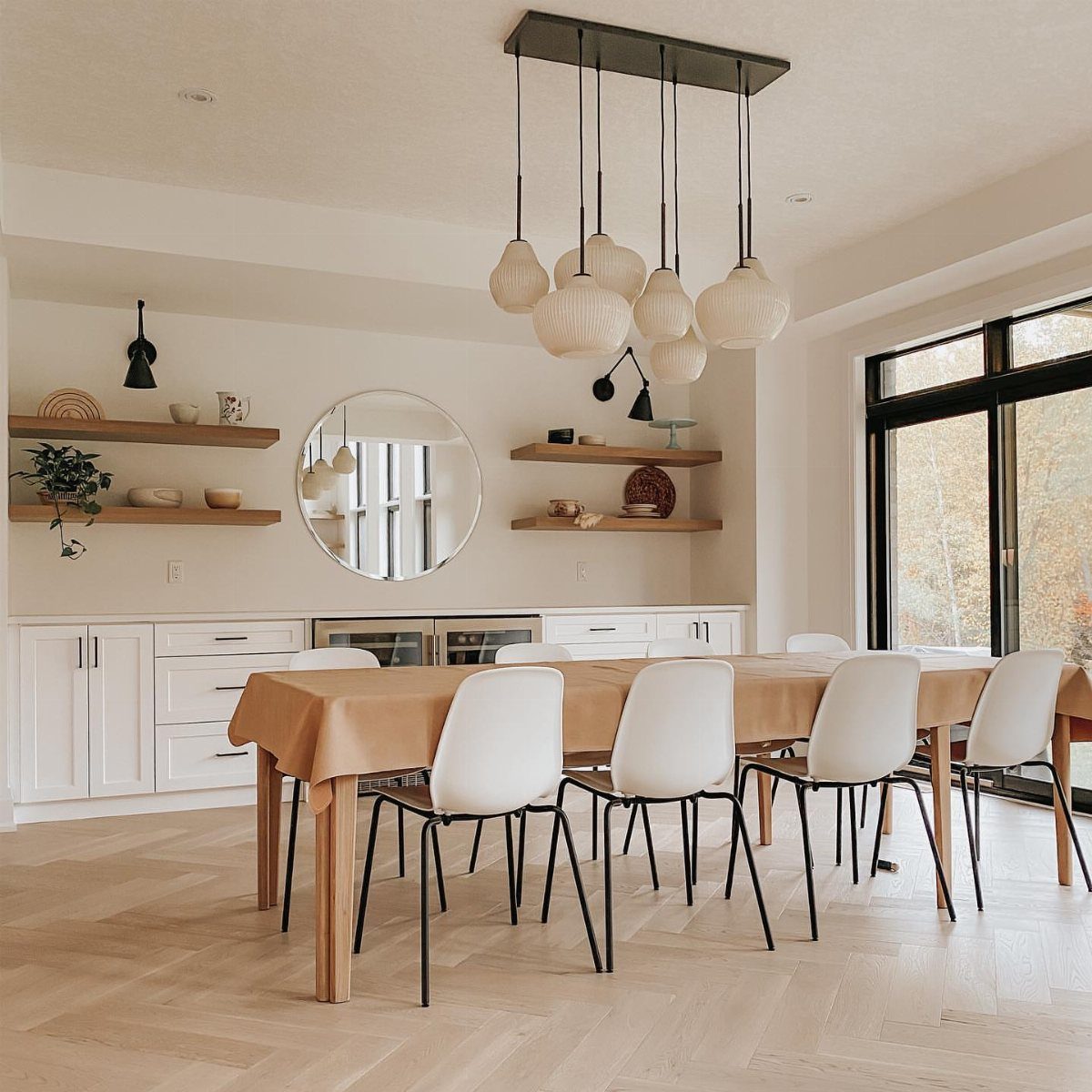
Floating wooden shelves above a run of white cabinets give a dining wall its storage without taking an inch of floor. Plates, glasses and serving pieces sit within reach of the table.
I’d stack 2 shelves at slightly different heights, then leave a gap beside them for a round mirror. That mix of open shelf and reflective surface stops the wall from feeling like a pantry.
Keep the shelves to a few items each. Clutter reads faster on open wood than behind doors.
16. Rustic Wood Textures
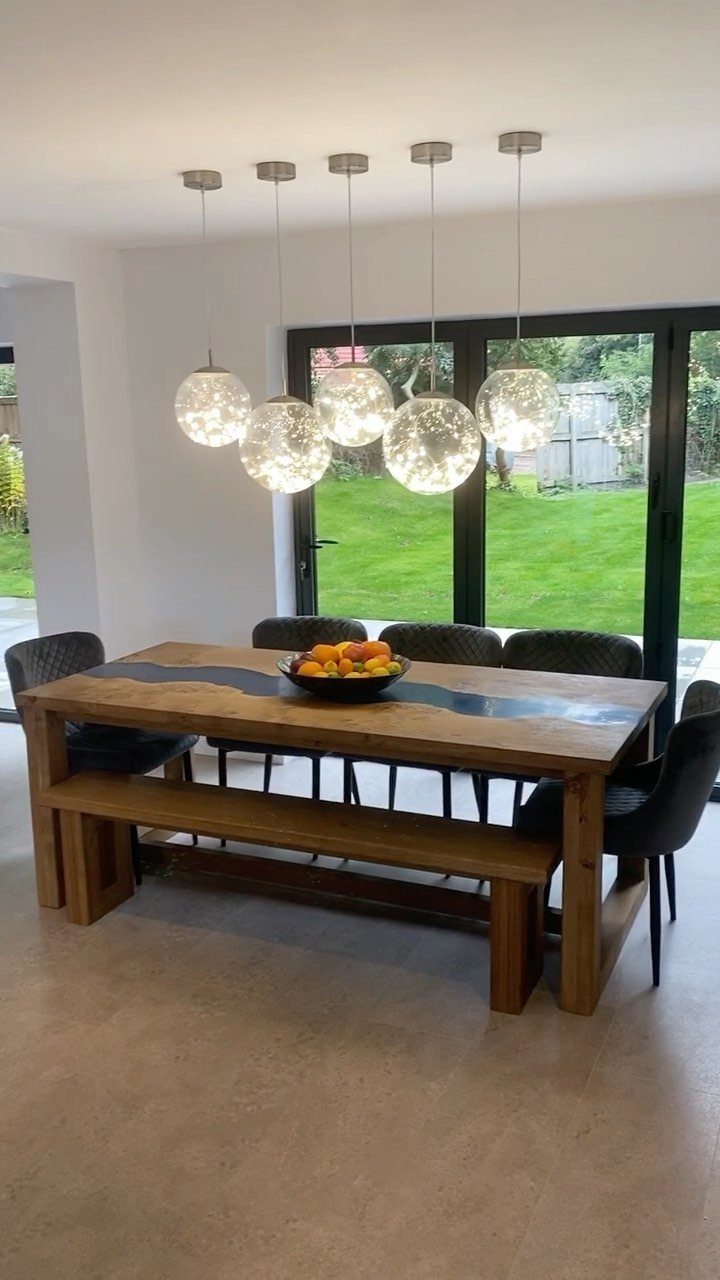
Wood with a dark resin river down the middle is a striking choice because the grain does the decorating. Match it with a bench in the same wood and a table like this needs no centerpiece.
Round pendants hung in a row above it echo the soft edges and keep the eye on the table. Grey chairs cool the warm tone so it never turns heavy.
A glass door to the garden helps. Daylight shows off the grain in a way a ceiling light can’t.
The maker notes the kitchen pairs light grey wall units with navy blue island units, which is a useful contrast to borrow if you want the wood to stand out.
17. Fluted Wall Panels
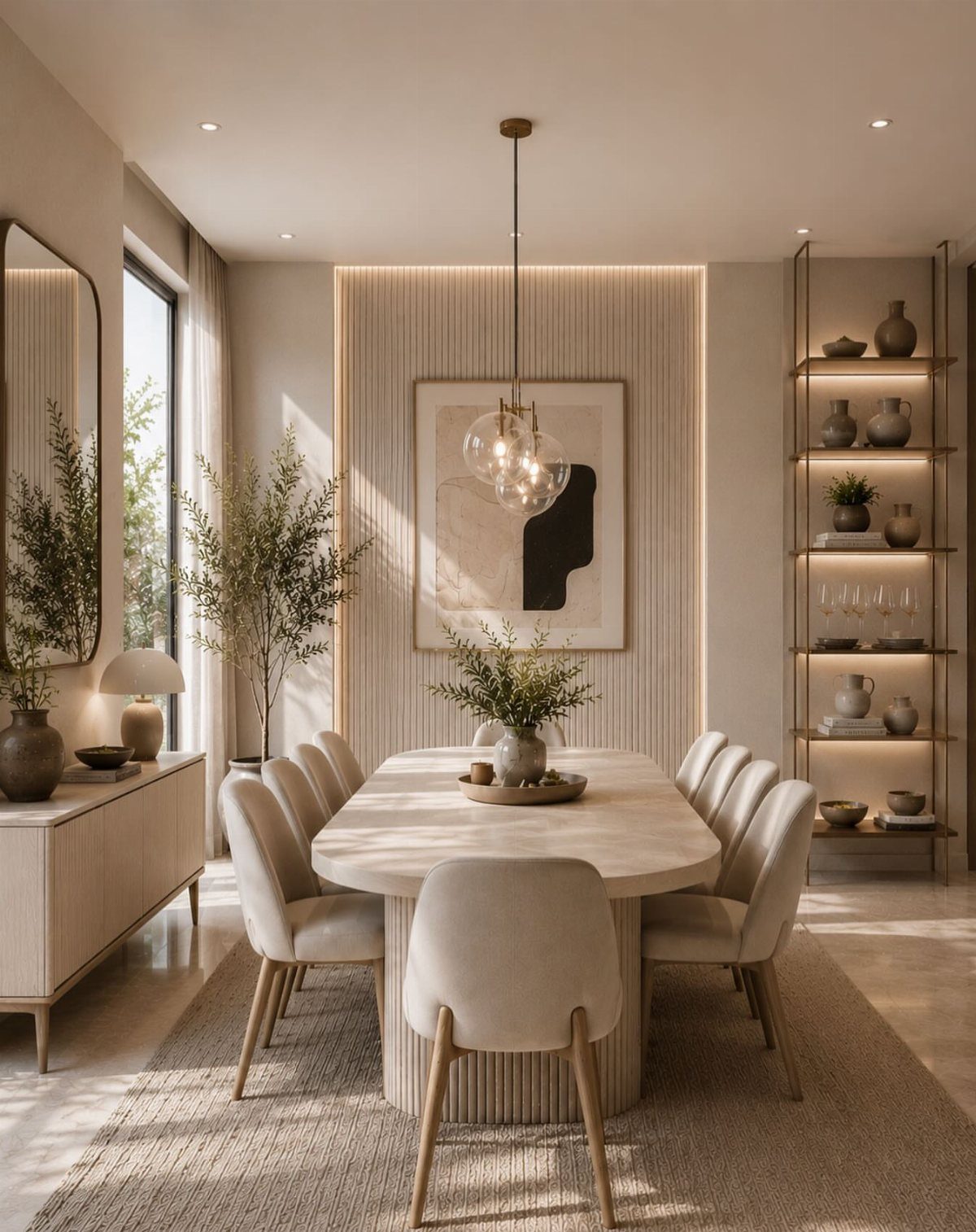
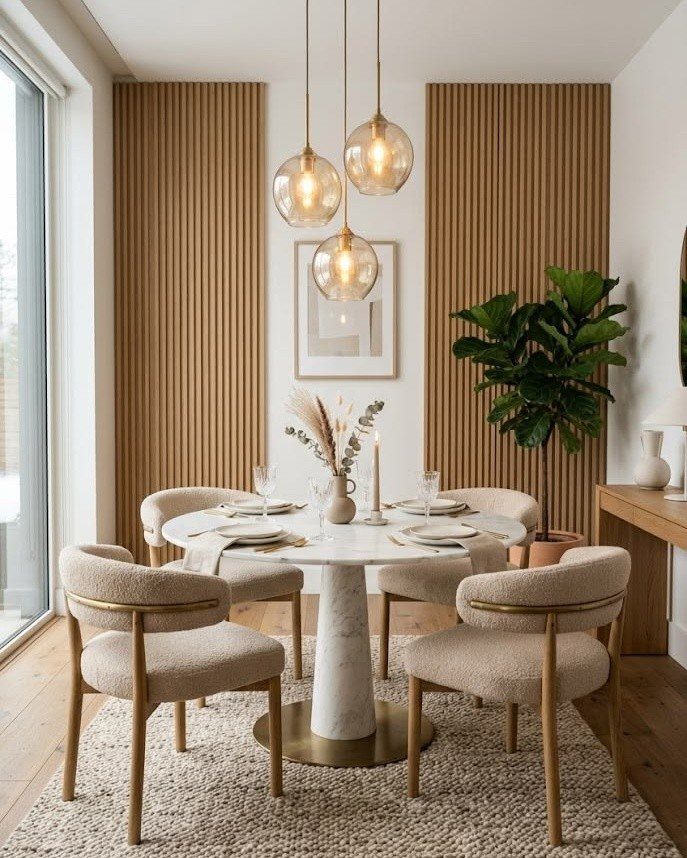
Vertical ridges on a fluted panel add texture to a plain wall without any color or pattern. The grooves catch light and give the neutral palette some depth.
I’d hang one piece of art against it and stop there, because the panel already has plenty going on. Add a pendant over the table so the corner reads as its own zone.
Renters can look for peel-and-stick slat panels rather than anything permanent.
18. Compact Oval Dining Table
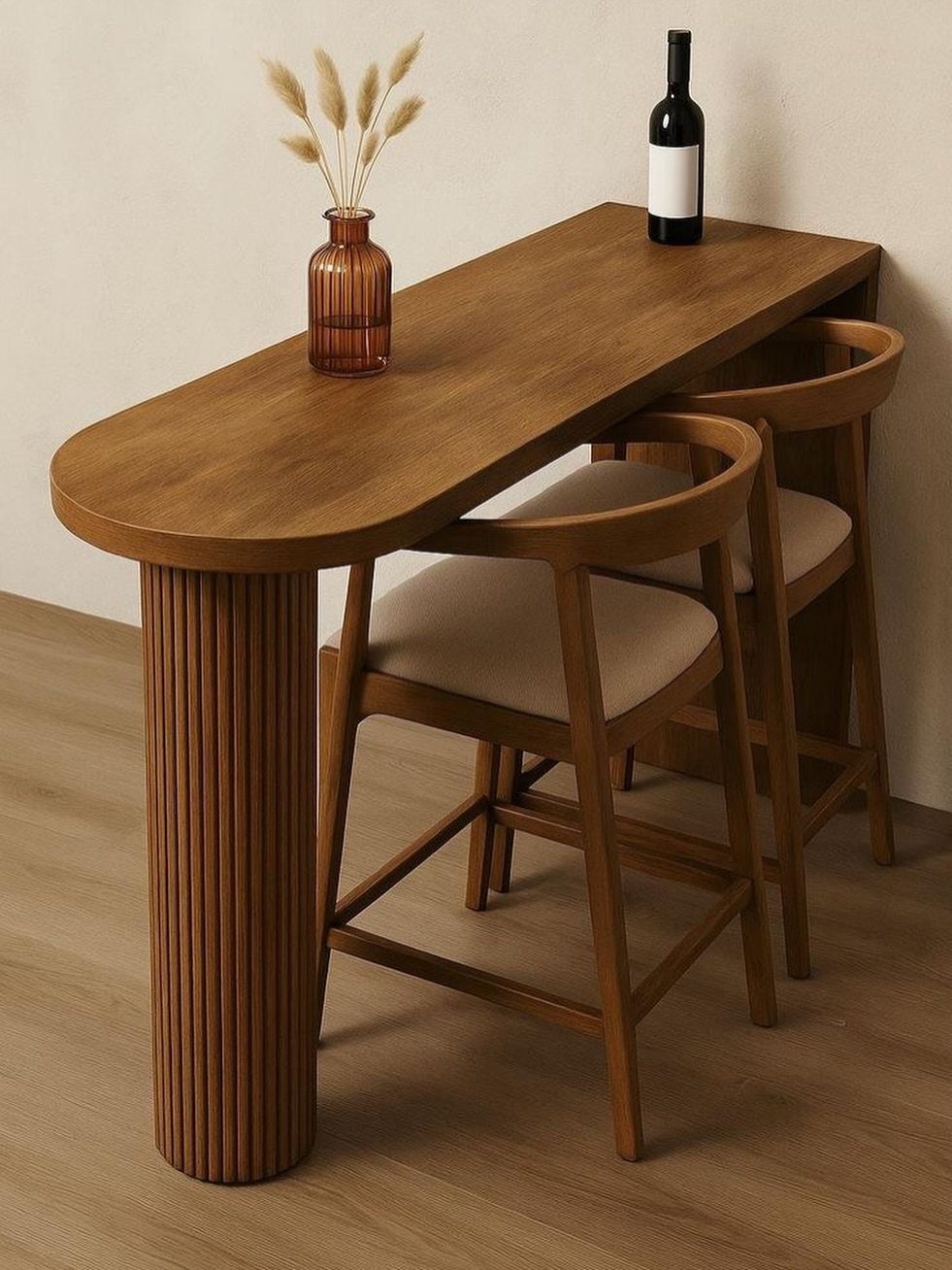
A narrow oval table with only 2 chairs is about the least demanding way to eat at home. The rounded ends and a fluted leg soften it, and it slides against a wall so the floor stays open.
Matching cushioned chairs complete the set. A vase of dried grass is enough styling; anything bigger will crowd the top.
I’d choose an oval over a rectangle so nobody bumps a corner when passing.
19. Modern Rectangular Dining Table
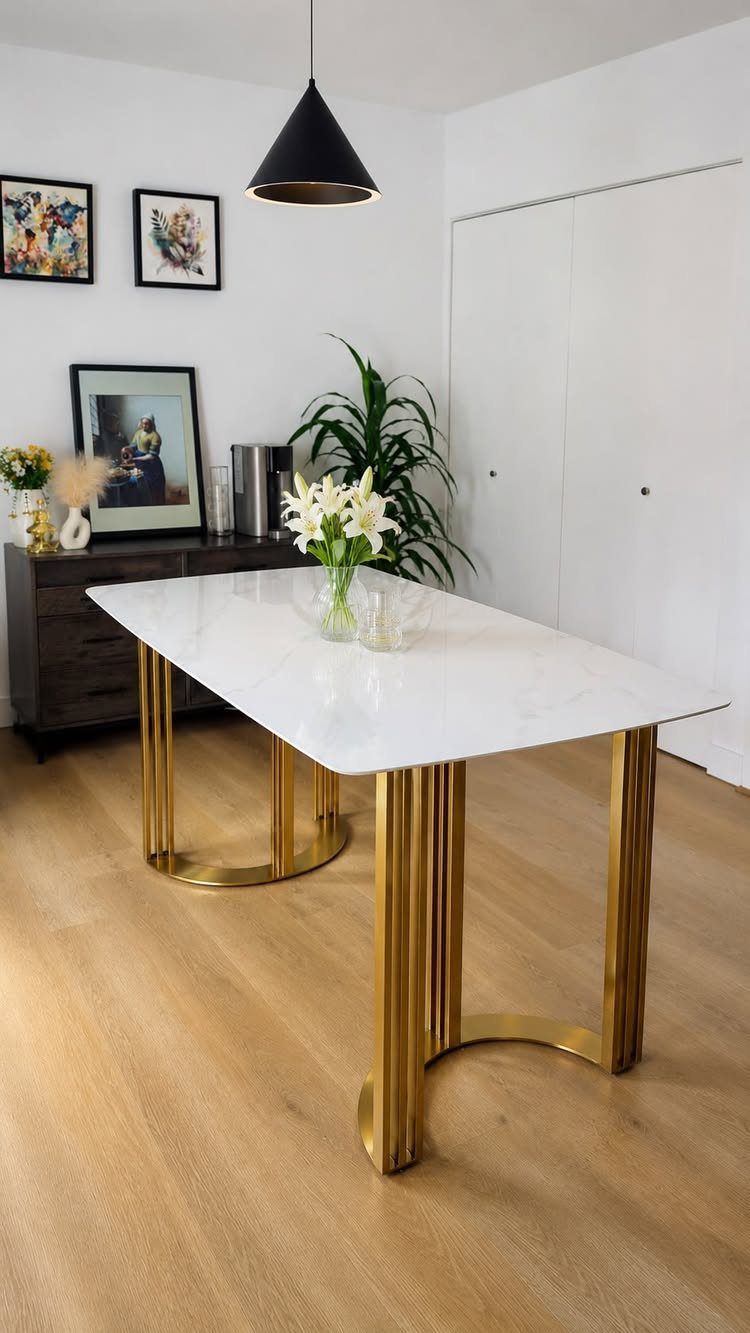
Slim gold legs keep a rectangular table from looking bulky, and the white top reads as light even in a room with a dark sideboard. That contrast does the styling for you.
I’d echo the sideboard with a black pendant over the table, as in this room, so the dark tones balance across the space.
One plant is enough. Keep the chairs plain so the legs stay the detail people notice.
20. Marble-Top Dining Table
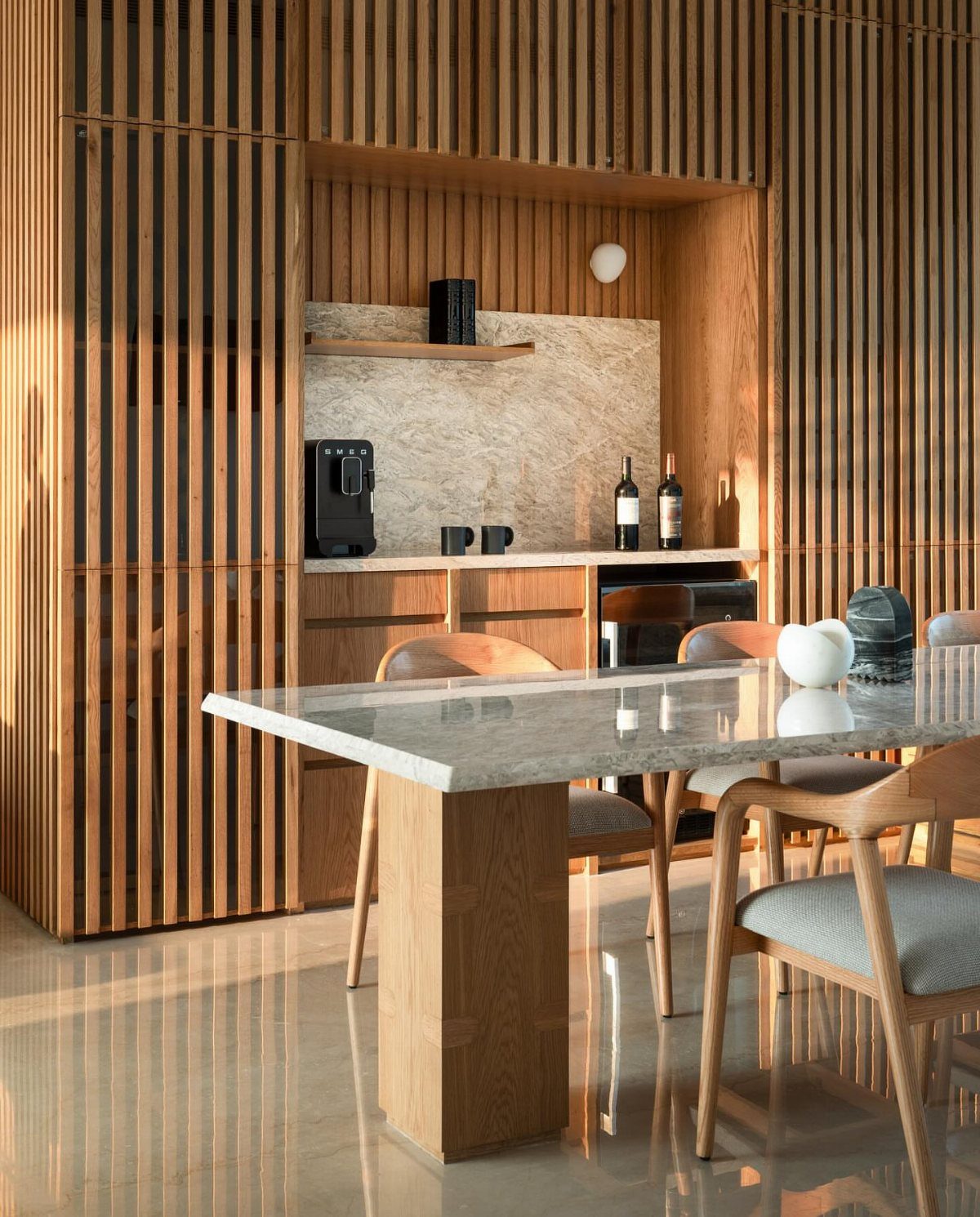
Marble on top and wood below is a pairing I like because the cool, veined surface keeps the wooden chairs from feeling too warm. Vertical slats on the wall behind add texture without adding color.
A built-in coffee station in the same room turns the dining area into a morning spot too. Keep the tabletop bare, since the stone already has pattern.
21. Small Two-Person Dining Nook
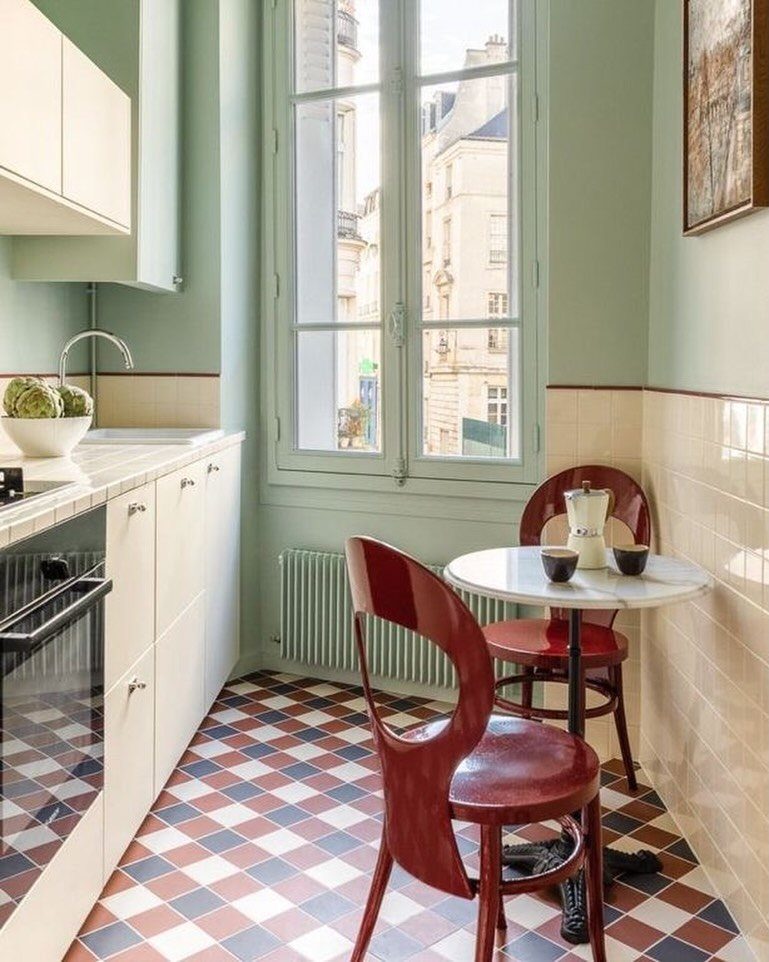
2 red chairs are the whole decorating plan here. Paint the table white so it fades back and the chairs carry the color.
A small round top slips into a kitchen corner by the window, and light green walls with a checkered floor give the red a calm backdrop.
Choose one saturated color for the chairs, then keep the table in a soft neutral so that single color gets all the attention.
2 seats is the limit, so this suits couples and solo cooks.
22. Built-In Banquette Dining
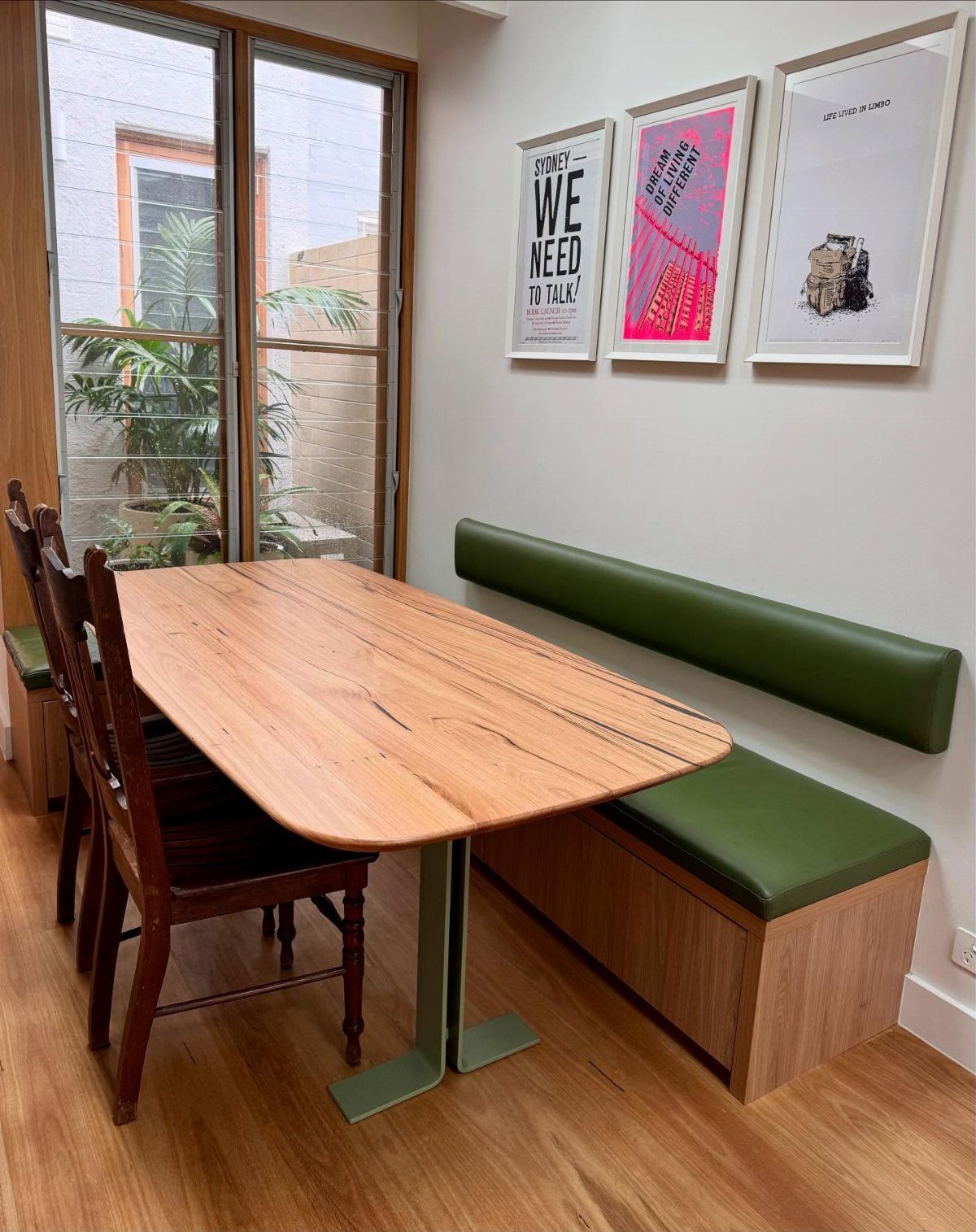
Green upholstery on a built-in banquette gives a wood-heavy room its one real color. A medium or deep green looks richer against light wood floors than a pale one.
Keep the table and chairs in wood tones, and let the cushion be the only thing that stands out.
23. Simple Oval Table Setup
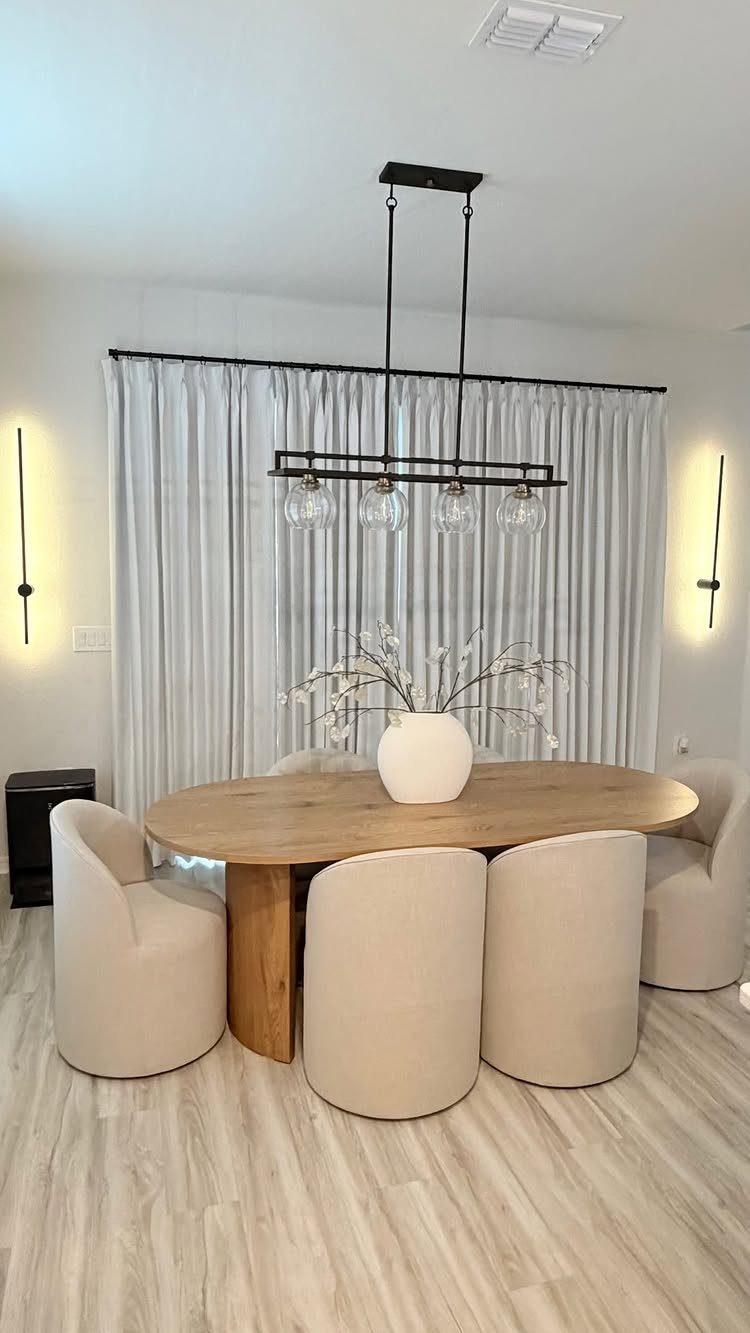
An oval wooden table with four cream upholstered chairs is about as easy as a dining setup gets. Soft seats mean people stay at the table after the plates are cleared.
Pick a linear light fixture to match the table’s long shape, and hang it centered over the top. White curtains and a vase of bare branches finish the corner without adding clutter.
24. Light Wood Dining Set
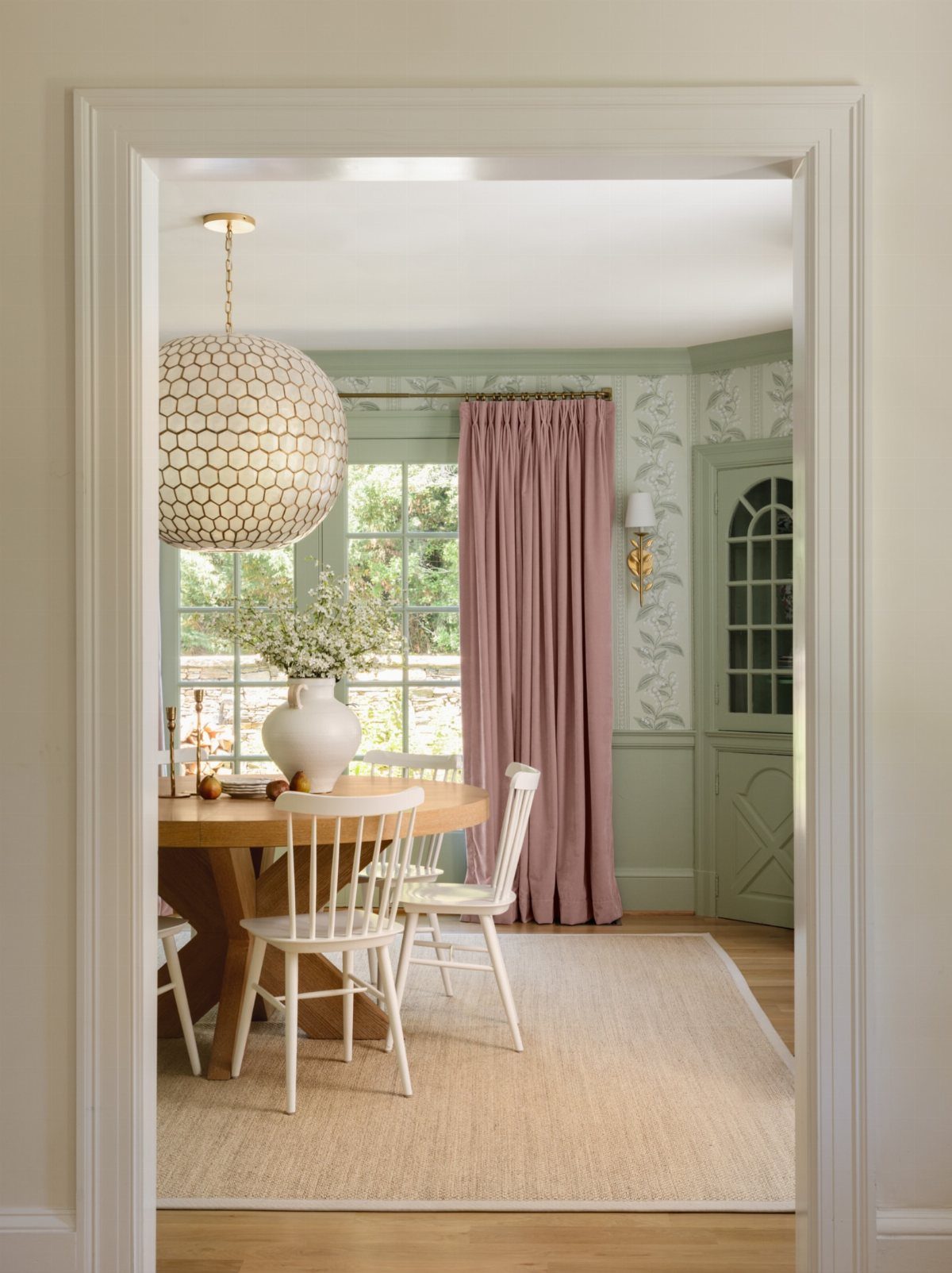
Pink curtains and green patterned wallpaper already give this room plenty of color, so the furniture can stay plain. A light wood table with white chairs lets the eye rest.
A large white spherical pendant adds a soft shape above the table without competing with the wallpaper. I’d choose white chairs over wood ones here, since they keep the setup clean against such a busy backdrop.
25. Round Table with Chairs
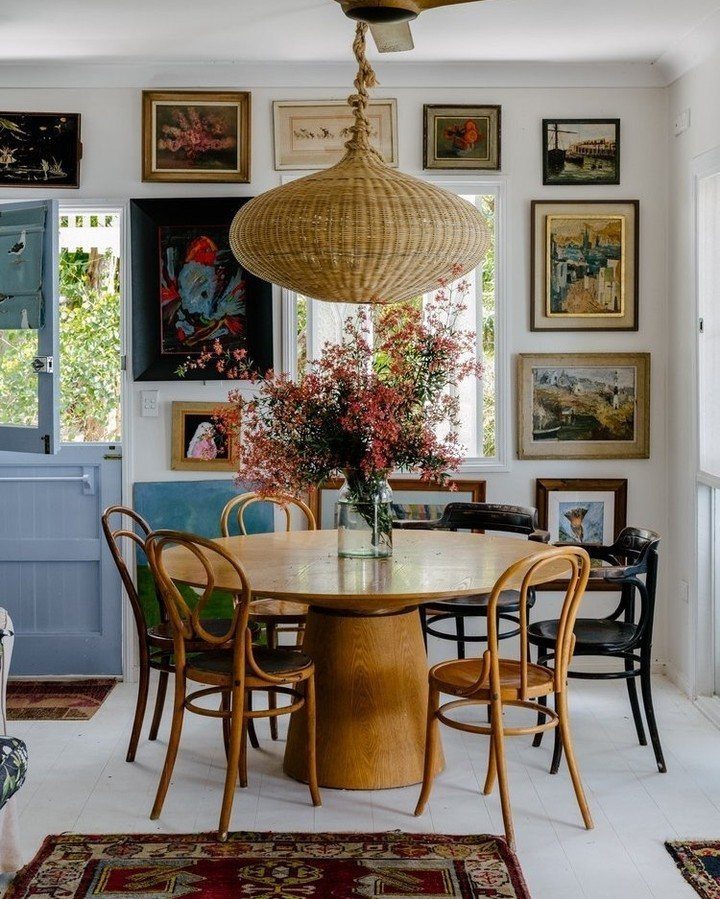
Bentwood chairs around a round wooden table are a classic pairing because the curved backs repeat the circle of the top. With no corners and no heavy frame, the set stays light even in a room hung with framed paintings.
A woven pendant hung low over the center gives the table its own zone and a warm texture against white walls. I’d hang it centered, since an off-center fixture on a round table looks like a mistake.
Let the art on the walls stay the busy part and keep the tabletop bare.
Frequently Asked Questions
What to do with a small dining area?
Start with a round or oval table and a bench along the wall, which replaces the chairs on 2 sides. Keep 2 or 3 chairs on the open sides so the table is easy to move.
Mirrors help a cramped dining nook more than almost any other fix: one large round piece, or two tall ones flanking a window, catches daylight and spreads it across the walls so the corner reads as deeper.
What is a small dining area called?
It’s most often called a dining nook: a compact eating spot tucked into a kitchen corner or a bay window.
The classic version is a small round table by a window with 2 chairs. In a bay window, a wraparound bench that follows the window line gives the nook its shape.
What furniture works best in a small dining area?
A round or oval table is the best fit, since there are no corners to catch a hip on the way to a chair.
A pedestal base or slim legs leave more room for knees, and a built-in bench saves the floor space that chairs would take up.
Armless chairs tuck fully under the table and keep the room from looking crowded. Tape the table and chair footprints on the floor first, then check walkways, doorways and how far each chair slides out when someone stands up.