
The walkway around your table decides which of these is yours: a tight dining nook suits a round pedestal table or one on a root base, while a long room can carry a trestle, a wood table with a bench along one wall, or a walnut top on X-legs.
The ideas run from a wood tray with candles set on a table you already own to a star-pattern wood top that takes real woodworking.
Along the way you’ll find an epoxy resin wood table, where one poured detail makes a plain top look one-of-a-kind.
1. Reclaimed Wood Table
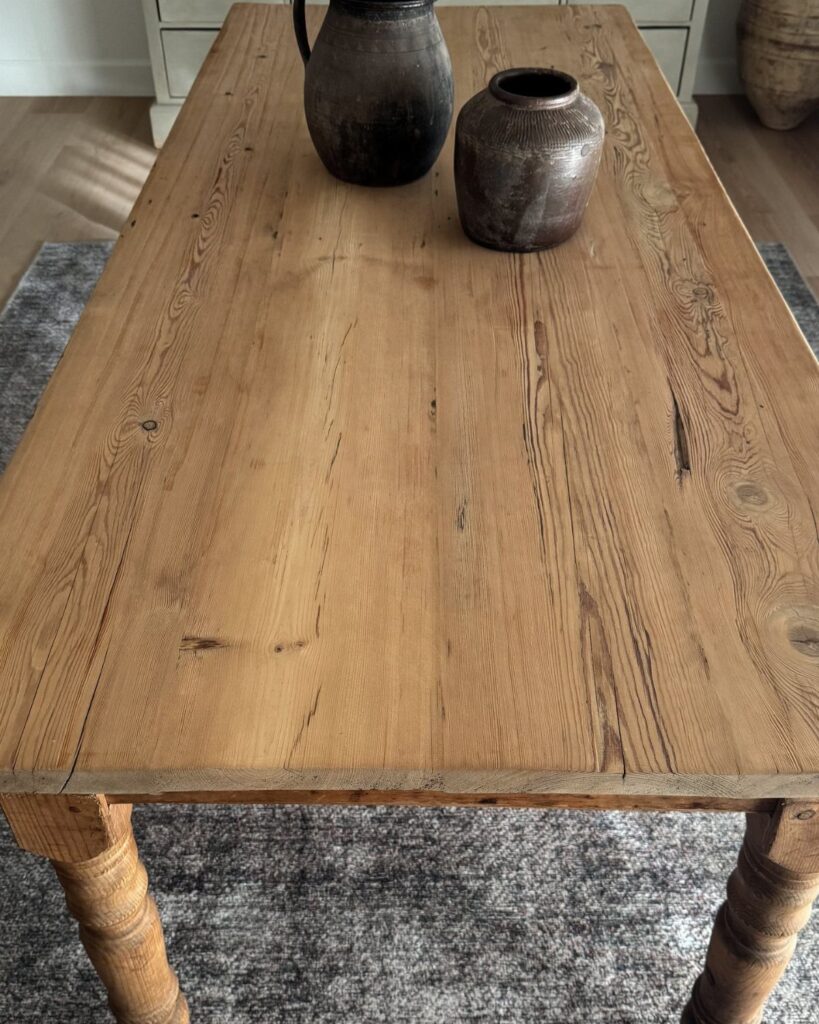
Weathered boards with open grain and visible wear carry a room on their own, which is why a reclaimed top looks best against quiet surroundings.
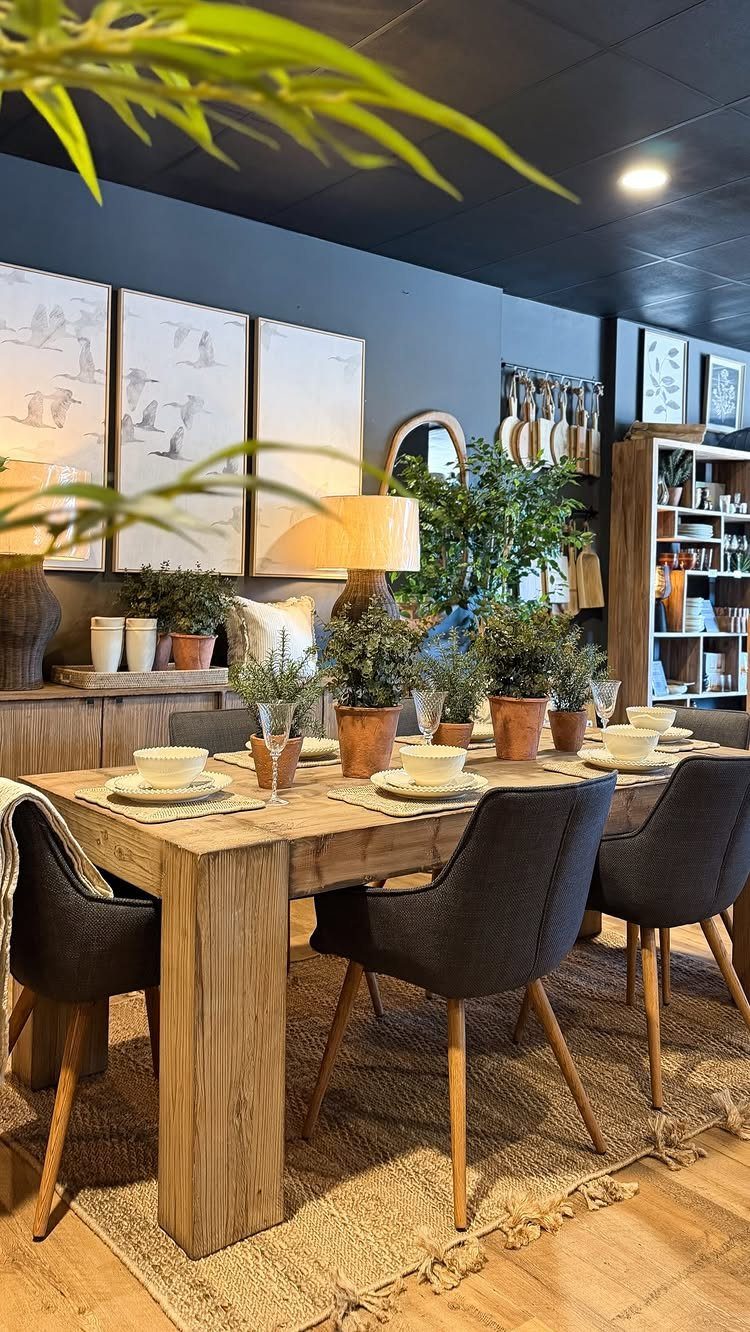
Dark gray chairs and a jute rug hold the palette quiet, so the grain of the wood is what you notice first.
Plates and a few plants are enough on top. Anything louder competes with the surface.
2. Live-edge Table
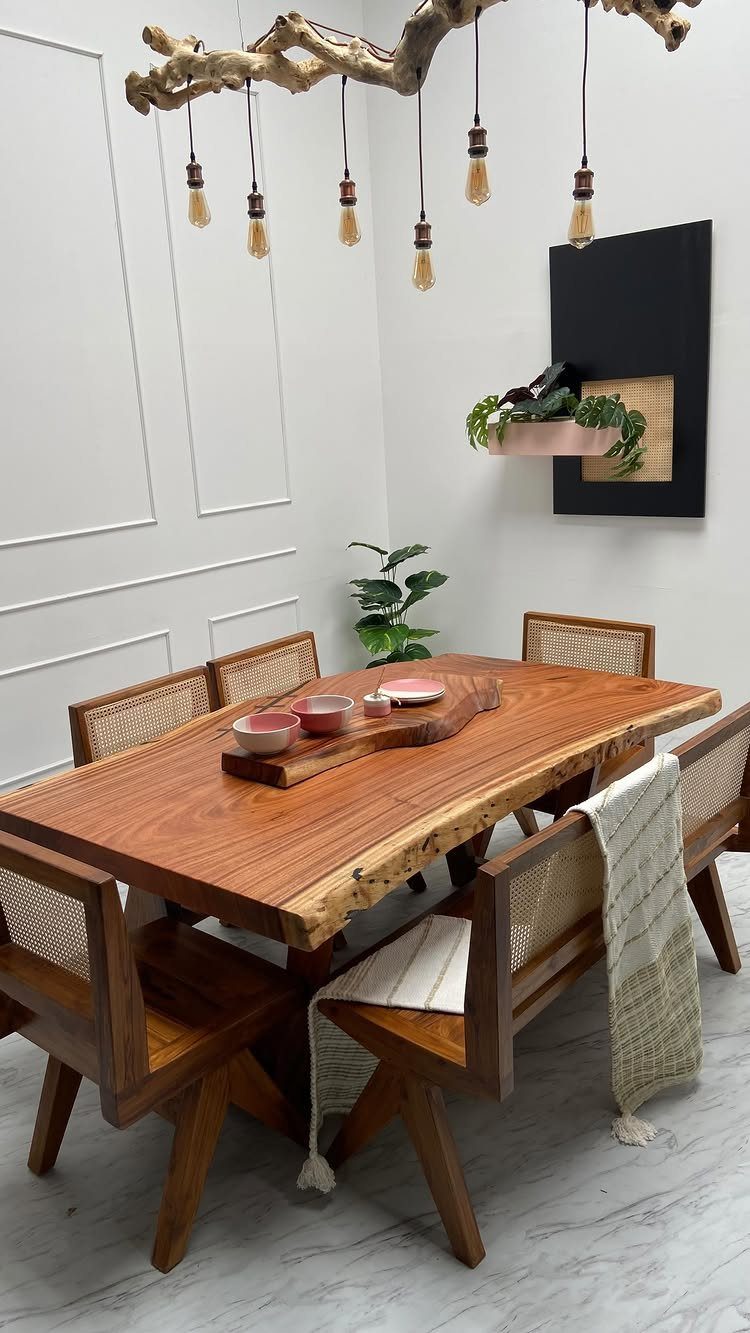
Branch-style lighting overhead and cane-back chairs beside it echo a live-edge slab without copying it. Keeping the walls white lets the uneven edge read as the one wild line in the room.
I like matching the chair tone to the slab, as in this setup. It looks calmer and lets the natural edge stand out.
For a small dining area, a slab with a gentle curve is easier to live with than one with deep dips.
3. Trestle Dining Table
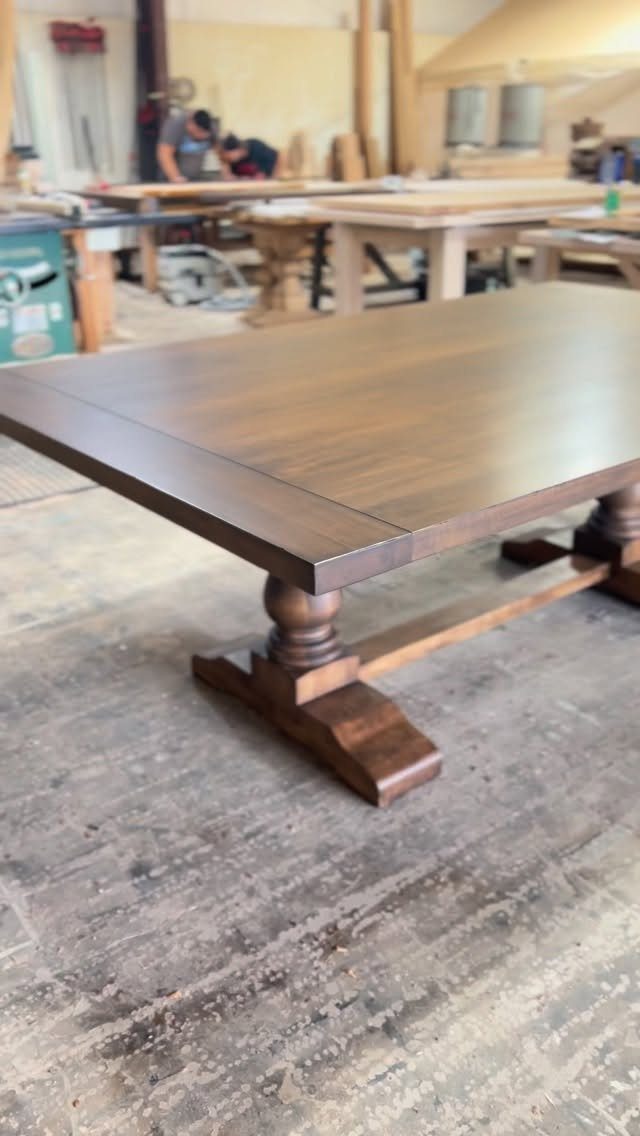
A trestle base spreads its support along the length of the table, so the legs sit well inside the corners. That makes it a good fit for a bench or a chair at each end without anyone fighting a leg.
Turned legs, as on this dark brown version, give the base a more traditional look than plain square posts. I would pick the dark finish for a room that already has light floors, since the table then anchors the space.
4. Natural Wood Table
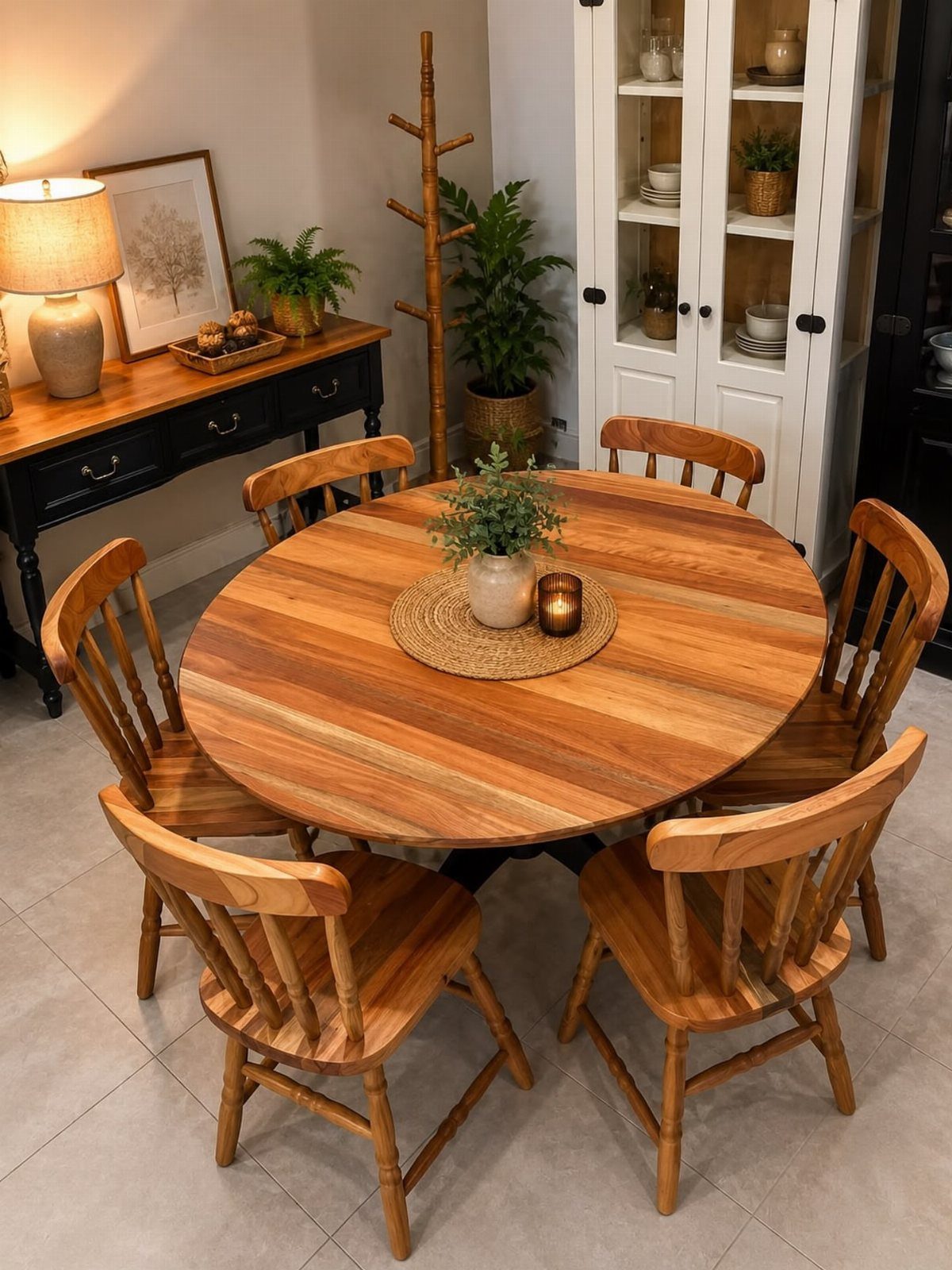
Pale or honey-toned wood with an easy grain suits renters who want warmth without a heavy finish. A round top with 4 spindle-back chairs seats a small household and keeps walking paths open in a tight dining nook.
Matching the chairs to the table tone, as here, makes the set feel cohesive. Break it up with a white cabinet and a few plants nearby so the wood doesn’t swallow the room.
5. Round Pedestal Table
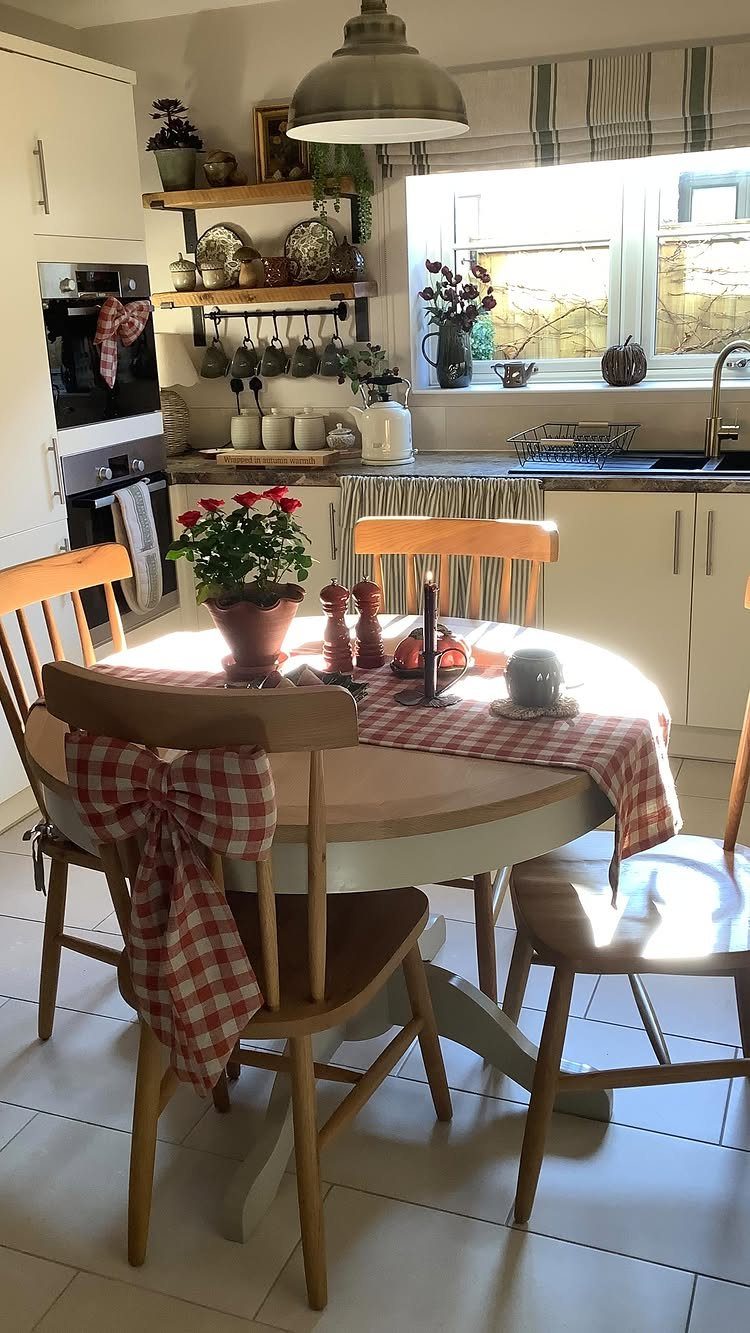
A single central base means no corner legs, so a round pedestal table lets people slide their chairs in anywhere around the edge. In a kitchen, that flexibility matters more than any finish.
The maker of this one notes it extends and seats 4–6, which is a smart feature if you host occasionally but live in a small space.
A light wood tone with a checkered runner keeps it feeling like a country kitchen rather than a formal dining room.
6. Wood Table with Metal Chairs
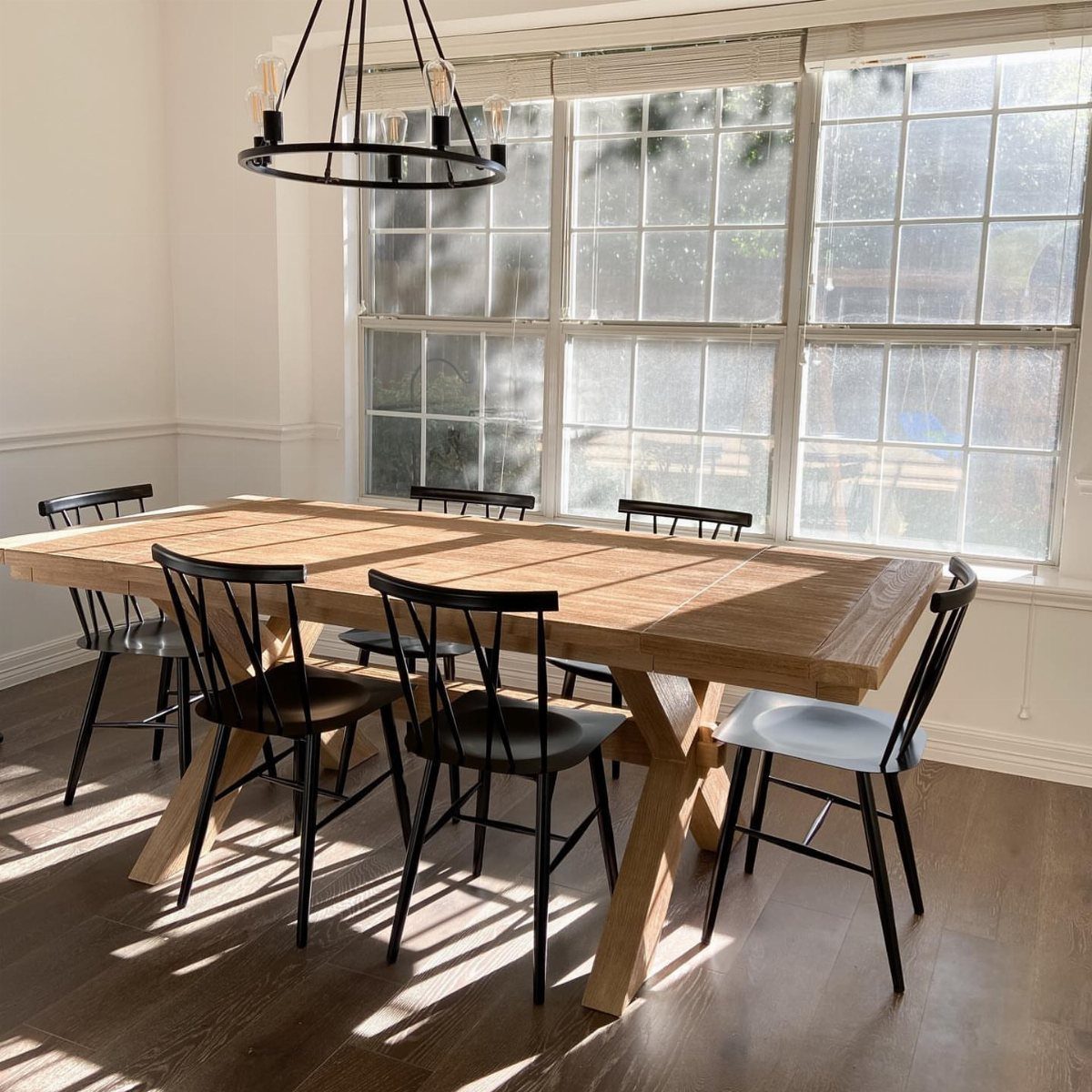
Black metal chairs bring a sharp, slim outline that offsets the softer grain of a light wood top. The contrast is the whole appeal, and a warm, natural finish like this one on the table is what makes it land.
X-legs add another graphic line, so I would pare back everything else in the room. A black chandelier overhead repeats the chair color and ties the look together.
Metal seats can feel hard during a long dinner, so a seat pad is worth considering.
7. Wood Table with Wicker Chairs
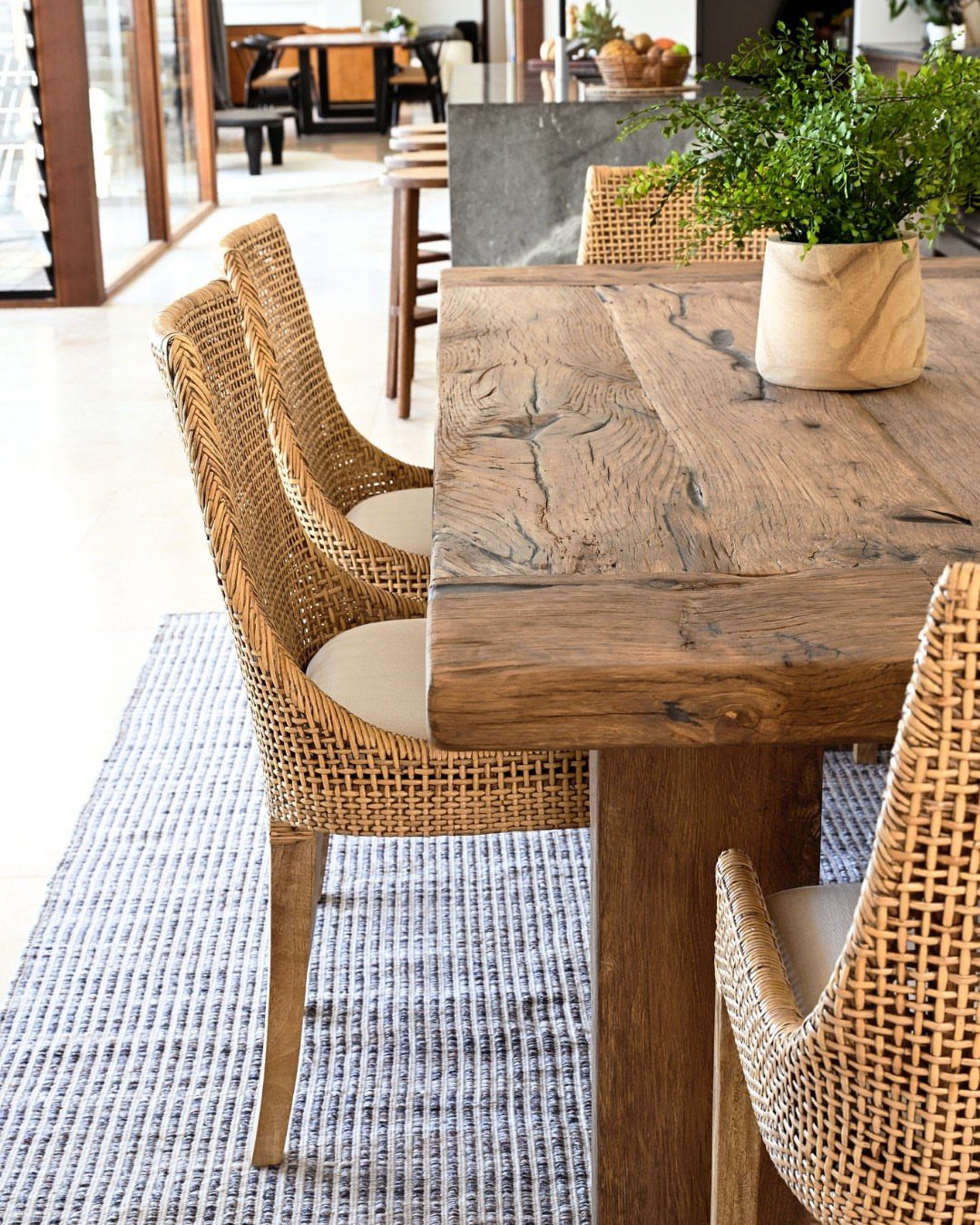
Wicker brings a loose, hand-woven texture that softens the straight lines of a wood tabletop. The 2 materials share a natural tone, so they sit together without any effort.
A gray rug underneath keeps the pairing from turning too country. I would stop at one potted plant on the table and leave the rest of the surface bare, so the weave and the grain both get a clear look.
8. Wood Table with Leather Chairs
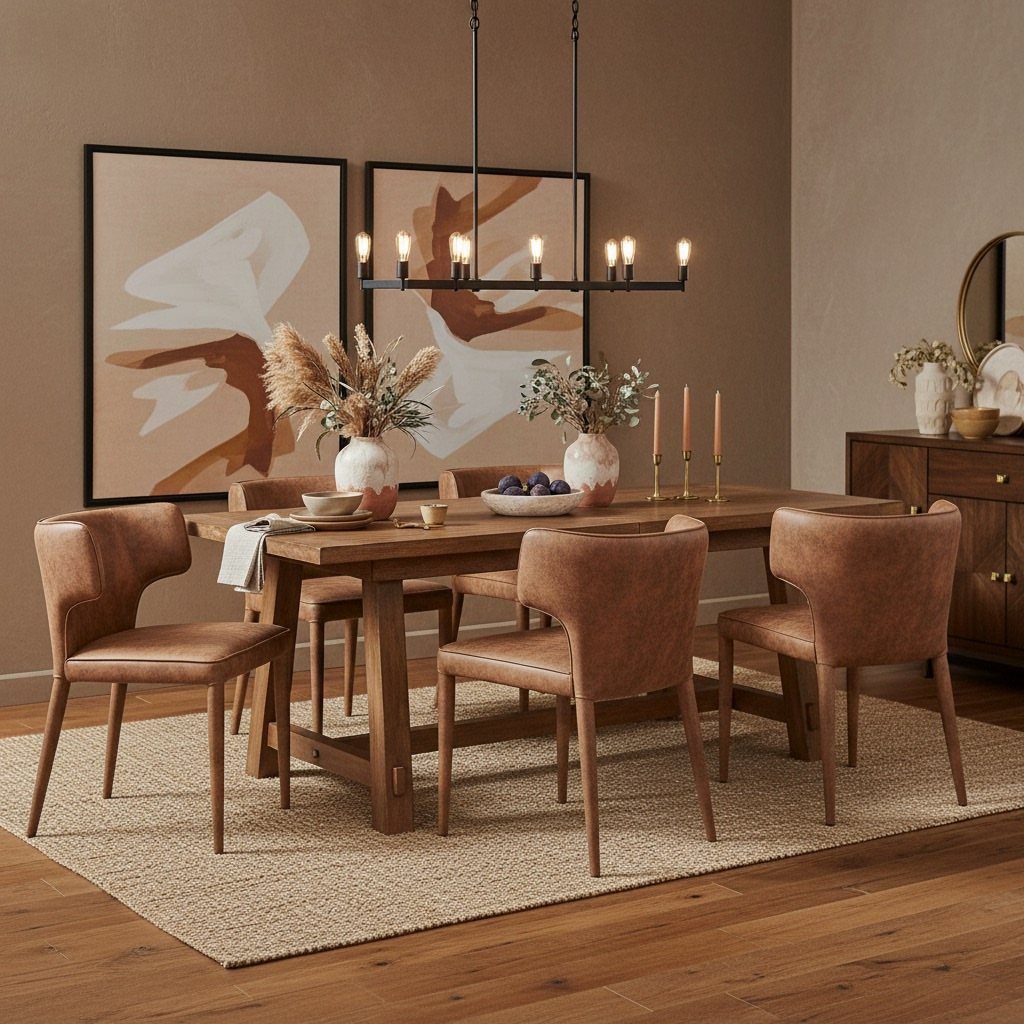
Brown leather chairs give a wood table some weight. Six of them around a long top read as a proper dining set, and the leather’s smooth finish sets off the rougher grain beside it.
A linear chandelier over the table suits that long shape better than a single round fixture. Keep the walls neutral and hang one piece of abstract art, as here, so the room stays calm.
Leather costs more than wicker or painted wood, so I would buy fewer chairs before I bought cheaper ones.
9. Round Farmhouse Table
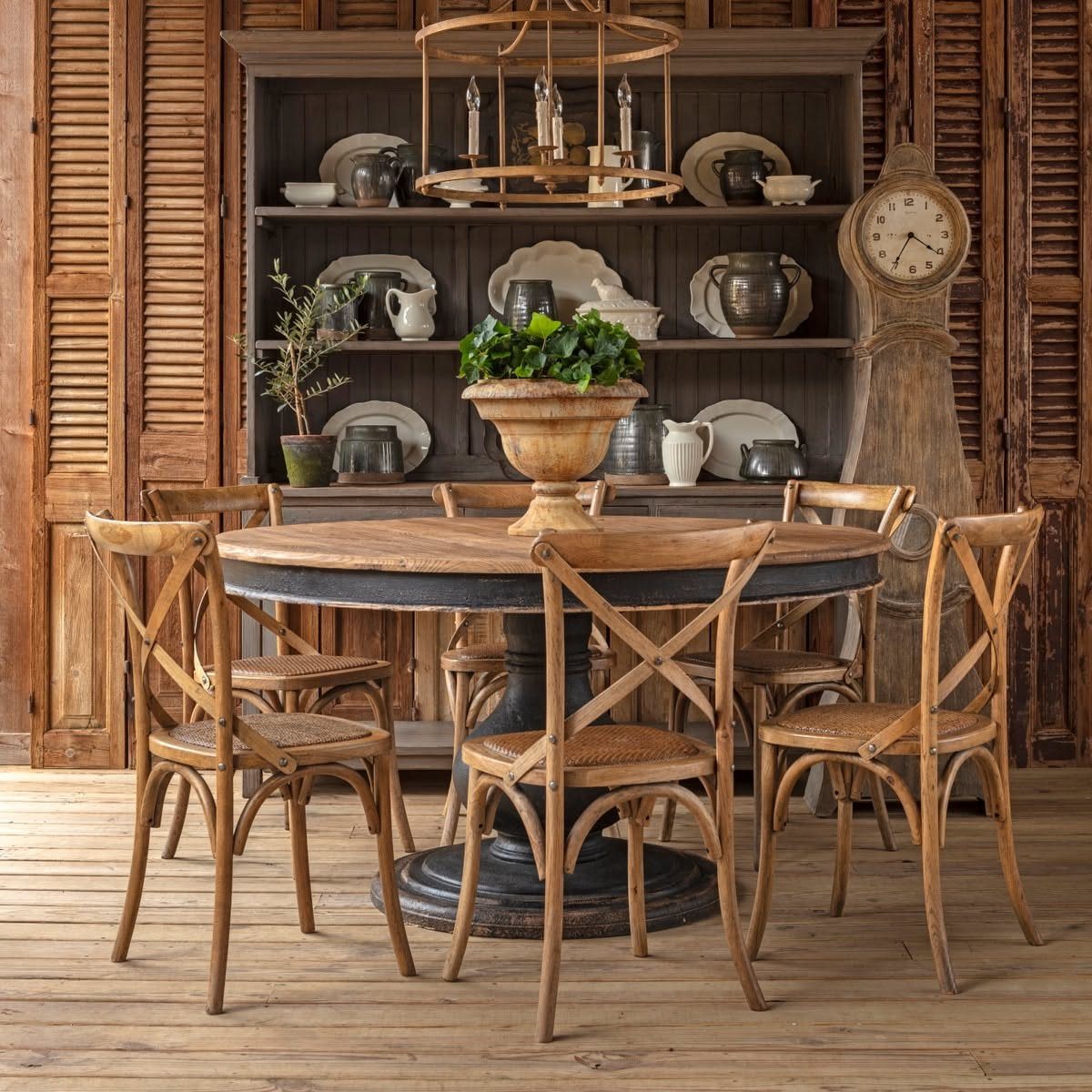
Round tops put everyone at equal distance, which is why a round farmhouse table feels like a family meal and not a formal setting. 4 cross-back chairs fit that shape neatly.
Wood paneling, a pottery hutch and a grandfather clock all lean the same old-house direction here. If your room is plainer, the table and chairs alone still carry the look.
I would choose a round top over a rectangle in any dining nook where the walkway is tight.
10. Star-pattern Wood Top
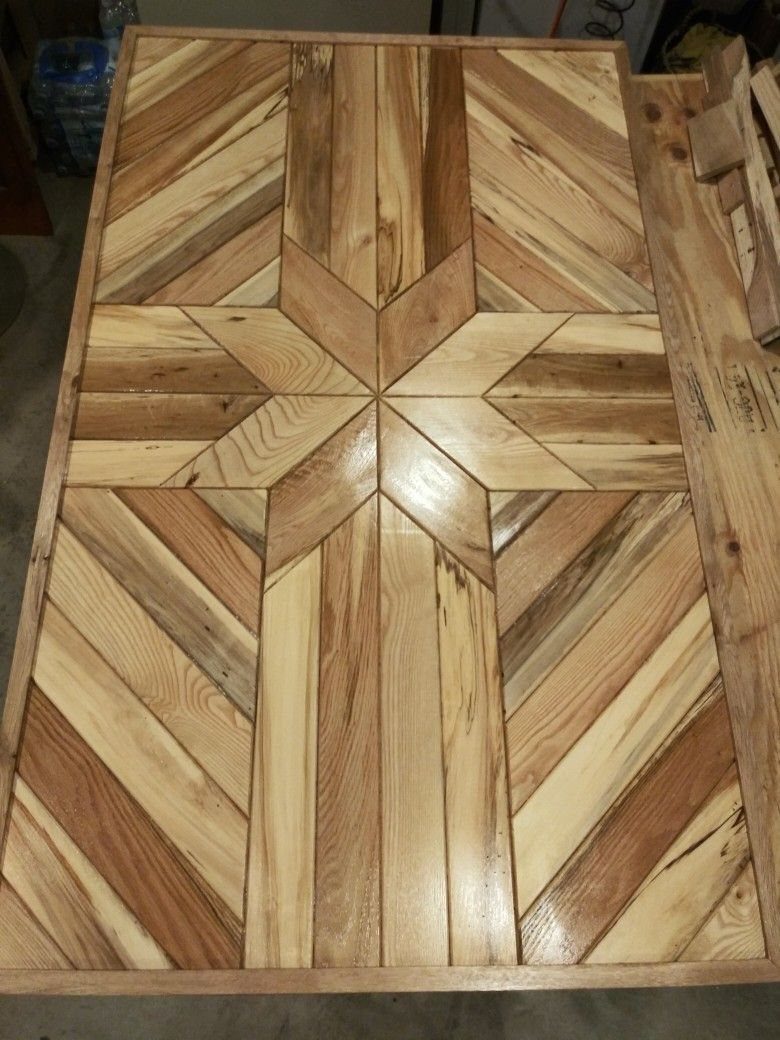
A star pattern turns a plain tabletop into the focal point of the room. Light-colored planks are cut and fitted into a radiating shape, and the seams between them make the design.
This is a build for someone comfortable with a workbench, since every piece has to meet cleanly at the center. Pick planks in two or three close tones so the star shows without looking busy.
Keep the base simple. Plain legs and bare surroundings let the top do the talking.
11. Mixed Wood Tones
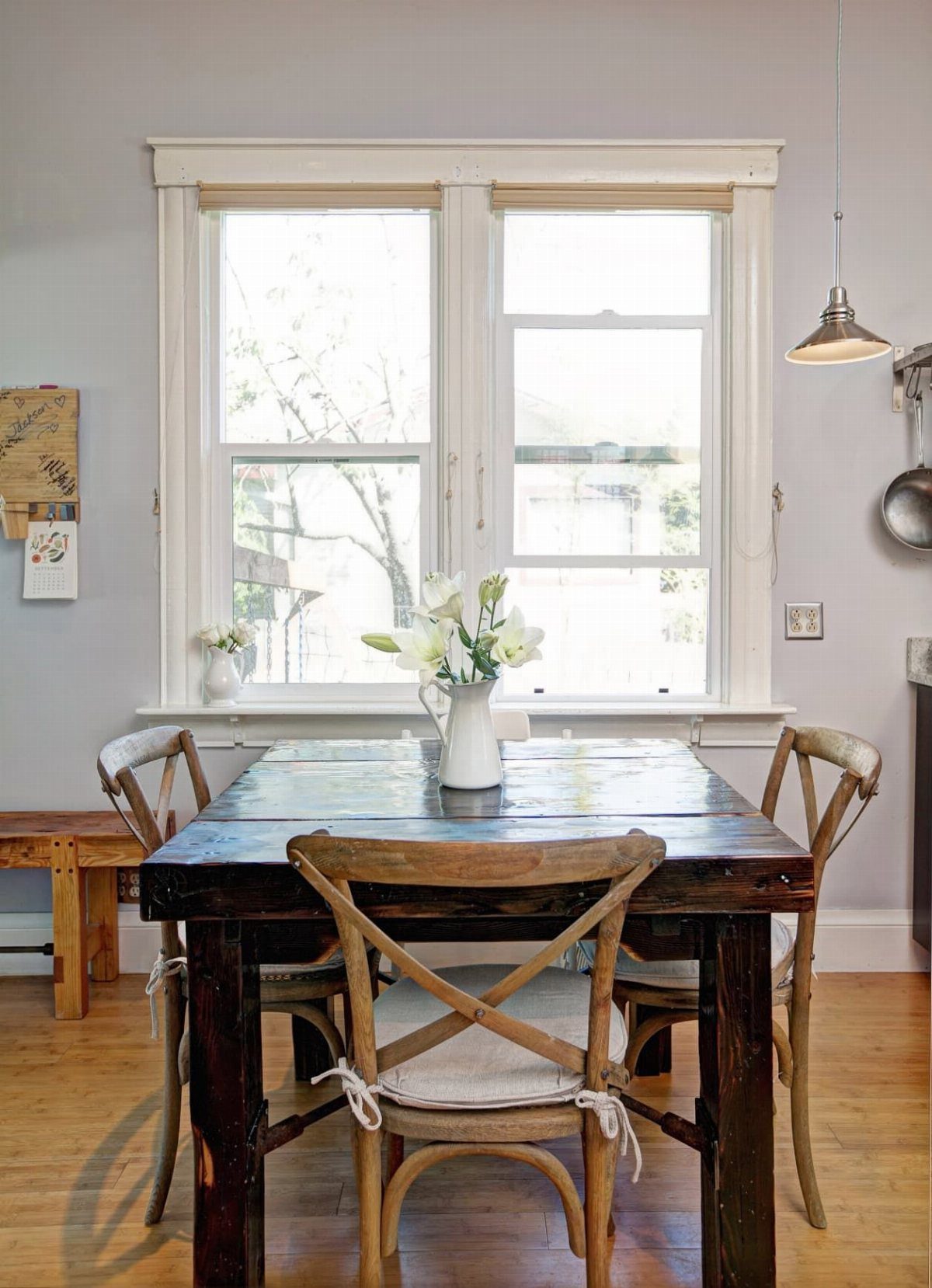
Pairing a dark table with lighter chairs gives each piece its own outline, so the set looks collected instead of bought in one box. Light cross-back chairs stand out cleanly against a deep brown top.
White cushions on the seats tie the chairs to the white vase on the table. I like that repeat; it keeps 2 wood tones from feeling random.
If you try this, keep the chair tone clearly lighter. A near match looks like a mistake.
12. Industrial Metal Base
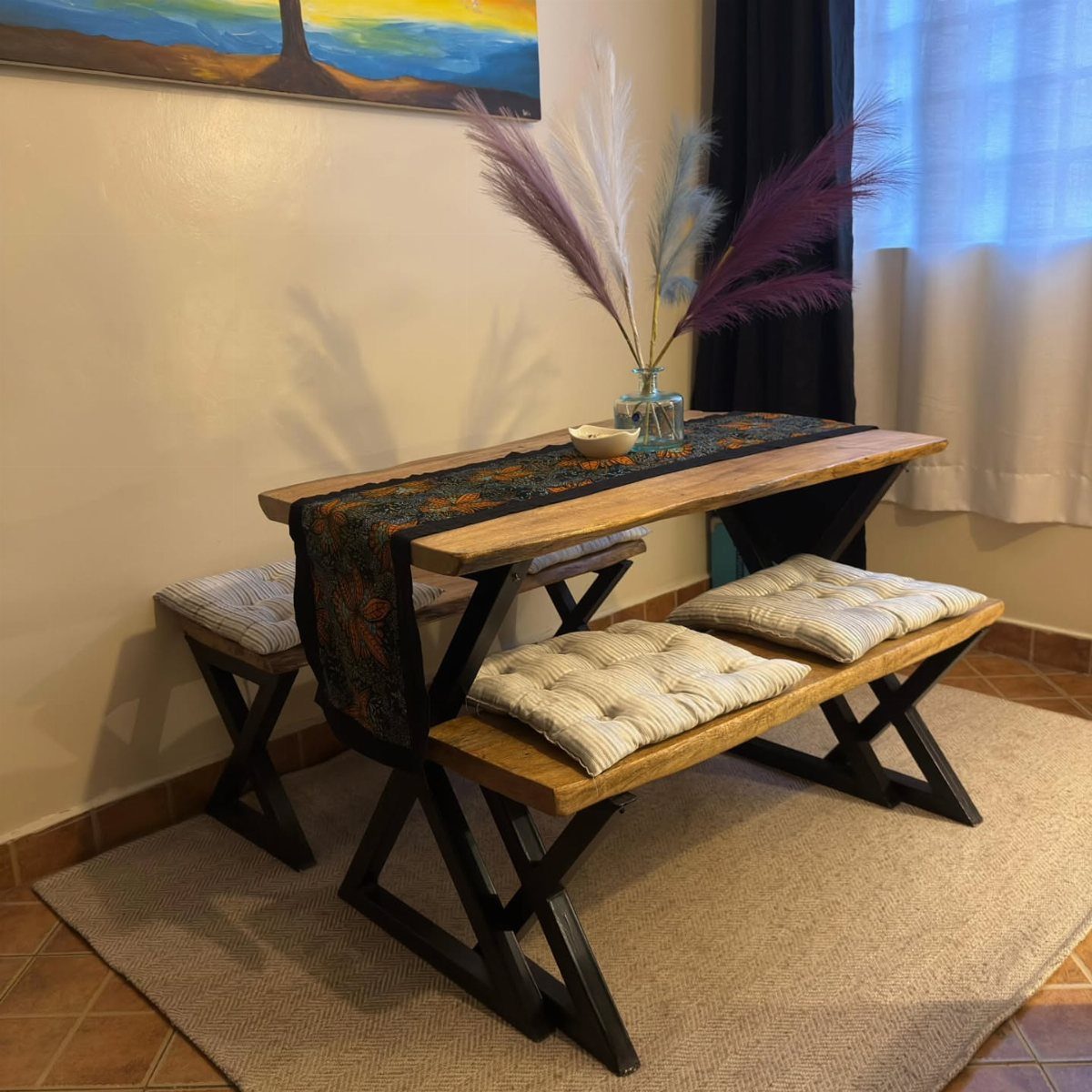
Black X-shaped metal legs under a wood top add an industrial edge without changing the rustic feel of the grain.
Choose benches built on the same steel frame as the table, and the set reads as one piece instead of mismatched parts.
Cushions on the benches make them comfortable for longer meals.
I would pick this base over wood legs when the room already has plenty of warm tones and needs a sharper line.
13. Wood Table with Bench
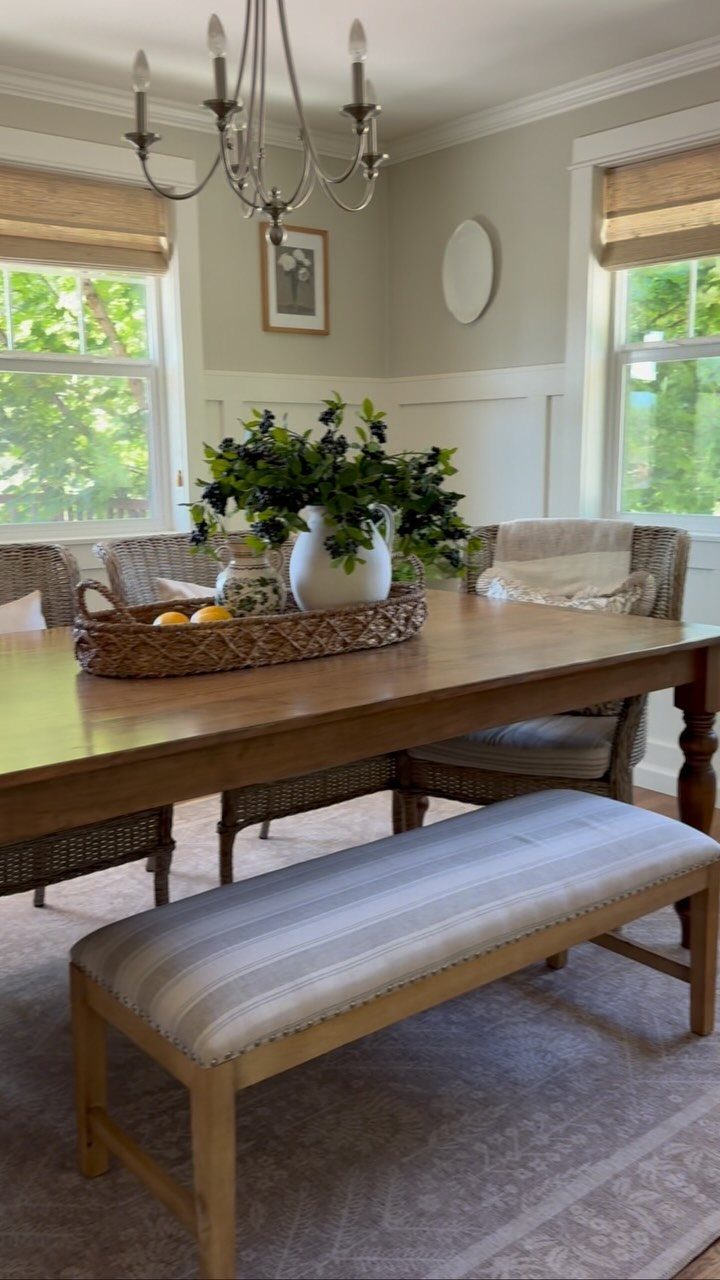
A bench along one side of a rectangular table seats more people than chairs would and tucks fully under the top when the meal is over.
In this room, a striped cushion on the bench adds pattern, while the wicker chairs on the other side keep the mix relaxed.
I would put the bench on the long side against a wall or window and chairs on the open side. That keeps the room looking balanced and the walkway clear.
14. Cross-back Chairs
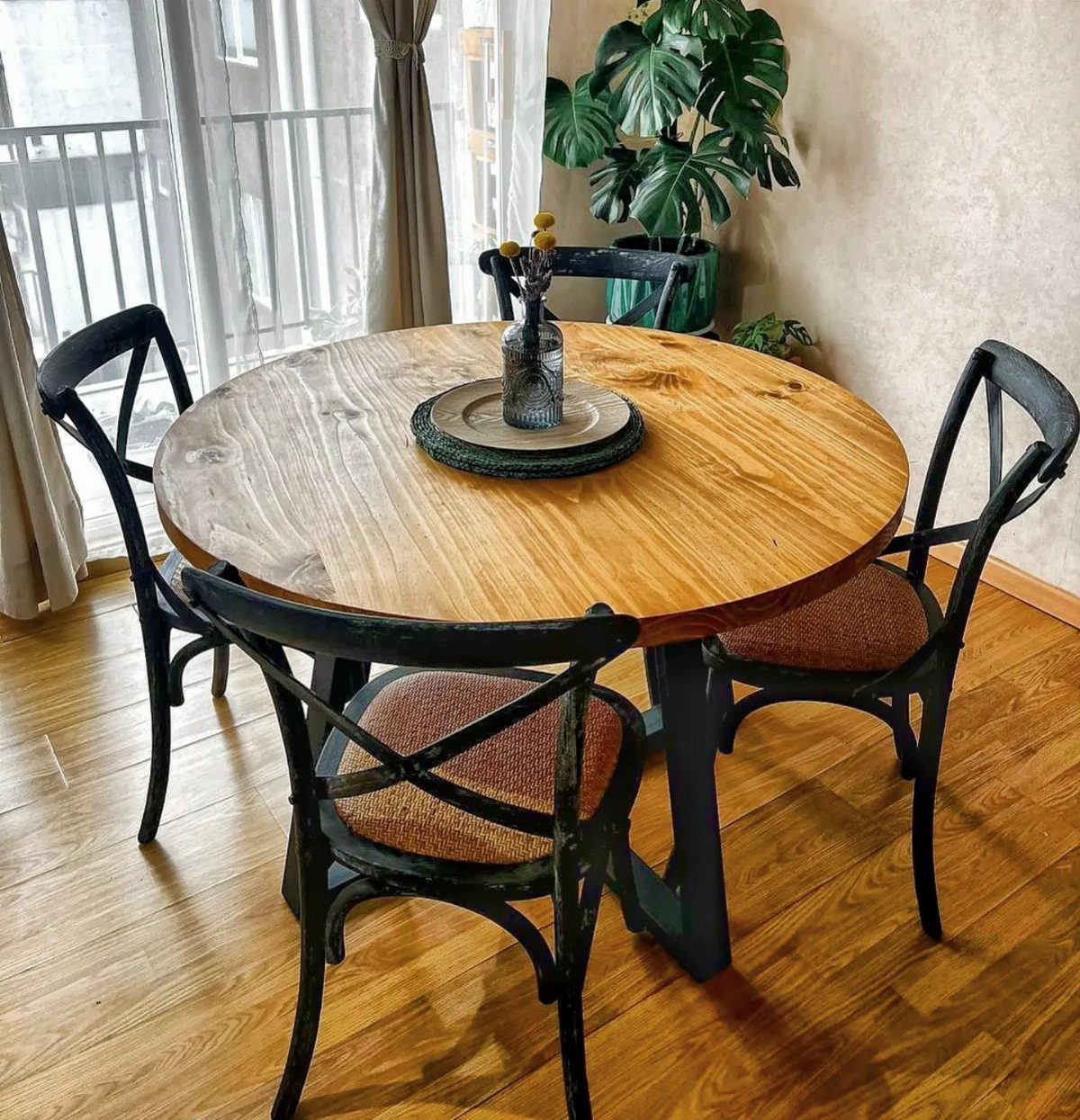
Black cross-back chairs give a round natural wood table a crisp frame. The X on each backrest adds a graphic detail, and the dark finish keeps the pale grain of the top in front.
3 chairs around a round table leave room for a fourth or fifth later, which suits a household that grows slowly.
Keep the table decor light, as here with one vase and a plant, so the chairs stay the strongest line in the room.
15. Spindle-back Chairs
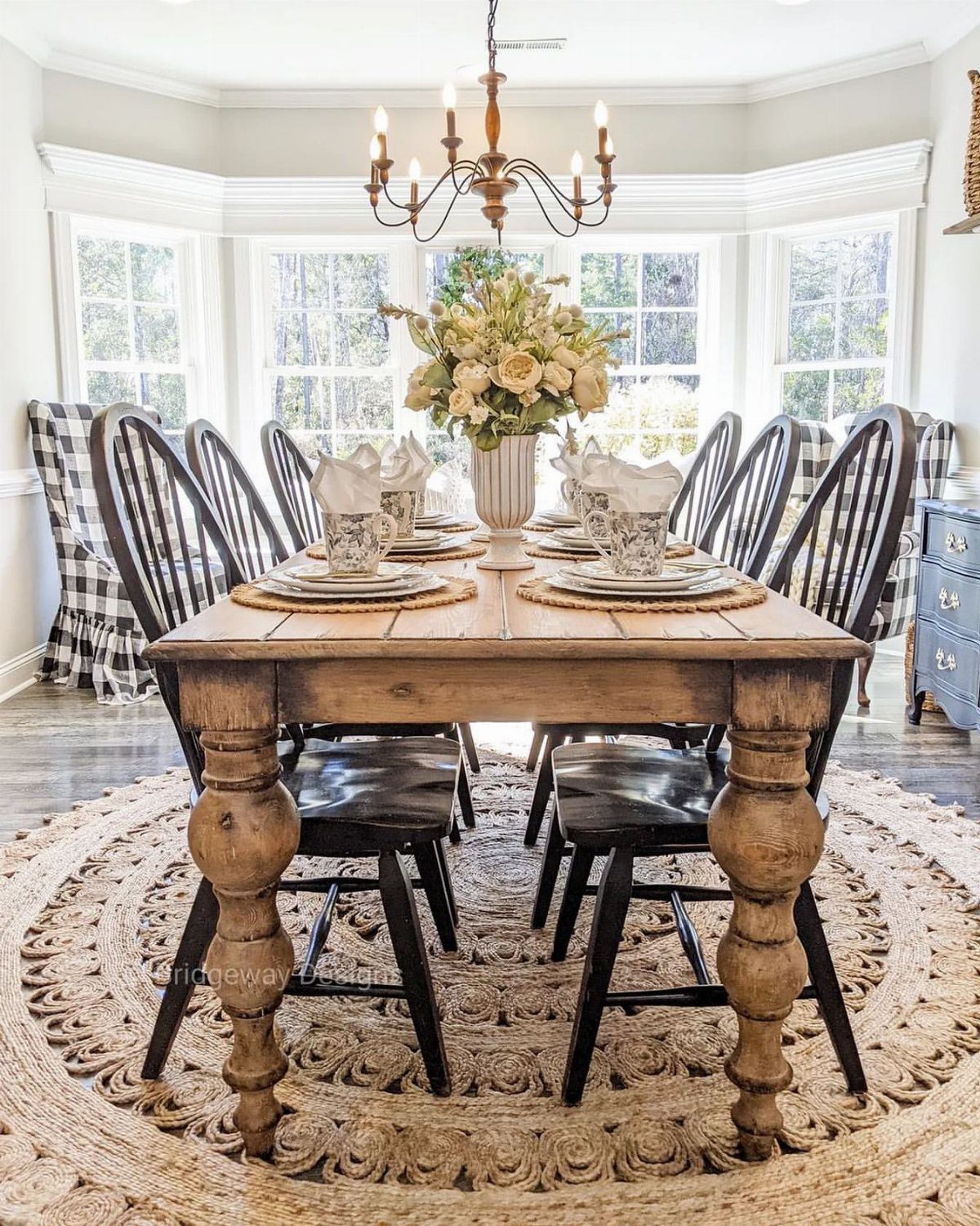
Rows of thin vertical spindles let light pass through the chair backs, so black spindle-back chairs look lighter than a solid-back chair of the same size. Around a rustic table, they bring a traditional outline that never fights the wood.
A jute rug underneath adds one more natural texture without adding color. I would keep the centerpiece loose and floral, like this one, because the chairs already supply plenty of pattern.
To keep the table the star, pick black. Wood-tone spindles blend in.
16. Distressed Wood Table
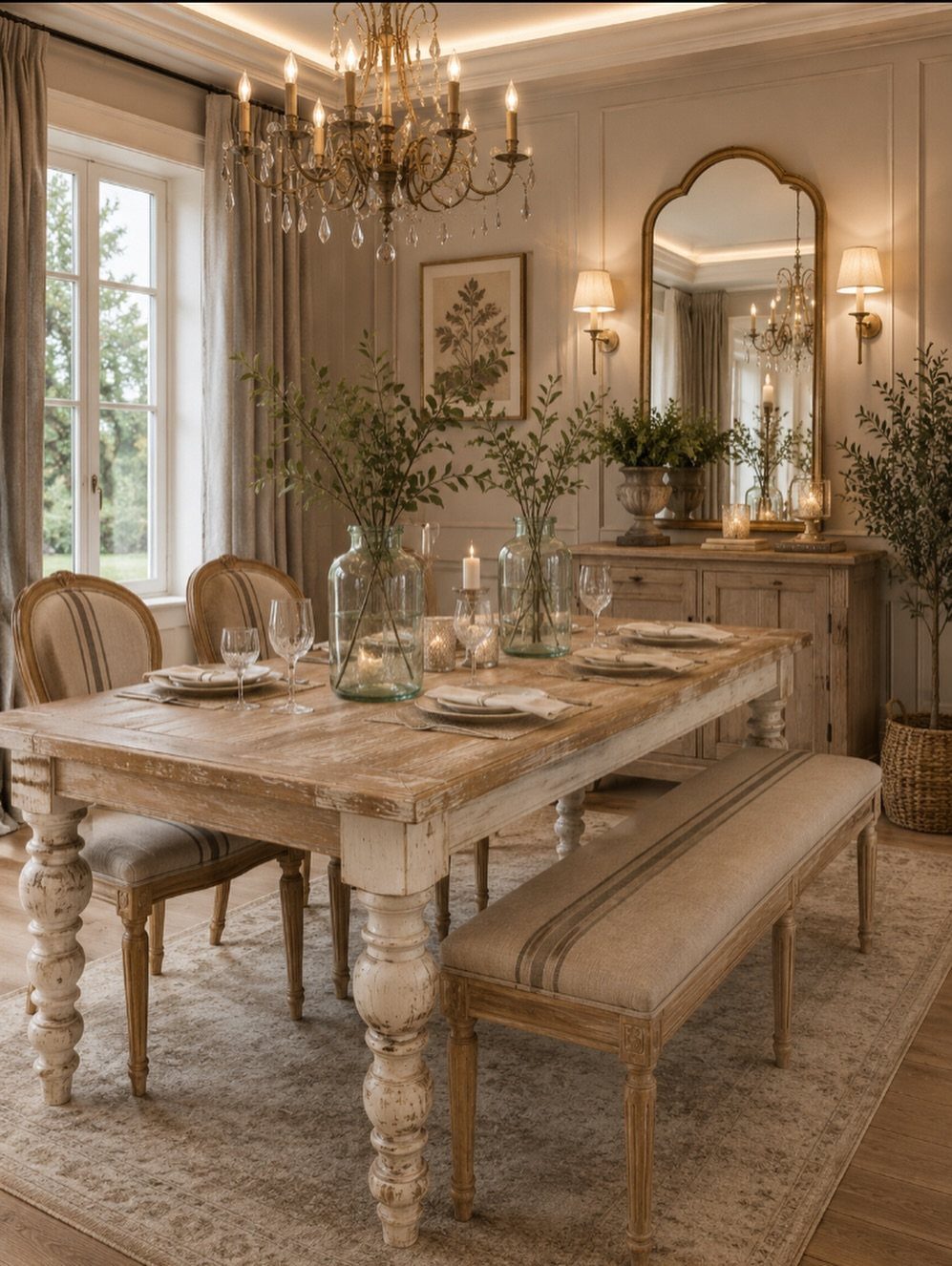
Worn edges, softened paint and a rubbed-back finish give a distressed table age that new wood can’t fake. With turned legs, it leans toward cottage style, and upholstered chairs plus a matching bench keep the look soft instead of rough.
I prefer distressing on a table with a plain top, because heavy wear plus heavy decor gets messy fast. A large mirror and a few floral arrangements, as in this room, are about the right amount.
Buying a pre-distressed table saves a weekend of sanding, but the finish is only as good as the maker’s patience.
17. Octagonal Barnwood Table
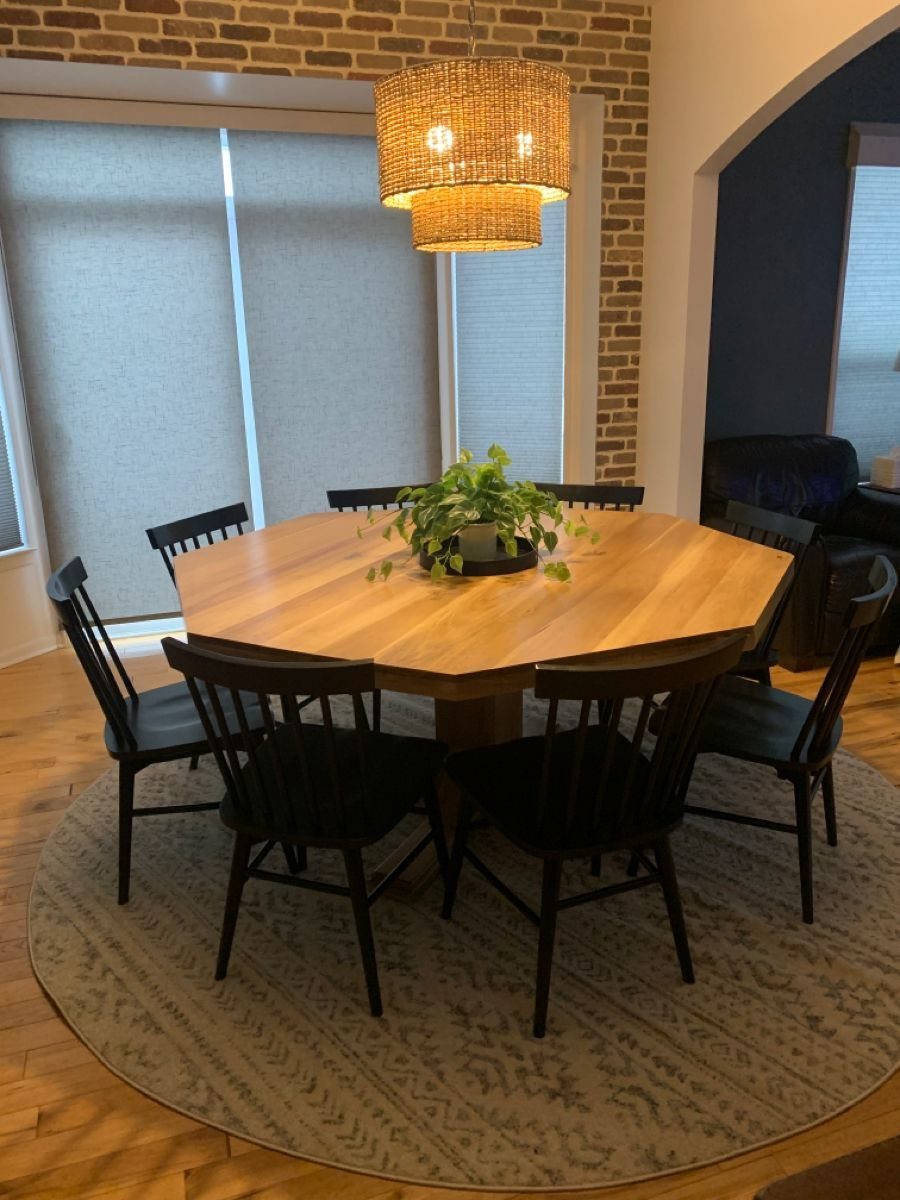
An octagonal tabletop reads as a round table with a firmer outline. Black chairs repeat that crisp edge, and a round rug underneath softens it so the shape doesn’t feel stiff.
This is a good choice for a square dining area, where a rectangle leaves dead corners. A woven pendant overhead repeats the natural material, and a single plant in the center keeps sight lines open across the top.
Against a brick wall, I would keep every other surface plain. The shape already brings plenty of interest on its own.
18. Round Table with Root Base
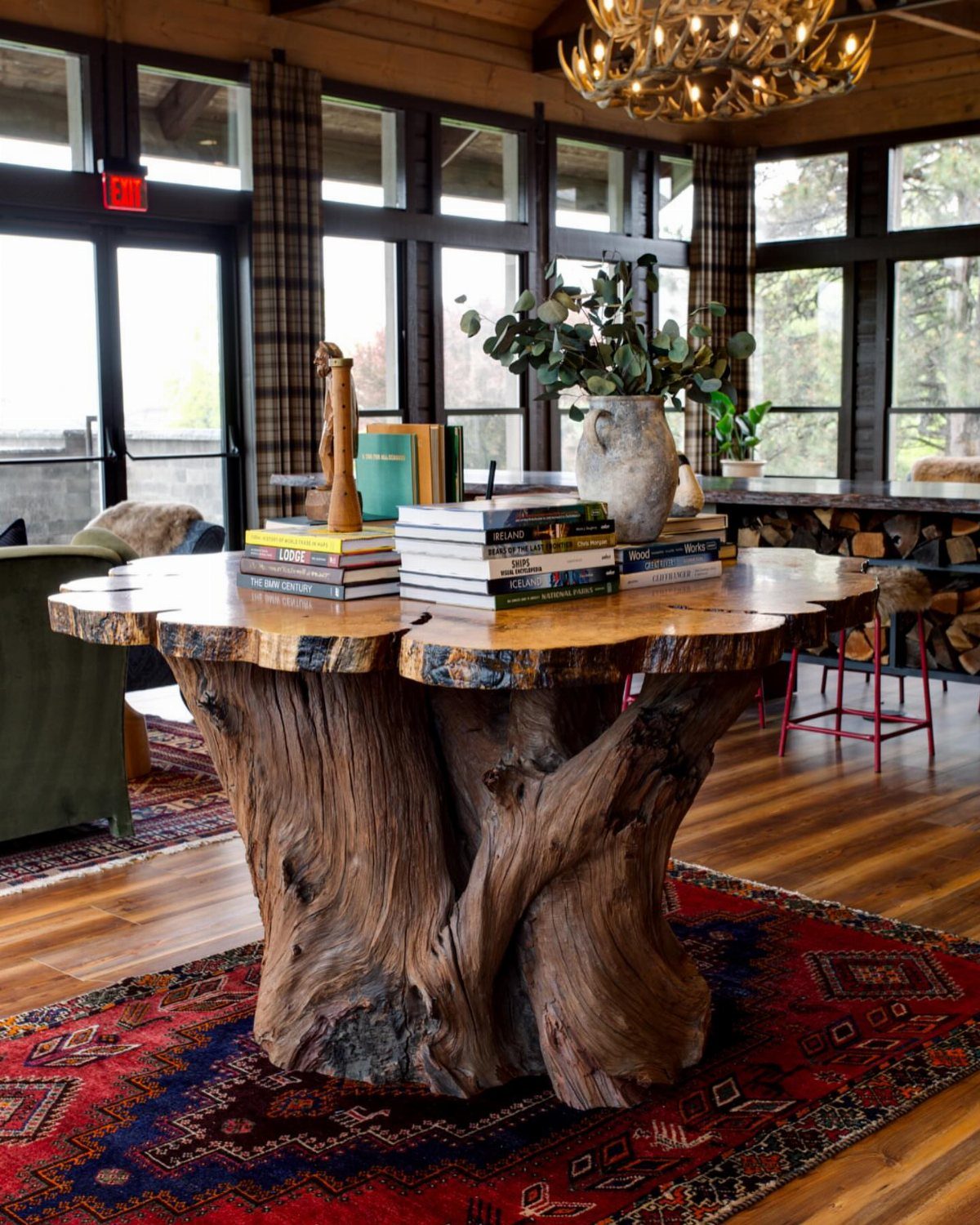
A thick root base replaces ordinary legs with something that looks grown rather than built. Under a round live-edge top, it gives the table a sculptural, one-of-a-kind shape, and no two bases will match.
The base takes up the center, so chairs can pull in from any side without a corner leg in the way.
I would keep the top styling to a few books and a vase, as here, since the base is the main event.
A rug in a deep color, like this red one, grounds the heavy form so it doesn’t feel like it’s floating.
19. Round Table with Metal Base
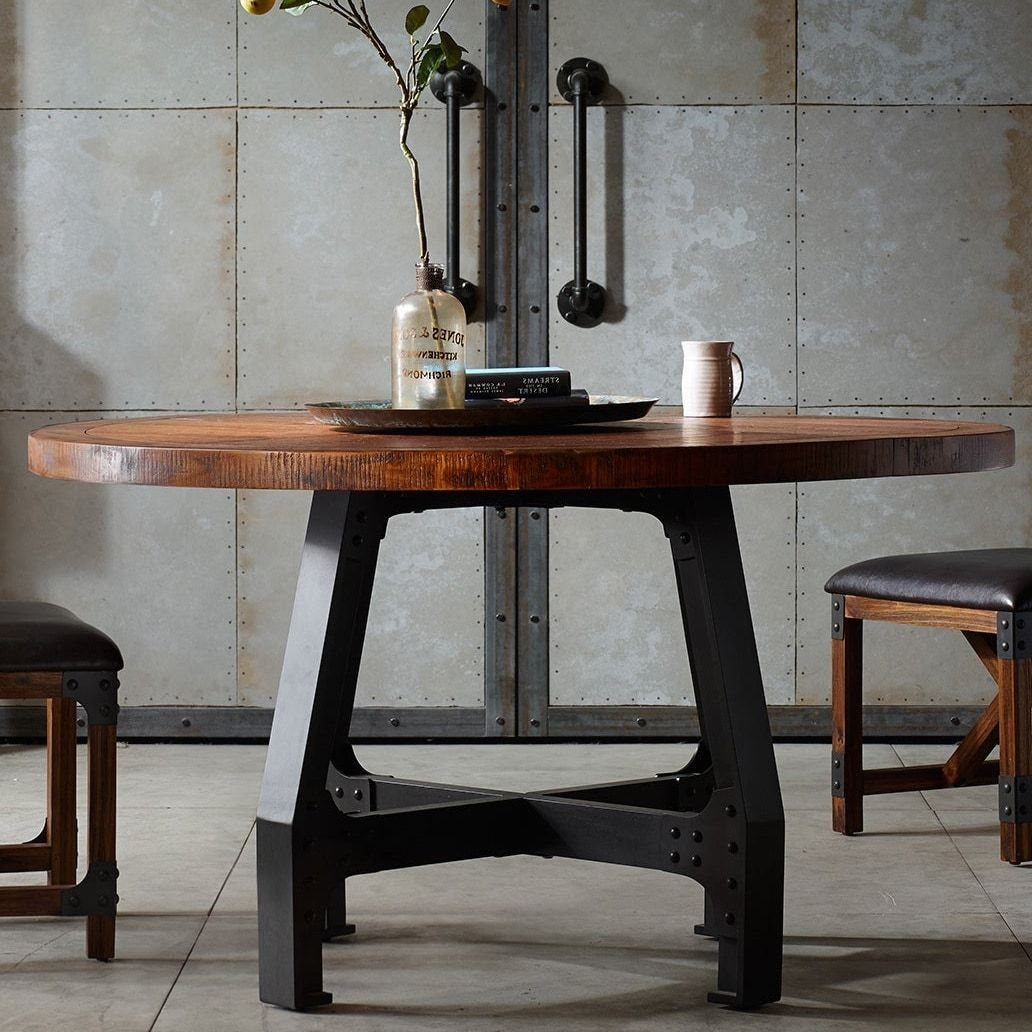
A black U-shaped base under a round reclaimed top keeps the rustic wood from tipping into farmhouse. The metal reads as modern, the planks read as old, and the two hold each other in check.
Because the base sits under the center, stools and chairs can tuck in at any angle. Against a gray metal wall like this one, I would keep the tabletop bare except for a single vase.
20. Wood Table with Slab Legs
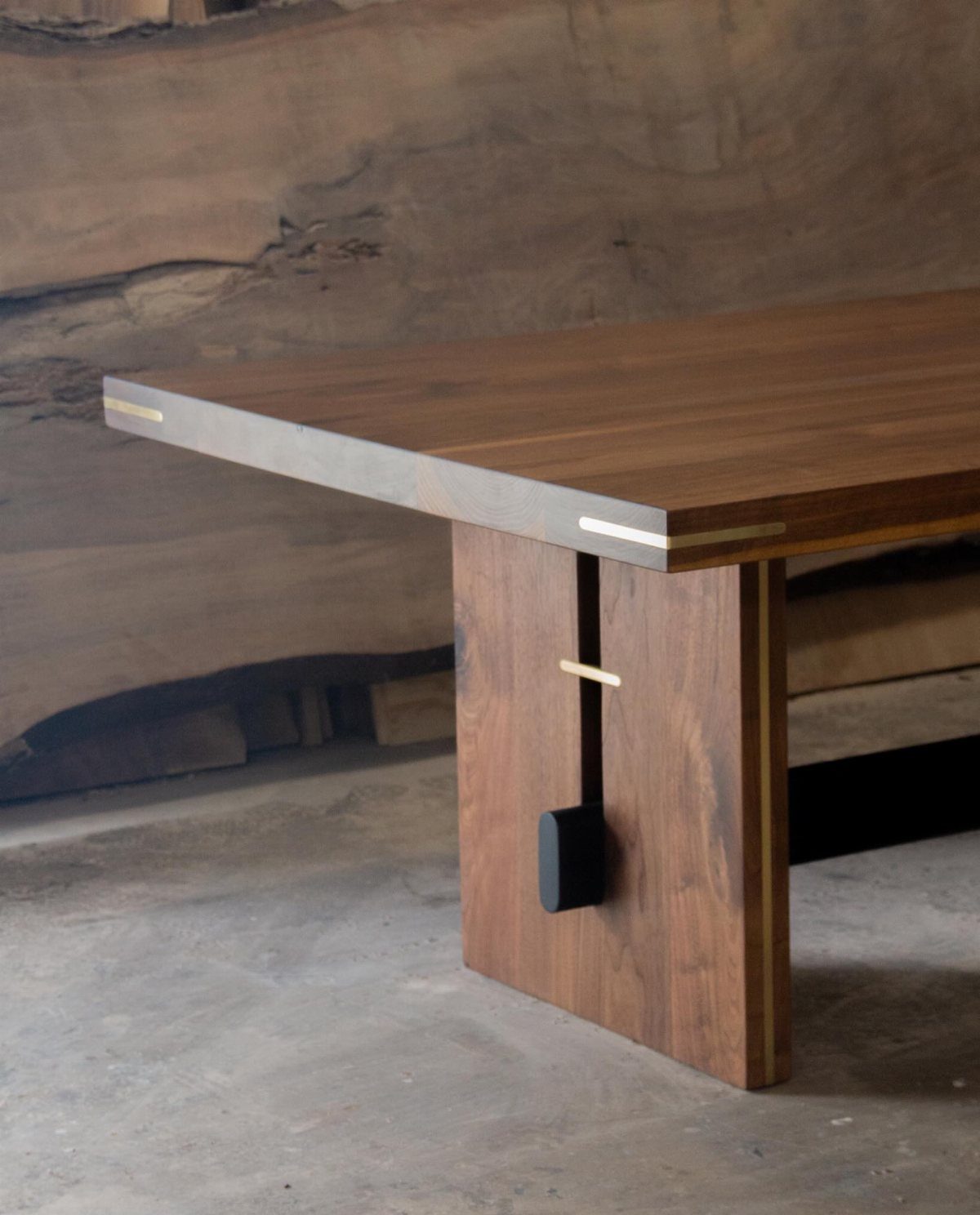
Two broad slabs of walnut standing in for legs make the table look carved from one block.
With no narrow posts at the corners, people can sit anywhere along the sides, and the thick wood gives the whole piece real visual weight.
I would use brass sparingly, as here, and leave the floor and walls plain.
21. Wood Table with Turned Legs
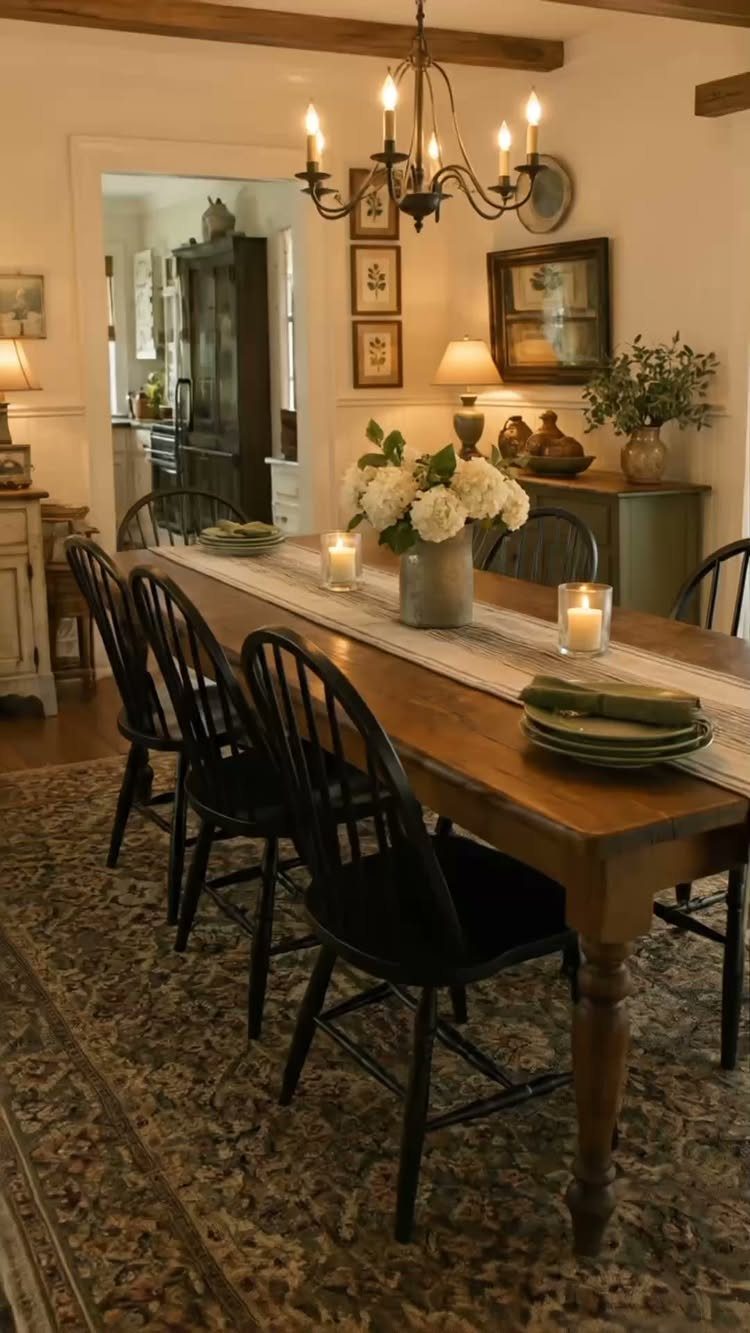
Chunky turned legs give a plain rectangular top a traditional profile, with the rounded shapes carved into the wood doing the decorating. They suit a room where you want rustic to feel settled rather than rough.
Black spindle-back chairs suit that older look, and the wood stays the main event.
One floral arrangement down the middle is enough. If the legs are thick, the table already has the detail.
22. Wood Table with A-frame Legs
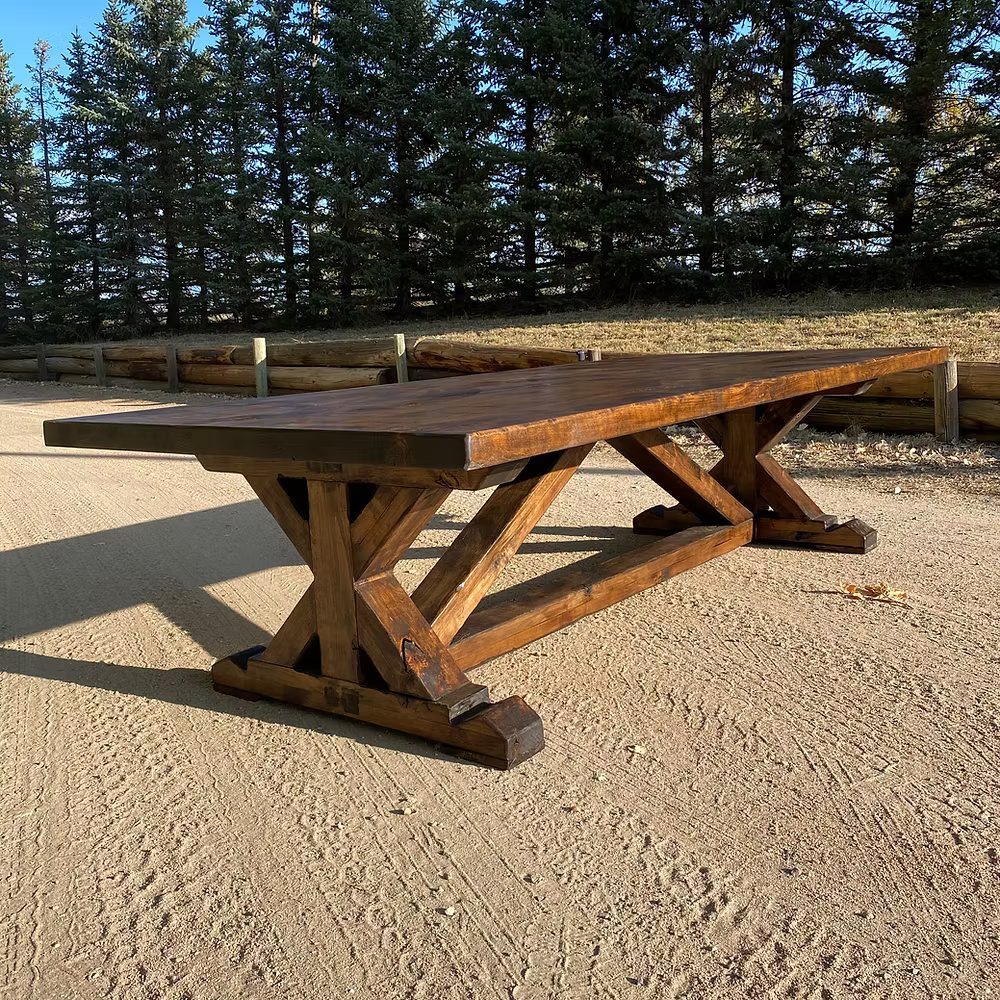
A-frame legs lean inward and meet a center stretcher, which gives a plank top the sturdy build of a work table. The slanted lines give a rustic table a clear shape from any side.
I like this style in a dark stain, since the angled base stays readable against pale walls.
23. Walnut Table with X-legs
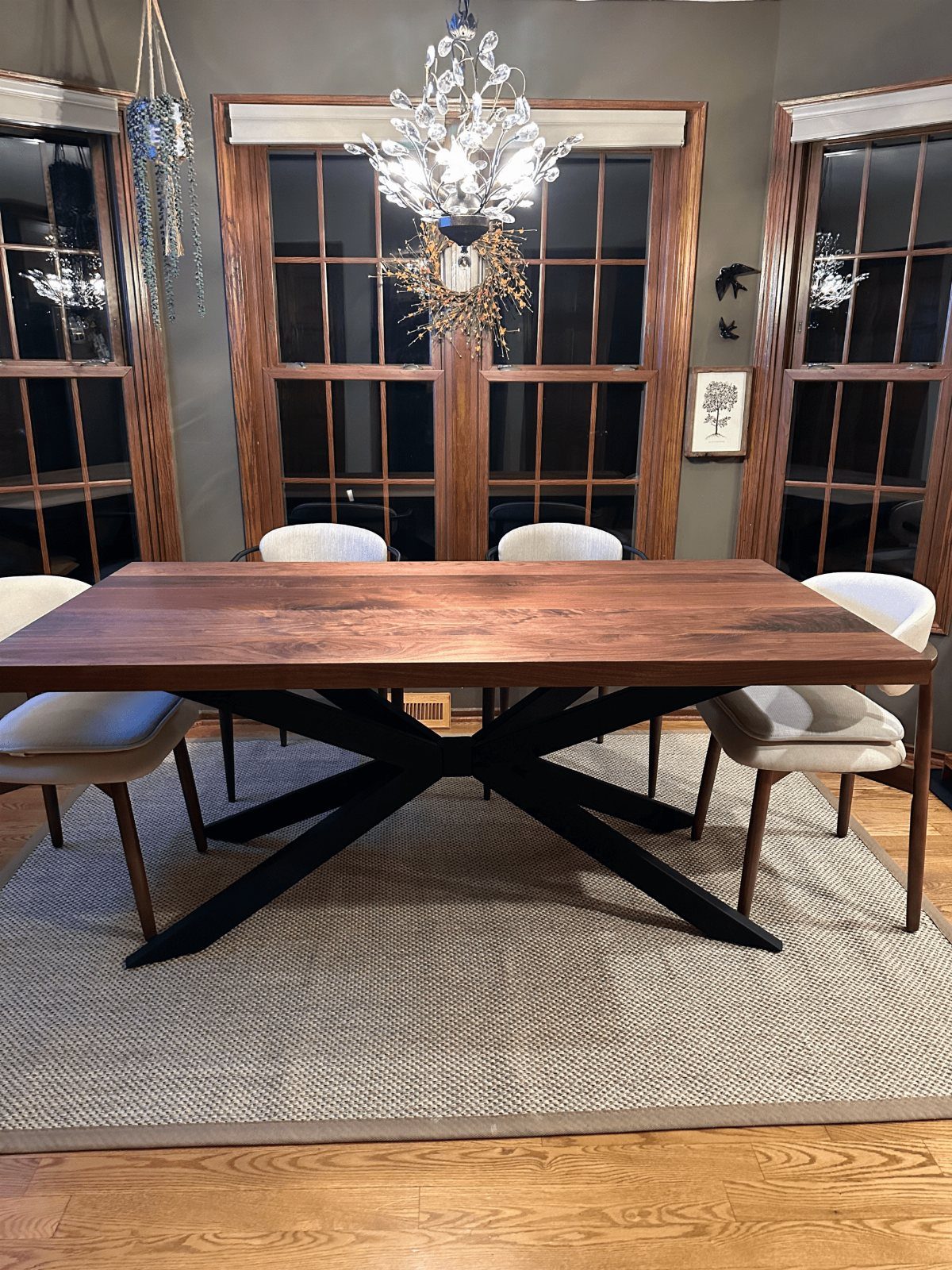
A live-edge walnut top gets a lighter look from black metal X-legs, which add a thin graphic line under the heavy dark slab. Together they sit between rustic and modern.
White upholstered chairs, as here, give the dark wood a clean contrast. A rug under the whole set marks out the eating zone, and I would pick one with a plain pattern so the natural edge stays the focus.
24. Sculptural Wood Table
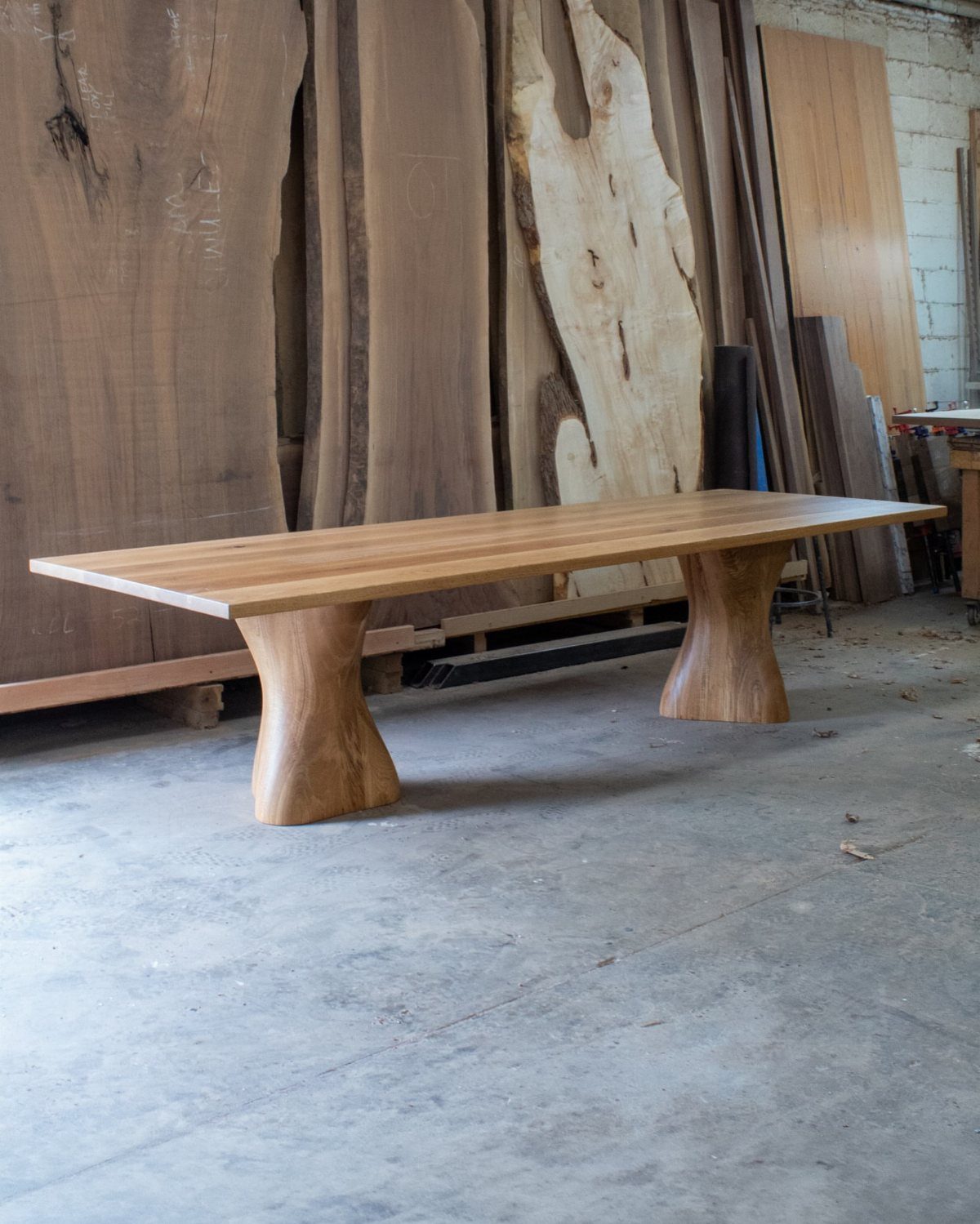
Thick curved legs turn a long natural wood table into something closer to furniture art. The light wood and rounded bases feel contemporary, yet the grain keeps it clearly rustic.
A base this bold needs a quiet top, so I would skip centerpieces and runners and let the length of the wood show.
Pick a pale finish like this one if the room is small, since dark curved bases get heavy fast.
25. Epoxy Resin Wood Table
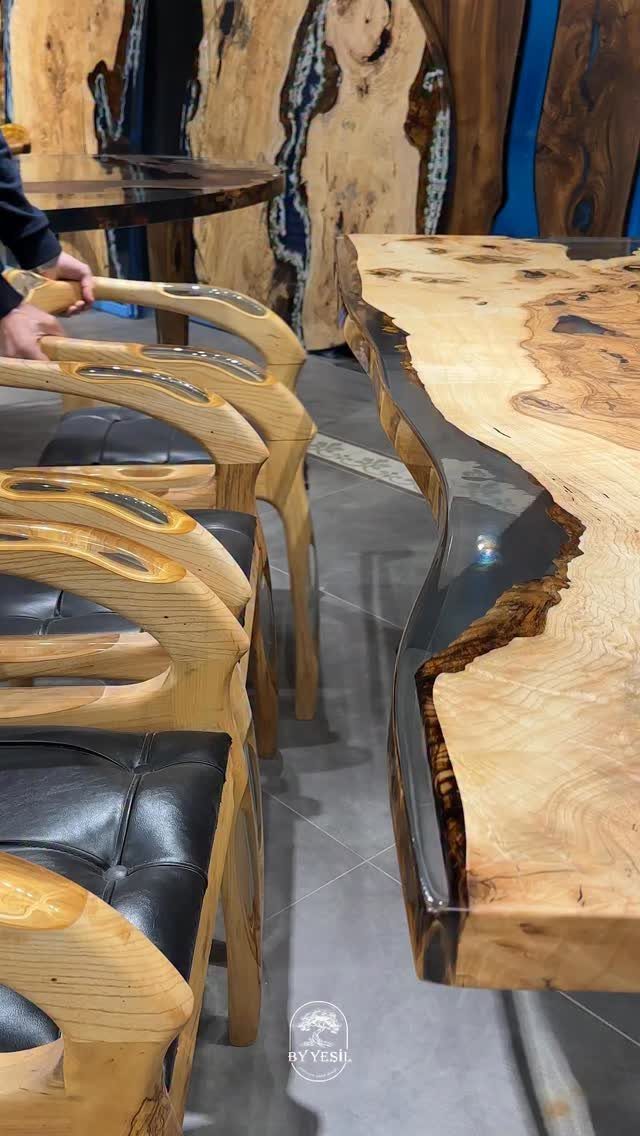
Dark epoxy resin poured into the natural gaps of a live-edge slab leaves a black channel through the wood, so the split becomes the design instead of a flaw.
Against the warm grain, that dark line looks like a river running down the table.
Carved wooden chairs match the top and keep the set in one material family. I would leave the surface bare, since the resin line is the detail people will look at.
26. Wood Table with White Chairs
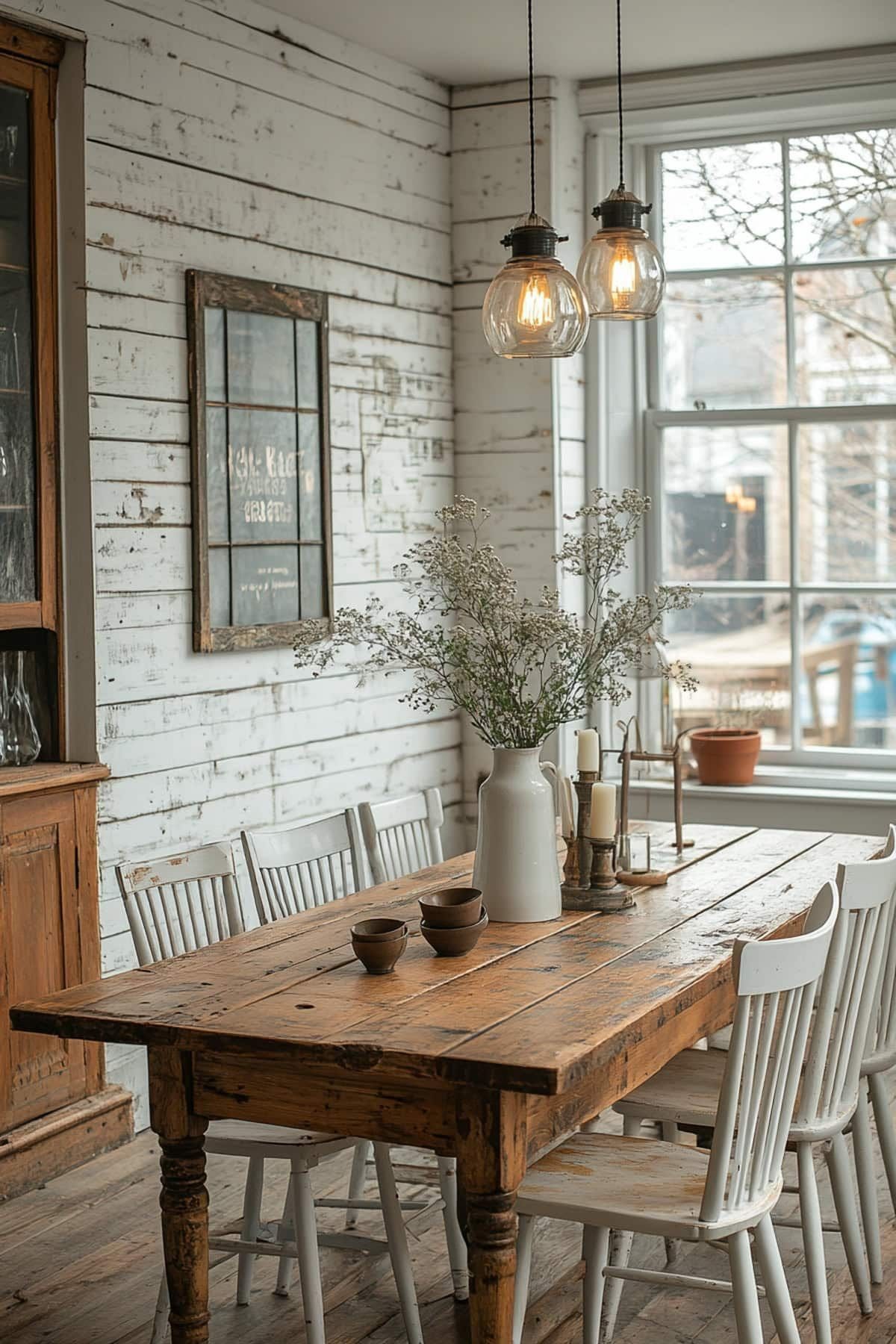
White chairs lighten a heavy reclaimed wood table and let the grain stand out, the way a plain frame sets off a picture.
Painted wooden seats keep the material honest, so the pairing stays rustic instead of turning glossy or formal.
Bright walls and a pendant light overhead help the contrast read clean. I would add one vase of flowers and stop there.
Choose white chairs over dark ones when the room has little daylight.
27. Wood Table with Upholstered Chairs
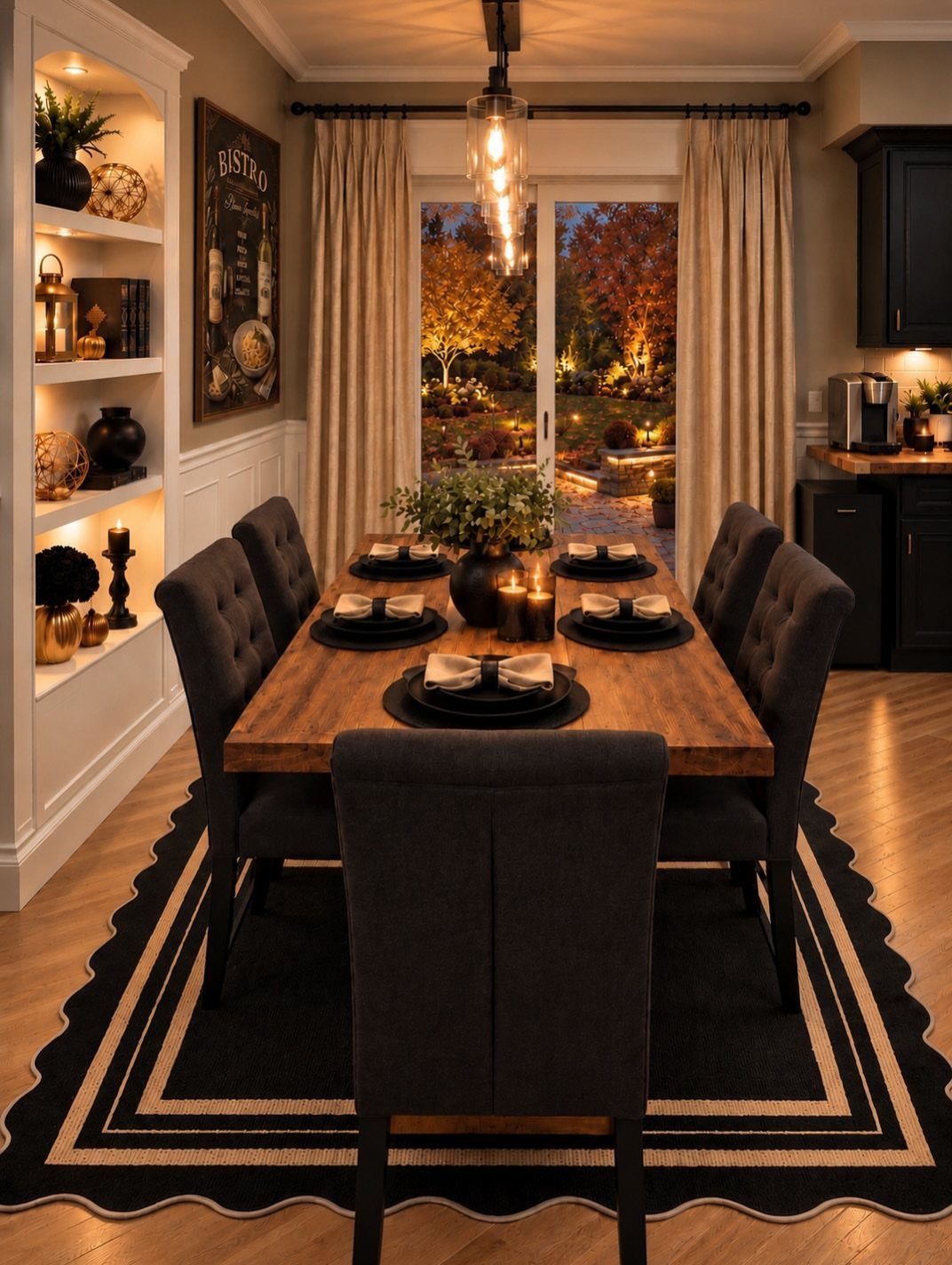
Dark gray upholstery turns a hard wooden table into a place where people linger. The fabric seats soften the grain’s roughness, and upholstered chairs line a long top without crowding it.
A black and white patterned rug underneath hides the crumbs and marks out the dining zone. Fabric asks more of you than wood or metal, so I would pick a tight weave you can wipe or brush clean.
28. Farmhouse Table Centerpiece
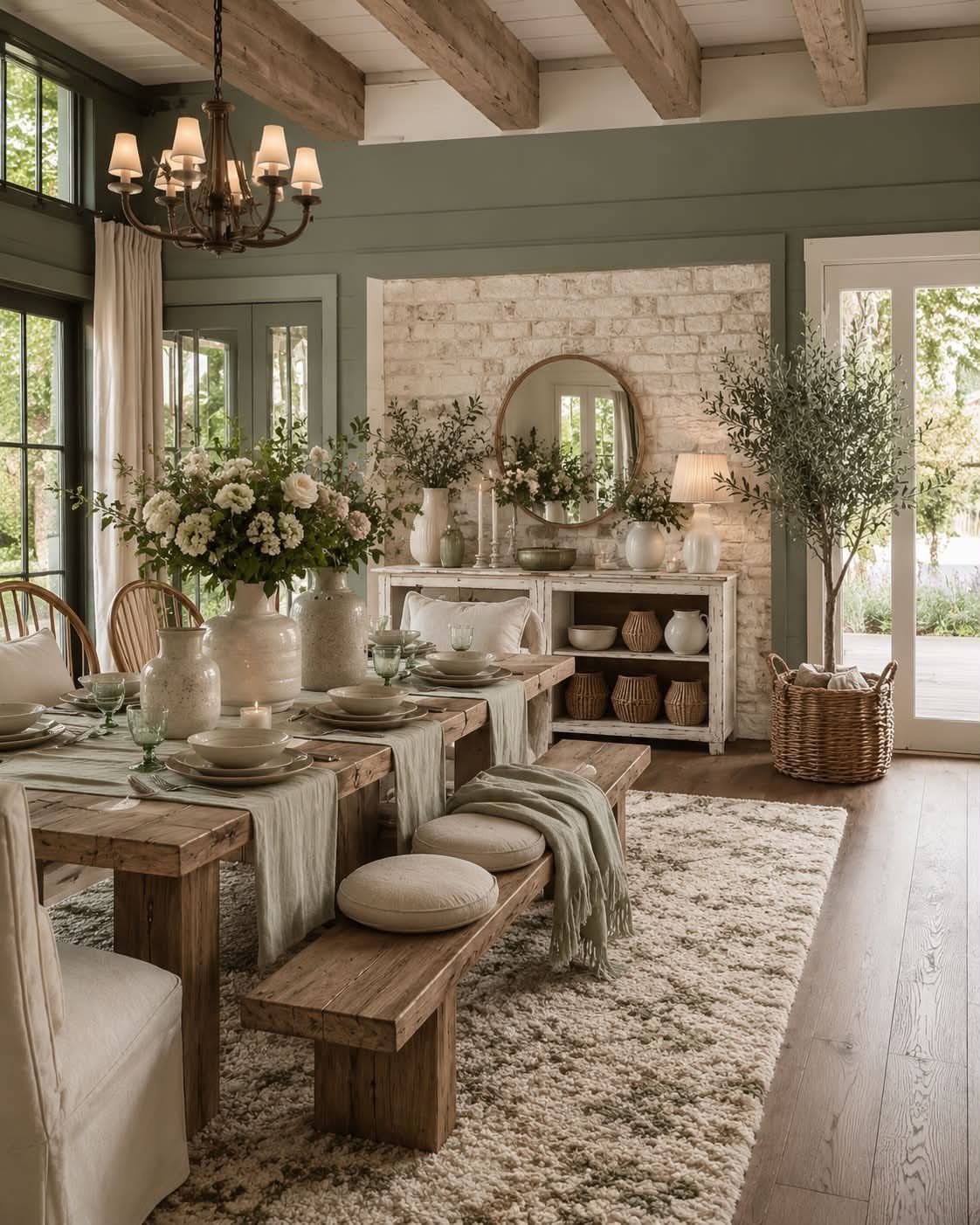
A farmhouse tabletop centerpiece works best as a low, loose line down the middle: a few floral arrangements spaced along a light green runner, with room left for plates.
Keep every piece below eye level so guests can still talk across the table.
Greenery, wood and a few vintage-style accents sit well together because they share a natural palette. Swapping the flowers by season costs little and changes the whole table in minutes.
29. Wood Tray with Candles
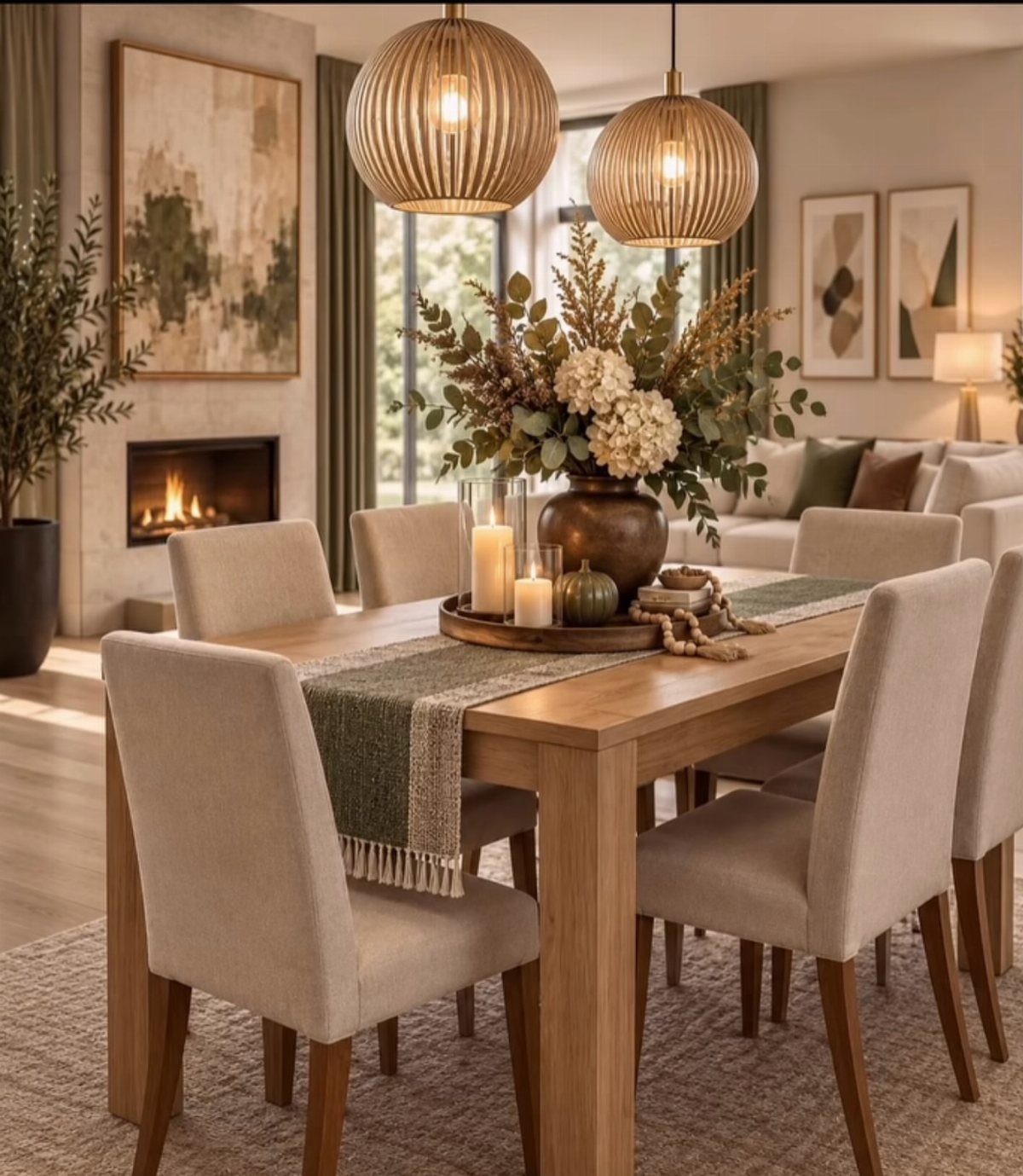
A round wood tray gathers candles and flowers into one footprint, so the table has a single focal point instead of scattered small objects.
White candles of different heights sit well inside it, with a floral arrangement rising from the middle.
To lift a plain table, I would pick a tray in the same wood tone as the top. Lighting the candles at dinner is the whole effect.
30. Dough Bowl Centerpiece
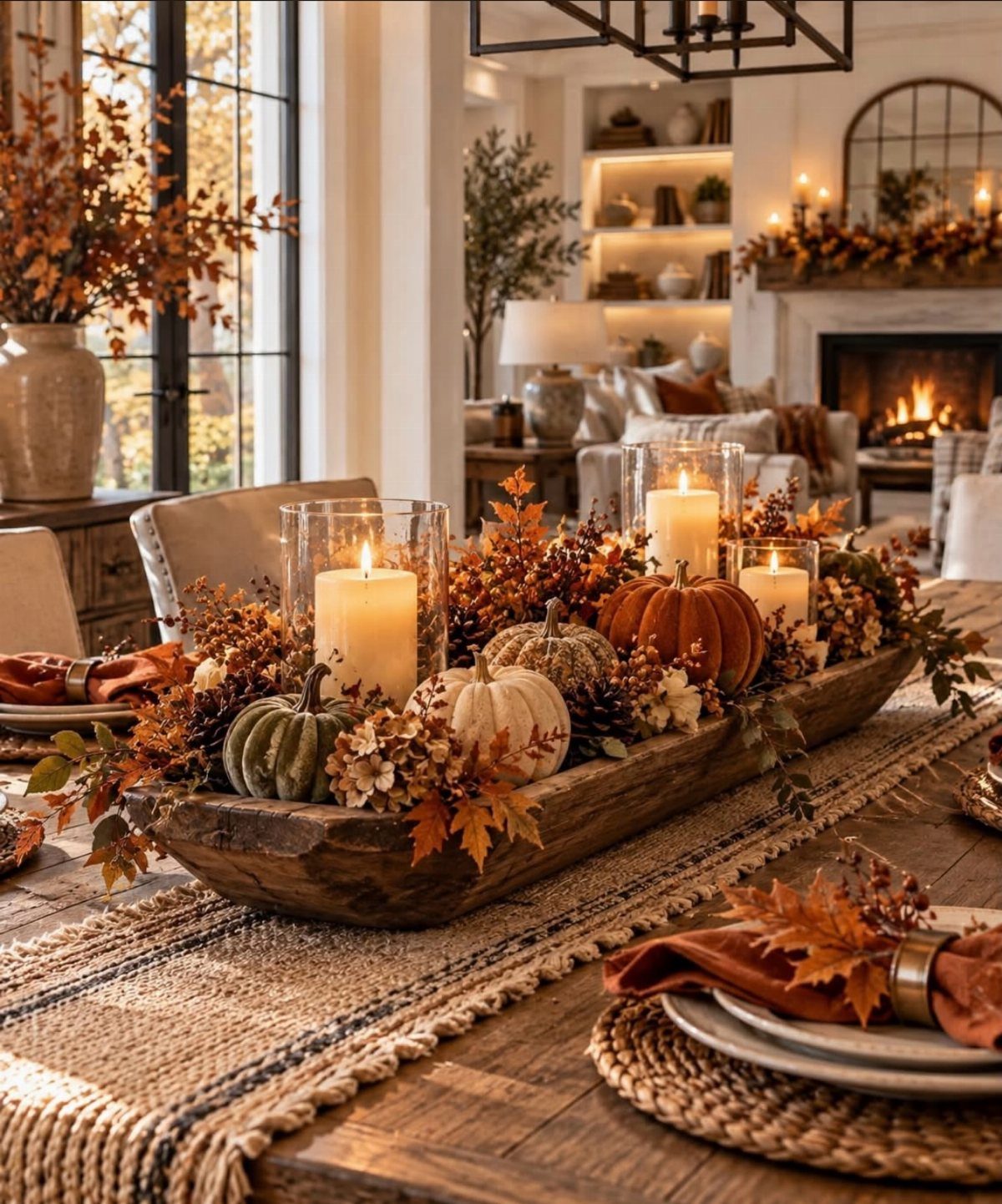
A carved wooden dough bowl makes a centerpiece with built-in shape: its deep, curved sides hold pumpkins, autumn leaves and candles in a tight mound. The dark old wood looks right on a rustic table without any extra styling.
Fill it for fall, then empty it and fill it with something else for the next season. I would set the candles at the center and tuck the leaves around them so nothing crowds the bowl’s rim.
31. Rustic Fall Centerpiece
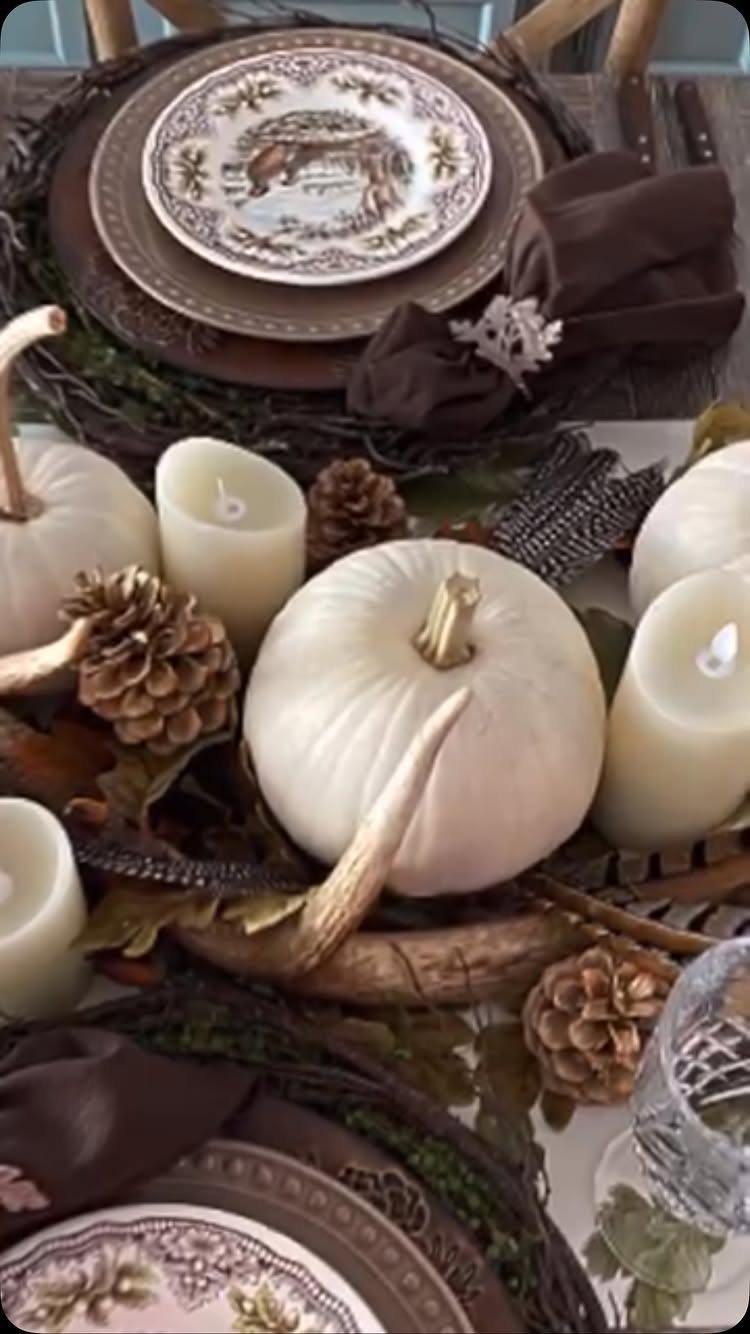
White pumpkins keep a fall table from turning into an orange pile, and the pinecones and antlers bring in the woodland side. Candles tucked between them add height and a warm glow once the light drops.
I would group everything in a loose cluster down the center and leave the sides clear for plates. Brown napkins on rustic plates hold the palette quiet, so the natural objects do the talking.
32. Mason Jar Wildflowers
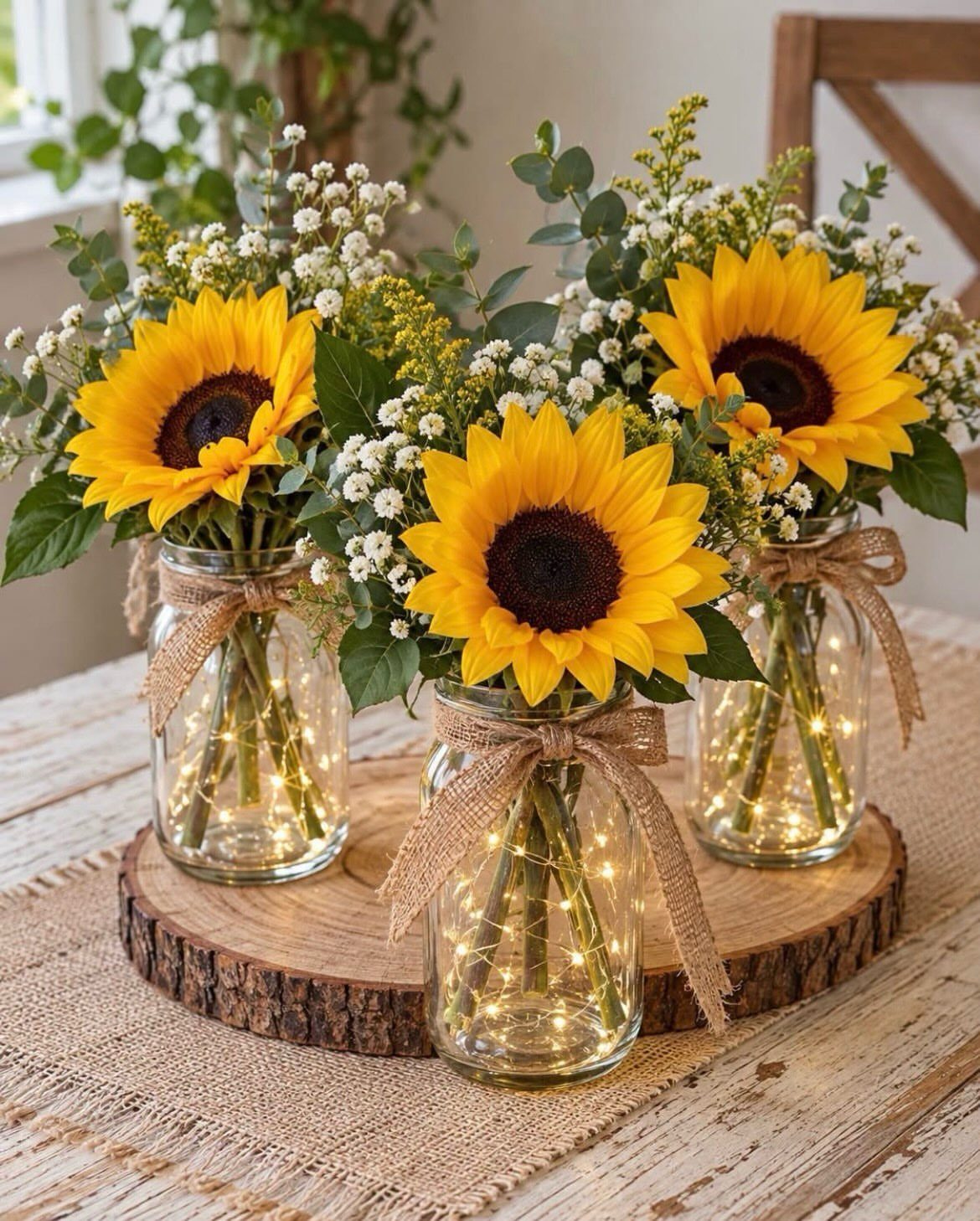
Burlap tied around a mason jar hides the glass and gives sunflowers and baby’s breath a country look. Set three jars on a wood slice, and the slice pulls them into one centerpiece instead of three loose objects.
Fairy lights tucked into the jars add a soft glow at dinner. Sunflowers have big heads, so I would cut the stems short enough that the arrangement stays below eye level and people can talk across the table.
33. Table with Jute Rug
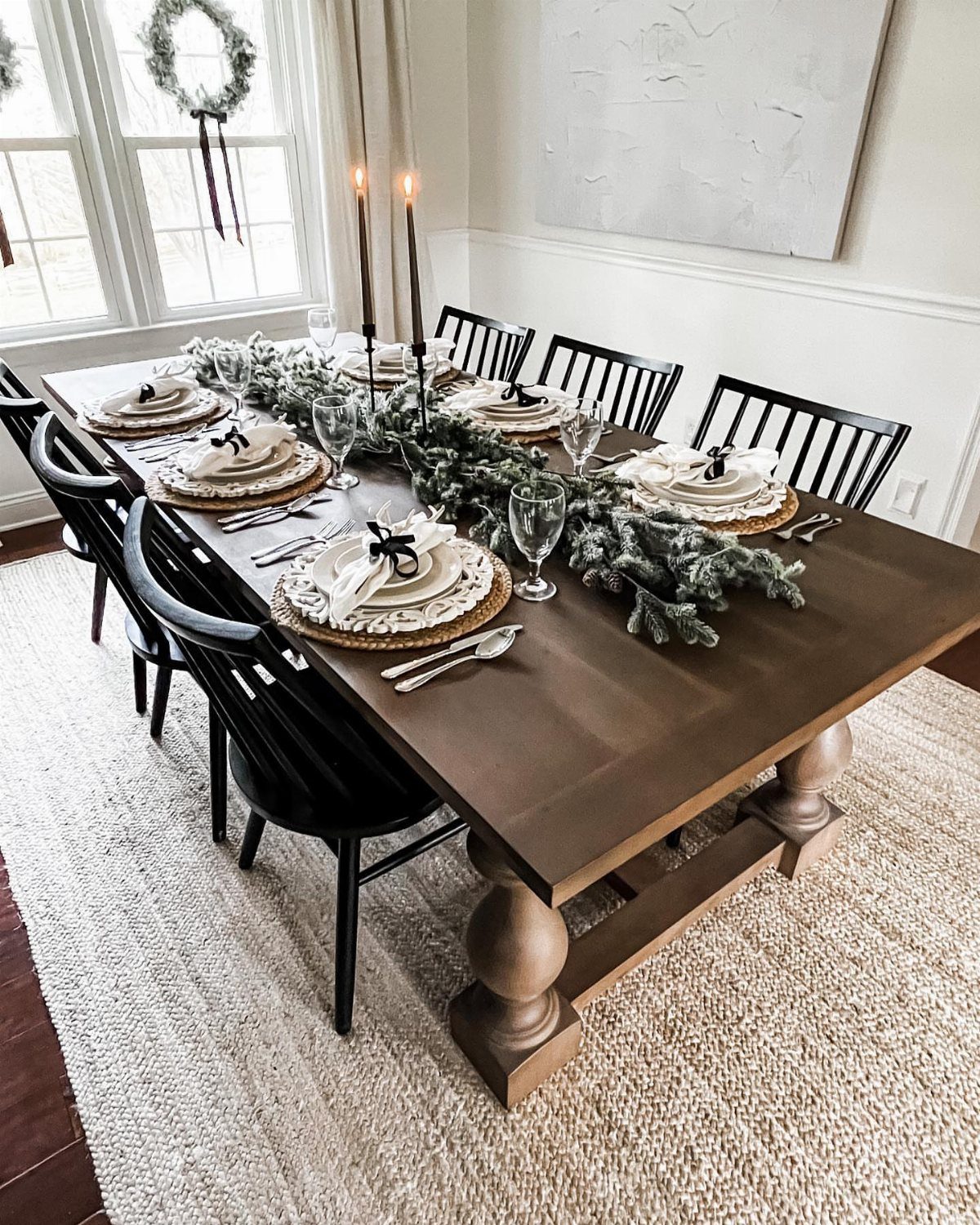
Pale jute gives a wood table a floor of its own and marks out the dining zone in an open room.
A natural-fiber rug also adds texture without adding another color, which keeps black chairs and a greenery centerpiece in charge.
Size matters more than the weave. Size the rug so the chairs stay on it when pulled out, which means it has to extend past the table on every side.
34. Table with Pendant Lights
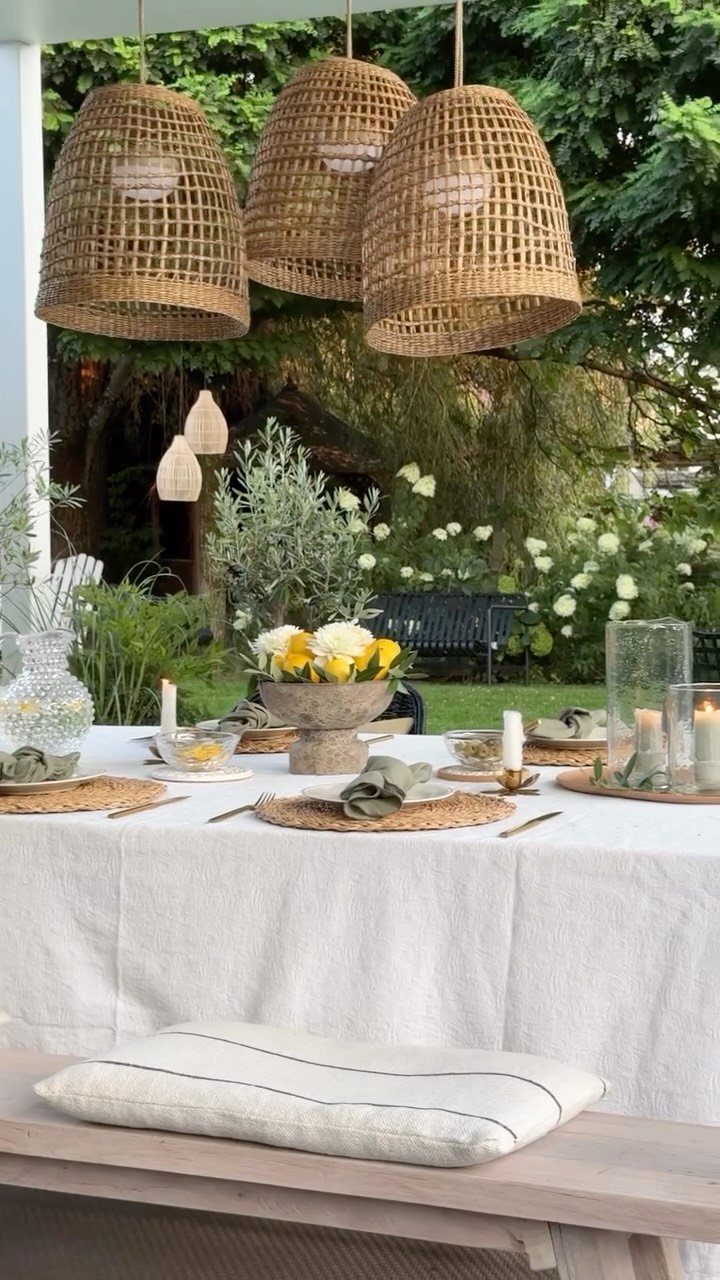
Three woven pendants in a row give an outdoor table a ceiling where there isn’t one. The wicker looks right beside a white linen cloth and a garden backdrop, and the lights make the table feel like a room.
Hang pendants low enough to frame the table but high enough that they don’t block faces across it. Outdoors, I would buy fixtures rated for damp or wet locations.
35. Table with Chandelier
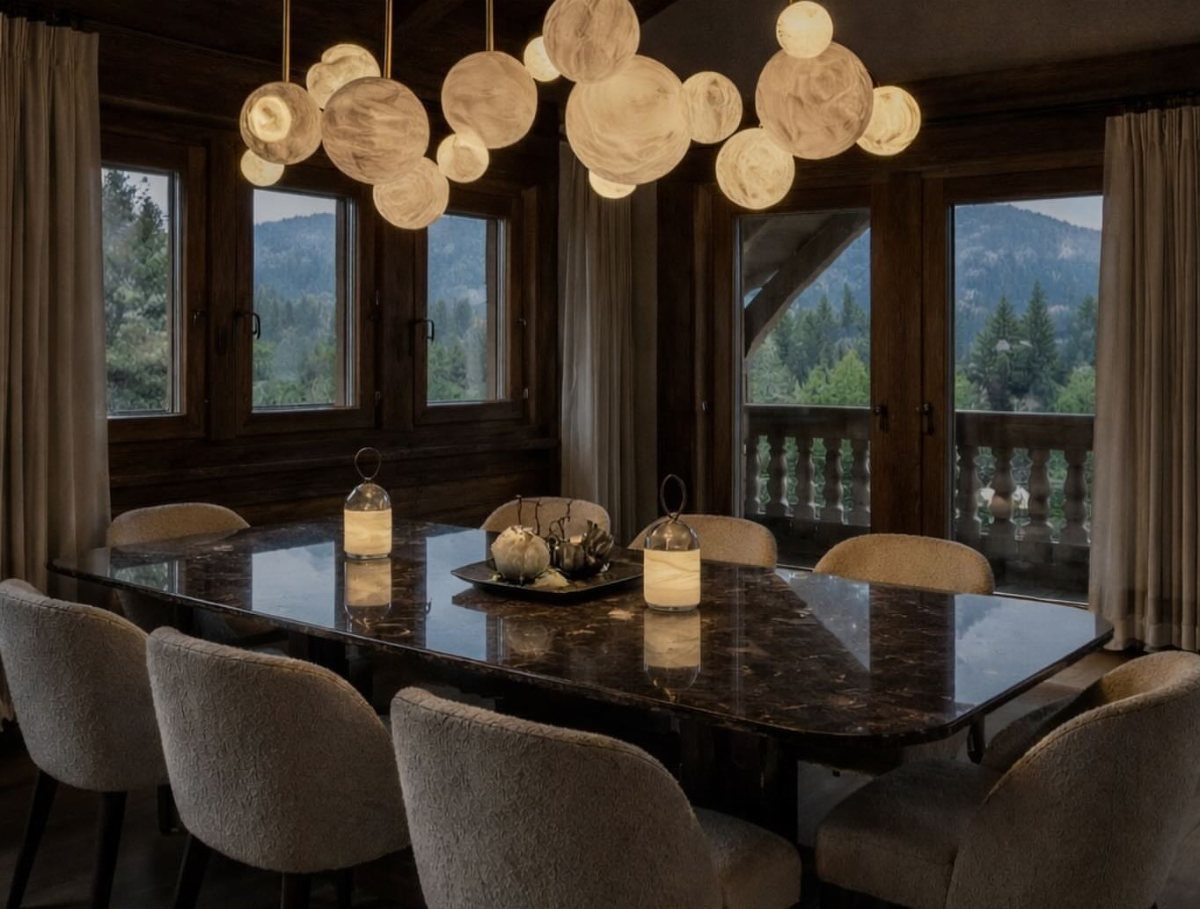
A spherical glass chandelier is a modern choice over a dark stone table, and in a wood-paneled room that contrast is the appeal.
The clear bubbles read light and airy against heavy timber, so the room gets one bright, delicate piece.
For size, a common guideline puts the fixture’s width at about half to two-thirds the width of the table. I would go larger if the ceiling is high and the paneling is dark.
36. Table with Seasonal Branches
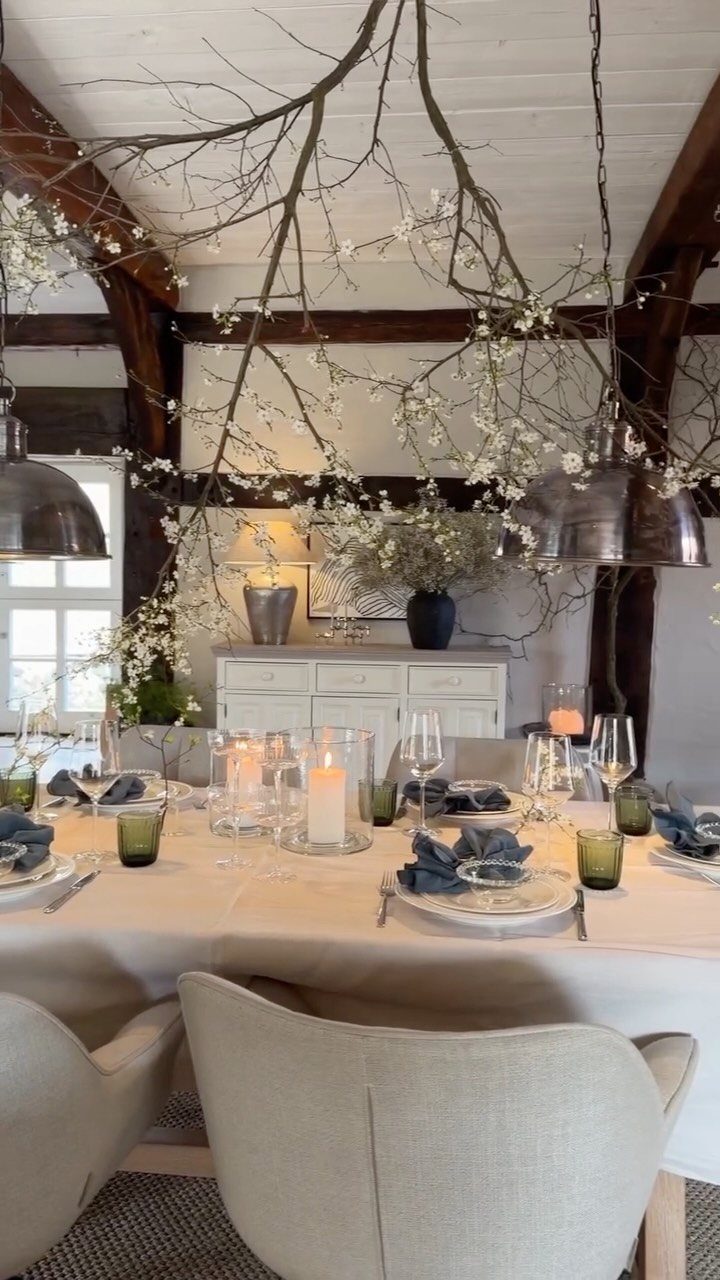
Tall flowering branches bring height that a vase on the table can’t, and under exposed beams they fill the empty space between table and ceiling.
White cloth, candles and glassware keep the table below them calm, so the branches are the one big gesture.
I would keep the branches above eye level so guests can see across the table. Swap in whatever is blooming or bare for the season.
37. Table with a Table Runner
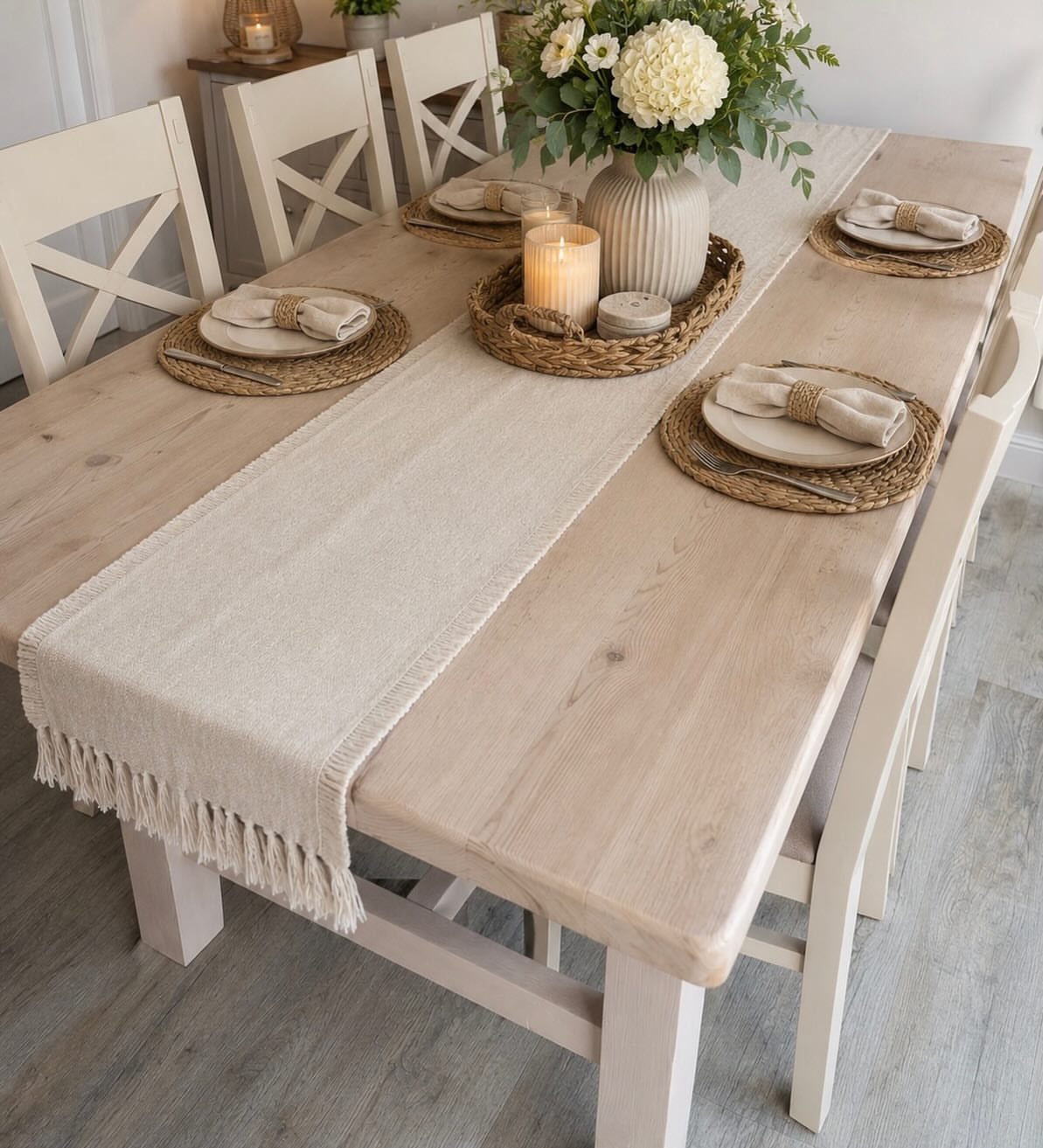
A beige fabric runner sets a second layer on a light wood top, and the soft tone stays close to the grain so the table reads calm instead of busy. Woven chargers on top of it repeat that natural texture.
Choose a runner that hangs over each end, and keep it narrow enough to leave wood showing on both sides. With a floral centerpiece and candles down the middle, I would stop there and let the plates fill the rest.
38. Large Dining Table
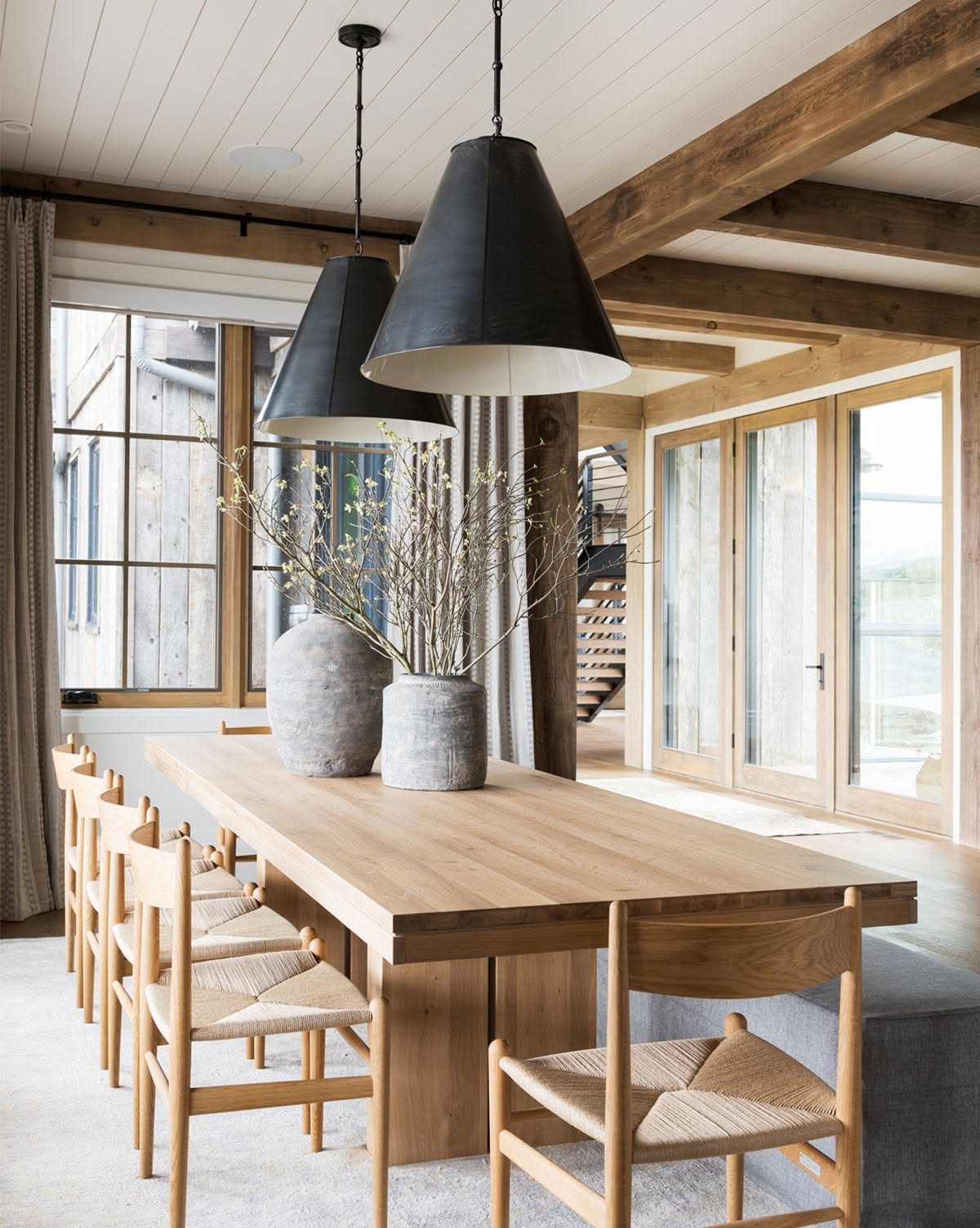
A long light-wood table with a bench along one side seats a crowd without feeling like a banquet hall, especially under big black conical pendants that give the length a clear rhythm.
Matching chairs on one side and a grey bench on the other break up the sameness of a long run.
Pick a table that suits the room’s scale; this one has the beams and tall windows to carry it. In a smaller space, I would go shorter, since a long table can crowd walkways.
39. Compact Reclaimed Table
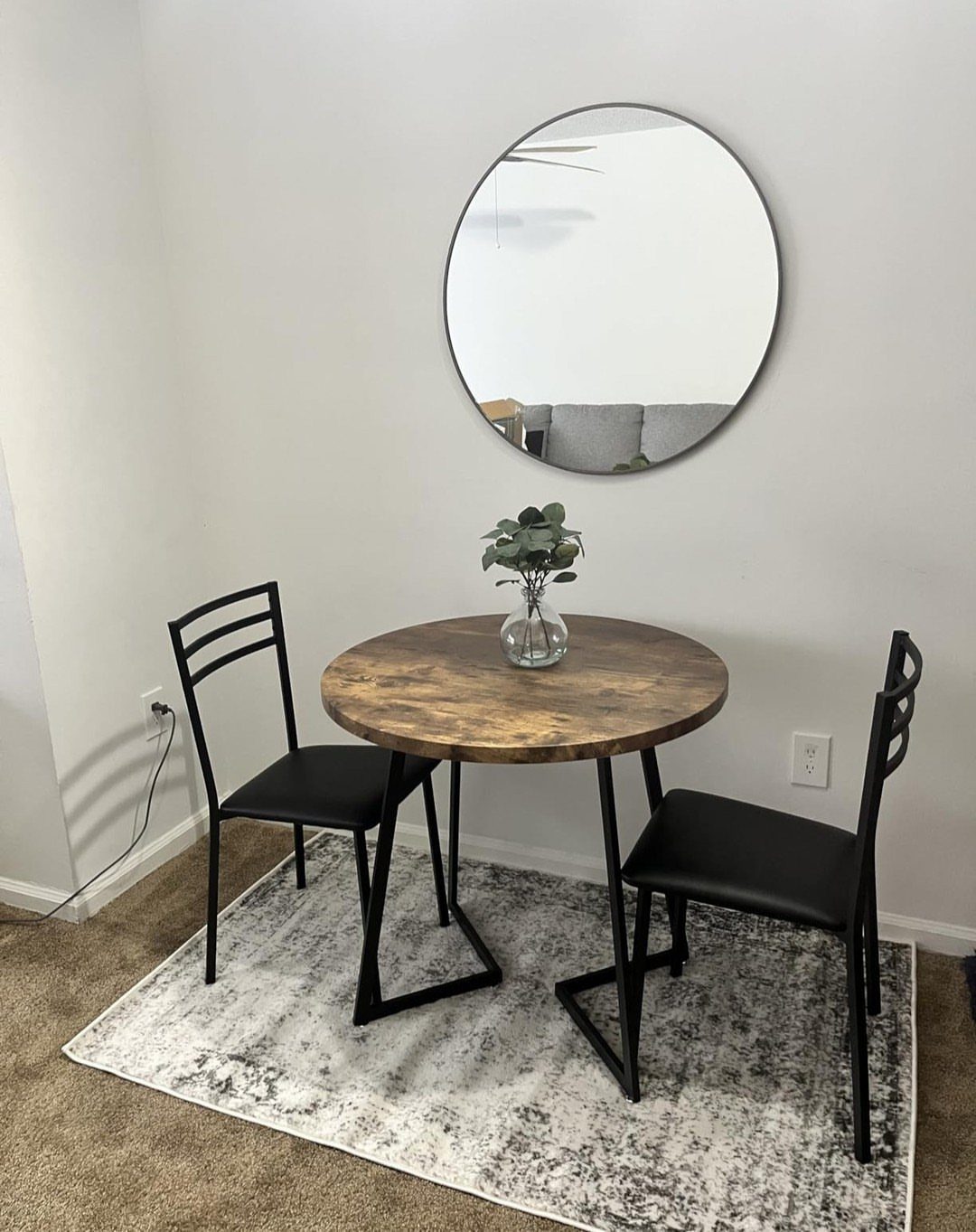
2 black chairs at a small round reclaimed top is a setup I like for a nook or a studio, because a round edge has no corners to bump into.
Black metal legs keep the base slim, so the floor stays visible and the table feels lighter than it is.
A grey rug anchors the pair, and a round mirror with a vase of greenery on the wall adds height without using up any tabletop. Keep the table itself nearly bare.
Choosing Table and Chair Capacity
Chair width changes the headcount as much as the tabletop does. A table that feels roomy with 4 chairs can seat 6–8 people comfortably, depending on how bulky the chairs are.
A 43.3-inch round table is listed for 4–6, and that range is a real choice. Size it for the 4 people who eat there most nights, and count on slim chairs if you want the last 2 seats to feel comfortable.
In a tight nook, buy narrower chairs before you buy a bigger top.
Before you order, tape the tabletop outline on the floor and pull a chair out at each spot. If you can’t walk around it, the table is too big.
Frequently Asked Questions
How many people can a rustic dining table seat?
It depends on the shape and base. A round pedestal table that extends is built to seat 4–6, which suits a small space where you host now and then.
A round top with 4 chairs fits a small household in a tight nook, while a long rectangular top with 6 chairs reads as a full dining set.
Swap one side’s chairs for a bench and you gain roughly 6 extra inches of elbow room per person, and the whole thing tucks fully under the tabletop once dinner is done.
What light fixture goes over a rustic dining table?
Match the fixture to the shape of the table. Over a 72-inch rectangular top, a long linear fixture with 3 or 4 lights spreads the glow evenly, where one round pendant leaves the table ends in shadow.
A black chandelier repeats the color of black chairs, and a woven pendant over an octagonal or round wood table carries the natural material overhead.
Over a live-edge slab with white walls, branch-style lighting echoes the uneven edge without copying it.