


Installed quartz runs $50–$150+ per square foot, but the deciding factor is how you cook, not the tier. Resin tolerates heat less well than stone, and a pan straight off the burner can crack the slab through thermal shock.
If you set hot cookware down without thinking, skip it. A 30 sq. ft. kitchen runs $2,500–$6,000 installed.
1. Costs and Price Ranges
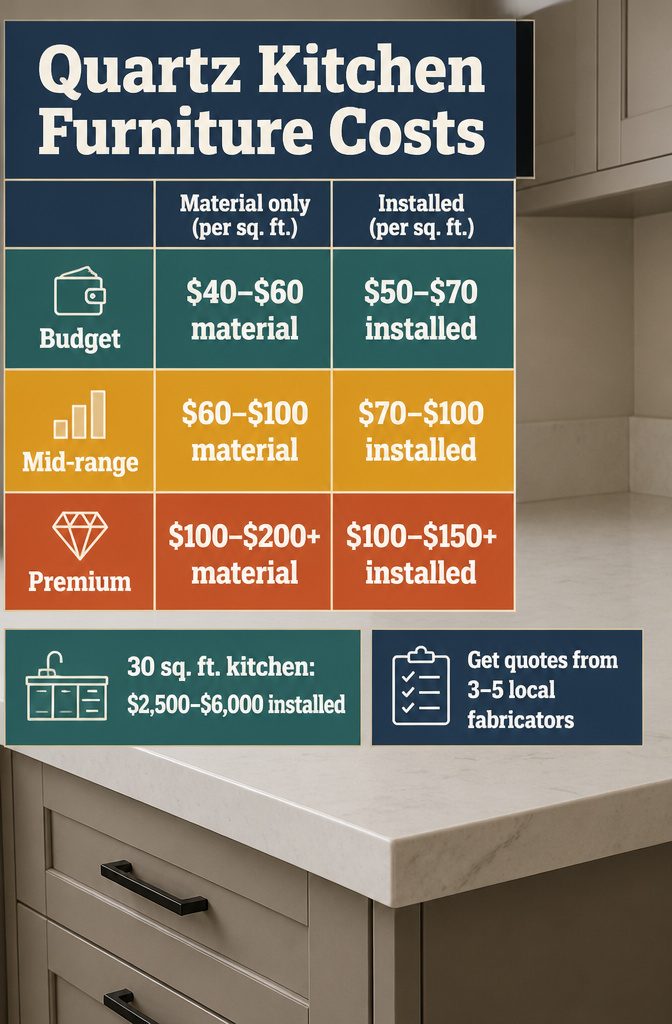
Quartz kitchen furniture prices fall into three tiers, and installed costs run higher than the slab alone.
| Tier | Material only (per sq. ft.) | Installed (per sq. ft.) |
|---|---|---|
| Budget | $40–$60 | $50–$70 |
| Mid-range | $60–$100 | $70–$100 |
| Premium | $100–$200+ | $100–$150+ |
By brand, Caesarstone runs $60–$140, Silestone $70–$150 and Cambria $90–$200+.
MSI sits at $50–$100, and HanStone and Viatera at $60–$120. On a tight budget, I’d price MSI first, since its range starts lowest.
A 30 sq. ft. kitchen lands at $2,500–$6,000 installed. Region, slab size and job complexity all move that number, so get quotes from 3–5 local fabricators.
2. Colors and Finishes
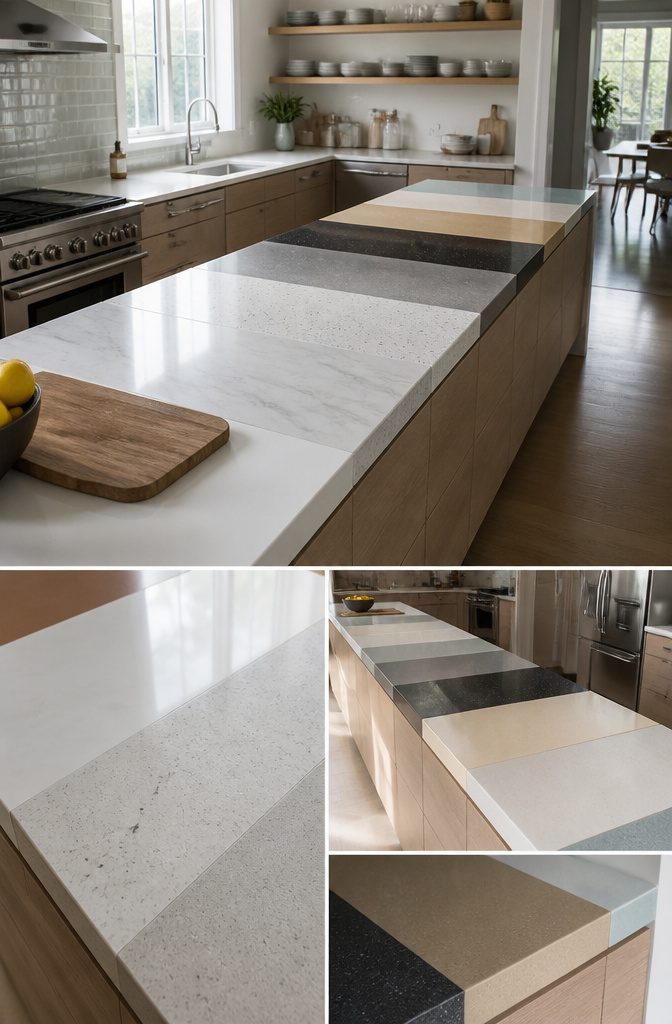
Quartz kitchen furniture comes in nine color families, and the neutrals carry most kitchens:
- White, solid: Flat and clean, the most minimal look. It suits flat-panel cabinetry, glass tile and stainless steel appliances.
- White, softly veined: Adds movement without getting busy. For a first kitchen, I’d pick this over solid white.
- White, speckled: Adds texture and holds up in layered, more ornate rooms.
- Gray and black: Both read modern. Black is the most dramatic and gray the easiest to live with.
- Beige, cream and brown: These read warm and soften a room with cool fixtures.
- Blue, green, red and yellow: Statement colors. They are harder to live with for years, so choose one only if you’re sure.
Quartz has uniform color and pattern, so a sample is a fair preview of the full slab.
3. Advantages and Limitations
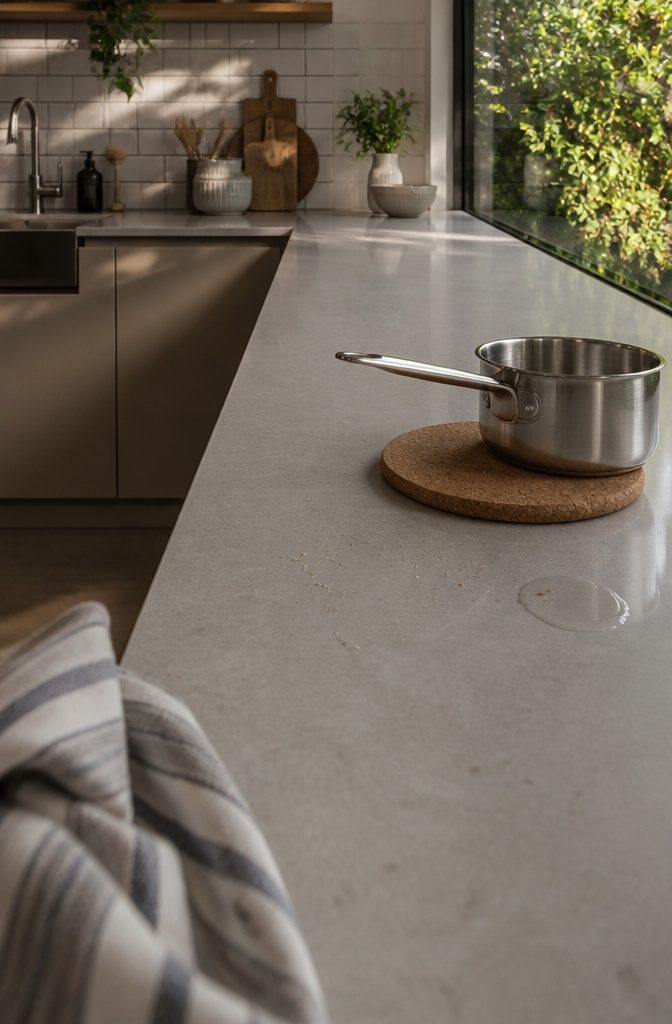
Quartz kitchen furniture is roughly 90–95% ground natural quartz bound with resins, polymers and pigments, and that mix explains most of what it does well.
The surface is non-porous, so it resists stains, bacteria and moisture, and it never needs sealing. Color and pattern stay consistent from slab to slab, which natural stone can’t promise.
The limits are real. Resin tolerates heat less well than stone, and a sudden temperature jump (thermal shock) is how a pan off the burner does damage, so use a trivet every time.
Prolonged direct sunlight can fade the color, and seams may show on large runs.
I’d pick it for busy family kitchens where low upkeep matters. Skip it for a sun-drenched window wall, an outdoor counter, or a cook who sets hot cookware down without thinking.
4. Installation and Timeline
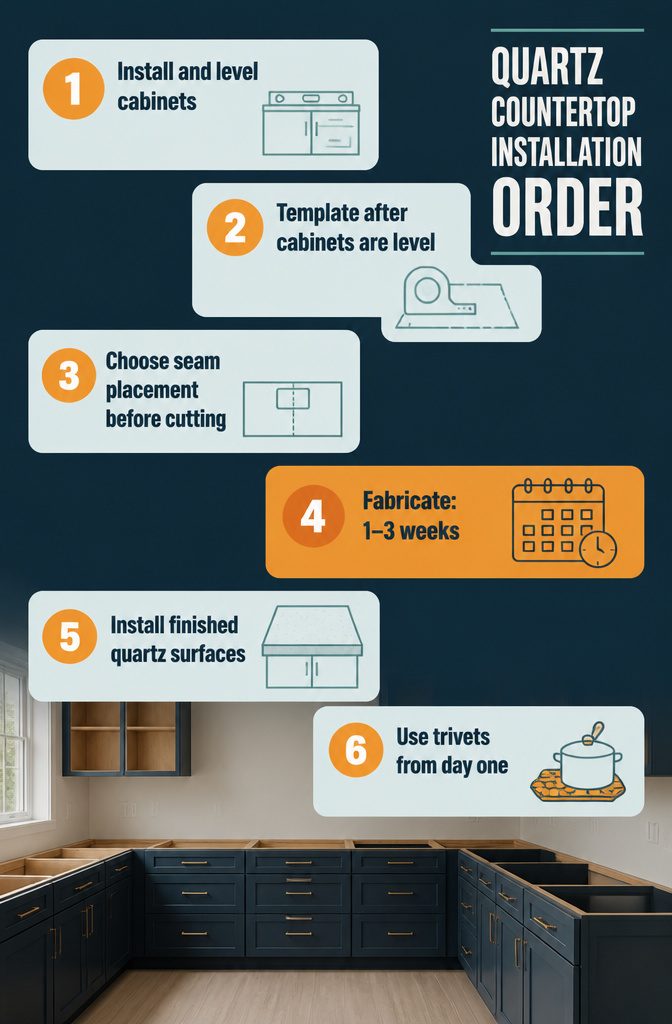
- Install the cabinets and level them first. A template taken off an uneven run won’t fit the stone properly.
- A professional templates the countertop only after the cabinets are in and level.
- Settle seam placement with the fabricator before any cutting. Seams are filled with color-matched epoxy, so decide where they land while the layout is still on paper.
- Fabrication takes 1–3 weeks between templating and install. A more complex layout pushes toward the long end, so don’t schedule a dinner party for week one.
- The fabricator installs the finished quartz kitchen furniture surfaces onto the cabinets.
- Use trivets or hot pads from the first day. Sudden temperature changes can damage quartz, so a pan straight off the burner never goes directly on it.
5. Daily Care
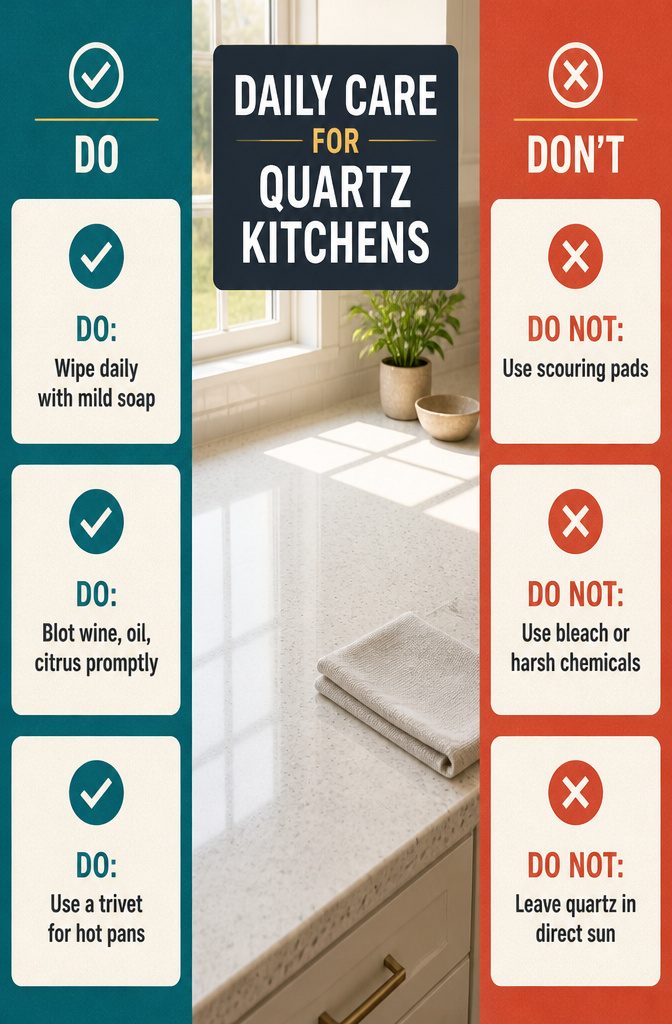
Quartz kitchen furniture asks for very little, and most of the routine is knowing what to skip.
- Wipe surfaces daily with a soft cloth, mild dish soap and warm water.
- Keep scouring pads, bleach and harsh chemicals away from the slab. They dull the finish.
- Wipe up wine, oil and citrus promptly. Quartz resists stains, but a quick wipe is the safe habit.
- Set hot pans on a trivet every time, because quartz can crack from thermal shock.
- In a sun-drenched kitchen, add window treatments. Long direct sun can fade a slab over the years.
6. Product and Supplier Options
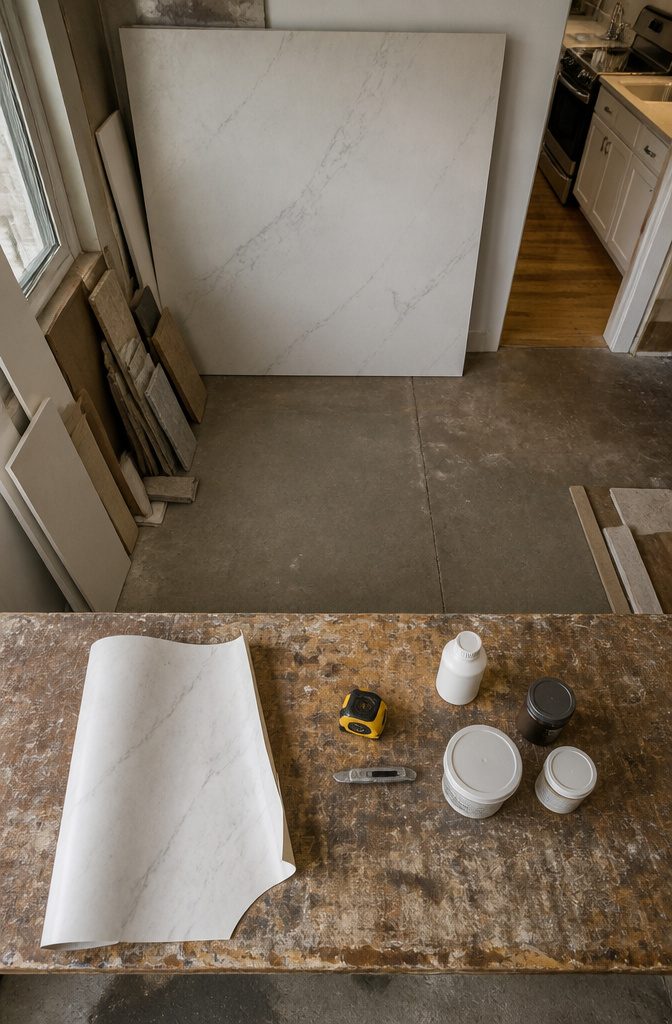
The directory lists 171 countertop products across 57 pages, with suppliers such as Vemy Quartz Surface Co Ltd, Global Quartz and FOSHAN BILLOW QUARTZ STONE based in China and Vietnam.
One sample listing is priced at US$ 100 per square meter with a 200-square-meter minimum, and the jumbo slab measures 138 x 79 inches (3,500 x 2,000 mm). Bulk minimums like that suit contractors, not one-kitchen buyers.
The DIY side is much smaller in scale: Giani epoxy kits at $199.95 and $149.95, Weiman at $21.98, EZ FAUX DECOR vinyl wrap at $119.09, and the SSTBLEV sintered stone tabletop at $189.99.
These are refinishing products, not real quartz. For renters, the vinyl wrap is the one I’d consider, since it’s sold as removable.
Quartz vs Granite
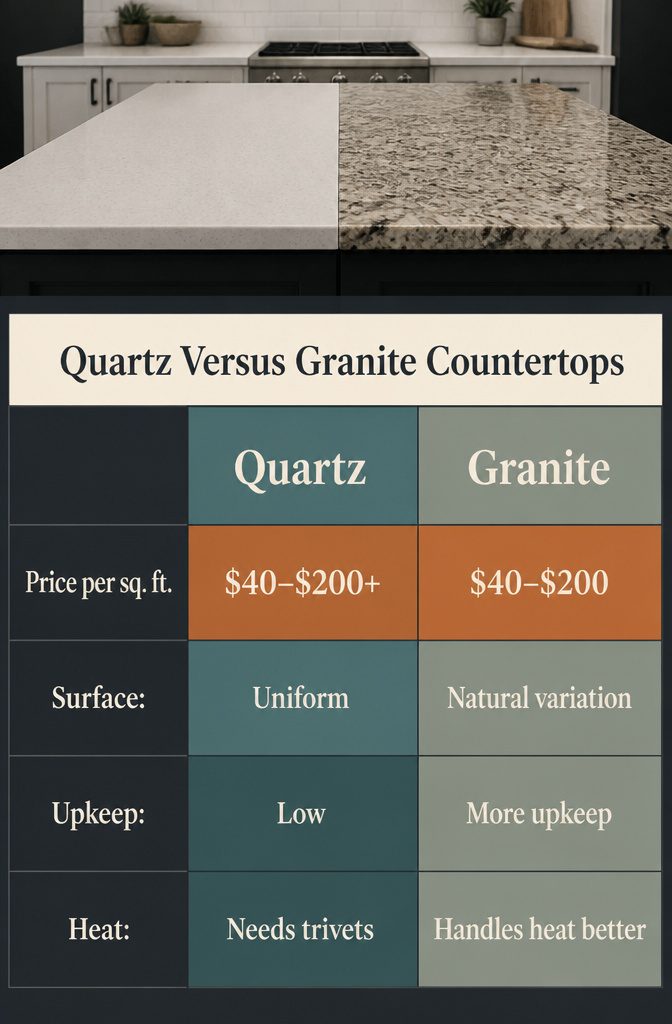
Quartz is uniform and non-porous, so it needs less upkeep. Granite is natural and unique, and it handles heat better; quartz needs trivets under hot pans.
| Material | Price per sq. ft. | Standout trait |
|---|---|---|
| Quartz | $40–$200+ | Uniform, low upkeep |
| Granite | $40–$200 | Natural, heat-resistant |
| Solid surface (Corian) | $40–$120 | n/a |
| Butcher block | $30–$100 | n/a |
| Laminate | $20–$60 | n/a |
For a busy rental-minded kitchen, I pick quartz.
Even color and low upkeep beat granite’s heat tolerance, since a trivet is a cheap habit. Choose granite if you want natural variation and set hot pots down freely.
Thickness and Edges
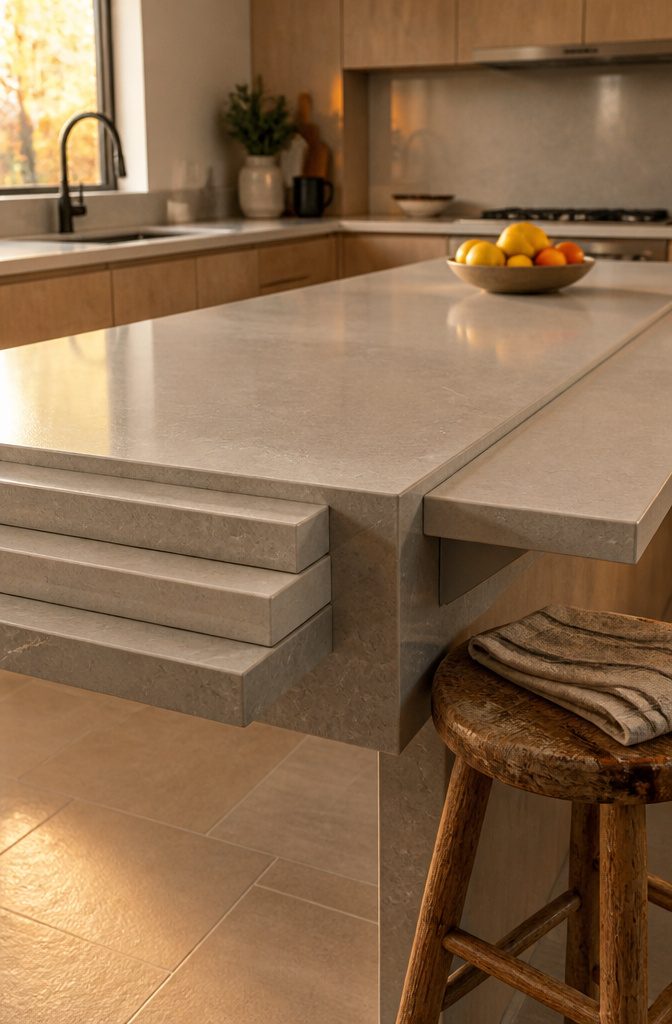
Choose 3 cm if the budget allows.
A 2 cm slab typically runs $5–$15 per square foot cheaper, but 3 cm is more durable and needs no plywood support underneath. The thinner slab depends on that backing, which adds a step to the job.
Edges are priced by the linear foot.
Straight or eased edges, the simplest profiles, run $10–$20. Bullnose and ogee are the premium profiles at $25–$50.
A beveled edge sits between them in look, with a crisp angled cut. I’d skip ogee unless the kitchen is traditional, since the curves are harder to wipe and fight modern cabinet lines.
Standard overhang is 1.5 inches. For seating, plan 12–18 inches of overhang with support brackets, because an unsupported ledge that deep puts stress on the stone.
Warranty and Lifespan
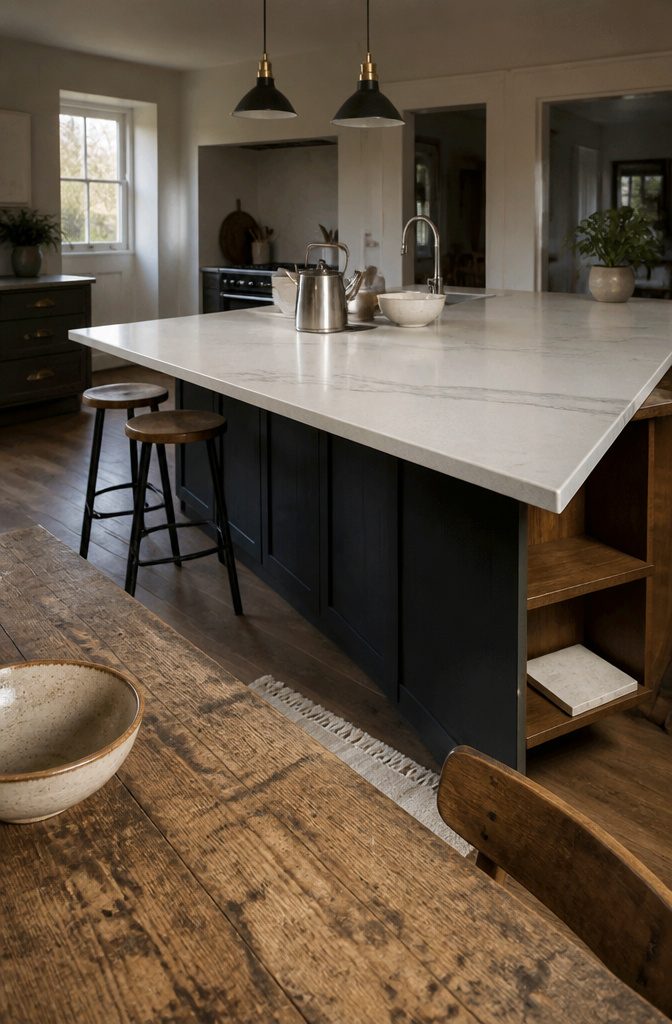
Warranties on quartz kitchen furniture typically run 10 to 25 years, and with proper care the surface itself can last 25 years or more. Read the warranty terms before you sign, because coverage length matters less than what a claim actually requires.
Small damage rarely means a new top. A fabricator can fill a minor scratch or chip with color-matched epoxy and polish the spot, so the repair is usually hard to spot afterward.
Major damage is a different story: it may call for replacing part of the slab or all of it, so ask the fabricator how they handle that before you commit.
For most homeowners, I think quartz is worth the money. A surface that can last 25 years or more, and that takes minor repairs in stride, spreads its cost over a long stretch of daily use.
Frequently Asked Questions
How much does a quartz countertop cost?
Installed quartz runs about $50–$70 per square foot at the budget tier, $70–$100 at mid-range and $100–$150+ at the premium tier.
A 30 sq. ft. kitchen lands at roughly $2,500–$6,000 installed. Region, slab size and job complexity shift the total, so get quotes from 3–5 local fabricators.
Is white quartz good for a modern kitchen?
Yes. Solid white gives the cleanest, most minimal look and pairs well with flat-panel cabinets, glass tile and stainless steel appliances.
If solid white feels too stark, a softly veined white adds some movement without looking busy. Quartz also keeps the same color and pattern from slab to slab, so a sample shows what you will get.
Are quartz countertops worth the money?
For most homeowners, yes.
The upfront price is higher than laminate, but quartz is durable, needs little upkeep and carries a 10–25 year warranty. A surface that can last 25 years or more spreads that cost over a lot of daily use.
Do quartz countertops need to be sealed?
No.
Quartz is non-porous, so it resists stains, bacteria and moisture without any sealer. Daily care is a soft cloth with mild dish soap and warm water.
How does quartz compare to granite?
Quartz is uniform in color and needs less upkeep, while granite is a natural stone with one-of-a-kind variation and better heat tolerance.
Both run about $40–$200 per square foot. Quartz needs a trivet under hot pans, so choose granite if you want natural variation and tend to set hot pots down freely.
Can quartz countertops be repaired if damaged?
Minor damage usually can be. A fabricator fills a small scratch or chip with color-matched epoxy and polishes the spot, and the repair is typically hard to see afterward.
Major damage may mean replacing part of the slab or all of it, so ask your fabricator how they handle that before you commit.
How long do quartz countertops last?
With proper care, 25 years or more.
Warranties typically run 10 to 25 years, so read the terms to see what a claim requires. A trivet under hot cookware and window treatments in very sunny kitchens help the surface last.