

A dining room can lean moody and dramatic, or stay modern minimal with statement lighting as the one bold move.
The choice comes down to how much upkeep you’re willing to accept: bare surfaces show every smudge, while weathered wood forgives scratches and rings.
In an open plan, a rug under the table and statement lighting overhead mark the dining area, so you get a defined zone with no walls or dividers.
For tight spaces, a round pedestal table saves floor space because it has no corner legs to crowd knees, and a banquette along one wall seats several people where loose chairs would block the path.
1. Statement Lighting
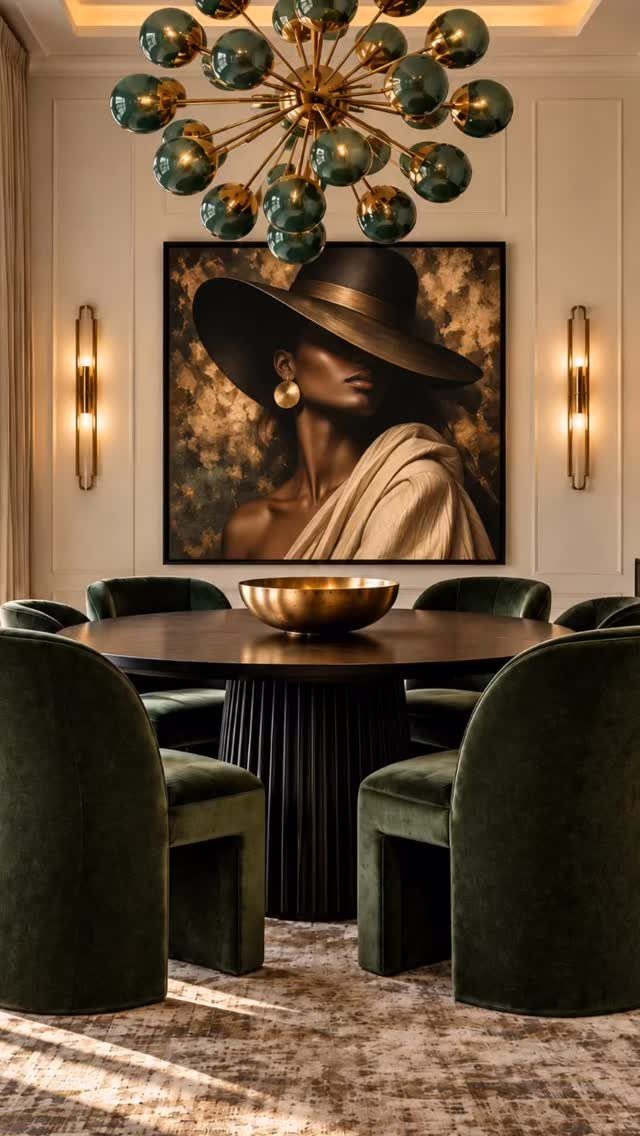
A chandelier with colored glass spheres does the work of a piece of art, and it gives the table beneath it a clear edge.
Over a round table, a fixture with a wide, even spread suits the shape best, because the light reads as centered from every seat.
Pick the fixture before the paint or the chairs.
Gold and green glass will push a room toward jewel tones, so let the velvet and the artwork pick up those same colors. Hang it low enough to feel intentional, not floating near the ceiling.
2. Natural Wood Dining
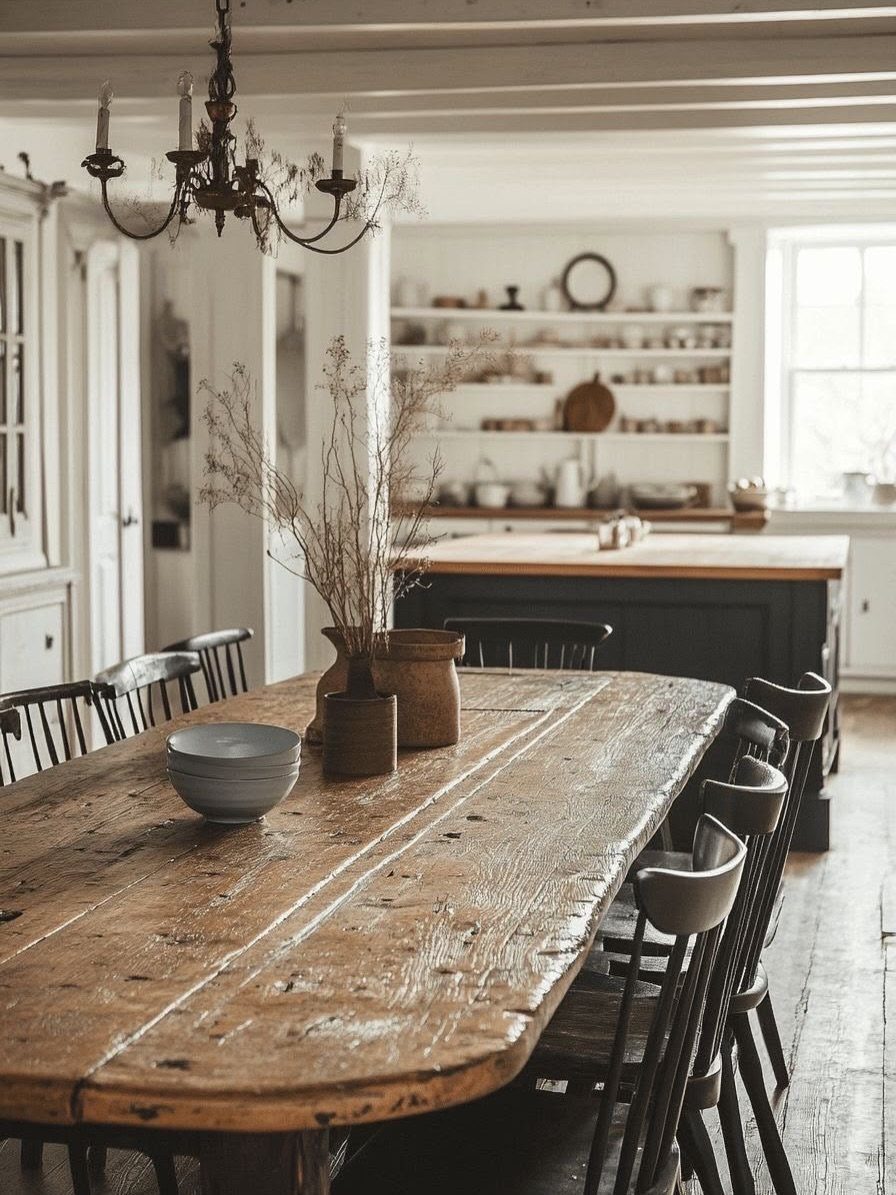
Weathered wood is forgiving in a way painted or glossy tables are not: scratches, rings and dents add to the look instead of ruining it.
For a household that hosts often, that makes it the practical pick as well as the pretty one.
Dark chairs give a pale, textured table some contrast, and black spindle backs keep the room from feeling heavy because you can see through them.
Add one or two more natural materials, like open shelving or a woven runner, and stop there. Too many wood tones competing will flatten the effect.
3. Round Dining Table
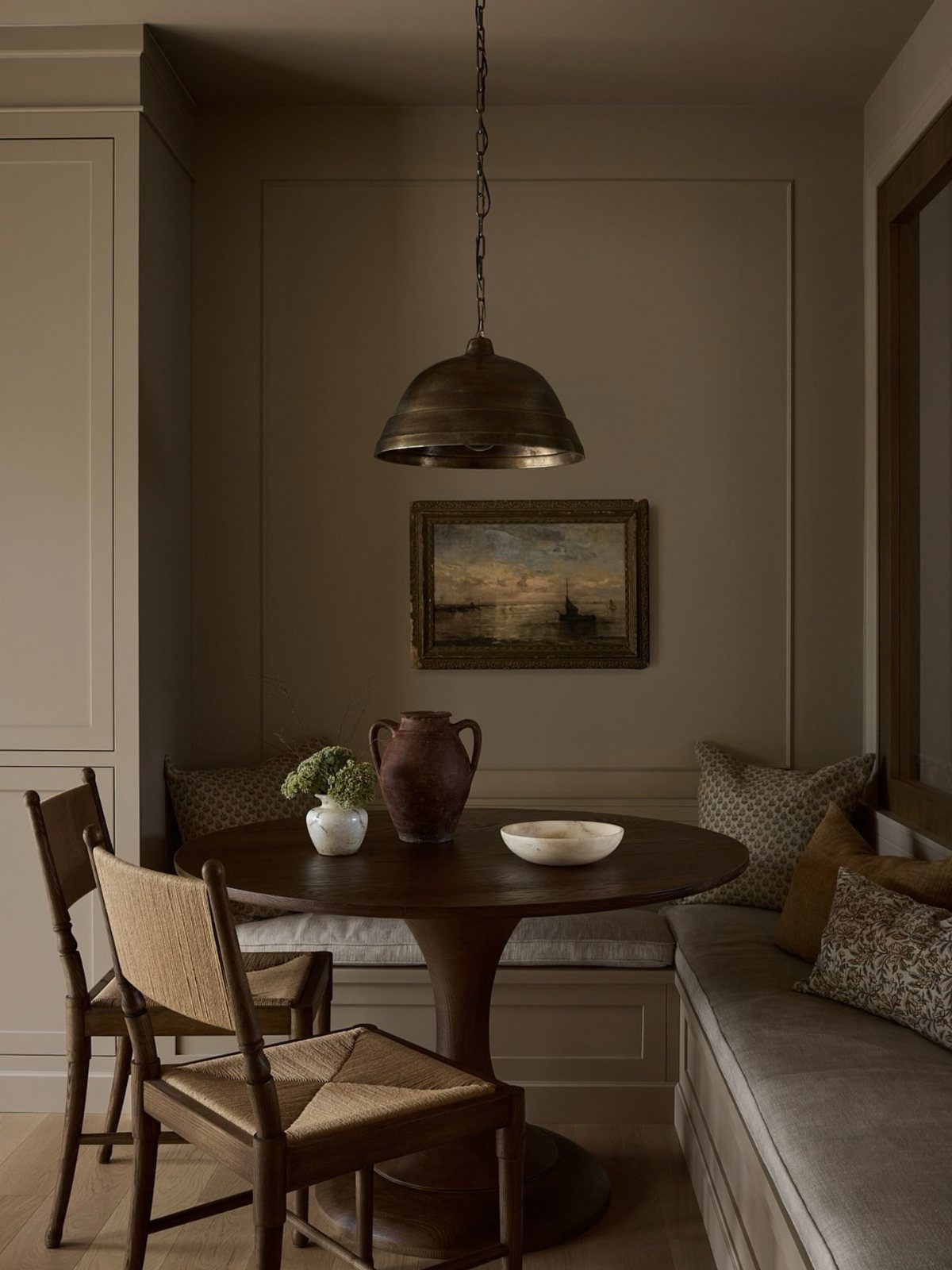
Corners are the first thing to go in a tight dining area, and a round table has none.
People can slide past it, and everyone at the table can see everyone else, which makes conversation easier than at a long rectangle.
A pedestal base is the detail I would hold out for, since legs at each corner crowd knees and make squeezing in an extra guest awkward.
Pair the table with a built-in bench on one side and you save the floor space a third chair would take. Keep the centerpiece low, a bowl or a short vase, so it doesn’t block the view across.
4. Natural Light Dining
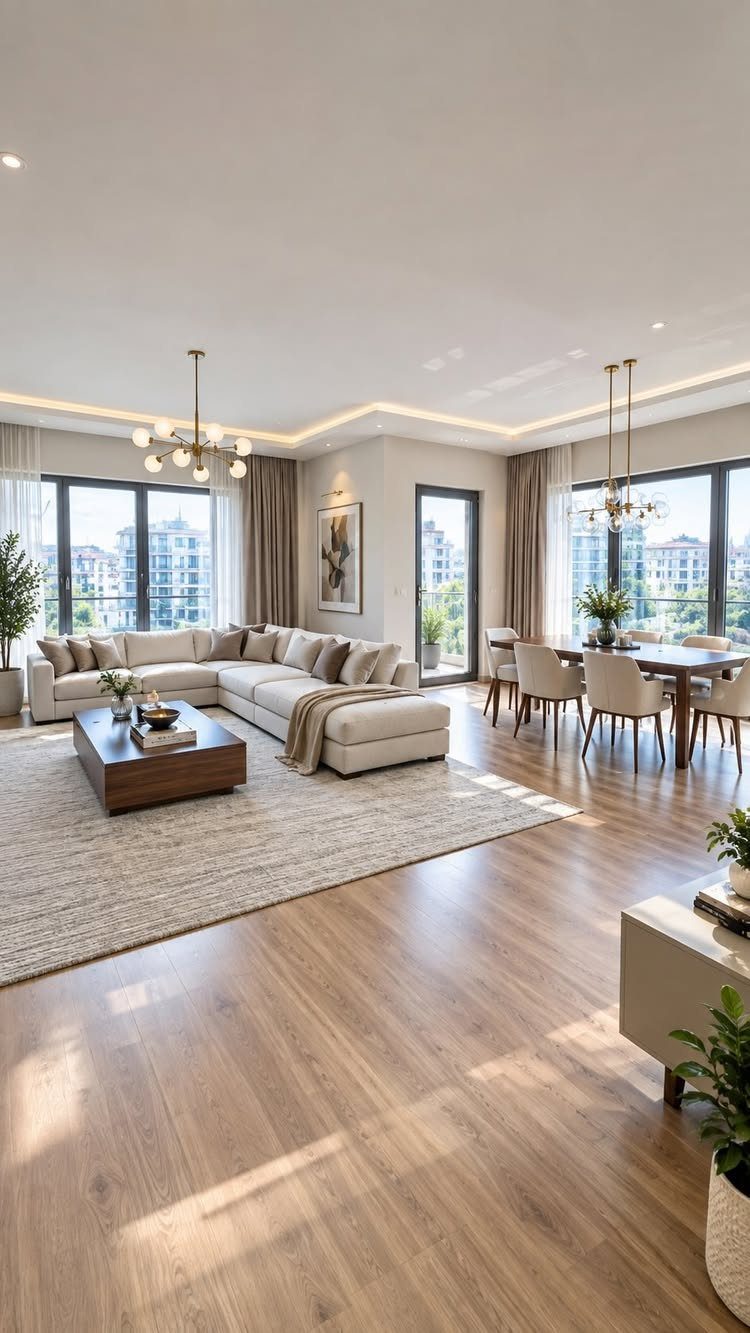
Placing the table beside a big window means you spend daytime meals in the brightest part of the house and may never need to flip a switch at breakfast.
In an open-plan room, it also marks the dining zone without a wall or a rug.
White chairs bounce that light around, and a wood tabletop keeps the glare from feeling sterile. Leave the window itself fairly bare, with sheer panels or nothing, so the view and the daylight do the decorating.
Check where the afternoon sun lands first; a table in a glare patch gets uncomfortable fast.
5. Built-in Banquette Seating
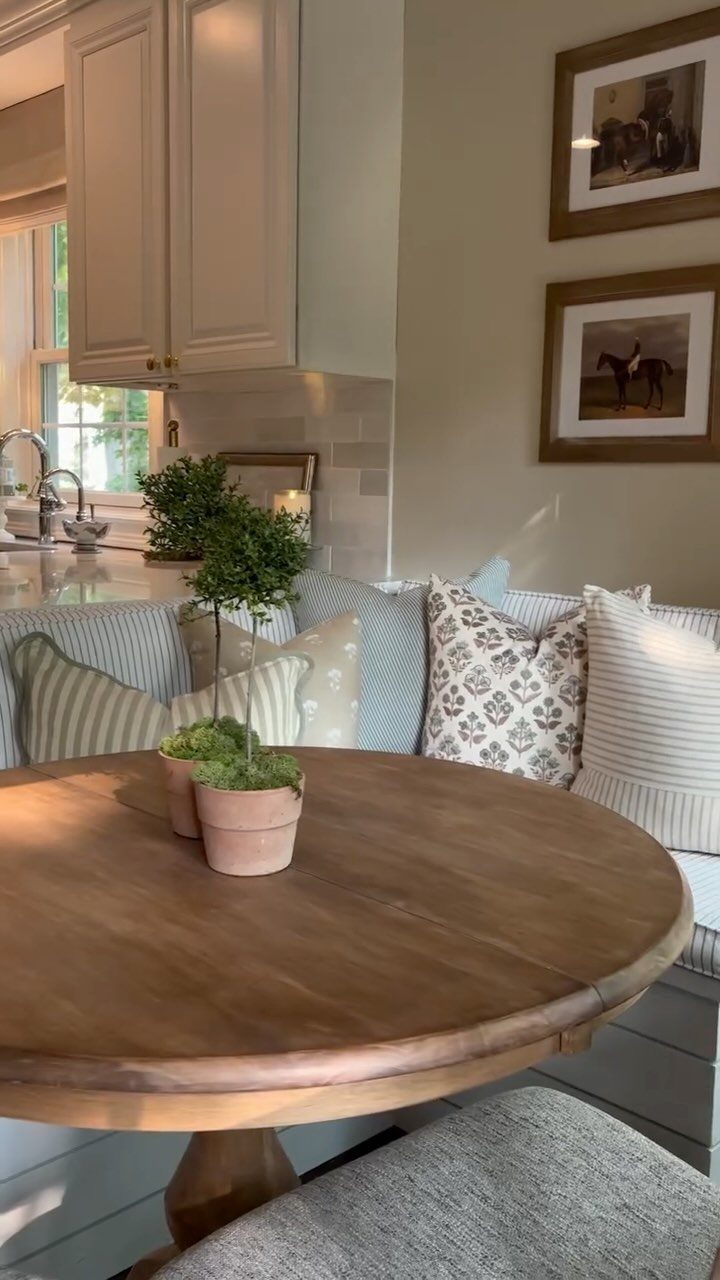
A banquette turns one wall into seating for several people, and that is why I like it for a kitchen nook where loose chairs would eat up the floor.
Pull a round table in front of it and the group tucks in close.
Pillows are what make it comfortable.
Mix a stripe with a pattern in related colors, and choose cushions firm enough to sit against through a long dinner. Storage under the seat lid is a bonus worth planning for if you build it yourself.
Add a couple of small potted plants on the table and the nook feels finished.
6. Modern Minimal Dining
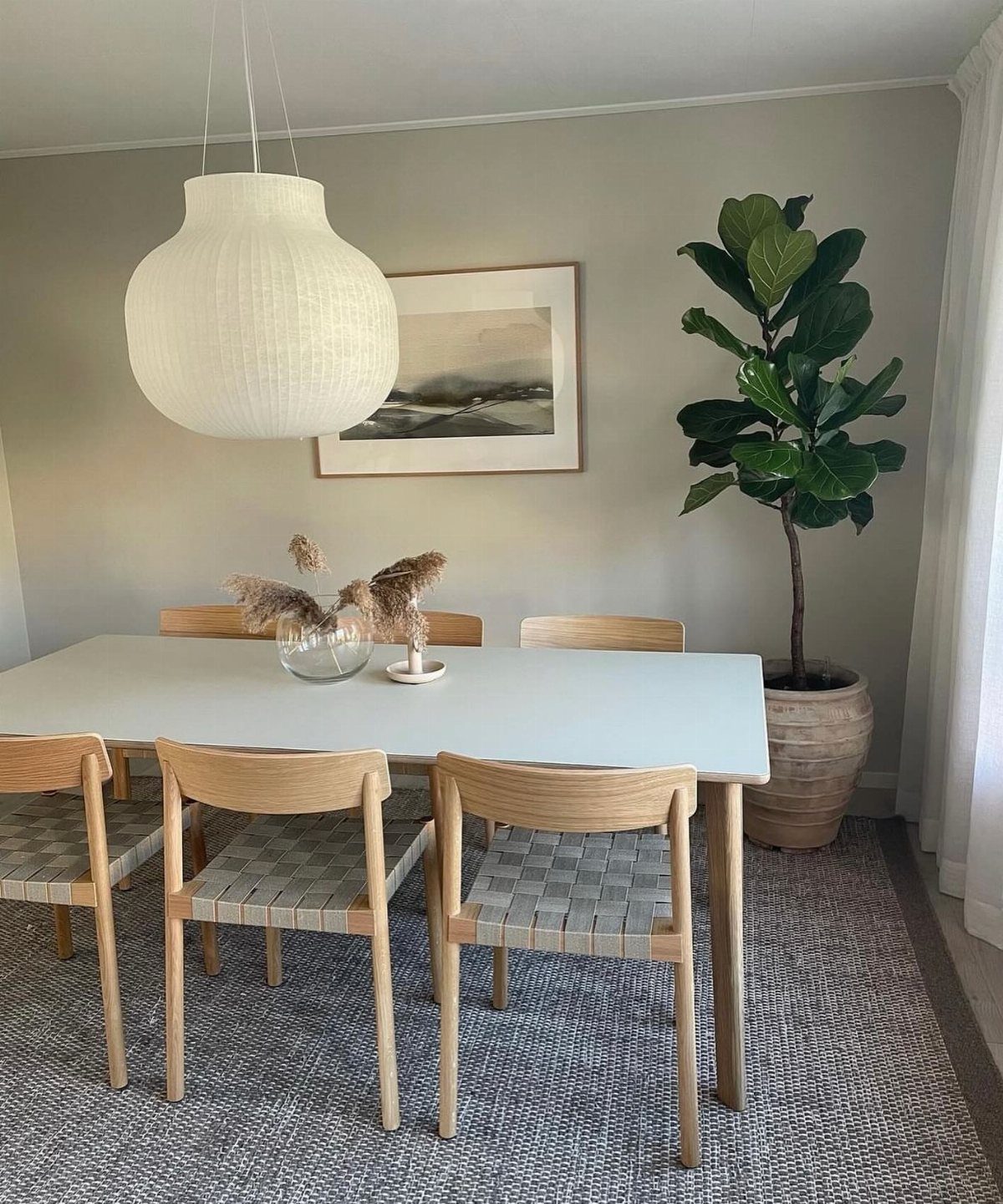
Clean lines only work if the surfaces stay clear, so a minimal dining room is really a decision about what you leave out. A white table, woven chairs and one oversized pendant is enough furniture for the whole room.
Warmth in a minimal dining room comes from texture, not objects, so pick chair seats with a visible weave or upholstery and let one plant or one large piece of art be the only decor.
Choose a pendant big enough to look deliberate, since a small one disappears over a white table.
Minimal rooms cost you in upkeep, because bare surfaces show every smudge and crumb. White shows every spill, and bare surfaces show every pile of mail.
7. Artful Dining Room
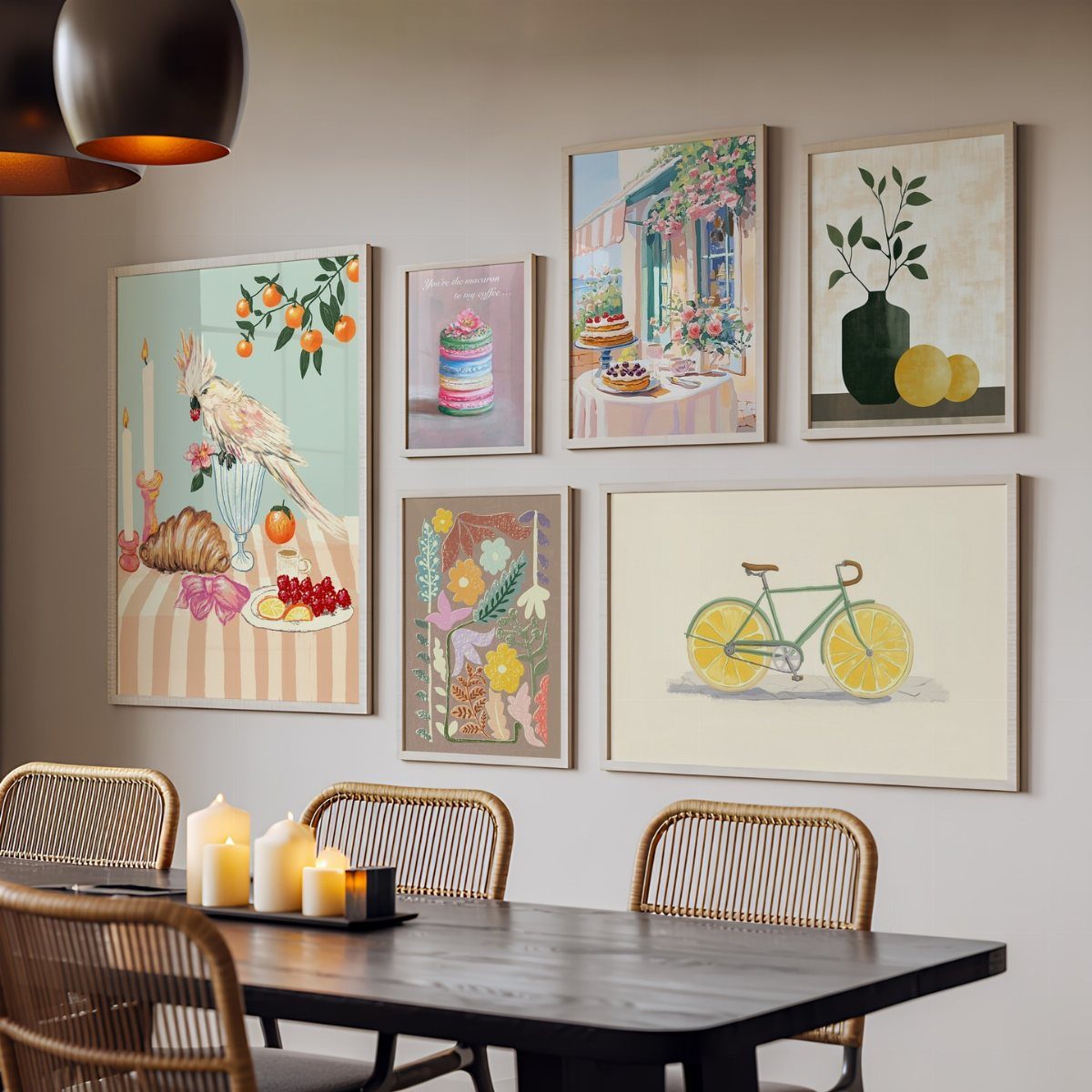
A gallery wall behind a dining table can carry the whole room’s personality, and a group of prints in bright, playful colors does exactly that against a dark table and natural rattan.
The dark furniture steps back so the art leads.
Keep the frames simple and let the artwork supply the color.
Hang the group centered over the table, not pushed to one side, so it reads as one arrangement. Rental-friendly picture-hanging strips make it easy to rearrange the layout until it looks right, and only then reach for nails.
Candles on the table pick up the same warmth without adding clutter.
8. Red Dining Room Walls
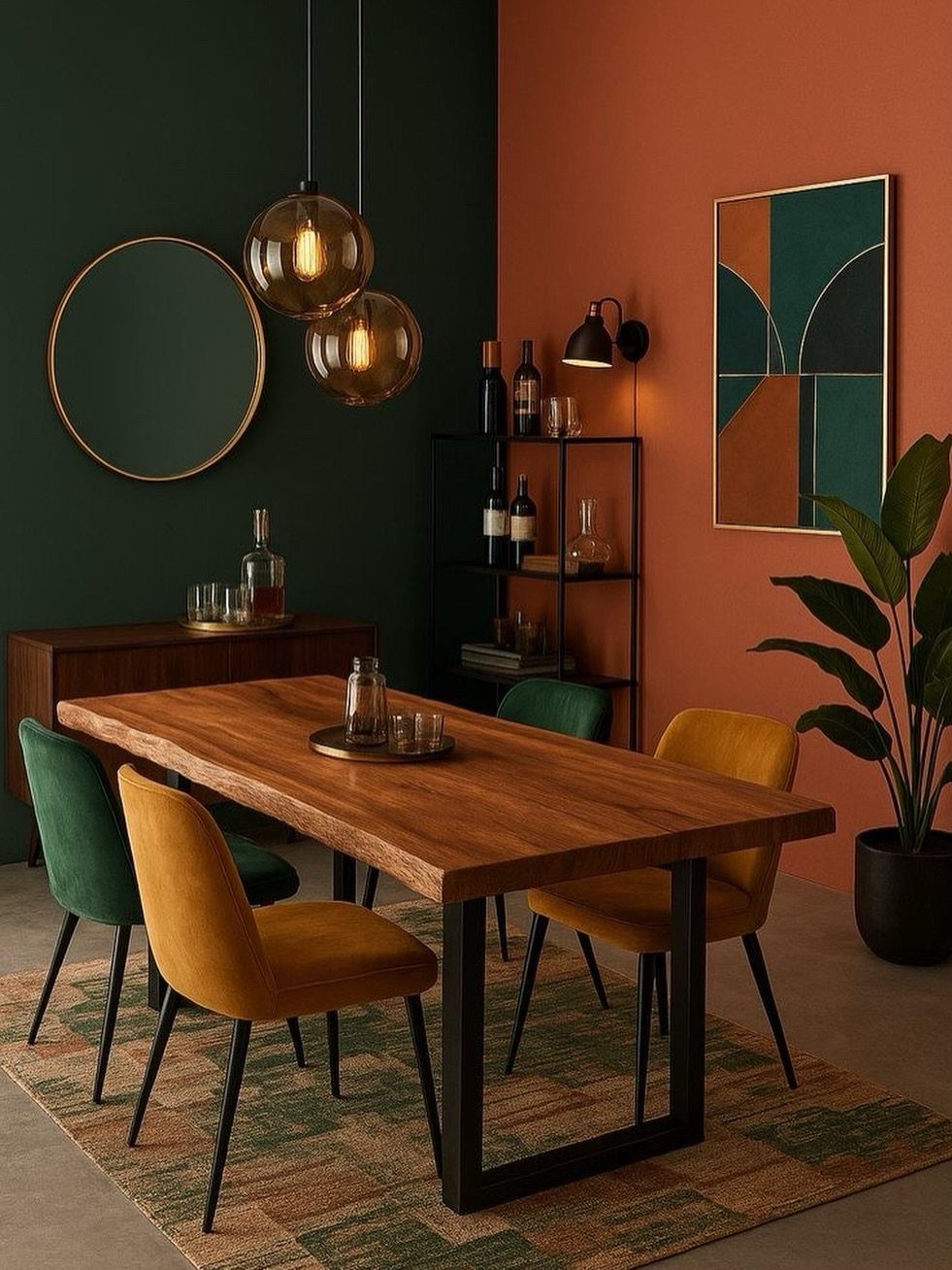
Terracotta red beside deep green is a bold pairing, and it works because both colors sit in the earthy range.
A wooden table keeps the combination from feeling loud, and velvet chairs in yellow and green carry the wall colors down to seat height.
Paint is the cheapest way to try this, and a weekend covers 2 walls. Choose one wall for the red and let the green wrap the rest, or the room gets busy fast.
A round mirror and one abstract piece are enough on the walls. Anything more fights the color.
9. Bay-window Dining Nook
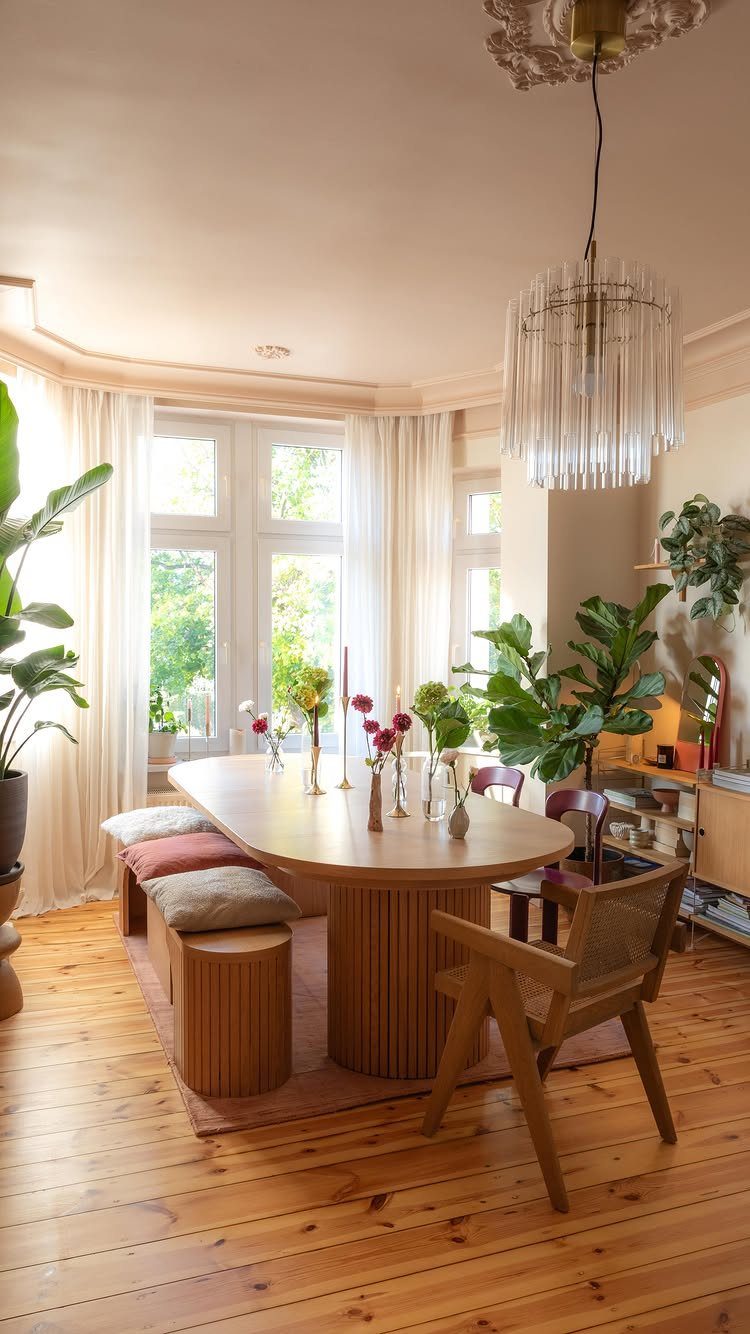
A bay window gives a dining nook its own architecture, so the table doesn’t need a wall behind it to feel like a place.
An oval table with a built-in bench along the curve seats more people than chairs would and leaves the middle of the room open.
Oval is the shape I’d pick here, because it follows the window better than a rectangle and has no corners to bump. Fluted wood adds texture without a pattern.
Plants on the sill fill the window without blocking light. A chandelier centered over the table finishes the nook.
10. Dining Room Rug
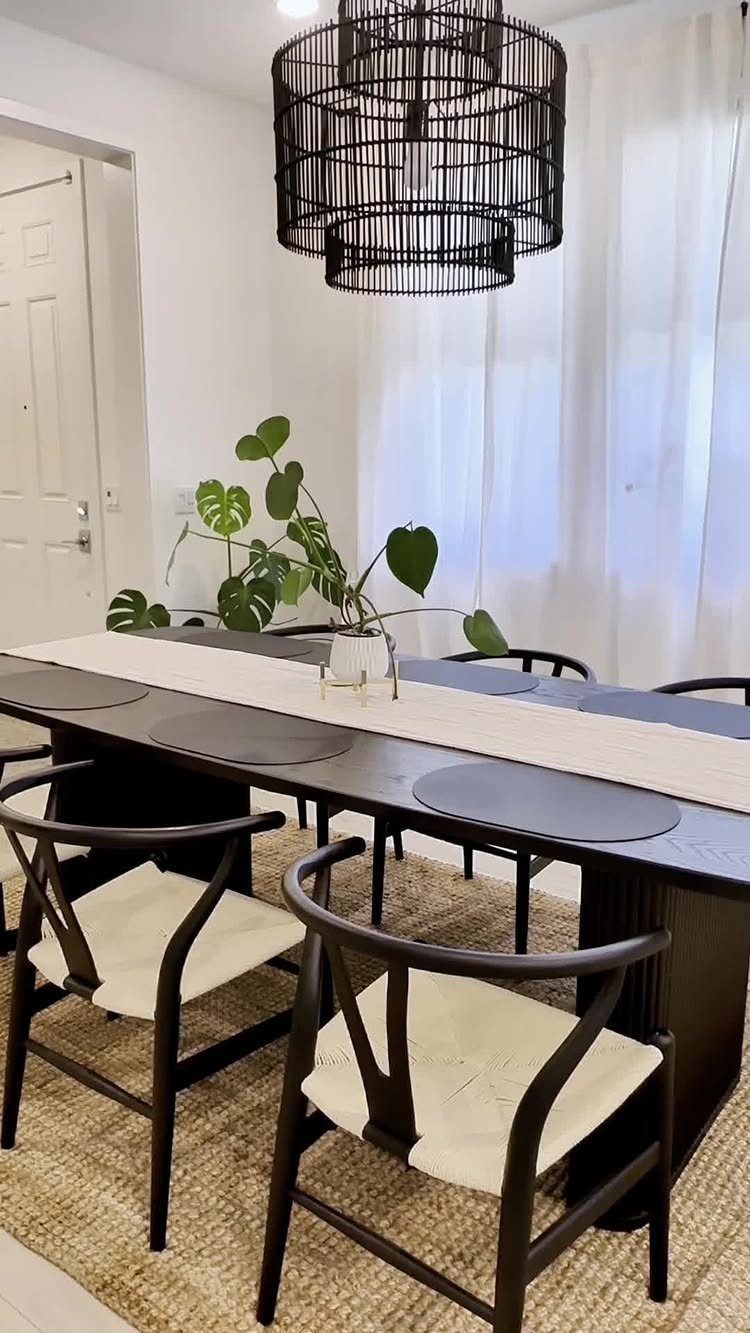
A textured jute rug under a dark wood table adds warmth to a bare floor and separates the dining area from the rest of the room. The natural fiber also sits well beside wishbone chairs and a black cage chandelier.
Size it so every chair stays on the rug when pulled back from the table.
That usually means a rug that extends well past the tabletop on all sides, and a rug that is too small makes chair legs catch on the edge.
Jute is rough underfoot and hides crumbs better than it cleans, so I’d skip it if kids eat there daily.
11. Moody Dining Room
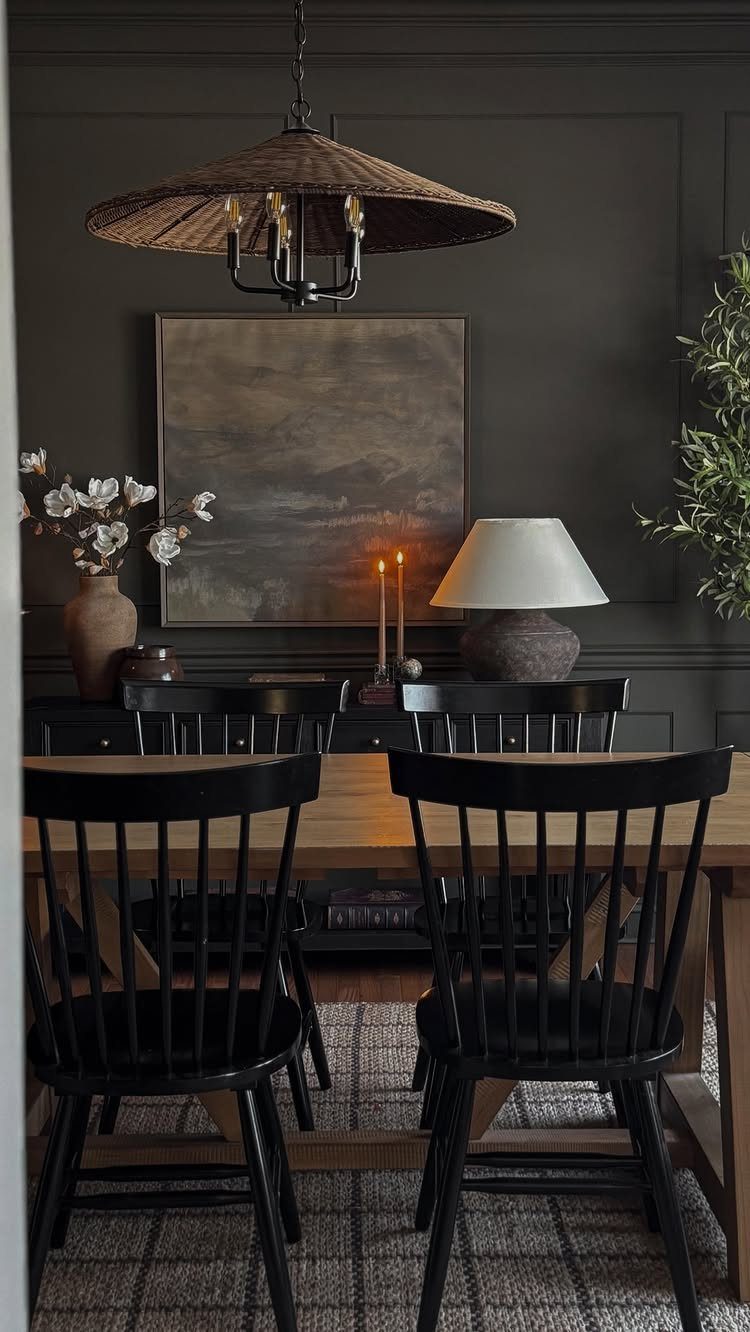
Dark gray walls make a dining room feel like an evening room, even at lunch.
Wood and woven textures keep it warm: a wooden table, black chairs and a woven pendant give the eye something to read against the deep color.
Layer your lighting.
A pendant overhead, a table lamp on a side surface and candles on the table let you dim the room to suit the meal. Choose matte paint, since a flat finish absorbs light and hides wall flaws.
One large painting is plenty. In a dark room, a single big piece looks calmer than several small ones.
One thing to keep in mind, however, is balance. If the lighting is all about the wow factor, the tablescape should stay on the minimalist side as to not create sensory overload for your dining companions.
12. Statement Dining Table
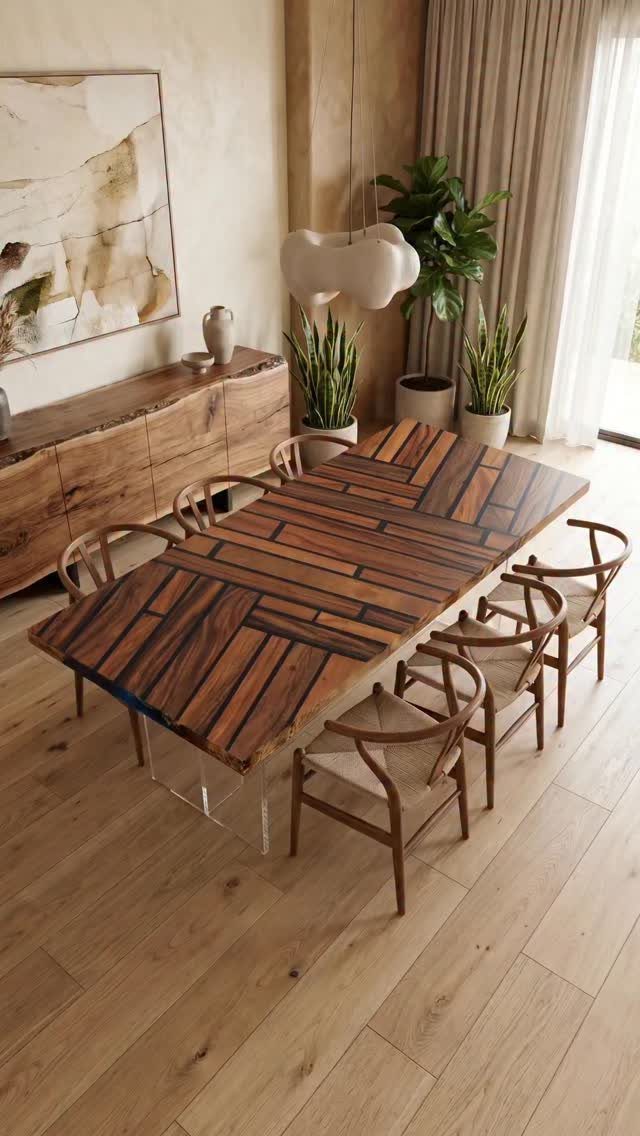
A table with a geometric patterned top and clear acrylic legs turns the furniture into the main event. The legs nearly vanish, so the pattern appears to float, which suits a room with a simple wooden sideboard and plants.
Let the table be the loudest thing in the room. Keep the walls and light fixture plain, and keep the tabletop mostly bare so the pattern stays visible.
Acrylic legs show fingerprints and scratches more than wood, so expect to wipe them down. For a table you will see every day, I would still pick this look over a plain one.
13. Eclectic Dining Room
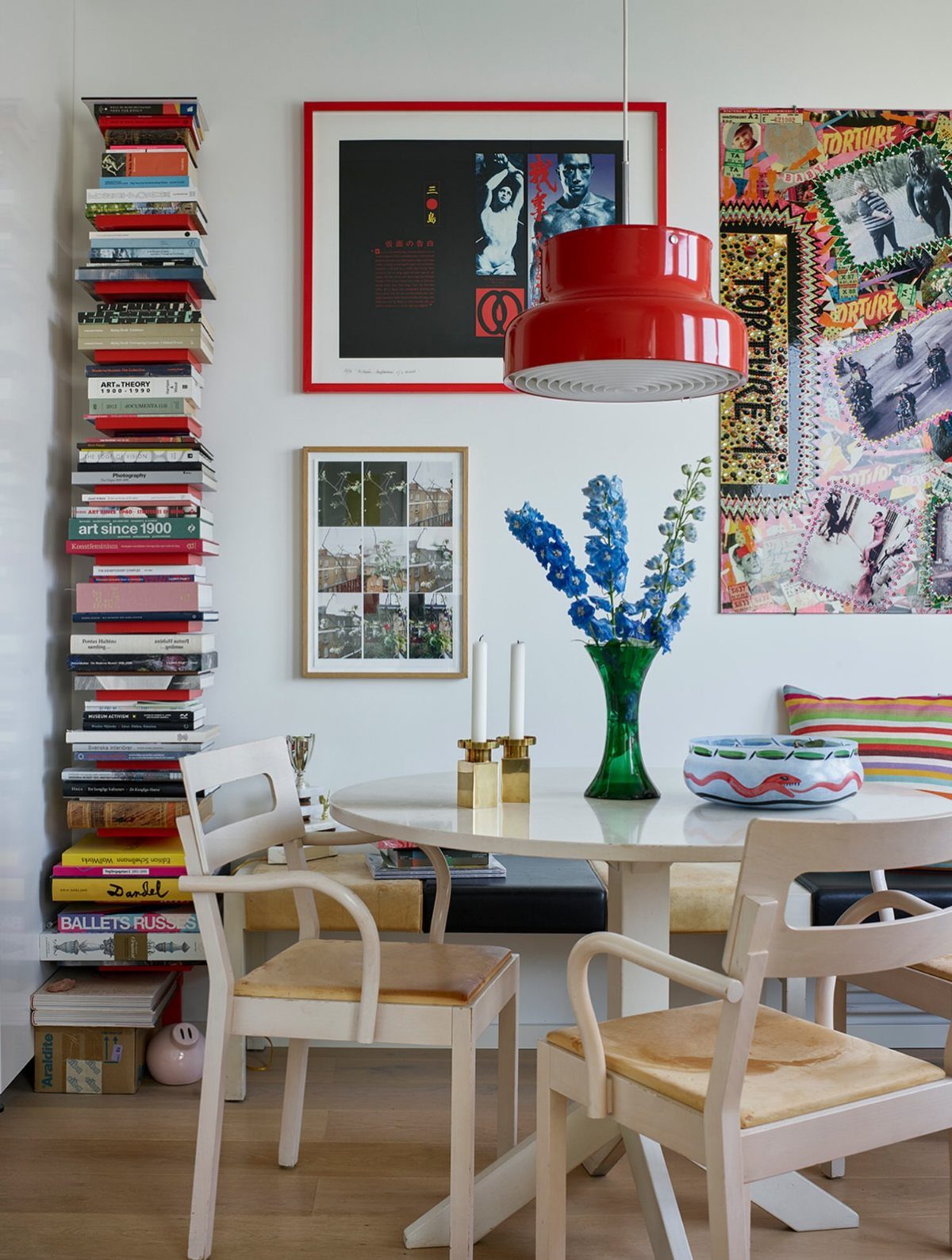
A red pendant over a white table is the quickest way to start a collected look, because the white keeps the color from turning into noise.
Everything else can stay mixed: chairs that don’t match, blue flowers, a stack of books and a crowd of wall art.
Pick one color to repeat in two or three places, and the clutter reads as chosen. Stop when the table still has room for plates.
14. Dining Room Greenery
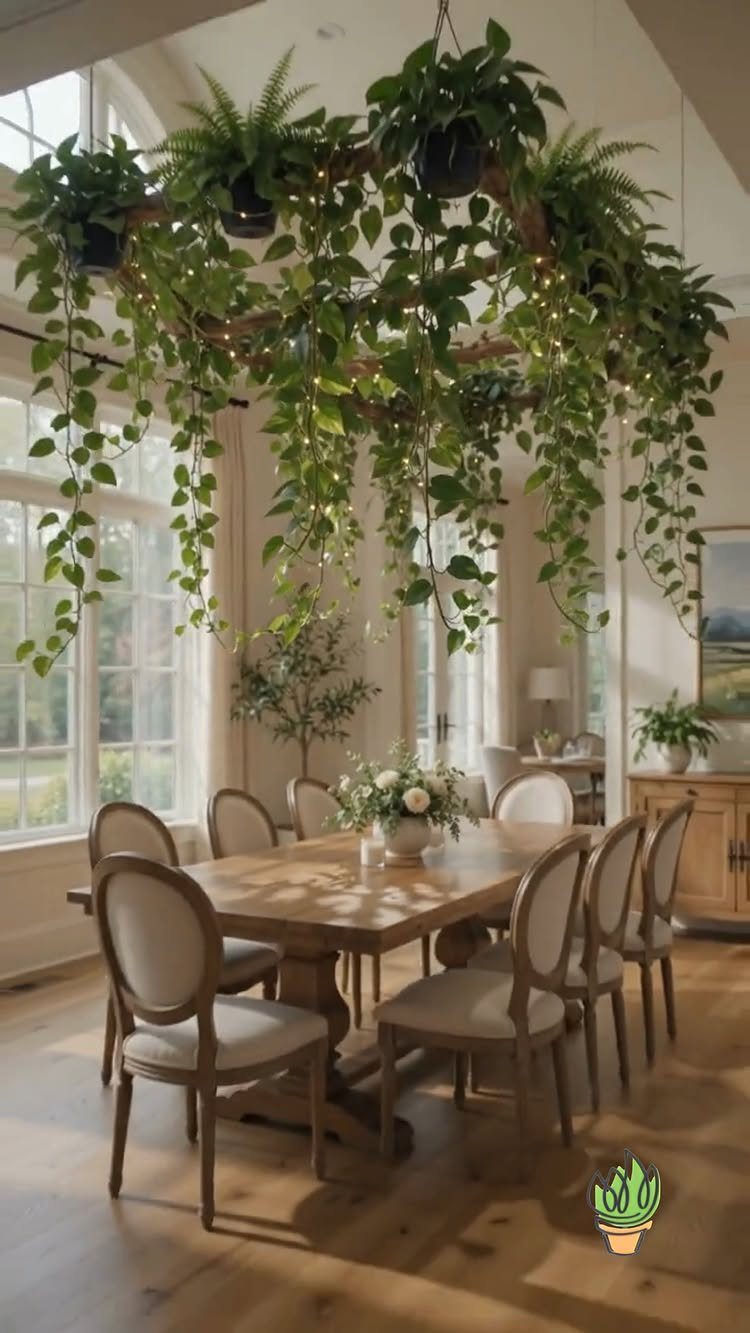
A hanging garden over the table puts the greenery where it can’t be knocked over or crowd the plates. It also fills the empty air above a wooden table, which a centerpiece alone never does.
Mix trailing plants with upright ones so the circle looks full from below. Fairy lights woven through the leaves give you soft light at dinner.
Plan for watering, since a ceiling-hung planter drips and needs a ladder. Fresh flowers on the table make a good low companion.
15. Kitchen Dining Nook
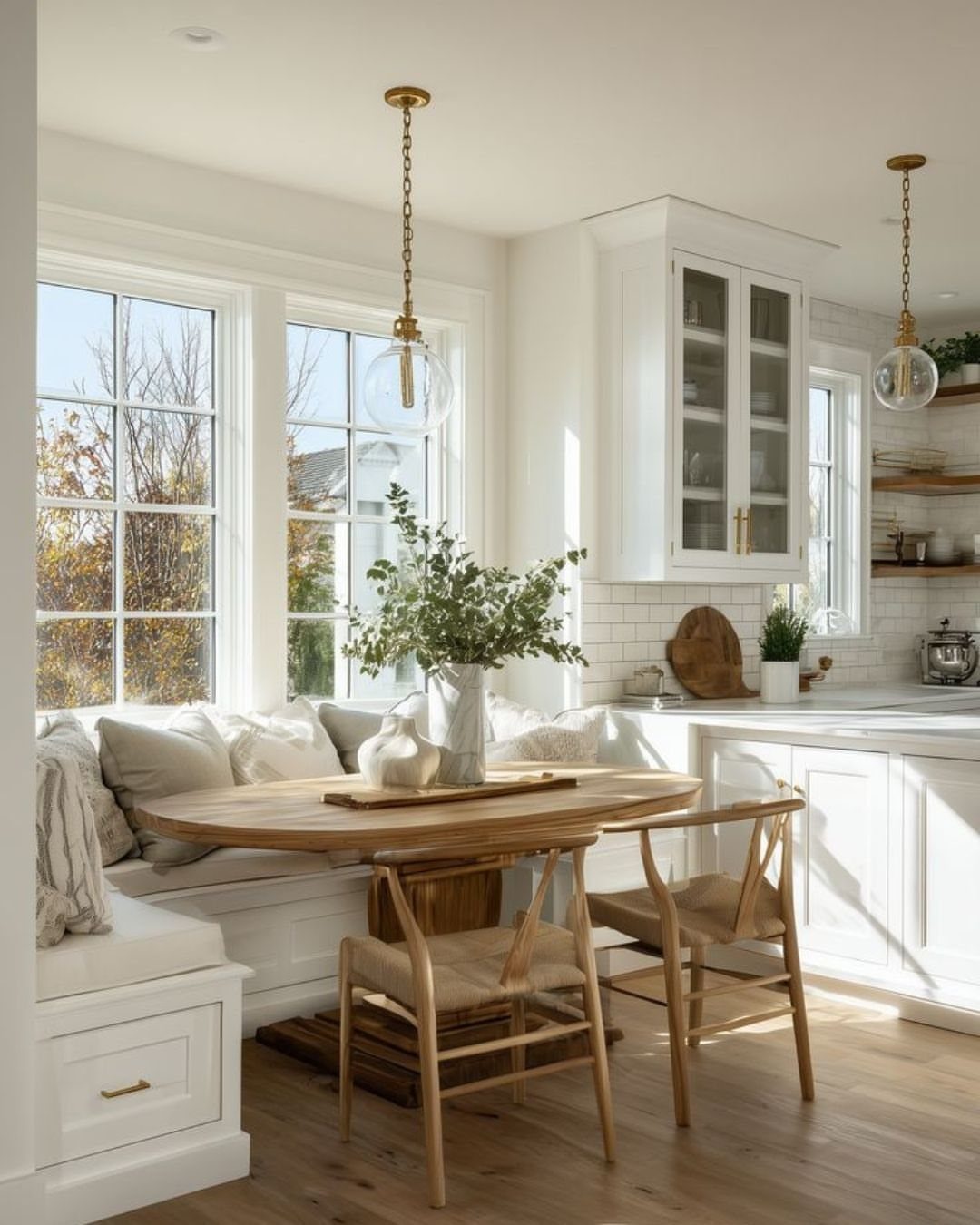
With no dining room, a round table tucked against a window seat gives the kitchen a real place to sit down.
Seating on a bench takes less floor than chairs on every side, and wishbone chairs fill the open edge without looking heavy.
I’d choose a round wooden table here, since a rectangle would block the path to the cabinets.
Glass pendants overhead mark the nook as its own spot while keeping the view open. Cushions on the window seat make a long meal comfortable.
16. Open-plan Dining Zone
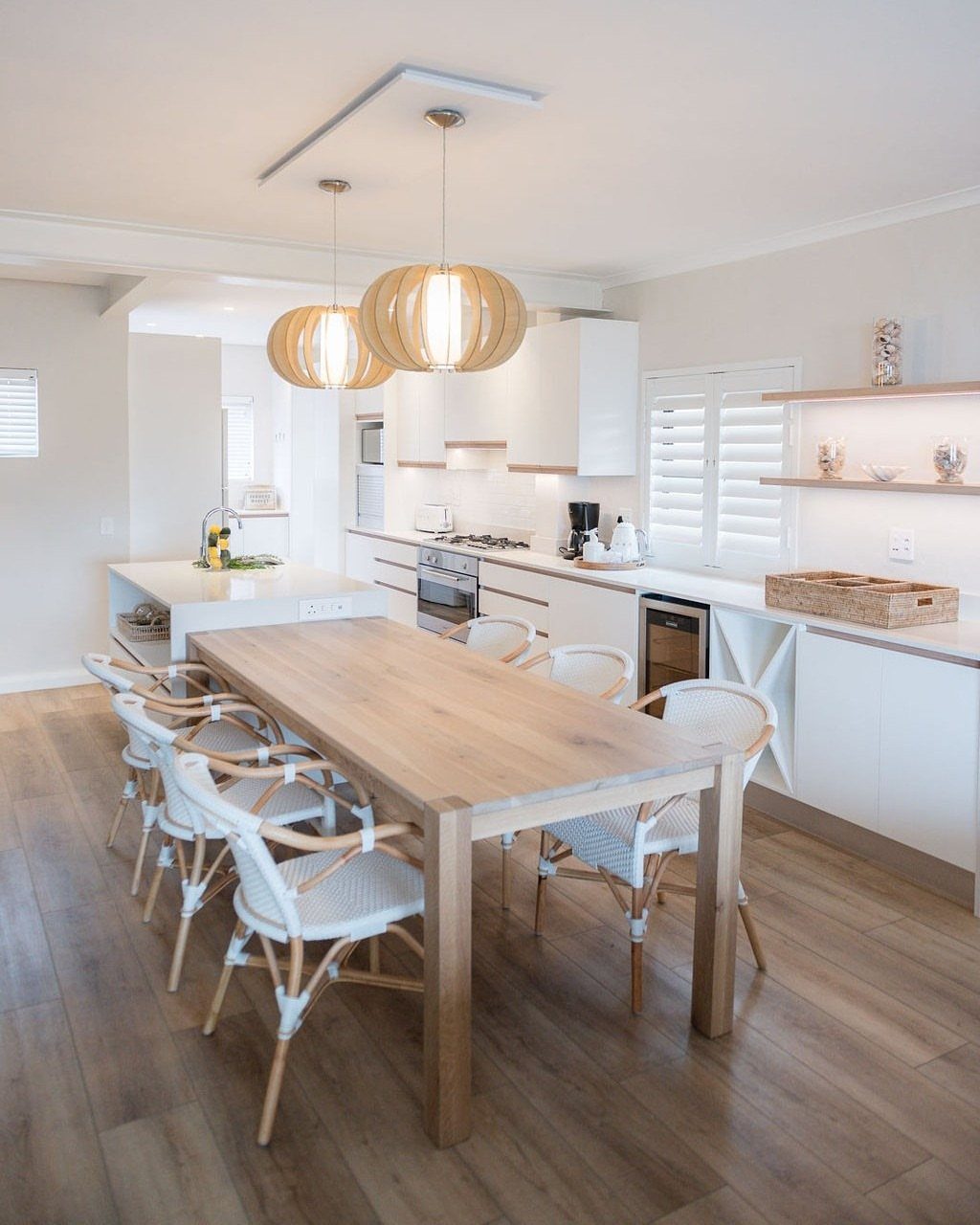
2 oversized pendants over a table are what separate a dining zone from the rest of an open kitchen. The fixture marks the dining zone without adding a physical partition.
Hang them low enough to feel connected to the table, and keep their material in line with the tabletop, wood with wood, so the zone looks planned.
Light woven chairs let the eye pass through to the kitchen beyond. A rug is optional; the lighting does the job already.
17. Dining Chairs
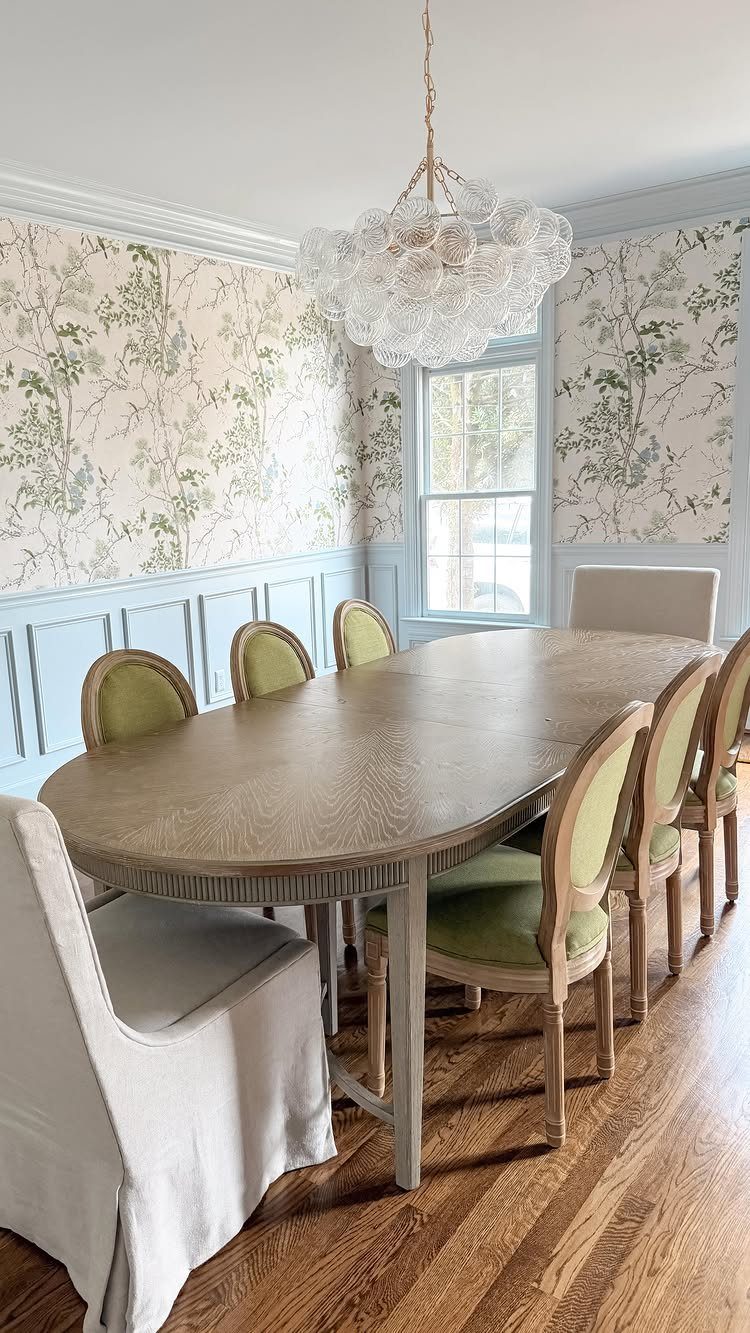
Two chair styles at one table is a trick worth stealing.
Upholstered side chairs in green give comfort for a long dinner, while white slipcovered chairs at the ends mark the host seats and can go in the wash after a spill.
Match the wood tone and the seat height, and let color or fabric be the only difference.
A chair that feels fine in the store can turn uncomfortable after a full meal, so test it properly. A good-looking chair that you abandon halfway through dessert is a bad purchase.
18. Dramatic Dining Room
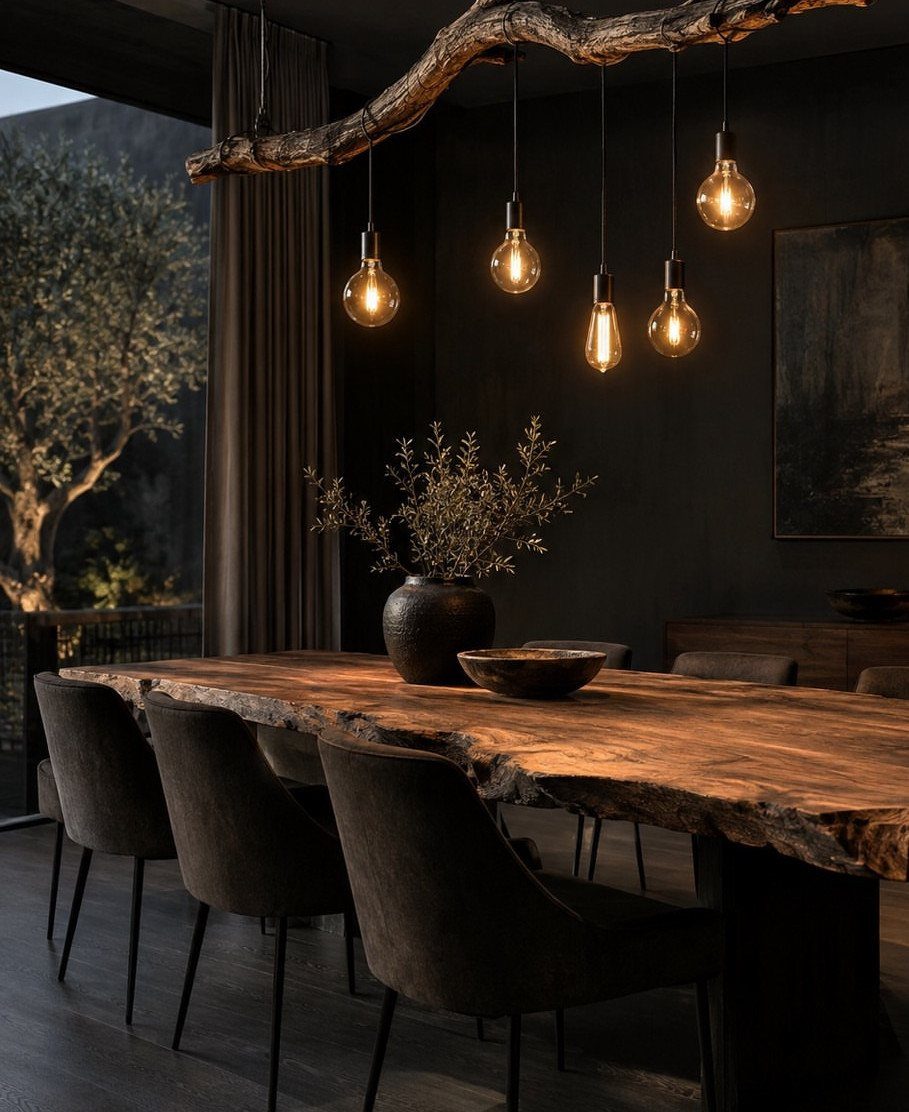
Drama comes from contrast: a dark wall, a rough live-edge table, and a branch fixture with bare bulbs that looks like a sculpture. Each piece is strong alone, so the room needs few extras.
Paint the walls dark first, as it’s the cheapest part. Then pick one hero, the table or the fixture, and let the other support it.
Dark chairs keep the focus on the wood. Bare bulbs glare, so put the fixture on a dimmer.
19. Rustic Dining Room
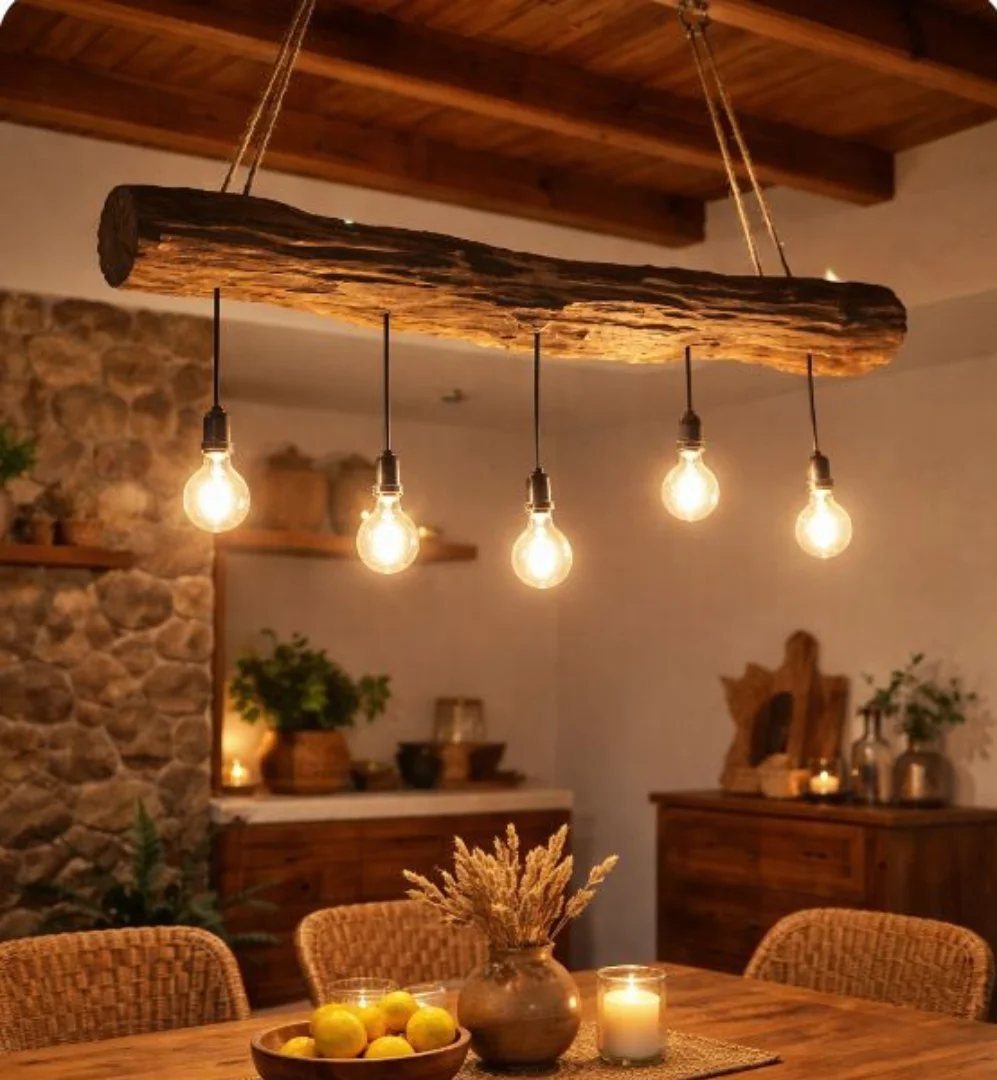
Raw timber and stone do most of the work in a rustic dining room, so the decor can stay small. A log chandelier with Edison bulbs gives the ceiling a country look that a store-bought fixture rarely matches.
I’d keep the table styling to what’s already there: lemons in a bowl and a single candle. Bright fruit is the only color the room needs against all that brown and gray.
If you don’t have a stone wall, wood planks or a limewashed finish can stand in.
20. Scandinavian Dining Room
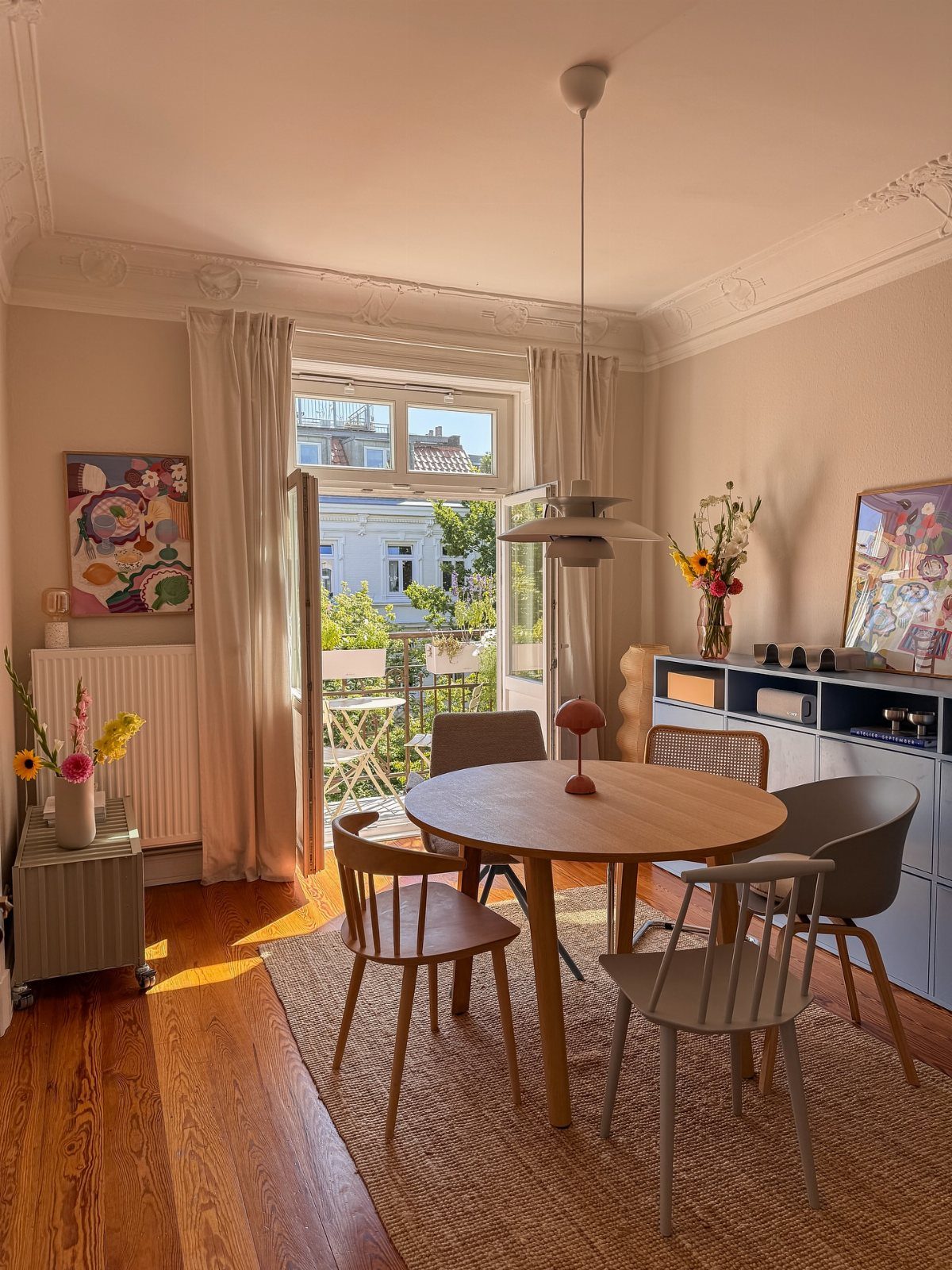
Chairs that don’t match can still look calm in a Scandinavian room, provided each one is simple, modern and light in color or wood tone. They make a round wooden table feel collected instead of set.
Hold the palette to wood, white and one soft accent.
Let the art and a small vase of flowers on pale walls carry the rest. I like a door to a balcony left uncovered, since it adds daylight and a view.
Skip heavy drapes and busy patterns here.
21. Live-edge Dining Table
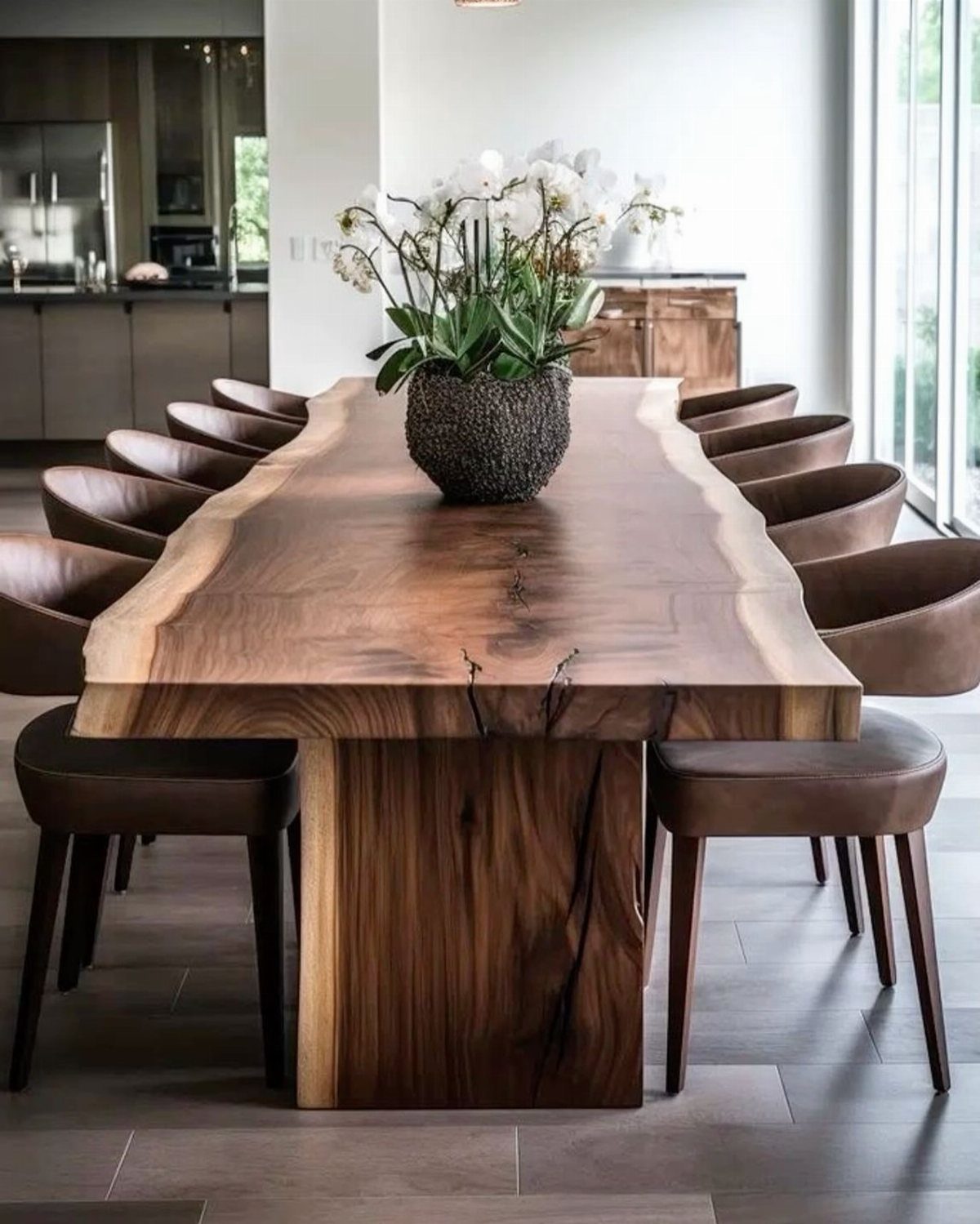
The uncut edge is the reason to buy this table, so choose one where it runs the full length and stays visible. Each slab has its own curve and grain, which means no 2 tables look alike.
Brown leather chairs sit well beside it because the colors stay in the same warm family. Keep the centerpiece slim, a few white orchids in a low pot, so nothing hides the outline of the wood.
A long table like this suits an open-concept room with space around it.
22. Reclaimed Wood Table
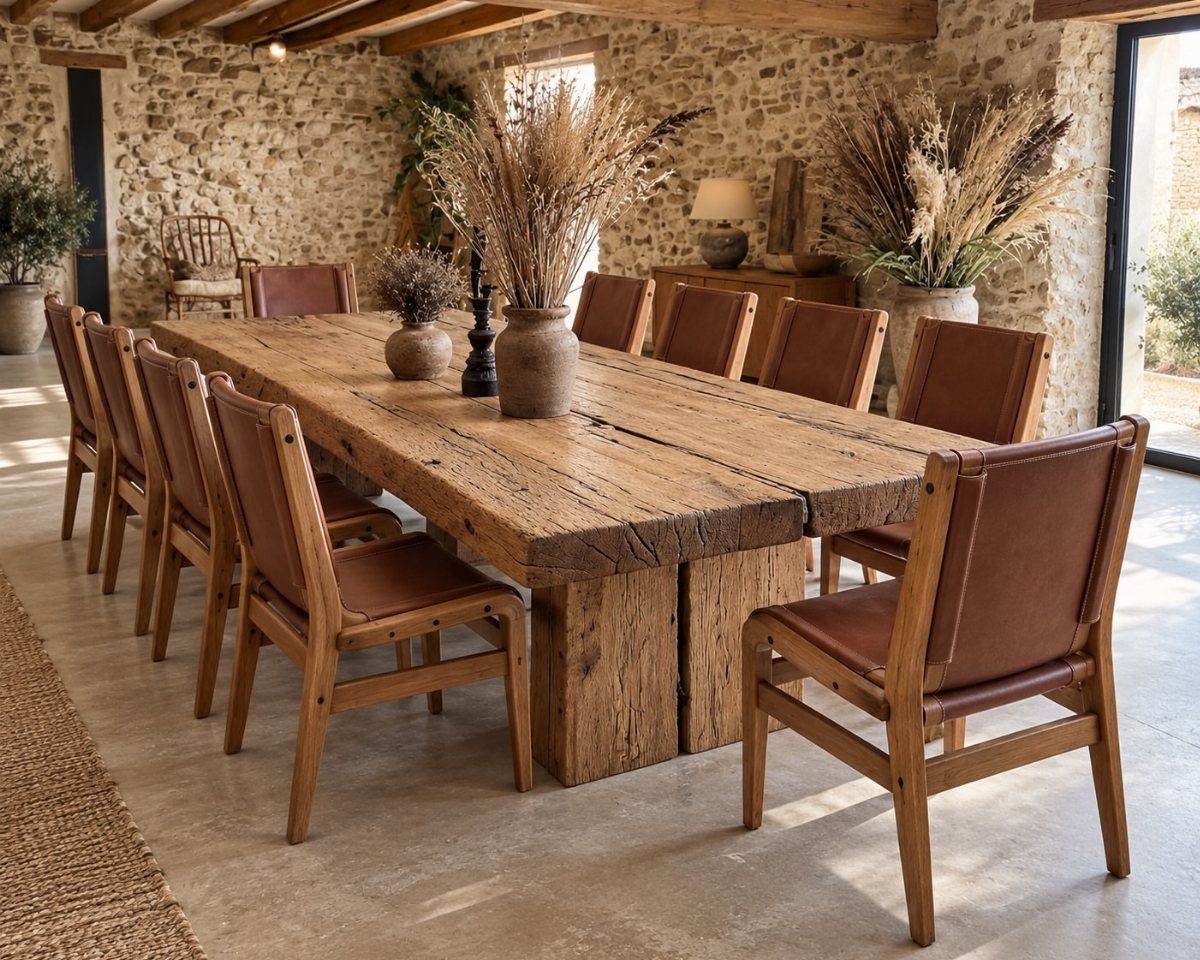
Nail holes, saw marks and uneven color are what you’re paying for with reclaimed wood, so leave them showing. The table reads as farmhouse without any extra decorating, and reusing old boards gives it a sustainable story too.
Leather chairs and a stone wall keep the room in the same earthy range. Dried grasses in tall vases stay put through every season and never need watering, which makes them my pick for the table.
Find out what finish is on the top ahead of checkout, because you’ll eat on it every day.
23. Fluted Pedestal Table
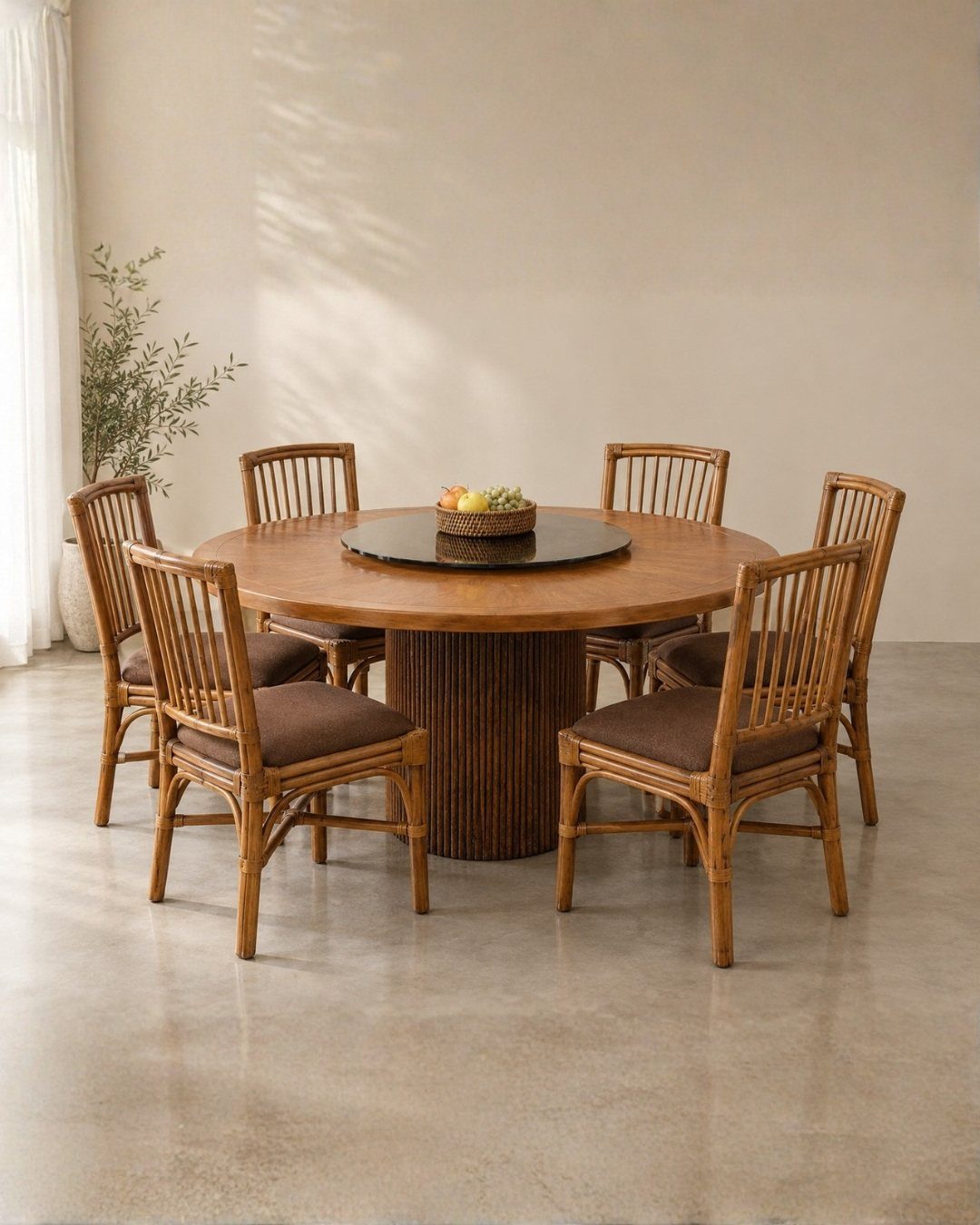
Vertical grooves on a pedestal catch light and throw thin shadow lines, so the base gets texture without any color or pattern. On a round wooden table, the effect is quiet but easy to spot.
Rattan chairs with brown cushions repeat the handmade feel, and six of them fit a round top comfortably. A glass lazy Susan in the center keeps dishes within reach without covering the wood.
Let everything else in the room stay plain so the fluting is the detail people notice.
24. Geometric Pedestal Table
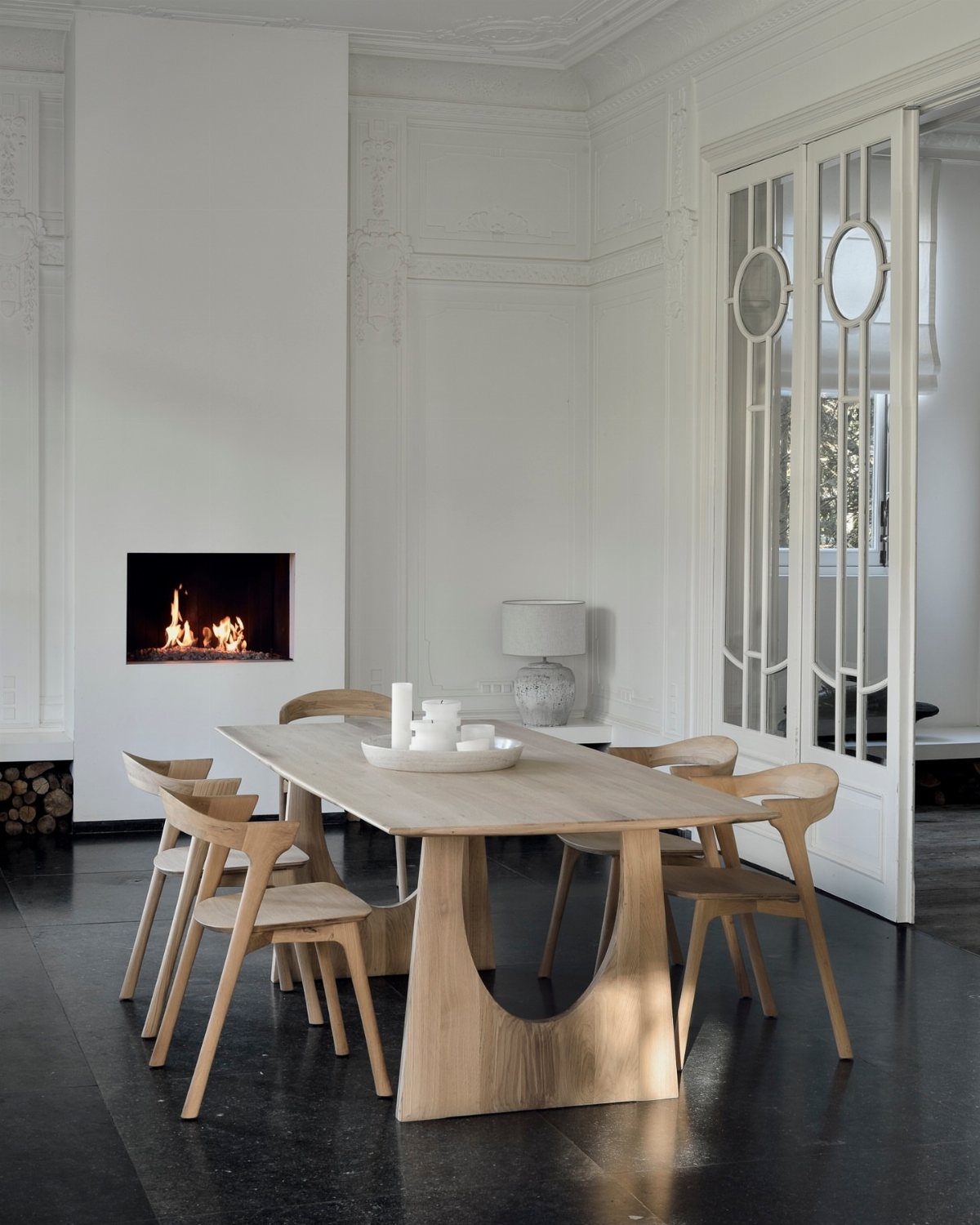
Look at the base before the top: faceted, angular shapes turn the part of a table that usually disappears into a sculpture. A light wood top lets that geometry read clearly.
White walls help by giving the shape a clean backdrop.
Matching chairs with simpler lines than the base keep the set from competing with itself. French doors and a fireplace add enough architecture, so leave the table top bare or give it a single low bowl.
Sit at it before buying, since a sculptural base can limit where your knees and chairs go.
25. Evergreens and Holly Berries

Fresh greenery and red roses on a holiday table let a centerpiece do seasonal work without crowding the platters. Keep it low and loose, so guests can see over it and the turkey still has room to land.
Red against green is already the holiday palette, which means the rest of the table can stay plain.
Add holly berries if you want a second note of red, and skip extra ornaments, since the tree and fireplace behind the table already carry the season.
26. Rounded Furniture Shapes
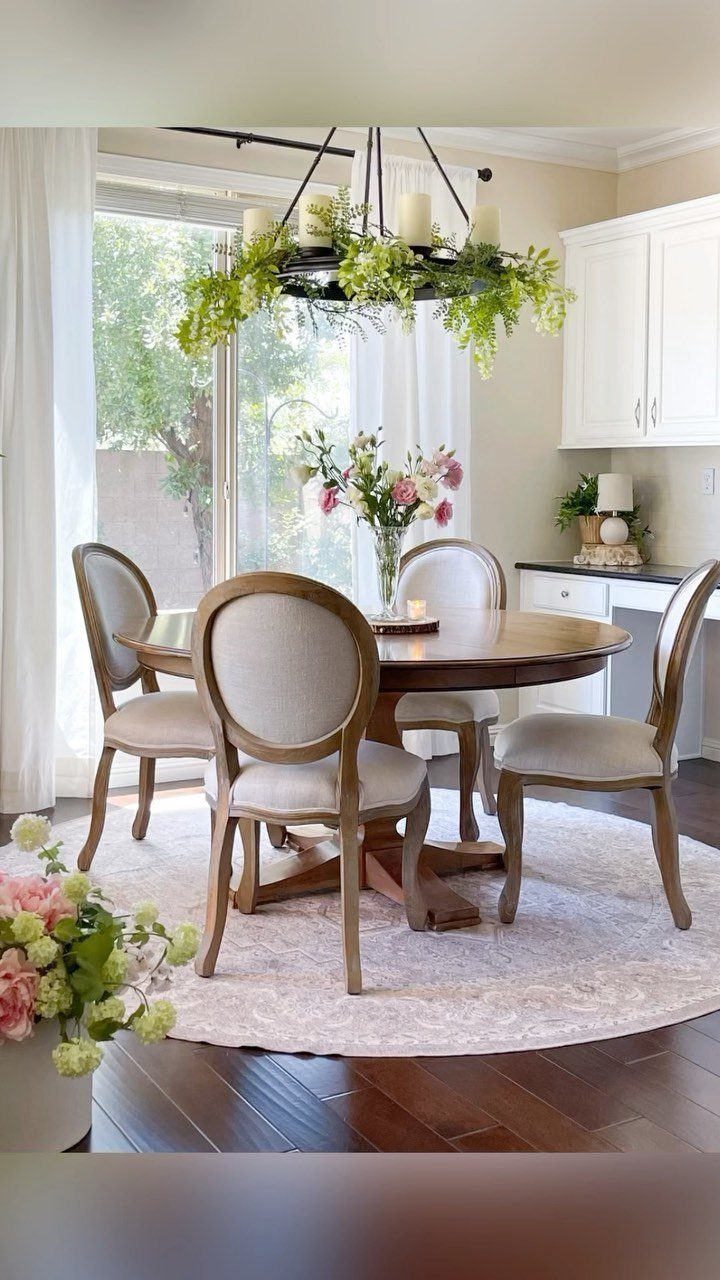
Repeating one shape through a dining room is a cheap way to make it look planned. A round table, oval chair backs, a circular rug and a floral chandelier all soften the room, so nothing points at a corner.
When you shop, let the table set the rule and match the rest to it. Oval-backed chairs echo a round table without copying it, so the curves feel related instead of matched.
Round shapes also leave an easy path to a door, which helps in a room with sliding glass.
Choosing a Dining Table
Start with headcount, not style.
A common rule of thumb is a chair’s width plus 6 inches of table edge per person (most chairs run 16–20 inches wide), and enough clear floor behind each seat that chairs can pull out without bumping the wall or sideboard.
If your table mostly serves everyday dinners and hosting is the exception, an extendable table with leaves beats a large fixed one.
Built-in storage, whether drawers or a matching sideboard, earns its place when the dining area is also where the serving dishes live.
Look at how the table sits against the adjoining rooms, because in an open plan you see it alongside the kitchen and living area every day.
A wood top on metal legs with white chairs is an easy combination to live with: the wood warms the metal, and the chairs stay light.
A custom table can give you a say in the size, wood, stain, leaves and distressing, which helps in an awkward room. Get the price and the wait in writing before paying any deposit.
Hosting and Room Atmosphere
Decide what the room does most often before you decide how it should feel. Everyday meals, family gatherings and entertaining pull the furniture in different directions, and the Tuesday dinner is the one the room has to get right.
Pick one word for the mood, such as cozy, bold, elegant or whimsical, and test every purchase against it. A piece that fights the word goes back, however good it looked online.
For big gatherings, plan flexibility instead of a bigger room.
Stackable or folding chairs in a closet and a table that extends cover the few nights a year you need extra seats, so the room still looks right the rest of the time.