
Start with your floor space and the number of people at a regular Tuesday dinner; the once-a-year feast can wait until the shape and size are settled.
The list runs from round tables and kitchen nook sets to long rectangular tables, and from a blue farmhouse set to metal legs and live-edge slabs.
One entry near the end covers sizing a table for hosting, because the same table has to handle a quiet dinner and a full house.
Seating changes the look as much as the table: spindle backs, X-backs, upholstered, leather, mixed chairs or a bench.
1. Dining Sets
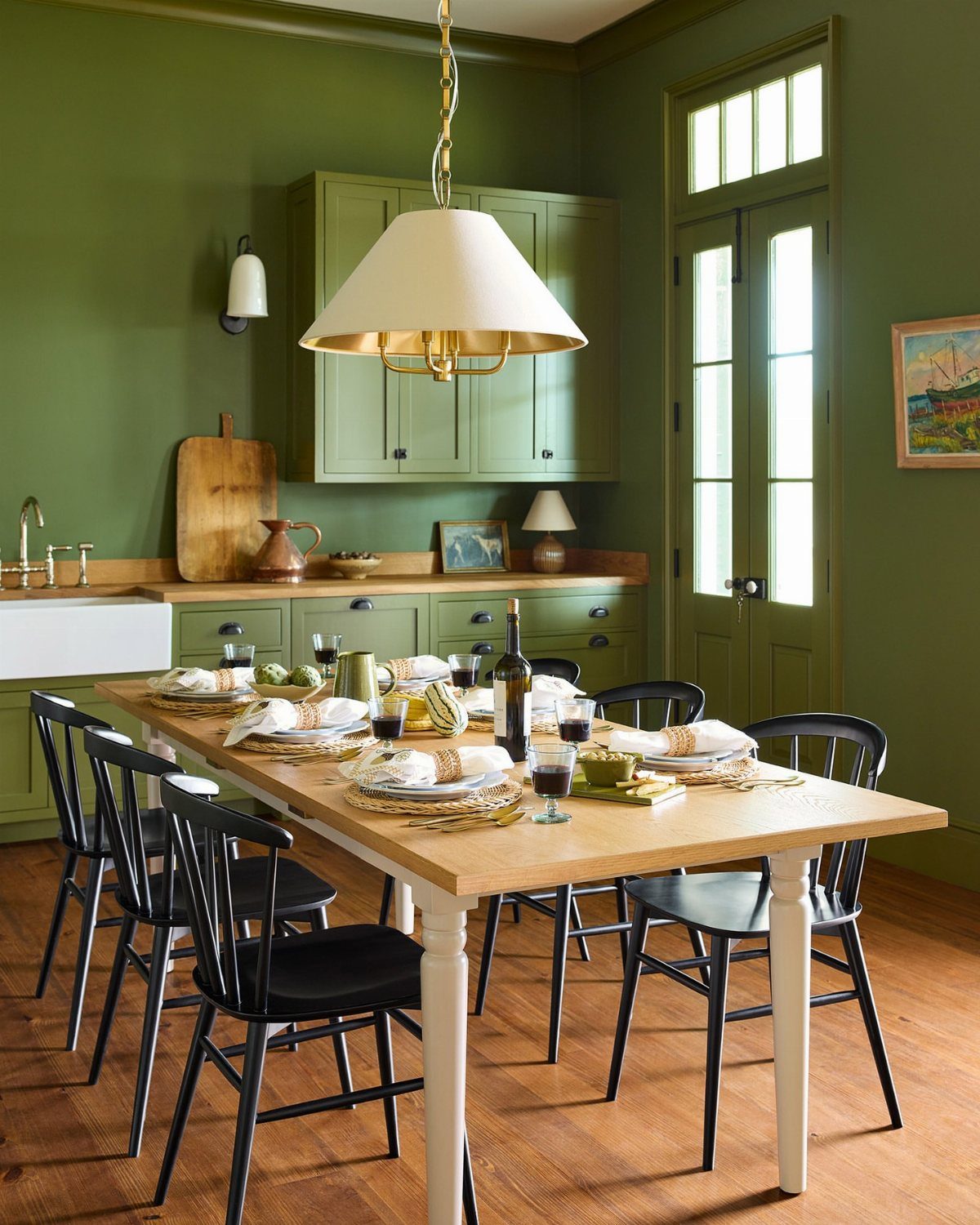
A set settles the matching question before you start: table and seating arrive as one group, so wood tone and chair finish already agree.
Here, a light wood top with black chairs gives clear contrast, and a green wall makes that pairing look deliberate.
Sets come in different piece counts and styles, so decide how many people sit down on an ordinary night before you pick. Buying for the usual weeknight, not the holiday crowd, leaves the space open instead of stuffed.
If the black chairs feel too heavy for your room, ask whether the same table is sold with a lighter chair.
2. Dining Chairs
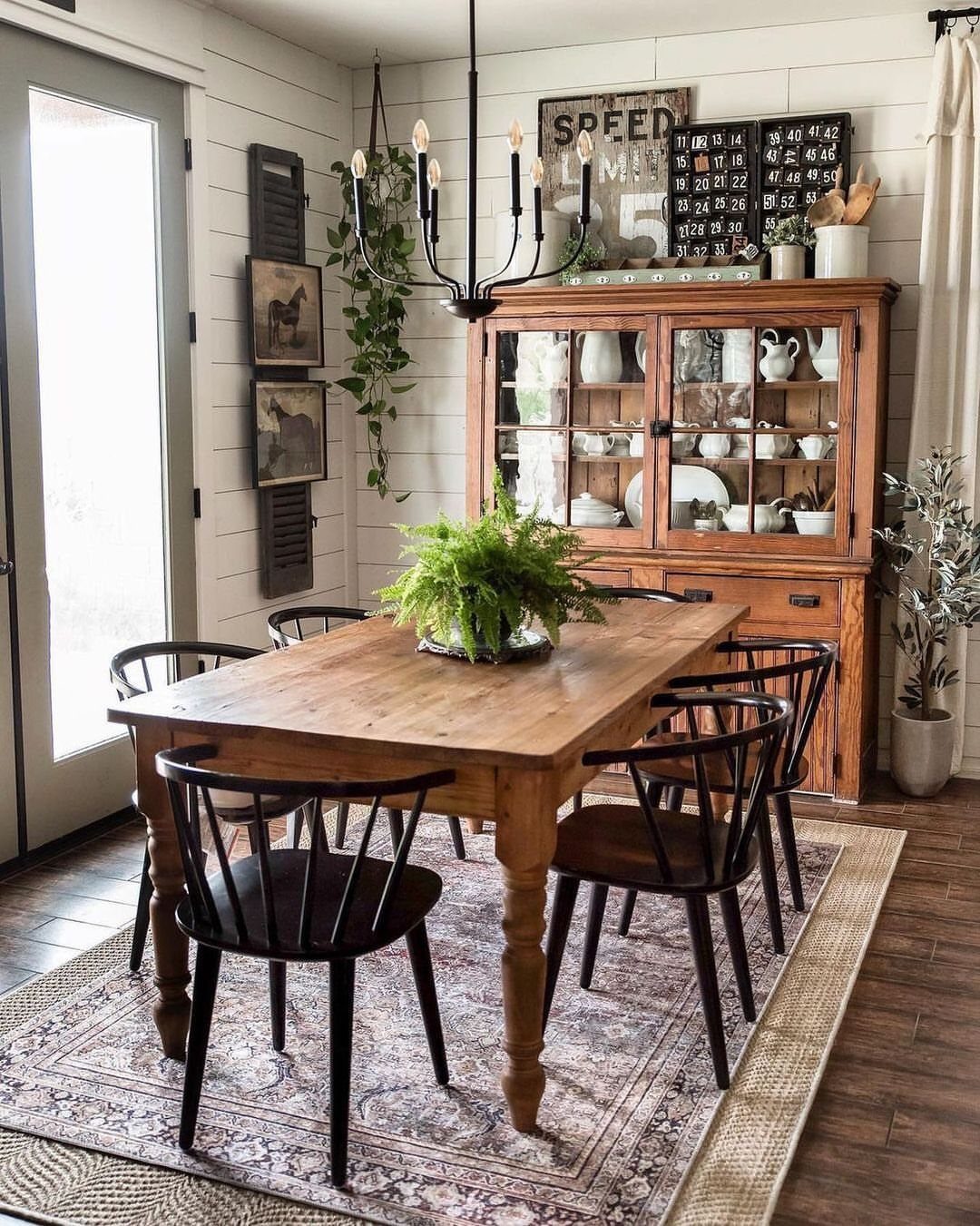
Black Windsor chairs against a pale wood table give a farmhouse set sharp contrast, and the chair finish can change the look of the room more than the table does.
The dark spindle backs read as a pattern against the light top, and they stay see-through, so the room doesn’t feel crowded.
Chair styles run from classic ladderbacks and Windsor designs to upholstered seats and unusual back shapes. For a farmhouse table, I’d start with ladderback or Windsor, since both suit the look without extra effort.
Buy one chair first and sit in it for a full meal at home, then decide on the rest of the set.
3. Dining Benches
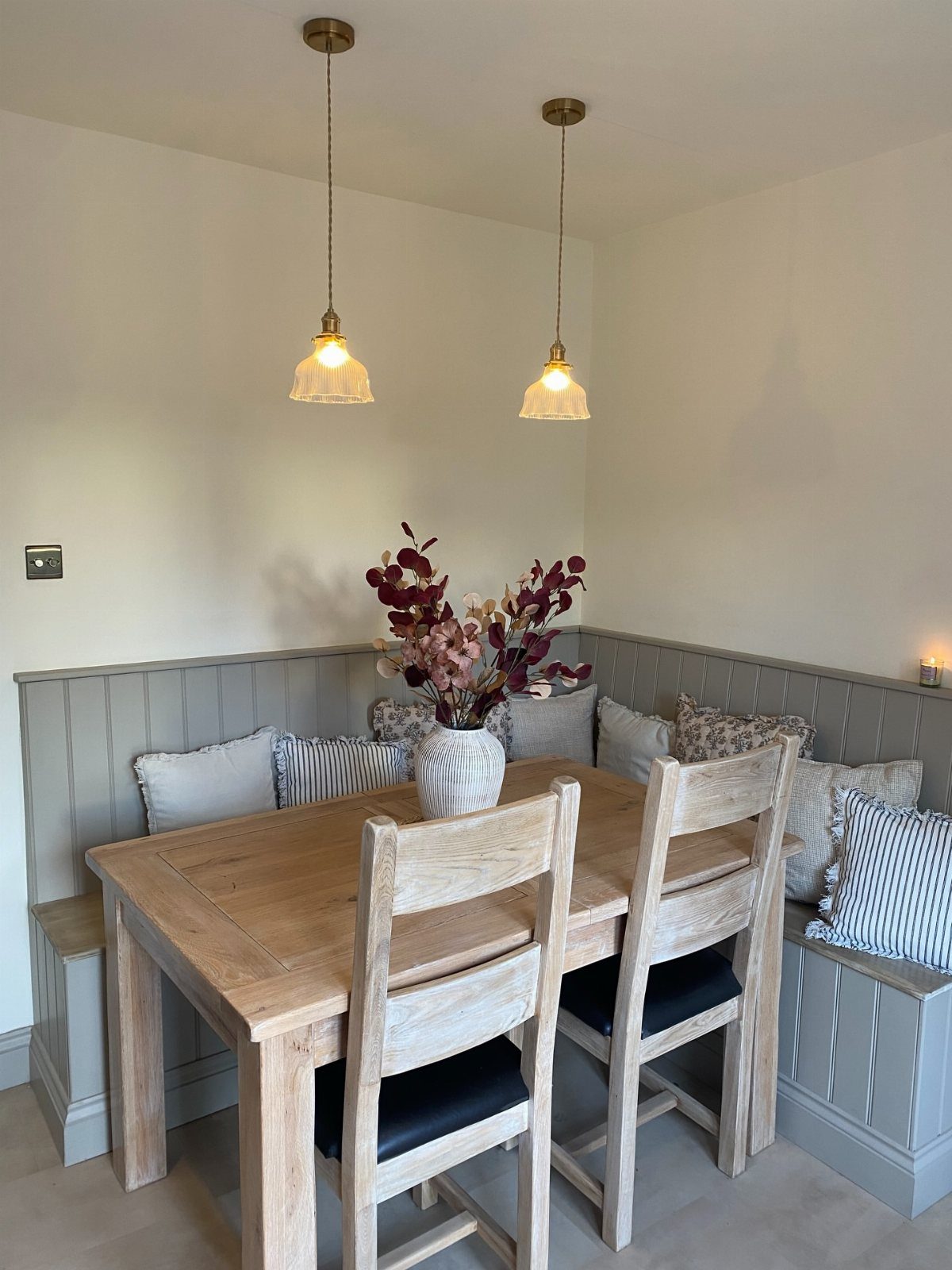
A built-in corner bench changes what a small dining area can seat. Tucked along 2 walls in an L, it frees the floor, and the table can sit closer to the corner than it could with chairs on every side.
Benches are casual, and they flex when more people show up: a guest can squeeze in without anyone hunting for an extra chair.
Cushions make long meals more comfortable, so I’d treat them as part of the plan, not an afterthought.
A bench on one side with a chair at each open end gives you fixed seating plus pieces you can slide around.
4. Trestle Tables
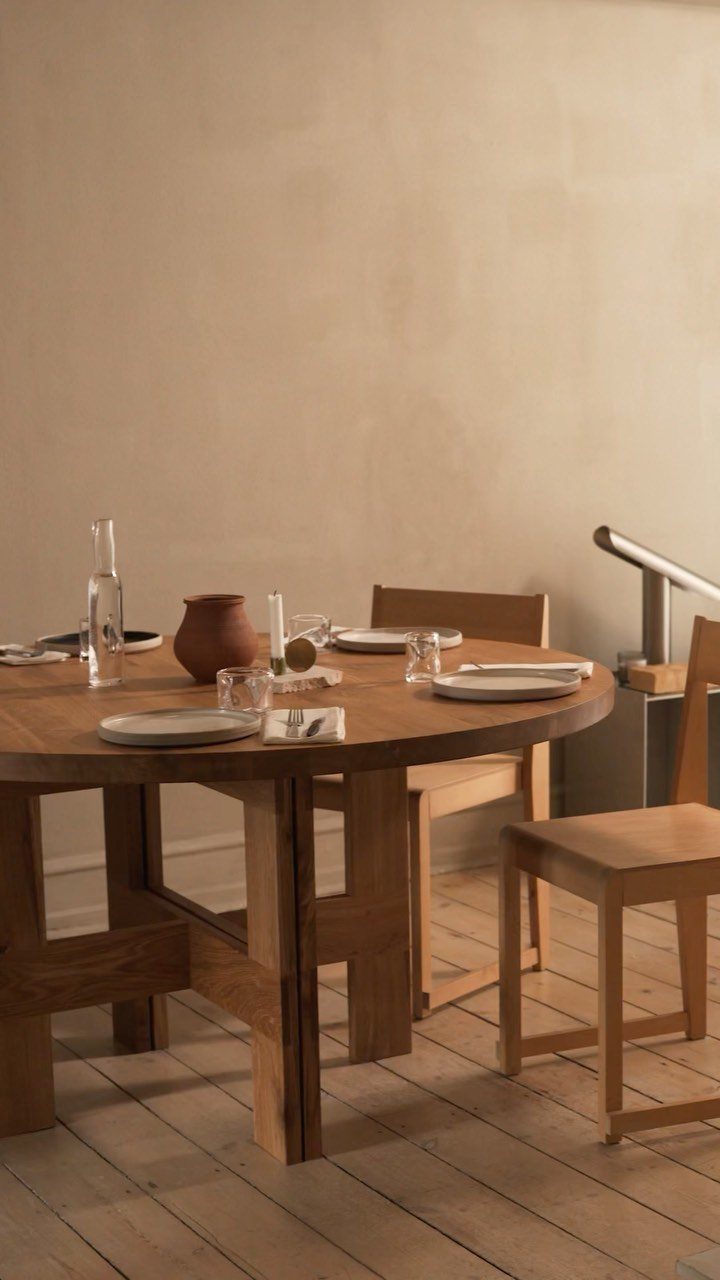
Trestle bases keep the legs tucked toward the middle, which leaves the table ends open for seating. That makes the style a farmhouse staple, and it looks especially clean on an oval top in a plain, uncluttered room.
Trestle tables come in large sizes and in extending designs, so you can buy for a normal week and still plan for a crowd. If hosting is occasional, the extending version makes more sense than a permanent giant.
Choose chairs with simple lines so the base stays the focus.
5. Round Dining Tables
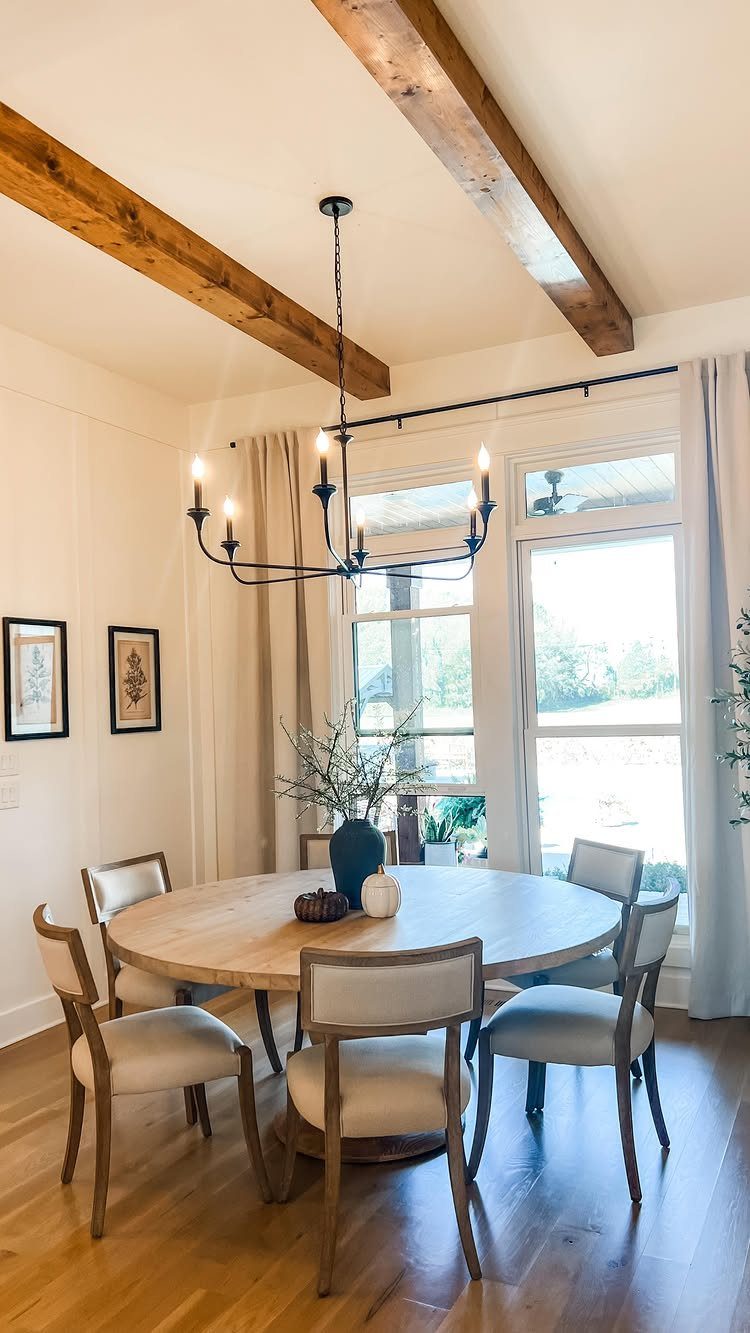
Round tables suit smaller groups and kitchen nooks, and they have no corners to bump in a tight walkway. Everyone faces everyone, which makes conversation easier than across a long rectangle.
Some round models extend for extra seats, a useful feature if the nook doubles as your gathering spot a few times a year. I’d look for one before accepting a fixed top.
Cream upholstered chairs soften the wood, but cushioned seats need more care around spills, so pick a fabric you’re willing to clean.
6. Pedestal Tables
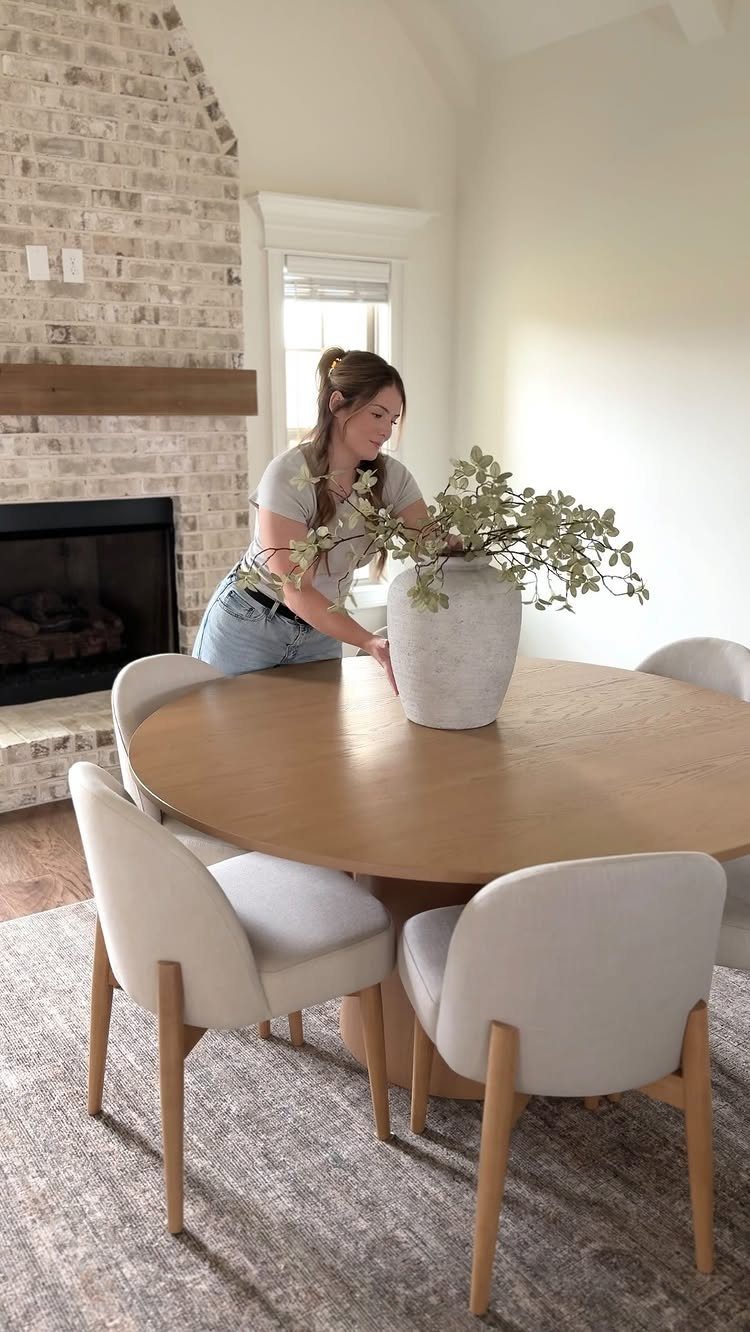
A single thick column under the top takes the place of corner legs, which is why a pedestal table leaves so much knee room.
A round top has no corners at all, so knees and chair placement never fight a leg.
The pedestal is a traditional design, and round is the shape most people picture. Other configurations exist too, so a pedestal doesn’t lock you into a circle.
A pedestal top should stay balanced when someone leans on the edge, so lean on it in the store and see if it tips.
7. Counter-height Sets
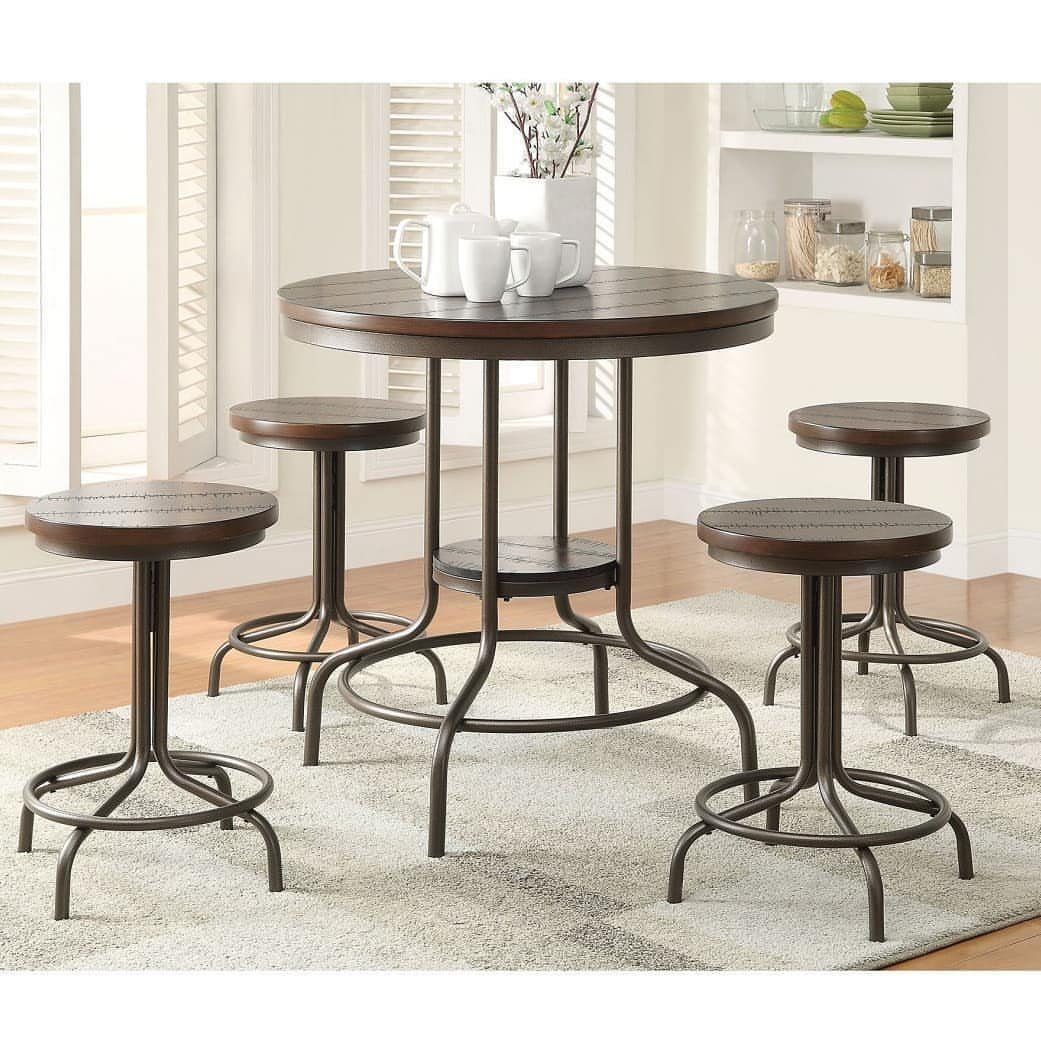
Counter-height sets sit the table at a standing-friendly level, and the stools tuck under it so the base of the room stays open.
Backless stools finished to match a dark wood round top make the whole group read as one piece, and a light rug underneath keeps it from feeling heavy.
A raised set pairs a taller table with stools or chairs made for that height, so don’t mix in regular dining chairs. Backless stools slide fully under the table, which helps in a small room.
If you plan long dinners, sit on one before buying and check that the seat feels comfortable for an hour.
8. Rectangular Tables
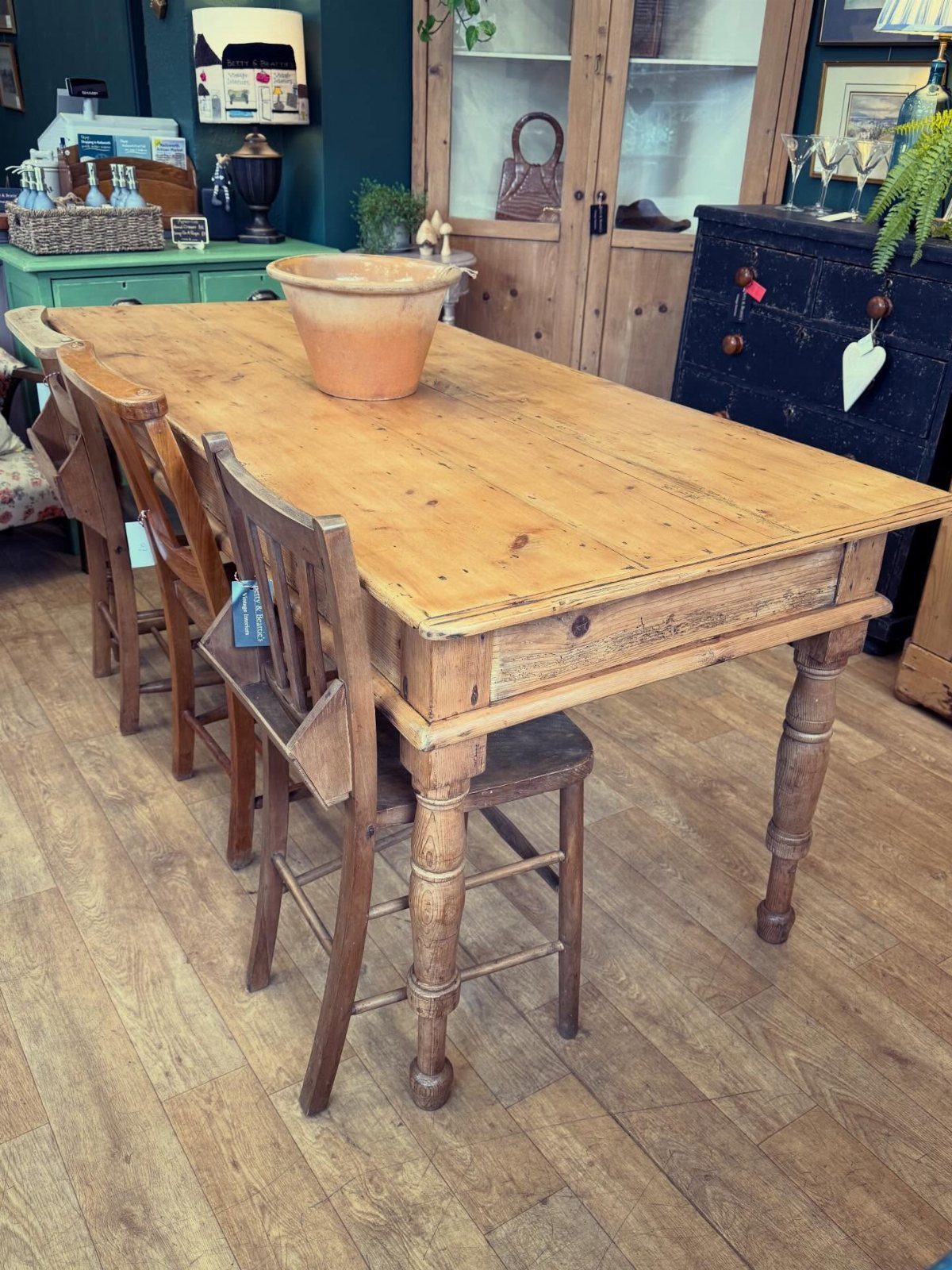
Rectangular is the shape most farmhouse tables come in, and it gives you the widest choice of sizes and finishes. The plank-style wood top here, with matching chairs, looks right at home beside a wooden cabinet and a black dresser.
Many rectangular models accept leaves, so the table can grow for guests and shrink back for ordinary weeknights. That flexibility is the main reason I’d pick this shape over a round one for a room with a long wall.
Measure the walkway on each side before you commit, and look for a leaf option if you host even a few times a year.
9. Farmhouse Wood Tables
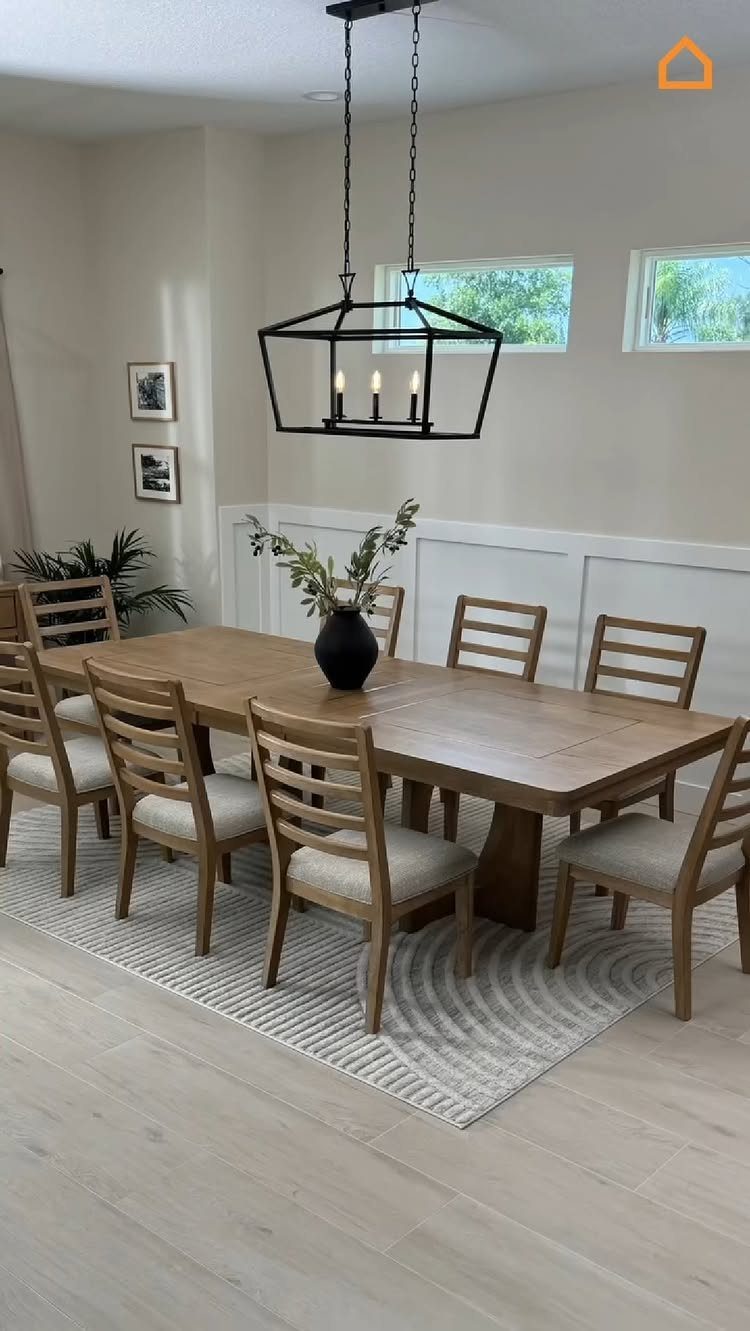
Solid wood is where a farmhouse table earns its keep, and the choice of hardwood changes the look more than the shape does.
A pale, even tone on the tabletop keeps a dining room bright, and a black lantern chandelier overhead adds strong contrast.
Solid-wood farmhouse tables are sold in several hardwoods, finishes, and base styles, so you can match the table to the floor or deliberately set it apart.
I lean toward a finish a shade or two off your floor tone, since an exact match can look flat.
Compare the base styles in person if you can, because legs decide how much room your knees get.
10. Farmhouse Dining Style
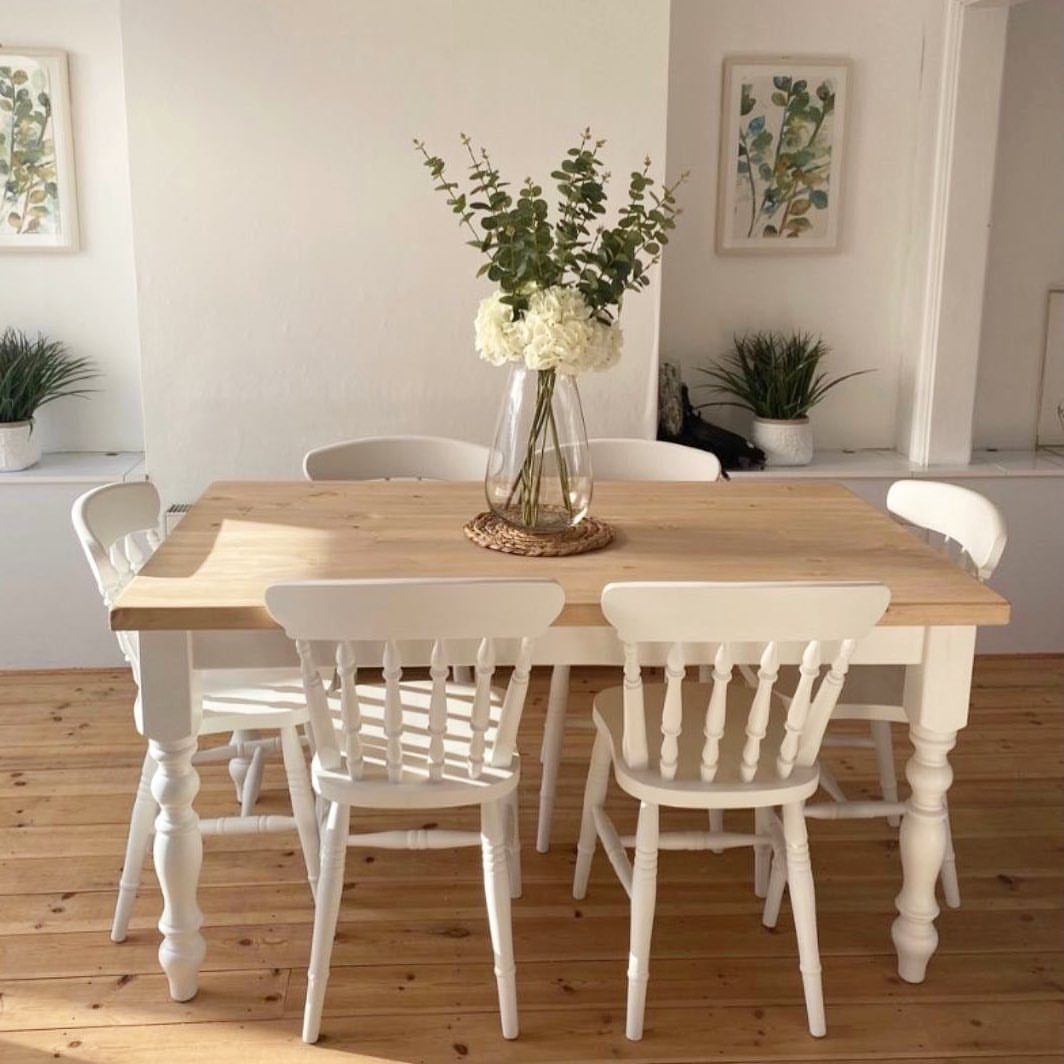
White spindle chairs against a light wood top blend rustic warmth with cleaner, more contemporary lines, which is what the farmhouse look does best.
The white legs on the table repeat the chair color, so the set looks planned instead of collected.
The style mixes rustic character and traditional details with modern design, which makes it easy to adjust. Keep the wood visible and the shapes simple, then add a vase of flowers or a few plants to finish the room.
I’d pick one traditional detail, like the spindle backs, and let everything else stay plain.
11. White and Wood Tables
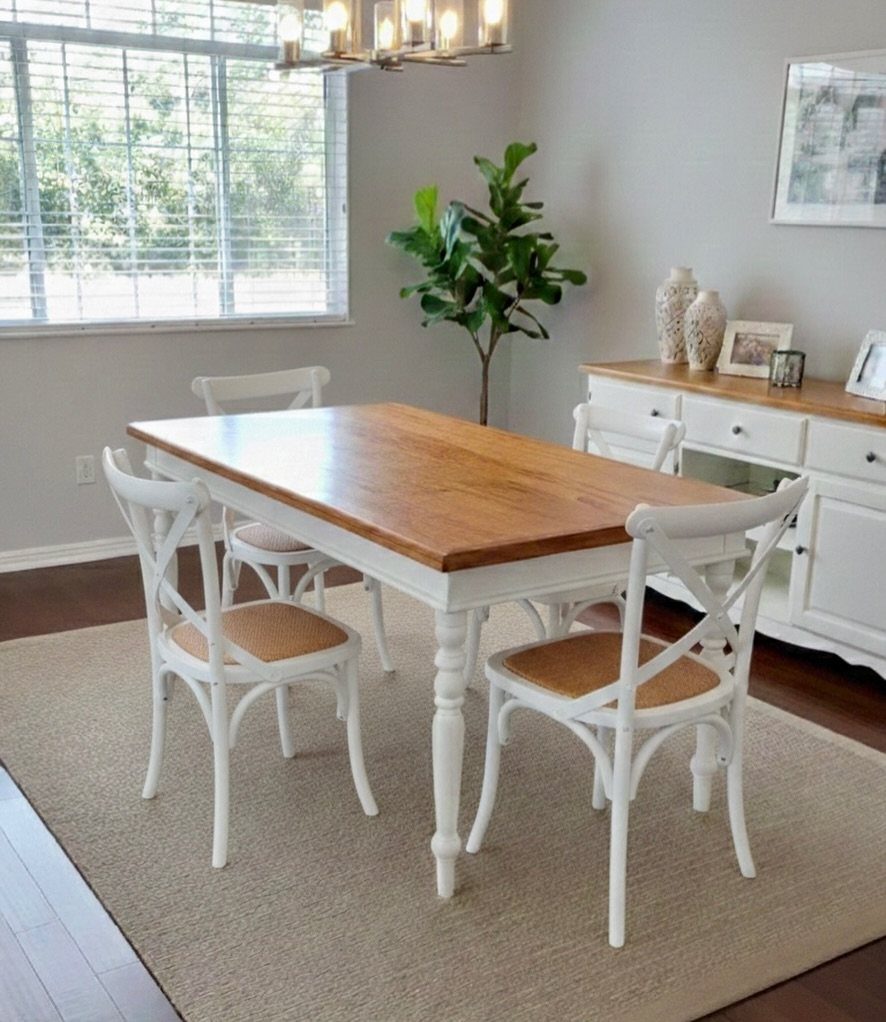
A white base under a wood top gives you two finishes in one table, and that pairing is what makes this style so easy to place.
Cross-back chairs that echo a white table frame tie the set together, and a neutral rug keeps the group soft against bright window light.
Two-tone designs combine a painted white base or frame with a contrasting wood surface. The painted part hides less wear than you might hope, so I’d choose a finish you’re comfortable touching up over time.
If your sideboard is also white, matching chairs to it ties the room together without extra decor.
12. Oak Dining Tables
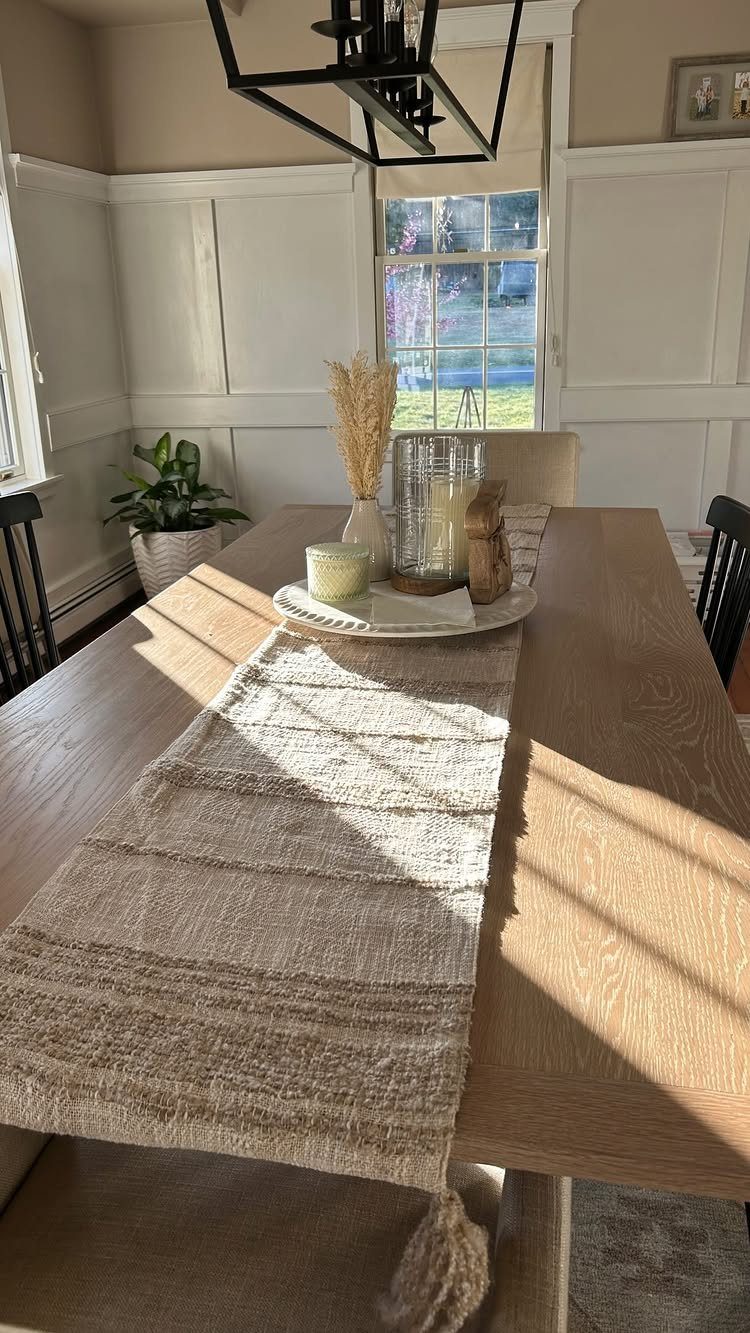
Oak shows its grain boldly, and on a light finish like this one the lines read as texture, which is exactly the rustic appeal people want from a farmhouse table.
A textured runner and a few candles are enough styling when the wood already does the talking.
Oak is a hardwood, so it suits a table that gets daily use. Against white wainscoting and a black chandelier, a light oak top gives the room a warm anchor without competing.
Look at the grain in person before ordering, since that pattern is the whole reason to choose oak.
13. Upholstered Dining Chairs

Fabric seats make a farmhouse table easier to sit at for a full meal, and they soften a plain wood top without changing its character.
Choose a fabric you’d be willing to blot and clean, since a dining chair meets spills more often than a sofa does.
Table size matters as much as chair choice here. The maker of this rectangular table notes that it includes a removable 18" extension leaf, so the same set covers a quiet weeknight and a full house.
I’d pair upholstered seats with a wood table that has visible grain, so the room keeps some rustic edge.
14. Dining Room Sets
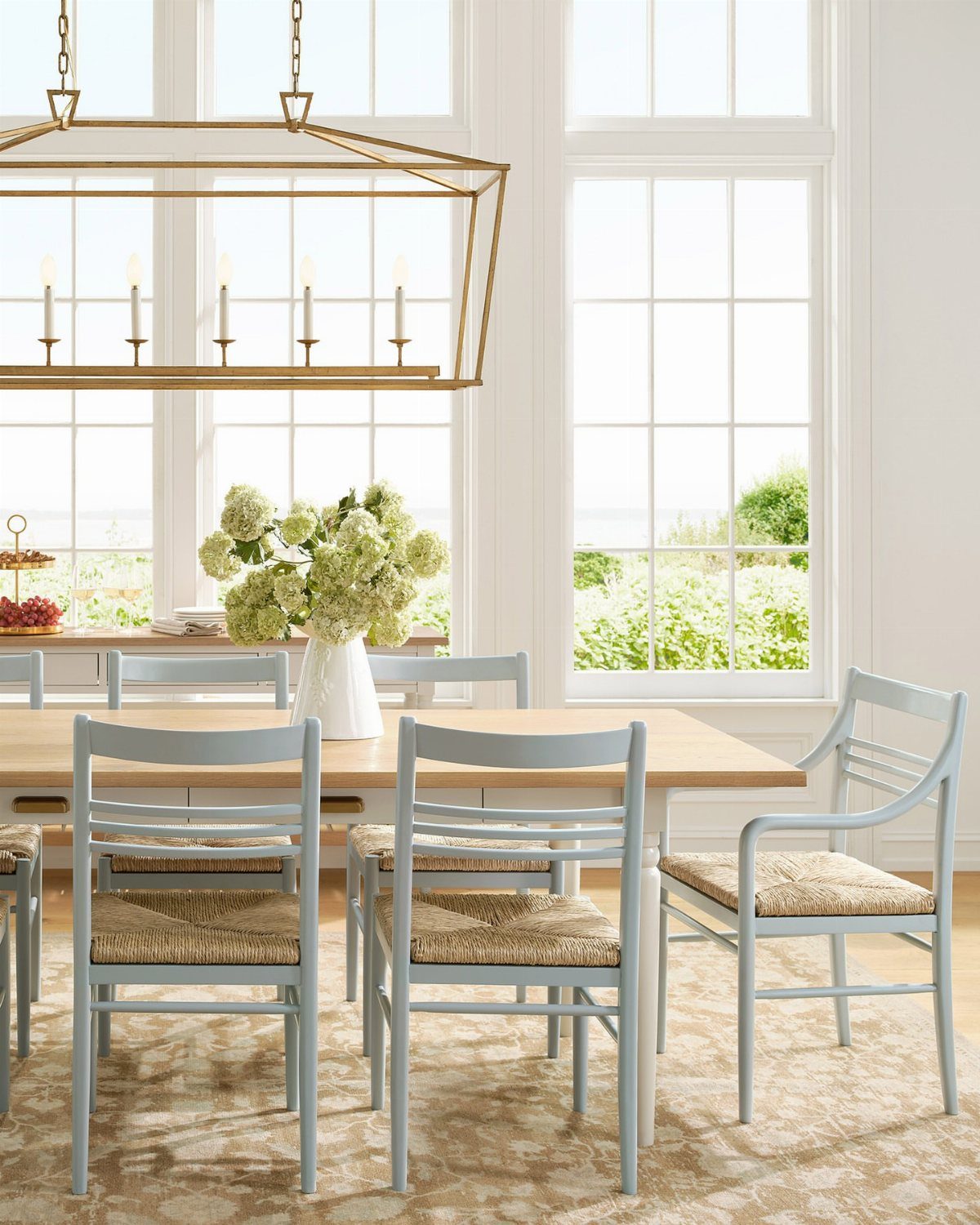
Light blue chairs with woven seats, matched to a pale wood table, make a dining set that feels airy instead of heavy. Retailers sell these coordinated groups so you don’t have to guess whether the finishes agree.
A gold chandelier overhead and white flowers on the table add warmth without crowding the color story. In a room with big windows, light styling works best, since the daylight already does most of the work.
15. Farmhouse Dining Collections
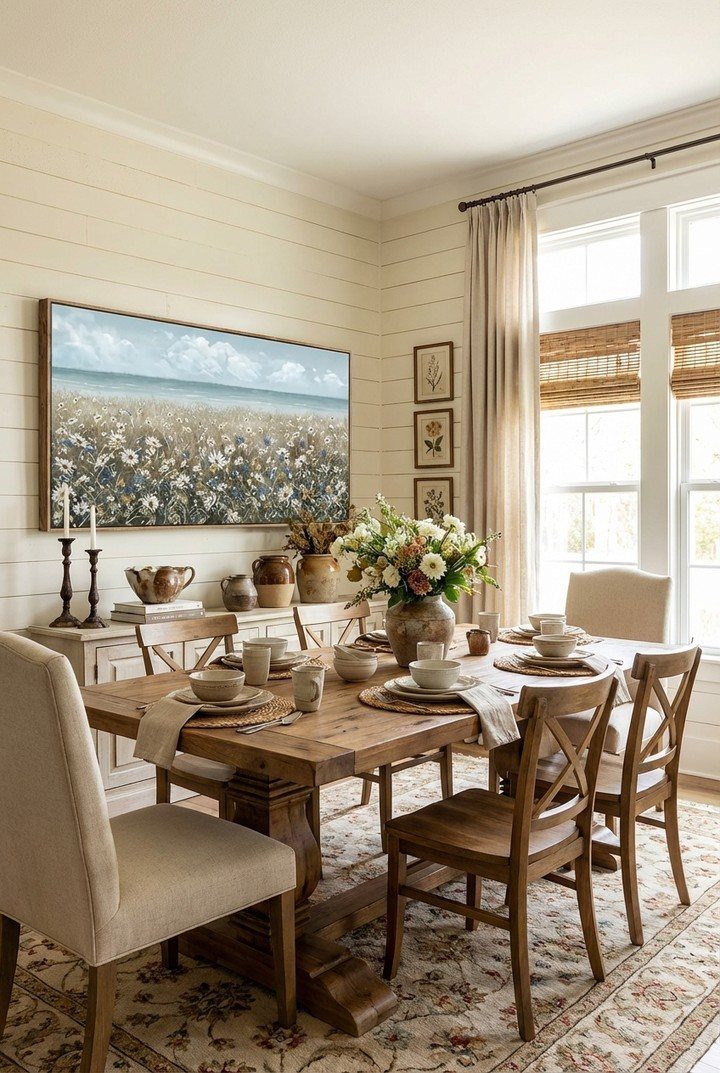
Shop by collection when you want the table, chairs, and sometimes storage pieces to share one finish and one design language. Here, cross-back chairs sit beside upholstered ones, and both read as one family against the wood table.
A collection saves you from hunting for a second piece that almost matches. Against shiplap walls, I like keeping the pottery and art simple so the furniture leads.
16. Dining Tables
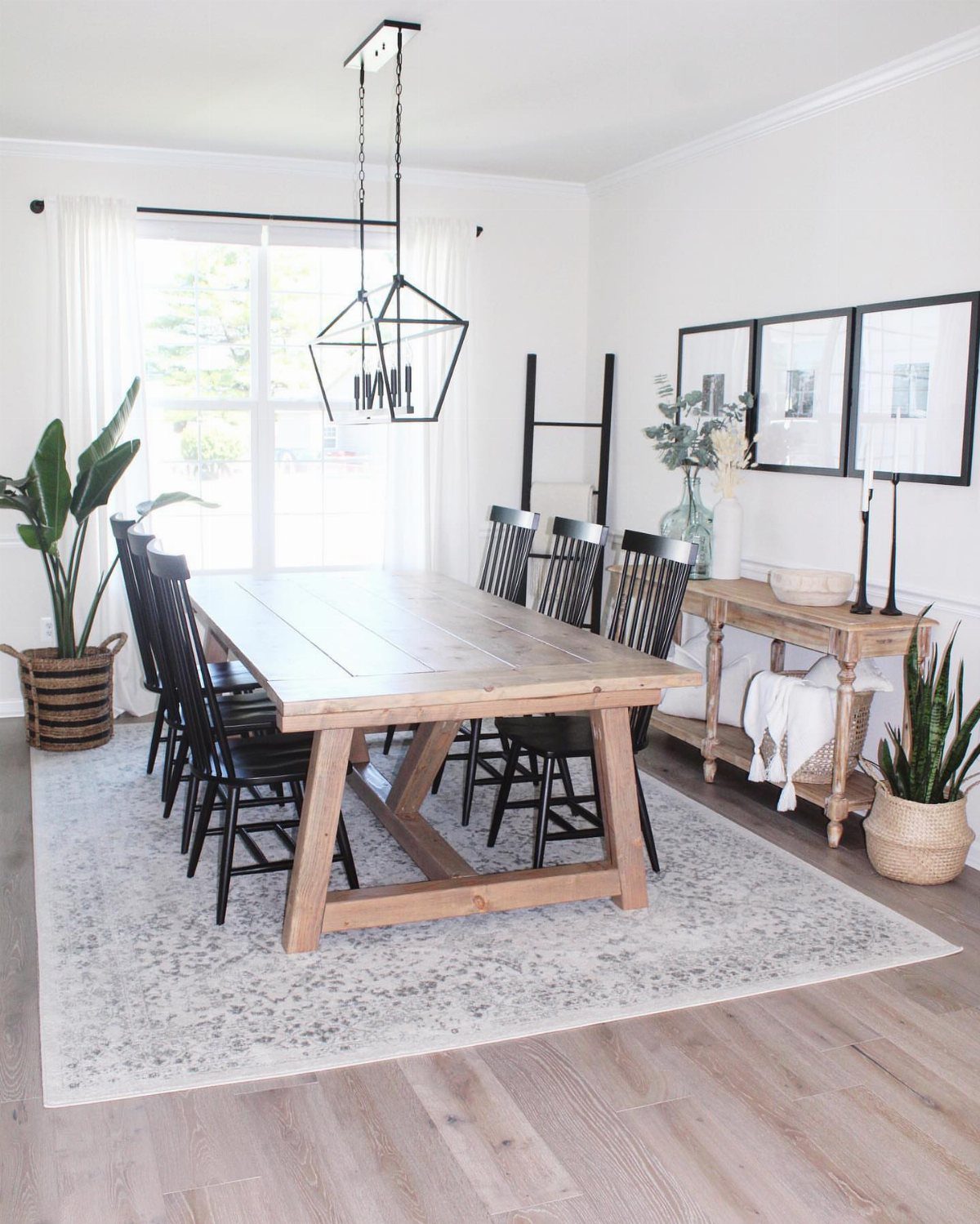
A plain dining table is the best place to start, because farmhouse tables come in several shapes, sizes, materials, and base styles. Decide the shape and size first, then pick the material and base.
A light wood top can stay quiet when black chairs and a gray rug supply the contrast. I’d choose the table before the chairs, since seating is easier to swap later.
17. Kitchen Nook Sets
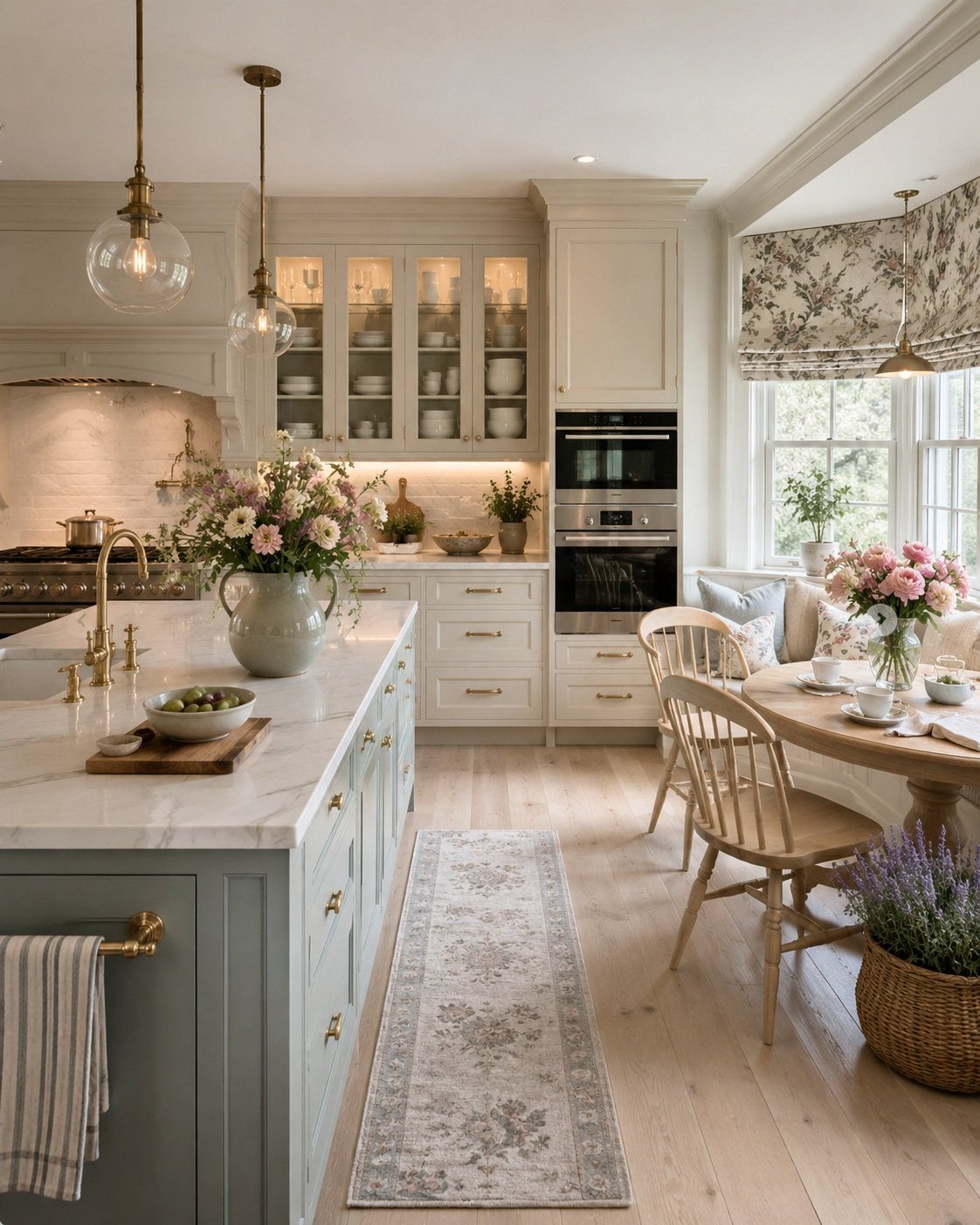
A small round table fits a kitchen nook by a window without cutting into the walkway, and it works in a dining room too. Next to a painted island or white cabinets, a wood top adds warmth that paint can’t.
Pick matching chairs so the nook reads as one tidy unit beside the island. Round tops have no corners, which helps in a tight spot.
Measure the nook before you shop, and leave room to pull each chair out.
18. Live-edge Tables
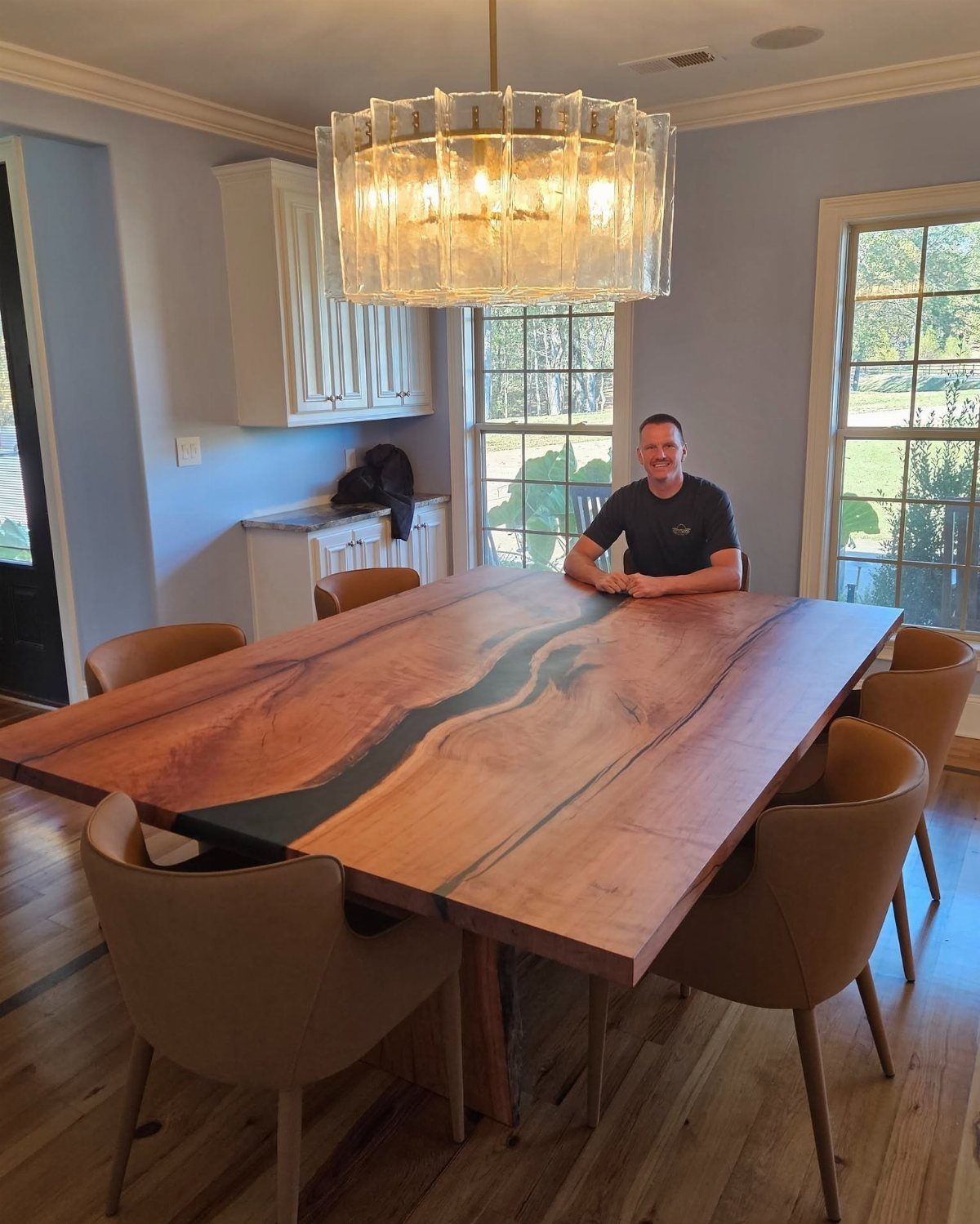
A live-edge top keeps the tree’s natural outline, so no 2 tables look alike.
Because the top already carries so much character, I prefer plain chairs, such as tan ones, with a single large chandelier handling the rest. Busy seating next to a live-edge slab competes with it.
Seeing the edge in person matters, because that curve is what you’re really paying for.
19. Farm Tables
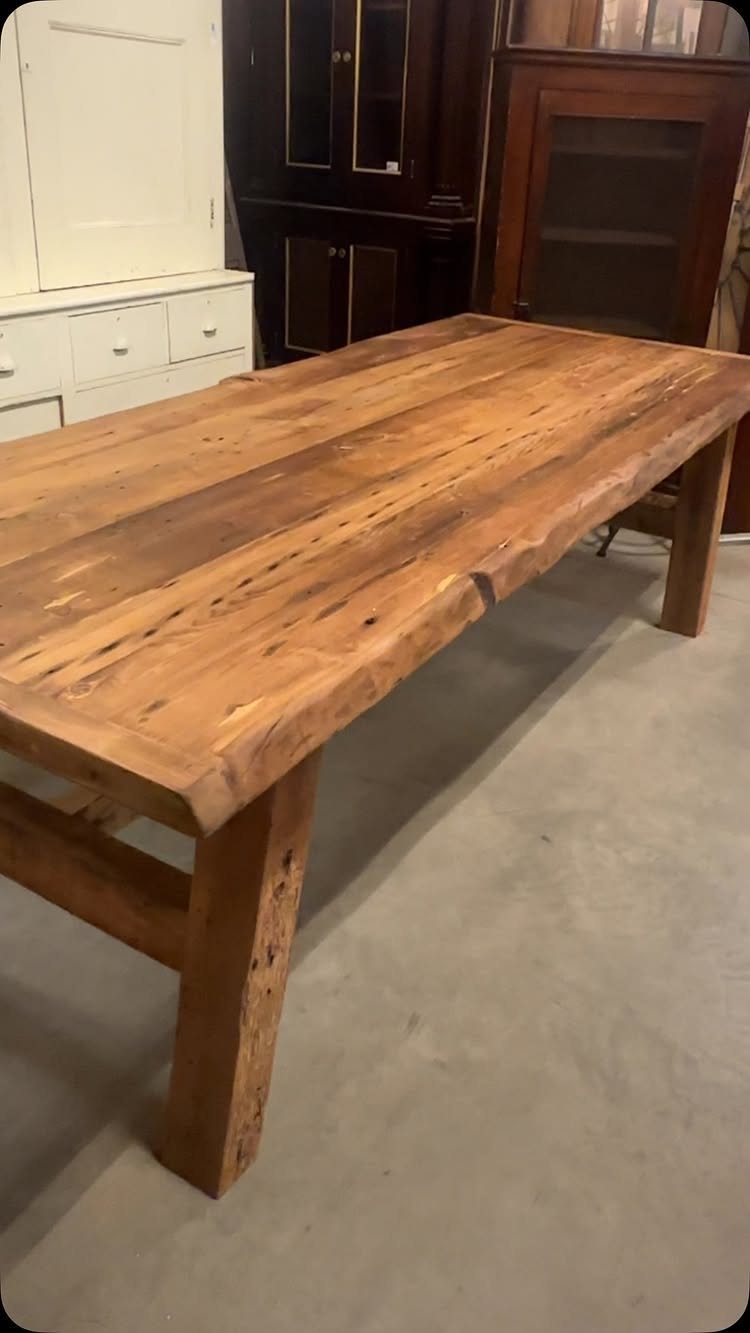
Thick block legs and a rustic top give a farm table its weight, and on a concrete floor that heft looks planned rather than bulky.
Farm tables come in a range of silhouettes, so the leg style is worth deciding before the top.
A natural finish keeps the grain and any rough texture in view. I’d pair it with other wood pieces in the room, as here, so the table feels like part of a family.
Heavy legs take up floor space at the corners, so work out where the chairs will tuck in while you’re still shopping.
20. Industrial Dining Tables
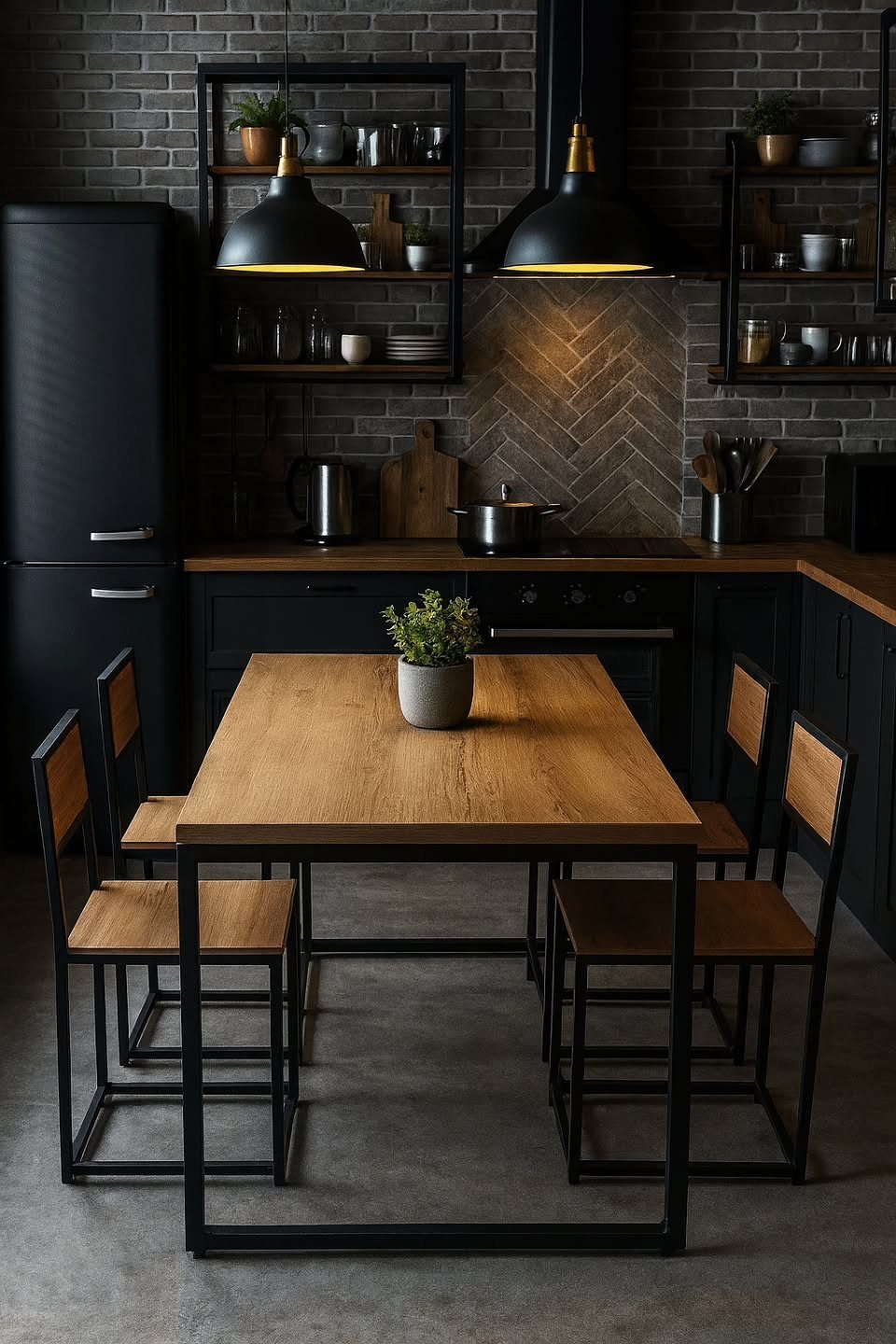
Black metal legs under a wood top are what push a farm-table shape toward industrial, and dark cabinets, brick, and black pendants push it further.
Some industrial designs add a live-edge top instead, which gives you a second route to the same mood.
Matching chairs keep the metal frame from looking like a one-off. Because the room already carries so much dark color, I’d choose a wood top with some warmth in it so the table doesn’t disappear into the cabinets.
Repeating the black of the table legs in pendants overhead ties the whole room together.
21. Farmhouse Table with Spindle Chairs
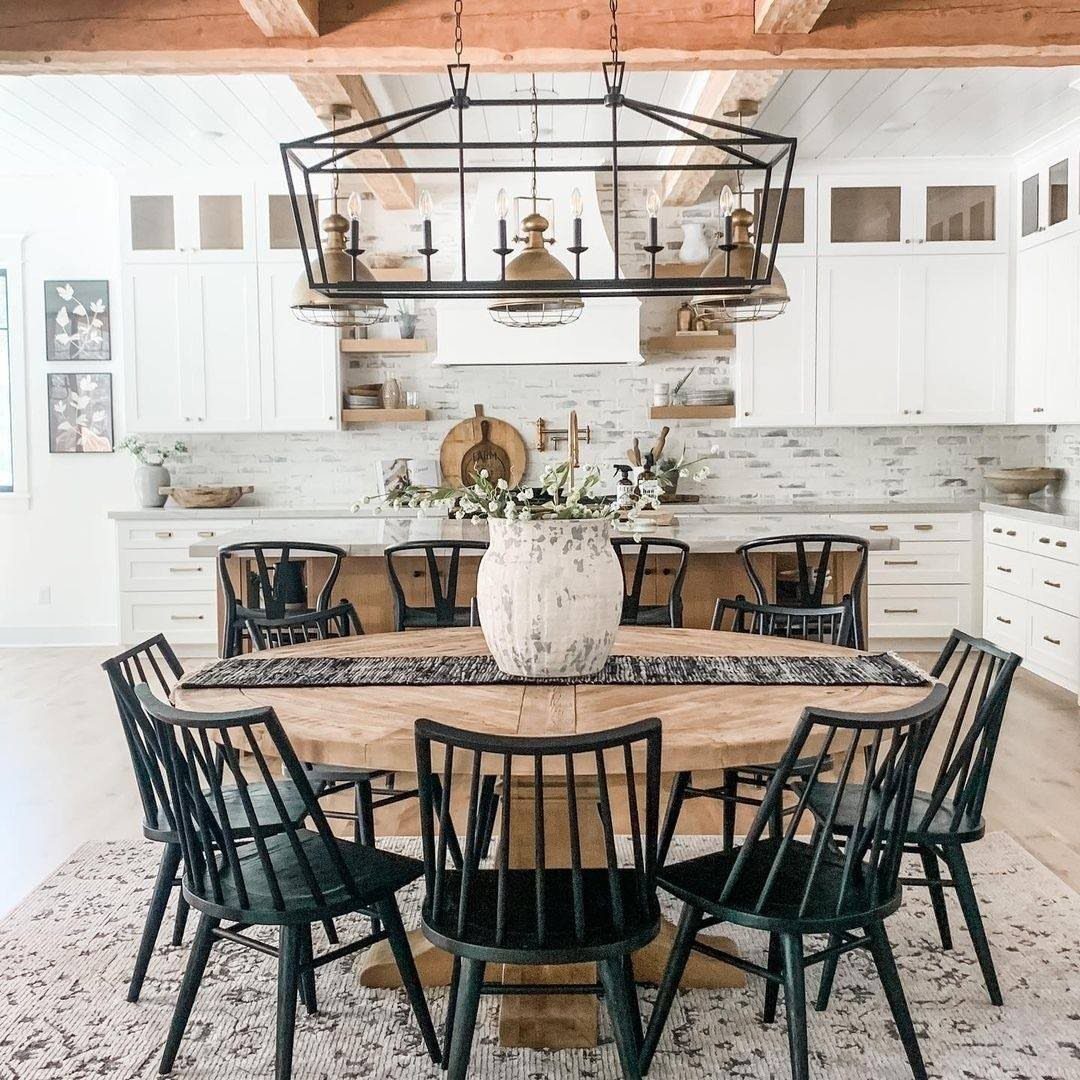
Black spindle-back chairs around a round wooden table make a farmhouse set with real contrast: pale kitchen, dark chair backs, warm wood in the middle. The open spindles let light through, so the chairs don’t crowd a bright room.
A large black lantern chandelier overhead and wooden ceiling beams carry the same dark-and-wood pairing upward. If your ceiling has no beams, a single black fixture over the table gets you most of the effect.
Round tops have no corners, so they suit a kitchen where the table sits close to the walkway.
22. Farmhouse Table with X-back Chairs
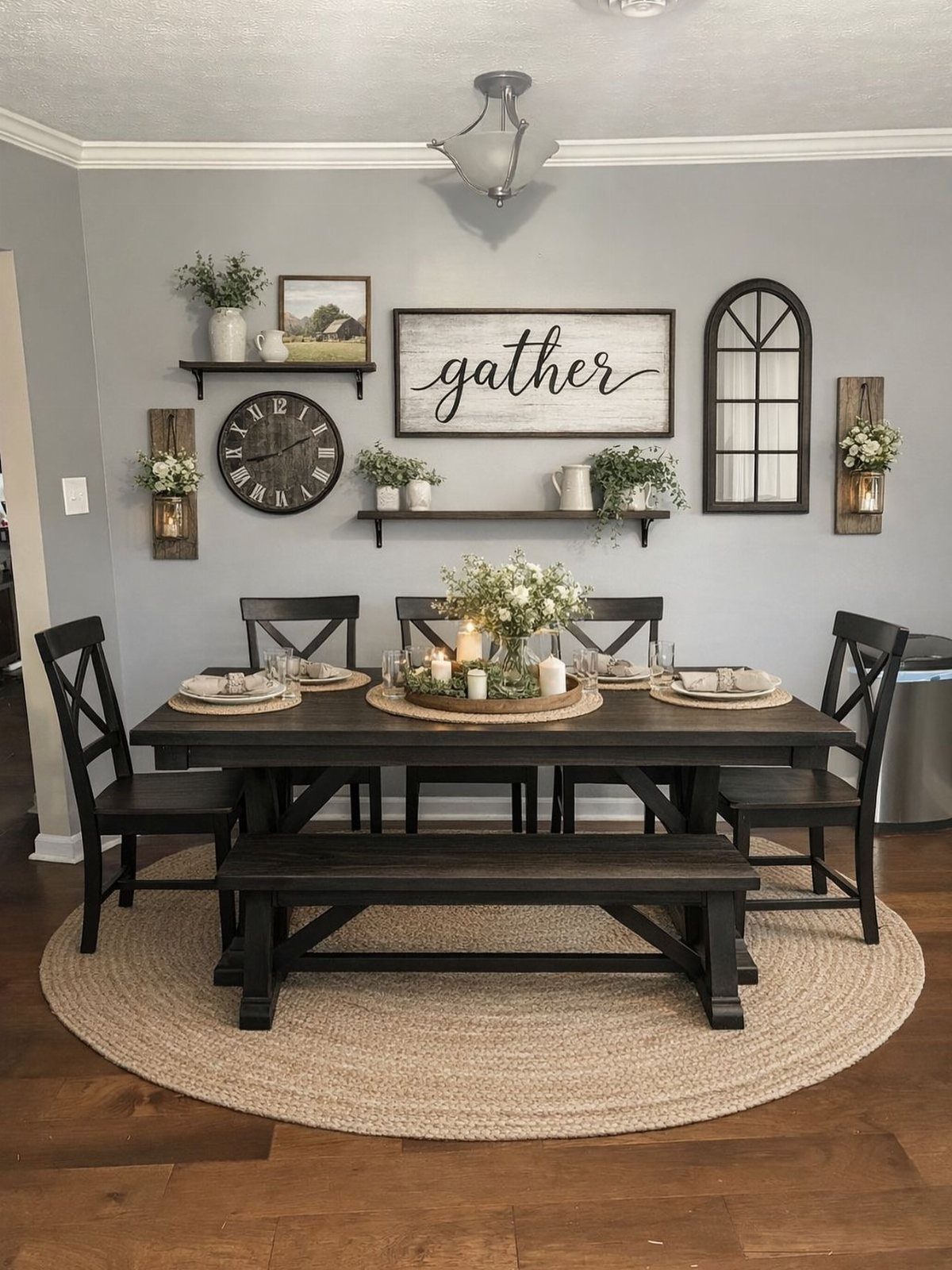
A dark wood table with X-back chairs and a bench on one side looks full and settled, especially in a grey room where the wood is the warmest thing in sight.
The bench saves one chair’s worth of floor space and lets an extra person slide in.
A jute rug underneath adds a lighter, textured layer so the dark set doesn’t sink into the floor. I’d keep wall decor to one piece, like the "gather" sign here, since the table and chairs already fill the room.
Make sure the rug extends past the chairs, so they stay on it when pulled out.
23. Farmhouse Table with Upholstered Chairs
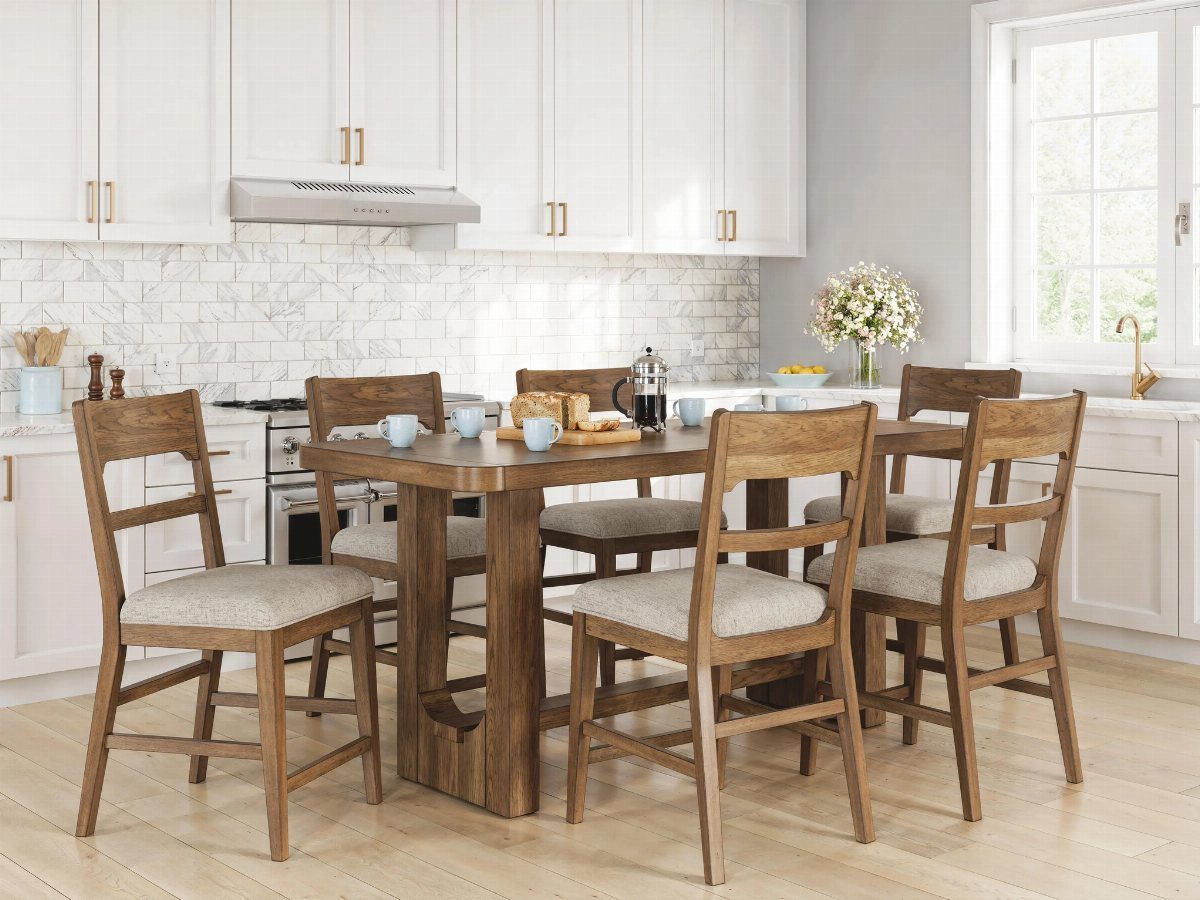
Beige upholstered seats on matching wooden chairs keep the farmhouse look while making a long meal easier to sit through.
In a white kitchen with a tiled backsplash and white cabinets, the neutral cushions blend in, and the wood table supplies the warmth.
I like this pairing for everyday eating, but a light fabric will show spills. Pick a seat covering you’d be willing to blot and clean, or choose a darker beige.
Matching the chair frames to the table finish keeps the set quiet, which suits a room that’s already mostly white.
24. Farmhouse Table with Mixed Chairs
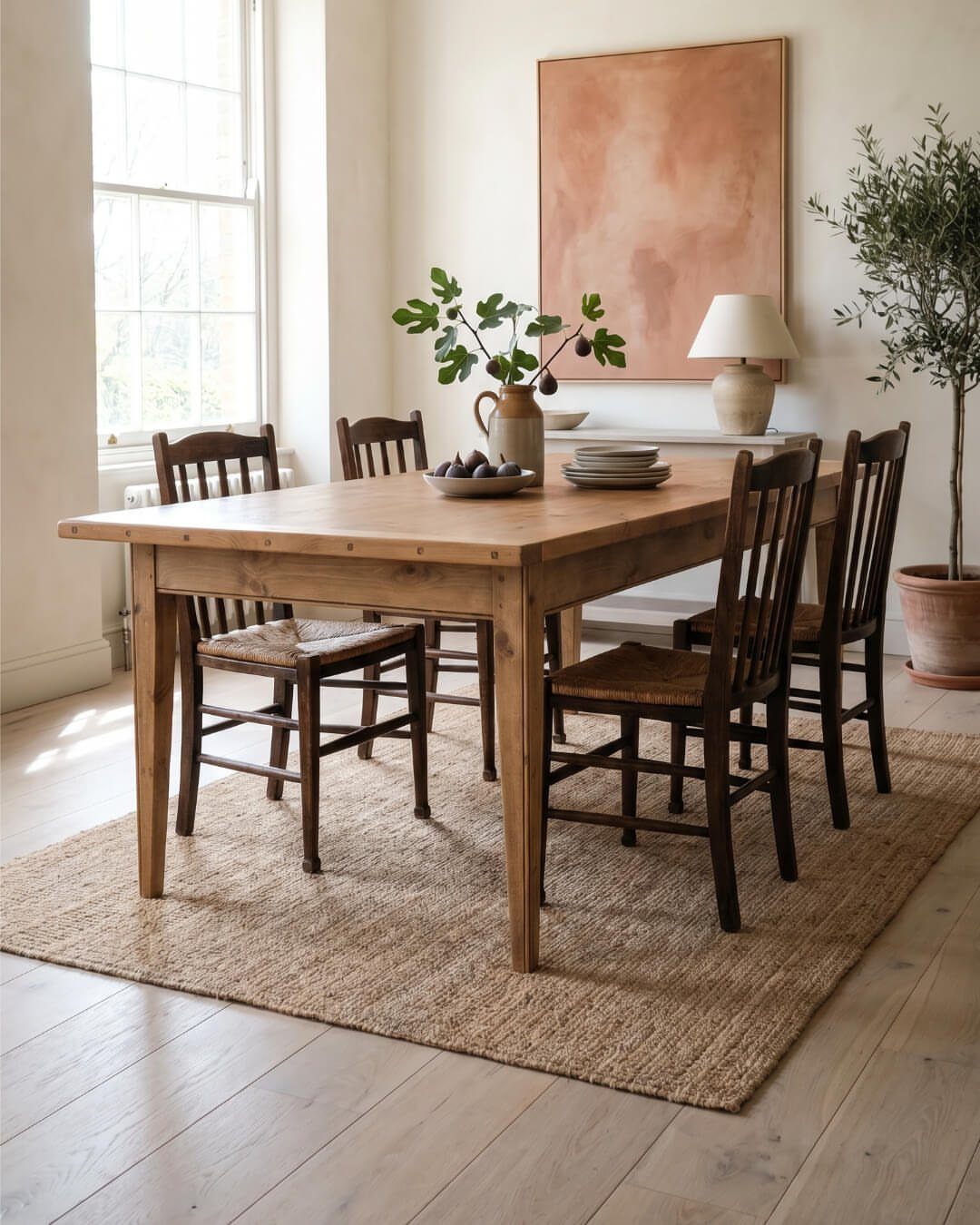
A light-toned table with dark wood chairs is a deliberate mismatch, and it works because the 2 tones are far enough apart to look chosen.
The chairs frame the pale top, and a natural jute rug underneath keeps the contrast from feeling stark.
Keep the wood species and style of the chairs fairly simple, since the color difference is already doing the work. In a bright room, dark chairs also give your eye somewhere to land.
If you’re unsure, buy the table first and test a single chair beside it.
25. Farmhouse Table with Leather Chairs
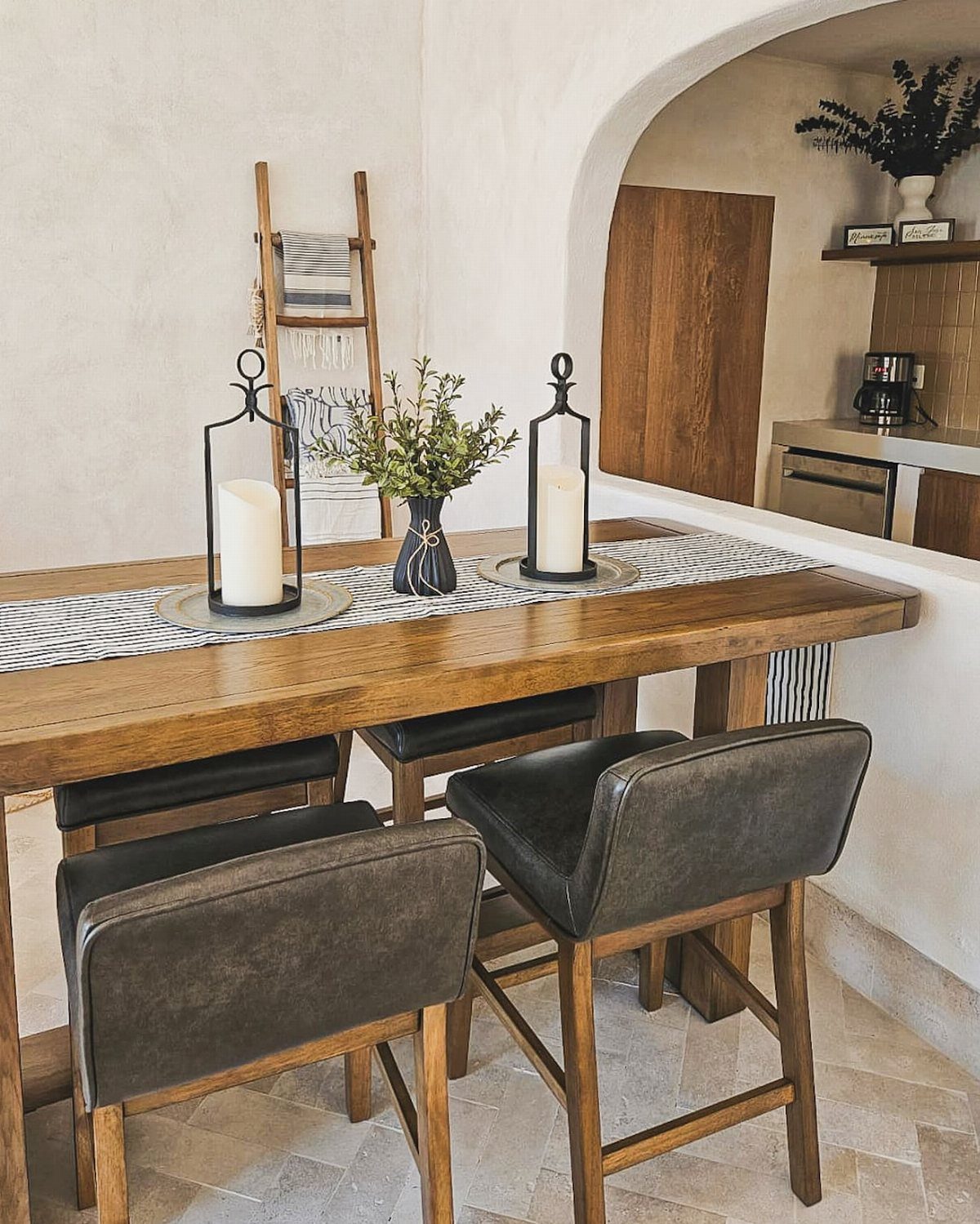
Dark leather seats against a rustic wood top give a farmhouse table a more grown-up, slightly moody feel, and the contrast is easy to live with.
Candle lanterns and a single vase are plenty of styling when the chairs already carry this much weight.
A warm table finish, like honey oak or medium walnut, gives dark leather chairs something to contrast with, while a cool gray or black top would make the whole set look heavy.
Leather is also easy to wipe down, which suits a table that sees daily meals.
Sit in one before buying, since seat depth and back height are hard to judge from a photo.
26. Blue Farmhouse Table Set
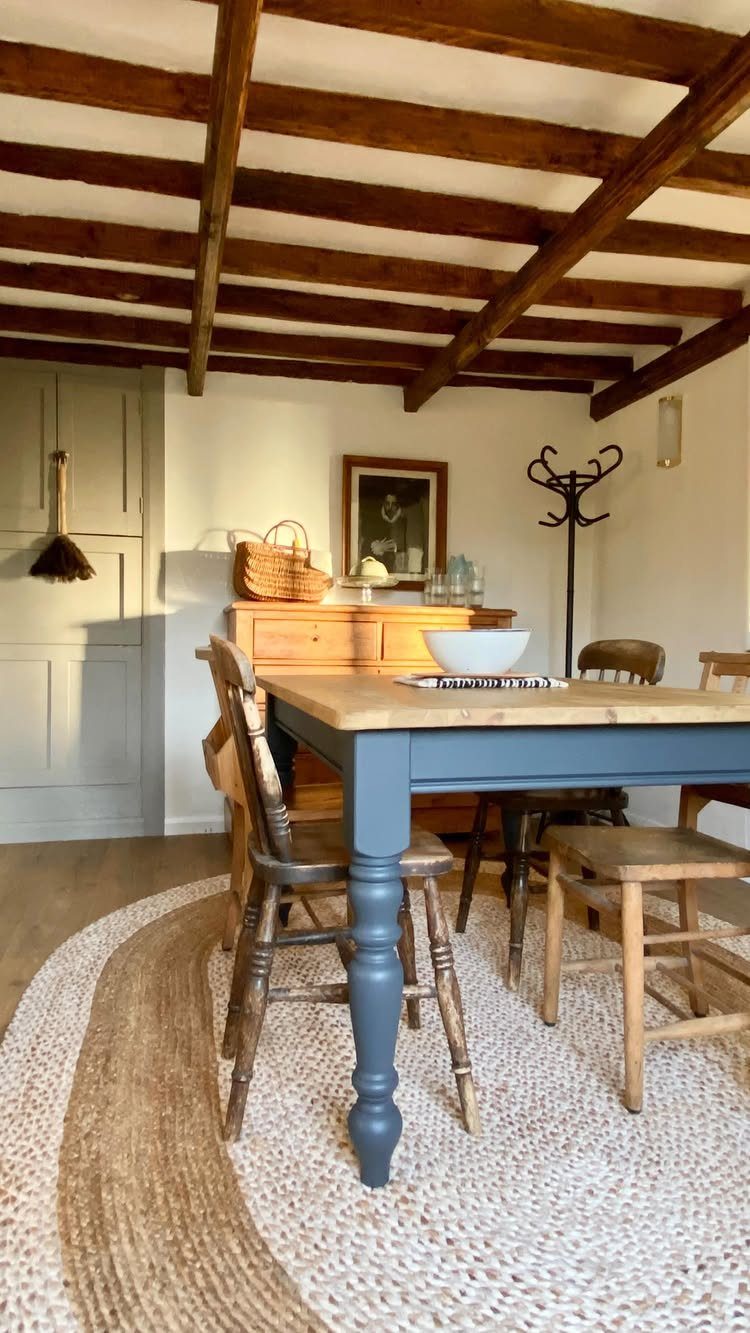
Painted blue legs and frame under a natural wood top make the table the color moment in a room full of beams and wood.
A woven rug underneath keeps the blue from feeling cold, and wooden chairs plus a few stools let the set stay relaxed.
Mixing stools with chairs adds flexible seating, since backless stools slide fully under the table when nobody is using them and free up floor space. I’d keep everything else in natural wood so the blue is the only bold choice.
Paint can chip along edges, so keep a small can of matching color for touch-ups.
27. Farmhouse Table with Metal Legs
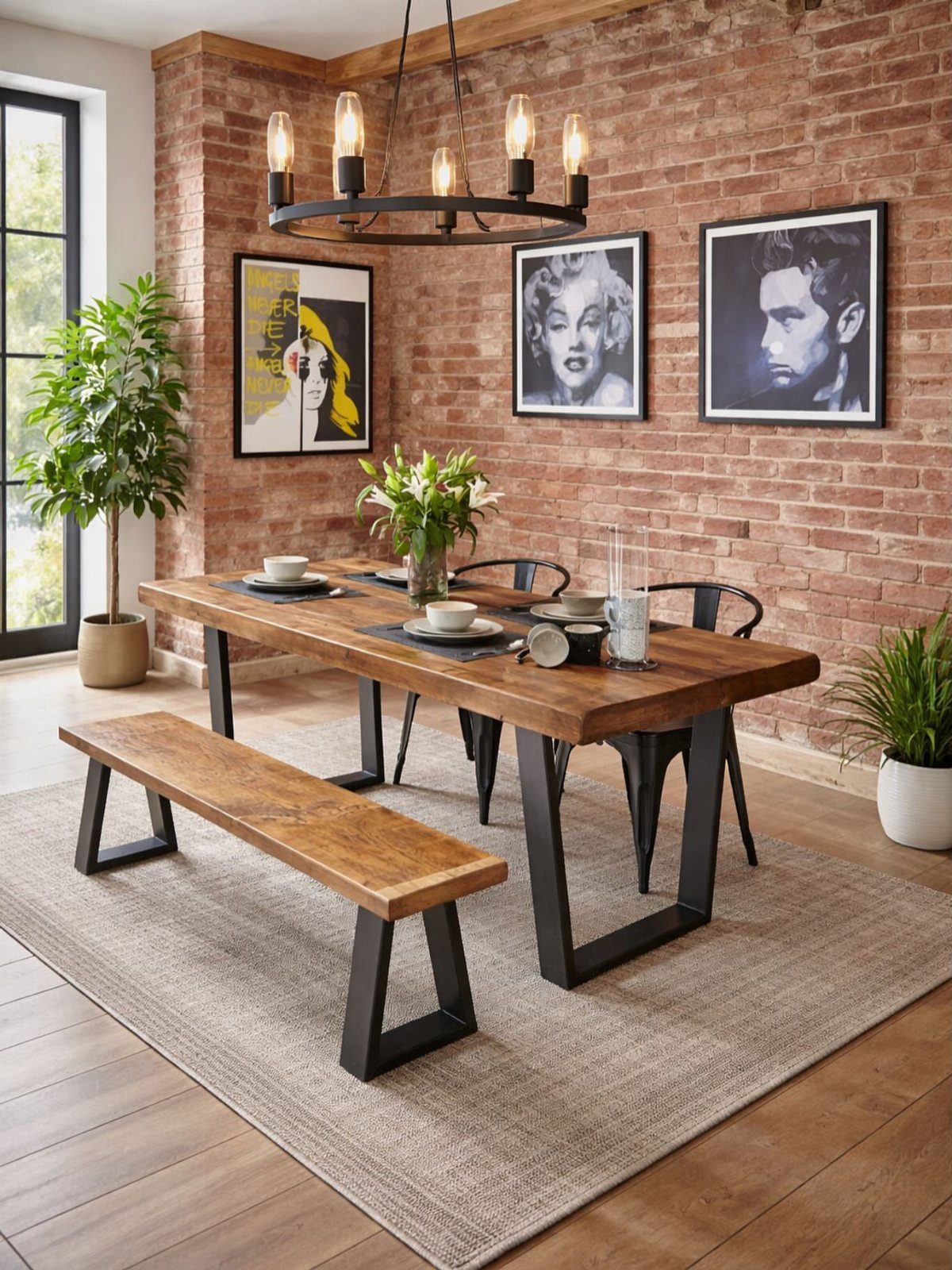
Black metal legs turn a rustic wood top into something sharper, and a brick wall behind it pushes that look further.
A bench on one side and black chairs on the other keep the set matched without needing two identical seat types.
The black chairs repeat the legs, which is what makes the table look planned. Three framed art pieces and one chandelier are enough above a table this solid.
Metal legs usually leave more knee room than chunky wood ones, but check the leg placement at the table’s ends if you plan to seat people there.
28. Rustic Dining Set with Cushions
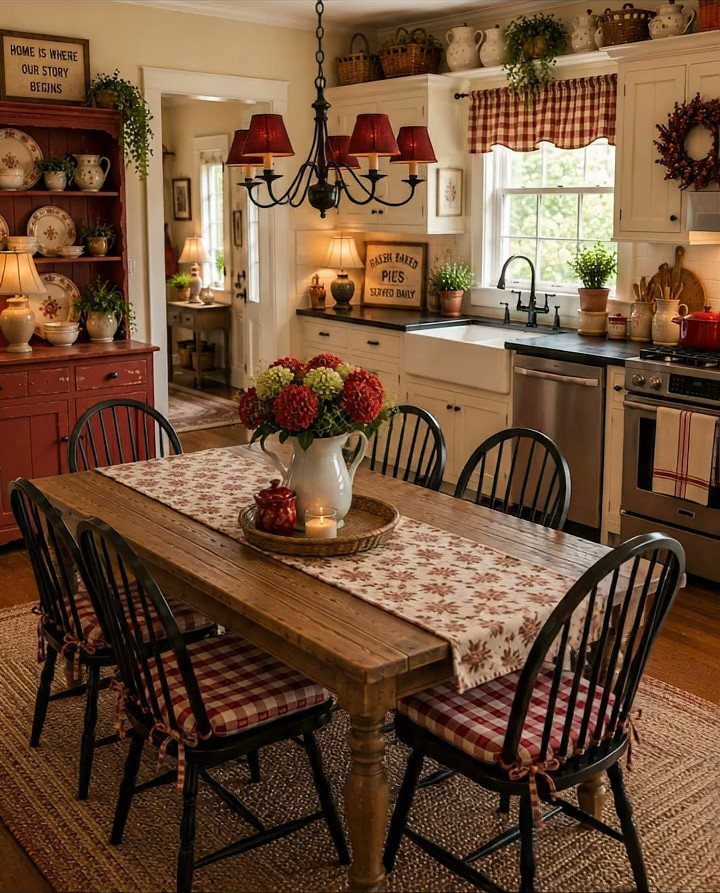
Red checkered cushions on black spindle-back chairs bring in the cozy, bakery-counter side of farmhouse style.
Black frames keep red cushions from taking over the room, and a wood table in a medium tone stays the calm anchor that holds the mix together.
Pick cushions with ties so they stay put on the seat. Washable cotton is the practical choice here, since a kitchen chair meets crumbs and spills all the time.
Cushions are the cheapest part of this look to change, so you can swap the red for another check when you tire of it.
29. Farmhouse Table in a Country Kitchen
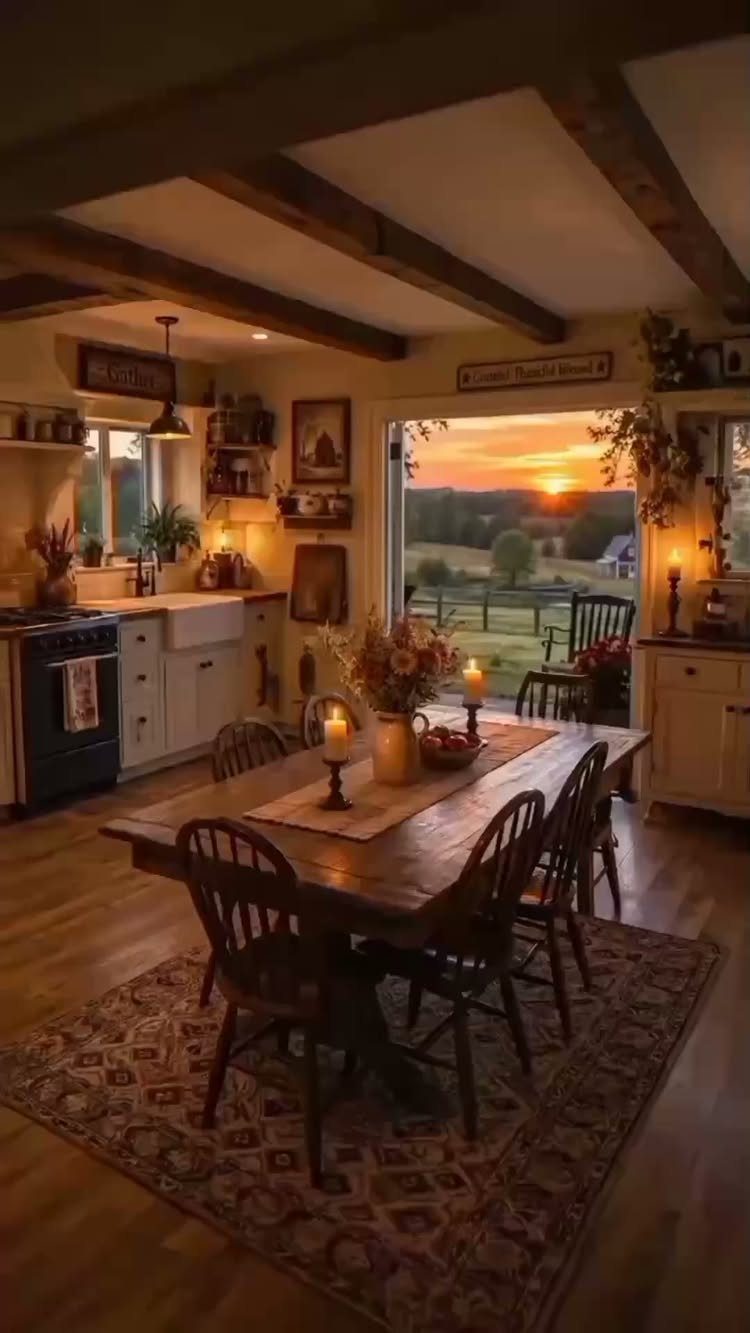
Exposed beams, a farmhouse sink, and an open door onto fields do most of the work in this kitchen, so the table can stay plain.
A simple wood top with matching chairs fits because nothing in the room needs competing with the view.
I’d choose a finish with some warmth in it, since evening light from that door will bring it out. Skip heavy centerpieces and keep the view clear across the table.
If your own kitchen has no view, a plain wood table and a window with open sightlines still gets you most of this calm.
Choose Table Size for Hosting
Start with the table you’ll use on an ordinary night, then count how many people a dinner party or holiday meal needs to seat.
The gap between those 2 numbers tells you whether a fixed top is enough or you need leaves.
Measure the room before you settle on a size. Allow at least 3′ on every side of the table so people can walk behind seated diners, and check the walkways near a kitchen island, since those carry the most traffic.
Check the clearance around the table too: chairs and benches need roughly 36 inches behind them to pull out without hitting a wall or a sideboard.
Leaves work differently by shape. A round table typically stores just one folding, hinged leaf inside, and extending it will likely add only 1 or 2 seats.
Rectangular tops take leaves better than any other shape, and a 44 x 72 inch table can often carry up to 4 of them tucked inside, though the count varies by style; many makers also sell extra leaves separately.
For a big holiday crowd, I’d go rectangular.
Frequently Asked Questions
What is the best farmhouse dining table?
For most homes, a solid wood rectangular table with a leaf is the best pick.
A table with drop-in or pull-out leaves gives you the most room to adjust, seating a crowd on holidays and pulling back to a smaller footprint the rest of the week.
In a small nook, a round top with no corners fits better, and an extending trestle suits a household that hosts only now and then.
What kind of chairs look good with a farmhouse table?
Ladderback and Windsor chairs fit a farmhouse table with almost no styling effort, since both are traditional country shapes.
Black spindle-back chairs against a pale wood top give sharp contrast while the open backs keep the room from feeling heavy, and for long dinners, padded seats work well in a fabric you’d happily blot clean.
What features define a modern farmhouse dining room set?
Look for weathered or open-grain wood, straight clean lines, soft neutral colors, and a heavy, solid build, because those 4 traits mark a modern farmhouse set.
One or two traditional details, like spindle backs, sit alongside updated materials or accents, so the set feels rustic without looking dated. I’d keep the wood visible and the shapes plain.
What wood is best for a farmhouse dining table?
Oak, pine, and acacia are the solid woods used most often, and oak is a hardwood that holds up to daily meals.
Wood species changes the look more than the table’s shape does: pine is the softest and cheapest, oak is harder with bold grain, and walnut costs the most.
Look at a sample in your own room’s light, and choose a stain 1–2 shades lighter or darker than your floor so the table doesn’t blend into it.
How can I style my dining space with a modern farmhouse set?
Start on the table with rustic tableware, woven placemats, and neutral linens, then add natural greenery or a vase of flowers.
Vintage-inspired lighting overhead, such as a black lantern chandelier, suits the look, and a textured rug underneath adds a softer layer.
A rug that extends about 24 inches past the table edge on every side keeps the chair legs on it even when someone pulls out to sit.
Are modern farmhouse dining sets suitable for open-concept homes?
Yes. Because the shapes are plain and the finishes neutral, a farmhouse set blends with mixed furniture, which helps when the dining area opens onto the living room.
Visible wood and simple shapes keep the set easy to pair with the furniture around it.
Do farmhouse dining sets come with matching chairs or benches?
Many sets include matching chairs, and some offer a coordinating bench for flexible seating.
Putting a bench on one long side and chairs at the ends gives you seating that stays put plus pieces that move, and a bench takes one more person without anyone fetching a chair.
Add cushions if your meals run long.