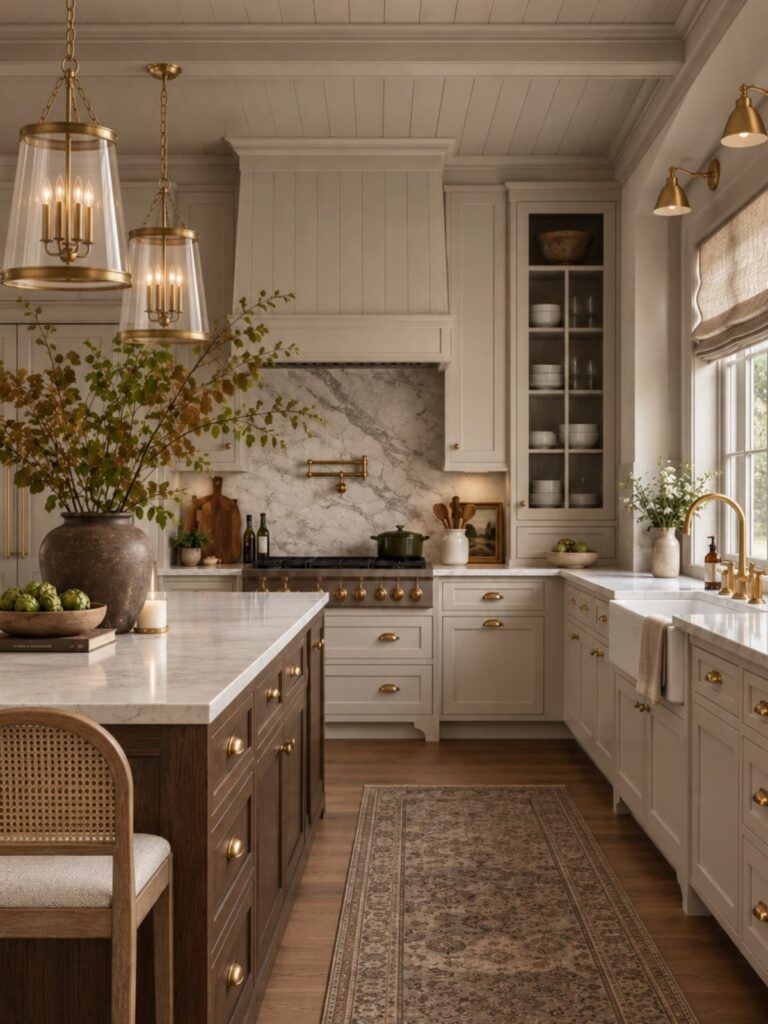

Whether your cabinet boxes stay or go decides which of these ideas is yours. If they stay, paint, polished nickel pulls and gold pendants over the island carry most of the look at little cost.
If the whole kitchen is open to change, spend on the pieces that are hard to replace later: cabinet boxes, counters and flooring.
1. Natural Wood and Stone
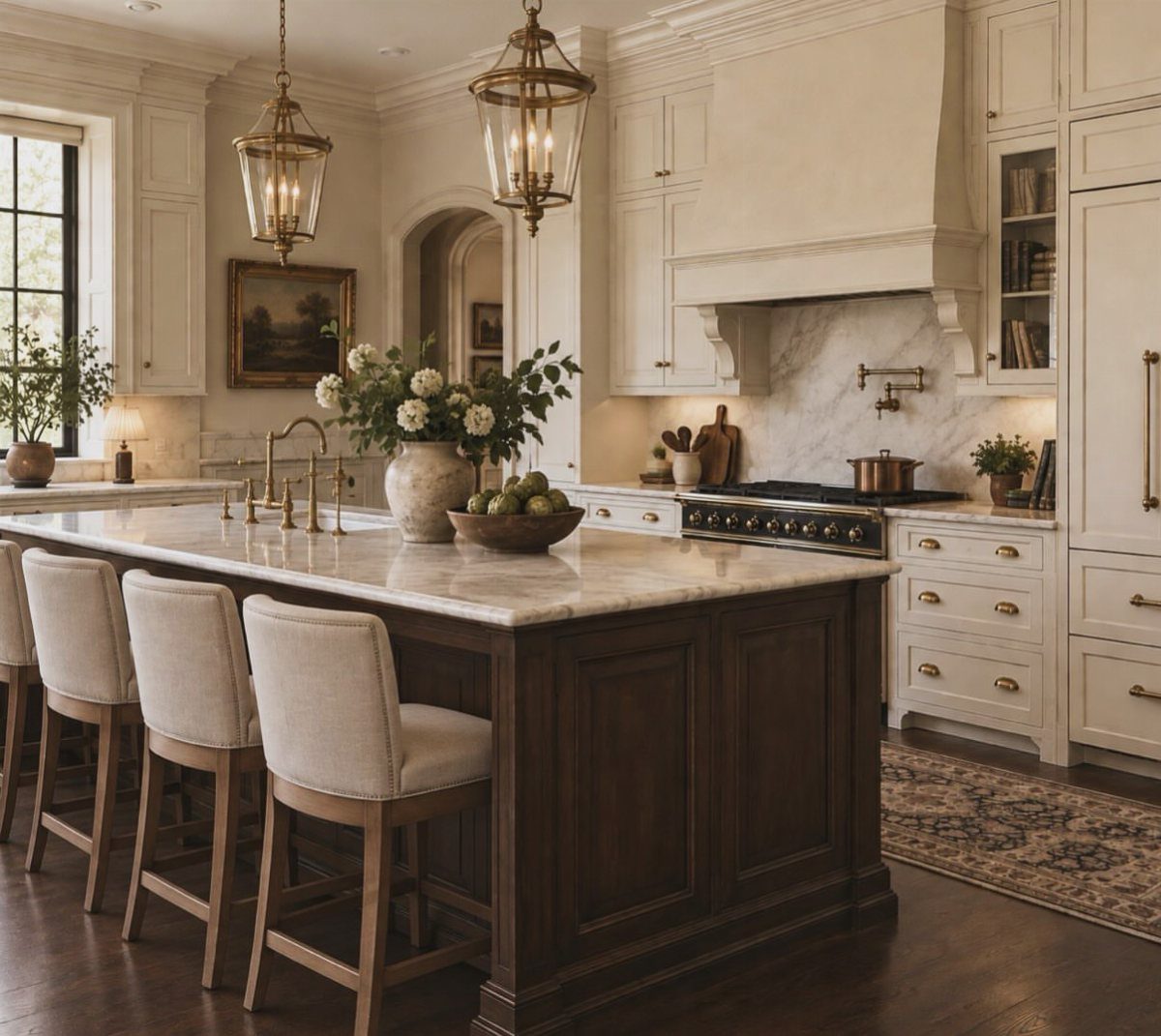
Dark wood under a white marble top is the pairing that does the work, and cream cabinets around it keep both materials in front.
Wood and stone bring warmth and texture that paint alone can’t, and they read as old in the best way.
Running the marble up the wall as a backsplash ties the counter to the room.
I’d keep the wood to one big piece, like this island, and let everything else stay quiet. Two competing wood tones make a kitchen feel busy fast.
2. Shaker Cabinetry
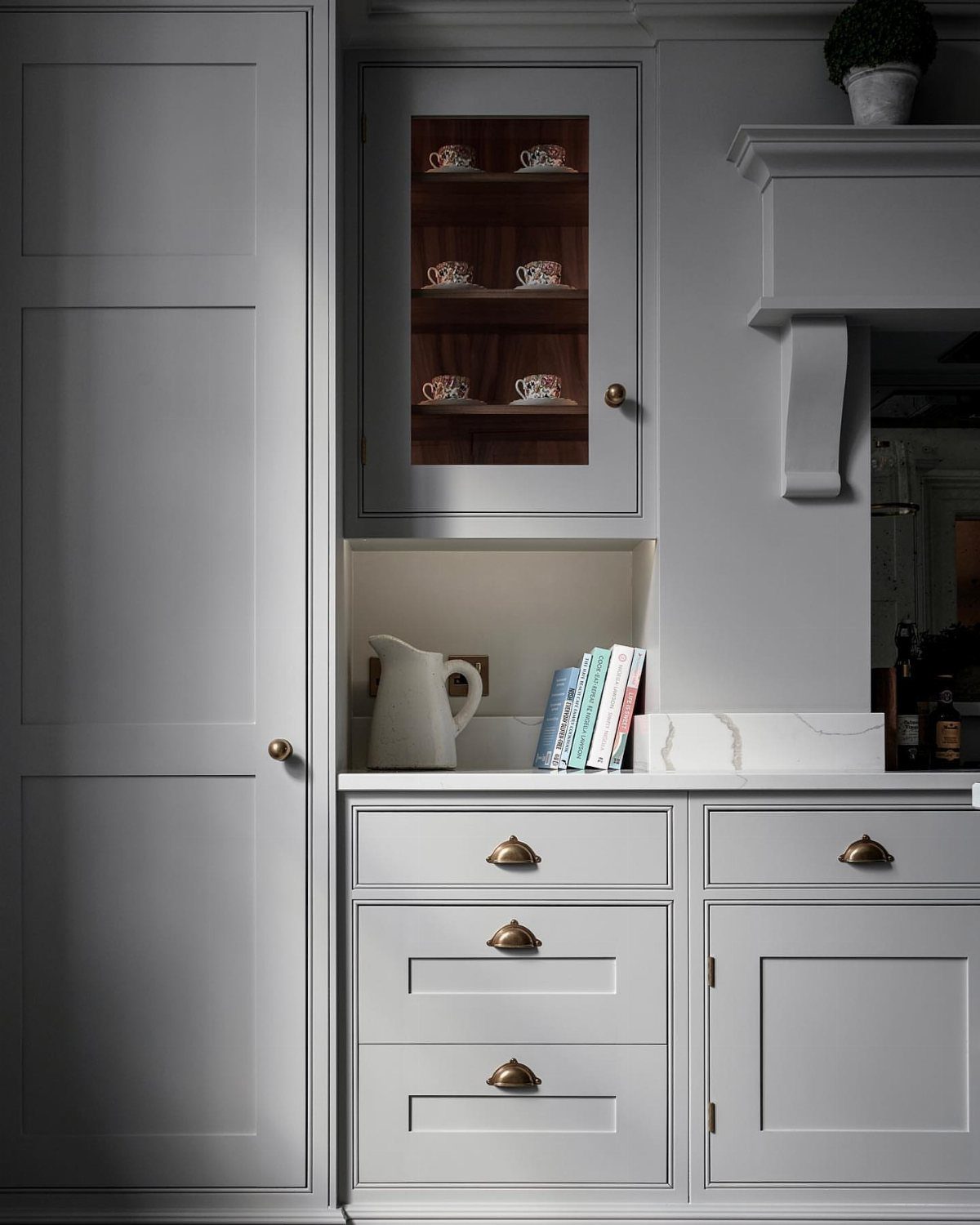
Recessed center panels set inside a square frame: that is all a Shaker door asks for, and the restraint is why it adapts so easily.
Grey paint with brass pulls reads traditional. The same door in white or a deeper color would shift the mood without changing the style.
I like one glass-front cabinet and a small open shelf mixed in, so the plain doors have something to play against. Pick one hardware finish and repeat it everywhere.
3. Warm Color Palette
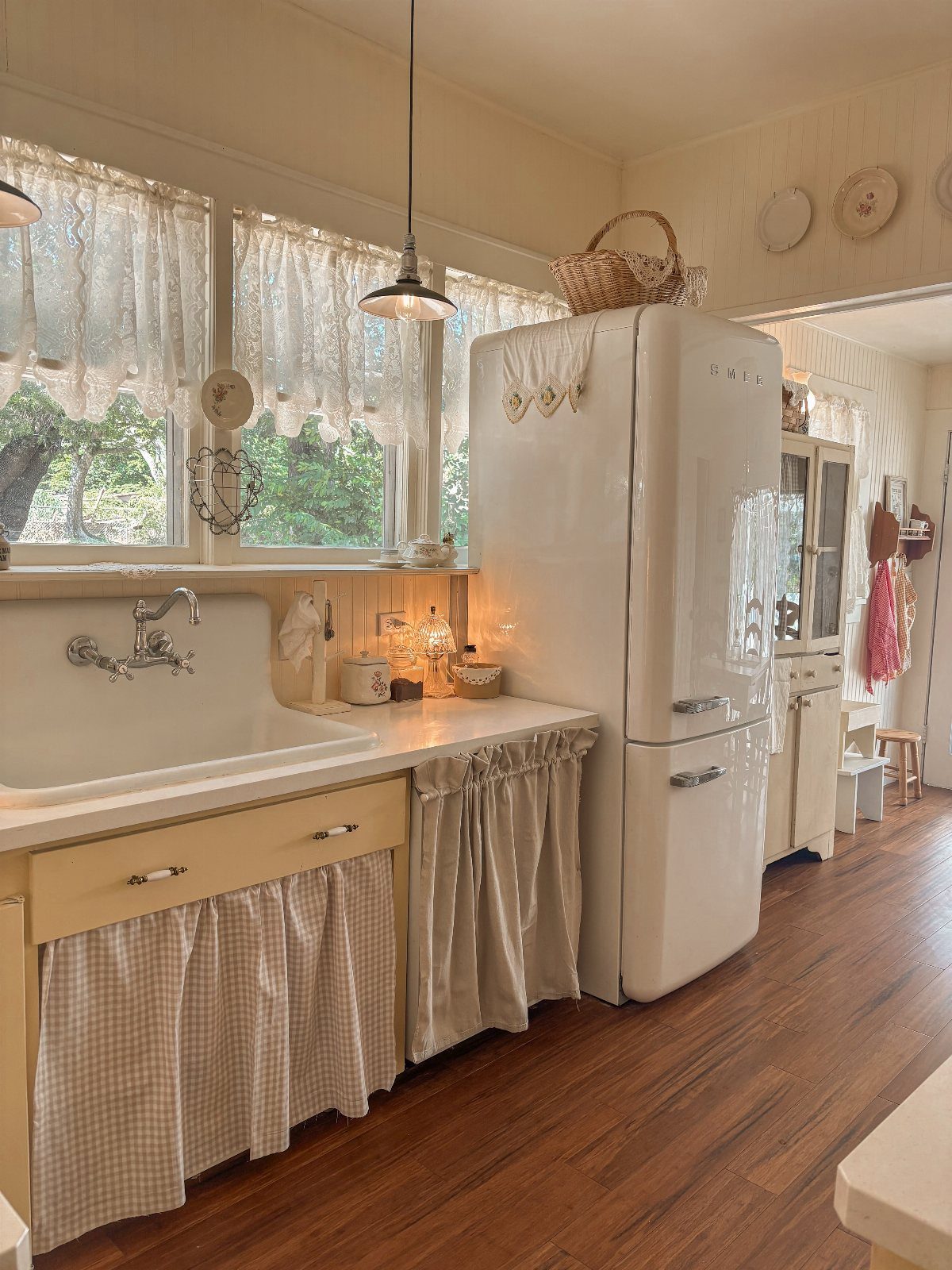
Cream does what stark white can’t: it makes a kitchen feel lived in before anyone has cooked a thing. Pair it with wood floors and soft window treatments, and the room settles into a familiar, welcoming mood.
Test paint samples on the wall and check them in morning and evening light, because creams shift more than whites do. A vintage-style appliance fits this palette well, though a modern one in a similar tone works just as well.
4. Decorative Architectural Details
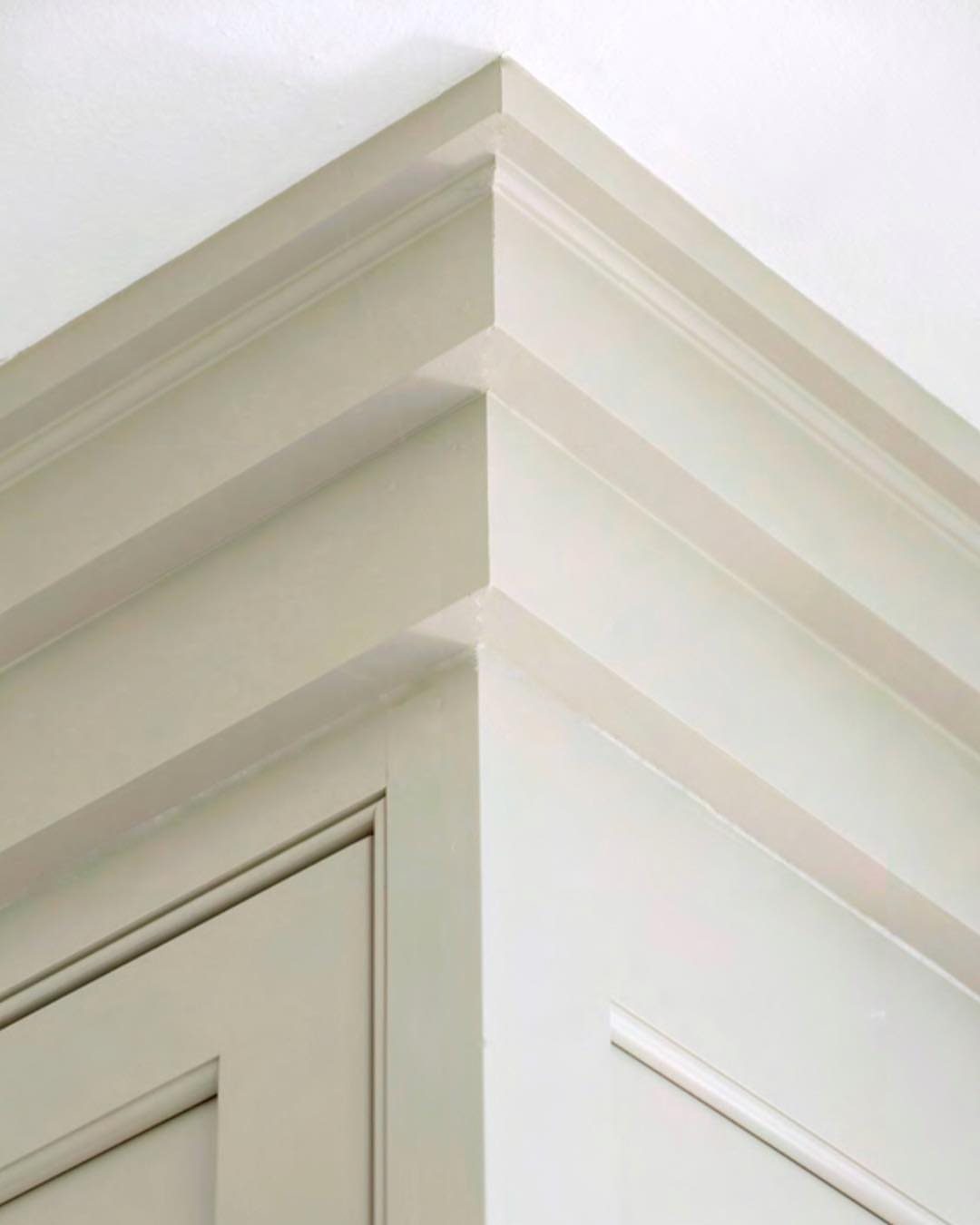
Stacked profiles in crown molding catch light and cast small shadows, which gives a cabinet top a finished, built-in look. That layered detail is a big part of what separates a traditional kitchen from a spare modern one.
Painting the molding the same color as the cabinets makes it read as part of the cabinetry instead of an add-on.
If you want more, carved accents like corbels are a separate option, but I’d add them one detail at a time.
New trends come and go every day, but if you’re a classicist, investing in a traditional kitchen that unites timeless decorative details and easy functionality is a no-brainer. The elegant aesthetic may look simple, but every element is carefully considered.
5. Traditional Paneled Doors
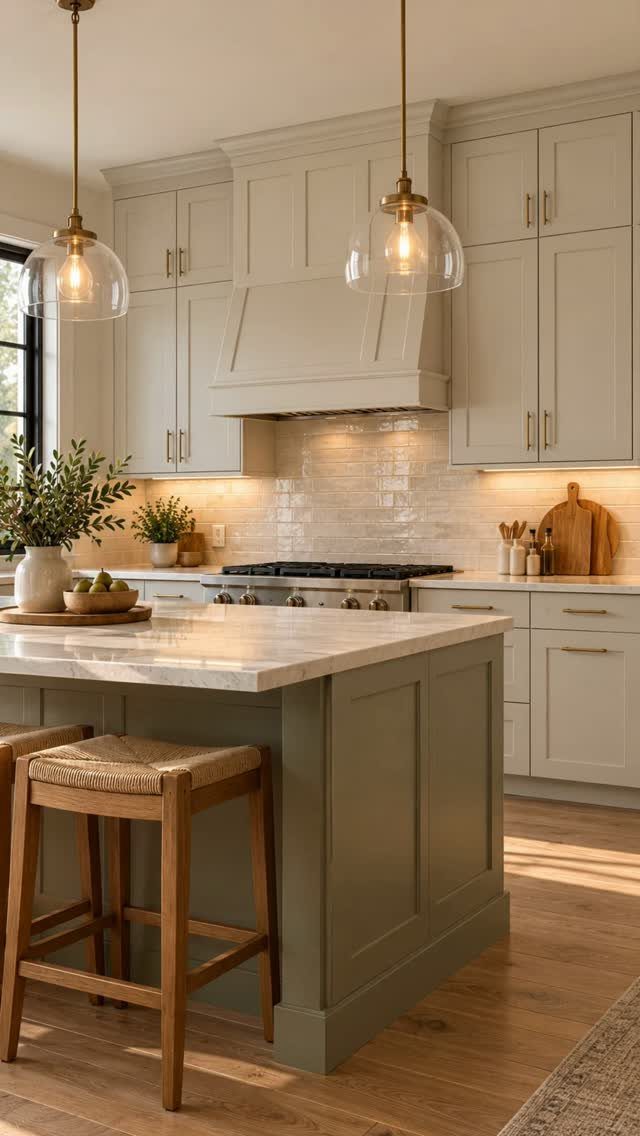
Formality lives in the door. A raised or otherwise traditional panel gives cabinetry a historic, tailored look that flat slabs can’t copy.
Splitting colors helps paneled doors show up: try a light gray on the uppers and a softer sage green on the island, with white marble tying the two together.
If your cabinet boxes are staying put, the island is the easiest place to try a second color. Wooden stools keep the mix from feeling too stiff.
6. Natural Stone Countertops
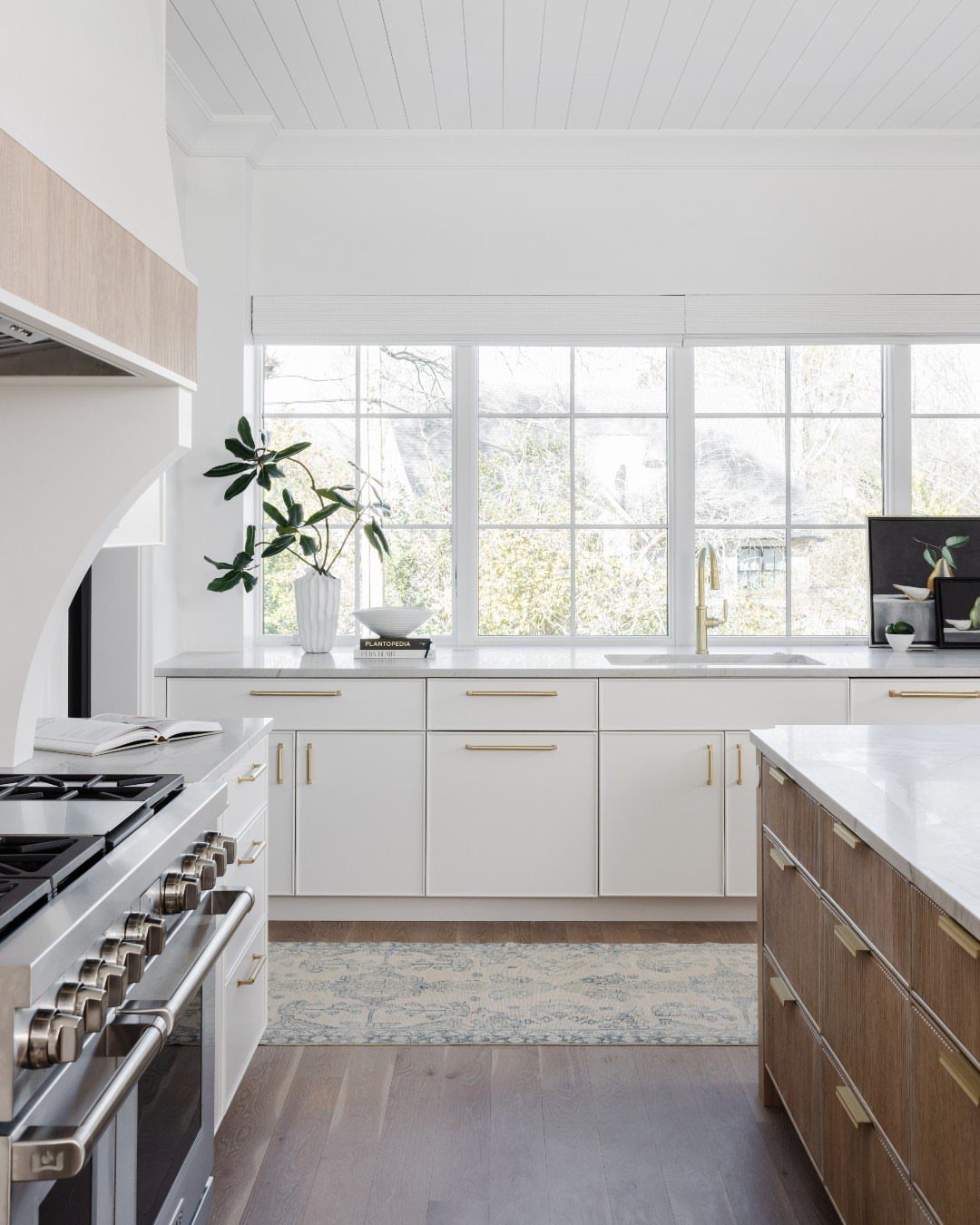
Stone ages into its character, and that is the best argument for it. A natural stone counter is a durable, classic surface that picks up a patina over the years instead of looking worn.
Set against white cabinets and under a big window, a pale stone makes the room feel open.
A wooden island, as here, adds the warmth that all that white needs. Look at the full slab before you buy, since natural stone varies from piece to piece.
7. Kitchen Island
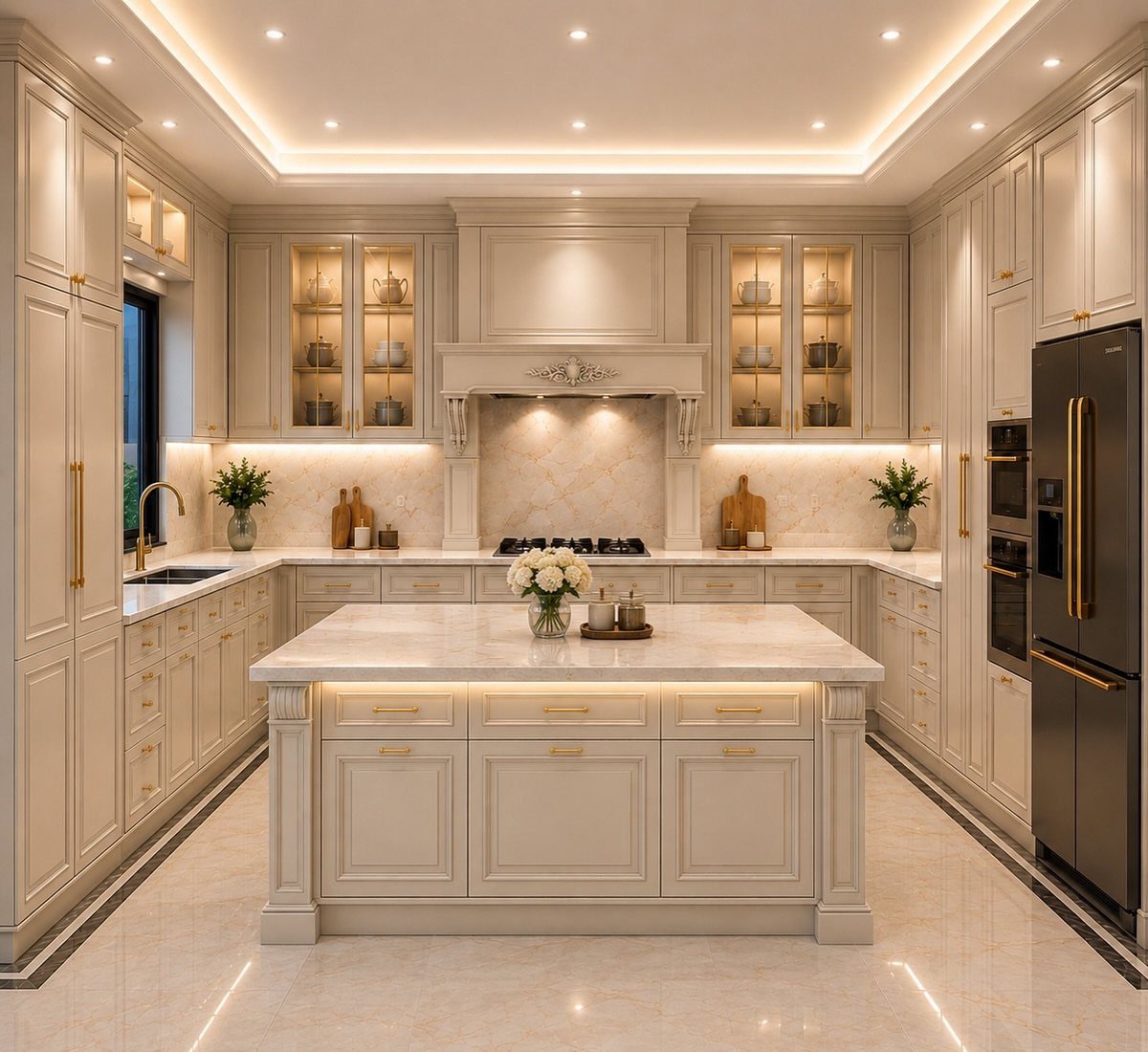
An island does 2 jobs: it gives the cook a work surface and gives everyone else a place to lean and talk.
Painting it the same cream as the perimeter cabinets and topping it with marble keeps it from reading as a freestanding piece of furniture.
Size it to the room. A big island looks great, but it has to leave clear floor on each side so the oven and dishwasher doors still open all the way.
8. Polished Nickel Hardware
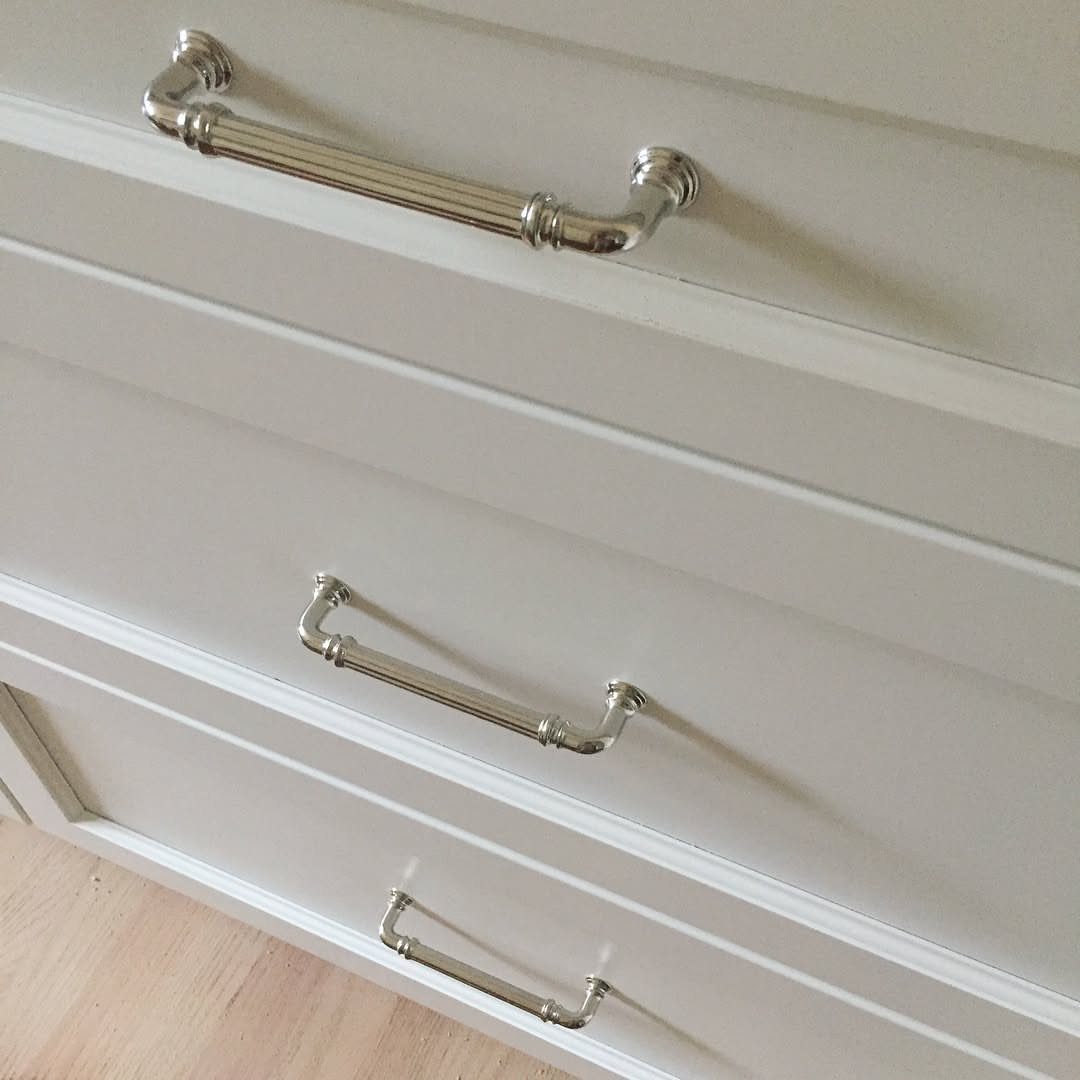
Hardware is the smallest part of a cabinet and the first part your hand meets. Polished nickel pulls with some heft suit recessed-panel doors; thin, light ones get lost against them.
I like a bar pull on every drawer, with knobs saved for the doors.
Buy a single pull first and hold it against a door before ordering the full set, since weight and finish read differently in person than on a screen.
9. White or Cream Cabinetry
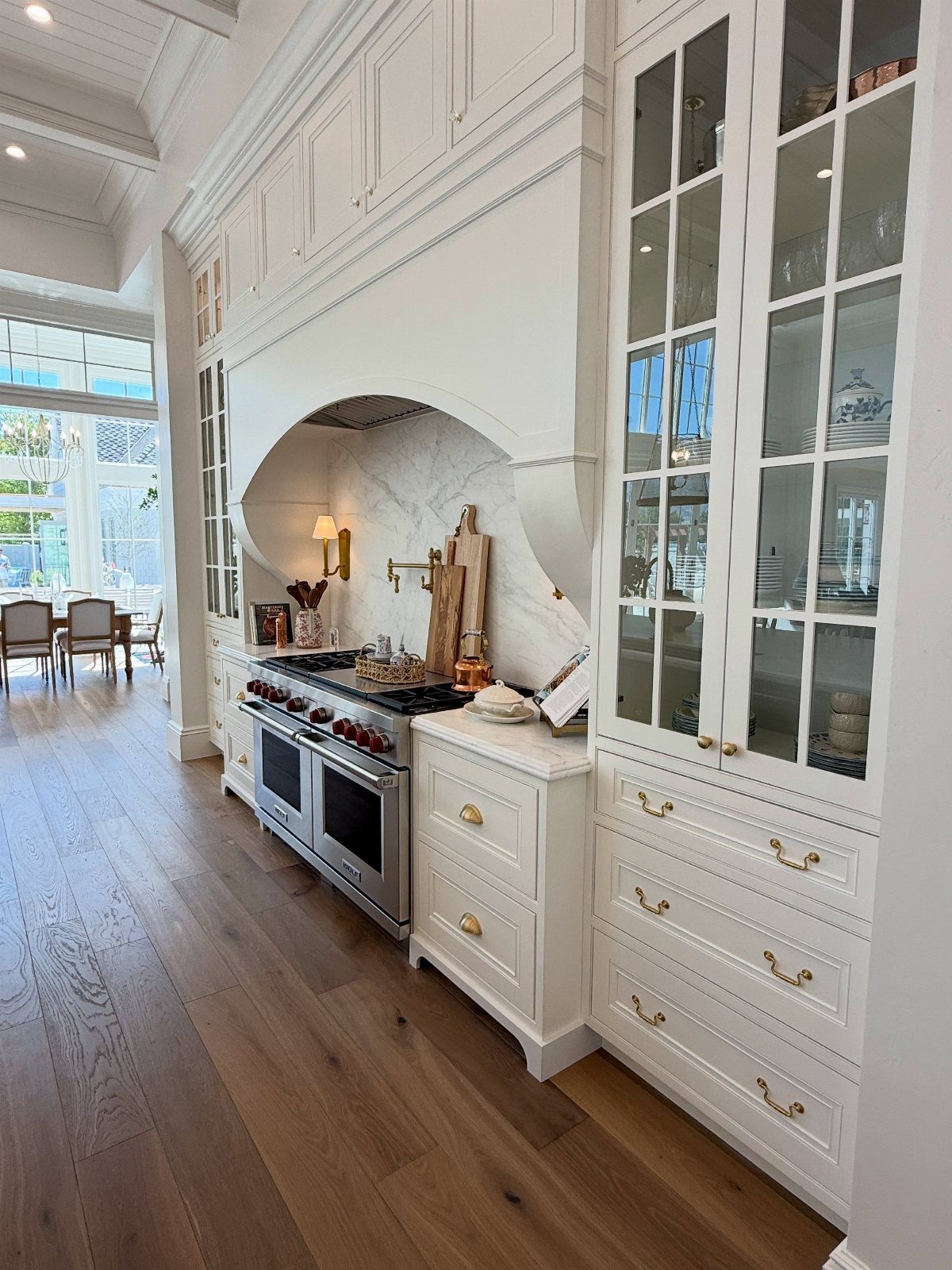
Light cabinets are the most familiar starting point for a classic kitchen, and a good one, because everything around them can change while they stay put. Here the white paint, gold hardware and marble hood carry the room.
Choose white for a crisp backdrop or cream for a softer one; both suit traditional doors. Light wood flooring gives white cabinets a warm floor to sit on.
10. Pendant Lights Above an Island
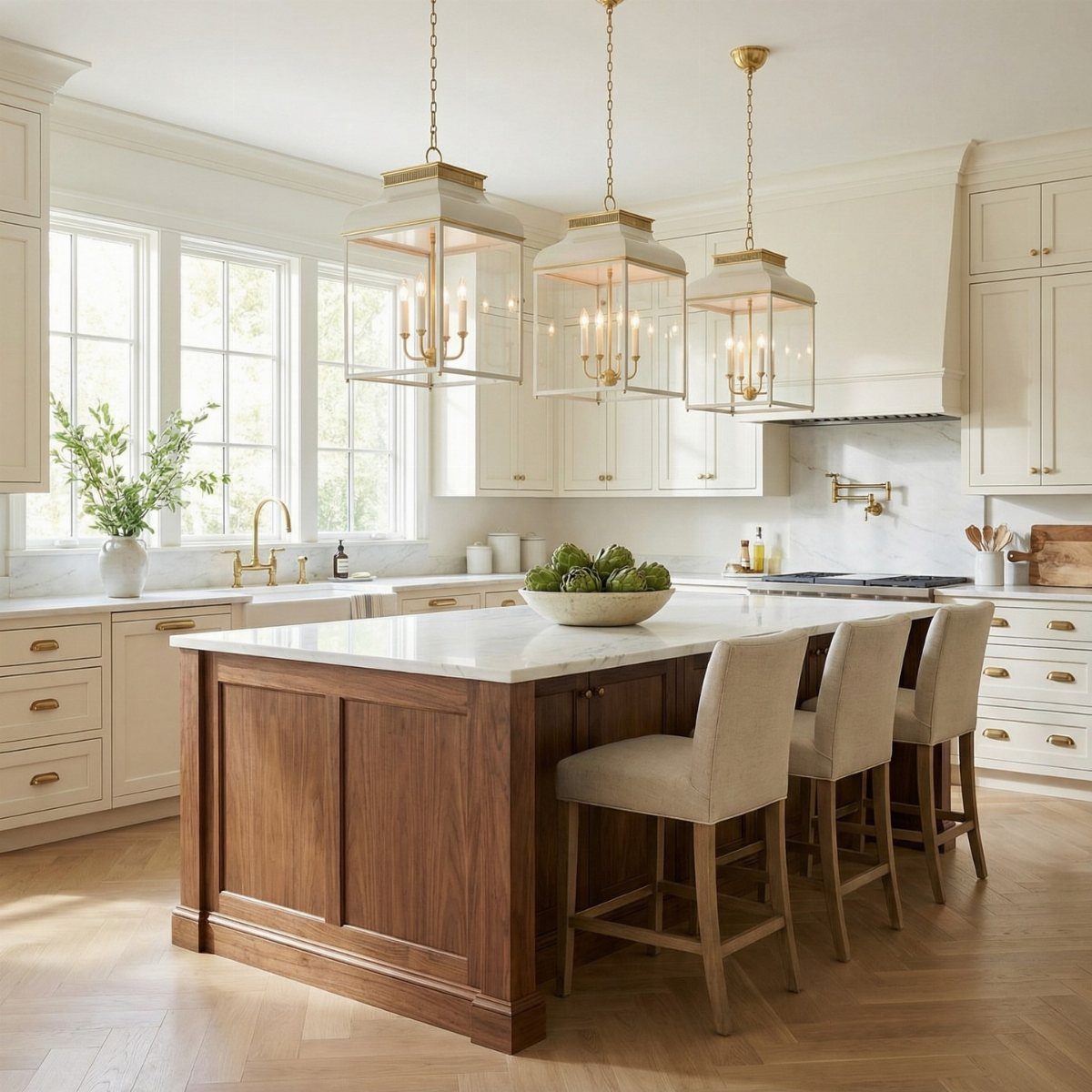
Lantern-shaped pendants in gold give an island a traditional ceiling line without crowding it.
Hang one over each stool position and space them evenly along the island’s length.
Hang each pendant so the bottom of the fixture clears heads and keeps sight lines open across the room. Match the gold to your cabinet hardware so the 2 read as a set.
11. White Subway Tile
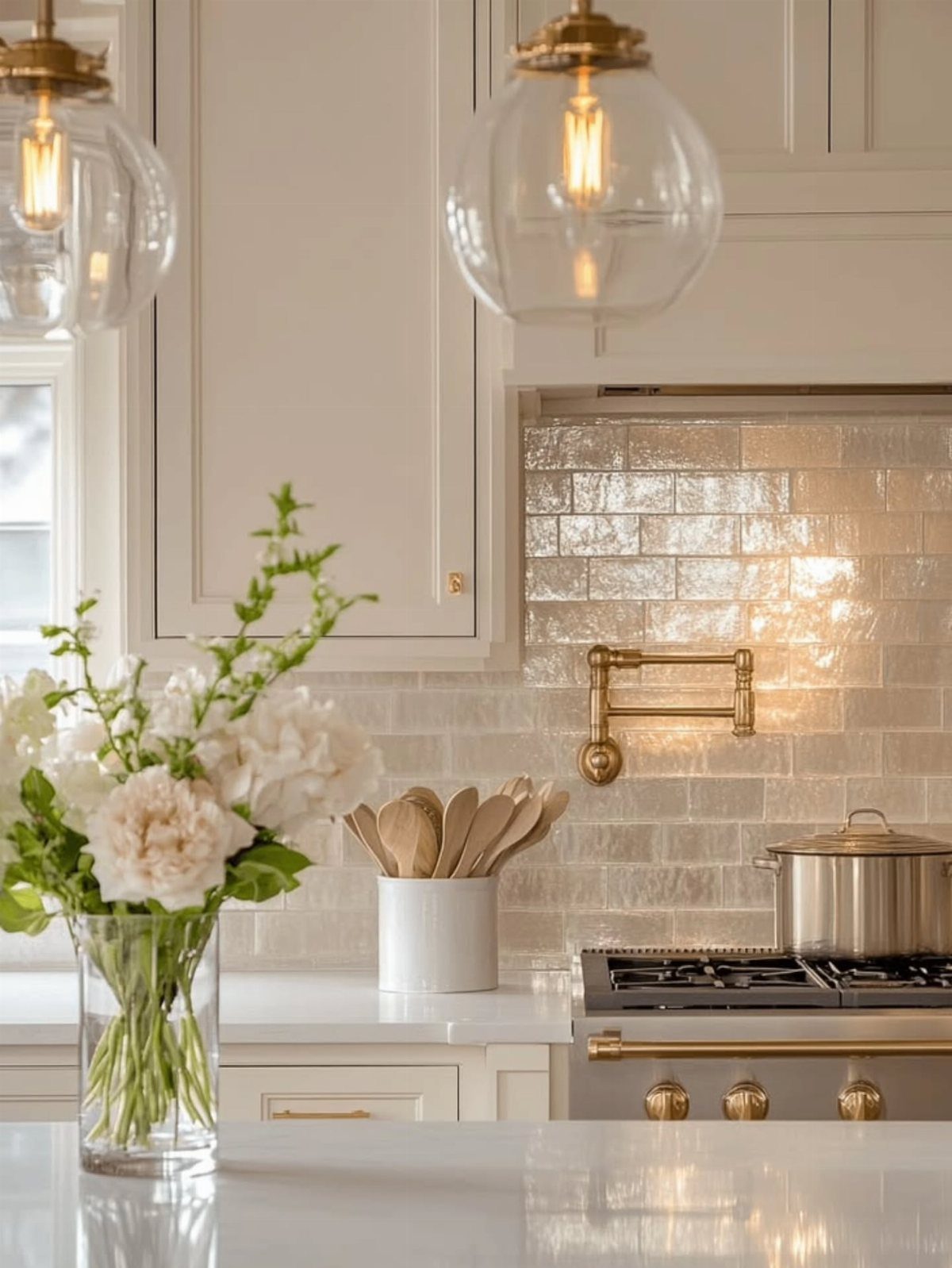
Grout color changes a subway backsplash more than the tile does. White grout keeps the wall quiet; a light gray draws the brick pattern forward.
Tile also varies in size, finish and edge.
I’d choose a beveled edge for the soft line it catches and a glossy finish for the classic look. Order a few loose tiles and set them beside your countertop before committing to the whole wall.
12. Open Shelving
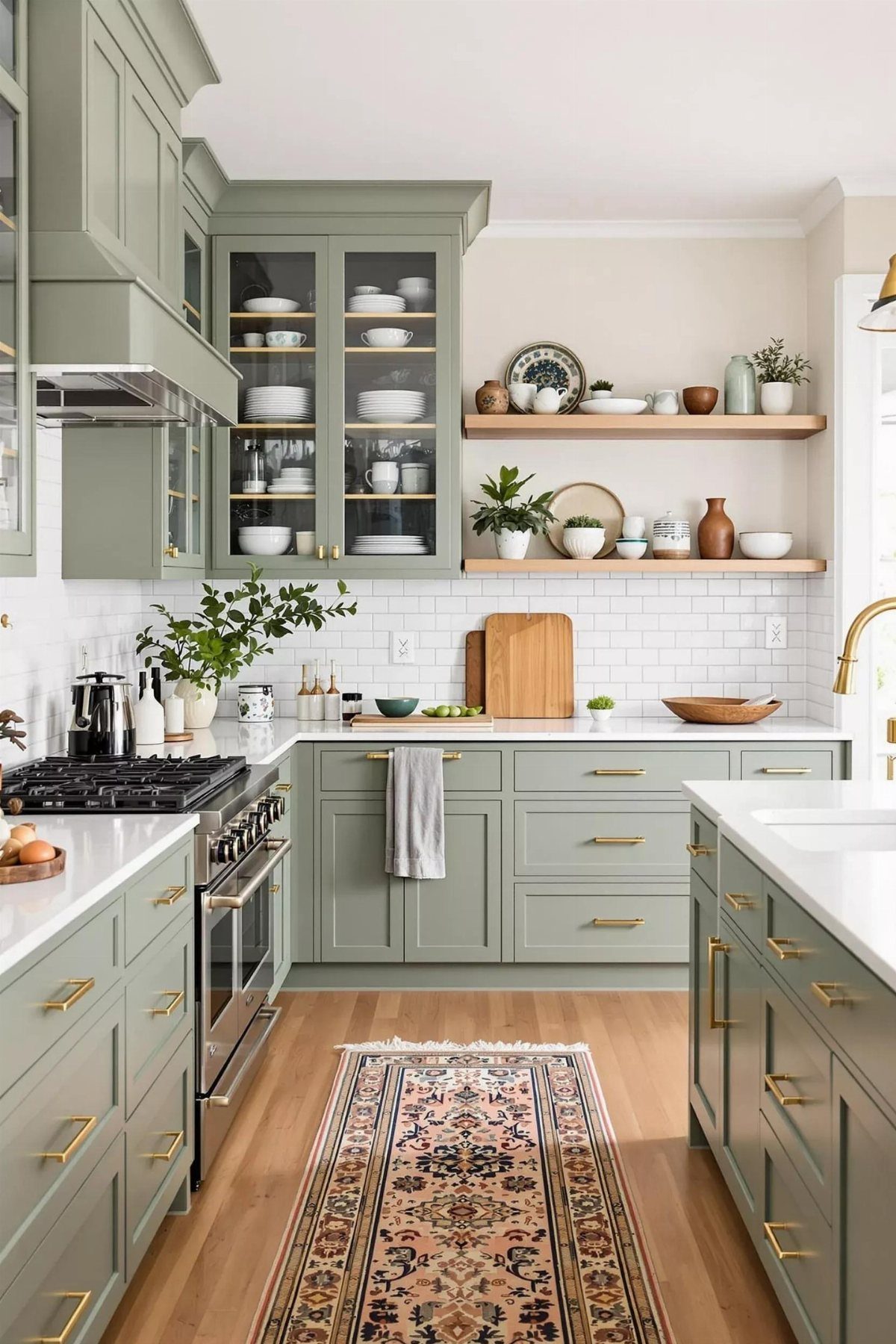
2 wood shelves on a tiled wall are plenty. Open shelving is the most contemporary move you can make in a traditional kitchen, and it works best in small doses.
Keep to the ceramics you use daily and a plant or two, since everything up there is on display.
Light wood looks soft against sage cabinets; choose a tone close to your floor so the kitchen doesn’t end up with competing woods.
13. Sage Green Painted Cabinets
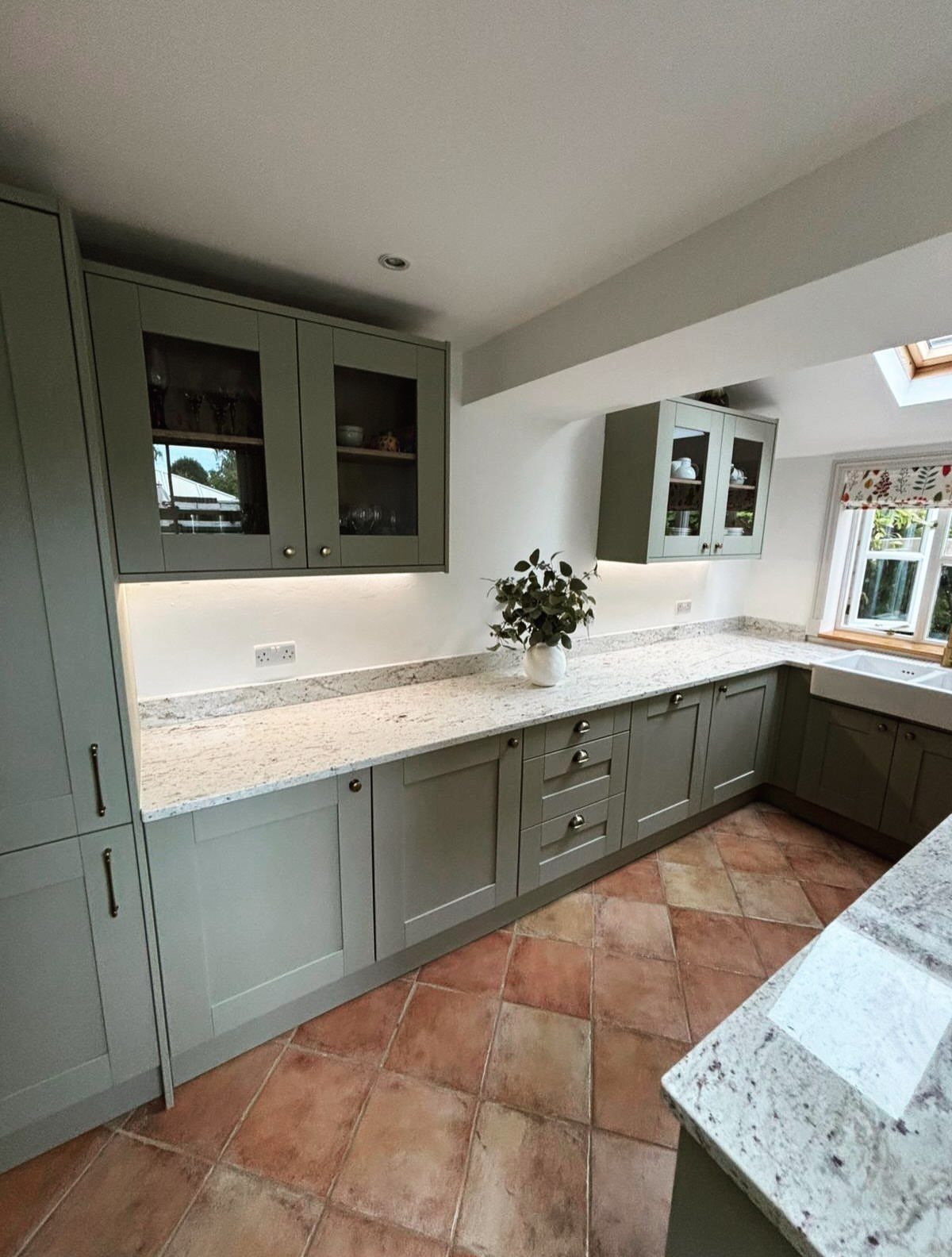
Sage green sits between a neutral and a color, which is why painted Shaker cabinets in this shade work so well in a traditional kitchen.
A soft green stays calm next to light stone counters and terracotta tile, and it keeps the old-house character that bare wood or white can lose.
Paint both the lowers and the glass-front uppers in the same sage, then let a lighter countertop and warm hardware supply the contrast. I’d hold the walls to a quiet, warm tone and let the cabinets carry the color.
14. Classic Kitchen Lighting
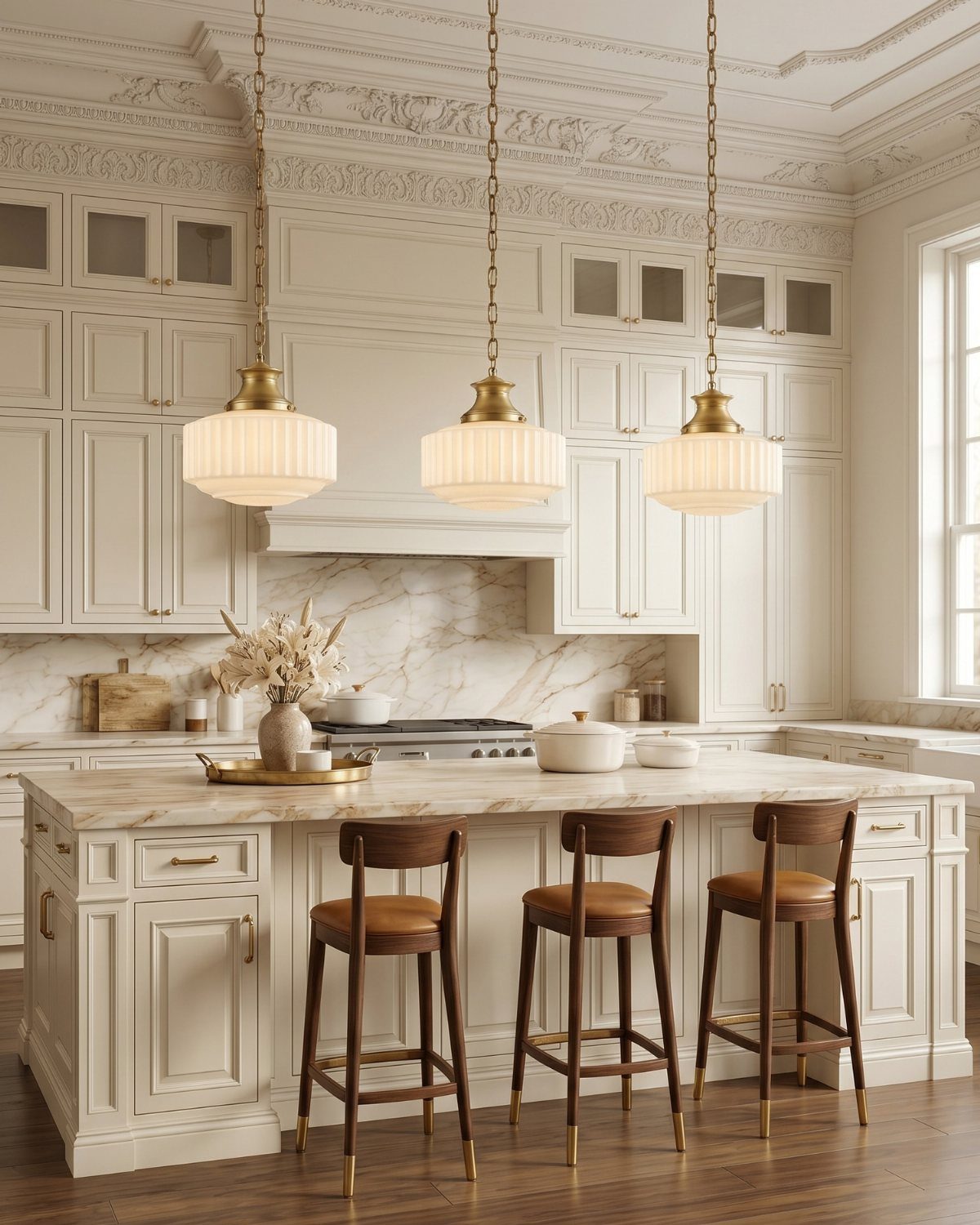
Gold pendants with frosted glass shades soften a marble island without hiding it, and that is why they feel timeless instead of trendy.
A light fixture with a classic shape will outlast a paint color, so I put the lighting budget toward shape before finish.
Three pendants over one island read as a set, especially when the gold repeats elsewhere in the room.
Frosted glass spreads the light gently across a white surface. Pair it with leather stools for a warmer note.
15. Wood Cabinetry
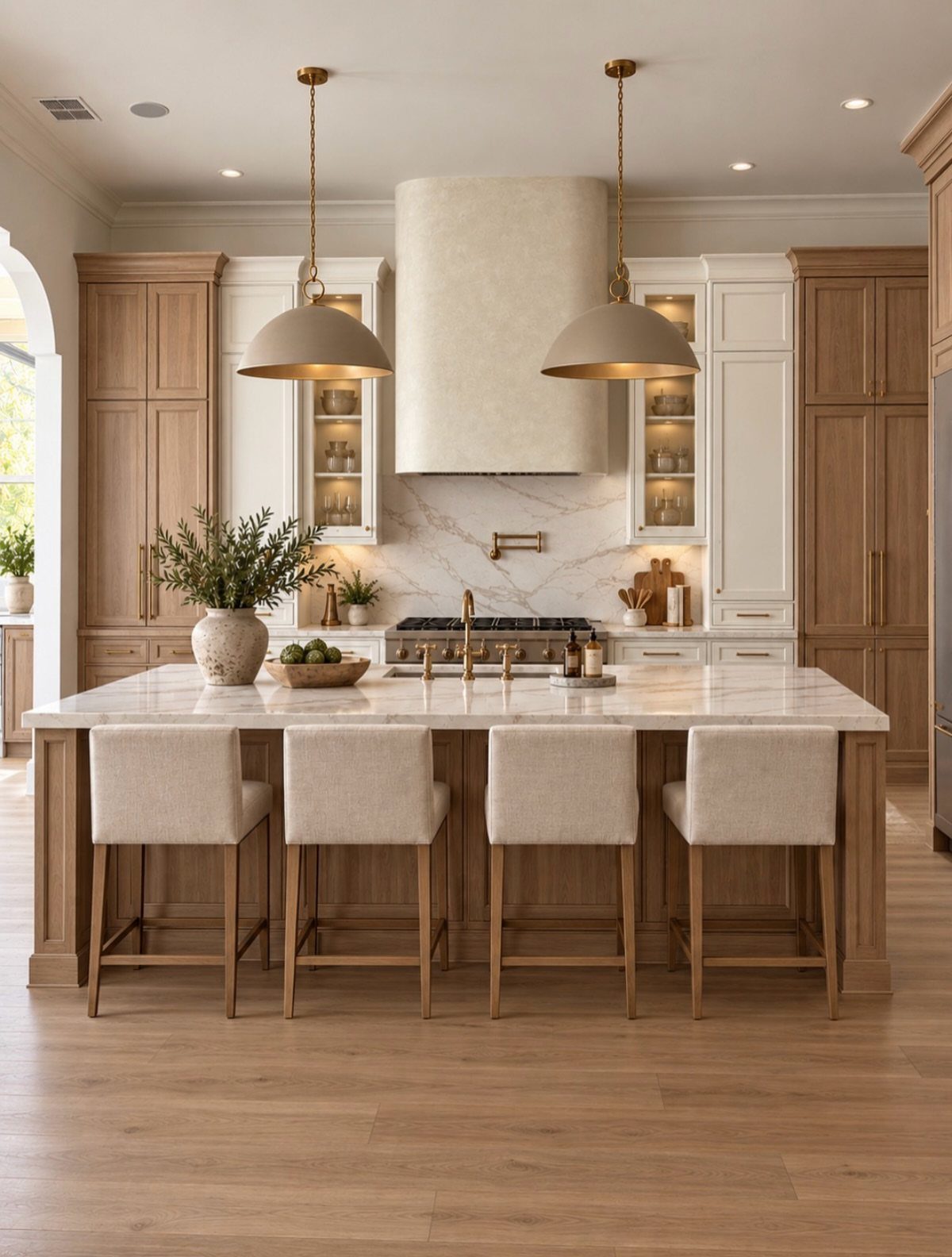
Light natural wood cabinets next to white ones give a kitchen 2 textures, and the grain keeps all that white from feeling flat.
Timber also points to craftsmanship: the joinery and the visible grain are what make a cabinet read as traditional.
I’d mix the two the way this room does, with wood on the main run and white around it, and let a marble island bridge them.
Keep the wood tone consistent across every piece, because a second shade will compete with the first.
16. Glass-front Cabinets
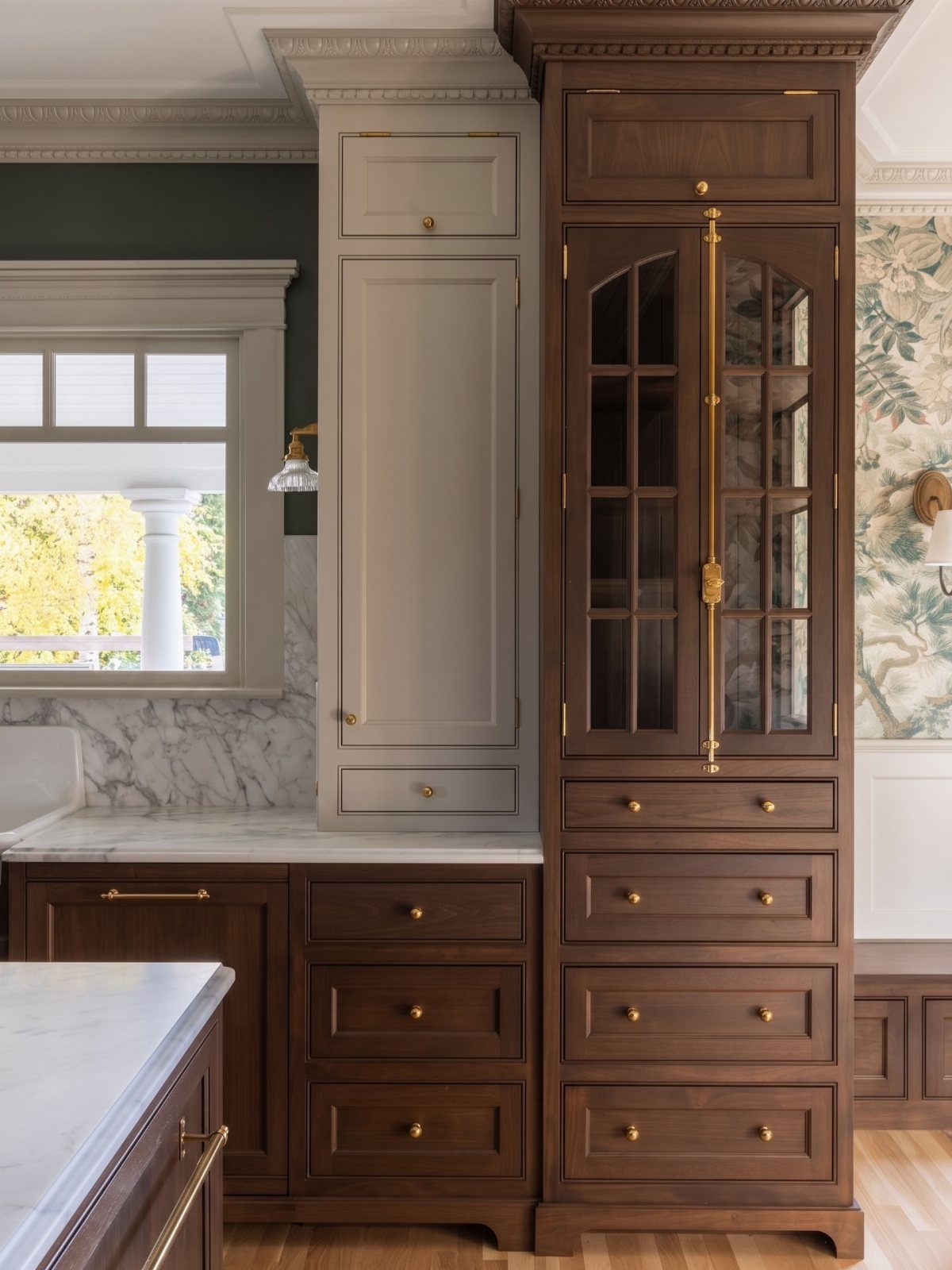
Glass in a cabinet door turns a storage box into a display piece. A tall dark wood cabinet with glazed doors is the strongest version, since the frame gives the glass a weight that thin metal can’t.
Put the glass where you want the eye to land, and keep the other cabinets solid.
Stick to dishes you’d happily see every day, because there’s no hiding a messy shelf. A smaller grey cabinet beside it adds a second color without taking over the room.
17. Modern Appliances in a Traditional Kitchen
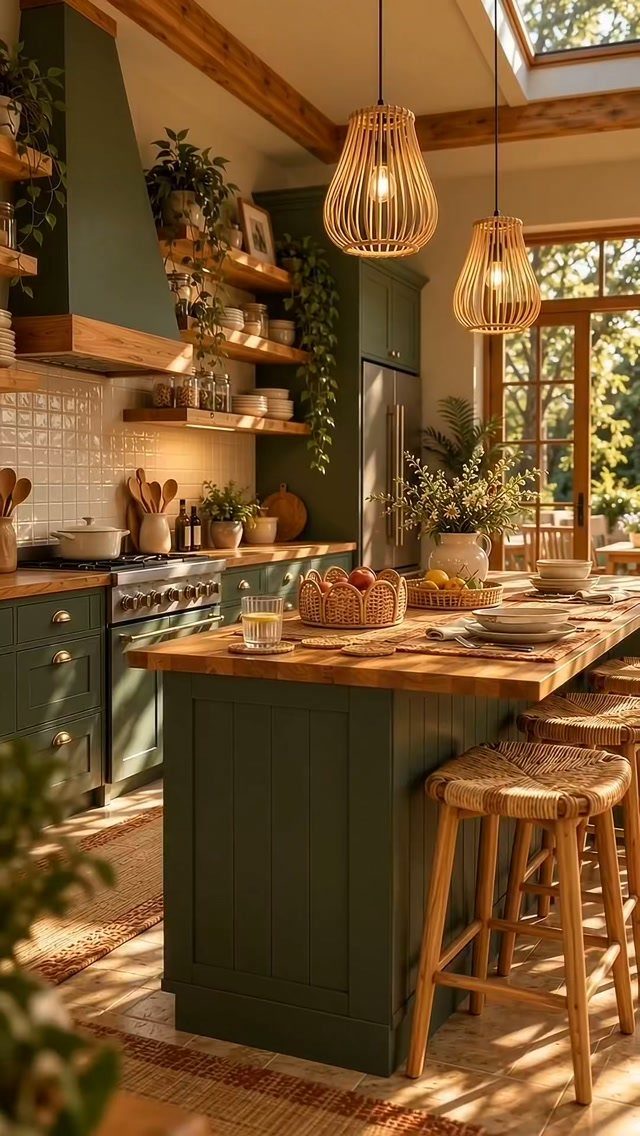
Stainless steel appliances sit comfortably in a sage green kitchen when the rest of the room is warm.
Wood, woven stools and open shelving give the steel a soft setting, so it looks like a practical choice rather than an intrusion.
Keep the modern pieces to the work zones: range, refrigerator, dishwasher.
Everything the eye lands on beyond them should stay traditional. If the appliances are the only cool-toned element, the kitchen stays balanced, and the finish also asks nothing of you in styling.
Reasons Traditional Style Appeals
Many people are tired of kitchens that look like showrooms. Designers describe a reaction against minimalism and against mid-century modern styling that has been repeated everywhere, with a pull toward rooms that feel comfortable and familiar.
A traditional kitchen gives you a sophisticated look that still feels cozy, a pairing that bare, spare surfaces rarely manage.
It also leaves room for your own taste. The style blends classic design with modern functionality, so you can keep the familiar look and still choose a layout and appliances that fit how you cook.
If you’re unsure it suits you, ask whether you want the room to feel lived in or crisp and spare. If it’s the first, traditional is the safer path.
Long-term Renovation Value
A kitchen that ages gracefully saves you from the frequent, costly remodel. Classic choices tend to look right for decades, while trend-driven ones date quickly.
Spend where replacement is hard: cabinet boxes, counters, flooring. Keep fast-moving details cheap and easy to swap, like paint color and small accessories.
The same logic helps at resale, since a classic kitchen appeals to a wide range of buyers instead of one taste.
Cost matters to most people planning an upgrade. Houzz reports that more than 7 in 10 homeowners cite long-run cost-effectiveness as a leading motivator for sustainable kitchen upgrades.
Price a choice by how many years you’ll live with it, not by the tag alone.
Traditional Style Versatility
Traditional style adapts to a period house and to a modern apartment alike, because its character comes from a few choices you can adjust.
Doors are the biggest lever. A simple Shaker door, or a Shaker door with bead molding, sits between the heavier raised panel and the flat slab, so it suits rooms that want a traditional feel without much ornament.
Paint is the next lever, and it changes the mood of the same cabinets completely.
Accessories finish the job. If you rent and can’t touch the cabinets, classic accessories and a considered color scheme can carry most of the look, as long as your lease allows the changes.
Frequently Asked Questions
What is a traditional style kitchen?
A traditional kitchen pairs warm natural materials like wood and stone with classic details: paneled or Shaker cabinet doors, layered crown molding, and a palette of cream, white or soft painted colors.
Shaped countertop edges and patterned backsplash tile are common extras. The look feels formal but cozy, and it still has room for modern appliances and layouts.
What kind of kitchen is timeless?
A kitchen built on classic choices: Shaker or paneled doors, natural wood and stone, and a warm palette. Classic shapes hold up for decades, while finishes picked for a trend start looking tired within a few years.
Lighting follows the same rule, since a fixture with a classic shape outlasts a paint color. When money is tight, I’d spend it on a fixture’s silhouette first and its finish second.
Why are traditional kitchens back in style?
A lot of people have grown weary of showroom-style kitchens, stark minimalism, and the mid-century look that shows up everywhere.
Traditional rooms offer comfort, familiarity and timeless appeal in return. A traditional room reads polished and warm at once, which bare, spare surfaces rarely pull off.
Can I incorporate modern elements into a traditional kitchen?
Modern is fine in the appliance zone, meaning the range, refrigerator and dishwasher.
Stainless steel appliances look at home when wood, woven stools and warm paint surround them. Open shelving is the boldest contemporary touch you can add, and 2 shelves is enough.
What are the popular colors for traditional kitchen cabinets?
Cream and white are the most familiar choices, and sage green, soft gray and blue also suit the style. Natural wood works too, either as the main cabinet run or paired with white.
How do traditional kitchens differ from modern kitchens?
Modern kitchens favor sleek lines and minimal surfaces, while traditional ones lean on classic details, natural materials and more ornament.
Stacked crown molding, paneled doors, and warm wood or stone give a traditional kitchen a layered, built-in look that a spare modern room lacks.