


Which gray-and-white kitchen is yours depends on what you’re allowed to change. A renter who can’t touch the cabinets can still get the two-tone look by setting a gray fridge, microwave, and range against white fronts.
Owners can paint just the island or the lower cabinets, add gray countertops under white uppers, or go all the way to gray and white Shaker doors, and each step adds more gray and more work.
1. White Cabinets, Gray Island
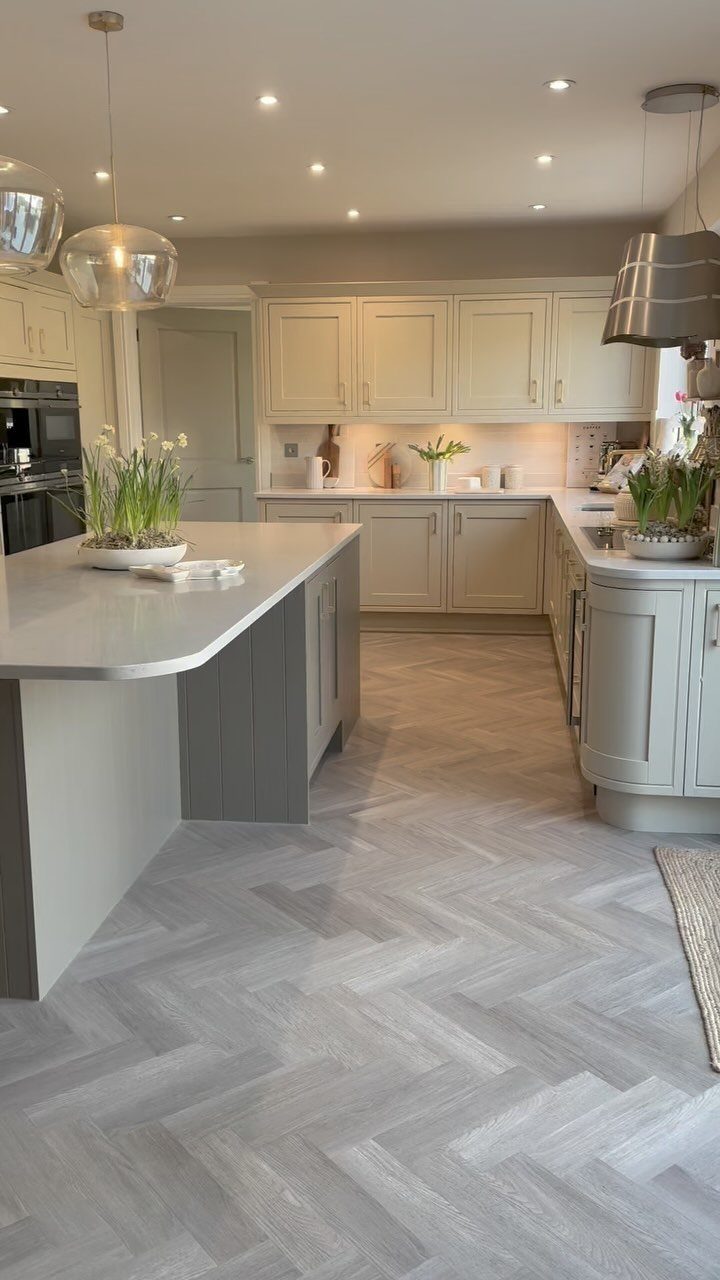
A white perimeter with one gray island keeps the color in a single place, and that makes the island do all the work.
Pair it with a white countertop, as here, and the gray reads as a solid block of color instead of a second palette.
Pendant lights above the island pull the eye to it. For a budget remodel, painting only the island base is the cheapest way to test this look, and it leaves the option of new cabinet fronts open for later.
2. Light Gray Cabinets
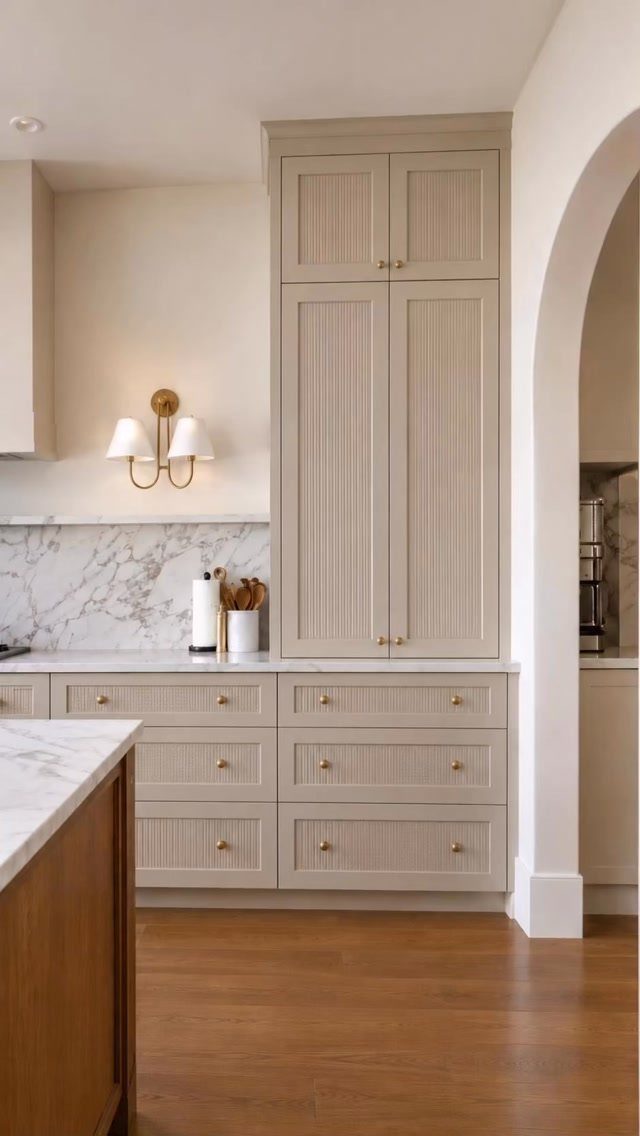
Pale gray cabinetry gives a kitchen a soft, airy feel without the starkness of all white.
Gold hardware and white marble on the counters and backsplash keep it from going flat, since the warm metal adds a little glow to a cool base.
I like fluted fronts for texture, but they collect dust in the grooves. If you want something easier to wipe, a plain shaker front in the same gray works just as well.
3. Dark Gray Cabinets
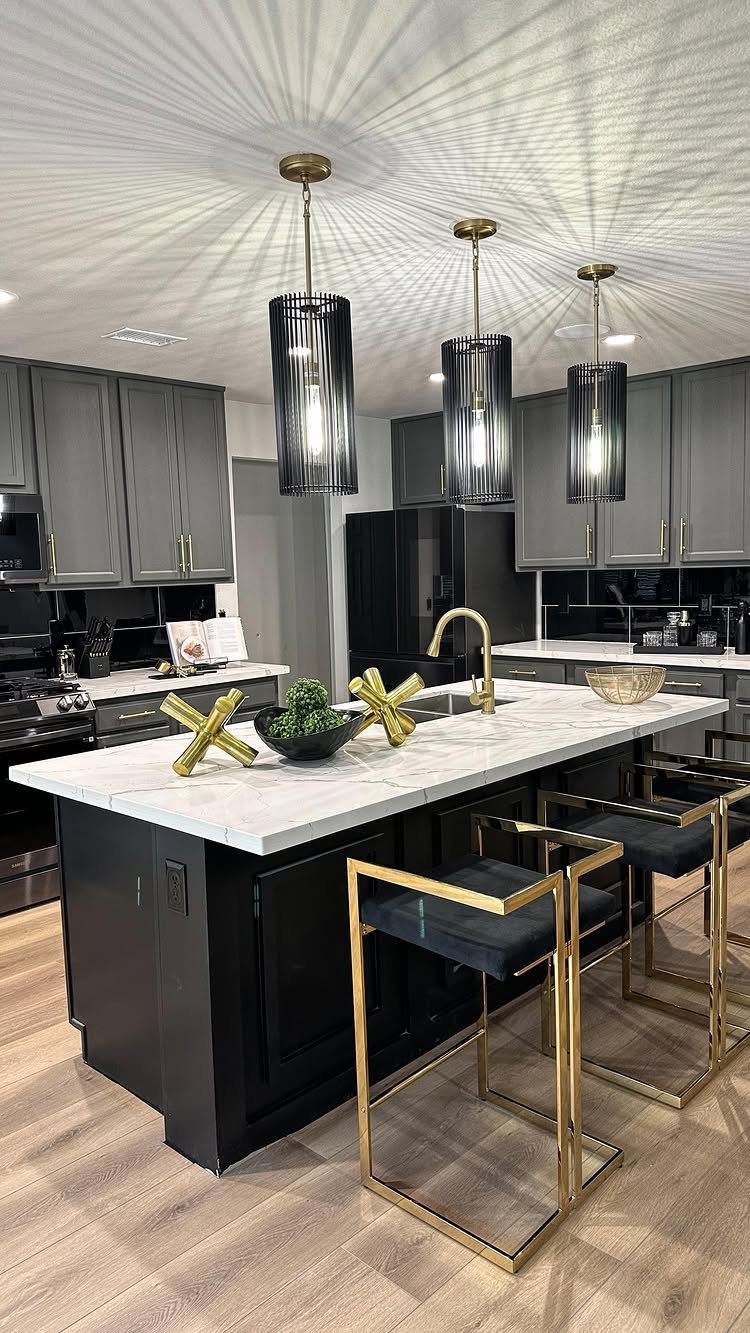
Dark gray cabinets turn a kitchen into the room people remember. White marble on the counters keeps the contrast sharp, and gold bar stools and hardware add warmth so the space doesn’t feel like a cave.
Use the dark shade on the uppers, the island, or both, but not on every surface. 3 black pendants over the island tie the look together, and I’d pick them in a matching finish rather than mixing metals.
4. Wood Accents
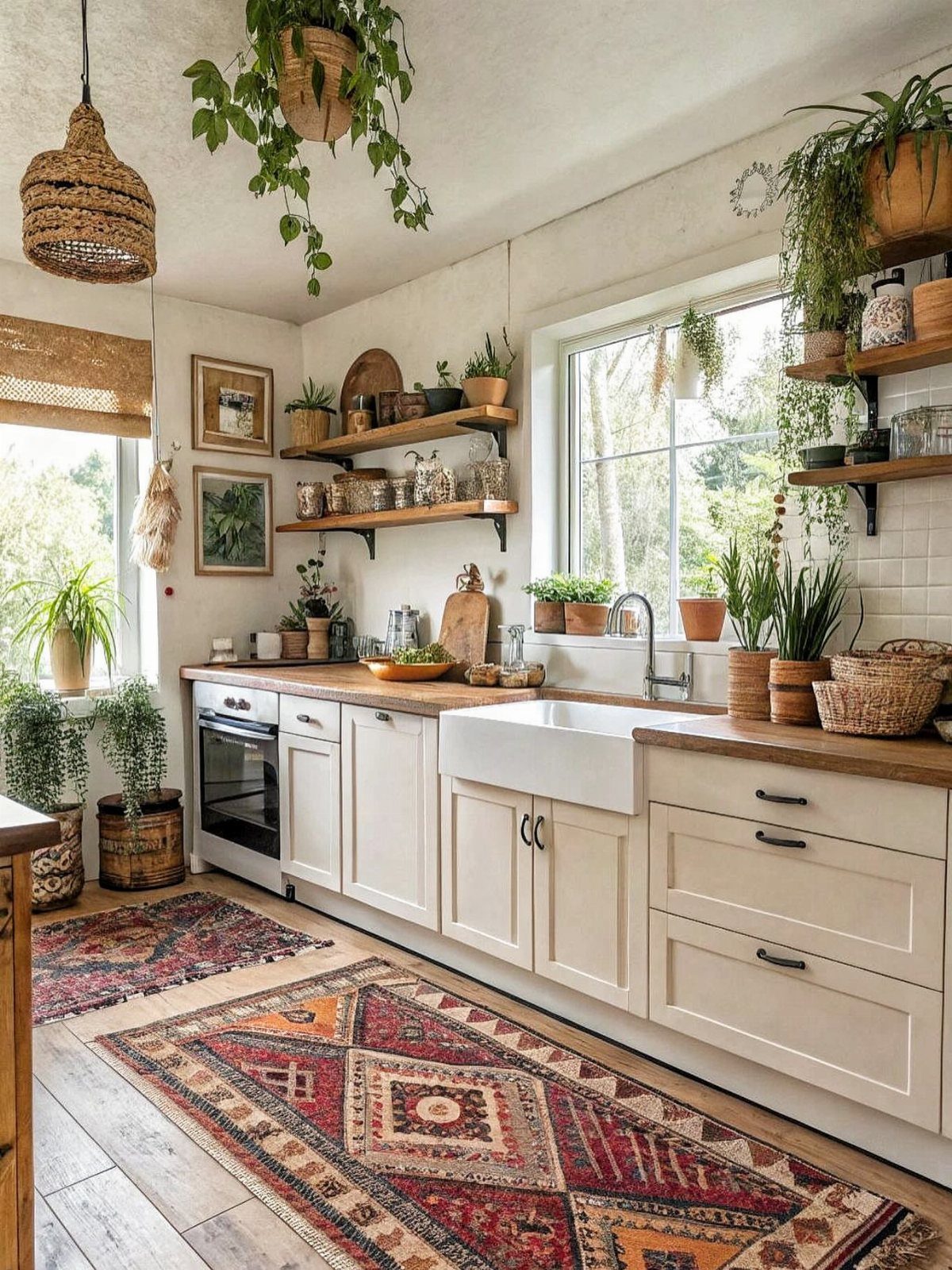
Natural wood is the quickest fix for a gray-and-white kitchen that feels too cool. Wooden countertops and open wall shelves against off-white cabinets add warmth, and they suit a casual, rustic look better than stone does.
Open shelves are cheaper than upper cabinets, but everything on them stays on display.
Keep the shelf contents to a few pieces and let a couple of plants fill the gaps. A rug on a light wood floor continues the same warm feel.
5. White Cabinets, Gray Countertops
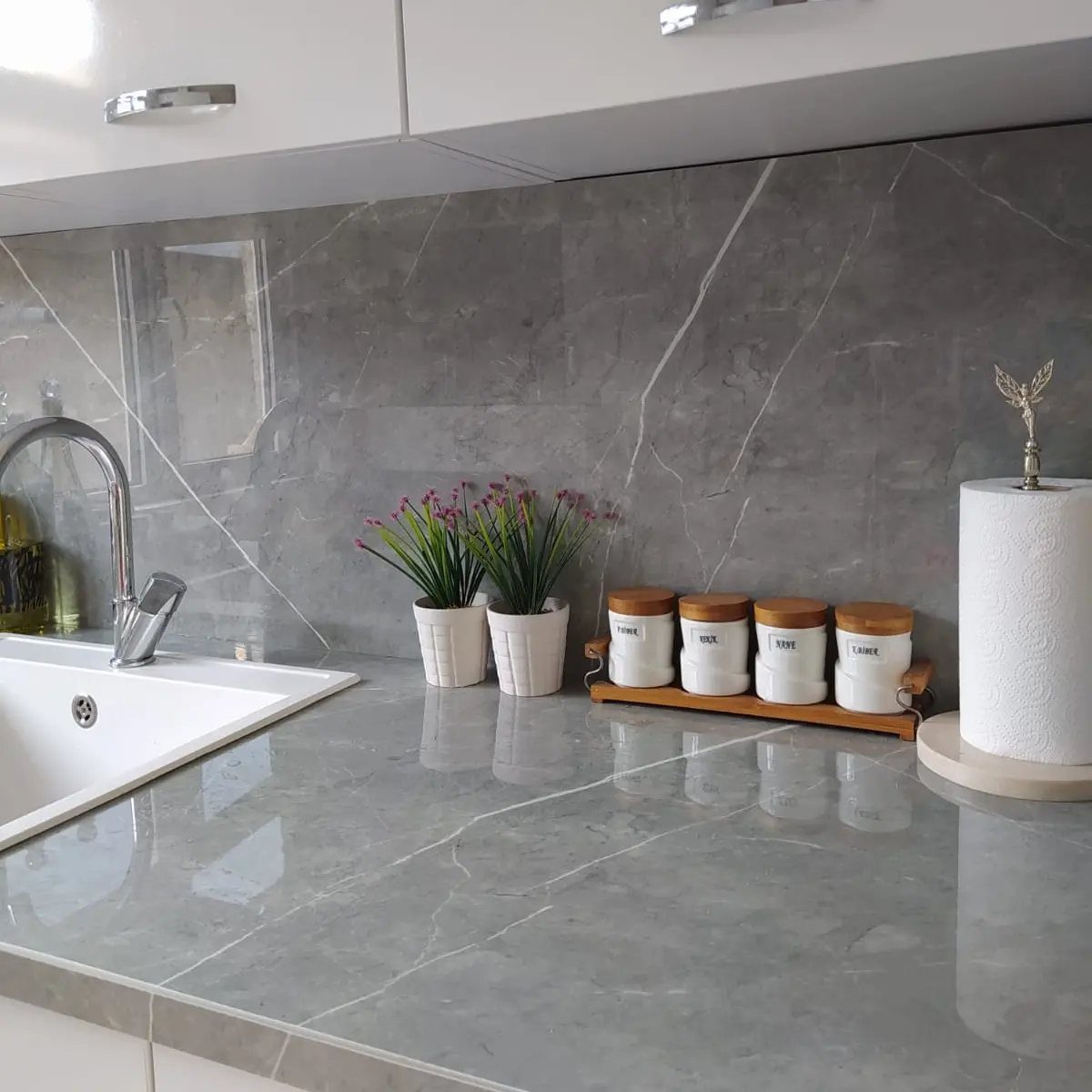
White cabinets get their weight from the countertop. A gray marble-patterned counter, carried up into a matching backsplash, gives the room one calm, continuous surface that makes the white look intentional rather than builder-basic.
Veining adds movement, so I’d keep the rest of the counter quiet.
A wooden tray with white canisters, like the one here, gathers small items without adding clutter. Swapping only the counter is a smaller project than replacing cabinets.
6. Gray and White Shaker
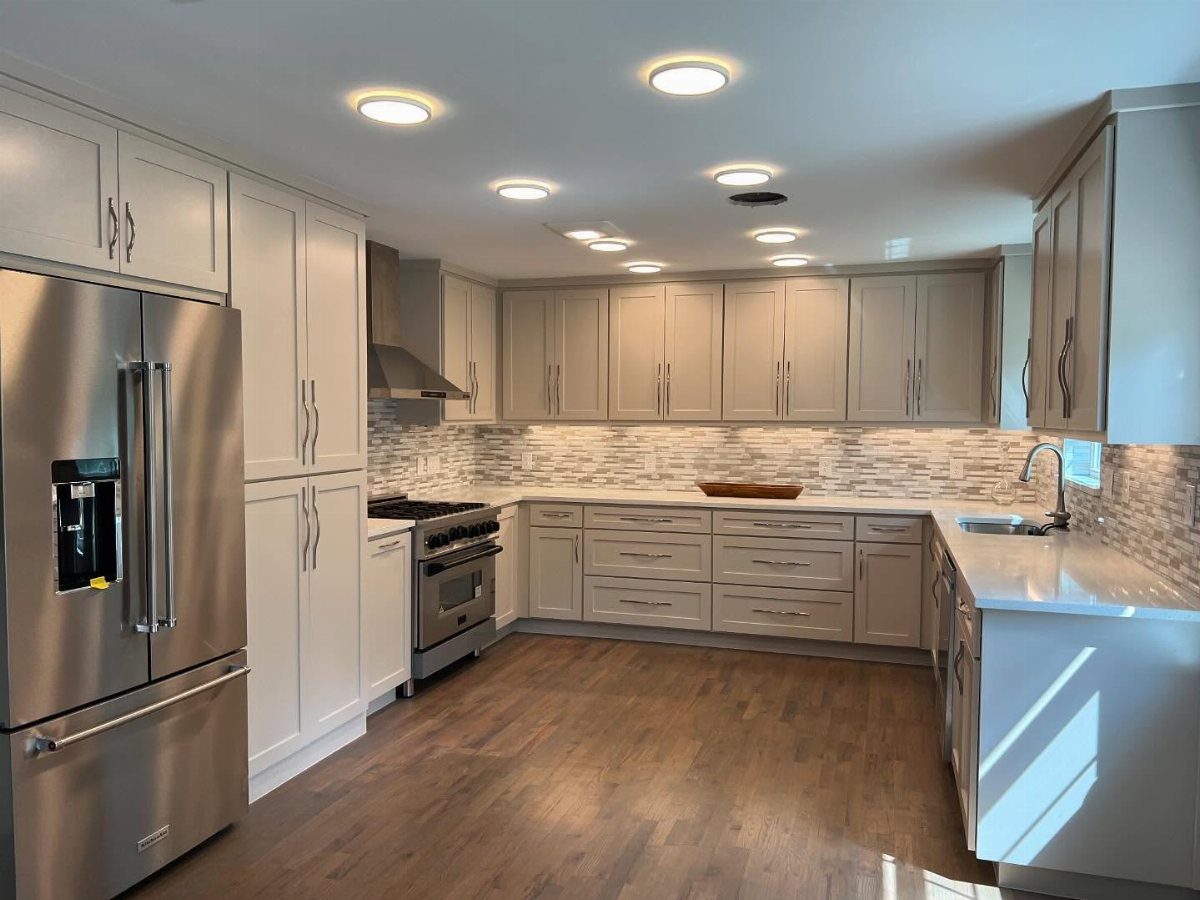
Shaker fronts are the easiest way to mix gray and white, because the simple flat-panel frame suits both traditional and contemporary kitchens.
Light gray shaker cabinets with white counters and a white tiled backsplash keep the whole room bright and clean.
If you’re unsure about gray, start with a gray lower run and keep the uppers white.
7. Gray Lower Cabinets
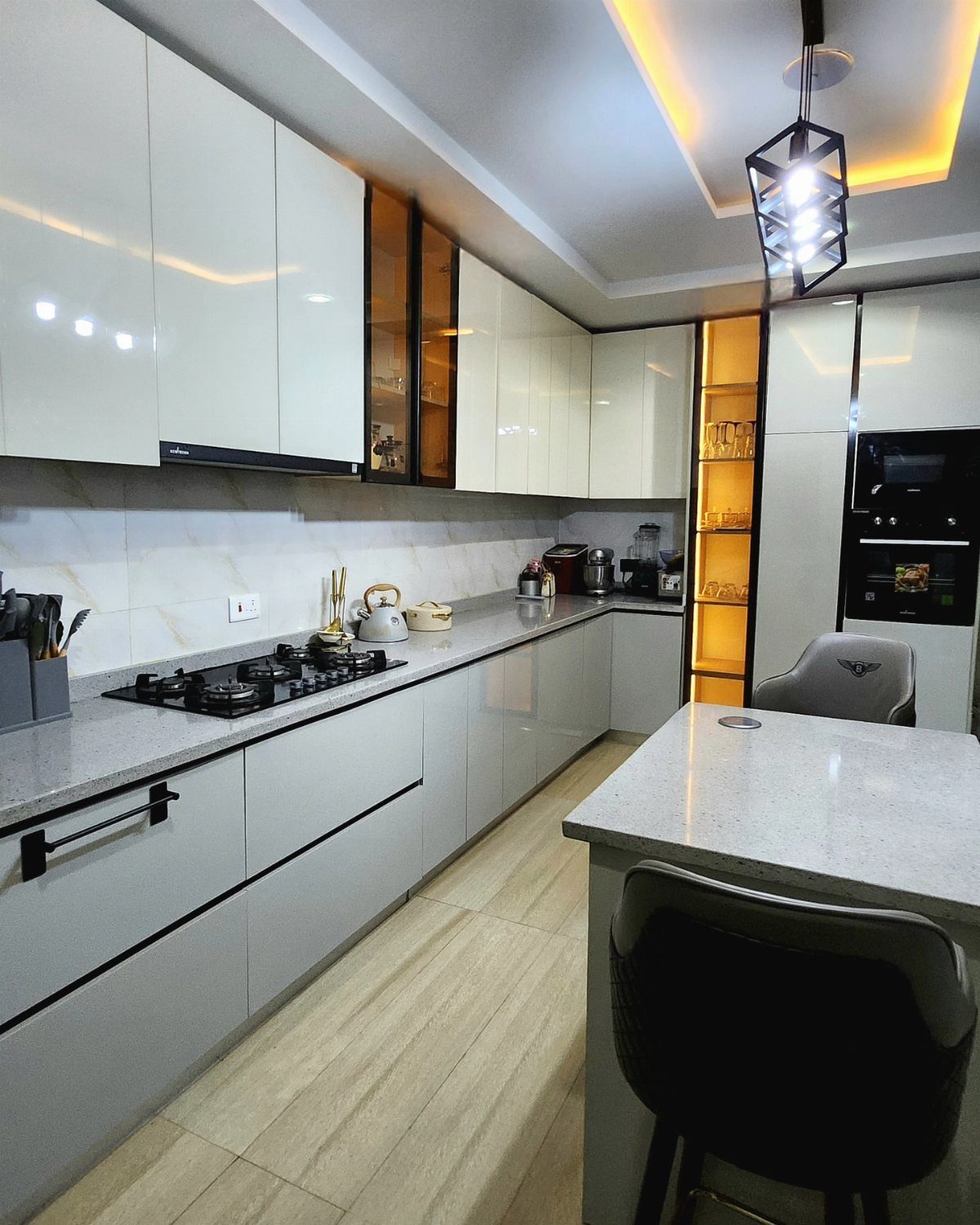
Gray below, white above gives a kitchen weight at counter level and keeps the wall side light. With a pale countertop, as here, the two-tone split stays soft instead of busy.
Paint is the low-cost way in, since only the base cabinets change color.
Pick a gray that sits visibly lighter or darker than the countertop, even by a shade or two, so the cabinets and the surface read as separate planes.
A small island in the same gray ties the lower run to the middle of the room.
8. Glass Cabinet Doors
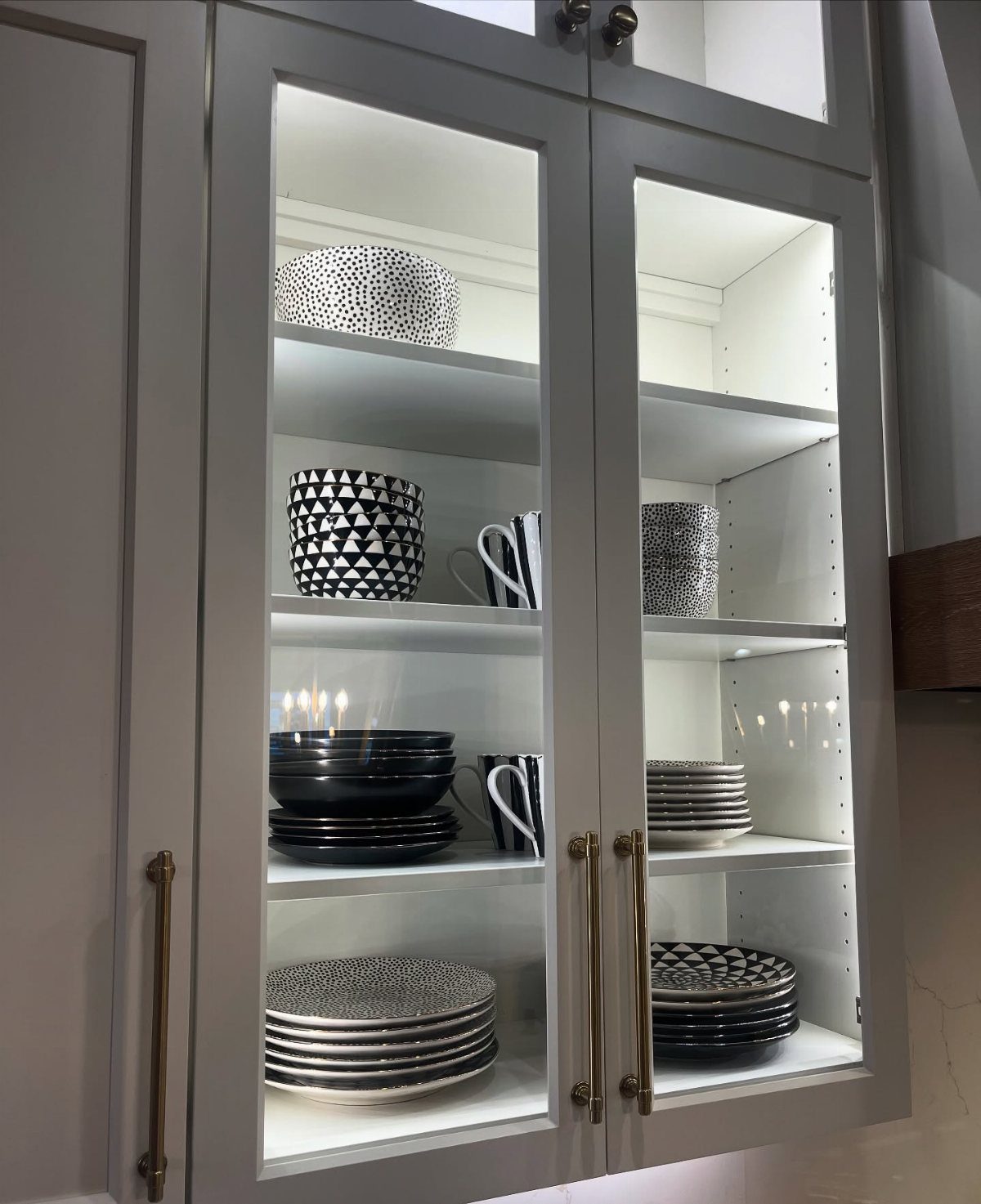
Glass doors turn a cabinet into a display case, and the lit interior adds depth to a flat wall of white. Black-and-white patterned dishes and mugs, like these, read as graphic and tidy at the same time.
Whatever sits behind glass is on show, so stack neatly and group by color. A cabinet of mismatched, everyday clutter will look worse than a solid door would.
Put glass on one or two uppers only, and leave the rest solid for the things you’d rather hide.
9. White Cabinets, Dark Gray Focal
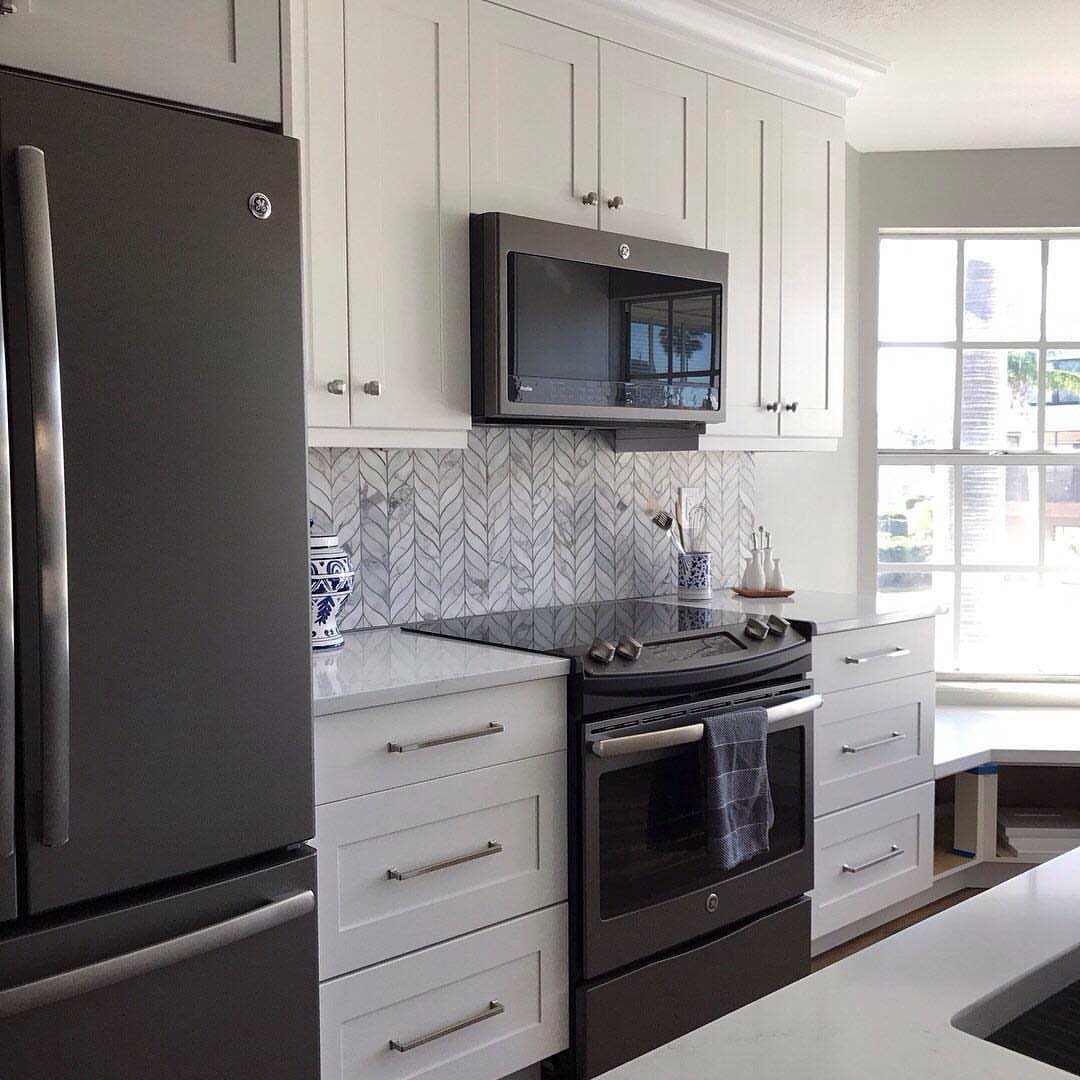
Appliances can carry the dark gray instead of the cabinets. A gray refrigerator, microwave, and stove set against white cabinetry give the room a strong center while the white stays calm around them.
Grouping the dark pieces along one wall makes the focal point look planned.
This is also the easiest version for renters or anyone not ready to repaint, since nothing needs refinishing.
10. Gray-Green Island
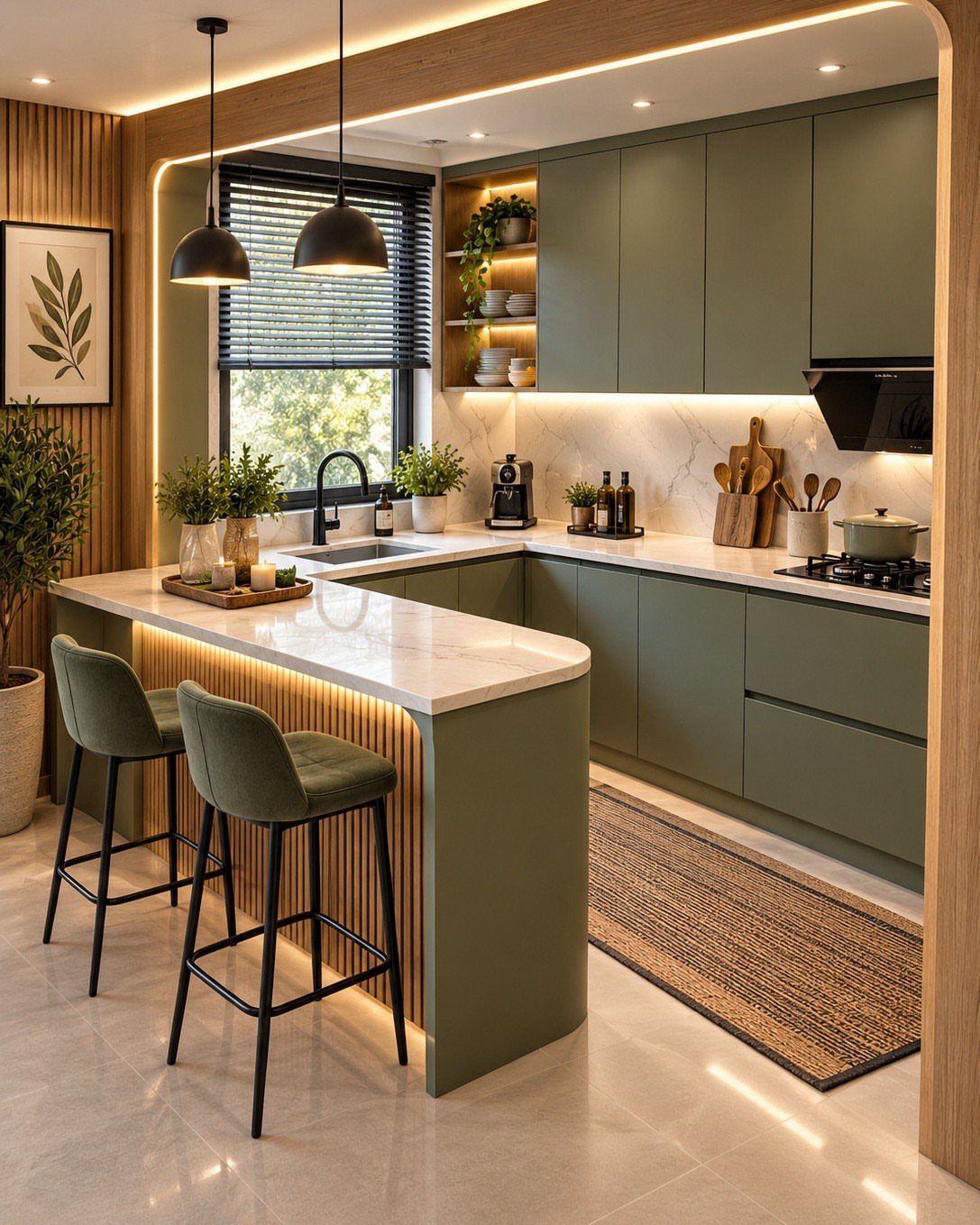
A muted gray-green on the island lets one piece bring in color without shouting. White countertops keep it crisp, and green velvet bar stools pick up the same tone in a softer texture.
Black pendants give the green a sharp edge to play against. A natural fiber rug on light tile warms the floor and keeps the palette from turning cold.
Sample the paint next to your tile before committing; gray-greens shift between cool and warm depending on the light.
11. Blue-Gray Cabinets
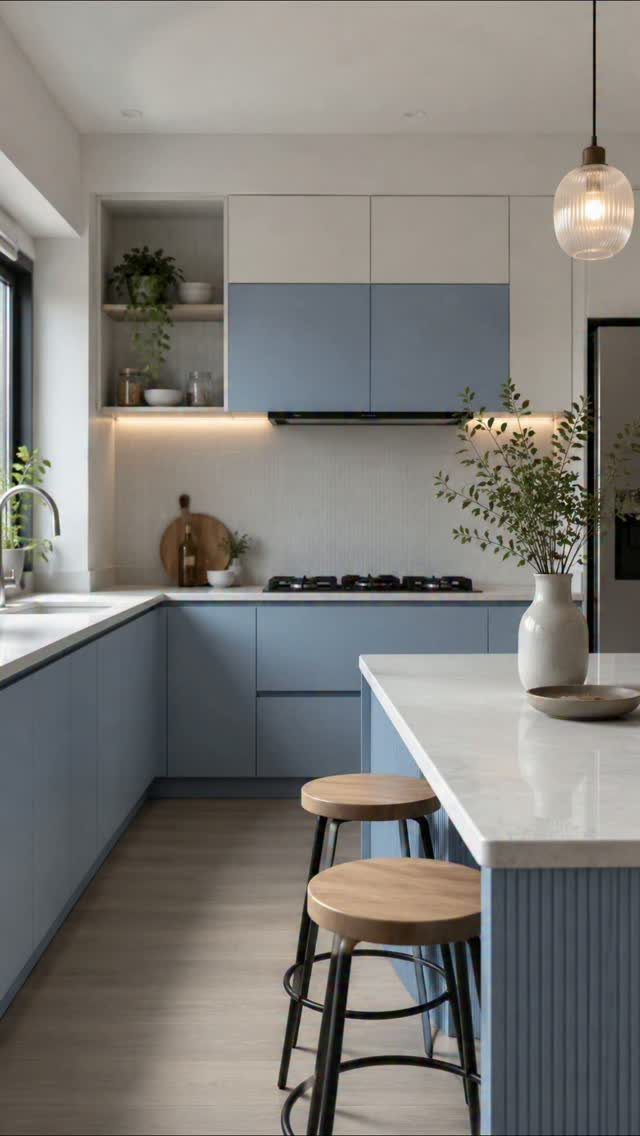
Blue-gray cabinets give a kitchen a quiet, cool-toned calm, and white walls and countertops keep it from feeling heavy.
Carrying the color across both the lower and upper cabinets spreads it evenly through the room, so no one wall ends up doing all the work.
Wooden stools at the island add warmth that the blue-gray lacks on its own. I’d pick a medium wood tone over a very pale one so the seating holds its own against the color.
12. Green-Gray Cabinets
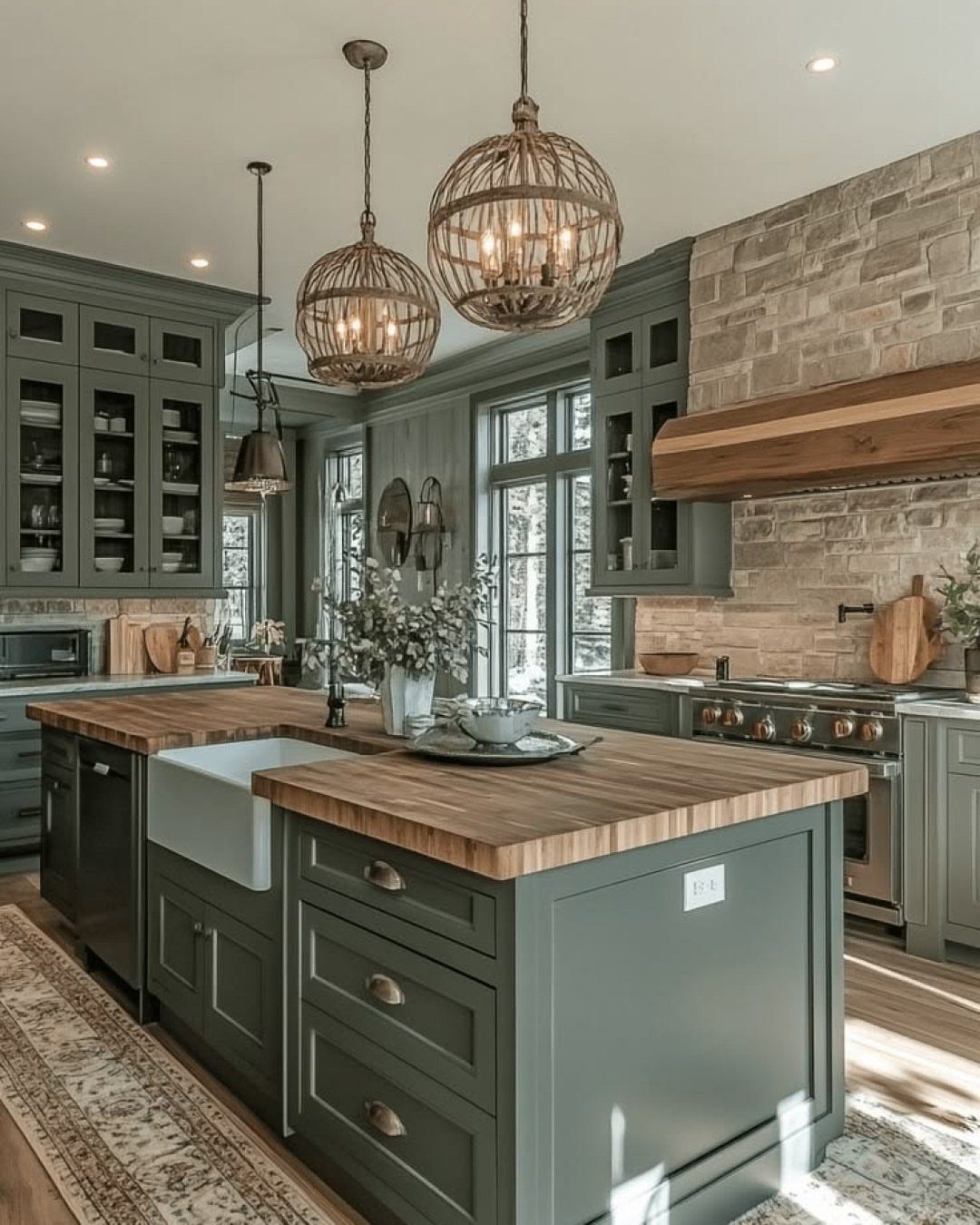
Green-gray cabinets lean coastal when they sit beside natural materials, and this kitchen uses plenty: a wooden island top, a wooden range hood, and stone walls. The cabinet color stays soft enough to let those textures lead.
Two large, spherical wicker pendants over the island add a relaxed, beachy shape. I’d choose them oversized, since small ones get lost in a room with this much texture.
Wood and stone do the heavy lifting here, so keep the hardware simple.
13. Gray Cabinets, White Marble
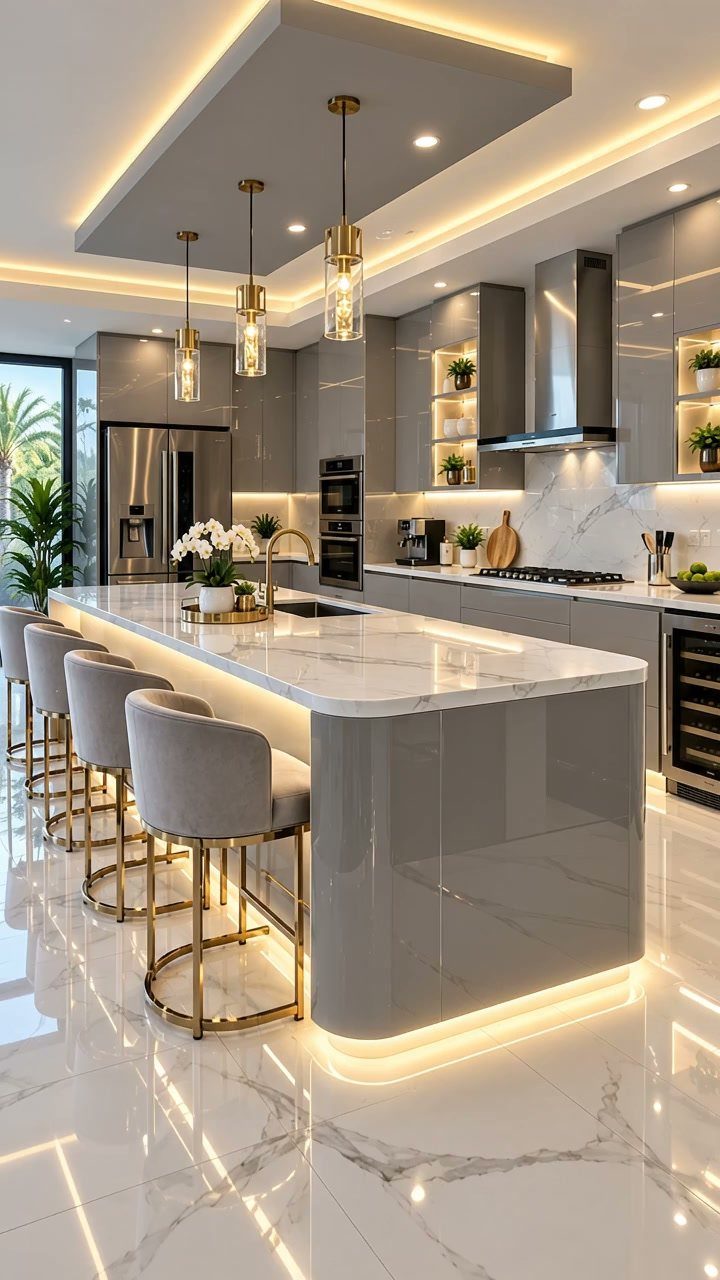
Glossy fronts catch the light, so gray reads livelier here than a matte finish would. White marble on the counters and floor keeps the room bright, and the gold accents add the warm note.
I’d match the velvet on the island stools to the cabinet gray so the island and perimeter read as one set.
If a marble floor is out of reach, marble on just the counter or backsplash still gives you the pairing.
14. Gray Cabinets, Wood Counters
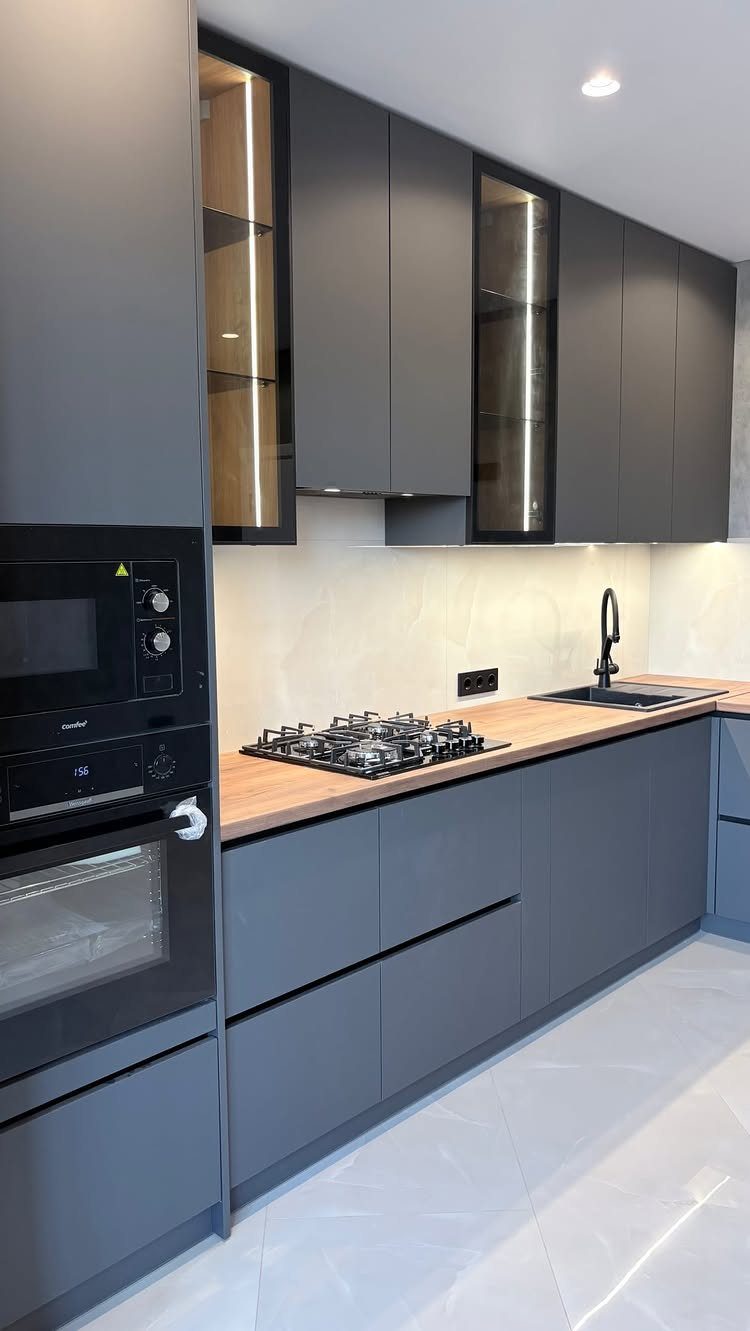
The counters do the warming in this kitchen, which lets gray run on both the lower and upper cabinets without the room turning cold.
A black sink gives the light wood something dark to sit against, and white tile underfoot keeps the whole thing airy.
For a variation, keep the counters plain and put the wood on the uppers instead. I’d use wood in one place only, not both.
15. Gray Cabinets, Black Counters
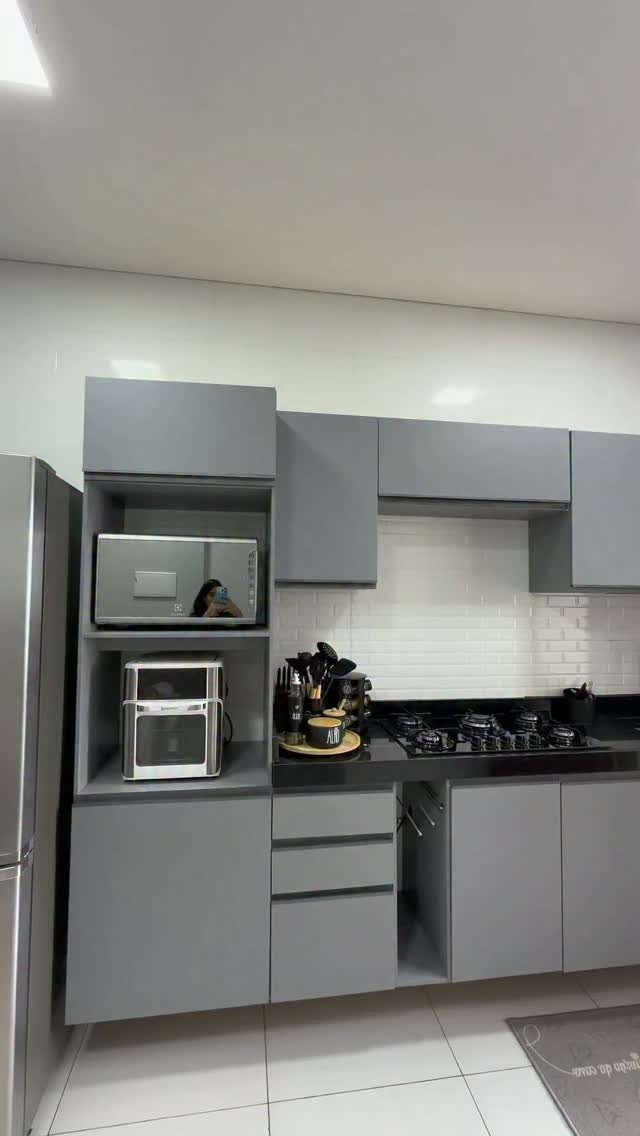
Black countertops make gray cabinets look softer, and that contrast is the whole look. A white tiled backsplash keeps it from closing in, so I’d keep the tile light and simple, as here.
This is the boldest pairing on the list, so let the cabinets stay quiet: plain fronts, modest hardware, and no second dark color competing with the counter.
16. Gray Cabinets, White Ribbed Doors
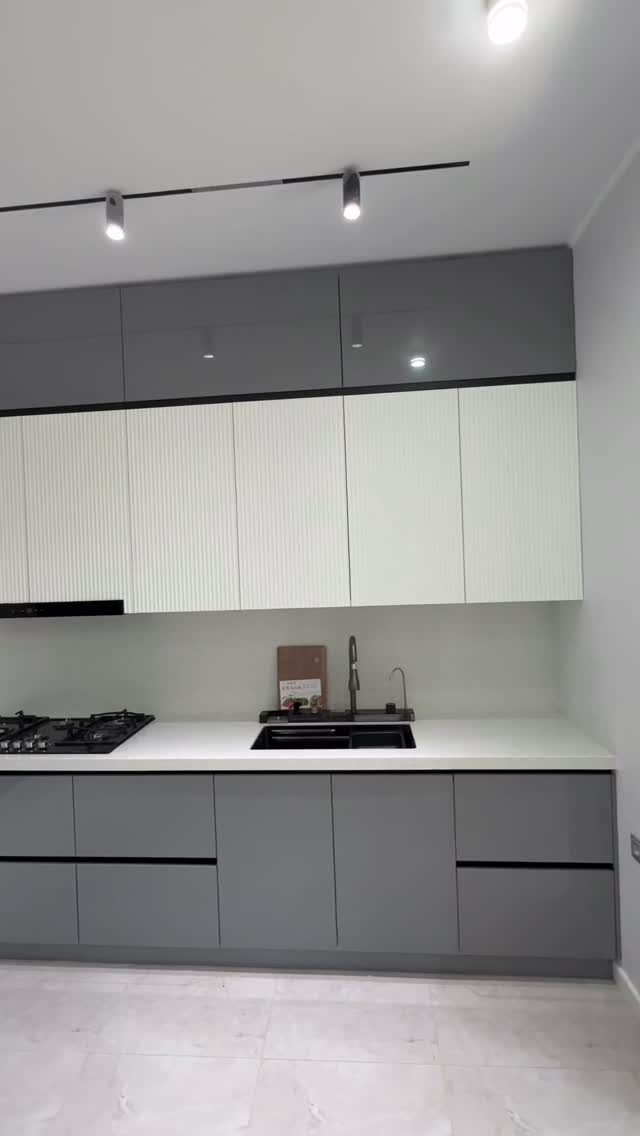
The middle of the run is the detail: a section of white ribbed doors set between gray uppers and lowers. Gray frames it on both sides, and the white counter below lets the ribbing stand out.
Keep the ribbed section to one stretch.
I’d put it where your eye lands first, since repeating it along the whole wall would flatten the contrast. Black fixtures, like a stovetop and sink, anchor a pale center and keep gray and white from looking washed out.
17. Gray Cabinets, Glass Display
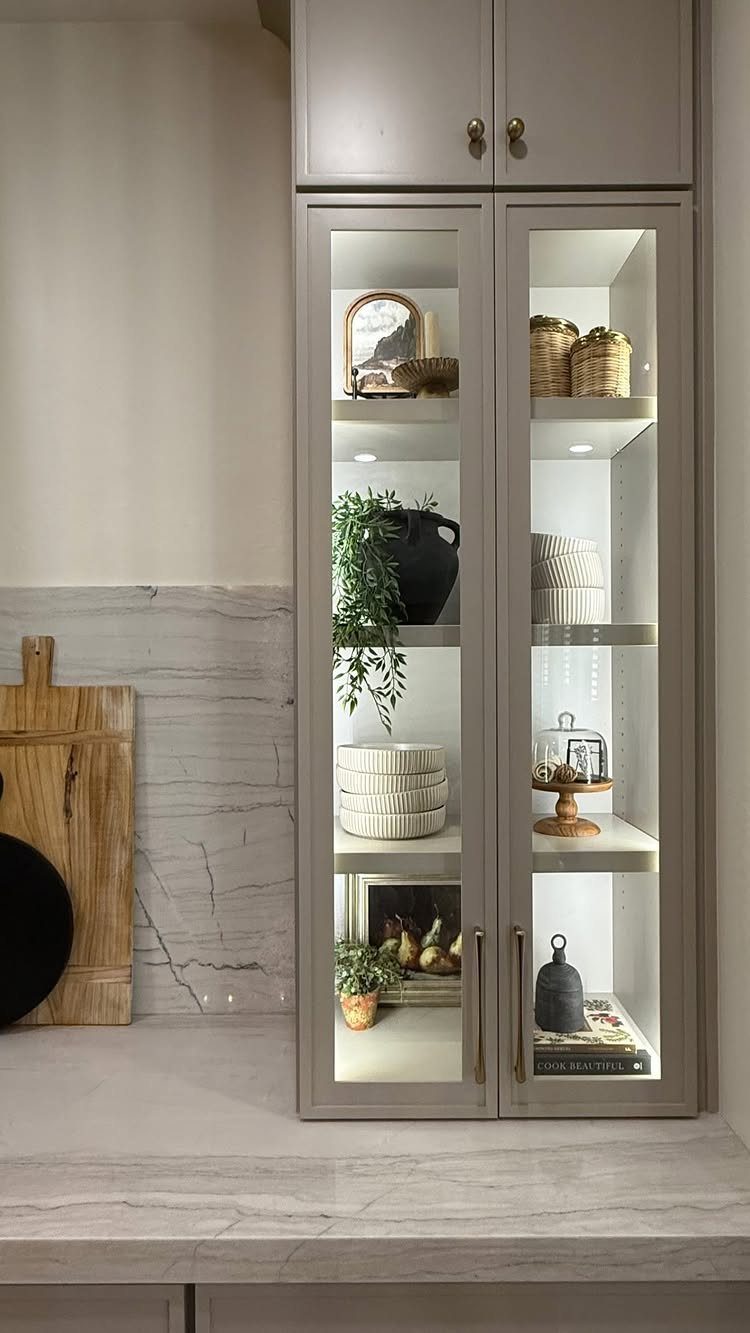
One lit glass cabinet can anchor a whole counter run. Interior lighting makes the dishes and plants glow against the gray, and a white marble backsplash and countertop give it a clean backdrop.
Fill it with a few plates for shape and a plant or two for green, then set a cookbook on the counter in front. I’d leave the neighboring cabinets solid so this one stays the focal point.
Cleaning and Cabinet Upkeep
White cabinets show fingerprints, grease, dust, and smudges faster than gray ones, so plan on wiping them more often. Gray hides most of those marks, though dark gray can show streaks left by a wet cloth.
For most spills and smudges on gray or white cabinet doors, wiping with a damp microfiber cloth and a drop of dish soap gets the job done.
Harsh cleaners can wear down the finish, so skip them. On dark gray, buff the door dry with a second soft cloth right after wiping to head off streaks.
Grease and steam settle on cabinet fronts, and the ones near the stove take the worst of it.
Run the range hood fan whenever you cook, and open a window when you’re boiling a big pot. Wipe those stove-side doors weekly so grease never builds into a sticky film.
Frequently Asked Questions
What are some stunning ideas for a gray and white kitchen?
Keep the room white and paint only the island gray: the color lands in one spot, and that single block pulls the eye first.
Dark gray cabinets against white marble counters give the sharpest contrast, and gold stools or hardware keep the room from feeling heavy. For a softer version, use light gray cabinets with white marble and gold pulls.
What is the best gray color for a kitchen?
A soft, muted gray is the safest choice. Benjamin Moore’s Gray Owl paired with Winter White is a classic combination that stays stylish for years.
What colors make a kitchen look expensive?
Soft, subtle shades tend to read as sophisticated, and a pairing like Winter White with Gray Owl looks polished while staying current for years.
I’d also point to gray cabinets with white marble counters and gold accents, where the warm metal takes the chill off the cool base.
What goes with white and gray kitchen cabinets?
Against gray cabinets, a white counter or one with soft gray veining looks calm and intentional. White cabinets work with gray counters, a gray island, or gray walls.
For accents, warm wood, brass or gold, and black are the easiest additions, and soft blue or sage green work if you want some color. Wood helps most when the room feels too cool.
Are two-tone gray and white kitchen cabinets right for you?
For most kitchens, yes. The pairing adapts to traditional, contemporary, and rustic styles, and it works best when you balance color with texture.
The low-risk way to test it is a gray island or gray lower cabinets under white uppers, which means repainting only one set of cabinets.
What is the most popular countertop in 2026?
White quartz is the safe pick: it resists stains, handles daily wear, and comes in plenty of tones and patterns.
I can’t point to a reliable 2026 ranking, so treat it as a timeless option rather than a trend report. If crumbs and water marks bother you, a mid or dark gray top hides them better than pure white.
Are gray and white kitchens in style?
Yes. The pairing has stayed popular because it works as a neutral backdrop for modern and classic homes alike, and wood, metal, or color accents are easy to add later.
Keep the white to the counters, walls, or trim and let gray cover the cabinetry, and the room feels more current than a fully white one.
How can I brighten my gray and white kitchen?
Brighten with surfaces first: pale counters and a white tile backsplash reflect the most light.
Reflective pieces help too, such as glass cabinet doors with interior lighting or glossy cabinet fronts. Pendants or under-cabinet lights add brightness and warmth, and larger windows bring in more daylight if you have that option.
What accessories go with a gray and white kitchen?
Wood is the best place to start. A cutting board, open shelves, or bar stools warm up the cool palette, and a few plants add green.
Keep pendants and hardware in one metal finish, such as gold or black, because mixed metals look less planned. On open shelves, limit the display to a few pieces so it stays tidy.