
Yes, studs are essential for floating shelves. Drywall anchors alone can’t safely support weight; they fail gradually under stress. A single stud holds roughly 45–50 lbs, while two studs support 90–100 lbs. Adding blocking behind walls boosts capacity beyond 200 lbs. Always locate studs with a finder, align brackets properly, and secure screws directly into solid wood. When studs don’t align with your ideal shelf location, blocking between them creates a sturdy mounting surface. Skip these steps, and you’ll risk sagging or collapse.
The following sections detail installation techniques that prevent failure.
Yes, Floating Shelves Need Studs
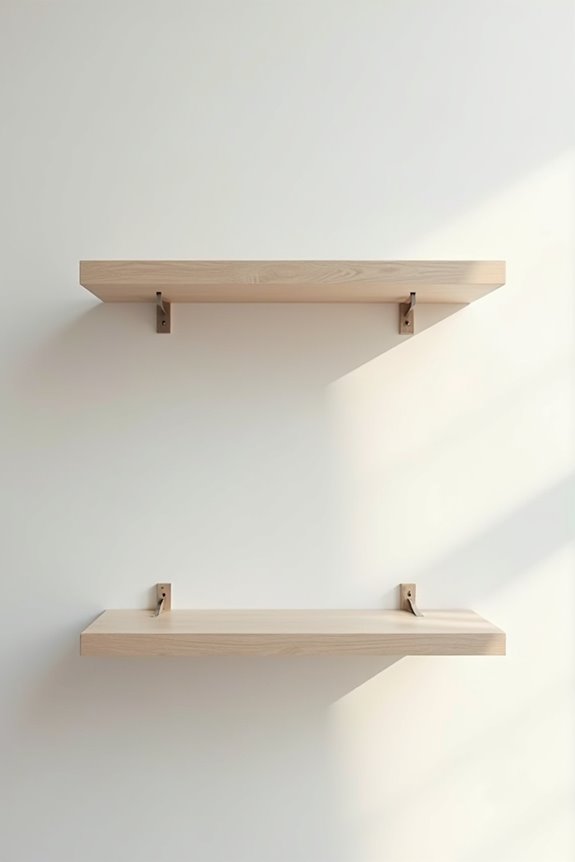
Why do floating shelves sometimes fall off walls? Studs are your answer. They’re the wooden supports behind drywall that hold everything up. Always anchor floating shelves directly into studs because drywall anchors alone won’t provide adequate support.
Floating shelves fall off walls without studs. Always anchor directly into wooden supports—drywall anchors alone won’t suffice.
Here’s what you need to know:
- One stud supports roughly 45–50 lbs
- Two studs support about 90–100 lbs
- Blocking behind walls supports 200+ lbs
Without studs, your shelves risk failing. The brackets need something solid to grip into. If studs don’t align with your ideal shelf placement, you have options. Consider using blocking or masonry anchors instead. Studs provide the strongest, most reliable foundation available.

HEAVY DUTY - we recommend mounting to a stud on your wall for maximum support. Each bracket holds 15lbs. For heavier shelves please add extra brackets to distribute the...
Why Wall Studs Trump Drywall Anchors
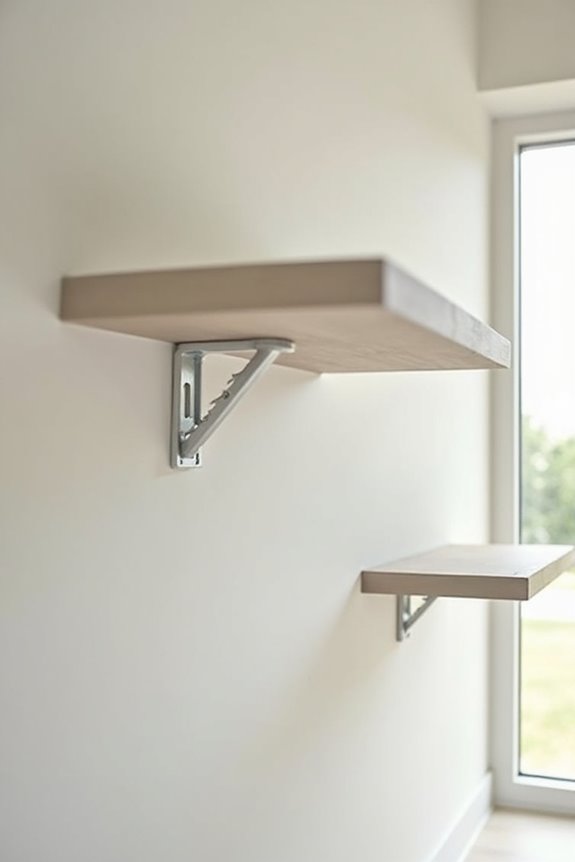
Wall studs simply outperform drywall anchors in every meaningful way. Studs matter for your shelves.
The Strength Difference
Studs handle about 45–50 lbs per stud safely. Two studs together support roughly 90–100 lbs. Drywall anchors alone are far weaker and shouldn’t carry heavy loads.
Why This Matters for You
When you mount shelves into studs, you’re tapping into your home’s structural frame. This means no wobbling, no sagging, and no wall damage. Drywall anchors are supplemental; they’re helpers, not primary supports.
What Happens Without Studs
Relying only on anchors risks shelf failure under weight. Your shelves might sag or pull from the wall entirely.
Your Best Move
Find studs before installing. If they don’t align with bracket holes, add blocking behind the drywall. This approach maximizes strength and ensures your shelves stay secure.
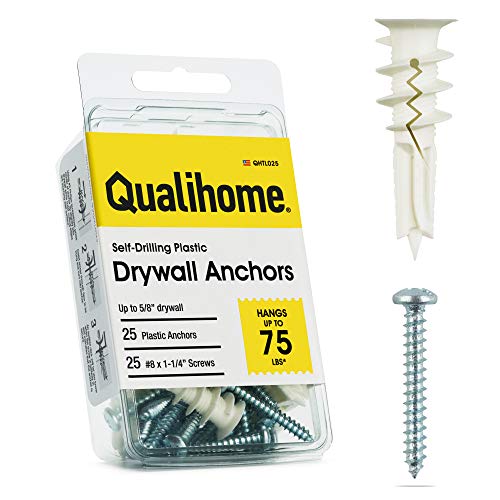
ANTI-SPIN GRIP FOR A SECURE HOLD Designed to grip firmly into drywall and help reduce spinning during installation for a more reliable and frustration-free hold.

【More Space, More for You】 – Our set of 5 floating shelves (16.5"L×5.7"W×0.6"H) offers generous storage, perfect for organizing Halloween decor or displaying spooky-themed trinkets. With a maximum weight capacity of 40 lb, ideal for bathrooms, bedrooms, kitchens, and living rooms. Easily add a touch of atmosphere to your Halloween setup or everyday wall decor.

RUGGED ALL-METAL RELIABILITY: Built from premium aluminum with a reinforced frame, these floating shelves resist warping, bending, and everyday wear so your book shelf, bathroom decor, and favorite room decor pieces stay securely supported for years of effortless home decor styling
Weight Capacity by Stud Count: What You Can Actually Hold
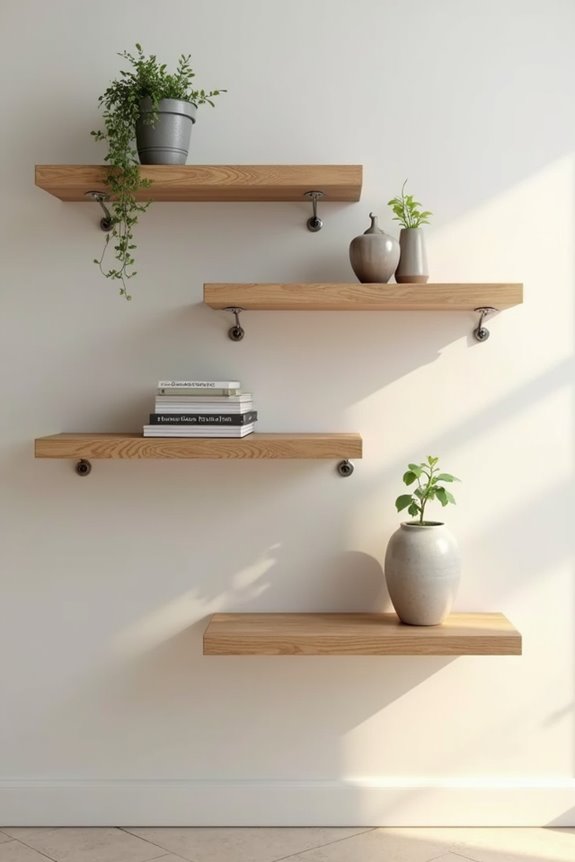
Now let’s talk about what your shelf can actually hold based on how many studs you’re using. The number of studs you anchor into directly determines your weight capacity, and I want to show you exactly what that means in practical terms. Whether you’re working with one stud, two studs, or adding blocking for extra strength, these limits ensure your shelves and everything on them remain safe and secure.

【Dimensions】16inch bracket with 6inch rods, designed to support 6.25 inches to10 inches deep shelf. Lumber thickness1.2-4 inches, length is from 16 inch to 21 inch . (lumber board is NOT included)

The bracket has a 1" backplate and is designed for use with boards 1.5" thick or more.NOTE: The board thickness we refer to is the actual (not nominal) size.

Contents: Package includes (4) 5 inch brackets, (4) 3-1/2 inch wood anchors, (4) 2 inch threaded studs, (4) washers, (4) drywall anchors, (2) wood screws, (1) drill guide, (1) 1/2" drill bit, (1) hex nut, (1) hex bolt, (1) set of instructions
Single Stud Load Limits
How much weight can you actually hang on a single stud. Understanding stud load limits helps you mount shelves safely and confidently.
Here’s what a single stud can handle:
- 45–50 lbs maximum capacity for floating shelves with proper brackets
- Weight distribution matters – spread items evenly across the shelf
- Quality brackets are essential – they transfer load directly into the stud
A single stud gives you a solid foundation, but it’s not unlimited. You’re looking at roughly 45–50 lbs safely. That’s enough for books, decorative items, and light plants. Don’t push beyond this limit, though. Overloading stresses your wall and risks damage. If you need more capacity, adding a second stud doubles your potential. Planning your shelf weight beforehand prevents structural failure and ensures long-term stability.
Double Stud Capacity Standards
Once you understand what a single stud can hold, doubling up opens real possibilities for heavier shelves. When you mount brackets into two studs, you’re looking at roughly 90–100 lbs of capacity. This represents a meaningful increase from one stud’s limitations.
Two studs provide stability and balance. Your shelf won’t sag or shift as easily. You have room for books, plants, and decorative items.
The Sweet Spot for Most Homes
Two studs represent the minimal recommended setup for longer or heavier shelves. It’s the standard that builders and installers trust. When you screw every bracket hole directly into those studs, you maximize strength and maintain safety.
This setup works for most floating shelf projects.
Blocking And Maximum Strength
What if you could triple or even quadruple your shelf’s weight capacity?
Blocking is the solution that transforms your shelves from fragile to fortress-strong. Here’s what blocking does for you:
- Raises capacity from 45–50 lbs to 200+ lbs with proper installation
- Distributes weight across multiple studs for safer, more stable shelves
- Eliminates dependence on drywall anchors that fail under real pressure
Blocking is solid wood installed between studs behind your drywall. When you screw your bracket into this blocking, you’re anchoring into something genuinely sturdy, not just drywall dust.
Mount every bracket hole directly into blocking. You’ll distribute the load properly and prevent shelf failure. This is the difference between amateur installation and a job done right.
Install Into Studs: A Step-by-Step Guide
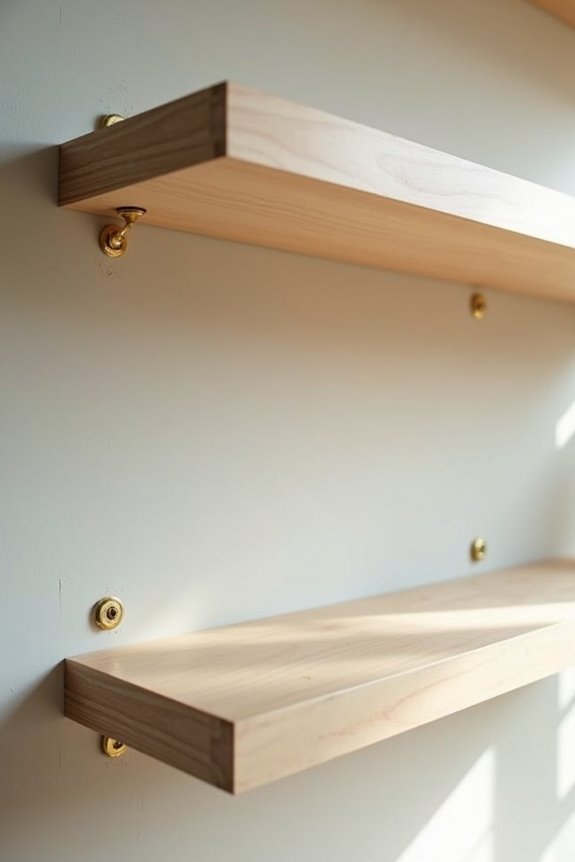
Want your floating shelves to hold up securely. Finding studs is your first move.
Step 1: Locate Your Studs
Use a stud finder to scan your wall. Mark each stud position with a pencil. Studs are typically 16 inches apart.
Step 2: Position Your Brackets
Align bracket holes with the studs you’ve marked. This gives you solid wood support instead of just drywall.
Step 3: Drill and Secure
Drill pilot holes into the studs. Install screws firmly into the wood. Each stud typically supports 45–50 pounds.
Step 4: Mount Your Shelf
Slide your shelf onto the mounted brackets. Check that it’s level and secure.
Using two studs significantly increases your shelf’s load capacity and stability.

100% Paulownia Wood: Elevate your space with AMADA rustic floating shelves for the wall, crafted from 100% Paulownia wood sourced from 5-year-old trees. The natural wood texture of floating shelves is timeless and can blend in well with any decor style.

Heavy Duty Shelf Brackets: Wildnut floating shelf brackets are made of high-quality steel with a thickened L bracket structure for stronger support and long-lasting stability. When properly installed, these heavy duty shelf brackets can support up to 200 lbs, making them ideal for books, kitchen items, plants, collectibles, and everyday storage.

Wall-mountable floating shelf easily installs without needing a single tool—just place, push, slide, and hang.
When Studs Don’t Align: Fix It
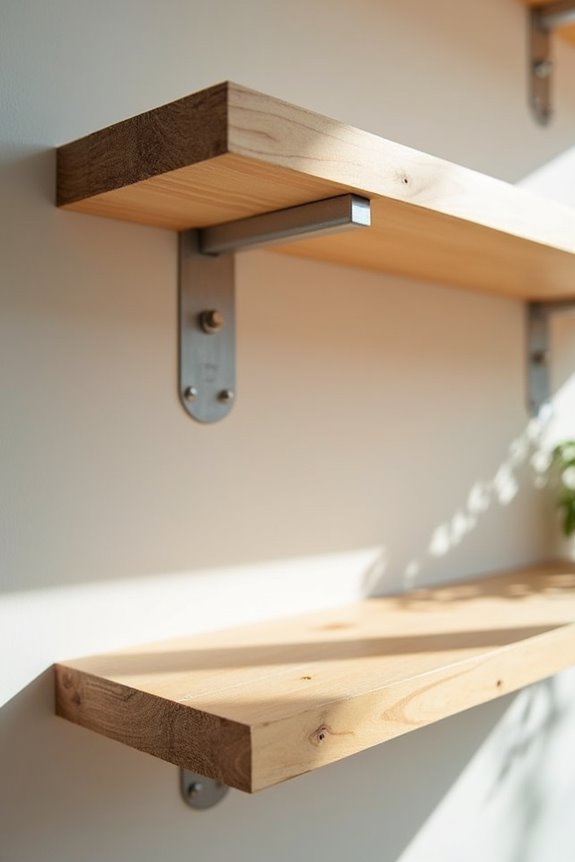
Your ideal shelf location won’t always line up perfectly with studs.
Your ideal shelf location won’t always line up perfectly with studs—but you have solid options to make it work.
When this happens, you have solid options that work great. This guide walks you through fixing misaligned studs so you can hang your shelf exactly where you want it.
Your Best Solutions:
- Install blocking between studs to create a sturdy mounting surface for your brackets
- Use high-quality wall anchors rated for your shelf’s weight capacity
- Spread bracket placement across multiple attachment points to maximize support
When relying on wall anchors instead of studs, expect reduced weight capacity compared to stud-mounted setups. Typical per-stud capacity is 45–50 lbs, but wall anchors hold less.
Installing blocking whenever possible delivers the strength you need. After installation, recheck that everything’s level and secure.

【Basic 5 Set Floating Wall Shelves】Just make your own storage space by using DOLLFIO 5 sets of wooden floating wall shelves! You can combine our floating wall shelves in any way you want. Our floating wall shelves are great for all-type rooms because they process a simple & simple design.

【Basic 8 Set Floating Wall Shelves】Just make your own storage space by using DOLLFIO 8 sets of wooden floating wall shelves! You can combine our floating wall shelves in any way you want. Our floating wall shelves are great for all-type rooms because they process a simple & simple design.

LARGE SIZE DESIGN: This living room shelves each board measures 20in L x 9.84in W x 1.5in H,which means that compared with similar wall shelves, these floating shelves provide greater use space and possibilities.
Can You Skip Studs? Why Drywall Anchors Alone Fail
Although drywall anchors seem like an easy shortcut, they will fail when it comes to floating shelves. You need to understand why they’re insufficient on their own.
Drywall anchors work best as backup support, not primary holders. This is what you’re really working with:
| Mount Type | Weight Capacity | Reliability |
|---|---|---|
| Drywall anchors only | 10–20 lbs | Low |
| Single stud | 45–50 lbs | High |
| Two studs | 90–100 lbs | Very high |
| Stud + blocking | 100+ lbs | Maximum |
When you skip studs entirely, you’re risking your shelf’s safety. Those anchors will eventually fail under real-world weight. Instead, locate studs or install blocking behind your wall. Your shelves and everything on them require solid support.

The bracket has a 1" backplate and is designed for use with boards 1.5" thick or more.NOTE: The board thickness we refer to is the actual (not nominal) size.

HEAVY DUTY SHELF BRACKETS: The L shaped shelf brackets are made of premium quality solid steel at thickness 0.2"/5mm, which make it more solid and wont sag. When installed on columns or brick walls, the load-bearing effect of each pair of shelf brackets is optimal. They have no problem holding shelf with books, kitchen dishes, large mantles, plants, decoration stuffs on it.
Strengthen Weak Walls: Add Blocking Behind Your Shelf
If your walls don’t have studs where you need them, blocking is your solution.
Blocking behind your shelf means inserting horizontal wood pieces between studs. This reinforcement transforms weak walls into stable mounting surfaces. You gain these benefits:
- Load capacity jumps to 200+ pounds with proper blocking installation
- Bracket placement becomes flexible since you’re not limited to stud locations
- Sag and wobble decrease significantly with solid wood backing instead of drywall alone
Blocking delivers maximum shelf support. You’ll screw brackets directly into solid wood rather than relying on drywall anchors. This method works especially well for longer shelves or heavier items you plan to display.
Adding blocking takes extra effort upfront, but your shelves will perform reliably without risk of failure.

Enhanced Lip Protection -These floating wall shelves feature a carefully designed front lip, offering additional protection to prevent your items from slipping or falling off, for new year organization. Display your cherished memories, books, plants, picture frames, funk pop or decorative items with confidence, knowing they are securely held in place.
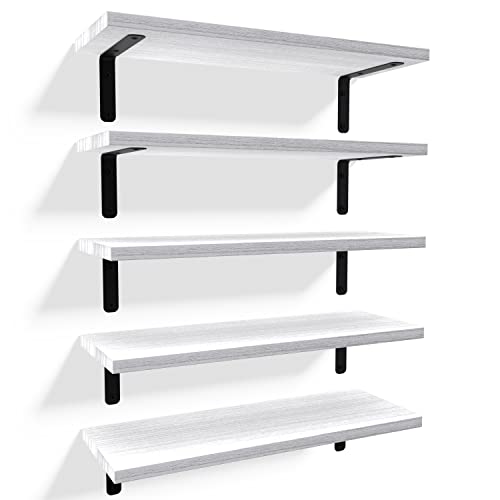
【More Space, More for You】 – Our set of 5 floating shelves (16.5"L×5.7"W×0.6"H) offers generous storage, perfect for organizing Halloween decor or displaying spooky-themed trinkets. With a maximum weight capacity of 40 lb, ideal for bathrooms, bedrooms, kitchens, and living rooms. Easily add a touch of atmosphere to your Halloween setup or everyday wall decor.
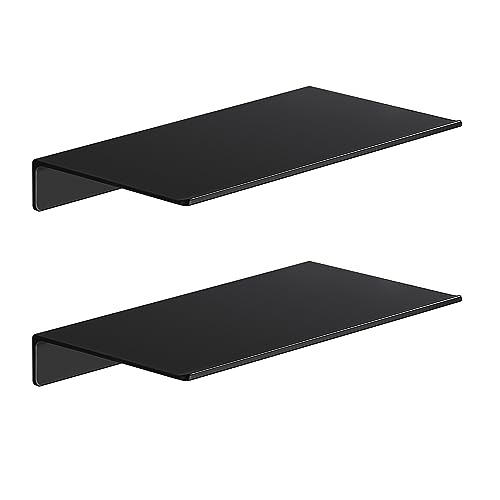
RUGGED ALL-METAL RELIABILITY: Built from premium aluminum with a reinforced frame, these floating shelves resist warping, bending, and everyday wear so your book shelf, bathroom decor, and favorite room decor pieces stay securely supported for years of effortless home decor styling
Why Floating Shelves Sag: Bracket Orientation, Crooked Walls, and Weak Anchors
I’ve noticed that most sagging shelves fail because of installation mistakes and wall problems, not the shelves themselves. Bracket orientation, uneven walls, and weak anchors create that frustrating droop over time. Understanding these issues will help you install shelves that actually stay level and sturdy for years.

Heavy duty design - Our shelves will hold as much as 80 lbs when mounted to a stud or brickwall because our brackets are made of solid steel and welded components and includes quality screws and anchors

【Suitable For 2*4” Wood Studs】Goovilla hidden shelf brackets is desiged with a 1.57*1.38” backplane. The small size and 3 close together screw holes match the narrow 2×4 inch (actual size is 1.5*3.5” ) wood studs thoroughly.

Heavy Duty design, maxium support weight of 100lb for a pair of this L bracket. Matte black powder coat finish. Creating a rustic, reclaimed, salvaged look,perfect for your home, office, garage, work space or anywhere else
Bracket Installation Mistakes
Why do floating shelves sag even when you’ve used studs?
Bracket installation mistakes cause most sag problems. The main issues are:
- Misaligned holes – Mounting brackets upside down or backwards prevents proper load transfer to your wall studs.
- Skipped fastener holes – Not screwing every bracket hole into solid studs or blocking creates weak points that fail under weight.
- Uneven bracket spacing – Brackets placed too far apart or unevenly distributed force one side to carry more load than it should.
The fix requires three steps: align brackets correctly, use every hole into studs, and space brackets evenly along your shelf length. Proper installation prevents structural failure.
Wall and Anchor Issues
Beyond bracket mistakes, the wall itself often causes sagging problems. If your wall is crooked, even perfect brackets won’t help. You’ll need shims to level everything properly.
Weak anchors are another significant cause of failure. Drywall-only anchors cannot handle substantial weight. As weight builds up, those anchors fail gradually, and your shelf sags.
The better solution: Anchor brackets directly to studs whenever possible. Studs provide solid support that drywall alone cannot match.
If you cannot reach studs, use heavy-duty anchors rated for your shelf’s weight. Check your wall’s level before installing anything. A crooked foundation will create problems later.
Regular maintenance prevents failure. Tighten screws monthly to catch looseness before it becomes a structural issue.
Find Wall Studs for Floating Shelf Installation
How you mount your floating shelf directly affects its stability and weight capacity.
To find studs accurately:
- Get a stud finder tool to locate studs
- Mark stud positions with a level and pencil for precision
- Verify multiple studs align with your bracket placements
Using a stud finder eliminates guesswork during installation. Scan the wall horizontally until the device beeps, indicating a stud. Mark that spot and verify it by scanning again from different angles.
Once you’ve located studs, use a level to draw vertical lines marking their exact positions. This helps you plan bracket placement before drilling. Mount brackets into two or more studs whenever possible. This approach ensures your shelf remains secure and can support substantial weight. Studs provide the solid foundation necessary for a successful installation.

Hanging Kid Bookshelf: Our wall-mounted kid bookshelf can keep books or toys high and away from your children, it can effectively use the space on the wall, keep kid's bedrooms always clean and tidy, and develop good habits from childhood

【Solid Wood Floating Shelves】:The 60 inch floating shelf Crafted from 100% solid pine with natural grain and knots, hand-sanded and stained for a warm, rustic feel. Note: Each handcrafted shelf is uniquely stunning.

【Solid Wood Floating Shelves】:The 24 inch floating shelf Crafted from 100% solid pine with natural grain and knots, hand-sanded and stained for a warm, rustic feel. Note: Each handcrafted shelf is uniquely stunning.