
Before using carpet cleaner on your couch, check the fabric’s cleaning code on its tag. W means water-safe, S means solvent only, and X means vacuum only. Vacuum thoroughly first, then test your cleaner on a hidden spot and wait 24 hours.
Apply solution lightly, blot gently instead of scrubbing, and avoid soaking the fabric. Use light extraction to remove excess moisture, then air dry with fans and open windows. Skip heat sources like hairdryers.
For stubborn stains or delicate fabrics like silk, professionals have specialized equipment and expertise that can prevent damage to your upholstery.
Check Your Couch’s Cleaning Code First
Before you grab that carpet cleaner, find your couch’s cleaning code. This small tag is usually tucked underneath or on the side of your furniture. Look for a letter: W, S, WS, or X. Each one tells you what’s safe for your upholstery cleaning.
A W means water-based cleaners work fine. An S calls for solvent-based products only. WS gives you flexibility; both options are okay. X is the most restrictive; it means vacuum and brush only, no liquids at all.
Finding your cleaning code prevents damage to your couch. Carpet cleaner may seem convenient, but it’s not always appropriate for upholstery. Always test your chosen solution in a hidden spot first. Wait until it dries completely to check if the fabric stays colorfast before treating visible areas.

Removes Both Oil & Water-Based Stains

Powerful stain removal: This upholstery foam cleaner removes stubborn stains without leaving residue, quickly restoring carpets to a pristine state.

CAR CARPET & UPHOLSTERY CLEANER KIT – Our professional-grade car carpet cleaner spray comes complete with an interior upholstery brush, purpose-built for deep-cleaning car carpets, fabric seats, and floor mats to showroom condition. Removes stubborn stains and eliminates odors fast.
Why Carpet Cleaner Can Damage Your Couch
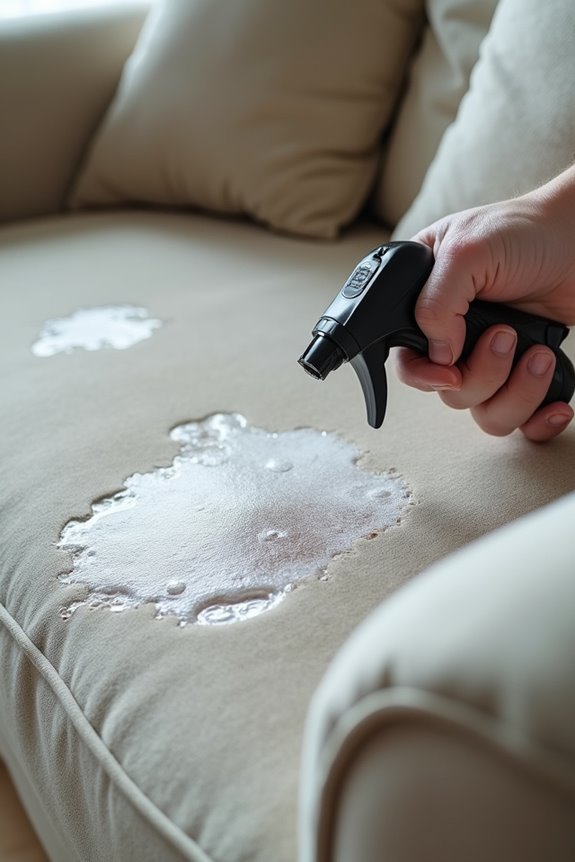
Carpet cleaners can harm your couch in ways you might not expect. The strong chemicals and heavy-duty suction designed for carpets can cause your fabric’s colors to bleed, shrink the fibers, or even weaken them permanently. These cleaning products can leave behind a sticky residue that traps more dirt on your upholstery over time.

Powerful Stain & Dirt Removal: Carpet Bomber is a high-performance carpet and upholstery cleaner that effortlessly lifts tough stains from fabric, vinyl, and upholstery. Designed to penetrate deep into fibers, it removes dirt, grease, and grime, restoring your vehicle’s interior to a like-new condition
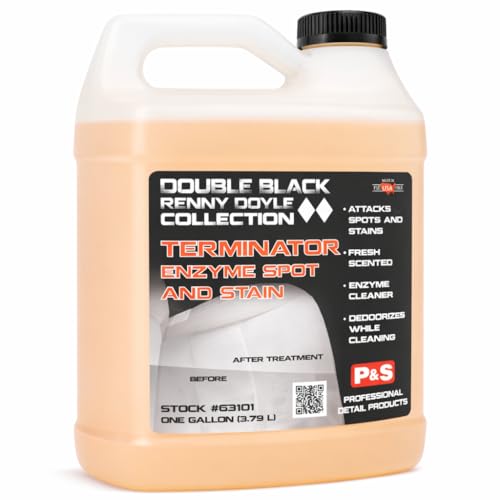
Powerful Stain-Fighting Formula: Terminator Enzyme Spot & Stain Remover penetrates deep into carpets and upholstery, attacking grease, oil, dirt, and protein-based stains at the source. Whether it’s food spills, pet stains, or ground-in grime, this powerful cleaner lifts contaminants for easy removal

StainLift Technology. Lift and remove deep down dirt, stains and odors.
Discoloration And Staining Risks
Why would a product that works great on your carpet potentially harm your couch? The answer lies in how different fabrics react to cleaning solutions. Your carpet and couch use different fiber types and dyes. Carpet cleaners can cause discoloration or staining because of colorfastness differences between these materials.
Over-wetting from carpet cleaners creates cleanup risks. When moisture soaks into upholstery, it can sit there and cause water damage or musty odors. Some fabrics absorb liquids more than others, trapping moisture deep inside.
The aggressive formula that lifts dirt from carpet fibers might be too harsh for delicate couch fabrics. You could end up with faded spots or uneven coloring. Test any cleaner on a hidden area first before treating visible sections to prevent permanent damage to your furniture.
Fiber Damage From Chemicals
While carpet cleaners work wonderfully on sturdy carpet fibers, they can break down the delicate fabrics on your couch.
Many cleaning solutions contain strong detergents that weaken natural fibers like wool or silk. Water-based cleaning products can over-saturate upholstery, trapping moisture inside and causing mold or odors. High-alkaline carpet cleaners may fade colors or cause dyes to bleed into surrounding areas.
| Cleaner Type | Main Risk | Fabric Most Affected |
|---|---|---|
| Strong Detergents | Fiber weakening | Wool, silk |
| Water-based solutions | Over-wetting | All delicate fabrics |
| High-alkaline formulas | Color fading | Dyed upholstery |
Always test cleaning products in hidden spots first. Choose fabric-safe cleaning solutions specifically designed for couches instead of carpet cleaners. Using the correct products prevents permanent damage to your furniture.
Vacuum Thoroughly Before Any Wet Cleaning
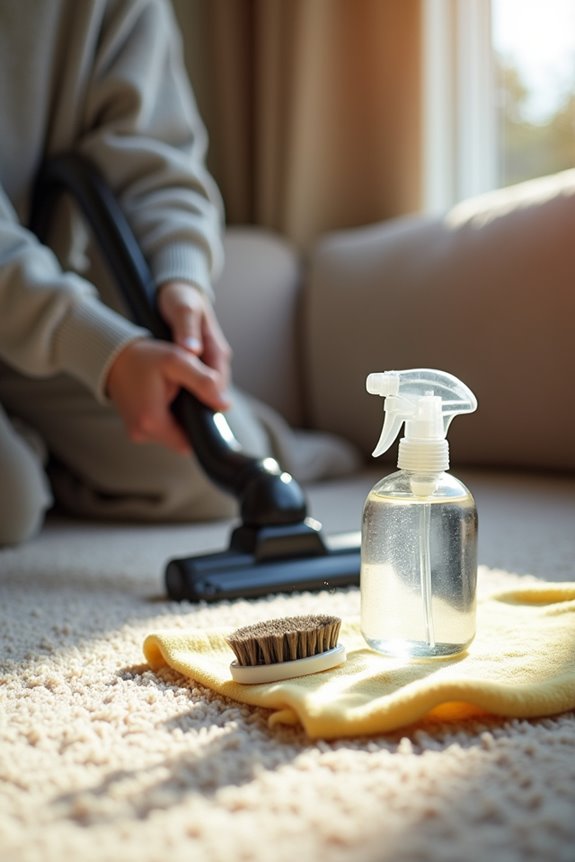
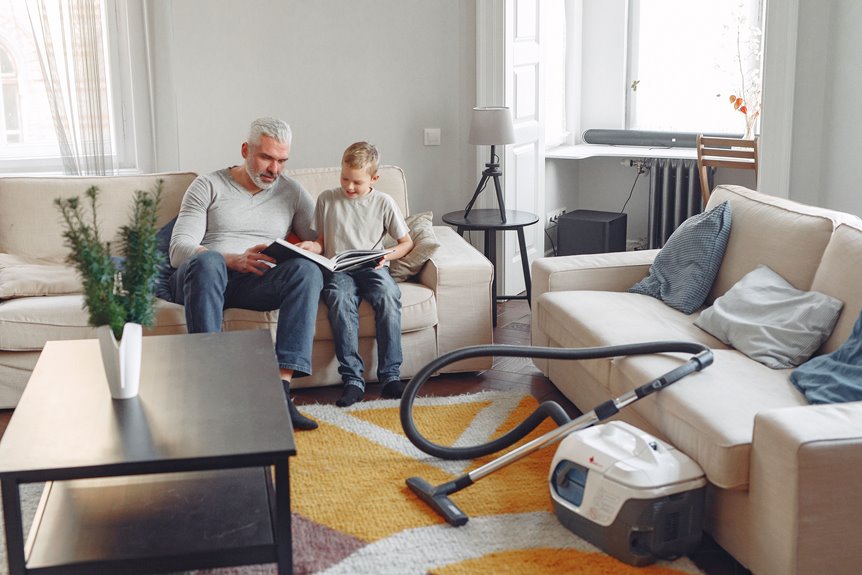
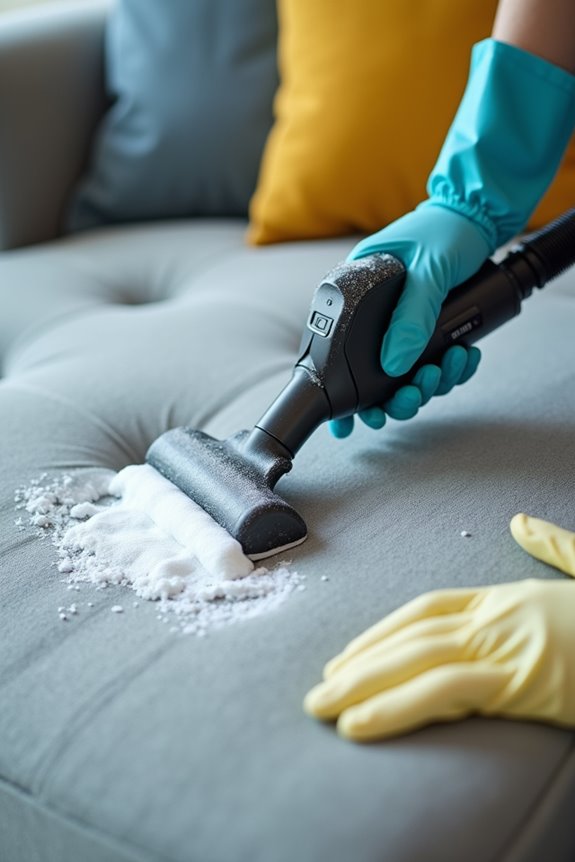
Before you grab that carpet cleaner, vacuum your couch thoroughly with the upholstery attachment. This step is essential for effective cleaning.
Start by using the upholstery attachment to remove loose dirt, dust, and debris from every surface. Pay special attention to cracks, crevices, and seams where grime hides. If you’ve got pet fur, use a fabric lint brush first to pull it away.
Gently brush or scrape any hardened stains to loosen them up. This prep work is crucial because surface dirt can trap your cleaning solution and prevent it from working effectively on embedded grime.
Thorough vacuuming before wet cleaning removes obstacles that would otherwise block your cleaning solution from reaching deep into the carpet fibers.

UNDO MORE STAINS IN MORE PLACES: Shark StainStriker is a portable carpet and upholstery cleaner that delivers powerful tough stain elimination. Tackle messes throughout your home with an arsenal of unique tools designed for more versality in cleaning.

EVERY PURCHASE SAVES PETS. BISSELL proudly supports BISSELL Pet Foundation and its mission to help save homeless pets.
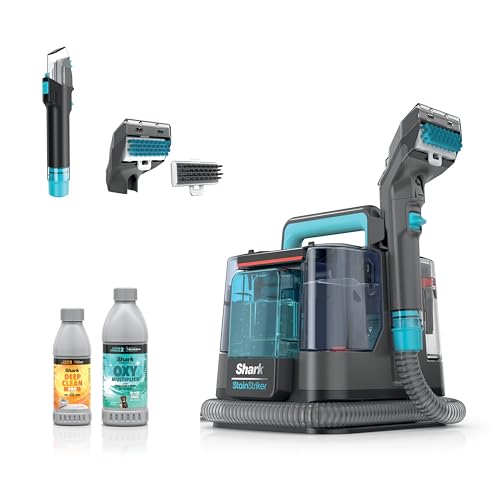
UNDO EVERYDAY SPOTS AND STAINS: Shark StainStriker is a portable carpet and upholstery cleaner that delivers powerful tough stain elimination for messes throughout your home and onboard self-cleaning for easy maintenance.
Test Your Cleaner in a Hidden Spot
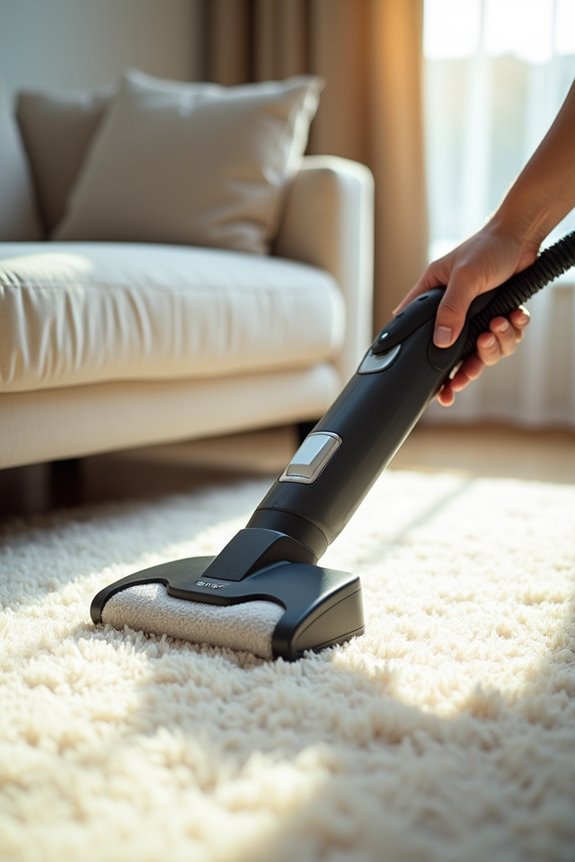
Before cleaning your whole couch, test the cleaner on a hidden spot like the back or underside to check for color transfer and texture changes. Apply a small amount of the cleaner mixture with a soft cloth, being careful not to soak the fabric, then wait for it to dry completely. If you don’t see any color bleeding or damage after it dries, it’s safe to use on the rest of your couch.
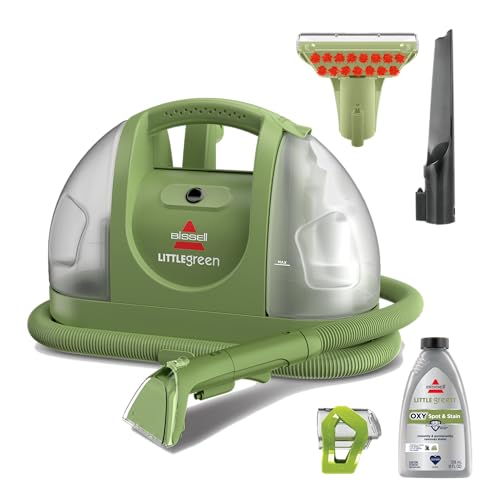
AMERICA'S #1 BRAND IN PORTABLE DEEP CLEANING: Trusted by over 7 million households.

EVERY PURCHASE SAVES PETS. Every purchase makes it possible for BISSELL to continue our support of BISSELL Pet Foundation and its mission of saving pets in need.

Powerful Stain Removal: Deep clean spots and stains on carpets, rugs, furniture, and auto interiors
Check For Color Transfer
How do you know if a cleaner will damage your couch’s fabric?
Perform a color transfer test before using any cleaner broadly. Follow these steps:
- Blot a small amount of cleaner onto a white cloth
- Press the cloth firmly onto an inconspicuous area under a cushion
- Wait several minutes to see if dye transfers to the cloth
- Check the fabric for any color changes or fading
- Discontinue use immediately if you notice any transfer
This spot test confirms colorfastness and protects your investment. Always check hidden seams and underneath areas first, since these spots won’t be visible if something goes wrong. If color bleeds onto a white cloth, that cleaner isn’t safe for your couch. Following your couch’s cleaning code (W, S, WS, or X) during this test is essential. Taking these few minutes prevents permanent damage and costly replacements.
Examine Texture Changes
Beyond color transfer, you’ll also want to check how your cleaner affects your couch’s fabric texture. After you’ve tested your cleaner on a hidden spot and it’s completely dry, run your hand over the test patch. Feel for any changes like stiffness, fraying, or pilling. Look closely at the appearance too. Does the fabric feel slick or gummy? Is it noticeably softer or rougher than before?
Document the original texture before you start cleaning. This gives you a clear comparison point. If you notice any negative changes during your texture test patch, stop immediately. Don’t use that cleaner on your couch. Instead, consider calling a professional upholstery service for fabric safety options. Protecting your couch’s fabric integrity prevents costly damage.
Wait For Complete Drying
The most critical step in testing your carpet cleaner is letting that hidden spot dry completely before you decide anything. Rushing this process will cost you. Moisture masks real problems that show up once everything dries.
What matters during your drying wait:
- You’ll spot color transfer only after complete drying reveals true results
- Texture changes become obvious as fabric fully dries and settles
- Waiting prevents expensive mistakes on your entire couch
- Patience gives you concrete data before cleaning larger areas
- Documentation of your test results protects future decisions
Wait at least 24 hours. Check the spot in good lighting. Look for any color bleeding or fabric damage. If your test area passes, you’re ready. If not, stop immediately and explore safer alternatives with professionals.
Mix Your Carpet Cleaner Solution Safely
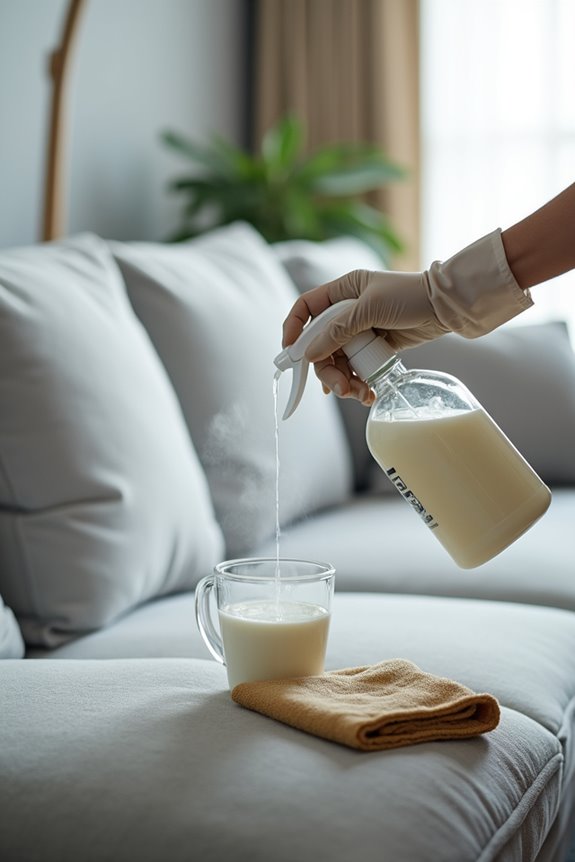
Preparing your cleaning solution correctly is one of the most important steps before treating your couch. Mix your carpet cleaner in a separate bucket or spray bottle away from your furniture. This keeps you safe and helps you follow the dilution ratios on the label carefully.
| Step | Action |
|---|---|
| Read the Label | Check dilution instructions for your carpet cleaner |
| Measure Carefully | Use exact amounts of cleaner and water |
| Mix Thoroughly | Stir the solution until completely blended |
Never apply concentrated solutions directly onto fabric. Instead, dilute everything according to manufacturer guidelines to keep it upholstery safe. Avoid mixing cleaners with bleach or ammonia, which can damage your couch. Using the right dilution protects your furniture while still getting it clean.

Professional Grade Formula: Specifically designed as a dry-cleaning solvent to safely remove oil-based stains, grease, and grime without using water.

WATERLESS STAIN REMOVAL: This instant stain remover is perfect for tackling upholstery stains without water or washing. Ideal for quick fixes, whether at home or on the go.

Professional Strength Formula: Designed to tackle the toughest carpet stains quickly and effectively.
Apply and Blot: Never Scrub or Soak
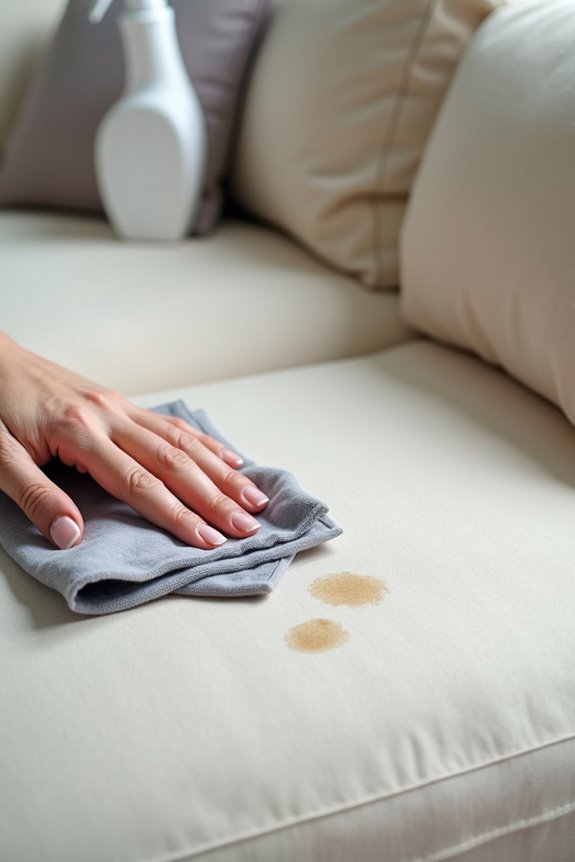
Now that you’ve mixed your solution, it’s time to apply it to your couch. This step requires a gentle touch. I apply upholstery cleaners directly to the stained area, not the fabric itself. Using a soft cloth, I blot the stain with a lifting motion rather than scrubbing, which protects your upholstery from damage.
What matters during this process:
- Blotting lifts stains without fraying delicate fibers
- Scrubbing spreads dirt deeper into cushions
- Avoid soaking, which causes water damage and mold
- Light pressure works better than aggressive rubbing
- Patience during blotting preserves your couch’s appearance
I’m careful not to over-saturate the fabric. Too much moisture trapped inside creates odors and damages padding. After blotting, I finish with a final light extraction using the upholstery tool to remove remaining moisture and prevent sticky residue.

High-density Bristles: The brush head of the car carpet brush features thousands of bristles densely packed with uniform spacing, securely anchored into the brush base. It penetrates deep into seat stitching and fabric weaves to swiftly sweep away debris and dust
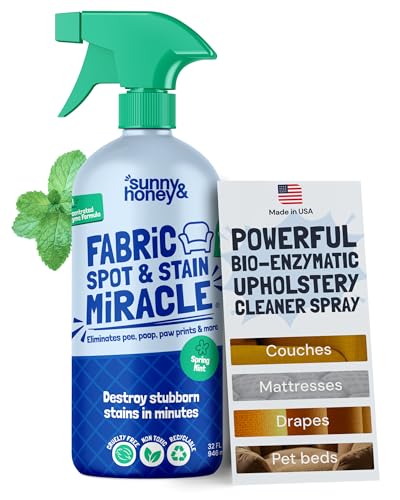
Powerful Stain Removing Fabric Cleaner Spray: Our residue-free mattress cleaner spray tackles new and old stains from pet accidents, coffee and grease. This enzymatic fabric sofa cleaner eliminates waste first time, cleaning furniture and pillows fast
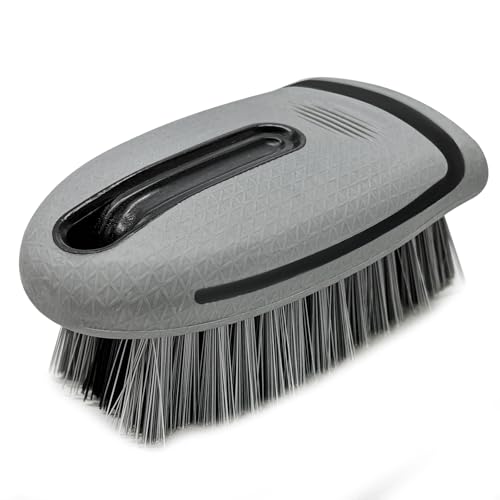
Excellent Quality: The bristles of our carpet brush are made of high-quality TPR material, featuring excellent wear resistance and weather resistance. Its base is made of PP material, which is renowned for its excellent heat resistance and impact resistance. Therefore, it can serve you for a long time
Dry Your Couch After Carpet Cleaner Use

How do you get your couch completely dry after cleaning? Running a few dry passes with your carpet cleaner makes a real difference. This removes moisture quickly and speeds up your drying time significantly.
Running dry passes with your carpet cleaner removes moisture quickly and significantly speeds up couch drying time.
Next, open windows and turn on ceiling or floor fans to boost air circulation throughout the room. This step is especially important if you live somewhere humid.
If your couch has removable cushions, stand them upright. This position maximizes airflow around each piece and cuts drying time considerably.
Avoid hairdryers and other heat sources. These can damage your fabric or set stains permanently. Instead, rely on natural air circulation and patience.
Once everything’s completely dry, vacuum the couch again. This fluffs the fibers and removes any loosened dirt remaining from the carpet cleaner.
Effective on grease, tar, coffee, lipstick, ink, blood stains and more

QUICKLY ATTACKS GREASE, OIL, DIRT AND FOOD RELATED SPOTS AND STAINS. The ideal upholstery cleaner!

Powerful Stain & Dirt Removal: Carpet Bomber is a high-performance carpet and upholstery cleaner that effortlessly lifts tough stains from fabric, vinyl, and upholstery. Designed to penetrate deep into fibers, it removes dirt, grease, and grime, restoring your vehicle’s interior to a like-new condition
Still Have Stains? When to Call a Professional
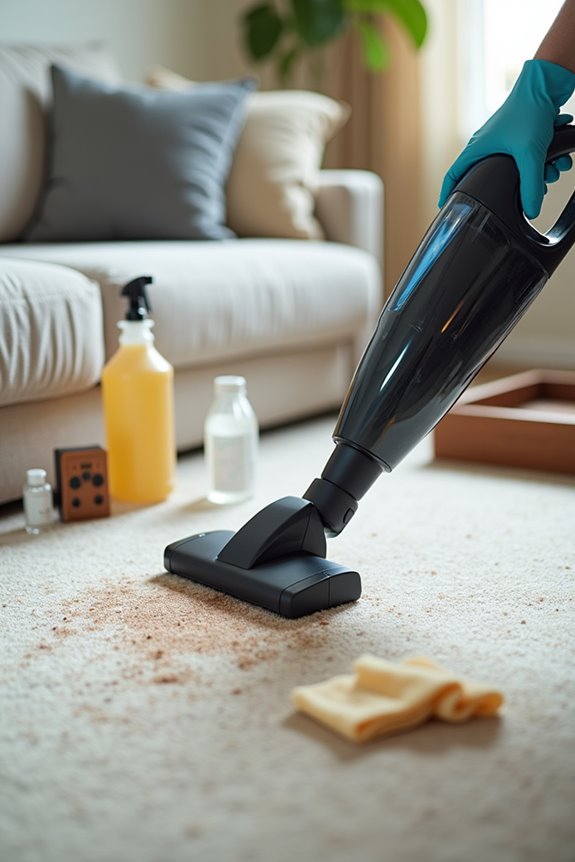
Sometimes even your best efforts won’t completely remove a stubborn stain from your couch. When persistent stains stick around after your upholstery cleaning attempts, it’s time to consider professional help. Frustration is natural when DIY methods don’t work, but professionals have the tools and expertise to succeed where home cleaning fails.
You should call a professional upholstery cleaner when:
- Your fabric is delicate like silk or velvet and you’re worried about damage
- Pet stains keep returning even after enzymatic treatments
- You notice musty smells after repeated cleaning efforts
- The stain’s original cause remains unknown or complex
- You’re unsure which cleaners are safe for your specific couch material
Professionals have specialized equipment, fabric-safe formulas, and expertise that tackle what home cleaning can’t. They’ll assess your couch’s needs properly and restore it safely.
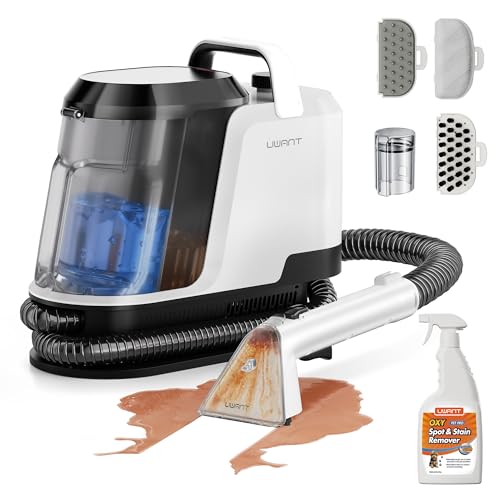
Upgrade 18Kpa Powerful Suction:The 18Kpa spot cleaner can make residual stains invisible, leaving no dirt in any dead corner. Improve cleaning efficiency by 50% compared with 15Kpa, which can make carpet dry faster without bad smell.

Upgrade 18Kpa Powerful Suction:The 18Kpa spot cleaner can make residual stains invisible, leaving no dirt in any dead corner. Improve cleaning efficiency by 50% compared with 15Kpa, which can make carpet dry faster without bad smell.

Strong Suction Power: With 18,000 PA of suction, effortlessly eliminate stubborn pet stains and spots from carpets, upholstery, car interiors, and more. Experience the deep clean you and your pets deserve!
What Professional Cleaners Do Differently
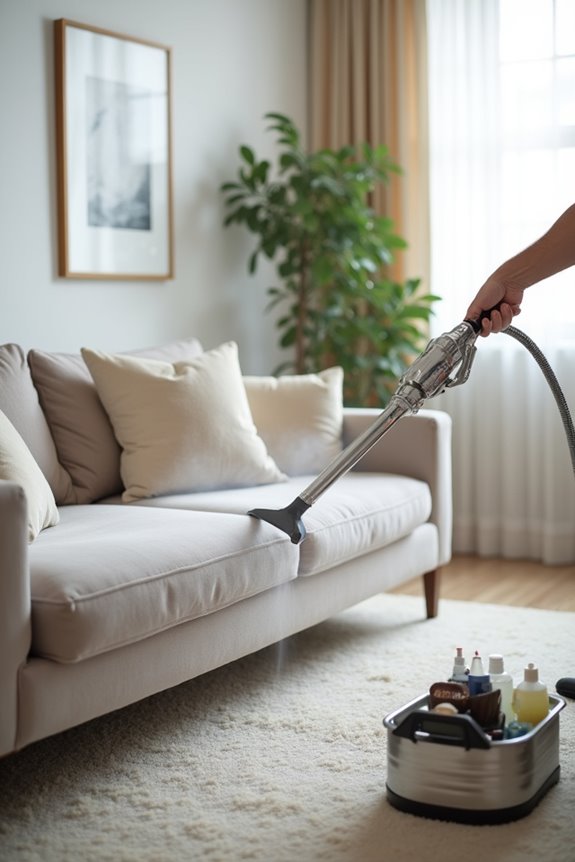
Why do professionals get better results than DIY cleaning? They use specialized upholstery cleaner formulated specifically for couches, not generic carpet solutions. Before treating your whole couch, they perform fabric testing on hidden spots to check for color damage. This careful approach protects your furniture.
Professionals also own powerful moisture extraction equipment that removes water deeply and quickly. This prevents mold and mildew from growing inside your cushions. They understand different fabrics need different treatments; silk requires gentler care than cotton.
They’ll assess your couch in person, identify what your specific fabric can handle, and recommend protective finishes. They’ll also teach you how to dry and maintain your couch afterward. This personalized attention produces measurable improvements in cleaning results and fabric longevity.

UNDO TOUGH SPOTS AND STAINS THROUGHOUT YOUR HOME: Shark StainStriker is a portable carpet and upholstery cleaner that delivers powerful tough stain elimination. It’s loaded with a lineup of tools that give you maximum cleaning performance on carpets, rugs, stairs, cars, and more.

OXI POWERED CLEANING ACTION: Enhanced with an active oxidizing formula that lifts and breaks down deep-set stains. Delivers a more effective clean by targeting tough spots at the molecular level

EVERY PURCHASE SAVES PETS. BISSELL proudly supports BISSELL Pet Foundation and its mission to help save homeless pets.