

Options run from $0 (leaving the gap empty) to custom pull-out shelves and stacked cabinets, and the deciding rule is how often you’ll climb a stool.
Grease from the stove settles on everything up there, so only pieces that survive a rinse or a wipe belong. One couple’s deep white CB2 salad bowl moved up when it kept a cabinet door open.
1. Serving Pieces and Cookware
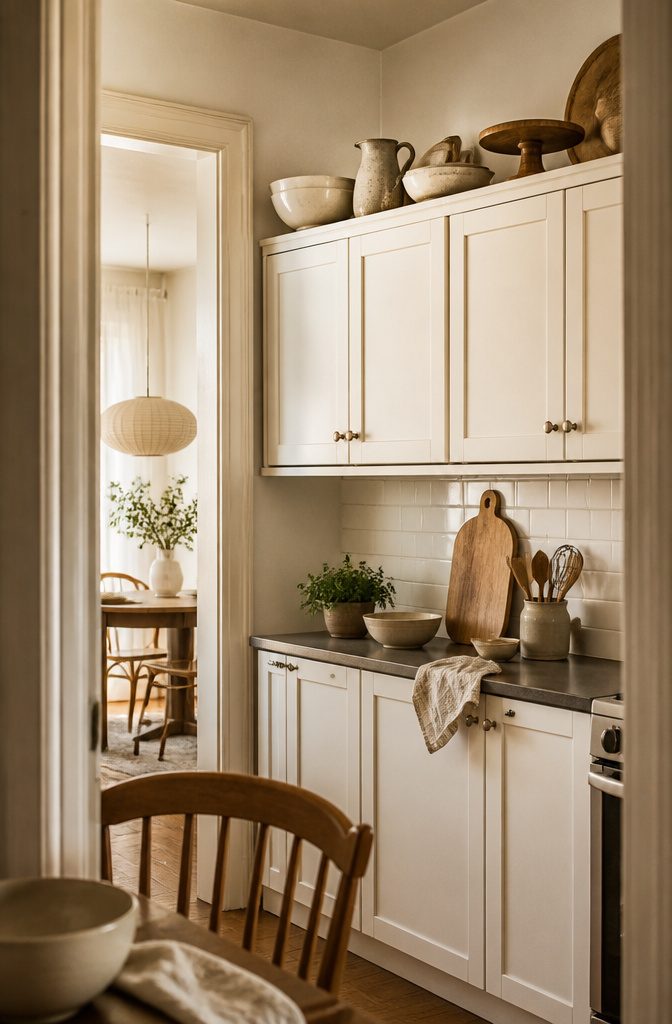
Cake stands, big serving boards, pottery and oversized bowls get used rarely, so they shouldn’t hold shelf space inside your cabinets.
One studio apartment shows why.
With about 5 kitchen cabinets total, a cooking-obsessed couple watched their cookware collection outgrow them in 2 months. A deep white salad bowl from CB2 then went into cabinet #3, and the door stopped about 0.3 inches short of closing.
Up top it went, as a stopgap. It stayed, because tall, wide, long pieces fit there that never would inside, and the room felt bigger.
Bulky pieces go up first in my book: anything that keeps a cabinet door from closing belongs above it.
2. Baskets and Bins
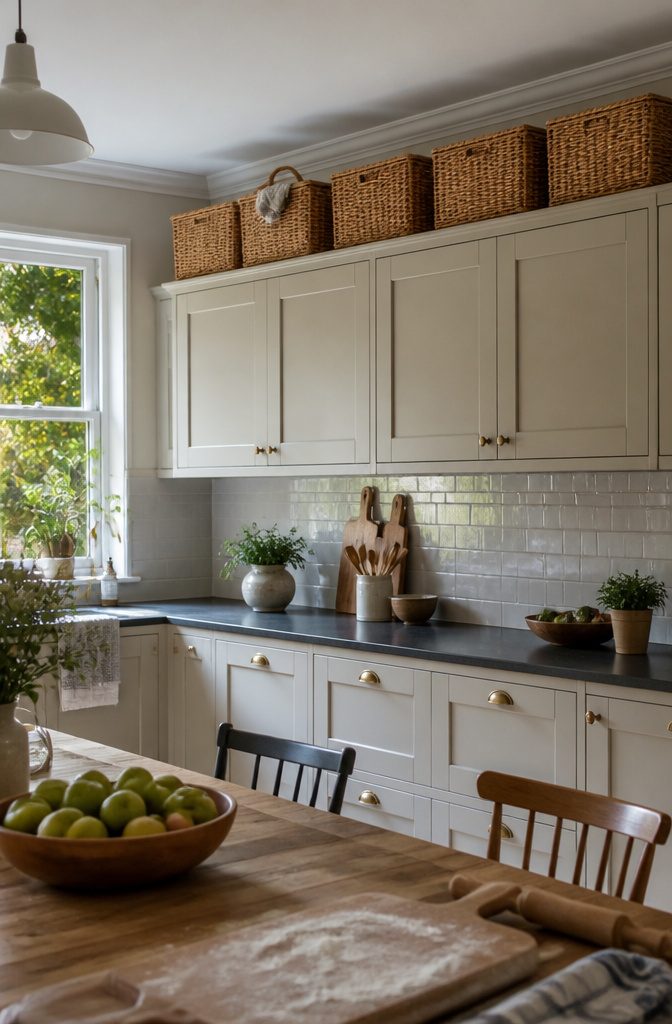
Wicker baskets give the space above your cabinets a closed look. They hide what looks messy in the open: the juicer you rarely run, a stash of recipes torn from magazines, seasonal tea towels, small appliances that came as gifts.
Bins suit exactly that kind of clutter, and a row of them adds neutral texture and a little warmth along a hard, flat cabinet line.
Fill them only with things you rarely touch, like holiday platters or backup appliances.
Anything you reach for every morning belongs lower down, because hauling a basket off a high cabinet gets old fast. I’d stick with a matching set so the row reads as one decision rather than leftovers.
3. Backup Pantry Goods
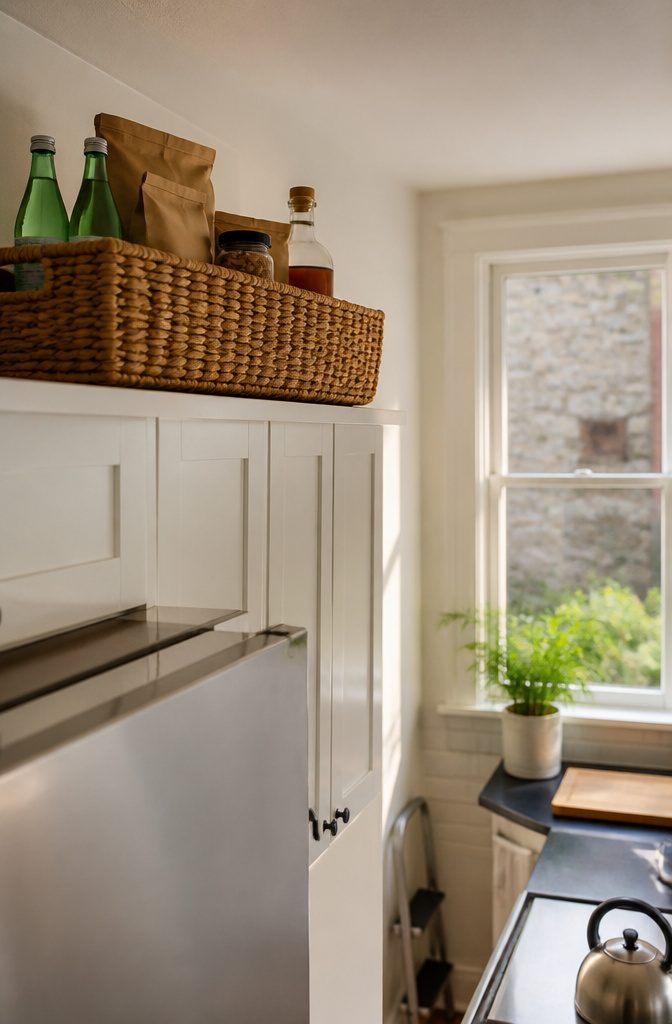
Wicker baskets work well up high for back-up stock: extra coffee grounds, sparkling water, bottles of spirits.
Store only what you won’t need until the current bag or bottle runs out. Specialty ingredients you use a few times a year follow the same rule, since a basket on top of the cabinets is somewhere you visit rarely.
Anything you reach for daily stays lower. Cooking oil, everyday salt, and the cereal you pour each morning don’t belong up there, because a step stool between you and breakfast gets old fast.
Don’t expect to reach this space daily. Keep a step stool or small ladder close by, in a nearby closet or beside the fridge, so a refill doesn’t turn into a search.
4. Cookbooks
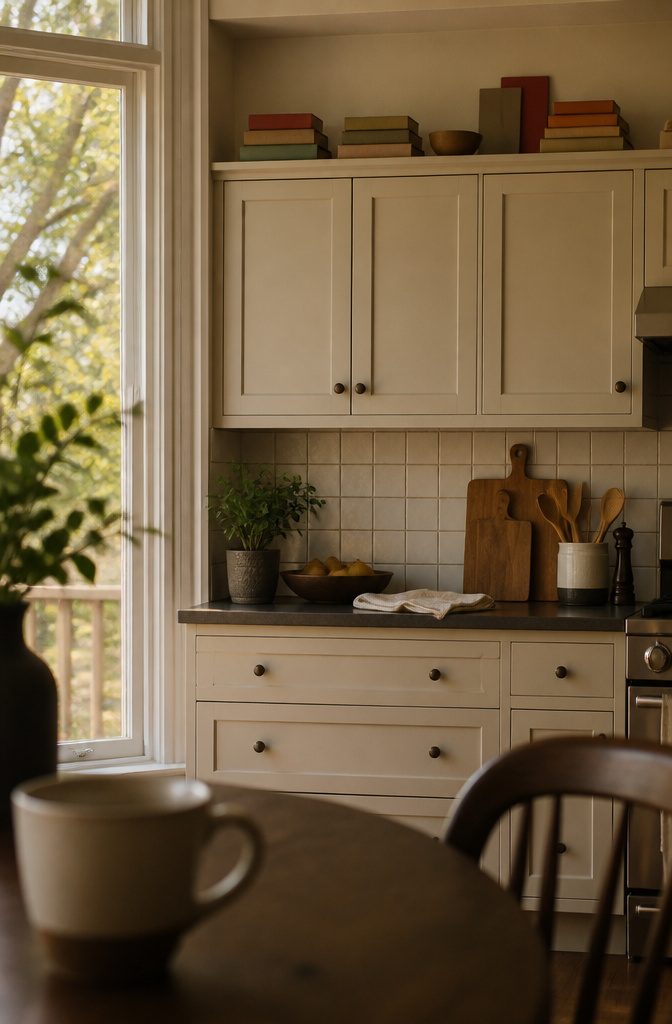
Stacked flat or arranged as decor, cookbooks add color and a personal touch above the cabinets, and the stack doesn’t have to be color-coordinated to look good. Good Housekeeping puts the role plainly:
Open shelving above upper cabinets is the perfect place to display cookbooks. Remember it’s more about decor, it will be too difficult to pull them down on a regular basis.
That suits anyone who owns cookbooks mostly for the pleasure of having them.
I’d skip it if you cook from yours weekly. Kitchen grease turns into a sticky film up there, and one reader who tried it ended up moving her books to a bookshelf.
Her advice is to keep cookbooks up there only if you’ll clean at least 2x/month. Dishwasher-safe tools are the safer thing to store.
5. Collections and Repeats
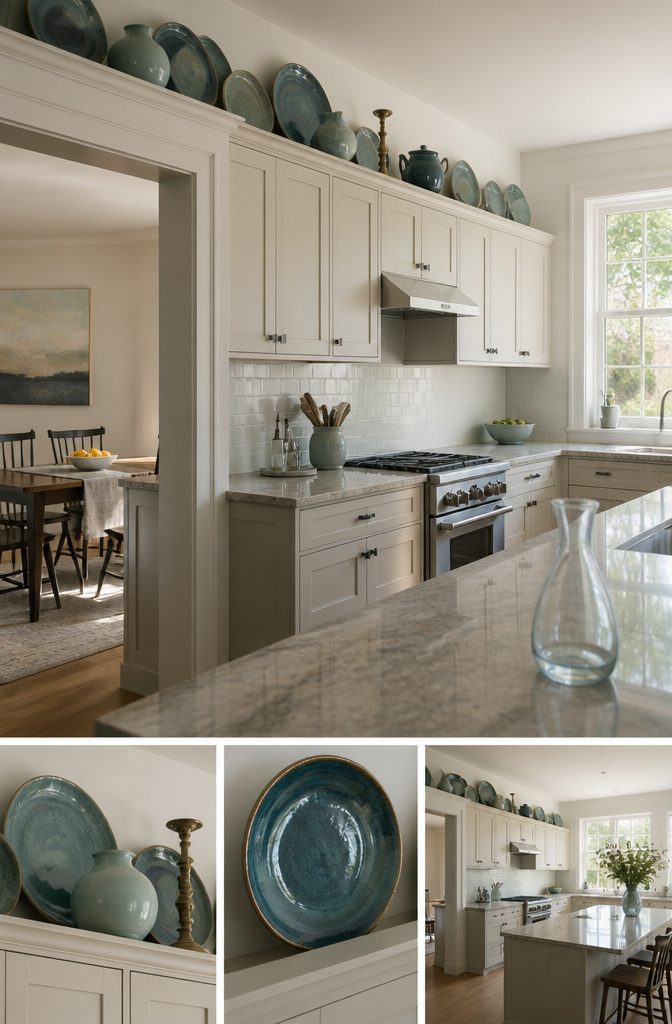
Plates, vases, teapots and candleholders make the strongest collections above cabinets, because matching pieces read as a deliberate choice instead of leftovers.
A row of plates in one color family, or a run of vases in related shapes, looks planned from across the room. This is a pretty-over-function move, so I’d save it for kitchens that already have enough storage elsewhere.
Spacing matters as much as matching.
I’d admit that 2 of the same pitcher styled directly next to each other is probably one too many, so break up identical pieces with something different, like a vase or a teapot, and the repeat becomes a rhythm.
Stick to glazed ceramic, glass and metal. Anything up there collects dust and grease, and it has to survive a rinse.
6. Plants and Natural Textures
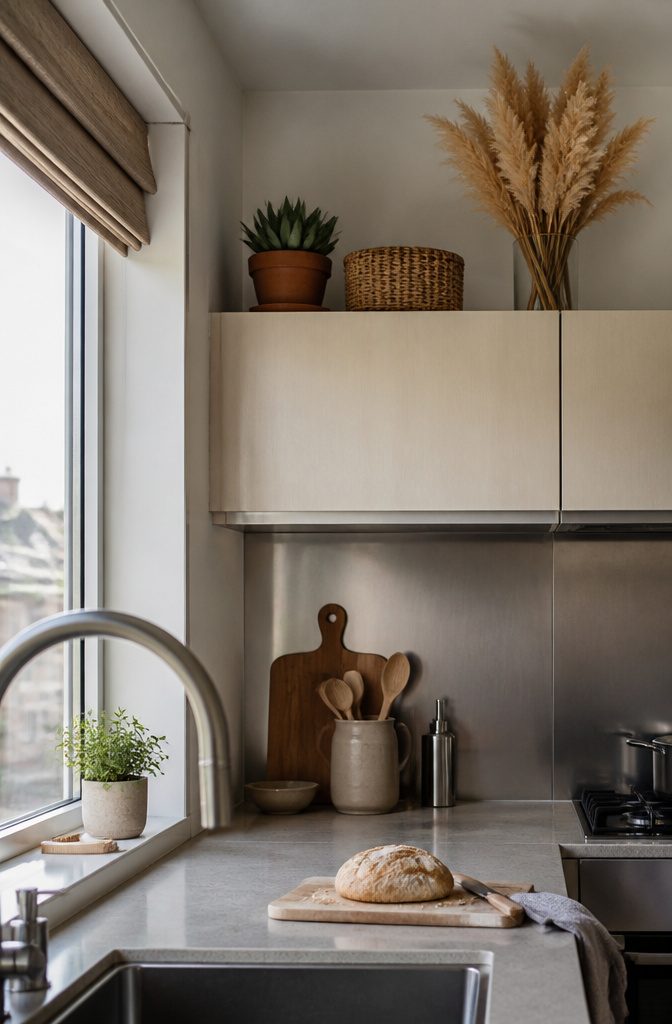
Greenery gives a flat, empty line of cabinet tops the one thing a kitchen of stone, steel and laminate lacks: something alive.
Pick plants that don’t need daily watering. A succulent is the easy call, and I’d stop at one or two instead of a full greenhouse row.
The upkeep is real, though. Watering means carrying a full pitcher up a stool or onto the counter, and the top of a tall cabinet often gets little natural light.
Pampas grass, wicker and rattan add warmth to hard surfaces and never need a drink, so they suit a high shelf better than leaves do.
A wicker bin also hides what’s inside while adding texture. Cooking grease turns the dust up there into a grimy film that clings to leaves and weave alike, so plan on wiping or vacuuming every few months.
7. Art and Sculpture
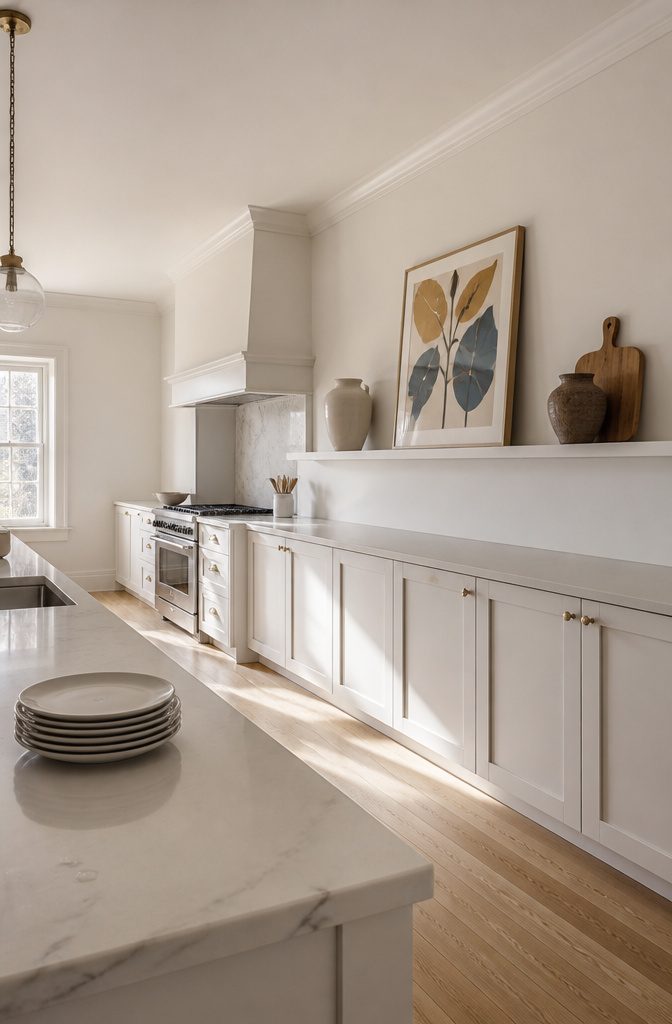
Leaning a big piece of art against the wall above the cabinets draws the eye up and adds color and personality, especially in an all-white kitchen.
Grouped vases, sculptures and wood chopping boards do the same job, and they give you a display spot when the counters need to stay clear for cooking.
One homeowner with hard-to-reach cabinet tops filled the space with a few big decorative urns and pictures, and now cleans up there only twice a year or so.
Fewer, larger pieces mean less to lift down and wipe. Grease and dust travel up there, though, and artwork is hard to clean once grease settles on it.
I’d stick with large pottery and glass-fronted frames that wipe clean, especially near the stove. Glass above head height should be secured, particularly in earthquake country.
8. A Shelf or Cubbies
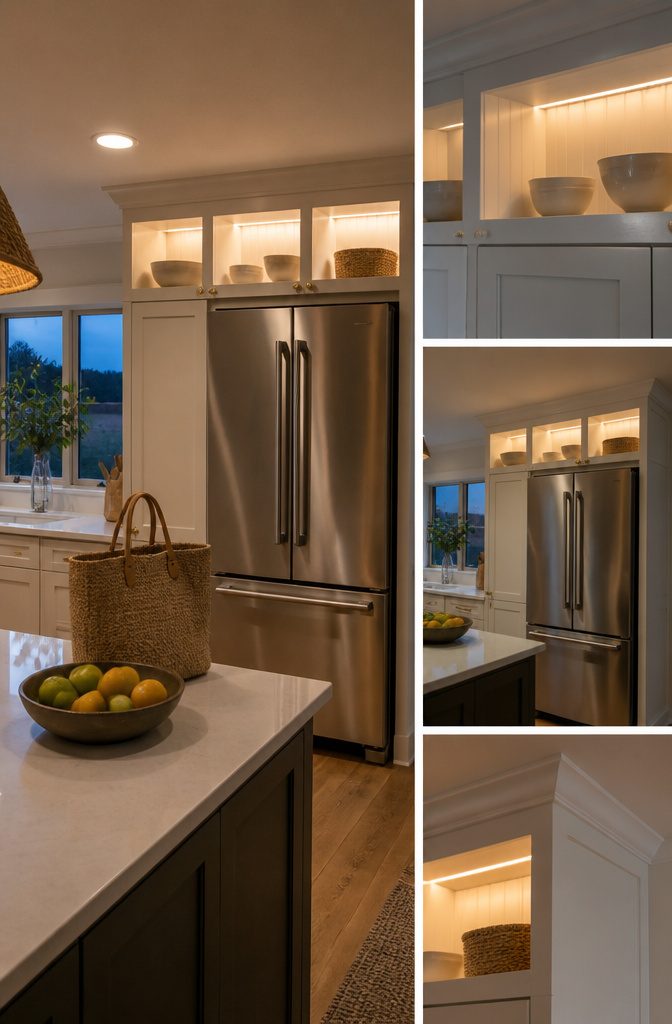
The quickest option is an open shelf: stack a board on top of 3 small wine racks, and have the hardware store cut the lumber if you’re not handy. Cubbies look more built-in.
One MDF version goes together in 3 pieces, with a 17.5-inch opening and cubbies 15.5 inches high. The space above the refrigerator is 24 inches deep, so the cubbies run 16 inches deep.
Beadboard backs painted white finish the insides. A 5-inch heading covers the top 2.5 inches of each opening, and 2-inch-wide wood trim over each vertical divider makes the dividers look twice as thick.
Two Ikea LED strips light the boxes, and one power unit connects up to 3. A commenter matched the paint to the cabinets: Halcyon Green by Sherwin Williams.
9. Extend or Add Cabinets
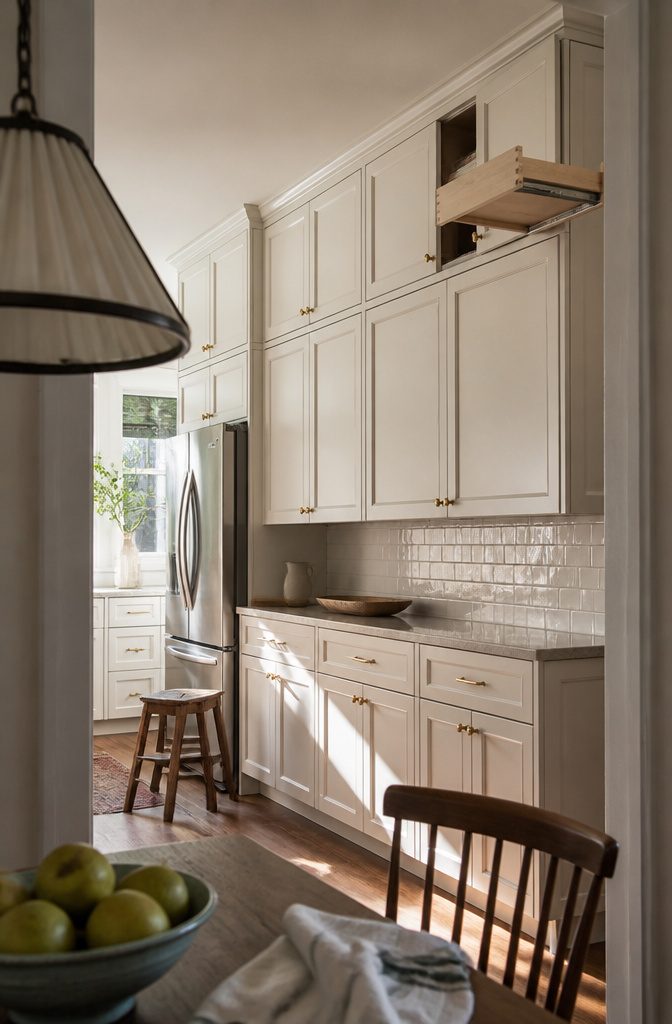
Most kitchen cabinets stop at 84 inches (7 feet), leaving a foot or more of dead space below the ceiling.
Taller cabinets, or a second set stacked above the existing ones, fill that gap with doors that hide everything. It’s the permanent route, so I’d skip it in a rental.
Reach is the weak spot. A cabinet that high only works if you can get to the back of it, and a step stool gets old fast.
ShelfGenie sells custom pull-out shelves on ball-bearing rails, made of Baltic Birch Ply in the Basic and Classic lines and painted hardwood with dovetail joinery in Designer.
The company claims up to 50% more overhead storage. Sliding a shelf toward you beats groping around in a deep box.
10. A Decorative Galley Rail
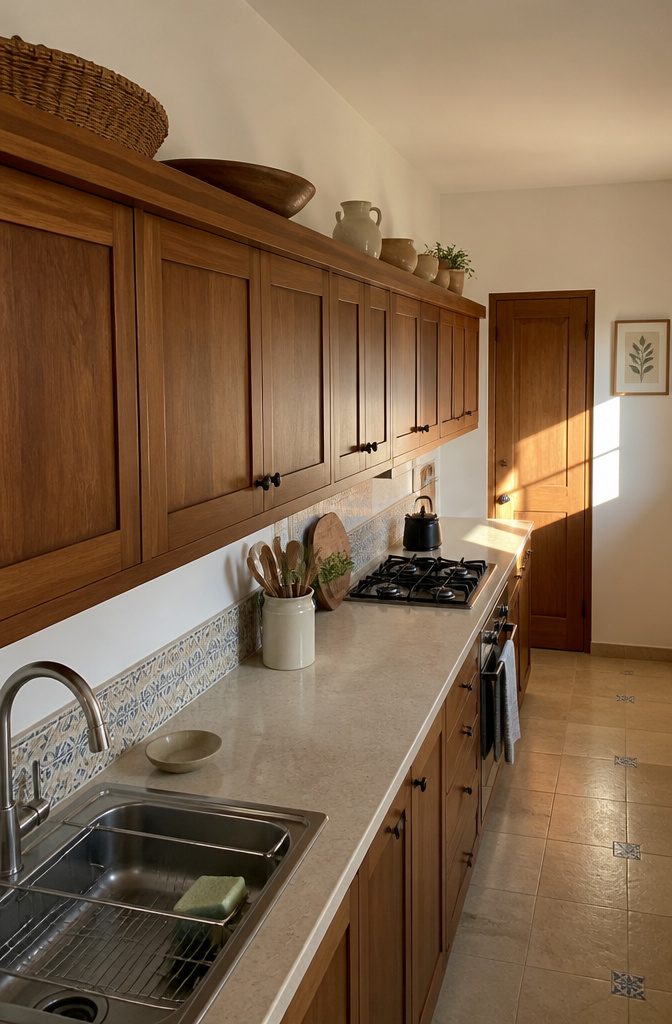
Cabinets that stop at 84 inches, or 7 feet, leave a foot or more of open space above them, and a galley rail is the lightest way to deal with it.
It’s a low decorative lip along the top edge of the cabinets. The lip gives the cabinet line a finished look and keeps baskets, platters, or a vase from creeping toward the edge.
A rail adds no storage by itself. It only contains what you put up there, so I treat it as the right choice when the cabinets are staying and you want the top to look intentional without building anything.
Profiles and finishes vary by maker, so match the rail to your door style before you buy.
11. Leave It Empty
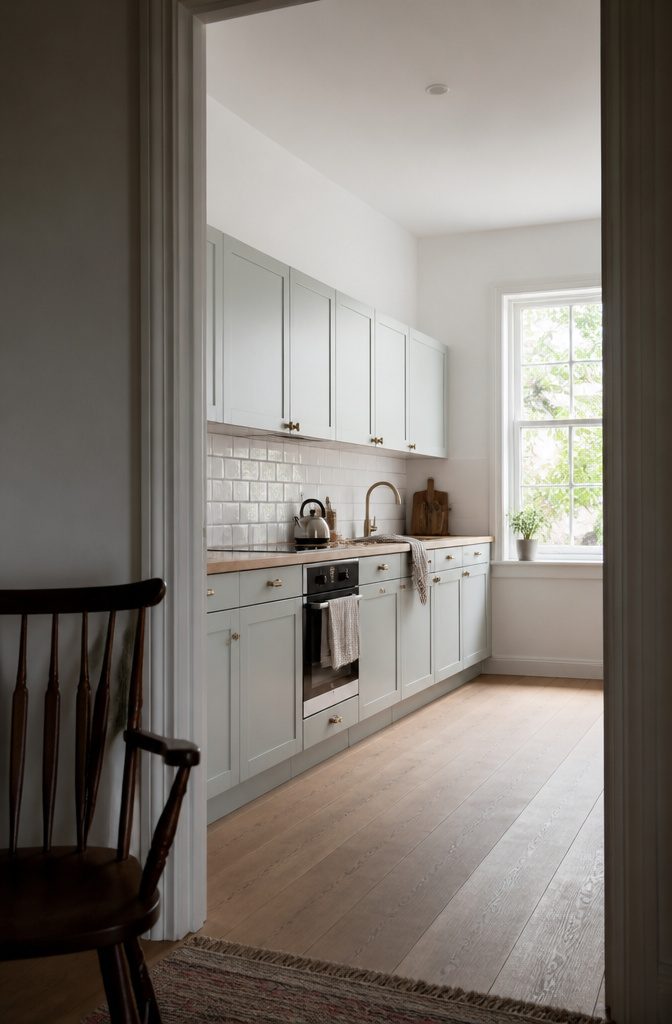
A bare gap between the cabinet tops and the ceiling is a legitimate choice, and in a small kitchen it’s often the best one.
Open space makes the room feel airier than a row of items crowded up there. On a low ceiling, anything stacked on top of the cabinets pulls the eye down even further.
Nothing sits up there, so nothing needs wiping.
Kitchen air carries grease, and it settles on whatever lives above the stove. If you know you won’t climb a step stool with a damp cloth, leaving the gap empty beats every other storage idea here.
It also costs $0 and commits you to nothing. If you later need the space, it’s still there.
Storage or Display
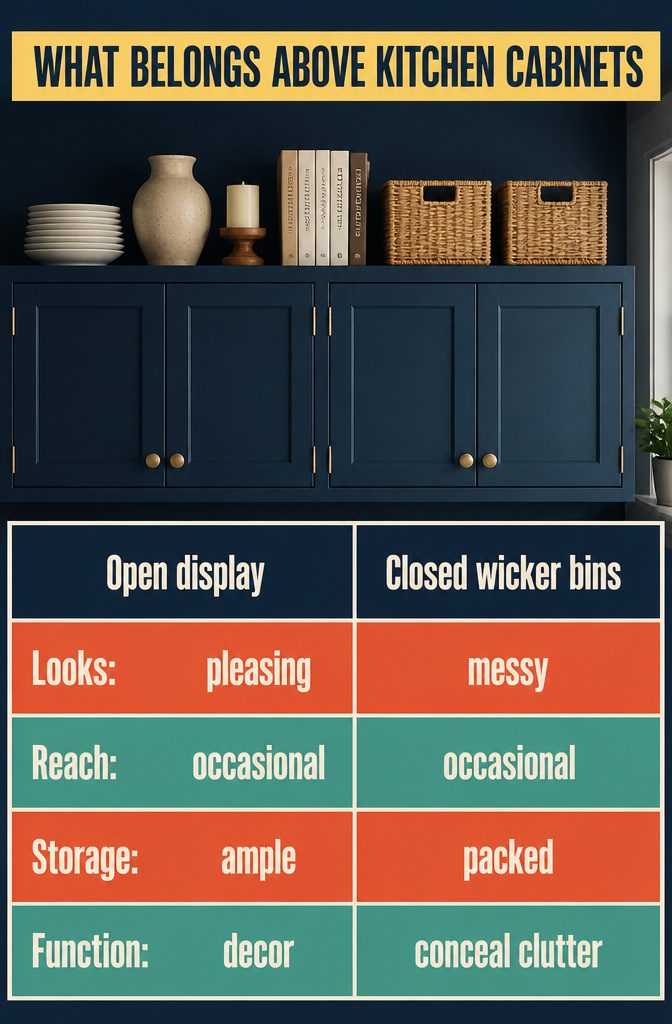
Two questions sort everything that goes up there. The first is whether the item is worth looking at.
Plates, vases, candle holders and a stack of cookbooks pass, so they stay in the open. Anything that looks messy, like odd-shaped gear or mismatched packaging, goes into wicker bins, which hide the clutter and add texture.
The second is how often you reach for it.
Anything you use daily belongs below, within arm’s reach, because hauling items down from that height gets old fast. Open or closed, the top of the cabinets suits things you need only now and then.
Display also works best in kitchens that already have ample storage, since decor up there is pretty over function. If your cabinets are packed, choose closed bins.
Access and Cleaning
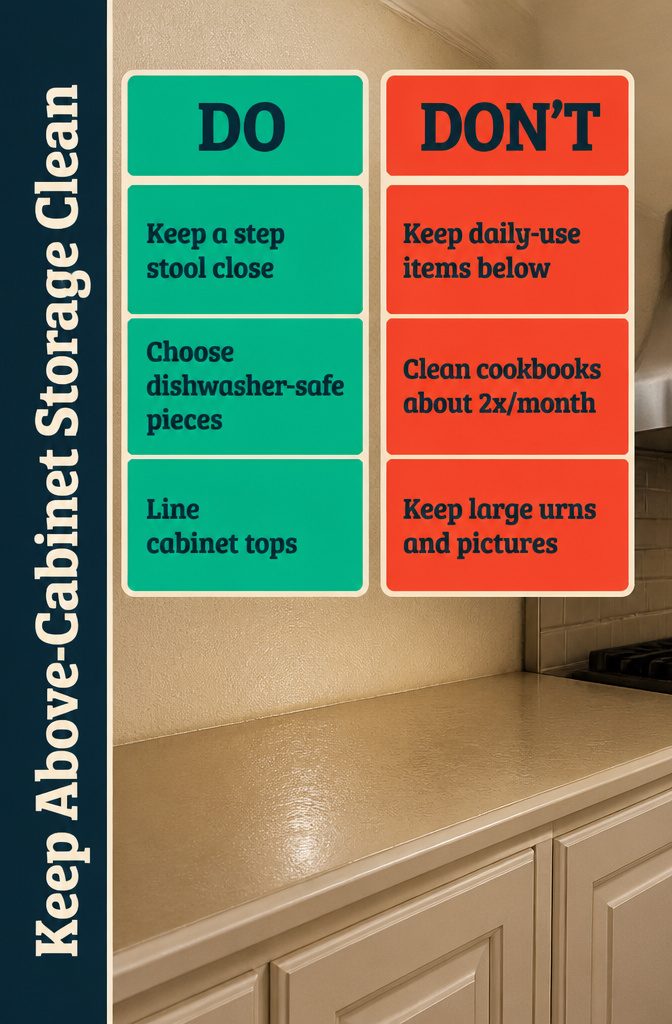
Oil from the stove drifts up and settles, so this zone needs a plan before you fill it.
- Skip anything you use daily. Plants, pitchers and everyday bowls mean climbing onto the counter, and even a taller person needs a stool, so keep a step stool close by.
- Cooking oil and dust bond into a sticky, greasy film on objects and cabinet tops. Dishwasher-safe pieces handle that best, since a grimy cake plate just goes in the wash.
- Line the cabinet tops so you lift out the liner instead of scrubbing.
- Cookbooks need attention about 2x/month, and they still collect residue, so I’d keep them elsewhere.
- Large urns and pictures need cleaning only about twice a year, which makes them the low-effort pick.
Color, Height and Warmth
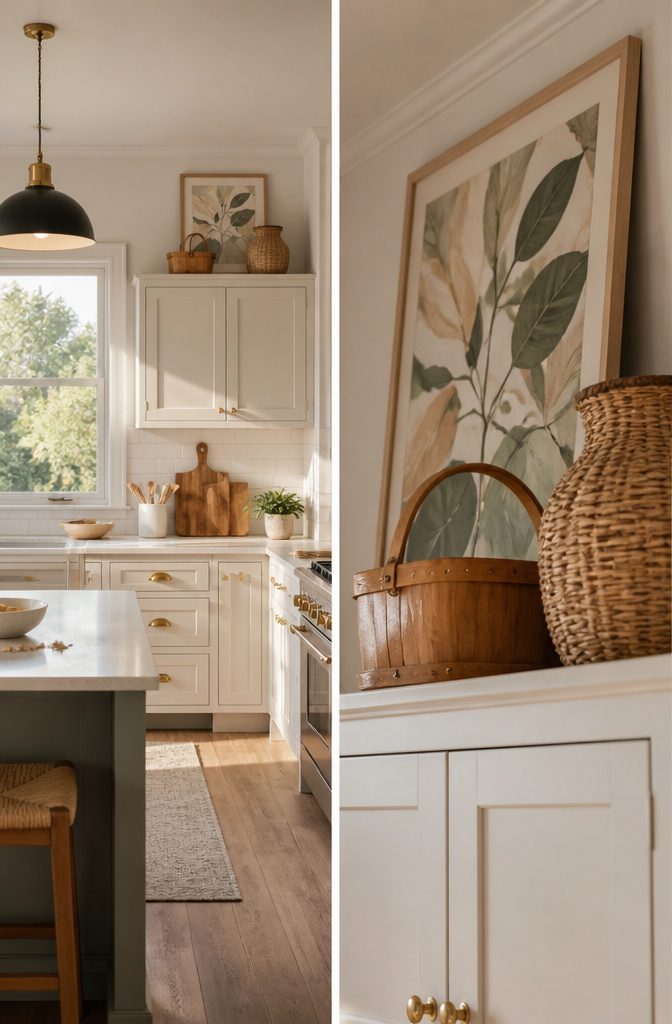
An all-white kitchen needs color, and art leaning along the cabinet tops supplies it. It also adds depth if you layer pieces in front.
When there’s a lot of space between the cabinets and the ceiling, the same art fills that height. A cold or industrial room needs warmth instead.
A wood-toned basket repeats the wood you already have in the floor and a cutting board, and wicker or rattan softens hard surfaces. A statement light fixture pulls the eye up toward the ceiling, which makes the room feel larger.
A small kitchen often needs none of this. An empty gap makes the room feel airier, and in a tight space I’d choose it over a half-styled row.
If you do style, one small section can be enough. You don’t have to dress the whole run.
Frequently Asked Questions
What can I put in the space above my kitchen cabinets?
Rarely used items fit best: cake stands, big serving boards, oversized bowls, and backup pantry stock in baskets.
For display, plates, vases, teapots, large art, cookbooks and a plant or two all work. Anything you use daily should stay lower, within arm’s reach.
How do I store things on top of kitchen cabinets?
Use matching wicker baskets or bins for things you need only now and then, and line the cabinet tops so you can lift out the liner instead of scrubbing.
Kitchen grease and dust bond into a sticky film up there, so dishwasher-safe pieces are the easiest to keep clean. Keep a step stool in a nearby closet or beside the fridge so a refill doesn’t turn into a search.
How can I hide the gap above my kitchen cabinets?
The permanent fix is taller cabinets, or a second set stacked above the existing ones, since most cabinets stop at 84 inches and leave a foot or more of open space.
Skip that in a rental. A row of matching wicker bins hides what’s inside but not the gap itself, and a galley rail only keeps items from creeping toward the edge.
Leaving the space empty is also fine, and it often makes a small kitchen feel airier.