


Cloths here run from a $19.58 polyester round to a $260 striped cotton, and how hard the table gets used picks yours: oilcloth for kids, a neutral like the $80 Merrow Stitch cotton (60 x 120 inches) for everything else.
Skip the iron and cotton looks rumpled; only real linen gets away with wrinkles.
1. A Neutral Base Cloth
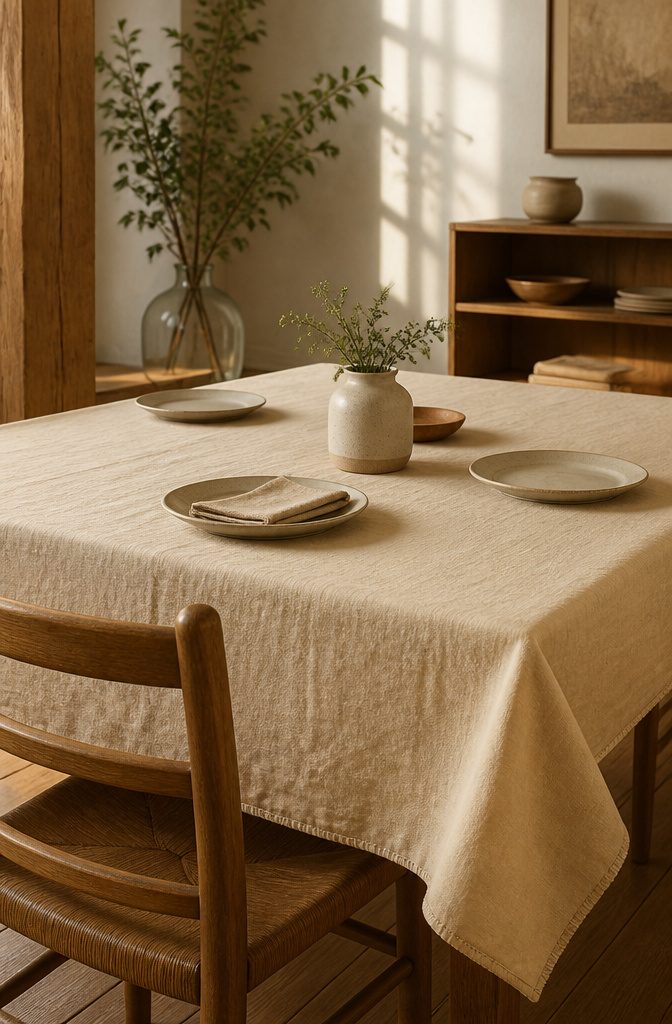
A warm natural cotton cloth is the safest first buy, because it sits quietly under almost any plate, napkin, or centerpiece you add later. The Merrow Stitch Warm Natural Organic Cotton Tablecloth is a good example.
It measures 60 x 120 inches and costs $80, reduced from $100, at Crate & Barrel. Thick merrow stitching along the sides keeps the edges from fraying, which matters on a cloth you’ll wash again and again.
On a budget, one neutral cloth beats three seasonal ones.
Choose a shade that suits your walls, floors, and wood tones, then let the color change around it through other linens and small accents. A bold cloth dates quickly, while a neutral one just gets a new look each season.
2. Layer Cloths and Runners
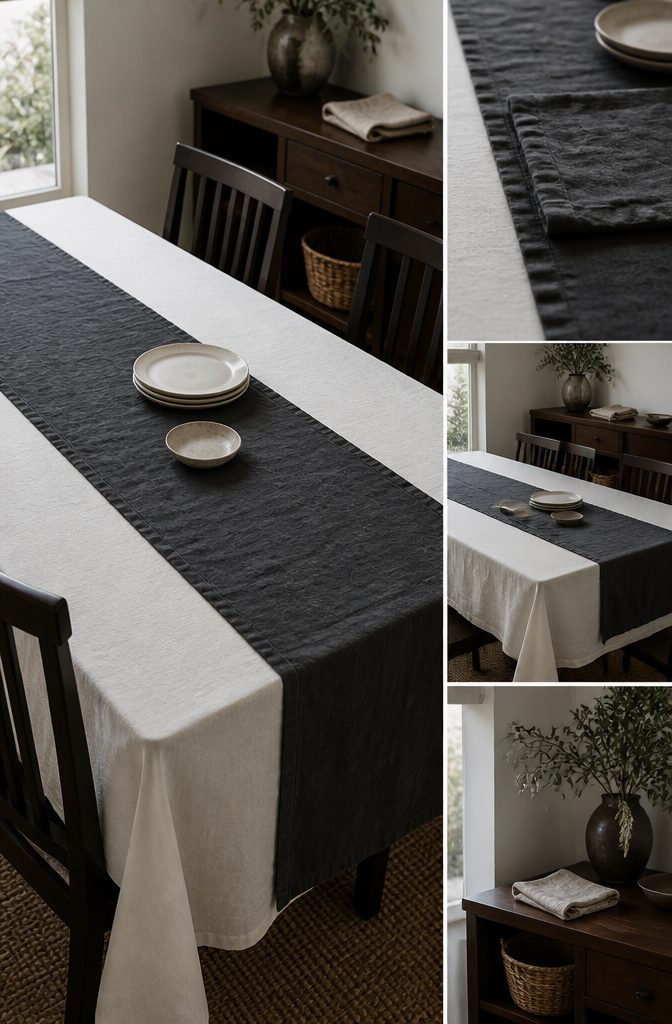
Start with two cloths: a basic white one flat on the table, then a charcoal cloth folded lengthwise into a runner.
Folding a regular tablecloth to the width you want beats buying a pre-made runner, which locks you into one size.
A white base with a neutral runner suits warmer months, and a darker base with a natural linen runner suits colder ones.
Two of your basic neutrals layered together will also match the rest of the house with no extra shopping. If you want more punch, an indigo pintuck cloth under a patterned linen works as long as the colors coordinate.
Wrinkles are what you pay for layering.
Unpressed linen looks relaxed and authentic, but only real linen gets away with it, and cotton just looks rumpled. For a formal dinner, get out the iron.
3. Fabric by the Yard
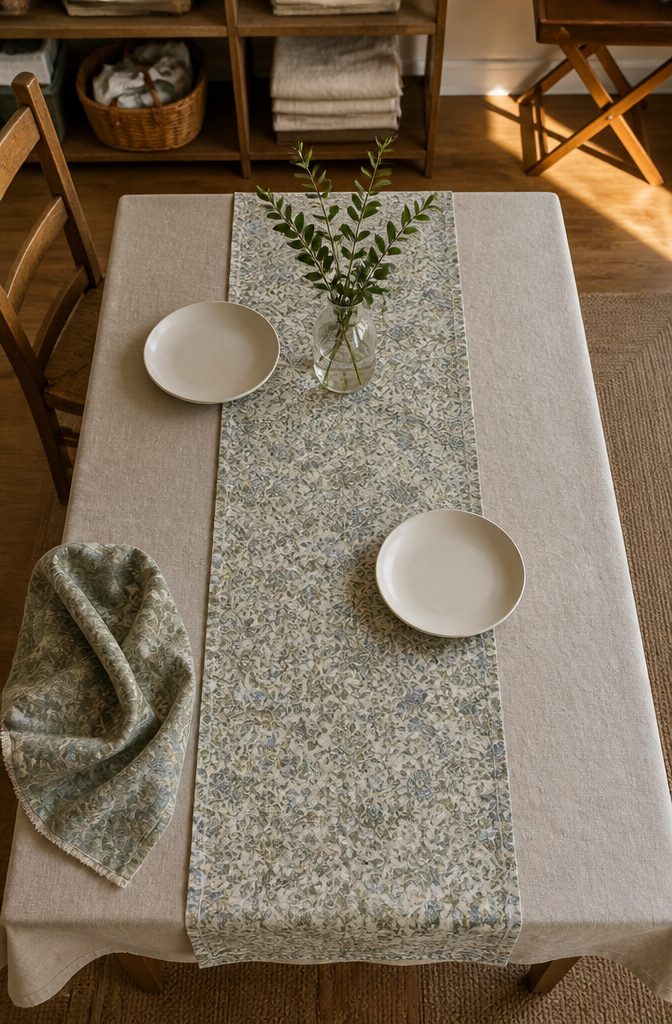
Fabric from the bolt is the cheapest way to get a runner or table cover you actually like.
Two to 3 yards often costs much less than a finished tablecloth or runner, and the fabric store offers far more patterns, textures, and widths than the linen aisle.
Fold the long edges under, keep the ends cut straight, and you have a runner in any width you want, laid over a plain base cloth.
Yardage also works as a full-length cloth on a 6′ or 8′ folding table, which is a quick way to make a basic table look intentional.
I now own about a dozen affordable cloths and runners, and swapping one over a neutral base is how I change seasonal color without buying a whole new cloth.
4. Mix Colors and Patterns
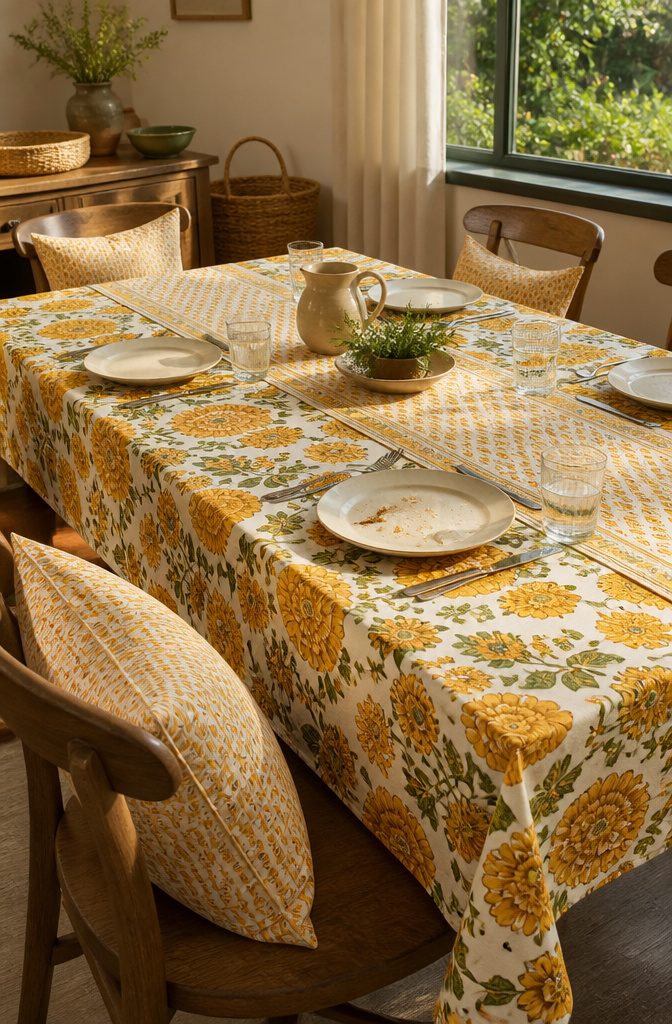
Prints get along when their colors match, so settle on one shared tone before you pick a second pattern.
A bold floral cloth and a quieter printed runner can share a table if both lean the same direction, and chair pillows in similar tones carry the print down to seat level.
The Marigold Living Juhi Flower Tablecloth (70 x 70 inches, $90) is a sunny block print in 300-thread-count cotton.
On a tighter budget, I’d go for the Fern Trail Marigold Mexican Tablecloth (48 x 48), $24 and marked down from $30. It also holds up to messy meals:
Mexican oilcloth can really go the distance (especially for outdoor tables) because its vinyl fabric material is stain-resistant, waterproof, and almost always features a bright floral design.
— Eater
That makes it a low-risk place to try a loud print.
5. Flowers and Napkins for Color
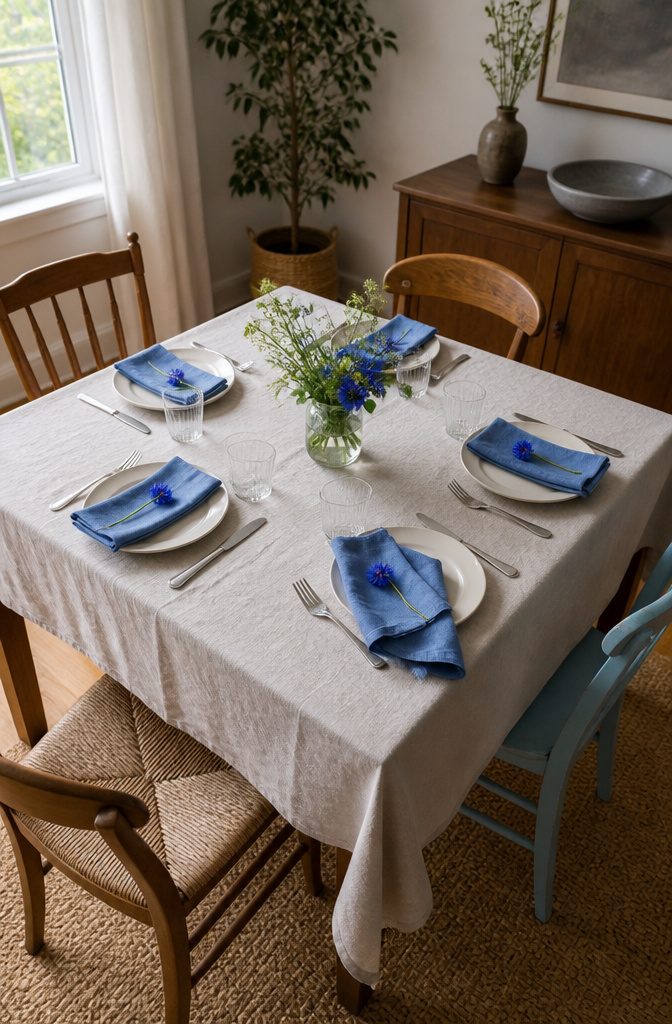
Color works best in small pieces. A neutral cloth stays on the table all year, and napkins and flowers carry the seasonal color, which costs far less than buying a second cloth.
Pull one shade from the bouquet and repeat it in the napkins: blue blooms with blue napkins read as spring without shouting.
A colored napkin is usually enough to make a statement without overpowering the room, so I’d buy a few napkin colors before a second tablecloth.
On a tight budget, skip the big centerpiece and set a single flower on each place setting.
Keep a set of napkins in your basic neutral shades too, since they mix with any table. Linen is my pick when you can find it.
6. A Themed Tablescape
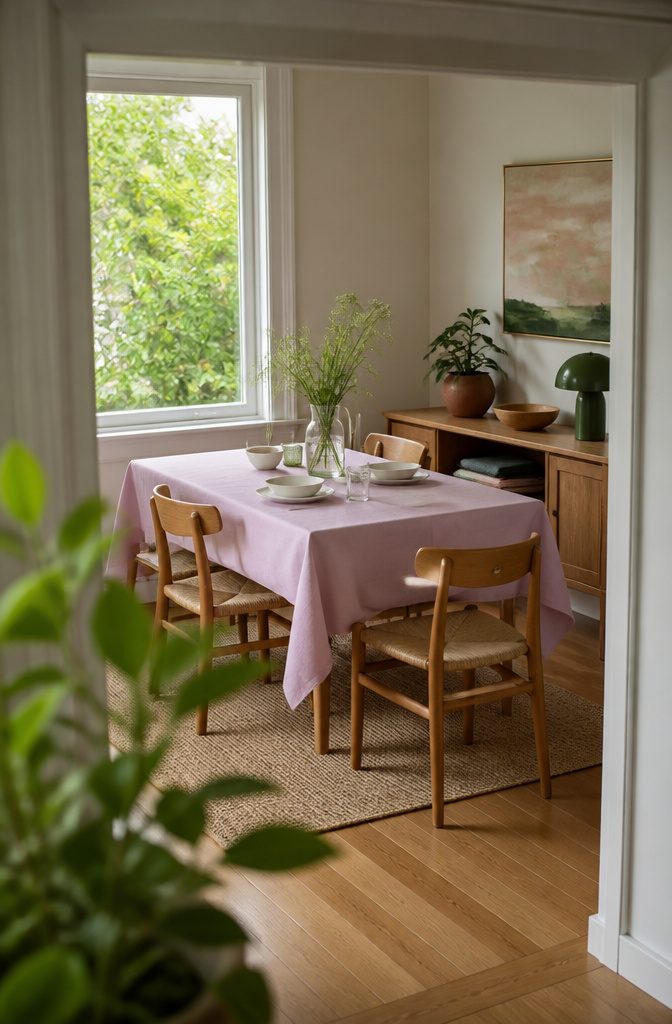
Pick the theme with the cloth first, then add two or three accents at most.
- Garden party: a pale or soft pastel cloth, with loose stems in a small jar or pitcher. It reads fresh without any fuss.
- Rustic: natural linen or a slubby weave, wood bowls, one or two candles. The texture hides wrinkles and wear.
- Mediterranean: white or blue-and-white cloth, terracotta pots, olive branches in a pitcher. Keep the dishes simple.
- French: cream linen, a stripe, or a toile, with a single candlestick. It looks formal without much styling.
- Floral: a printed cloth does the work, so keep plates plain and the centerpiece small. A busy print crowds a small table.
- Tropical: a green or leaf-print cloth with oversized leaves. It tips into costume quickly, so I’d skip it in a small room.
For a rental or a compact dining room, garden party, rustic, and French win. The cloths are solid or quiet, and the accents pack into a drawer.
7. Linen, Cotton, or Oilcloth
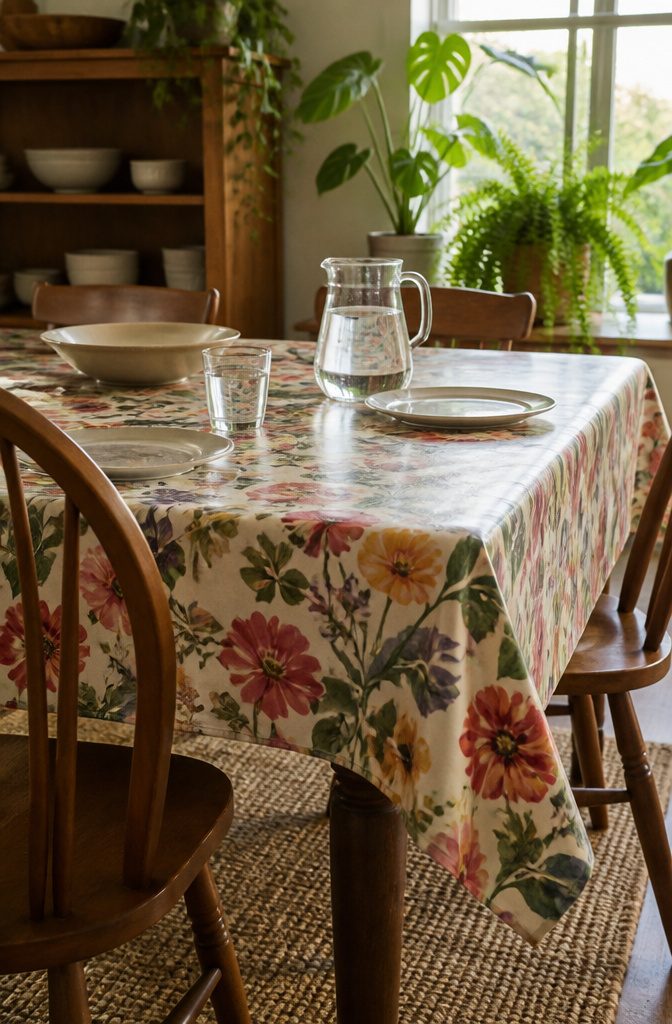
Linen is the pick for looks.
The Linkslove Striped Linen Tablecloth (55 x 55 inches, $50) fits a small square table. The Misette Embroidered Linen Tablecloth, at 80 x 120 inches, is built for a long table: $210, down from $420, with vegetable embroidery that practically asks for a cheese board.
Cotton sits a notch more casual. The 100-percent cotton Gohar World Multicolor Stripe runs $260 and has buttons on the ends to lengthen it, which is a lot to spend on something a kid can drip grape juice on.
For everyday family dining, I’d choose waterproof, stain-resistant oilcloth.
A spill gets wiped and forgotten. Keep the linen or cotton for guests and Sunday dinners.
8. Color for Dining Room Mood
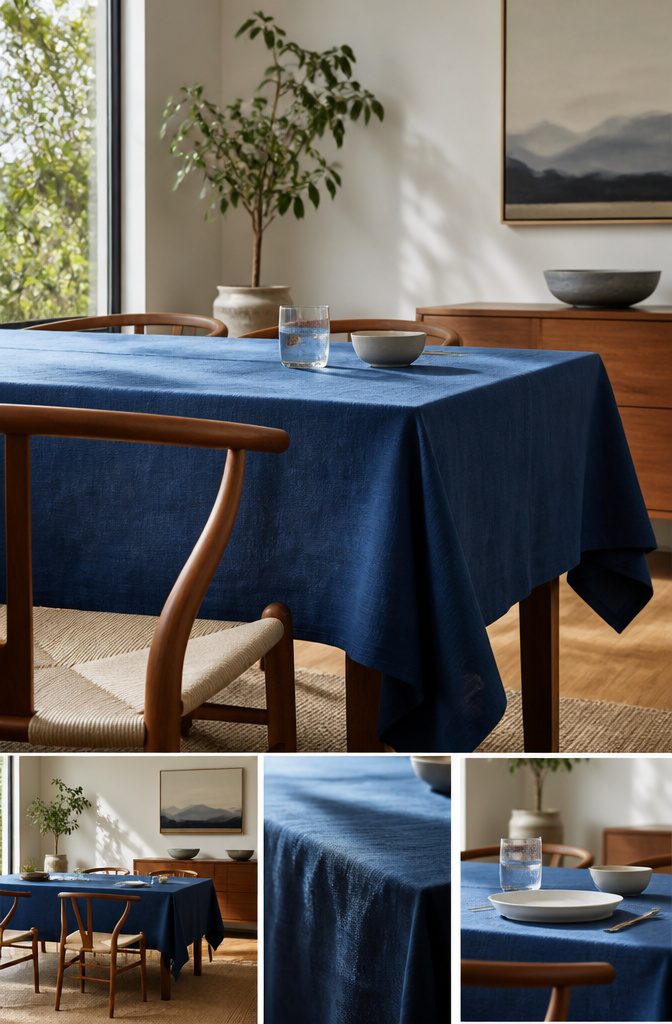
Each color pulls the room in a different direction:
- Blue: calm and grounded, a table that invites you to slow down.
- Pink: intimate and personal, even with plain dishes.
- Purple: ceremonial, so an ordinary evening feels like an occasion.
- Yellow: optimistic, a good fit for morning coffee and weekend brunch.
- Green: organic and calm, especially beside plants, wood furniture, or natural light.
For a room used every day, I’d go with blue. It suits weekday dinners and quiet breakfasts, and it asks very little of the rest of the room.
Green is a close second if your dining room already has wood and greenery. Purple is better saved for nights you host.
9. Overhang Sets the Formality
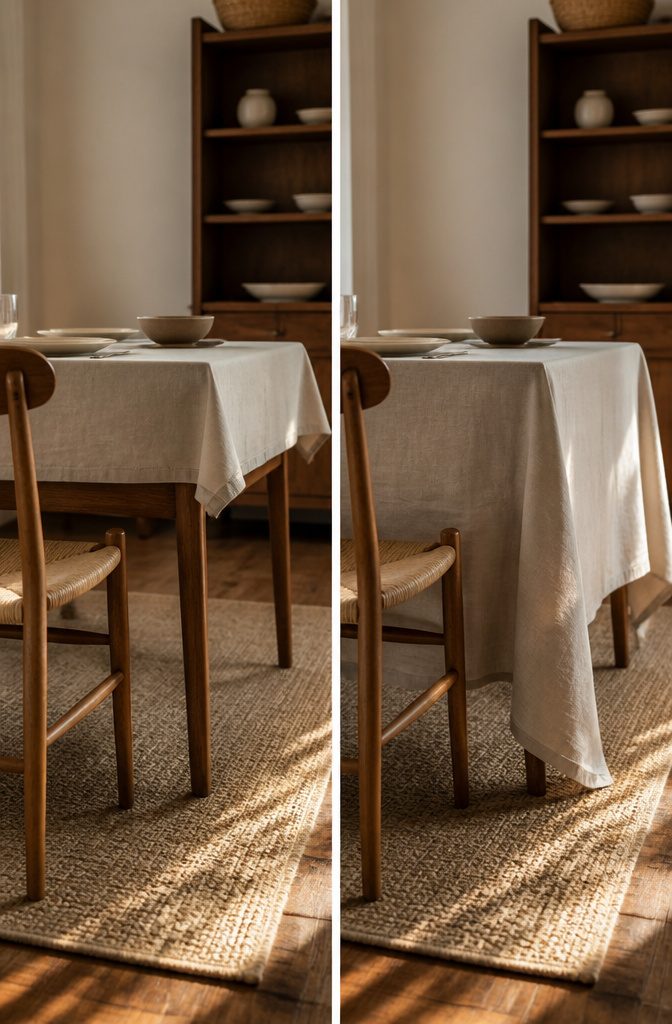
A lap-length cloth, which stops around lap height, reads as casual. It suits weeknight dinners, weekend breakfasts, and tables that double as homework space, since chairs slide in easily and nothing drags when someone stands up.
A floor-length cloth, described as reaching the ground, makes the table one solid column of fabric. That looks dressed up and a little theatrical, which is right for holiday dinners, birthdays, and anything with place cards.
For most renters and first-home owners, I’d pick lap-length for everyday use and keep floor-length for the few dinners a year that call for it.
Long cloths get stepped on and tangle around chair legs, so they work best when the evening is planned.
10. Protection and Easy Cleanup
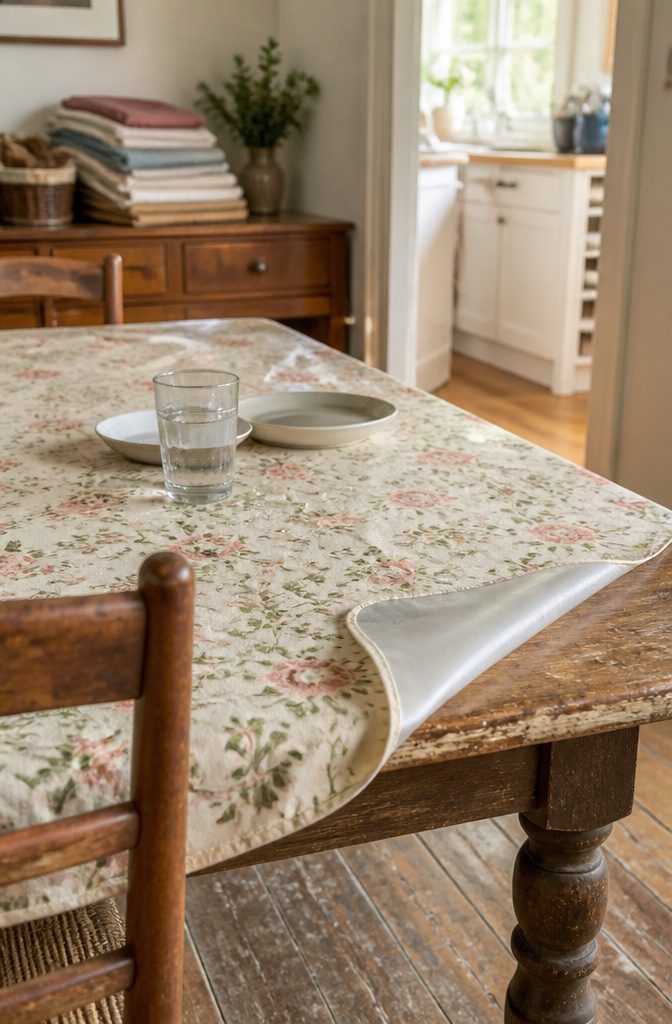
A tablecloth takes the spills, stains, and scratches so the tabletop doesn’t, and cleanup means pulling it off and tossing it in the washer.
That pays off with kids at the table or a crowd of guests. It also hides a tired surface: a floral cloth can cover a bad paint job on a secondhand table until you refinish it.
With a fabric cloth, slip a waterproof sheet underneath so liquid never reaches the wood.
Everyday use is a personal call.
I lean toward leaving one out, but the cost is real: constant washing, plus ironing to get the creases out. If you know you’ll skip the iron, save the cloth for guest dinners.
Cloth Sizes That Fit
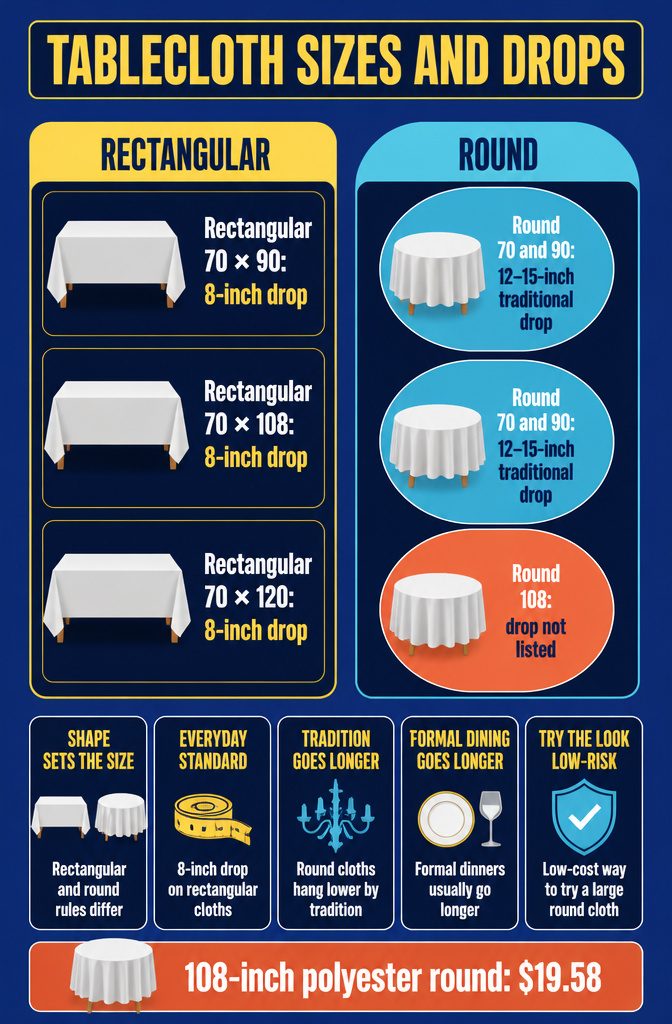
Rectangular and round cloths follow different drop rules, so shape settles the size before anything else does.
| Shape | Cloth size (inches) | Typical drop |
|---|---|---|
| Rectangular | 70 x 90 | About 8 inches |
| Rectangular | 70 x 108 | About 8 inches |
| Rectangular | 70 x 120 | About 8 inches |
| Round | 70 | 12–15 inches (traditional) |
| Round | 90 | 12–15 inches (traditional) |
| Round | 108 | n/a |
An 8-inch drop on a rectangular cloth is the everyday standard, and formal dinners usually go longer.
Round cloths hang lower by tradition, which is why they look so generous. For a large round table, a 108-inch round polyester cloth costs $19.58, a low-risk way to try the look.
Finish the Table Setting
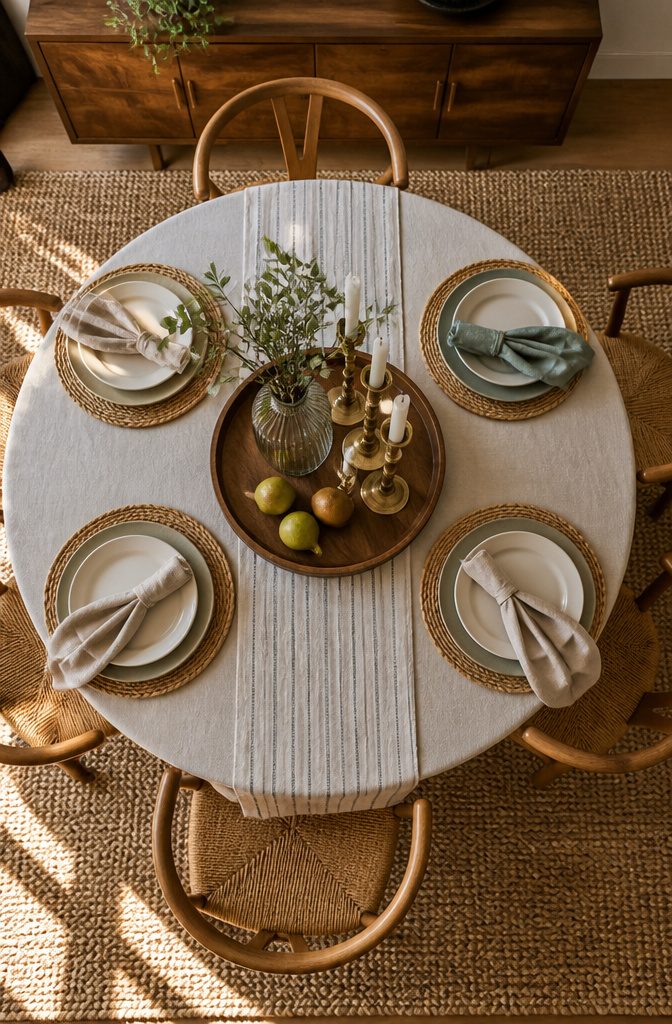
Placemats at 15 x 20 inches are sized for a full-course meal, and cloth napkins come in sets of 6 at 20 x 20 inches.
Judge the placemat by the dishware that will sit on it: a patterned plate wants a solid mat, and the napkin should pick up one color from the plate or the cloth.
A runner adds texture down the center and usually comes in 18 x 90, 18 x 108, or 18 x 120 inches, so match the length to your table. Charger plates under the dinner plates finish the look.
On a round table, allow about 24 inches from the center of one dinner plate to the next.
Rectangular placemats overlap there, so skip them. Set a round tray in the middle with candles, a glass vase, and seasonal produce, and vary the heights.
Frequently Asked Questions
Should you put a tablecloth on a dining room table?
Usually yes, especially with kids or guests at the table.
A cloth takes the spills, stains, and scratches instead of the wood, cleanup means tossing it in the washer, and it can hide a tired or badly painted surface until you refinish it.
Using one every day is a personal call, since it means constant washing and ironing. If you know you’ll skip the iron, save it for guest dinners.
How do you dress a round dining table?
Use a round cloth, or a runner, and plan the seating before the styling. Allow about 24 inches from the center of one dinner plate to the next, and skip rectangular placemats because they overlap on a round table.
Round cloths traditionally hang 12–15 inches, which is why they look so generous. For a centerpiece, a round tray with candles, a glass vase, and seasonal produce at varied heights works well.
What can you decorate a dining table with?
Napkins and flowers are the easiest place to add color, since they cost far less than a second tablecloth.
A runner over a neutral base cloth adds texture, and a single flower at each place setting works on a tight budget.
If you want a theme, pick the cloth first, then add two or three accents at most, such as candles, a pitcher of stems, or wood bowls.
What is the best material for a dining room tablecloth?
It depends on how the table gets used.
Linen looks best, cotton is a notch more casual, and waterproof, stain-resistant oilcloth is the practical pick for everyday family meals because spills simply wipe off. Keep the linen or cotton for guests and Sunday dinners.
Where is the cheapest place to buy tablecloths?
A fabric store is usually the cheapest route. Two to 3 yards of fabric often costs much less than a finished tablecloth or runner, and you can fold the long edges under to make a runner in any width.
For a ready-made cloth, a 108-inch round polyester tablecloth runs $19.58 at linentablecloth.com.