

A cabinet style is three separate choices: the door profile, the finish, and the box behind it.
Distressed and two-tone are finishes, and frameless is construction, so each works with any door. Shaker, the most popular door, has no personality of its own, so paint and hardware decide the look.
Shaker Cabinets
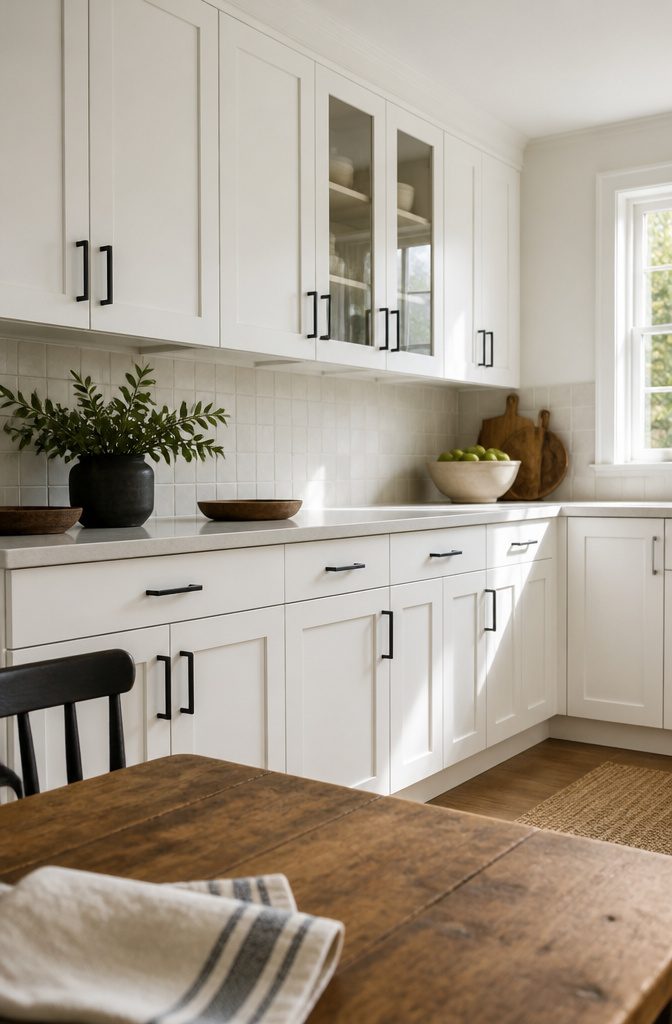
A flat recessed center panel inside a square frame defines the Shaker door, and it is the most popular cabinet door style going.
The 5-piece construction and square edges leave almost no ornamentation, so the same door sits comfortably in traditional, transitional, modern and contemporary kitchens. Run it through the whole room, or mix it with a few glass fronts for variety.
That plainness cuts both ways. A Shaker door has no personality of its own, so finish and hardware set the mood.
Crisp white reads clean and classic, while matte black turns the same profile dramatic and modern. I’d choose the color and pulls first, then judge the door against them, since swapping hardware later is cheap and repainting is not.
Slab or Flat-Panel Doors
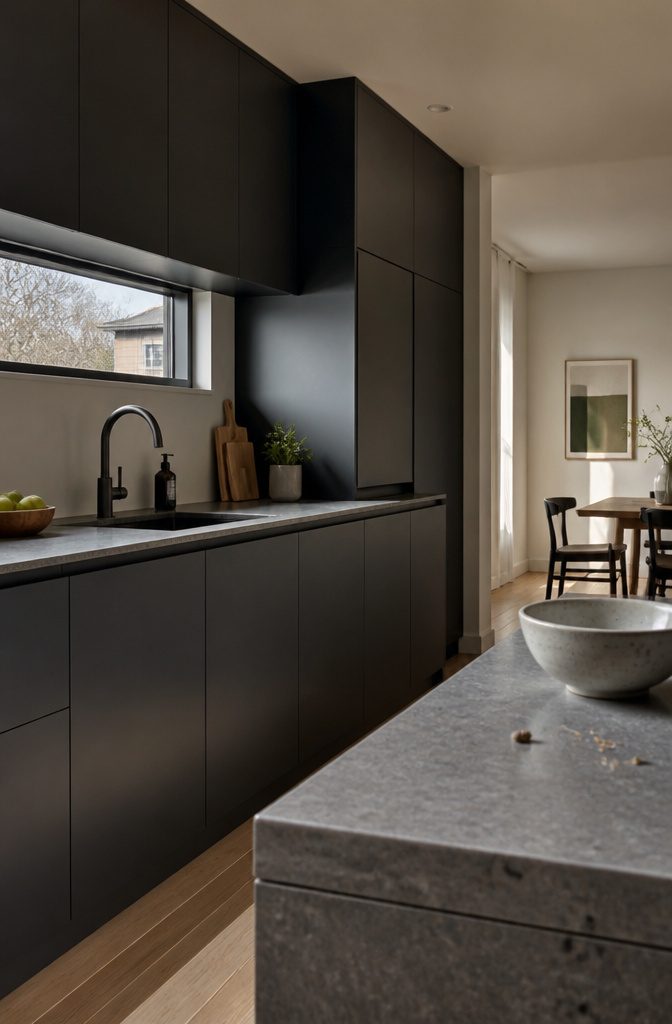
A slab door is one flat piece with no recessed panel, trim or frame, which is why it anchors minimalist, modern and contemporary kitchens. Skip the handles and the line runs unbroken, the Euro look that also suits industrial spaces.
Smooth fronts wipe clean quickly because there are no grooves to hold grime. They also don’t interrupt the eye, so the room feels calmer, and that’s the main reason I’d steer a small kitchen toward them.
The drawback is plain. A flat door shows every fingerprint, and with no profile or molding it has nothing to distract from a scuff, a dent or a mismatched color.
Plan on regular wipe-downs, and choose the material and finish carefully, because on a slab front they carry the entire look.
Raised Panel
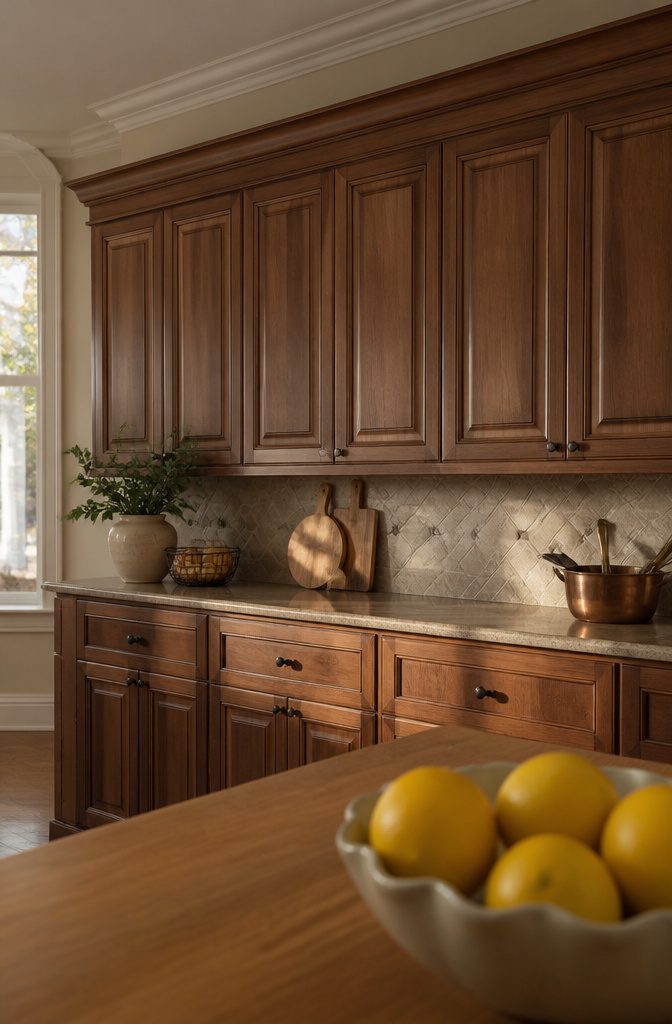
A raised panel door has a center panel that projects above the surrounding frame, with beveled edges stepping down toward the rails and stiles.
Those angles catch light and throw shadow lines across the door, which is why the style reads as traditional, formal and classic. It suits traditional architecture and comes in many wood types and colors.
Shaker looks plain beside it. Its 5-piece door has a recessed center panel and square edges, so the face stays flat.
For a kitchen that gets daily cooking, I’d lean Shaker, because every bevel and groove on a raised panel is a place where dust settles. A cloth glides over a flat panel but won’t reach into those corners.
Glass-Front Doors
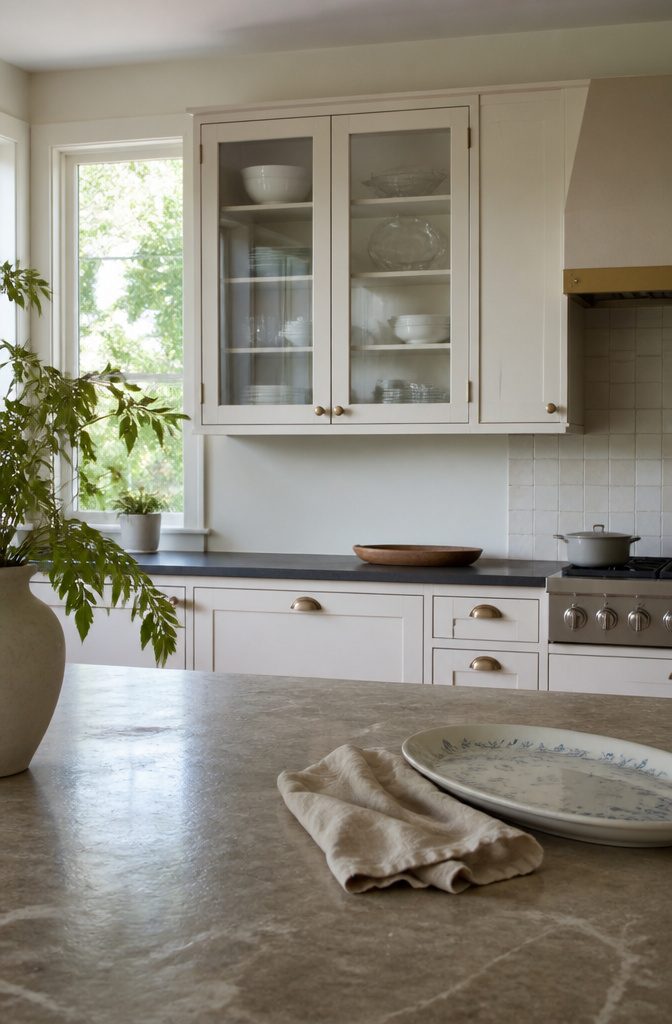
A long run of solid doors reads as one heavy block, and swapping a few uppers for glass-front doors breaks it up.
Light passes through the panes and bounces off plates and bowls, so the wall feels lighter. I like them in pairs flanking a window or range hood, or as a single cabinet in the middle of a row.
Whatever sits behind the glass is on view, and that is the cost. Stock a glass-front cabinet only with things you’d happily look at every day: matching white dishes, clear glassware, a few good serving pieces.
Mismatched mugs, plastic containers and cereal boxes belong behind solid doors. If your dishes are a jumble, I’d skip glass, because a cabinet that needs constant straightening turns into a chore.
Beadboard
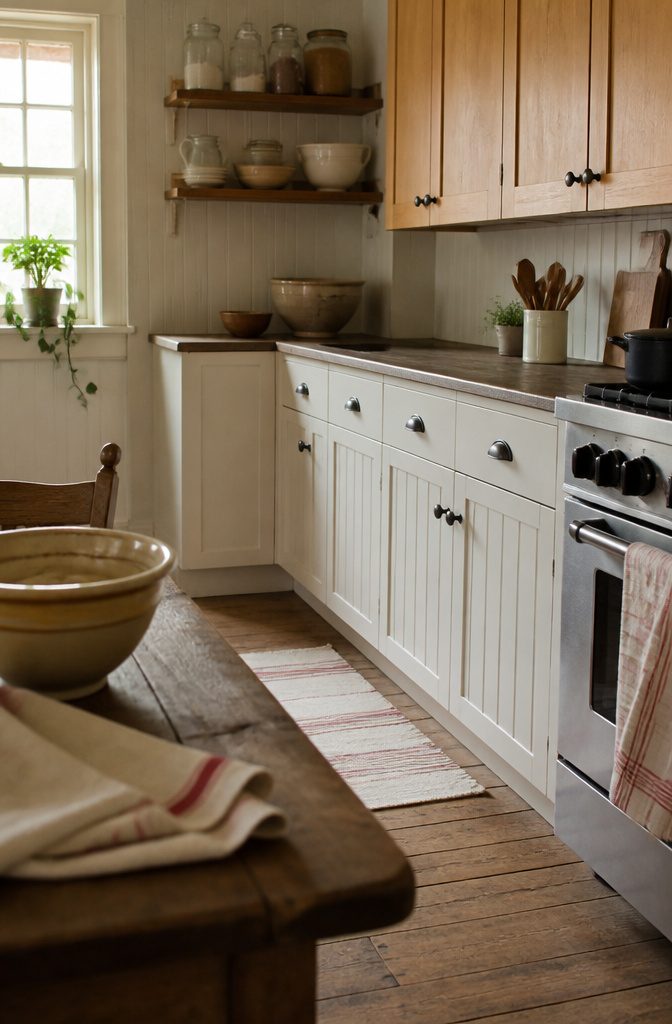
Beadboard fronts carry a pattern of vertical grooves that gives a cabinet door texture and a cottage or country feel. For a country kitchen, white beadboard lower cabinets with natural wood uppers is the pairing I’d pick.
If a full run feels like too much, line the backs of glass-door cabinets with beadboard, where it acts like wallpaper behind your dishes.
Grease and dust settle into every groove, so beadboard takes more effort to clean than a flat door.
A damp cloth skims over the channels, and a soft brush does the real work. I’d keep it away from the cabinets beside the stove and use a smoother door there.
Louvered Doors
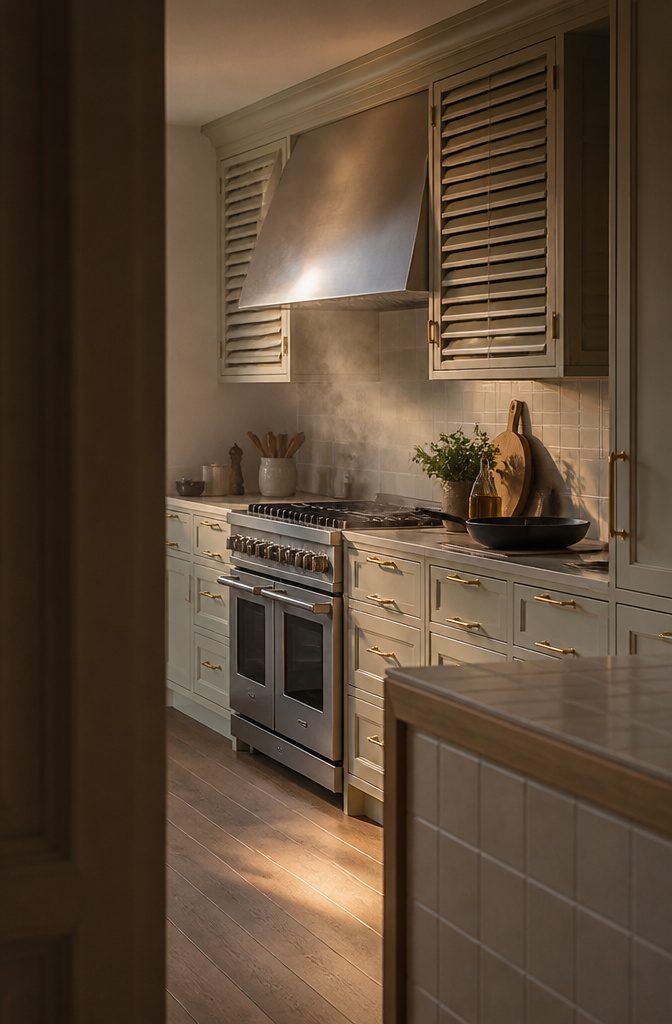
Louvered doors are a niche choice, and I’d use them as an accent rather than across a whole kitchen.
Horizontal slats add texture, let light filter through, and hide what’s inside, which gives the door a breezy look that flat fronts can’t match.
Ventilation is the one practical reason to pick them. Slatted doors flanking the range hood let air move through the cabinet and help diffuse cooking steam and heat, while adding dimension to the wall.
A butler’s pantry is the other good home for louvers, since glassware sits behind the slats and stays visible without needing a glass door.
Alternating the slat direction from door to door adds some visual play. I’d try it on one or two cabinets before committing to more.
Inset Cabinets
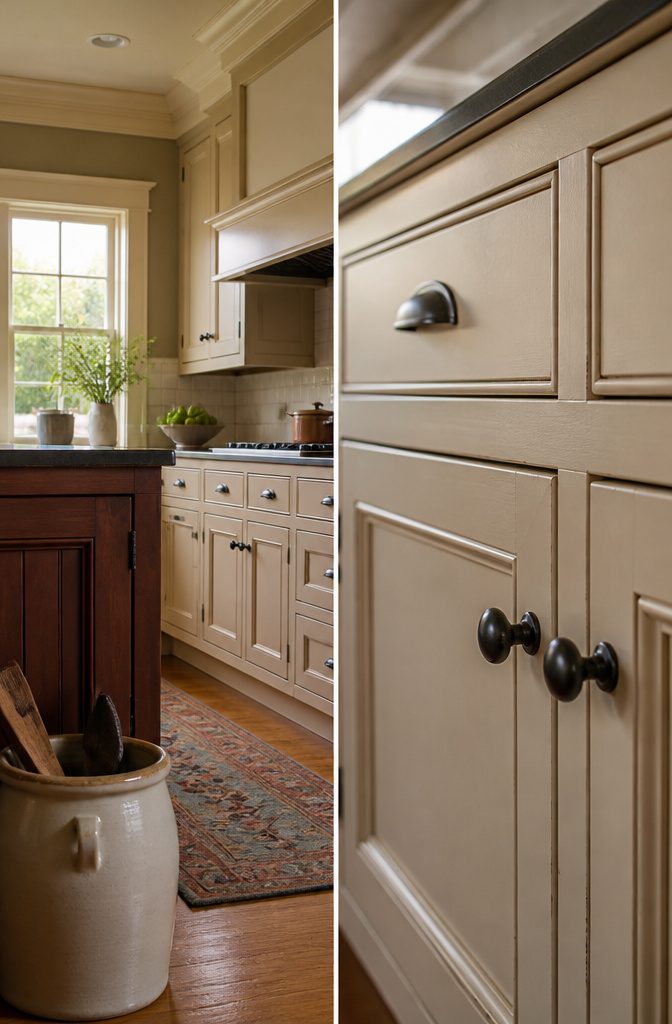
Inset doors and drawer fronts sit inside the face frame instead of in front of it, which leaves every surface flush and gives the run a furniture-like look.
Partial overlay covers only part of the frame, exposes large stretches of it, and uses smaller doors with less material.
Full overlay covers nearly all of it. Inset is the only style where the frame stays visible as a border around each door.
Inset is the most expensive of the three, because the spacing has to be exact and the flush panel needs different hardware.
I’d choose it for a traditional, transitional or craftsman kitchen where the budget covers that labor. You can pick a beaded edge for decorative texture or a flush edge for a smoother, more minimal line.
Open Shelving
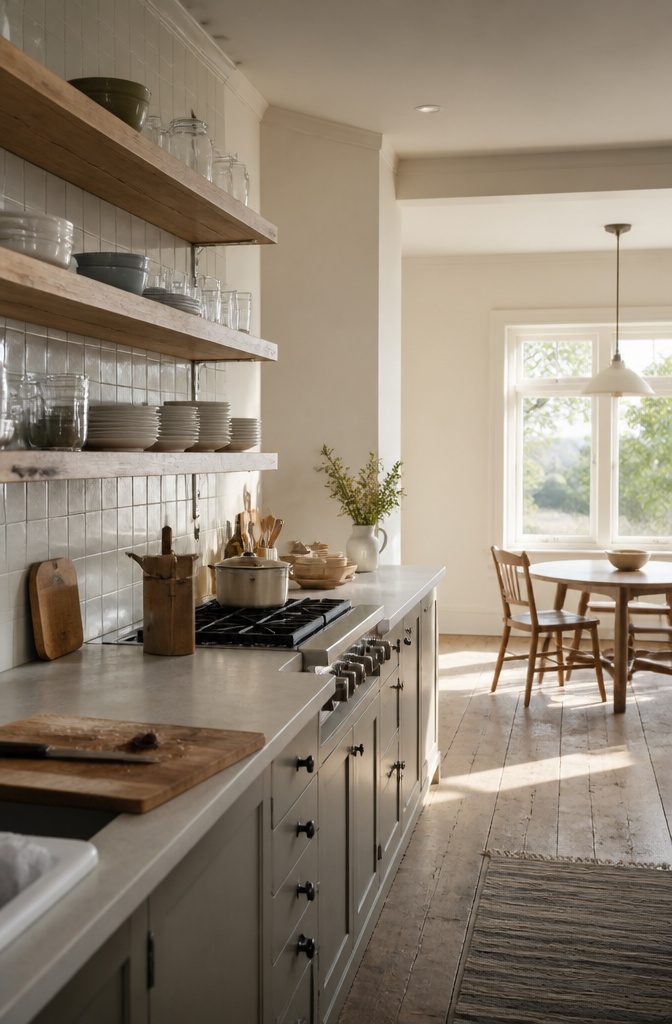
Doorless shelves keep dishes, glasses and bowls within one reach of the counter, and without a run of upper doors the wall stays visible, so a small kitchen reads wider and lighter.
Upkeep is the price.
Grease and dust settle on anything near the stove, so plates need a rinse before use and shelves need regular wiping. Everything is also on display, so mismatched mugs and half-empty cereal boxes become part of the room.
Open shelves suit people who cook lightly, own dishes they like looking at, and don’t mind wiping. Skip them if you fry often or dislike visible clutter; a short shelf far from the range beats a full wall.
Two-Tone Cabinets
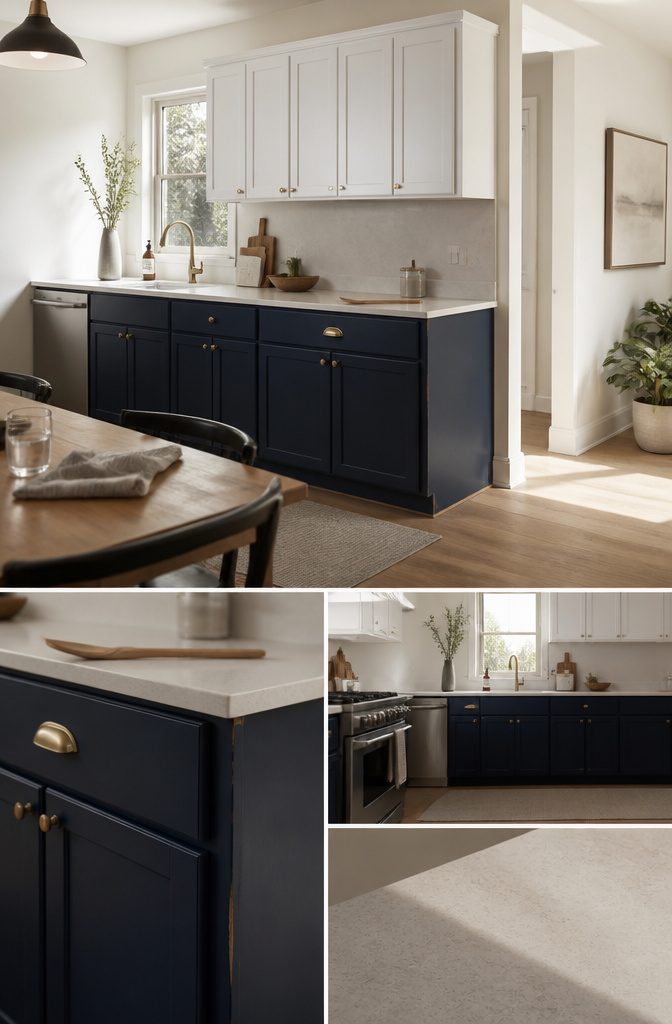
Two-tone cabinets pair two colors, materials or finishes in one kitchen. It is a finish choice rather than a door style, so it works with any door type.
Because the doors stay the same and only the finish changes, it is a cheaper way to add contrast than switching to a different door.
The classic split is upper versus lower. Light white uppers over dark, bold lowers make a kitchen feel grounded and a little more spacious, and they balance a small room.
The other option is an island in one color against the surrounding cabinets, which marks it as its own zone.
If you’re nervous about committing, I’d start with the island: it is one contained block of color, and the rest of the kitchen stays calm.
Distressed Finish
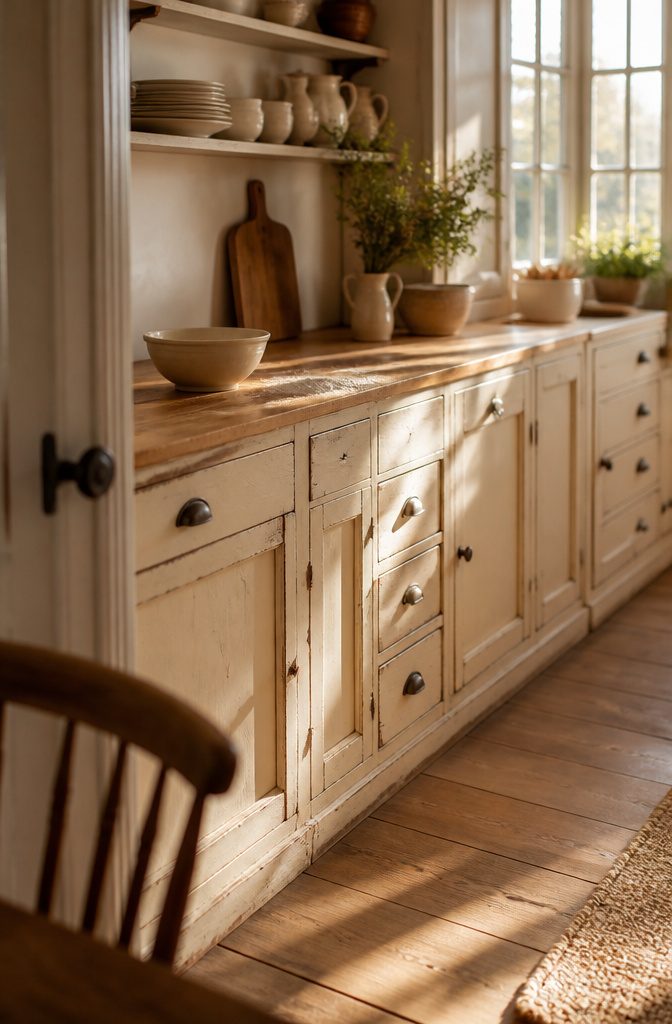
Distressed cabinets get their aged, weathered look from deliberate sanding, denting and scraping done to brand-new doors, so the wear is manufactured rather than earned.
It is a finish, not a door style, which means it goes on top of whatever door profile you already like.
I’d keep it to farmhouse and cottage kitchens, where that rustic, vintage warmth matches the rest of the room.
In a sleek, modern kitchen the dents and scuffs read as damage instead of character, and the two looks work against each other.
Because the amount of wear varies from one maker to the next, look at a sample door in person before you commit.
Painted and Colorful Finishes
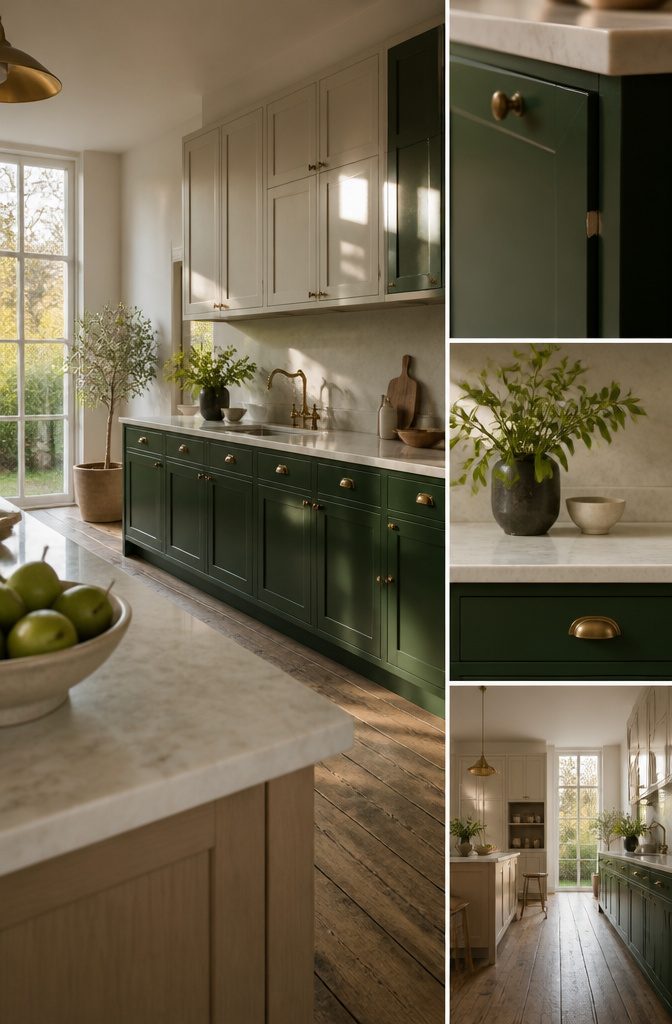
Paint is the fastest way to refresh tired cabinets or tie together a mismatched set. Navy, emerald green and matte black all read current, along with warm earthy tones, jewel tones, terracotta and neutrals with real character.
Millennial gray, sterile white, honey oak, bright yellow and artificial mint green look dated, and I’d skip all five.
Dark paint has a cost in a tight room: deep colors on every cabinet make a small kitchen feel smaller.
Keep the uppers light and put the navy or green on the base run, where it grounds the space. If the kitchen is large, deeper shades are comfortable, though lighter walls keep it open.
Mixing sheens adds interest without a second color. A high-gloss door pops against flat-finish neighbors.
Frameless Construction
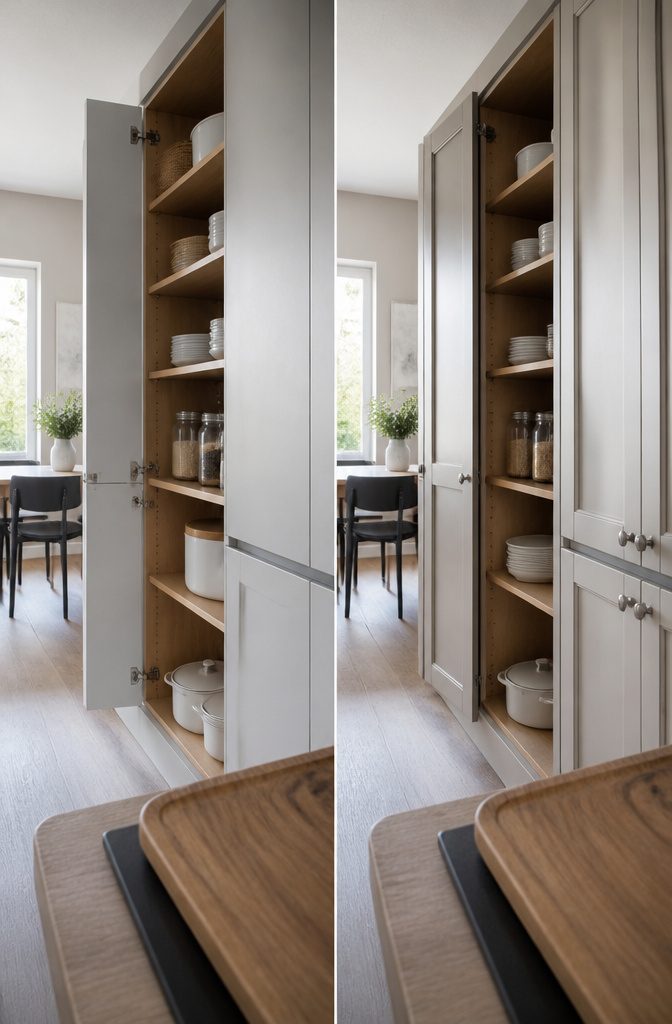
Frameless is a construction type, not a door style. It describes the cabinet box behind the doors, and the doors themselves are a separate choice.
A framed box has a face frame attached to the front, which gives it extra strength and is why you mostly see framed cabinets in traditional kitchens. A frameless box leaves that frame off.
For a small kitchen remodel, I’d pick frameless. No face frame means more usable storage, and the sturdy box supports adjustable shelves you can reset as your dishes and pantry items change.
The look is sleek and floating, which suits contemporary and modern designs, and the plain interior wipes clean easily. If you’re after a traditional kitchen, framed is the better match, since the frame is part of that look.
Broader Design Looks
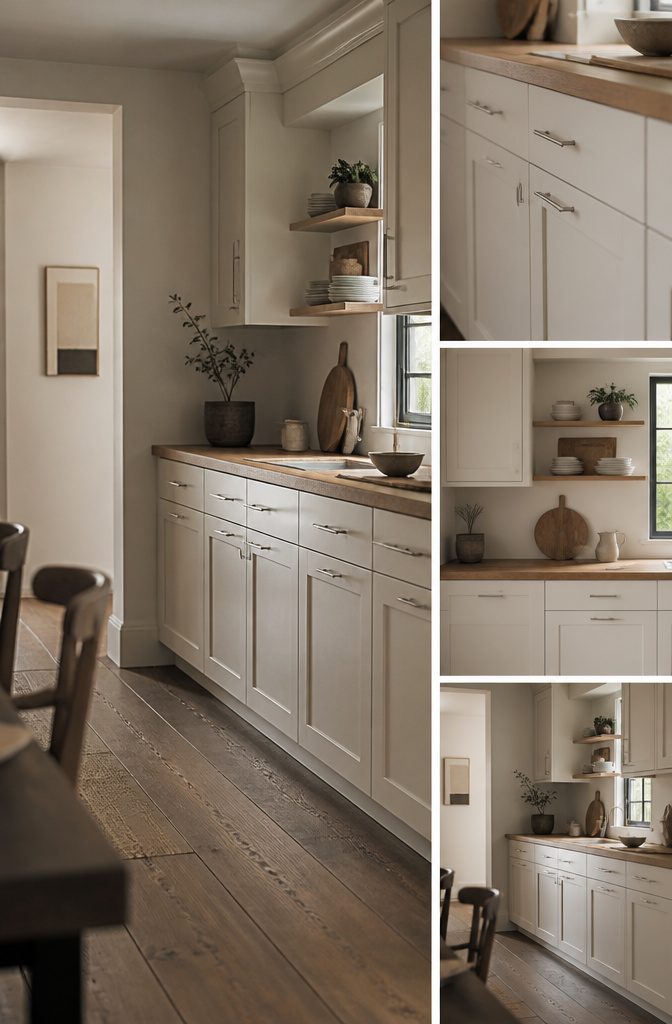
Traditional, modern, contemporary, transitional, farmhouse and cottage describe the whole kitchen, not the door. A door profile is one ingredient, and the finish and hardware decide the look.
Traditional pairs raised panel doors with crown molding, glazed finishes and prominent wood grain. Transitional keeps the raised panel but adds clean lines or curved edges.
Farmhouse often starts with a white Shaker door, then adds visible grain, accent pulls and open shelving. Modern and contemporary both lean on flat slab doors, with modern going to high gloss or stained wood.
That is why guide categories overlap.
Shaker turns up under traditional, farmhouse and contemporary, and slab lands under two labels at once. Choose the door first, then let finish and hardware decide which label it earns.
Fitting Style to Your Home
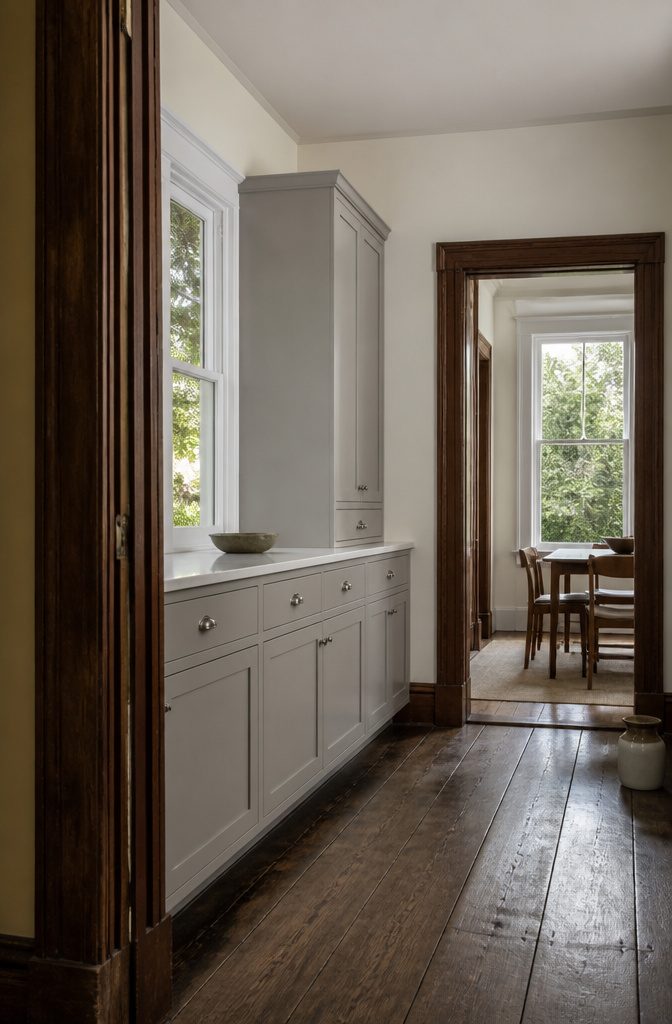
Cabinets cover more of a kitchen’s surface than anything else, so the door style sets the tone before paint or hardware does.
Flat slab fronts with no recessed detail read streamlined and European, often handleless, and they suit modern or industrial rooms. Ornate fronts with crown molding, raised panels and decorative hardware read warm, formal and classic.
Match the cabinets to the house: slab doors in a home full of older trim look pasted in, and heavy molding in a stripped-down new build fights the architecture. When the mood is undecided, Shaker is the safest bet.
Its flat panel and clean lines sit comfortably in traditional and modern kitchens alike, which is why I’d steer a first-time buyer toward it. Shaker White and Shaker Grey also count as transitional, splitting the difference.
Storage Sizes to Know
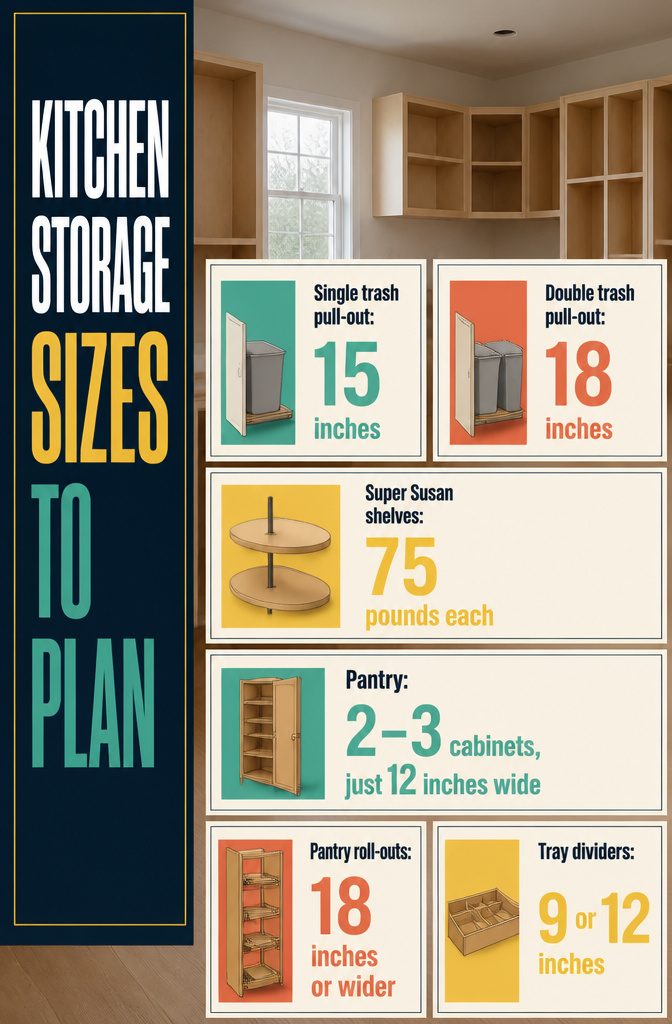
Storage hardware decides how a kitchen works day to day, and these are the widths I’d plan around:
- Trash pull-out: a single bin unit takes 15 inches, and a double takes 18. If you sort recycling, the extra 3 inches is worth it.
- Super Susan corner shelves: each shelf holds up to 75 pounds, so heavy pots are fine here.
- Pantry cabinet: it adds the storage of 2–3 standard cabinets and can be just 12 inches wide. For roll-outs, go 18 inches or wider.
- Tray dividers: these come in 9 or 12 inch widths.
- Base pull-outs: plan on 12–15 inches.
- Drop zones: these come in 3-inch widths.
Materials and Finishes
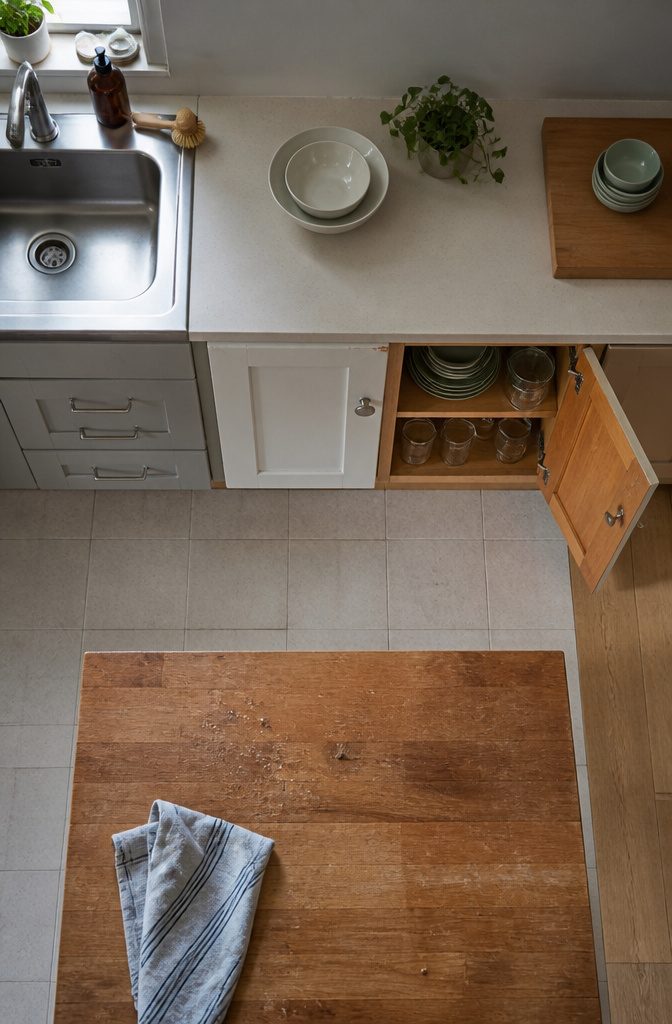
Each material trades price against lifespan and upkeep:
- Solid wood: oak, maple and cherry can be sanded and refinished, which suits a home you plan to keep.
- Plywood: lasts about 15–25 years under daily use.
- MDF: takes paint smoothly but usually wears out sooner than plywood.
- Stainless steel: among the easiest surfaces to clean.
- Laminate: also wipes down fast and costs little.
- Glass: panels brighten a run of cabinets but show fingerprints.
- Paint: refreshes wood or MDF, though chips show first at edges.
For a budget project, I’d choose plywood boxes with laminate or painted doors. The boxes carry the lifespan, and doors are the cheap part to redo later.
Choosing Your Cabinets
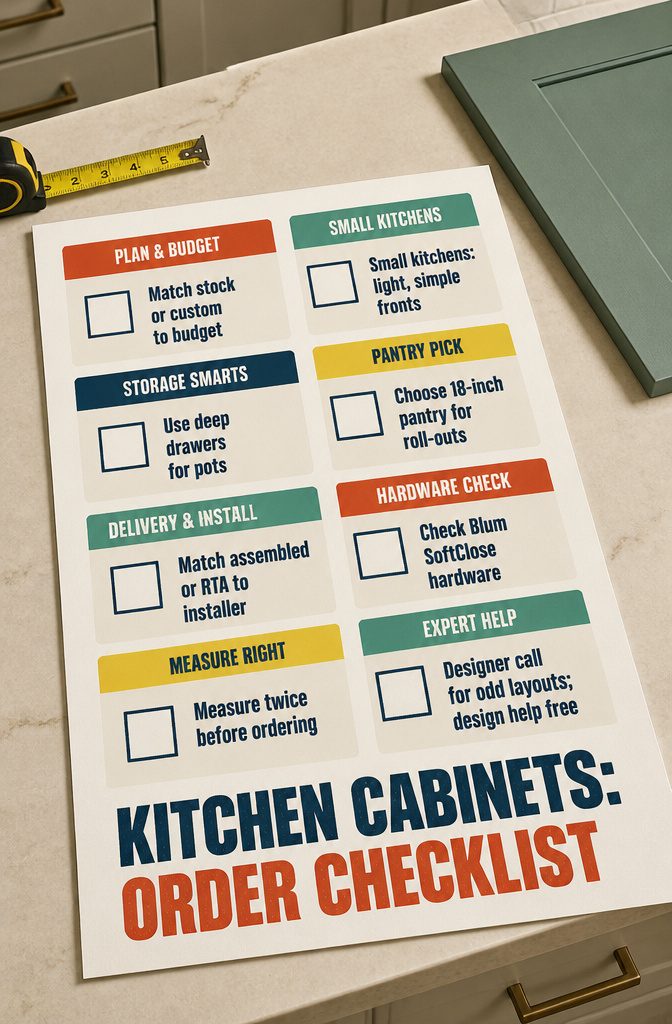
Weigh these before ordering a single door:
- Layout and budget settle stock versus custom. Stock comes in fixed sizes, costs less and installs faster. Custom earns its price only in awkward corners.
- In a small kitchen, choose light colors and a flat or simple Shaker front. Go tall, add pull-outs, and store rarely used items on the top shelves, which are hard to reach.
- Deep drawers beat shelves for pots. A pantry 18 inches or wider suits roll-out shelves.
- Stock arrives assembled or RTA. Assembled suits hiring out the install; RTA suits a patient DIYer.
- Look for Blum SoftClose hinges and slides, since hardware is where daily problems start.
- Hire a pro unless you’ve installed cabinets before, and measure twice before you order.
- A designer is worth a call for odd layouts, and some retailers offer design help free.
Frequently Asked Questions
What are the most popular kitchen cabinet styles?
Shaker is the most popular door style.
Its recessed center panel and square frame suit everything from traditional to contemporary kitchens. Slab doors lead in modern kitchens, raised panel in traditional ones, and glass-front, beadboard and louvered doors usually show up as accents.
How do I choose the right cabinets for my kitchen?
Start with your layout and budget, since those decide stock versus custom.
Pick the finish and hardware next, then judge the door style against them. A designer is worth a call for odd layouts, and some retailers offer design help free.
Which kitchen style cabinet works best for a small kitchen?
A flat slab or simple Shaker front in a light color.
Slab fronts don’t interrupt the eye, so the room feels calmer. Going tall and adding pull-outs gives you storage without crowding the floor.
Are custom cabinets worth the extra cost?
Usually only for awkward corners or unusual layouts.
Stock cabinets come in fixed sizes, cost less and install faster, and they work well in a standard-shaped kitchen. Semi-custom sits in the middle, allowing minor size changes.
Should I buy assembled or RTA cabinets?
Buy assembled if you’re hiring out the install, and RTA if you’re a patient DIYer. Unless you’ve installed cabinets before, hire a pro either way, and measure twice before you order.
What cabinet material lasts the longest?
Solid wood, such as oak, maple or cherry, because it can be sanded and refinished.
Plywood lasts about 15–25 years under daily use, and MDF usually wears out sooner. Stainless steel is another durable option.
Do dark cabinets make a kitchen look smaller?
In a small kitchen, yes: deep colors on every cabinet make the room feel tighter.
Keep the uppers light and put navy or green on the base run. Lighter walls and good lighting help, and a large kitchen can handle darker shades comfortably.
How can I tell if cabinet hardware is good quality?
Drawers should slide smoothly and hinges should hold firmly.
Blum SoftClose hinges and slides are a good sign. Daily problems tend to start with hardware rather than the look of the cabinet.
How can I maximize storage in a small kitchen?
Go tall with floor-to-ceiling cabinets, which come in 80, 84 and 96 inch heights, and add pull-outs and corner units.
Frameless boxes also give more usable space because there’s no face frame. Keep rarely used items on the top shelves, and expect to need a step stool up there.
What are the kitchen cabinet trends for 2026?
Natural wood, textured fronts, ceiling-height cabinets, handleless designs and hidden storage are the current picks. Deep colors such as navy, emerald green and matte black also read as up to date.
What kitchen cabinet colors are in style, and which look outdated?
Current colors include warm earthy tones, jewel tones, terracotta, navy, emerald green, matte black and neutrals with real character. Millennial gray, sterile white, honey oak, bright yellow and artificial mint green look dated.
Which kitchen cabinets are the easiest to clean?
Stainless steel and laminate are the easiest to wipe down.
Flat slab doors also clean quickly because they have no grooves to hold grime. Beadboard and raised panel doors take the most effort, since dust and grease settle into every groove.