


You can put foam on box springs, but it’s not ideal. Traditional coil-based box springs flex and move underneath, creating uneven pressure points that wear out your foam faster. Add a bunkie board on top of the springs to create a flat, solid surface. This protects your warranty and keeps your mattress from sagging prematurely. Check your warranty paperwork first, as many manufacturers require solid support. The details below explain exactly what foundation your foam needs.
Can You Put Foam on a Traditional Box Spring?
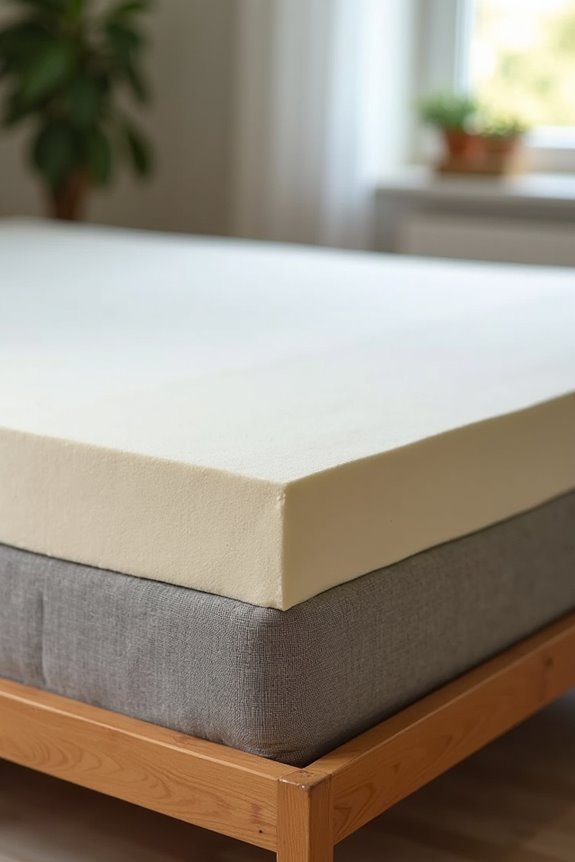
Traditional box springs filled with coils and springs aren’t compatible with foam mattresses. Foundation compatibility directly affects mattress performance. When you place a foam mattress on a coil-based box spring, those springs flex and move unevenly underneath, creating pressure points that compromise spinal alignment and comfort. Additionally, many foam mattress manufacturers won’t cover warranty claims if you use a traditional box spring as your foundation. They specifically require solid, non-spring support. If you’re set on using a box spring, you’ll need to add a solid layer on top, such as a bunkie board, to create the flat, stable surface your foam mattress requires.

【Beautiful Pink Design for a Dreamy Bedroom】 Transform your sleeping space with our charming pink bunkie board, designed to perfectly match your beds and add a touch of elegance to any bedroom.
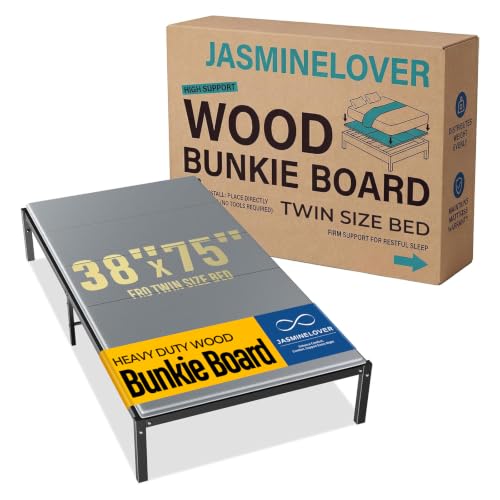
【Military-Grade Twin Bunkie Board】Engineered for 38"x75" Twin beds, this Bunkie Board Twin delivers full-edge reinforcement and 500lbs capacity. Its heavy-duty cross-braced frame prevents sagging on sofa beds, trundles, and metal frames

Stops Mattress Sagging & Supports Heavy Mattresses – Our 10mm high-density MDF core creates a rigid, continuous surface that eliminates sagging caused by slats that are too far apart. Engineered to support memory foam, hybrid, and heavy mattresses up to 200 lbs, this heavy duty bed board keeps your mattress flat and firm – no more sinking in the middle.
Why Traditional Box Springs Damage Foam Mattresses
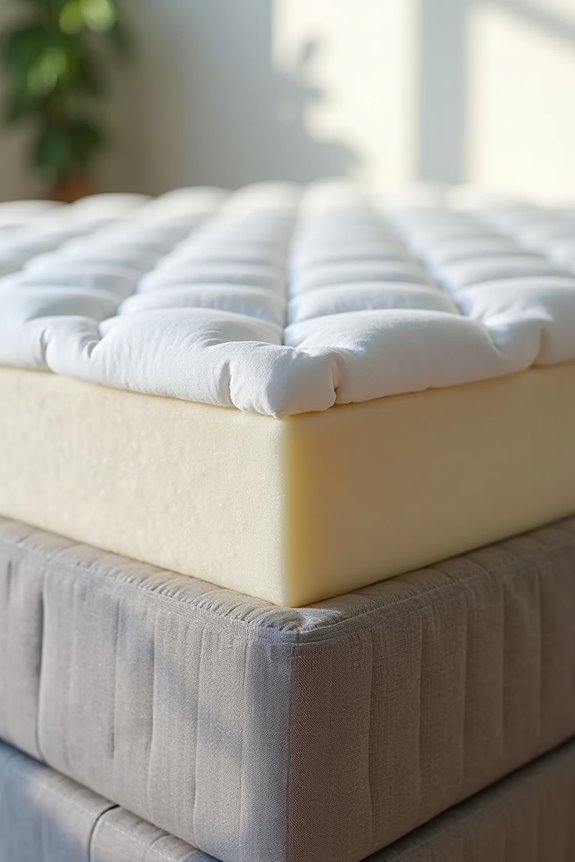
Pairing your foam mattress with a traditional box spring is a recipe for trouble. Those coil springs underneath don’t provide the solid, even support that foam needs, so your mattress sags unevenly and wears out faster than it should. Plus, the springs move around slightly, which throws off your spine’s alignment and can negatively impact your sleep quality.

Sturdy Slats Support: This twin size platform bed is made of 12 robust plywood slats, which combines great strength with durability. The twin bed frame also provides reliable mattress support, eliminating the need for a box spring. Size of twin size bed frame: 76.5" x 41" x 14" ( L x W x H), suitable mattress twin size: 75" x 38" (mattress not include). Max 400 LB heavy duty that could safely holds kids,teens and adults.

Solid Rubber Wood Legs: Fitted with solid rubber wood legs, the wooden platform bed frame ensures even weight distribution and strong support. Besides that, the rubber wood legs with high hardness bring long-lasting durability.

[Classic Farmhouse Design]: Bring instant warmth to your bedroom with a mid-century modern bed frame that feels cozy and inviting every day. The classic lines and rustic-inspired styling blend beautifully with modern, traditional, or country decorations.
Coil-Based Foundation Failures
When you place a foam mattress on a coil-based box spring, you’re working against what your mattress needs to perform well. Those coils flex and move independently, creating uneven support underneath your foam mattress support system. This movement causes pressure points and forces your mattress to sag faster than it should.
Manufacturers explicitly state that coil foundations don’t meet their requirements. You risk warranty denial if your mattress develops early sagging or body impressions. The coil foundation allows micro-movements that prevent proper weight distribution across your bed.
Foam mattresses perform best on solid, flat surfaces. When coils deflect unevenly, your spine alignment suffers and your mattress ages prematurely. A coil foundation voids your warranty coverage and degrades sleep quality over time.
Uneven Weight Distribution Issues
The real problem with coil-based foundations appears in how weight actually gets distributed across your mattress. When you use box springs under a foam mattress, those metal coils don’t create an even surface. Instead, they flex differently in different spots, pushing some areas up while others sink down.
Your body weight doesn’t spread out evenly. It concentrates in certain places. This uneven weight distribution causes your foam to compress faster in those pressure zones. Within just a few months, you’ll notice body impressions forming, especially where you sleep most.
A foam mattress foundation needs solid, consistent support everywhere. Box springs cannot provide that level of support. Choosing a solid platform or bunkie board protects your investment and keeps your foam mattress working properly.
How to Identify If Your Box Spring Is Actually Solid
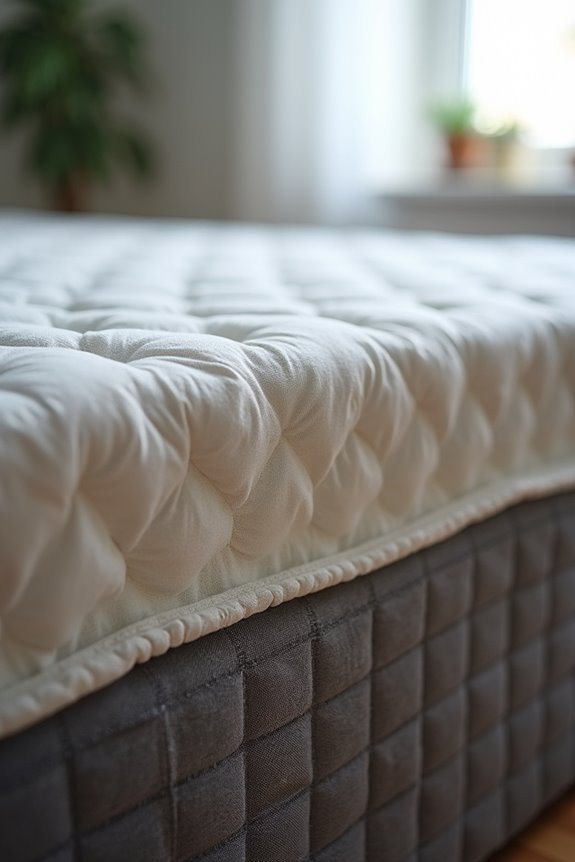
You can figure out if your box spring is truly solid by checking a few key things. Look for visible metal coils on top, press down on different spots to see if it feels firm or bouncy, and check the label or paperwork for words like “zero-deflection” or “solid foundation.” These three methods will quickly reveal whether your box spring can support a foam mattress without sagging.

STOPS MATTRESS SAGGING BETWEEN SLATS — Your mattress needs a flat, continuous surface to perform the way it was designed. When bed slats are spaced too far apart, the mattress sinks into the gaps — creating pressure points, uneven wear, and back discomfort. This 10mm twin-wall support board bridges those gaps, giving your mattress the foundation it needs. Our bunkie board requires a structure underneath, such as a metal frame or bed slats. Its capacity depends on the support structure.

STOPS MATTRESS SAGGING BETWEEN SLATS — Your mattress needs a flat, continuous surface to perform the way it was designed. When bed slats are spaced too far apart, the mattress sinks into the gaps — creating pressure points, uneven wear, and back discomfort. This 10mm twin-wall support board bridges those gaps, giving your mattress the foundation it needs. Our bunkie board requires a structure underneath, such as a metal frame or bed slats. Its capacity depends on the support structure.

【Prevents Sagging & Extends Mattress Life】 Say goodbye to a sinking mattress! Our Superhappy Queen Size Bunkie Board (60x80”) delivers firm, uniform support across your entire mattress. Perfect for platform beds, slatted bases, or sleeper sofas, it prevents sagging, maintains mattress integrity, and helps protect your mattress warranty for a consistently comfortable sleep.
Visual Coil Detection Method
How can you tell if your box spring has hidden coils or if it’s actually a solid foundation? Examine what’s underneath using these visual detection methods.
- Examine the fabric cover for a quilted pattern that suggests coils beneath
- Look for visible metal springs if you gently lift an edge
- Check the sides for any exposed coil wiring or metal framework
- Search for “solid top” or “zero-deflection” labels on documentation
These box spring testing steps help you identify your foundation type. A solid foundation keeps your foam mattress properly supported, while coils might compress unevenly. Take five minutes to inspect yours thoroughly. You’ll know exactly what supports your mattress.
Firmness Testing Techniques
Why does your box spring feel different when you press on it in different spots?
Testing firmness across your foundation reveals whether it’ll actually support your foam mattress. Press at five to seven points (corners, center, and sides) to check for uniform resistance. A quality foundation shouldn’t have soft spots or areas that sink under pressure. If you notice dips or uneven firmness, that foundation won’t provide the support your foam mattress needs.
Apply steady force with your palm at each point for a few seconds. The surface should feel consistently rigid throughout. Any localized weakness signals inadequate support. This multi-point test ensures your foundation can handle your mattress properly, which directly affects durability and sleep quality.
Documentation And Labeling Verification
Your firmness test indicates how your foundation feels currently, but you need to confirm it provides adequate support by checking the underlying structure and warranty documentation.
- Look at your warranty paperwork. Foam mattress warranties often require a solid foundation, not springs.
- Flip the box spring over and inspect underneath for visible metal coils or springs.
- Check the labeling for terms like “zero-deflection” or “solid top foundation.”
- Read the product documentation carefully for explicit mention of “solid foundation” or “no springs.”
Finding these details in your labeling and warranty documents ensures your foundation matches your foam mattress requirements.
What Your Warranty Actually Requires in a Foundation
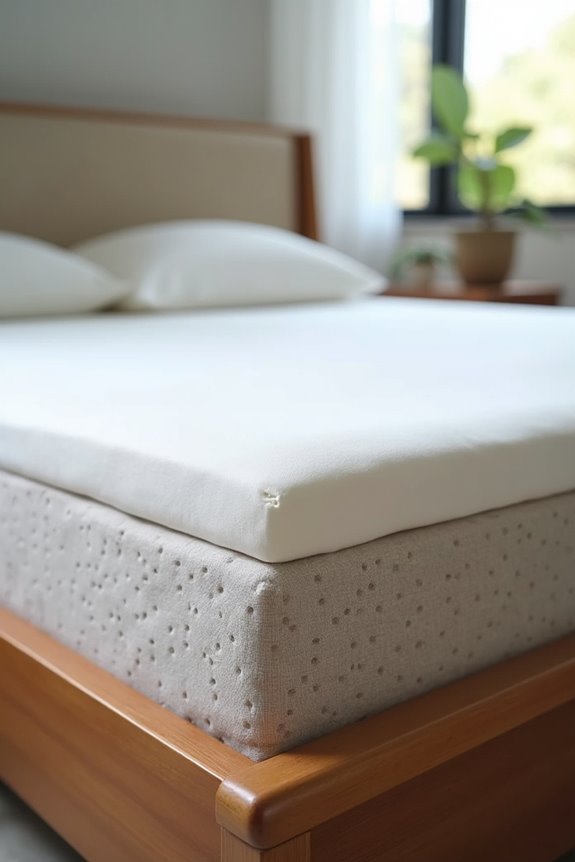
Before you place that foam mattress on just any foundation, understand what your warranty actually demands. Most manufacturers require a solid, non-spring foundation or a slatted frame with gaps no larger than 3 inches. Coil-based box springs don’t provide the support foam mattresses need to perform properly, and using a traditional box spring can void your entire warranty coverage.
Your warranty foundation requirements aren’t optional suggestions; they’re conditions for coverage. When you file a claim about impressions or wear, the manufacturer will check what you put underneath first. If you used incompatible support, they’ll deny your claim.
Always check your specific warranty documentation or the manufacturer’s website before setup. Look for terms like “non-spring foundation” or “solid foundation” to confirm compatibility.

Queen size box spring with metal slats compatible with any memory foam or hybrid mattress.

🌟 Experience Unmatched Comfort with Imperijade's Bunkie Board! 🌟 Tired of feeling those uncomfortable steel and hard support frames while sleeping on your pullout sofa bed? Our innovative support board is here to transform your sleep experience by providing a plush and supportive surface.

UNIVERSAL FIT: Suitable for Full / Double, Queen, King / Eastern King, and California King size Beds; Works with Mattresses, Box Springs, and Foundations; Compatible with steel, iron, metal, and wood bed frames (bed frame not included)
Preparing Your Box Spring for Foam (5 Steps)

Most box springs aren’t actually foam-friendly, so here’s how to check yours and get it ready.
Before placing your foam mattress on box springs, inspect what you’re working with:
- Look for coils underneath. Coil-based springs don’t support foam properly.
- Check for slat gaps wider than 3 inches, which create sagging spots.
- Examine each slat for cracks or breaks that weaken support.
- Feel the surface for soft spots or visible sagging.
If you find coils or gaps exceeding 3 inches, you have solid options. Adding a bunkie board on top creates the solid foundation your foam needs. Alternatively, replace your box springs entirely with a platform bed or solid foundation. This protects your warranty and ensures your mattress performs well for years.
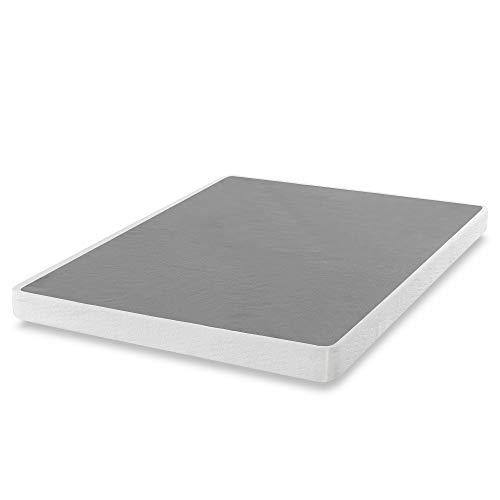
Strong and sturdy steel structure with new 5 inch low profile, which is perfect for higher profile mattresses

COMFORT AND SUPPORT BOOST: Enhances mattress comfort and stability
COMFORT AND SUPPORT BOOST: Enhances mattress comfort and stability
How Your Foam Breaks Down on the Wrong Foundation
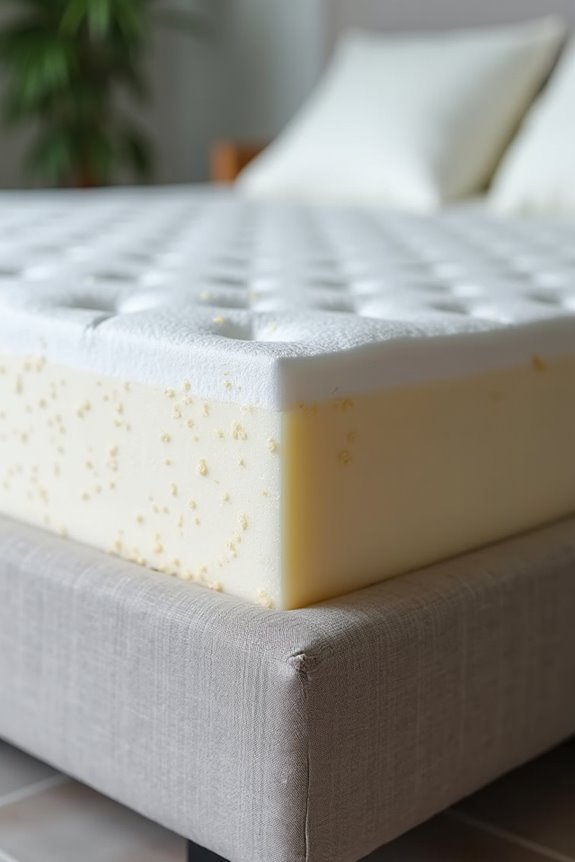
When you place your foam mattress on a box spring, the foam starts breaking down unevenly because the coils and springy surface don’t provide the solid support foam needs. You’ll notice body impressions and sagging develop within 12–18 months, much faster than the mattress was designed to wear, because the constant flexing creates weak spots where your weight concentrates. This uneven compression makes your mattress feel old prematurely and can damage your warranty coverage since most manufacturers require a solid or tightly slatted foundation to keep their protection valid.

Mattress Support:When slats are too wide, mattresses can sink and cause back discomfort. This high-strength PP bunkie board creates a flat, solid surface to support your mattress and help maintain sleep quality over time

BUNKIE BOARD adds extra support under the mattress to help prevent the mattress from sagging bringing life to an old uncomfortable mattress

Stop Your Mattress From Caving In – You know that annoying dip in the middle of your bed? Gone. Our 10mm high-density MDF core creates a solid, continuous surface that bridges gaps between slats and stops sagging before it starts. Whether you have a heavy memory foam mattress, a thick hybrid, or you're on the heavier side yourself – this bed board handles up to 1200 lbs without bending or bowing. Finally, a flat, firm surface that actually supports you.
Uneven Compression Damage
Your foam mattress needs a solid, even surface to perform properly. Box springs often fall short because when foam sits on springy surfaces, it compresses unevenly, creating pressure points that wear faster in high-impact areas like your hips and shoulders.
What happens over time:
- Months 1–3 feel normal, but subtle changes begin underneath
- Months 3–12 develop visible body impressions in the foam
- Months 12–18 reveal deep indentations that won’t bounce back
- Warranty claims get denied because box springs don’t meet foundation requirements
The constant micro-movements from bouncy springs disrupt your spinal alignment and accelerate breakdown. Your foam mattress performs better on a bunkie board or solid platform instead, which distributes your weight evenly and extends your mattress life substantially.
Timeline Of Deterioration
How quickly does a foam mattress fail on a box spring? Deterioration happens faster than expected. During months one through three, your mattress feels fine, so problems go unnoticed. However, damage is quietly building underneath.
By months three through twelve, subtle body impressions start forming in high-pressure zones like your hips and shoulders. Your foundation isn’t supporting your foam mattress wear evenly, so certain areas compress more than others.
After twelve to eighteen months, visible impressions appear and foam breakdown accelerates significantly. Sag increases, and support decreases noticeably. Warranty claims often get denied if your foam mattress sits on an unsupported foundation. Choosing the right foundation directly protects your investment from premature failure.
What Works Better Than a Traditional Box Spring
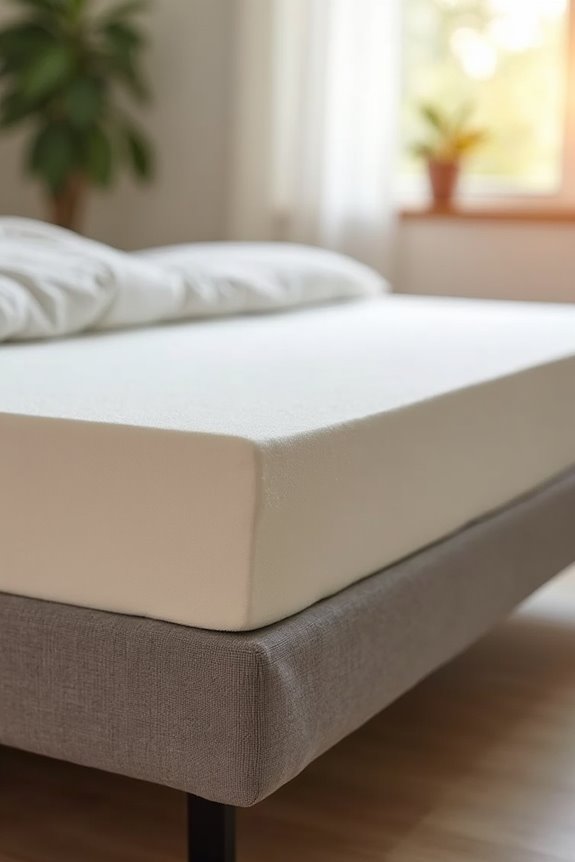
If you’re wondering what’ll actually work better for your foam mattress, several options beat a traditional box spring.
- Platform beds with slats spaced 3 inches apart or closer
- Bunkie boards placed on existing box springs for added support
- Solid foundations with zero deflection for even weight distribution
- Adjustable bases compatible with memory foam mattresses
A solid foundation prevents your mattress from sagging and keeps your warranty valid. Platform beds work great because they provide uniform support underneath. If you’ve got an old box spring you like, add a bunkie board on top. It transforms it into proper support for your memory foam mattress.
Adjustable bases are another solid choice. They’re compatible with most foam mattresses and replace traditional box springs while maintaining warranty coverage when manufacturers approve them.

STYLE THAT MAKES THE WHOLE ROOM FEEL FINISHED – Rounded legs and a warm wood finish bring a classic mid-century look that ties your space together. A design that never feels dated.

[Mid-Century Modern Charm]: Bring home a warm, inviting farmhouse bed frame that instantly makes your bedroom feel relaxed and lived-in, pairing beautifully with modern, rustic, or cottage decorations. Please note: slight color differences may occur due to lighting and monitor settings.

STYLE THAT MAKES THE WHOLE ROOM FEEL FINISHED – Rounded legs and a warm wood finish bring a classic mid-century look that ties your space together. A design that never feels dated.
Adding a Bunkie Board to Make Your Box Spring Work
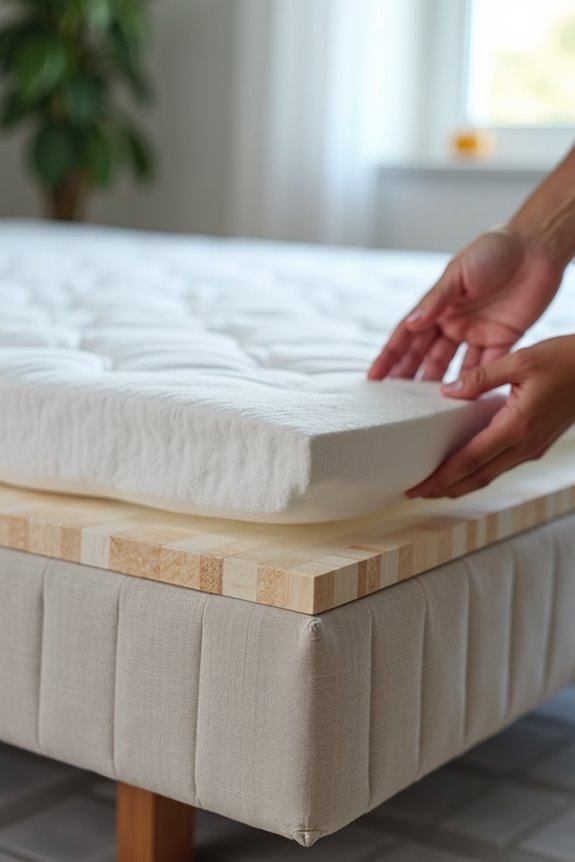
A bunkie board fixes the problem of foam mattresses feeling uneven on old box springs. This thin, solid foundation sits on top of your box springs and creates the flat support your foam mattress needs.
What changes with a bunkie board:
| What Happens | Before | After |
|---|---|---|
| Surface Feel | Bouncy and uneven | Firm and flat |
| Mattress Support | Flexes too much | Stays stable |
| Warranty Status | Often invalid | Protected |
| Setup Time | N/A | 10 minutes |
Your bunkie board must cover your entire mattress area. This uniform support prevents sagging and keeps your warranty valid. The difference in mattress performance is noticeable immediately, with your foam mattress functioning as intended.

STOPS MATTRESS SAGGING BETWEEN SLATS — Your mattress needs a flat, continuous surface to perform the way it was designed. When bed slats are spaced too far apart, the mattress sinks into the gaps — creating pressure points, uneven wear, and back discomfort. This 10mm twin-wall support board bridges those gaps, giving your mattress the foundation it needs. Our bunkie board requires a structure underneath, such as a metal frame or bed slats. Its capacity depends on the support structure.
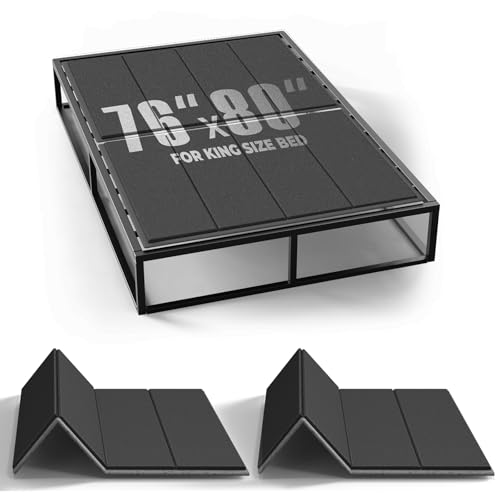
Sofa bed new experience:Older sofa beds are supported by bottom springs and fabrics, and you can feel the discomfort and lack of support from the back springs while sleeping.Sofa bed support boards can be a good solution to this problem! Simply place it on top of the sofa bed to solve the problem of sagging and springs due to insufficient support and improve the quality of sleep.

BUNKIE BOARD adds extra support under the mattress to help prevent the mattress from sagging bringing life to an old uncomfortable mattress
Check Your Foundation in 5 Minutes
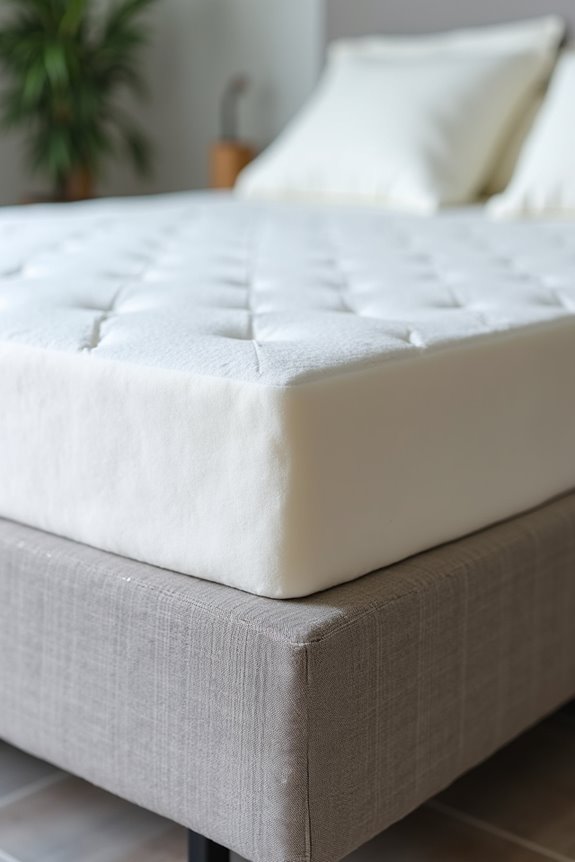
Check Your Foundation in 5 Minutes
Before you place your foam mattress on box springs, verify that your foundation can support it. Complete this five-minute check to confirm your setup will work.
Before placing your foam mattress on box springs, verify your foundation can support it with a quick five-minute check.
- Look for coils, wide gaps between slats, or sagging areas that signal a springy base
- Press the center and corners firmly to test for uniform firmness with minimal give
- Measure the gaps between slats; they shouldn’t exceed 3 inches to protect your warranty
- Compare your foundation against your mattress warranty requirements for solid support
If your foundation doesn’t pass this inspection, you can add a bunkie board or extra slats to create the flat, solid surface your foam mattress needs. This quick check prevents future damage and protects your investment.

WARRANTY-SAFE, EXTRA-WIDE WOOD SLATS: Extra-wide 3-inch solid wood slats with narrow 3.5-inch gaps, not 1-inch metal wire with 5-7 inch gaps that sag. Proper support helps protect your mattress and its warranty.

Perfect Fit for Standard QUEEN Beds: Designed to match standard twin bed frames exactly (60" x 80"), ensuring a precise and stable fit. Say goodbye to mismatched sizes—this bunkie board provides a flawless foundation for your mattress.

Reinforce Weak Frames or Replace Your Box Spring - Use SlatSure as a box spring alternative or reinforcement layer on top of wood slats, metal bars, or an existing frame.
How Long Your Foam Mattress Lasts on Each Foundation Type
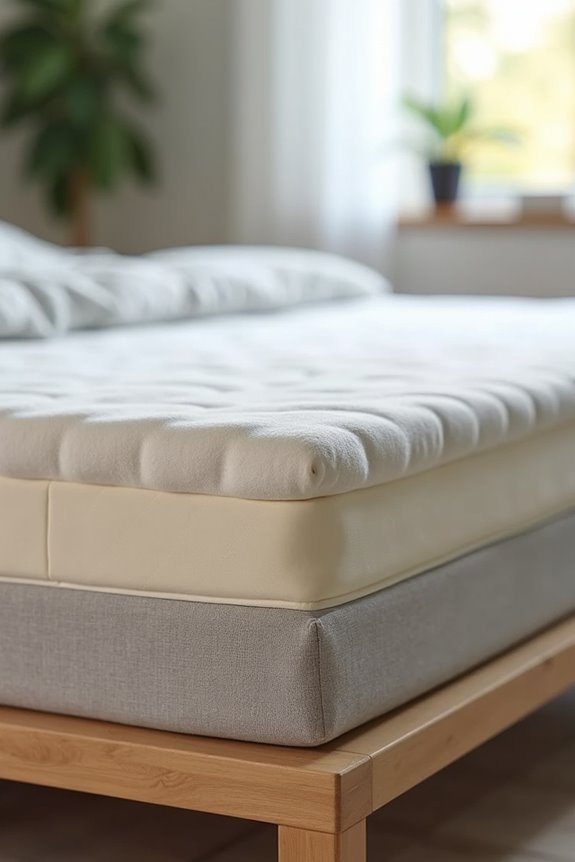
Now that you’ve confirmed your foundation is solid, it’s time to understand how your choice affects your mattress’s lifespan. Your foundation makes a real difference in how long your foam mattress lasts. On a proper solid foundation, you’ll get 8 to 12 years of use. A traditional box spring actually hurts your mattress. With a box spring, expect accelerated wear starting around month 3, with visible body impressions appearing by 12 to 18 months. You might only get 2 to 4 years before needing replacement. Platform beds and solid foundation boards are your best options. They provide even support that keeps your foam mattress comfortable and intact for years. Selecting the right foundation protects your investment by directly extending your mattress’s usable lifespan.

Heavy Duty Metal Construction:Built with reinforced heavy-duty metal steel, this size box spring mattress foundation provides exceptional strength and stability, supporting up to 3000 lbs without sagging or noise.
COMFORT AND SUPPORT BOOST: Enhances mattress comfort and stability
COMFORT AND SUPPORT BOOST: Enhances mattress comfort and stability
When Replacing Your Box Spring Makes Sense
Should you replace that box spring sitting under your foam mattress? Consider it when:
- Your warranty requires a solid foundation instead of springs
- Slat gaps exceed 3 inches, leaving your mattress unsupported
- Your current box spring has coils that compress unevenly
- You want your mattress at a specific height without sacrificing support
A platform foundation or bunkie board provides the solid, uniform surface your foam mattress needs. These alternatives preserve your warranty coverage and prevent uneven compression that causes premature sagging.
Check your mattress warranty first. It specifies exactly what foundation type you need. When you upgrade to a platform foundation, you extend foam mattress compatibility and longevity. Your retailer can guide you toward the right box spring replacement for your specific situation.